Chapter 1
Audience Strategy (Who to Target): Five Marketing Audiences and Six Optimization Domains
What do the different Marketing Audiences come to do, and which Optimization Domains do they map to?
Audience Strategy (Who to Target): Five Marketing Audiences and Six Optimization Domains
This chapter answersWhat do the different Marketing Audiences come to do, and which Optimization Domains do they map to?
Why it comes hereIdentify audiences and functions first; only then can you read the journey numbers.
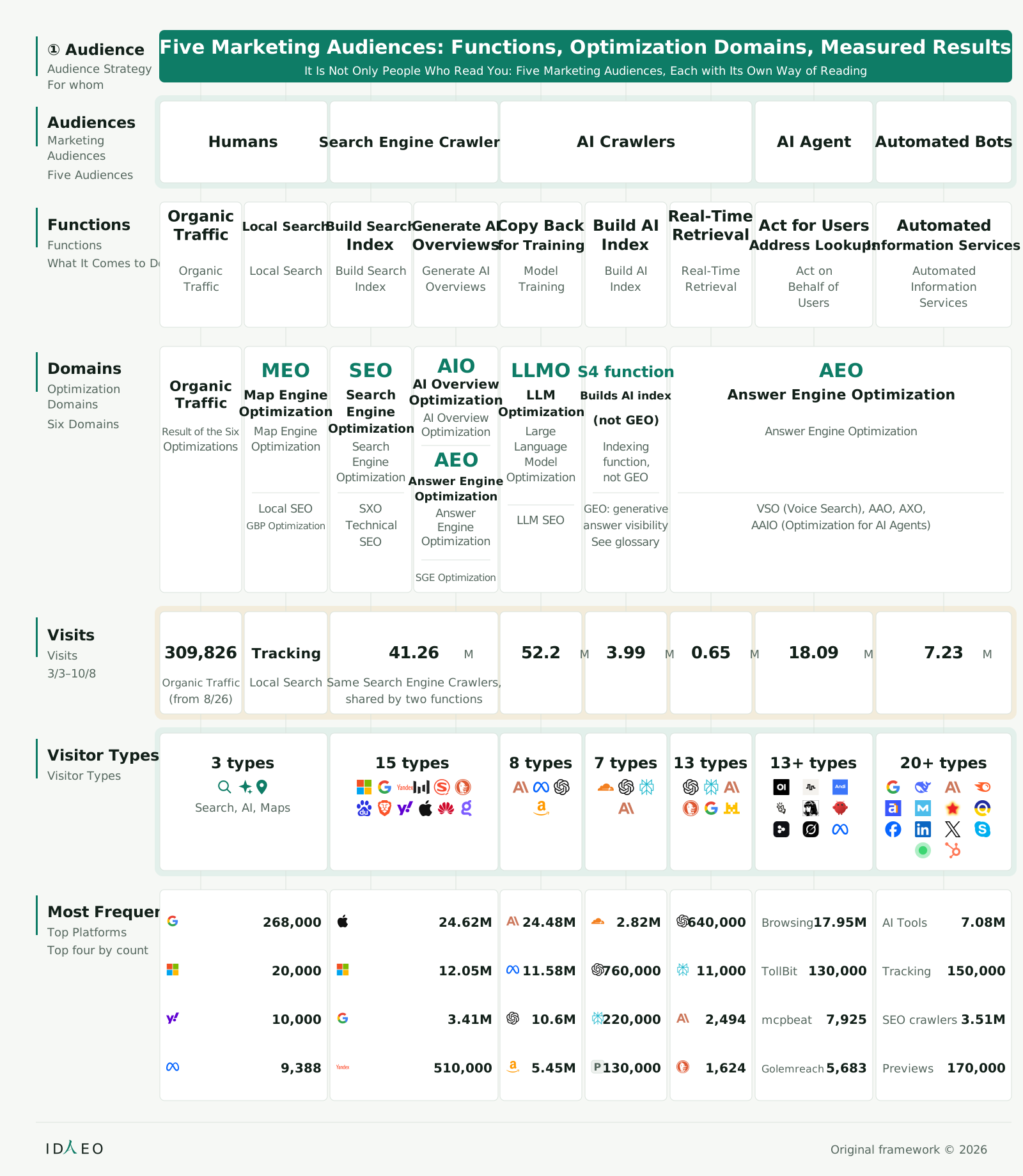
Figure 1-1 Panorama of the Five Marketing Audiences: Functions, Optimization Domains, and Measured Results
Read from top to bottom: Audience Strategy, Marketing Audiences, functions, main related domains, number of visits, visitor types, and the top four; each name has its English below it. The main related domains list abbreviations and full names, with related terms for the same domain below. Counts are by function. GEO appears in the domain legend, with no count attached. The “makes AI Overviews” cell is led by AIO and linked to AEO: AIO focuses on search engine AI Overviews, and AEO gets AI answers to use you. For Humans, the functions list “Organic Traffic” and “Local Search” side by side; Automated Bots provide “Automated Information Services.” AEO also supports AI real-time reads, AI Agents, and Automated Information Services. AEO is an Optimization Domain focused on getting AI answers to use content. GEO is an Optimization Domain focused on making content more visible in generative answers. Both involve the answer stage, and their scopes overlap.
View as text
Read top to bottom: Audience Strategy, Marketing Audiences, function, Optimization Domains, visit counts, visitor types, and the top four.
① Audience
For whom
Five Marketing Audiences: Functions, Optimization Domains, Measured Results
It Is Not Only People Who Read You: Five Marketing Audiences, Each with Its Own Way of Reading
Audiences
Five Audiences
Humans
Humans
Search Engine Crawlers
Search Engine Crawlers
AI Crawlers
AI Crawlers
AI Agent
AI Agents
Automated Bots
Automated
Bots
Functions
What It Comes to Do
OrganicTraffic
Organic
Traffic
Local Search
Local Search
Build Search
Index
Build Search
Index
Generate AI
Overviews
Generate AI
Overviews
Copy Back
for Training
Model
Training
Build AI
Index
Build AI
Index
Real-TimeRetrieval
Real-Time
Retrieval
Act for Users
Address Lookups
Act on
Behalf of
Users
Automated
Information Services
Automated
Information
Services
Domains
Six Domains
Visits
3/3–10/8
Visitor Types
3 types
Search, AI, Maps
15 types
8 types
7 types
13 types
13+ types
20+ types
Most Frequent
Top four by count
268,000
20,000
10,000
9,388
24.62M
12.05M
3.41M
510,000
24.48M
11.58M
10.6M
5.45M
P
2.82M
760,000
220,000
130,000
640,000
11,000
2,494
1,624
Browsing
17.95M
TollBit
130,000
mcpbeat
7,925
5,683
Golemreach
AI Tools
7.08M
Tracking
150,000
SEO crawlers
3.51M
Previews
170,000
ID
EO
Original framework © 2026
Audience Strategy
Marketing
Audiences
Functions
Optimization
Domains
Visits
Visitor Types
Top Platforms
Organic Traffic
(from 8/26)
Local Search
Same Search Engine Crawlers,
shared by two functions
OrganicTraffic
Result of the Six
Optimizations
MEO
Map Engine
Optimization
Local SEO
GBP Optimization
SEO
SearchEngine
Optimization
SXO
Technical
SEO
AIO
AI Overview
Optimization
AEO
Answer Engine
Optimization
SGE Optimization
LLMO
LLM
Optimization
LLM SEO
S4 function
Builds AI index
(not GEO)
GEO: generative
answer visibility
See glossary
AEO
Answer Engine Optimization
Answer Engine Optimization
VSO (Voice Search), AAO, AXO,
AAIO (Optimization for AI Agents)
309,826
41.26M
52.2M
3.99M
0.65M
18.09M
7.23M
Map Engine
Optimization
Search
Engine
Optimization
AI Overview
Optimization
Large
Language
Model
Optimization
Indexing
function,
not GEO
Answer
Engine
Optimization
Tracking
Terms from the same field are listed directly under the main name according to how they are used. AIO is linked to AEO; the industry uses AIO to mean “AI Overview Optimization” or as a general term for “AI optimization,” and both correspond to getting AI answers to use your content. In IDAEO, AIO refers to optimizing search engine AI Overviews. ASO, CRO, and SMO belong to traditional digital marketing and work alongside the Six Optimization Domains.
How to readRead top to bottom: Audience Strategy, Marketing Audiences, function, Optimization Domains, visit counts, visitor types, and the top four.
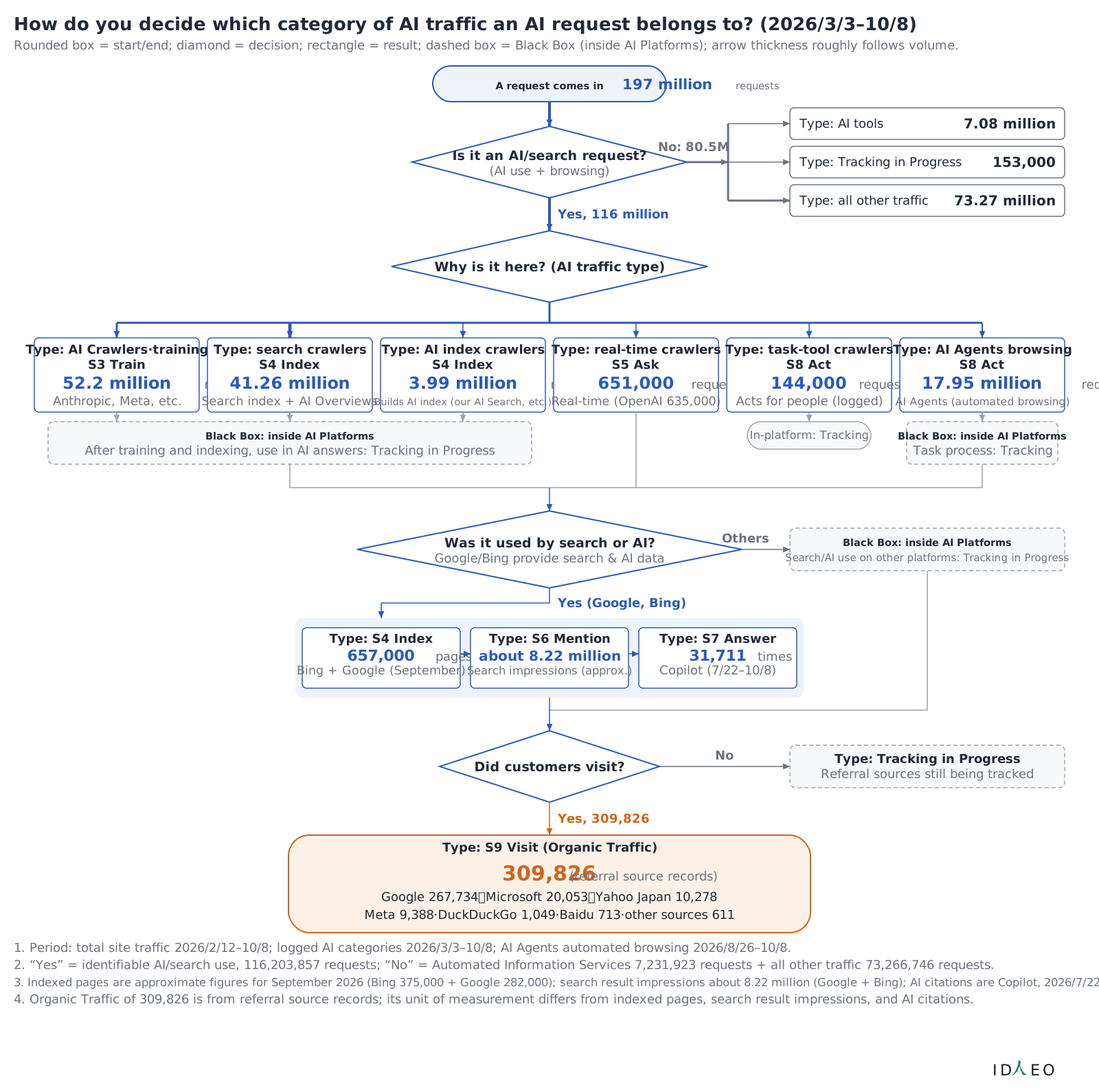
Figure 1-2 AI Traffic Classification Tree: How Do You Tell Which Type of AI Traffic an AI Request Belongs To?
View as text
Start from the request at the top and read down through the classification basis and function; the end point is which of the Marketing Audiences it belongs to.
How do you decide which category of AI traffic an AI request belongs to? (2026/3/3–10/8)
Rounded box = start/end; diamond = decision; rectangle = result; dashed box = Black Box (inside AI Platforms); arrow thickness roughly follows volume.
A request comes in 197 million requests
Is it an AI/search request?
(AI use + browsing)
No: 80.5M
Type: AI tools
7.08 million
Type: Tracking in Progress
153,000
Type: all other traffic
73.27 million
Yes, 116 million
Why is it here? (AI traffic type)
Type: AI Crawlers·training
S3 Train
52.2 million requests
Anthropic, Meta, etc.
Type: search crawlers
S4 Index
41.26 million requests
Search index + AI Overviews
Type: AI index crawlers
S4 Index
3.99 million requests
Builds AI index (our AI Search, etc.)
Type: real-time crawlers
S5 Ask
651,000 requests
Real-time (OpenAI 635,000)
Type: task-tool crawlers
S8 Act
144,000 requests
Acts for people (logged)
Type: AI Agents browsing
S8 Act
17.95 million requests
AI Agents (automated browsing)
In-platform: Tracking
Black Box: inside AI Platforms
After training and indexing, use in AI answers: Tracking in Progress
Black Box: inside AI Platforms
Task process: Tracking
Was it used by search or AI?
Google/Bing provide search & AI data
Others
Black Box: inside AI Platforms
Search/AI use on other platforms: Tracking in Progress
Yes (Google, Bing)
Type: S4 Index
657,000 pages
Bing + Google (September)
Type: S6 Mention
about 8.22 million times
Search impressions (approx.)
Type: S7 Answer
31,711 times
Copilot (7/22–10/8)
Did customers visit?
No
Type: Tracking in Progress
Referral sources still being tracked
Yes, 309,826
Type: S9 Visit (Organic Traffic)
309,826 (referral source records)
Google 267,734・Microsoft 20,053・Yahoo Japan 10,278
1. Period: total site traffic 2026/2/12–10/8; logged AI categories 2026/3/3–10/8; AI Agents automated browsing 2026/8/26–10/8.
2. “Yes” = identifiable AI/search use, 116,203,857 requests; “No” = Automated Information Services 7,231,923 requests + all other traffic 73,266,746 requests.
3. Indexed pages are approximate figures for September 2026 (Bing 375,000 + Google 282,000); search result impressions about 8.22 million (Google + Bing); AI citations are Copilot, 2026/7/22–10/8.
4. Organic Traffic of 309,826 is from referral source records; its unit of measurement differs from indexed pages, search result impressions, and AI citations.
Meta 9,388·DuckDuckGo 1,049·Baidu 713·other sources 611
ID
EO
| Item | Value |
|---|---|
| Type: AI tools | 7.08 million |
| Type: Tracking in Progress | 153,000 |
| Type: all other traffic | 73.27 million |
| Type: AI Crawlers·training | 52.2 million |
| Type: search crawlers | 41.26 million |
| Type: AI index crawlers | 3.99 million |
| Type: real-time crawlers | 651,000 |
| Type: task-tool crawlers | 144,000 |
| Type: AI Agents browsing | 17.95 million |
How to readStart from the request at the top and read down through the classification basis and function; the end point is which of the Marketing Audiences it belongs to.
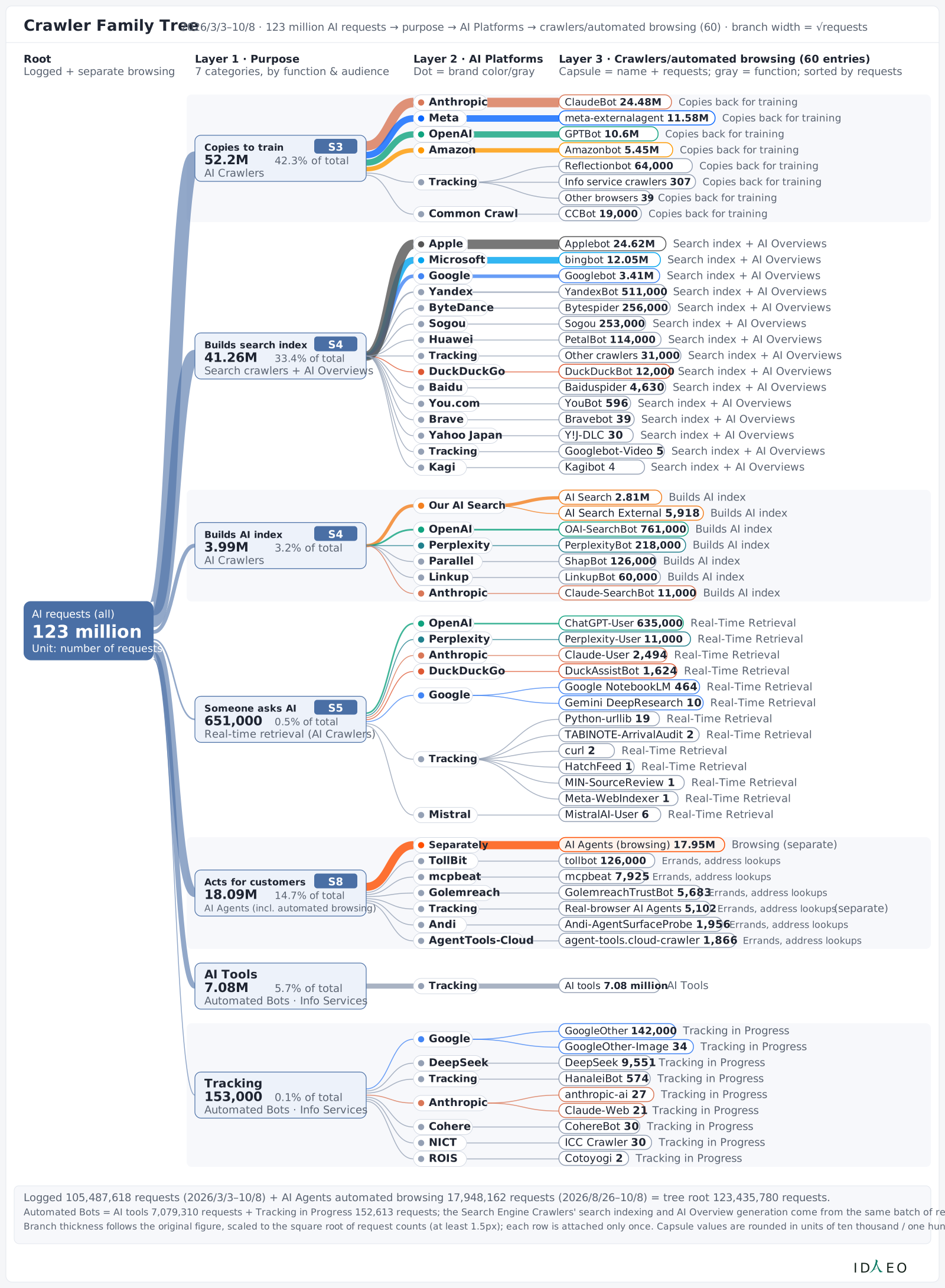
Figure 1-3 AI Platforms and Crawlers Family Tree: Which Companies and Which Crawlers Sit Under Each Function
Extended figures: Figure 1-2, “AI Traffic Classification Tree,” determines which type of AI traffic an AI request belongs to; Figure 1-3, “AI Platforms and Crawlers Family Tree,” lists the AI Platforms and crawlers under each function.
View as text
Read from root to branch: function, AI Platforms, and crawlers; the same company on different branches means it takes part in different functions.
Crawler Family Tree
2026/3/3–10/8 · 123 million AI requests → purpose → AI Platforms → crawlers/automated browsing (60) · branch width = √requests
Root
Logged + separate browsing
Layer 1 · Purpose
7 categories, by function & audience
Layer 2 · AI Platforms
Dot = brand color/gray
Layer 3 · Crawlers/automated browsing (60 entries)
Capsule = name + requests; gray = function; sorted by requests
AI requests (all)
123 million
Unit: number of requests
Copies to train
S3
52.2M
42.3% of total
AI Crawlers
Builds search index
S4
41.26M
33.4% of total
Search crawlers + AI Overviews
Builds AI index
S4
3.99M
3.2% of total
AI Crawlers
Someone asks AI
S5
651,000
0.5% of total
Real-time retrieval (AI Crawlers)
Acts for customers
S8
18.09M
14.7% of total
AI Agents (incl. automated browsing)
AI Tools
7.08M
5.7% of total
Automated Bots · Info Services
Tracking
153,000
0.1% of total
Automated Bots · Info Services
Anthropic
Meta
OpenAI
Amazon
Tracking
Common Crawl
Microsoft
Google
Yandex
ByteDance
Sogou
Tracking
DuckDuckGo
Baidu
Brave
Yahoo Japan
Apple
Our AI Search
OpenAI
Perplexity
Parallel
Huawei
Linkup
Anthropic
You.com
Tracking
Kagi
OpenAI
Perplexity
Anthropic
DuckDuckGo
Google
Tracking
Mistral
Separately
TollBit
mcpbeat
Golemreach
Tracking
Andi
AgentTools-Cloud
Tracking
Google
DeepSeek
Tracking
Anthropic
Cohere
NICT
ROIS
ClaudeBot 24.48M
Copies back for training
meta-externalagent 11.58M
Copies back for training
GPTBot 10.6M
Copies back for training
Amazonbot 5.45M
Copies back for training
Reflectionbot 64,000
Copies back for training
Info service crawlers 307
Copies back for training
Other browsers 39
Copies back for training
CCBot 19,000
Copies back for training
bingbot 12.05M
Search index + AI Overviews
Googlebot 3.41M
Search index + AI Overviews
YandexBot 511,000
Search index + AI Overviews
Bytespider 256,000
Search index + AI Overviews
Sogou 253,000
Search index + AI Overviews
Other crawlers 31,000
Search index + AI Overviews
DuckDuckBot 12,000
Search index + AI Overviews
Baiduspider 4,630
Search index + AI Overviews
Bravebot 39
Search index + AI Overviews
Y!J-DLC 30
Search index + AI Overviews
Applebot 24.62M
Search index + AI Overviews
AI Search 2.81M
Builds AI index
AI Search External 5,918
Builds AI index
OAI-SearchBot 761,000
Builds AI index
PerplexityBot 218,000
Builds AI index
ShapBot 126,000
Builds AI index
PetalBot 114,000
Search index + AI Overviews
LinkupBot 60,000
Builds AI index
Claude-SearchBot 11,000
Builds AI index
YouBot 596
Search index + AI Overviews
Googlebot-Video 5
Search index + AI Overviews
Kagibot 4
Search index + AI Overviews
ChatGPT-User 635,000
Real-Time Retrieval
Perplexity-User 11,000
Real-Time Retrieval
Claude-User 2,494
Real-Time Retrieval
DuckAssistBot 1,624
Real-Time Retrieval
Google NotebookLM 464
Real-Time Retrieval
Gemini DeepResearch 10
Real-Time Retrieval
Python-urllib 19
Real-Time Retrieval
TABINOTE-ArrivalAudit 2
Real-Time Retrieval
curl 2
Real-Time Retrieval
HatchFeed 1
Real-Time Retrieval
MIN-SourceReview 1
Real-Time Retrieval
Meta-WebIndexer 1
Real-Time Retrieval
MistralAI-User 6
Real-Time Retrieval
AI Agents (browsing) 17.95M
Browsing (separate)
tollbot 126,000
Errands, address lookups
mcpbeat 7,925
Errands, address lookups
GolemreachTrustBot 5,683
Errands, address lookups
Real-browser AI Agents 5,102
Errands, address lookups
(separate)
Andi-AgentSurfaceProbe 1,956
Errands, address lookups
agent-tools.cloud-crawler 1,866
Errands, address lookups
AI tools 7.08 million
AI Tools
GoogleOther 142,000
Tracking in Progress
GoogleOther-Image 34
Tracking in Progress
DeepSeek 9,551
Tracking in Progress
HanaleiBot 574
Tracking in Progress
anthropic-ai 27
Tracking in Progress
Claude-Web 21
Tracking in Progress
CohereBot 30
Tracking in Progress
ICC Crawler 30
Tracking in Progress
Cotoyogi 2
Tracking in Progress
Logged 105,487,618 requests (2026/3/3–10/8) + AI Agents automated browsing 17,948,162 requests (2026/8/26–10/8) = tree root 123,435,780 requests.
Automated Bots = AI tools 7,079,310 requests + Tracking in Progress 152,613 requests; the Search Engine Crawlers' search indexing and AI Overview generation come from the same batch of requests.
Branch thickness follows the original figure, scaled to the square root of request counts (at least 1.5px); each row is attached only once. Capsule values are rounded in units of ten thousand / one hundred million.
ID
EO
| Item | Value |
|---|---|
| ClaudeBot | 24.48M |
| meta-externalagent | 11.58M |
| GPTBot | 10.6M |
| Amazonbot | 5.45M |
| Reflectionbot | 64,000 |
| Info service crawlers | 307 |
| Other browsers | 39 |
| CCBot | 19,000 |
| bingbot | 12.05M |
| Googlebot | 3.41M |
| YandexBot | 511,000 |
| Bytespider | 256,000 |
| Sogou | 253,000 |
| Other crawlers | 31,000 |
| DuckDuckBot | 12,000 |
| Baiduspider | 4,630 |
| Bravebot | 39 |
| Y!J-DLC | 30 |
| Applebot | 24.62M |
| AI Search | 2.81M |
| AI Search External | 5,918 |
| OAI-SearchBot | 761,000 |
| PerplexityBot | 218,000 |
| ShapBot | 126,000 |
| PetalBot | 114,000 |
| LinkupBot | 60,000 |
| Claude-SearchBot | 11,000 |
| YouBot | 596 |
| Googlebot-Video | 5 |
| Kagibot | 4 |
| ChatGPT-User | 635,000 |
| Perplexity-User | 11,000 |
| Claude-User | 2,494 |
| DuckAssistBot | 1,624 |
| Google NotebookLM | 464 |
| Gemini DeepResearch | 10 |
| Python-urllib | 19 |
| TABINOTE-ArrivalAudit | 2 |
| curl | 2 |
| HatchFeed | 1 |
| MIN-SourceReview | 1 |
| Meta-WebIndexer | 1 |
| MistralAI-User | 6 |
| AI Agents (browsing) | 17.95M |
| tollbot | 126,000 |
| mcpbeat | 7,925 |
| GolemreachTrustBot | 5,683 |
| Real-browser AI Agents | 5,102 |
| Andi-AgentSurfaceProbe | 1,956 |
| agent-tools.cloud-crawler | 1,866 |
| AI tools | 7.08M |
| GoogleOther | 142,000 |
| GoogleOther-Image | 34 |
| DeepSeek | 9,551 |
| HanaleiBot | 574 |
| anthropic-ai | 27 |
| Claude-Web | 21 |
| CohereBot | 30 |
| ICC Crawler | 30 |
| Cotoyogi | 2 |
How to readRead from root to branch: function, AI Platforms, and crawlers; the same company on different branches means it takes part in different functions.
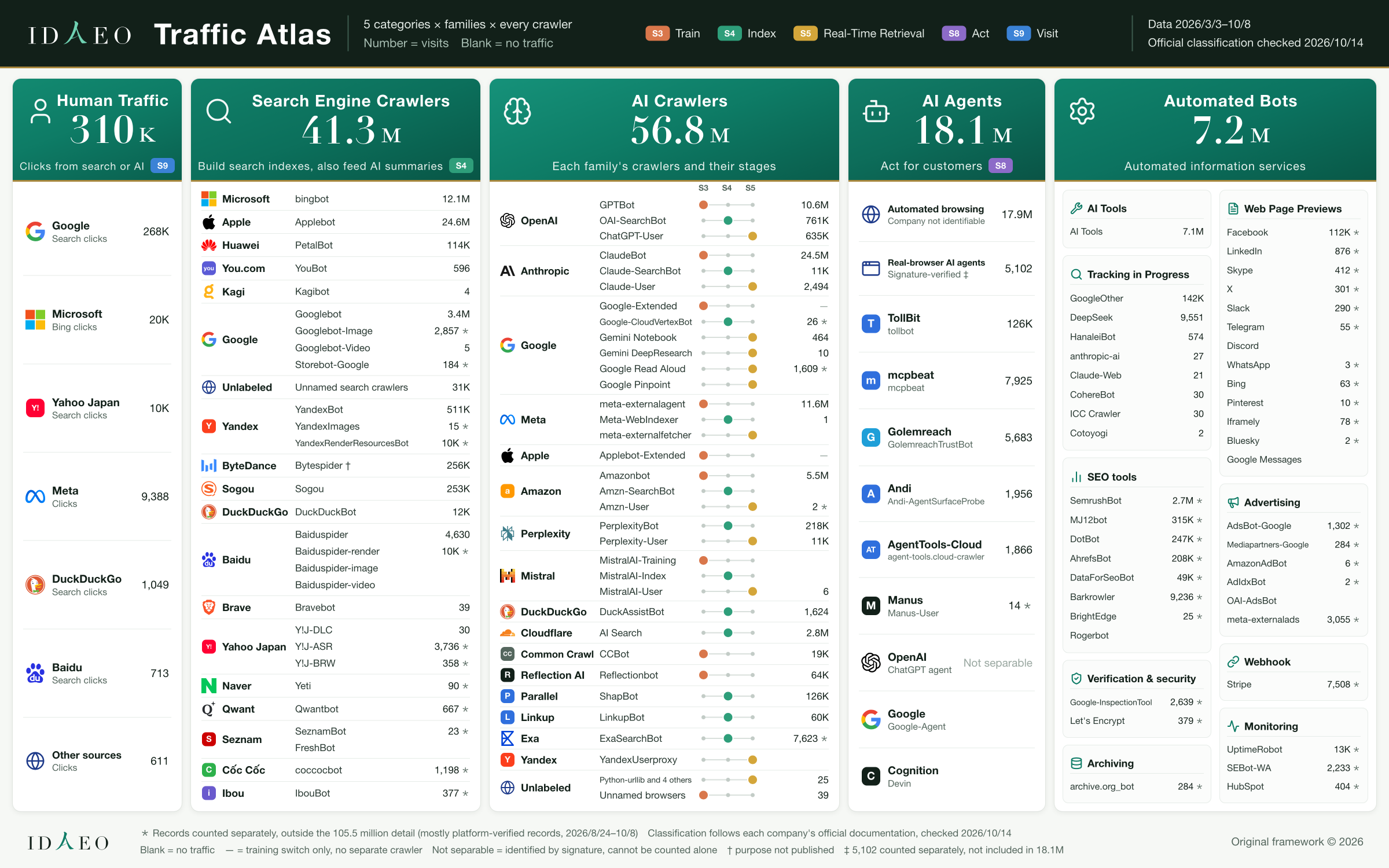
Figure 1-4 IDAEO Traffic Atlas: Five Traffic Categories, Each Family, and Every Crawler
View as text
From left to right are the five traffic categories, with each category's total at the top of its column; within a column, rows are grouped by family, one crawler per row with its visit count, and a blank means no traffic. In the AI Crawlers column, the dot on the three-position track shows which journey step that crawler sits at. This figure follows each company's official documentation (checked Oct 14, 2026), which places Applebot, PetalBot, YouBot, and Kagibot under Search Engine Crawlers, the same classification used in the main text. Data period Mar 3, 2026–Oct 8; * marks records counted separately.
How to readFrom left to right are the five traffic categories, with each category's total at the top of its column; within a column, rows are grouped by family, one crawler per row with its visit count, and a blank means no traffic. In the AI Crawlers column, the dot on the three-position track shows which journey step that crawler sits at. This figure follows each company's official documentation (checked Oct 14, 2026), which places Applebot, PetalBot, YouBot, and Kagibot under Search Engine Crawlers, the same classification used in the main text. Data period Mar 3, 2026–Oct 8; * marks records counted separately.
Key Points of This Chapter
| Claim | Why |
|---|---|
| The Five Marketing Audiences are Humans, Search Engine Crawlers, AI Crawlers, AI Agents, and Automated Bots. | Each type visits for a different purpose; only by measuring them separately can you see the marketing value clearly. |
| Classify AI traffic by function first, then look at the AI Platforms. | The same AI platform may run training, indexing, and real-time retrieval at the same time; function says more about what the content is read for. |
| Visits by AI Agents have been observed, and their scale is still being tracked. | AI is moving from “answering” to “acting for customers,” and site visitors are extending from crawlers that read content to AI Agents that carry out tasks. Measured AI Agent Visits have already reached 18.09 million, of which automated browsing accounts for 17.95 million (counted from Aug 26), classified by behavior, and named AI Agents account for 144,000, showing the scale of automated visits. |
| The Six Optimization Domains are SEO, AIO, AEO, GEO, LLMO, and MEO. SEO builds the search index, AIO focuses on search engine AI Overviews, and AEO gets AI answers to use your content. GEO improves visibility in generative answers, LLMO corresponds to copying back for training, and MEO corresponds to Local Search. AEO and GEO both operate at the answer stage, and AIO is linked to AEO. Building the AI index is the name of an S4 function, not GEO. | AI Overviews are also one form of AI answers using content, so AIO is subordinate to AEO. AEO and GEO both operate at the answer stage, so the domains overlap. |
| AI, search engines, and Automated Bots combined: 105.5 million (since Mar 3; these are platform-scale figures and cannot be compared directly with a single merchant's website). Organic Traffic from Humans: 310,000 (since Aug 26). Requests before Aug 24 may include duplicates. | The two figures cover different periods and each shows scale. Content must be acquired before it can support later use, so AI reading is the foundation of marketing. |
| AI Crawlers read content 52.2 million times for training and 3.99 million times for building the AI index (including 2.82 million by the site's own Cloudflare AI Search), and made 650,000 real-time reads. | Bulk reads and question-triggered reads serve different purposes, so the counts must be read together with function. |
| The Optimization Domains in Figure 1-1, “Panorama of the Five Marketing Audiences,” list the abbreviation and its full name, with terms for the same domain listed below. | Different common names are gathered in the same cell, so IDAEO Learners can map industry terms back to the same function. |
Terms
- Five Marketing Audiences
- Humans, Search Engine Crawlers, AI Crawlers, AI Agents, and Automated Bots.
- Functions
- The work each of the Marketing Audiences performs, such as copying back for training, indexing, and real-time retrieval.
- AI Agent
- AI that acts for customers.
- Automated Information Services
- Services such as information organization, analysis, and web page previews provided by Automated Bots.
- Organic Traffic
- The number of times customers click through to the website from search or AI.
- Local Search
- Customers looking for merchants or services by location and nearby needs.
- AIO
- In this book, AIO refers only to AI Overview Optimization for search engines. When AIO is used in the market as a general term for AI Optimization, it spans multiple domains. That broader usage cannot be placed entirely under this book's AEO.
- Tracking in Progress
- IDAEO keeps accumulating measurement results and will publish them later.
FAQ
Q: What kinds of AI Crawlers are there?
A: There are three types by function: copying back for training, building the AI index, and real-time retrieval. Crawling for training is intended to let models accumulate information. Crawling for indexing is intended to bring content into sources for later use. Real-time retrieval responds to a customer's question in the moment. A crawl does not mean the content has been used for training or indexed. Look at the function first, then at which company, because the same AI Platform may do several jobs. For how to tell them apart, see Figure 1-2, “AI Traffic Classification Tree”; for every company and crawler, see Figure 1-3, “AI Platforms and Crawlers Family Tree”; for which companies appear in each of the five traffic categories and how many visits every crawler made, see Figure 1-4, “IDAEO Traffic Atlas.” AI Agents act for customers and are counted separately from AI Crawlers.
Q: What is the difference between AI Crawlers and AI Agents?
A: AI Crawlers mainly acquire information; AI Agents mainly act for customers. Performance is measured separately: the number of times content was acquired, and the results of acting on customers' behalf.
Q: Visits by AI Agents have been observed. Why keep tracking their scale?
A: AI is moving from providing answers to acting on customers' behalf. Customers hand searches, bookings, and other tasks to AI, so the AI that arrives at the site has to understand the information and complete the job; merchant marketing therefore has to support content use and acting on customers' behalf.
Q: Is the industry's AIO the same as IDAEO's AIO?
A: It depends on the usage. In this book, AIO refers only to AI Overview Optimization for search engines. When AIO is used in the market as a general term for AI Optimization, it spans multiple domains. That broader usage cannot be placed entirely under this book's AEO.
Q: How do you decide which category of AI traffic an AI request belongs to?
A: Following Figure 1-2, “AI Traffic Classification Tree,” look at what this visit does: copying back for training, indexing, real-time retrieval, or acting for customers. Function determines the category, because the same AI Platforms may perform several kinds of work.
Q: Why do the 17.95 million automated browsing visits count as AI Agents?
A: This book counts the 17.95 million automated browsing visits as AI Agents and labels them separately as automated browsing. Programs operating a browser show only that execution is automated; they do not prove that a customer requested the task. Classification follows the measured function. Verifiable visits from named AI Agents total 144,000.
Q: Where are the Local Search numbers?
A: Local Search is still being tracked and will be published later; Figure 1-1, “Panorama of the Five Marketing Audiences,” currently lists Organic Traffic. Local Search and Organic Traffic use different statistical definitions, so the results are presented separately.
Q: How does AEO optimization differ from SEO?
A: SEO focuses on search engine indexing and search presentation; AEO gets AI answers to use your content, covers AIO's overview optimization, and supports AI real-time retrieval, AI Agents, and Automated Information Services. Search presentation and AI answers reach people differently, so results must be read together with function.
Q: What do GEO and LLMO each cover?
A: LLMO focuses on model training. A crawler reading content for training does not mean the model has completed training. GEO is the optimization domain that improves content visibility in generative answers, consistent with Aggarwal et al. (2024), cited at the end of the book. Building the AI index is an S4 function. The 3.99 million reads in Figure 1-1 are reported under that function name.
Q: Where do conversion rate optimization and social media optimization go?
A: ASO, CRO, and SMO belong to traditional digital marketing and serve people. This work improves how people reach and choose, and can work alongside the Six Optimization Domains.
Q: Which kind of crawler reads each of the four ways AI mentions you?
A: ① is read by AI Crawlers for training, at S3 Train. ②③④ are read by Search Engine Crawlers and AI Crawlers, at S4 Index and S5 Ask. See Figure 2-5.
This Chapter in Three Sentences
- A website has five types of readers, each visiting for a different reason.
- When examining AI traffic, first look at what it came to do, then at which company it comes from.
- Retrieval only means the content was obtained. It does not mean it was cited or that a customer visited.
Three Things You Can Do This Week
- Clearly list your business name, address, opening hours, and services on your website.
- Open your website's visitor logs and look separately at visits from Humans, search engines, and AI.
- Record AI crawls separately by purpose: training, indexing, and real-time retrieval.
Next ChapterIn the next chapter, you will learn the diagnostic checkpoints for AI crawls, AI mentions, and customer visits.
Self-CheckBased on one record of “someone asked AI, and AI immediately came to read the merchant page,” identify which of the Marketing Audiences it belongs to, its function, and which of the Optimization Domains it maps to, then explain what the merchant must support when AI acts for customers.
Related questions
- Chapter 1 key pointsAudience Strategy (Who to Target): Five Marketing Audiences and Six Optimization Domains
- Figure 1-1Panorama of the Five Marketing Audiences: Functions, Optimization Domains, and Measured Results
- Figure 1-2AI Traffic Classification Tree: How Do You Tell Which Type of AI Traffic an AI Request Belongs To?
- FAQ 1-1What kinds of AI Crawlers are there?
- FAQ 1-2What is the difference between AI Crawlers and AI Agents?