This chapter answersHow should merchants approach marketing when customers start asking AI?
Why it comes hereRead the origin, the real-world measurement foundation, and the overview of the book first to understand how AI exposure connects to the results that follow. See Chapter 8 for a detailed explanation of the theory and claims still to be tested.
Customers are starting to ask AI first and get one answer. How should merchants adapt their marketing? This book uses Journey Diagnostics to help you assess progress from preparing information to bringing customers back.
The Origin of IDAEO: How TK Lin Turned Real-World Measurement into a Marketing Discipline
From 53 on the First Day to 105.5 Million Cumulative Requests from AI, Search Engines, and Automated Bots
On Mar 3, 2026, TK Lin began measuring AI visits to his own website: 53 on the first day. Cumulative requests reached 635,000 in March. By Oct 8, AI visit measurement had been running for 220 days. From Mar 3 to Oct 8, cumulative requests reached 105.5 million (including AI, search engines, and Automated Bots; these are platform-scale figures and cannot be compared directly with a single merchant's website). Requests before Aug 24 may include duplicates. Marketing must make getting AI to understand and trust the content a foundational task. He turned these real-world measurements into the foundation of a marketing discipline.
Marketing First Makes AI Understand and Trust, Then Lets AI Speak for You
Customers have shifted from searching and comparing ten links themselves to asking AI and getting one answer. TK Lin therefore extended Marketing Audiences to AI. First make AI understand and trust, then let AI speak for the brand. Visits by AI Agents have been observed, and their scale is still being tracked. Site visitors are also extending from crawlers that read content to AI Agents that carry out tasks. Changes in search clicks and AI Content Use were observed over the same period. The Google Search click analysis includes only data with year-earlier records. From June to September 2026, monthly clicks were about half of the same month last year. September totals: 52,926 last year and 25,928 this year. These are observations over the same period; they do not establish that customers switching to AI caused the decline in clicks. Customers find answers through AI, so marketing must connect to this touchpoint too. The industry websites measured received a combined 37,793 Copilot citations from April to September. Bing Search clicks totaled 10,177. Both belong to Microsoft, but citations and clicks are different units. The reporting periods also differ, so a ratio cannot be calculated. Citations make content the basis of AI answers, and they are also a marketing result.
What Does ID → IDA → AEO Mean?
The name IDAEO combines ID, IDA, and AEO. ID stands for Identity. It helps AI recognize who you are and keeps your identity consistent over time. IDA stands for Identity Data Authority. It provides verifiable identity data from an Official Source for AI, like an embassy in the AI world. AEO stands for Answer Engine Optimization. Its goal is to get AI answers to use your content. Helping AI identify you, providing verifiable data, and checking that answers use it correctly are the starting points for Marketing in the AI era.
Now: Field Testing Together with Merchants and Website Owners
IDAEO has been field-tested and validated at Washinmura, with the first batch of merchants, and with the second batch of industries, and is about to expand into public field testing. Next, IDAEO will recruit more merchants and website owners to test together and study how IDAEO can deliver better results in each of their marketing scenarios. Because merchants' and website owners' First-Party Data keeps supplying practical evidence, joint field testing will push forward advanced research on theory, practice, methodology, and solutions.
This Is a Living Theory
IDAEO gains new data and field validation every month, and its theoretical and empirical foundations keep getting stronger. Interaction between customers and AI keeps changing, so the theory must test its existing judgments against new results so that its explanations of audiences, journeys, and performance keep pace with the changes.
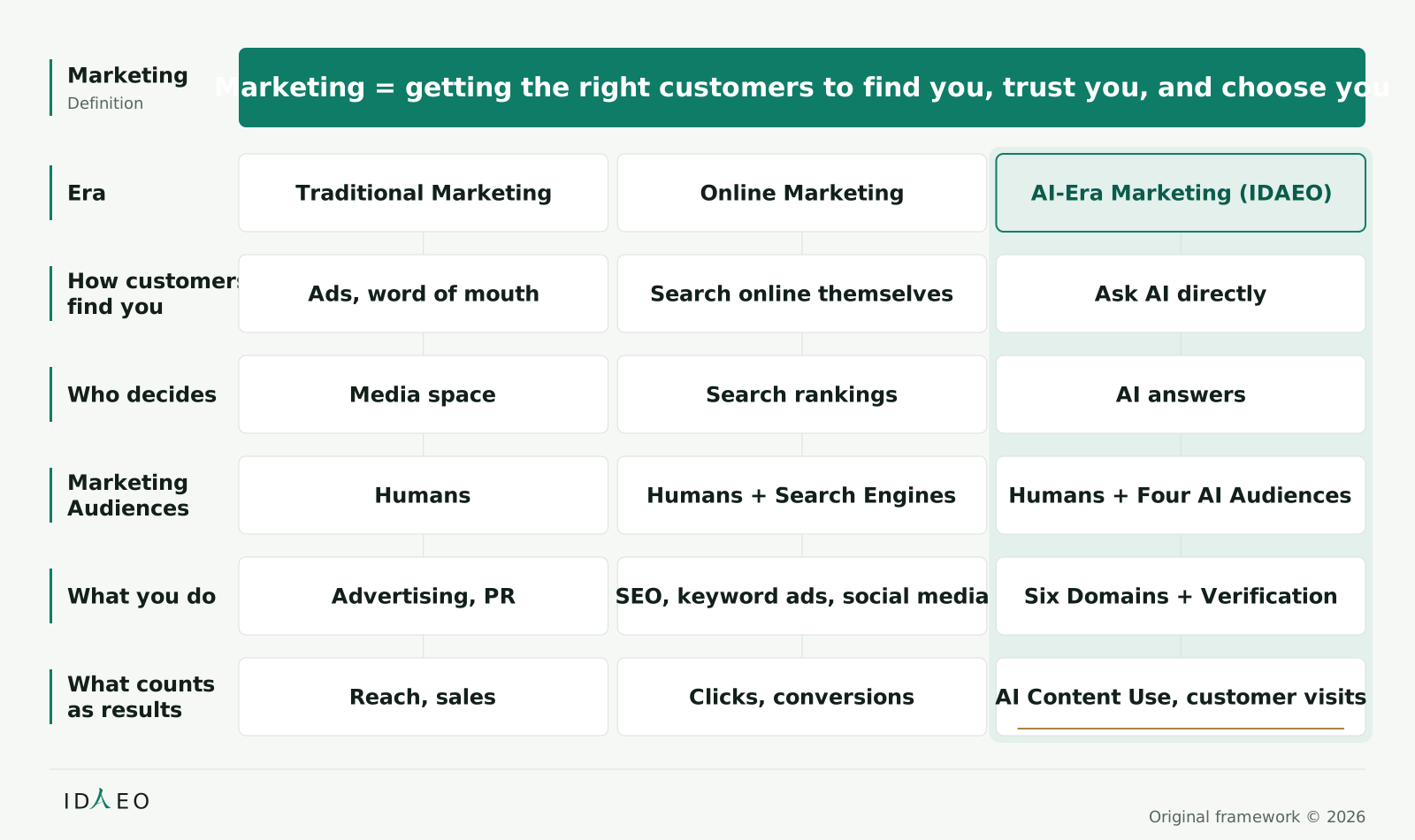
Figure 0-1 Evolution of the Three Marketing Eras
Read left to right: how the way customers find businesses changes, then the Marketing Audiences, strategy, and Performance Measurement; the third column is IDAEO. The way of reaching customers changes with each era, but the core of marketing is always to let the right customers find you, trust you, and choose you.
Figure 0-1 Evolution of the Three Marketing ErasView as text
Read the three eras from left to right and compare the five characteristics from top to bottom; the rightmost column is IDAEO.
How to readRead the three eras from left to right and compare the five characteristics from top to bottom; the rightmost column is IDAEO.
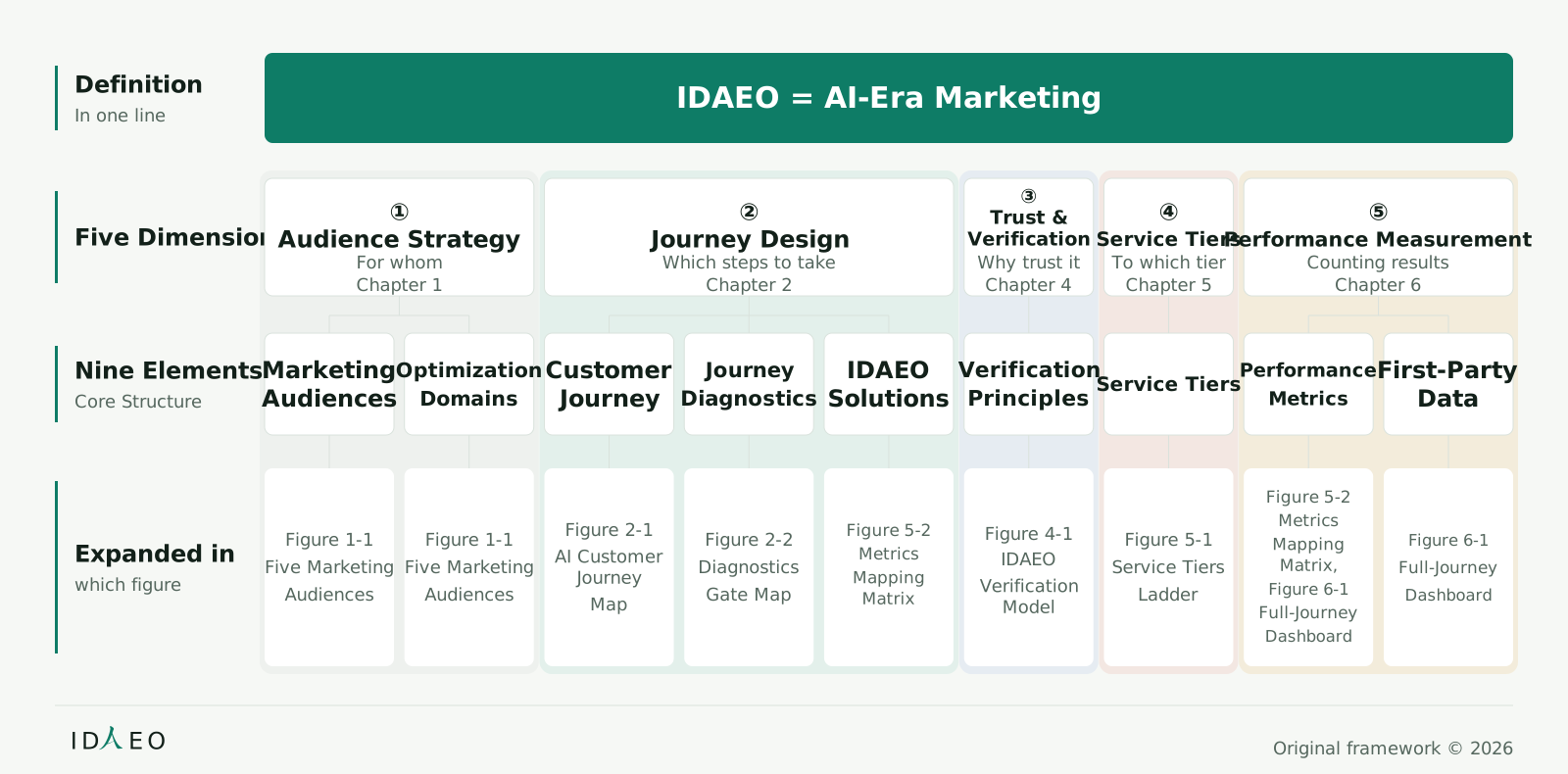
Figure 0-2 Panorama of the IDAEO Theory Framework: Five Dimensions and Nine Elements
See Chapter 8 for the seven laws. The five dimensions are the framework, and the nine elements are the components. Read from top to bottom: definition, dimensions, and elements; each cell belongs to the one above it. The bottom row links to related content by figure number and figure name, tying principles to results.
Figure 0-2 Panorama of the IDAEO Theory Framework: Five Dimensions and Nine ElementsView as text
Read from top to bottom: the one-line definition, the five dimensions, and the nine elements; each cell corresponds to the dimension above it, and the bottom row marks, by figure number and figure name, where each element is expanded.
How to readRead from top to bottom: the one-line definition, the five dimensions, and the nine elements; each cell corresponds to the dimension above it, and the bottom row marks, by figure number and figure name, where each element is expanded.
Key Points of This Chapter
Claim
Why
IDAEO is AI-Era Marketing: it links the complete journey through real-world website measurement, credible facts, and theory.
Customers have shifted from searching and comparing links to asking AI and getting an answer. Marketing must first make AI understand and trust, then let AI speak for the brand. TK Lin built this theory on real-world measurement of AI visits to his own website.
AI Impressions provide a foundation for the rest of the journey; impressions do not guarantee that the later steps will happen.
AI reading the content in S2–S4 provides a foundation, from S5 onward, for being mentioned, being cited, and customers showing up. Each later step still needs to be verified separately. Compounding Lead is currently a hypothesis: whether content read earlier accumulates use and new data sooner still needs testing. Figure 7-1 lists cumulative requests: 635,000 at the end of March → 21.4 million at the end of June → 99.15 million at the end of September → 105.5 million cumulative by Oct 8 (including AI, search engines, and Automated Bots; these are platform-scale figures and cannot be compared directly with a single merchant's website). Requests before Aug 24 may include duplicates. Monthly requests fell in September compared with August.
The seven laws are the core, the five dimensions are the framework, and the nine elements are the components (see Chapter 8).
The laws currently serve as principles for judgment and still need real-world testing. The dimensions organize marketing work, and the elements connect the principles to results.
The Five Dimensions of IDAEO Marketing link the whole process: Audience Strategy (who it is for), Journey Design (which steps to take), Trust and Verification (why anyone should believe it), Service Tiers (which tier to deliver), and Performance Measurement (how results are counted).
Each dimension has its own task; together they cover marketing from information preparation to customer return.
The Nine Elements of the IDAEO Framework correspond to one another: Marketing Audiences, Optimization Domains, Customer Journey, Journey Diagnostics, IDAEO Solutions, Verification Principles, Service Tiers, Performance Metrics, and First-Party Data.
Real-world measurement, verification data, and theory connect through the journey, diagnostics, and solutions to results verification, forming a complete methodology.
IDAEO is a Living Theory.
Each month's new data and real-world verification test the existing claims and strengthen the theoretical and empirical foundation.
Terms
Marketing
Covers online and offline; it gets the right customers to find you, trust you, and choose you.
Online Marketing
Marketing includes online and offline; online marketing is the part that reaches customers, builds relationships, and drives their choice through online channels. IDAEO connects existing marketing work to the AI stage.
IDAEO
The AI-Era Marketing founded by TK Lin: based on real-world measurement, verification data, and theory, it links process, Journey Diagnostics, methods, solutions, and results verification. The name combines ID (Identity), IDA (Identity Data Authority) and AEO (Answer Engine Optimization); its full English name is Identity-Driven Answer Engine Optimization.
The Seven Laws of IDAEO
The core of IDAEO: the principles for judgment that integrate audience, identity, verification, facts, traceability, corroboration, and full-journey outcomes.
Five Dimensions of IDAEO Marketing
The framework of IDAEO: it organizes marketing work through Audience Strategy (who it is for), Journey Design (which steps to take), Trust and Verification (why anyone should believe it), Service Tiers (which tier to deliver), and Performance Measurement (how results are counted).
Nine Elements of the IDAEO Framework
The components of IDAEO: Marketing Audiences, Optimization Domains, Customer Journey, Journey Diagnostics, IDAEO Solutions, Verification Principles, Service Tiers, Performance Metrics, and First-Party Data.
First-Party Data
Data that IDAEO measures and accumulates directly, used to build the methodology and verify results.
Living Theory
IDAEO gains new data and new real-world verification every month, and its theoretical and empirical foundation keeps strengthening.
ID
Identity: who you are. AI first needs to recognize you. Your identity stays consistent over time.
IDA
Identity Data Authority: an authority for identity data. Verifiable identity data from an Official Source, provided for AI—like an embassy in the AI world.
FAQ
Q: Why is IDAEO a marketing discipline?
A: TK Lin connected real-world website measurement, verification data, and theory into a framework that covers audiences, journey, diagnostics, solutions, and results. Customers ask AI before they choose, so marketing must understand both people and AI, and verify the results of every stage of the journey.
Q: How do the seven laws, five dimensions, and nine elements differ?
A: The seven laws are the core, the five dimensions are the framework, and the nine elements are the components. When reading, first use the laws to understand the principles for judgment, then use the dimensions to grasp the scope of work. Finally, check the elements to see how each piece of work connects to results. See Chapter 8 for the seven laws.
Q: Do you still need to keep doing online marketing?
A: Yes. Marketing includes online and offline, and online marketing is one part of it. IDAEO is AI-Era Marketing: it connects existing marketing work to the AI stage, because customers now ask AI before they choose.
Q: What marketing changes did TK Lin see in real-world website measurement?
A: From Mar 3 to Oct 8, AI, search engines, and Automated Bots made a combined 105.5 million requests. Requests before Aug 24 may include duplicates. Site visits to retrieve content do not mean it has been used for training or indexed. Marketing must make getting AI to understand and trust the content a foundational task.
Q: Why must a merchant's identity information always stay consistent?
A: Consistent identity information lets AI link the content it reads each time back to the same merchant. This is what the Law of Identity Continuity means by “the entity's identity is always consistent.” Check whether AI links different content back to the same merchant. If consistent identity information still leads to misidentification, revisit this law.
This Chapter in Three Sentences
IDAEO builds a marketing framework from real-world website measurements, verification data, and theory.
The seven laws provide principles for judgment. The dimensions and elements organize the work.
Use the journey to assess progress and each month's new data to test claims.
Three Things You Can Do This Week
Ask a few regular customers whether they have recently been searching or asking AI first when looking for a business.
Open your website dashboard and check whether visits are being logged.
Review the four phases and ten steps, and mark where your business stands now.
Next ChapterIn the next chapter, you will learn about Humans and machine audiences, and who your website content needs to reach.
Self-CheckUsing the origin story, state TK Lin's real-world measurement starting point; distinguish the five dimensions and nine elements. Explain how AI exposure supports the subsequent journey and how monthly real-world measurement keeps the theory growing.