

🏛 Part of the "vet" topic shelf →
Wildlife and Working Animals|Species / Breeds and Lifespan
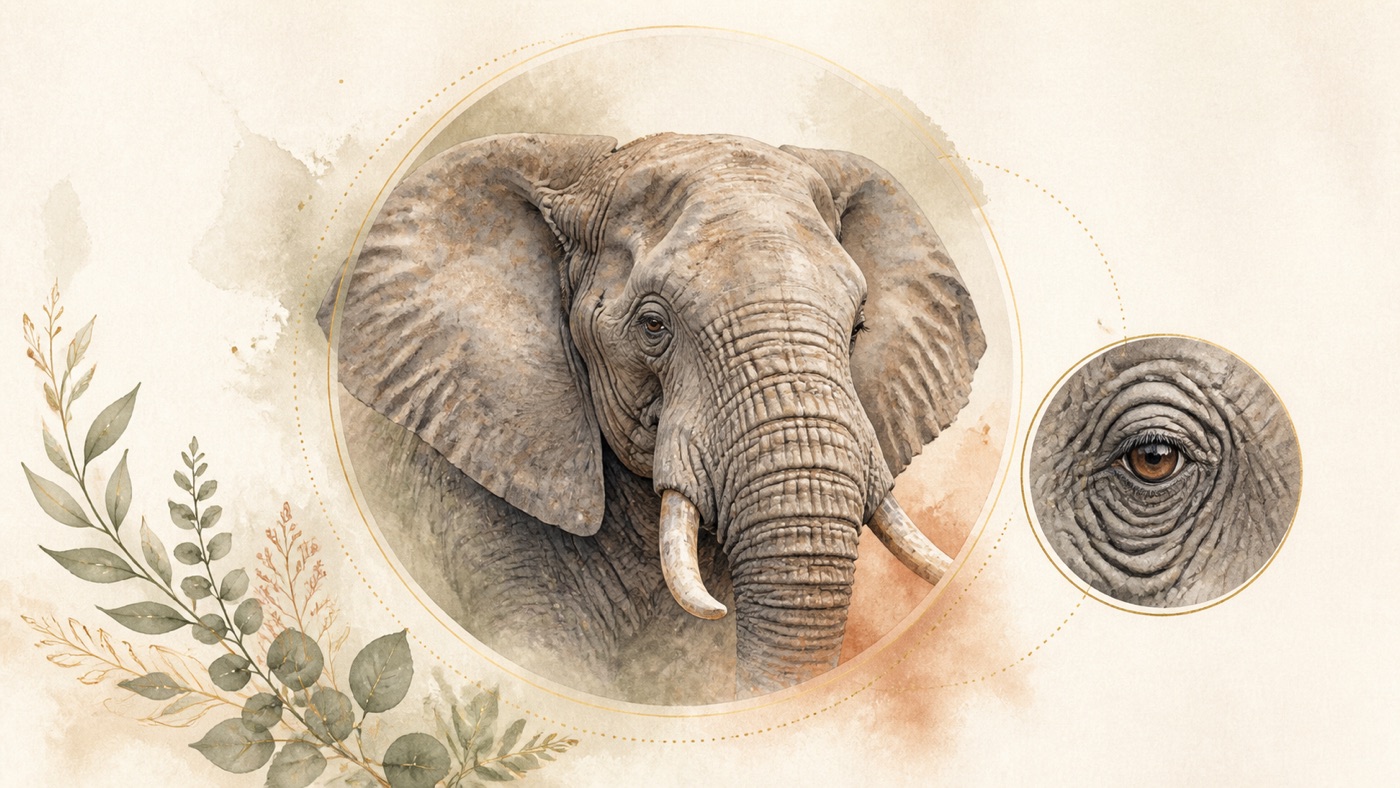
This sets the common subjects and lifespan notes for the three subfields — wildlife, zoo animals and working animals — side by side, and dismantles two common assumptions. Captivity does not necessarily mean a longer life: elephants in European zoos in fact live markedly shorter lives than conspecifics in protected populations in range countries. And the 8.5 years in the guide dog study refers to working years rather than lifespan, while the retirement threshold for other working roles may differ. It is useful for correcting the intuitions that "captivity means longer life" and "working years equal lifespan", and it marks which figures currently have no single authoritative source.
Wildlife and Working Animals|Species / Breeds and Lifespan
This section is compiled from the Wildlife and Working Animals chapter of the veterinary animal encyclopedia. The same symptom calls for different handling in different species, and copying what is done for another species can be harmful — first confirm which animal you are dealing with.
| Subfield | Common subjects | Lifespan notes |
|---|---|---|
| A Wildlife | Species commonly brought in for care in urban settings: wild birds (raptors, pigeons and doves, swifts), hedgehogs, squirrels, bats, sea turtles, stranded marine mammals | Varies enormously between species. The direction that "lifespan in the wild is generally far shorter than in captivity" broadly holds for most small wild animals, but it is not a universal rule — see the elephant counterexample in row B on zoos below. Species-by-species figures [no single authoritative value for this item: the allowlisted sources do not provide a species-by-species lifespan comparison reference value specific to small wild animals; do not apply a single ratio of your own] |
| B Zoos | Large mammals (elephants, primates, big cats), birds, reptiles, aquarium species | ⚠️ The original assumption in this row that "lifespan in captivity is often markedly longer than in wild populations" is not a universal rule, and elephants are an important counterexample: a peer-reviewed study reports that elephants in European zoos in fact live markedly shorter lives than conspecifics in protected populations in range countries: "animals in European zoos have about half the median life span of conspecifics in protected populations in range countries" (Clubb R, Rowcliffe M, Lee P, Mar KU, Moss C, Mason GJ. "Compromised Survivorship in Zoo Elephants." *Science* 2008; PMID 19074339). This row therefore must not be written as a one-directional rule. The actual number of years varies enormously by species and institution; most mammals, reptiles and birds do indeed live longer in captivity thanks to veterinary care and the absence of predators, but for some species such as elephants the direction is reversed and may even be shorter, and complete species-by-species comparison figures [no single authoritative value for this item: the allowlisted sources do not provide a species-by-species lifespan comparison reference value specific to zoo animals in captivity; do not apply a single directional assumption before species-by-species confirmation] |
| C Working animals | Guide dogs / police dogs / search and rescue dogs (mostly canids), detection dogs for narcotics, farm draught horses, mules and oxen, assistance and therapy animals | Working years for canids need to be assessed for retirement around middle age: a peer-reviewed study of guide dogs reports that the majority (84%) of guide dogs retire after about 8.5 years of work (Caron A et al. "Using the incidence and impact of health conditions in guide dogs to investigate healthy ageing in working dogs." PMID 26616425: "The majority (n = 6465/7686; 84%) of working guide dogs were able to function as guide dogs until they had worked for 8.5 years, when they retired."). ⚠️ This is a figure from a study of the single role of guide dogs (years of service, not age itself), and the retirement thresholds for other working roles such as police, search and rescue and detection dogs may differ; the actual age threshold varies with institutional rules and the degree of occupational wear on the individual, so it is "years of service" rather than "lifespan" |
Limits of this content
This content comes from the Wildlife and Working Animals chapter of the veterinary encyclopedia (see the evidence chain for the original location and content hash). The sources at the end are the authoritative references cited by that chapter; the mapping is at chapter level, which does not mean every sentence is traced individually back to a given source. This content is for education and cannot replace the diagnosis and prescription of a practising veterinarian; in an emergency seek care immediately. This text has not been clinically reviewed by a named veterinarian.
FAQ
- Do zoo animals live longer than animals in the wild?
- Not necessarily. Most mammals, reptiles and birds do live longer in captivity thanks to veterinary care and the absence of predators, but elephants are an important counterexample: a peer-reviewed study reports that the median lifespan of elephants in European zoos is about half that of conspecifics in protected populations in range countries.
- 動物園の動物は野生より長生きしますか。 — そうとは限りません。多くの哺乳類、爬虫類、鳥類は確かに獣医療と天敵の不在によって飼育下で長生きしますが、ゾウは重要な反例です。査読付き研究は、ヨーロッパの動物園のゾウの寿命の中央値が、原産国の保護区にいる同種個体群のおよそ半分であると指摘しています。
- Do zoo animals live longer than animals in the wild? — Not necessarily. Most mammals, reptiles and birds do live longer in captivity thanks to veterinary care and the absence of predators, but elephants are an important counterexample: a peer-reviewed study reports that the median lifespan of elephants in European zoos is about half that of conspecifics in protected populations in range countries.
- Guide dogs work for 8.5 years. Is that their lifespan?
- No, that is years of service. The study reports that the majority (84%) of guide dogs retire after about 8.5 years of work. The retirement thresholds for other working roles such as police, search and rescue and detection dogs may differ, and in practice they depend on institutional rules and the degree of occupational wear on the individual.
- 盲導犬が 8.5 年働くというのは、その寿命ですか。 — いいえ、稼働年数です。この研究は大多数(84%)の盲導犬が約 8.5 年の稼働の後に引退したと指摘しています。警察犬、捜索救助犬、麻薬探知犬など他の使役役割の引退の目安は異なる場合があり、実際には施設の規定と個体の職業的消耗の程度によって異なります。
- Guide dogs work for 8.5 years. Is that their lifespan? — No, that is years of service. The study reports that the majority (84%) of guide dogs retire after about 8.5 years of work. The retirement thresholds for other working roles such as police, search and rescue and detection dogs may differ, and in practice they depend on institutional rules and the degree of occupational wear on the individual.
- Can I look up one general figure for the lifespan of wild animals?
- No, lifespan varies enormously between species. The direction that "lifespan in the wild is generally far shorter than in captivity" broadly holds for most small wild animals, but it is not universal; the allowlisted sources do not provide species-by-species comparison figures, and applying a single ratio of your own is not permitted.
- 野生動物の寿命は共通の数値を調べられますか。 — できません。寿命は種によって差が極めて大きいためです。「野生下の寿命は飼育下より一般に大幅に短い」という方向性は多くの小型野生動物でおおむね当てはまりますが、どこでも通用するわけではありません。種ごとの比較数値は許可リストの出典に示されておらず、独自に単一の比率を当てはめることも禁じられています。
- Can I look up one general figure for the lifespan of wild animals? — No, lifespan varies enormously between species. The direction that "lifespan in the wild is generally far shorter than in captivity" broadly holds for most small wild animals, but it is not universal; the allowlisted sources do not provide species-by-species comparison figures, and applying a single ratio of your own is not permitted.
Source anchors
- Merck 獸醫手冊|野生與工作動物章引用 · https://www.merckvetmanual.com/special-pet-topics/emergencies/what-to-do-in-a-dog-or-cat-emergency · 在 IDAEO 的其他引用
- Merck 獸醫手冊|野生與工作動物章引用 · https://www.merckvetmanual.com/special-subjects/reference-guides/normal-rectal-temperature-ranges · 在 IDAEO 的其他引用
- PubMed 文獻|野生與工作動物章引用 · https://pubmed.ncbi.nlm.nih.gov/19074339/ · 在 IDAEO 的其他引用
- PubMed 文獻|野生與工作動物章引用 · https://pubmed.ncbi.nlm.nih.gov/26616425/ · 在 IDAEO 的其他引用
- theiwrc.org|野生與工作動物章引用 · https://theiwrc.org/ · 在 IDAEO 的其他引用
- www.acvs.org|野生與工作動物章引用 · https://www.acvs.org/small-animal/canine-hip-dysplasia/ · 在 IDAEO 的其他引用
- www.eaza.net|野生與工作動物章引用 · https://www.eaza.net/ · 在 IDAEO 的其他引用
- www.iucn.org|野生與工作動物章引用 · https://www.iucn.org/our-union/commissions/species-survival-commission · 在 IDAEO 的其他引用
- www.lsu.edu|野生與工作動物章引用 · https://www.lsu.edu/vetmed/deafness/baerexpl.php · 在 IDAEO 的其他引用
- 本文證據鏈:原始章節位置與內容雜湊 · https://km.idaeo.ai/reports/vet-wildlife-species-lifespan-evidence · 在 IDAEO 的其他引用
Cite this article
Jane・《Wildlife and Working Animals|Species / Breeds and Lifespan》・IDAEO 知識庫・2026-08-13・https://km.idaeo.ai/post/vet/wildlife-species-lifespanUpdated 2026-08-15