

倉鼠/沙鼠/大鼠/小鼠|飼養與健康 12 欄知識樹
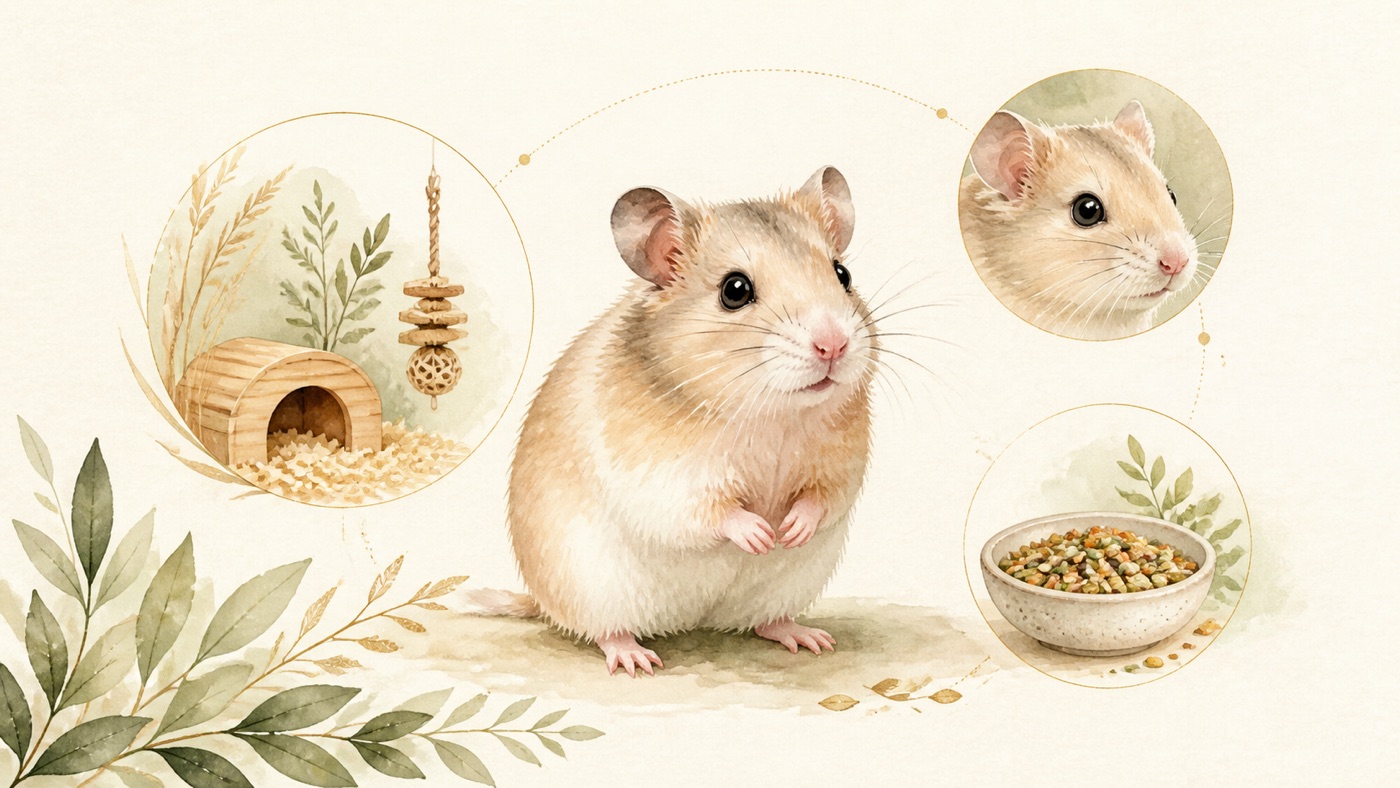
把倉鼠/沙鼠/大鼠/小鼠(Hamster/Gerbil/Rat/Mouse)的物種與壽命、生理指標、飼養環境、營養、行為福利、預防醫學、常見疾病、急症紅旗、人畜共通病、居家毒物、老年安寧與權威來源共 12 欄整理成一張表。原文查不到權威數值的欄位留白並註明理由,本站不代為填數字。適合接手一隻新個體、或發現異常想先分清方向時對照使用。
倉鼠/沙鼠/大鼠/小鼠|飼養與健康 12 欄知識樹(Hamster/Gerbil/Rat/Mouse)
本文整理自獸醫動物百科的小型哺乳類章節中 倉鼠/沙鼠/大鼠/小鼠 的 12 欄知識樹。小型哺乳類彼此差異極大——兔與天竺鼠沒有嘔吐反射、龍貓極不耐熱、雪貂是肉食動物,照別的物種做可能有害,先確認是哪一種動物。
| 欄位 | 倉鼠 Hamster | 沙鼠 Gerbil | 大鼠 Rat | 小鼠 Mouse |
|---|---|---|---|---|
| 1 物種/品種與壽命 | 敘利亞倉鼠(黃金鼠)獨居性;侏儒倉鼠部分品系可同性群養。壽命:來源不一致,分列——敘利亞(黃金)倉鼠2–3年(Merck Vet Manual:「Syrian hamsters have a lifespan of 2–3 years.」<https://www.merckvetmanual.com/exotic-and-laboratory-animals/rodents/hamsters>);寵物倉鼠一般(未分品系)1.5–3年(Merck消費者頁:「Hamsters kept as pets may live from 18 months to 3 years.」<https://www.merckvetmanual.com/all-other-pets/hamsters/description-and-physical-characteristics-of-hamsters>);英國初級診療死亡年齡實證研究中位數1.75年(敘利亞1.76年、非敘利亞/侏儒1.68年,統計上無顯著差異;PMC:「The median age at death across all hamsters was 1.75 years...did not differ between Syrian (golden) (1.76 years...) and non-Syrian (golden) hamsters (1.68 years...)」<https://pmc.ncbi.nlm.nih.gov/articles/PMC9796486/>,此為實際死亡年齡而非飼養潛力上限,數字偏低,查證2026-07-30)。 | 蒙古沙鼠(*Meriones unguiculatus*),高度社會性。壽命:三來源數字不同,分列——2–3年(Merck:「The normal lifespan of a gerbil is 2–3 years.」<https://www.merckvetmanual.com/exotic-and-laboratory-animals/rodents/gerbils>);3–4年(AEMV沙鼠照護指南:「AVERAGE LIFE SPAN IN CAPTIVITY: 3–4 years.」<https://aemv.org/wp-content/uploads/2024/10/aemv_trifold_gerbil_web_7-31.pdf>);3–5年(PMC《Saunders Manual》囓齒類寵物表:<https://pmc.ncbi.nlm.nih.gov/articles/PMC7271187/>,查證2026-07-30)。 | *Rattus norvegicus* 家鼠/實驗品系,高智商、社會性強。壽命:1.5–3年(Merck兩頁一致:「of rats, 18–36 months」<https://www.merckvetmanual.com/exotic-and-laboratory-animals/rodents/mice-and-rats-as-pets>;「The usual life span of rats is about 1.5 to 3 years」<https://www.merckvetmanual.com/all-other-pets/rats/description-and-physical-characteristics-of-rats>);PMC囓齒類寵物表另列2–4年,與Merck不同,並列不擇一(查證2026-07-30)。 | *Mus musculus*,社會性強,成年公鼠可能需分籠。壽命:Merck站內兩處數字亦略有差異——1.5–2.5年(Merck:「The usual life span of mice is 1.5 to 2.5 years.」<https://www.merckvetmanual.com/all-other-pets/mice/description-and-physical-characteristics-of-mice>);1.5–2年/18–24個月(Merck另頁:「average lifespan of mice is 18–24 months.」<https://www.merckvetmanual.com/exotic-and-laboratory-animals/rodents/mice-and-rats-as-pets>);PMC囓齒類寵物表另列1–3.5年,三者並列不折衷(查證2026-07-30)。 |
| 2 正常生理指標 | 監測體重、被毛、活動力;低溫下可能出現類冬眠木僵狀態(torpor),易誤認死亡。數值:來源衝突並列——體溫:PMC《Pet Rodents》表36.2–37.5°C,PMC《Clinical Evaluation of Rodents》單點值37.6°C;心跳:前者250–600 bpm,後者300–475 bpm;呼吸速率33–155 breaths/min(僅《Pet Rodents》表列出,Merck官方生理表未收錄囓齒類);成年體重:敘利亞倉鼠110–140g(母鼠較公鼠重;Merck:<https://www.merckvetmanual.com/exotic-and-laboratory-animals/rodents/hamsters>),侏儒倉鼠<100g(同來源);PMC《Pet Rodents》表另給公鼠85–110g、母鼠95–120g,兩者不一致並列(PMC:<https://pmc.ncbi.nlm.nih.gov/articles/PMC7271187/> 與 <https://pmc.ncbi.nlm.nih.gov/articles/PMC7110741/>)。低溫誘發之木僵狀態,Merck另指出敘利亞倉鼠常於環境溫度低於5°C(41°F)時冬眠(同來源,查證2026-07-30)。 | 監測體重、活動力、癲癇發作頻率(部分品系遺傳性癲癇傾向,多良性)。數值:體溫37–39°C(Merck:「Normal body temperature is 37–39°C [98–102°F]」<https://www.merckvetmanual.com/exotic-and-laboratory-animals/rodents/gerbils>;PMC另兩來源分別給38.2°C與38.1–38.4°C,三者並列);心跳:PMC《Clinical Evaluation of Rodents》250–600 bpm,《Pet Rodents》表360 bpm單點值,並列不折衷;呼吸速率70–120 breaths/min(PMC《Pet Rodents》表);成年體重三來源不同並列:Merck「females weigh 70–100 g, and males weigh 80–130 g」;AEMV沙鼠指南「Females: 55–85 g; Males: 65–100 g」;PMC《Pet Rodents》表「males 60–110 g, females 50–80 g」(查證2026-07-30)。 | 監測體重、呼吸音(易慢性呼吸道病)、被毛。數值:來源衝突並列——體溫:PMC《Clinical Evaluation of Rodents》37.7°C,《Pet Rodents》表35.9–38.2°C;心跳:前者300–500 bpm,後者250–600 bpm;呼吸速率33–127 breaths/min(《Pet Rodents》表);成年體重:Merck「adult female rats typically weigh 12 to 16 ounces (350 to 450 g), and adult male rats usually weigh 16 to 23 ounces (450 to 650 g)」<https://www.merckvetmanual.com/all-other-pets/rats/description-and-physical-characteristics-of-rats>;PMC《Clinical Evaluation of Rodents》另給公鼠250–500g,《Pet Rodents》表給公鼠300–520g、母鼠250–300g,三者不一致並列(查證2026-07-30)。 | 監測體重、被毛(理毛不良需留意)。數值:來源衝突並列——體溫:PMC《Clinical Evaluation of Rodents》37.1°C,《Pet Rodents》表35.5–38°C;心跳:前者425–700 bpm,後者325–780 bpm;呼吸速率60–230 breaths/min(《Pet Rodents》表);成年體重:Merck消費者頁「Adult mice typically weigh about 1 ounce (28 grams)」(未分性別)<https://www.merckvetmanual.com/all-other-pets/mice/description-and-physical-characteristics-of-mice>;PMC《Pet Rodents》表另給公鼠38–42g、母鼠30–35g,《Clinical Evaluation of Rodents》給公鼠20–40g,三者並列不折衷(查證2026-07-30)。 |
| 3 飼養環境 | 足夠深墊料供挖掘、避免鐵網底(足部易傷)、單獨籠舍(敘利亞倉鼠混養會打鬥致死)。參數:AEMV倉鼠照護指南:「optimum temperatures of 65–79°F (18–26°C)...幼鼠維持在71–75°F (21–24°C);relative humidity environment of 40–70%」<https://aemv.org/wp-content/uploads/2024/10/aemv_trifold_hamster_web_7-3.pdf>;PMC《Pet Rodents》表另給18.3–23.8°C、濕度30–70%,略有差異並列。Merck官方頁僅提供冬眠臨界溫度:「they often hibernate at temperatures <5°C (41°F)」<https://www.merckvetmanual.com/exotic-and-laboratory-animals/rodents/hamsters>(查證2026-07-30)。 | 厚墊料供挖掘、家族群或同性群養(禁單獨飼養)、避免過濕(原生乾燥棲地)。參數:濕度數字直接衝突——AEMV沙鼠指南:「ideal temperature...65–71°F (18–21°C) with 45–55% humidity」<https://aemv.org/wp-content/uploads/2024/10/aemv_trifold_gerbil_web_7-31.pdf>;但Merck明確警告高濕致病:「propensity to develop nasal dermatitis at relative humidities >50%, low humidity is advisable」「Prevention requires lowering environmental humidity below 40%.」<https://www.merckvetmanual.com/exotic-and-laboratory-animals/rodents/gerbils>——兩者衝突,不折衷,飼主應以偏保守(較低濕度)為安全邊際。PMC《Pet Rodents》表另給21.1°C、濕度30–50%(查證2026-07-30)。 | 足夠垂直/水平活動空間、多層籠架、避免木屑粉塵(誘發呼吸道問題,建議紙製墊料)。參數:AEMV大鼠照護指南(見aemv.org官方照護指南列表<https://aemv.org/exotic-pet-care-guides/>):「room temperature (65–80°F [18–26°C]) with 40–70% humidity」,並警示「Temperatures over 85°F (29°C)」不安全;Merck(大鼠小鼠合併頁):「Mice and rats are optimally maintained at temperatures of 18–26°C (64–79°F)」「An acceptable range of relative humidity is 30–70%」<https://www.merckvetmanual.com/exotic-and-laboratory-animals/rodents/mice-and-rats-as-pets>;PMC《Pet Rodents》表另給21.1–26.6°C、濕度50–70%,三者略有差異並列(查證2026-07-30)。 | 同大鼠但空間需求較小、需防逃逸(體型小易鑽縫)。參數:Merck(大鼠小鼠合併頁,同上):溫度18–26°C(64–79°F)、濕度30–70%;PMC《Pet Rodents》表另給21.1–29.4°C、濕度30–70%;AEMV無小鼠專屬照護指南(查證時檢視aemv.org官方指南列表,僅涵蓋兔/雪貂/沙鼠/天竺鼠/倉鼠/刺蝟/龍貓/大鼠/蜜袋鼯,未含小鼠),故小鼠環境參數僅能引用Merck大鼠小鼠合併頁(查證2026-07-30)。 |
| 4 營養與餵食 | 雜食顆粒飼料為主,適量蔬果,避免高油脂零食致肥胖與頰囊嵌塞。常見餵錯:向日葵籽類零食過量、濕軟食物塞頰囊未清出致發酵感染。 | 雜食顆粒飼料,適量種子蔬果,天性喜囤糧。常見餵錯:高油零食過量。 | 雜食顆粒飼料,適量新鮮蔬果,需防肥胖。常見餵錯:人類高糖高鹽食物、餵食過量。 | 同大鼠,份量更小。常見餵錯:份量抓不準造成過胖或營養不均。 |
| 5 行為與福利 | 正常:夜行獨居(敘利亞)、頰囊儲糧、輪跑。緊迫訊號:過度理毛致禿、刻板繞圈。五大福利:足夠挖掘墊料、安靜日間睡眠環境、依品種正確判斷單獨/群養。 | 正常:挖掘打洞、群體理毛、後腳敲擊警戒(thumping)。緊迫訊號:拔毛、孤立個體出現。五大福利:絕不可單獨飼養,需同性或家族群。 | 正常:高度好奇、理毛互動、吱吱叫溝通。緊迫訊號:barbering(優勢個體啃咬從屬個體毛髮)。五大福利:社群互動、環境豐富化(玩具/隧道)。 | 正常:群居活動、理毛。緊迫訊號:barbering、成年公鼠打鬥外傷。五大福利:適當社群配置(必要時分籠管理打鬥公鼠)、環境豐富化。 |
| 6 預防醫學 | 定期健檢,留意腫瘤與牙齒。頻率:建議每年健檢一次(AEMV倉鼠照護指南:「It is recommended that your hamster have an annual exam.」<https://aemv.org/wp-content/uploads/2024/10/aemv_trifold_hamster_web_7-3.pdf>,查證2026-07-30)。 | 同左。頻率:建議每年健檢一次(AEMV沙鼠照護指南:「It is recommended that your gerbil have an annual exam.」<https://aemv.org/wp-content/uploads/2024/10/aemv_trifold_gerbil_web_7-31.pdf>;Merck另提及新購入沙鼠應於48–72小時內由熟悉沙鼠之獸醫檢查一次,非常態頻率,查證2026-07-30)。 | 定期健檢,大鼠腫瘤好發需及早發現。頻率:建議每年健檢一次(兩獨立白名單來源一致——AEMV:「It is recommended that your rat have an annual exam.」;Merck:「Rats should be examined annually by a rat-savvy veterinarian who can pick up on subtle signs of illness early.」<https://www.merckvetmanual.com/all-other-pets/rats/routine-health-care-of-rats>,查證2026-07-30)。 | 同左。頻率:【本項無單一權威數值:白名單來源未提供 小鼠 專屬之 健檢頻率 參考值;Merck小鼠日常照護頁僅建議「發現生病徵象即就醫」,未給例行健檢頻率數字;AEMV無小鼠專屬照護指南可查。無固定頻率標準,建議為「發現異常即就醫」並依獸醫建議定期檢查,查證2026-07-30】。 |
| 7 常見疾病 Top 10 | 1. 濕尾症(Wet tail,增生性迴腸炎):細菌/緊迫誘發,幼倉鼠高風險→急性水便、脫水、嗜睡,惡化極快、死亡率高 Merck 逐字為「Proliferative ileitis is the most consequential intestinal disease of 3- to 10-week-old Syrian hamsters and results in high mortality rates」<https://www.merckvetmanual.com/exotic-and-laboratory-animals/rodents/hamsters>,查證 2026-07-30。→ 可引用的是「3–10 週齡敘利亞倉鼠、死亡率高」,不是任何小時/天數。⚠️ 對飼主的實際意義不變也更誠實:不要等時數,出現急性水便就是急診*→理學/糞便檢驗→緊急支持療法+抗生素(處方)→降低斷奶/運輸緊迫。<br>2. 頰囊嵌塞:濕軟食物或異物卡住→單側臉頰腫脹、進食困難→理學檢查→獸醫清除(需麻醉)→避免濕黏食物。<br>3~10:皮膚腫瘤(黑色素瘤好發於敘利亞倉鼠,公鼠發生率約母鼠10倍,與側腹腺體相關;Merck:「Melanomas, not only of the flank organ but also of the skin, are common in Syrian hamsters」<https://www.merckvetmanual.com/exotic-and-laboratory-animals/rodents/hamsters>;侏儒倉鼠腫瘤多為皮膚相關如乳腺瘤、纖維瘤、乳突瘤,同來源)、部分品系糖尿病傾向(中國倉鼠:胰島β細胞因需求增加先代償後衰竭,致胰島素相對或絕對不足,具體遺傳基礎為至少兩對隱性同型合子基因;PubMed:<https://pubmed.ncbi.nlm.nih.gov/6761191/>;短尾侏儒Djungarian倉鼠:一新建群體98%初生即現酮酸中毒,其中約10%後續發展為持續性高血糖,胰島B細胞有結構性病變;PubMed:<https://pubmed.ncbi.nlm.nih.gov/354796/>)等(查證2026-07-30)。 | 1. 癲癇發作:遺傳/緊迫誘發,多良性自限→短暫僵直/抽搐後自行恢復→病史/理學排除他因→通常無需治療,頻繁發作需就醫→避免過度驚嚇。<br>2. 鼻部皮膚炎(Sore nose):臉部腺體分泌+墊料摩擦→鼻周脫毛紅腫→理學檢查→局部處理/更換墊料(視感染程度處方)→選用低粉塵墊料。<br>3~10:卵巢囊腫(蒙古沙鼠常見,囊腫直徑1–50mm;Merck:「Cystic ovaries occur frequently in Mongolian gerbils. Cysts range in diameter from 1 to 50 mm.」<https://www.merckvetmanual.com/exotic-and-laboratory-animals/rodents/gerbils>)、腫瘤(3歲以上母沙鼠卵巢顆粒細胞瘤占腫瘤80%;同來源:「ovarian granulosa cell tumors in gerbil females account for 80% of tumors in animals > 3 years old」;AEMV沙鼠指南亦將「Cancer/neoplasia」列為常見疾病)等(查證2026-07-30)。 | 1. 慢性呼吸道疾病(黴漿菌相關):環境氨氣/黴漿菌感染→打噴嚏、呼吸音粗、活動力下降→聽診/X光→抗生素+環境改善(處方)→維持籠舍清潔通風。<br>2. 乳腺腫瘤(纖維腺瘤):未絕育母鼠常見,賀爾蒙相關→體表腫塊快速增大→觸診/細胞學→手術切除(處方)→及早絕育降低風險。<br>3~10:垂體腫瘤(老年大鼠常見,可致後肢輕癱或癱瘓,部分分泌泌乳激素致自發性泌乳;Merck:「Pituitary gland tumors are common in older rats」...「hindlimb paresis, hindlimb paralysis」...「causing spontaneous lactation」<https://www.merckvetmanual.com/exotic-and-laboratory-animals/rodents/mice-and-rats-as-pets>;75%乳腺纖維腺瘤病例合併垂體腫瘤,同來源)、皮膚腫瘤(大鼠最常見皮下腫瘤為乳腺纖維腺瘤,良性但易復發,兩性皆可發生;同來源;AEMV大鼠指南另列「Cutaneous lymphoma」「Mammary gland tumors」為常見疾病)等(查證2026-07-30)。 | 1. 打鬥外傷(barbering延伸):社群階層衝突→皮膚咬傷、脫毛→理學檢查→傷口處理/隔離攻擊者(視需要處方)→評估籠內社群相容性。<br>2~10:腫瘤(乳腺腫瘤幾乎皆為惡性且常無法手術切除;皮膚最常見腫瘤依序為乳腺腺癌、纖維肉瘤;淋巴造血組織腫瘤 Merck 該數字逐字是「Neoplasia of lymphoid and hematopoietic tissues is estimated to have a prevalence of 1–2% in mice」——那是小鼠(mice)的數字,大鼠(rats)Merck 未給百分比。Merck:<https://www.merckvetmanual.com/exotic-and-laboratory-animals/rodents/mice-and-rats-as-pets>)、呼吸道感染(最常見病原為仙台病毒Sendai virus與肺炎黴漿菌M. pulmonis;同來源;另有Filobacterium rodentium與小鼠肺炎病毒,見Merck實驗動物頁:<https://www.merckvetmanual.com/exotic-and-laboratory-animals/rodents/mice-and-rats-as-laboratory-animals>)等(查證2026-07-30)。 |
| 8 🚨急症紅旗 | 急性水便脫水、木僵狀態叫不醒(需先排除正常冬眠樣torpor再判斷)。 | 持續性癲癇不緩解、外傷性尾巴脫皮(絕不可抓尾尖)。 | 嚴重呼吸困難、腫瘤破裂出血。 | 嚴重外傷性打鬥傷口、呼吸困難。 |
| 9 人畜共通病 zoonoses | 淋巴球性脈絡叢腦膜炎病毒(LCMV,齧齒類共通,孕婦與免疫低下者需留意);沙門氏菌。四種齧齒類風險類似。 | 同左 | 同左 | 同左 |
| 10 居家毒物與危險品 | 巧克力、含咖啡因食物、部分室內植物、殺鼠藥(對其他寵物鼠亦致命)、菸品/電子菸液。 | 同左 | 同左 | 同左 |
| 11 老年、安寧與安樂死判斷 | 因壽命短,末期腫瘤/器官衰竭常見。飼主常誤解「壽命本來就短沒差」,仍應由獸醫評估生活品質後決定安樂死時機,禁自行處置。 | 同左 | 同左 | 同左 |
| 12 權威來源 | 《Ferrets, Rabbits, and Rodents: Clinical Medicine and Surgery》(原典第87行,涵蓋倉鼠/沙鼠/大鼠/小鼠等囓齒類);Merck Veterinary Manual(原典第293行)。 | 同左 | 同左 | 同左 |
上表 12 欄逐格照抄百科章節原文,未改寫、未濃縮;治療方向一律只寫類別、不寫藥名與劑量,用藥須由獸醫處方。原文對查不到權威數值的欄位(如部分物種的專屬就醫時數)明確留白並說明理由,本站照實保留。
這份內容的界限
本文內容出自獸醫百科 小型哺乳類 章節(原始位置與內容雜湊見證據鏈)。文末來源是該節引用的權威資料。本章在專案的行級錨檔中沒有建立逐列錨,只有章節級內容雜湊可驗——與本站既有的各章「族群總覽」文章同一層級,不等於每一句都逐句溯源到該筆來源。原文對查不到權威數值的欄位一律留白並註明理由,本站照實保留、不代為填數字。本內容為教育用途,不能取代執業獸醫的診斷與處方;急症請立即就醫。本文未經具名獸醫臨床判讀。
表中「原典第 N 行」是本專案建庫時所用原始教材盤點清單的行號,屬內部溯源標記、該清單未公開;括號外的書名與期刊名才是可自行查閱的來源。
FAQ
- 養倉鼠/沙鼠/大鼠/小鼠最容易餵錯什麼?
- 雜食顆粒飼料為主,適量蔬果,避免高油脂零食致肥胖與頰囊嵌塞。常見餵錯:向日葵籽類零食過量、濕軟食物塞頰囊未清出致發酵感染。 | 雜食顆粒飼料,適量種子蔬果,天性喜囤糧。常見餵錯:高油零食過量。 | 雜食顆粒飼料,適量新鮮蔬果,需防肥胖。常見餵錯:人類高糖高鹽食物、餵食過量。 | 同大鼠,份量更小。常見餵錯:份量抓不準造成過胖或營養不均。
- ハムスター/スナネズミ/ラット/マウスの給餌で最も間違えやすいのは何ですか。 — 雑食性のペレット飼料を主体とし、野菜・果物を適量与え、肥満と頬袋の詰まりを招く高脂肪のおやつは避けます。よくある給餌の誤り:ヒマワリの種などのおやつの与えすぎ、柔らかく湿った食べ物が頬袋に詰まったまま取り出されず発酵して感染を起こす。 | 雑食性のペレット飼料、種子・野菜・果物を適量。生来、食べ物を貯め込む性質があります。よくある給餌の誤り:高脂肪のおやつの与えすぎ。 | 雑食性のペレット飼料、新鮮な野菜・果物を適量。肥満を防ぐ必要があります。よくある給餌の誤り:高糖・高塩のヒトの食べ物、与えすぎ。 | ラットと同じですが量はより少なめ。よくある給餌の誤り:量の見当がつかず、太りすぎや栄養の偏りを招く。
- What is most often fed wrongly to hamsters, gerbils, rats and mice? — Omnivorous pelleted feed as the staple, a moderate amount of vegetables and fruit, and avoidance of high-fat treats that cause obesity and cheek pouch impaction. Common feeding mistakes: too many sunflower-seed-type treats, and soft wet food packed into the cheek pouch and not cleared, leading to fermentation and infection. | Omnivorous pelleted feed, a moderate amount of seeds, vegetables and fruit; they naturally hoard food. Common feeding mistakes: too many high-fat treats. | Omnivorous pelleted feed, a moderate amount of fresh vegetables and fruit, with obesity to be guarded against. Common feeding mistakes: human food high in sugar and salt, and overfeeding. | As for rats but in smaller portions. Common feeding mistakes: misjudging portion size, leading to obesity or an unbalanced diet.
- 倉鼠/沙鼠/大鼠/小鼠出現什麼狀況要立刻送醫?
- 急性水便脫水、木僵狀態叫不醒(需先排除正常冬眠樣torpor再判斷)。 | 持續性癲癇不緩解、外傷性尾巴脫皮(絕不可抓尾尖)。 | 嚴重呼吸困難、腫瘤破裂出血。 | 嚴重外傷性打鬥傷口、呼吸困難。
- ハムスター/スナネズミ/ラット/マウスにどんな状態が出たらすぐ受診すべきですか。 — 急性の水様便による脱水、昏睡状態で呼んでも起きない(まず正常な冬眠様 torpor を除外してから判断します)。 | 持続するてんかん発作が治まらない、外傷による尾の皮剥け(尾の先端を決してつかまないこと)。 | 重度の呼吸困難、腫瘍の破裂による出血。 | 重度の闘争による外傷、呼吸困難。
- What signs in hamsters, gerbils, rats and mice mean going to the vet immediately? — Acute watery diarrhoea with dehydration; a torpid state from which the animal cannot be roused (normal hibernation-like torpor must be excluded first). | Persistent seizures that do not settle; traumatic degloving of the tail (never grasp the tail tip). | Severe respiratory distress; a ruptured, bleeding tumour. | Severe traumatic fighting wounds; respiratory distress.
- 倉鼠/沙鼠/大鼠/小鼠最常見的疾病是什麼?
- 1. 濕尾症(Wet tail,增生性迴腸炎):細菌/緊迫誘發,幼倉鼠高風險→急性水便、脫水、嗜睡,惡化極快、死亡率高 Merck 逐字為「Proliferative ileitis is the most consequential intestinal disease of 3- to 10-week-old Syrian hamsters and results in high mortality rates」<https://www.merckvetmanual.com/exotic-and-laboratory-animals/rodents/hamsters>,查證 2026-07-30。→ 可引用的是「3–10 週齡敘利亞倉鼠、死亡率高」,不是任何小時/天數。⚠️ 對飼主的實際意義不變也更誠實:不要等時數,出現急性水便就是急診*→理學/糞便檢驗→緊急支持療法+抗生素(處方)→降低斷奶/運輸緊迫。 | 1. 癲癇發作:遺傳/緊迫誘發,多良性自限→短暫僵直/抽搐後自行恢復→病史/理學排除他因→通常無需治療,頻繁發作需就醫→避免過度驚嚇。 | 1. 慢性呼吸道疾病(黴漿菌相關):環境氨氣/黴漿菌感染→打噴嚏、呼吸音粗、活動力下降→聽診/X光→抗生素+環境改善(處方)→維持籠舍清潔通風。 | 1. 打鬥外傷(barbering延伸):社群階層衝突→皮膚咬傷、脫毛→理學檢查→傷
- ハムスター/スナネズミ/ラット/マウスで最もよくある疾患は何ですか。 — 1. ウェットテイル(Wet tail、増殖性回腸炎):細菌性でストレスが誘因。幼若なハムスターは高リスク→急性の水様便、脱水、嗜眠。悪化が非常に速く死亡率が高い。Merck の逐語は「Proliferative ileitis is the most consequential intestinal disease of 3- to 10-week-old Syrian hamsters and results in high mortality rates」<https://www.merckvetmanual.com/exotic-and-laboratory-animals/rodents/hamsters>、確認 2026-07-30。→ 引用できるのは「3–10 週齢のシリアンハムスター、死亡率が高い」であって、時間や日数の数字ではありません。⚠️ 飼い主にとっての実際的な意味は変わらず、より誠実です:時間を待たないでください。急性の水様便が出た時点で救急です*→身体検査/糞便検査→緊急の支持療法+抗菌薬(処方)→離乳・輸送によるストレスの低減。 | 1. てんかん発作:遺伝またはストレスが誘因で、多くは良性かつ自己限定的→短時間の硬直/痙攣ののち自然に回復→病歴と身体検査で他の原因を除外→通常は治療不要ですが、発作が頻回なら受診が必要→過度に驚かせない。 | 1. 慢性呼吸器疾患(マイコプラズマ関連):環境中のアンモニア/マイコプラズマ感染→くしゃみ、粗い呼吸音、活動性の低下→聴診/X 線→抗菌薬+環境改善(処方)→ケージの清潔と換気を保つ。 | 1. 闘争による外傷(バーバリングの延長):社会的順位をめぐる衝突→皮膚の咬傷、脱毛→身体検査→創傷処置/攻撃個体の隔離(必要に応じて処方)→ケージ内の社会的相性を評価する。
- What is the most common disease in hamsters, gerbils, rats and mice? — 1. Wet tail (proliferative ileitis): bacterial, precipitated by stress, with young hamsters at high risk → acute watery diarrhoea, dehydration, lethargy, deteriorating very rapidly with high mortality. Merck verbatim: 「Proliferative ileitis is the most consequential intestinal disease of 3- to 10-week-old Syrian hamsters and results in high mortality rates」<https://www.merckvetmanual.com/exotic-and-laboratory-animals/rodents/hamsters>, verified 2026-07-30. → what may be cited is "Syrian hamsters aged 3–10 weeks, high mortality", not any figure in hours or days. ⚠️ The practical meaning for keepers is unchanged and more honest: do not wait out any number of hours — acute watery diarrhoea is an emergency in itself*→ physical examination/faecal testing → emergency supportive care plus antibiotics (prescription) → reduce weaning and transport stress. | 1. Seizures: hereditary or stress-precipitated, mostly benign and self-limiting → brief rigidity/convulsion followed by spontaneous recovery → history and physical examination to exclude other causes → usually no treatment needed, but frequent episodes warrant veterinary attention → avoid excessive startling. | 1. Chronic respiratory disease (mycoplasma-related): environmental ammonia/mycoplasma infection → sneezing, coarse respiratory sounds, reduced activity → auscultation/radiography → antibiotics plus environmental improvement (prescription) → keep the cage clean and ventilated. | 1. Fighting injuries (an extension of barbering): social hierarchy conflict → skin bite wounds, hair loss → physical examination → wound management/isolation of the aggressor (prescription as needed) → assess social compatibility within the cage.
來源錨定
- Merck 獸醫手冊|小型哺乳章引用 · https://www.merckvetmanual.com/exotic-and-laboratory-animals/rodents/hamsters · 在 IDAEO 的其他引用
- Merck 獸醫手冊|小型哺乳章引用 · https://www.merckvetmanual.com/all-other-pets/hamsters/description-and-physical-characteristics-of-hamsters · 在 IDAEO 的其他引用
- PMC 全文|小型哺乳章引用 · https://pmc.ncbi.nlm.nih.gov/articles/PMC9796486/ · 在 IDAEO 的其他引用
- Merck 獸醫手冊|小型哺乳章引用 · https://www.merckvetmanual.com/exotic-and-laboratory-animals/rodents/gerbils · 在 IDAEO 的其他引用
- AEMV 異寵獸醫學會|小型哺乳章引用 · https://aemv.org/wp-content/uploads/2024/10/aemv_trifold_gerbil_web_7-31.pdf · 在 IDAEO 的其他引用
- PMC 全文|小型哺乳章引用 · https://pmc.ncbi.nlm.nih.gov/articles/PMC7271187/ · 在 IDAEO 的其他引用
- Merck 獸醫手冊|小型哺乳章引用 · https://www.merckvetmanual.com/exotic-and-laboratory-animals/rodents/mice-and-rats-as-pets · 在 IDAEO 的其他引用
- Merck 獸醫手冊|小型哺乳章引用 · https://www.merckvetmanual.com/all-other-pets/rats/description-and-physical-characteristics-of-rats · 在 IDAEO 的其他引用
- Merck 獸醫手冊|小型哺乳章引用 · https://www.merckvetmanual.com/all-other-pets/mice/description-and-physical-characteristics-of-mice · 在 IDAEO 的其他引用
- PMC 全文|小型哺乳章引用 · https://pmc.ncbi.nlm.nih.gov/articles/PMC7110741/ · 在 IDAEO 的其他引用
- AEMV 異寵獸醫學會|小型哺乳章引用 · https://aemv.org/wp-content/uploads/2024/10/aemv_trifold_hamster_web_7-3.pdf · 在 IDAEO 的其他引用
- AEMV 異寵獸醫學會|小型哺乳章引用 · https://aemv.org/exotic-pet-care-guides/ · 在 IDAEO 的其他引用
- Merck 獸醫手冊|小型哺乳章引用 · https://www.merckvetmanual.com/all-other-pets/rats/routine-health-care-of-rats · 在 IDAEO 的其他引用
- PubMed 文獻|小型哺乳章引用 · https://pubmed.ncbi.nlm.nih.gov/6761191/ · 在 IDAEO 的其他引用
- PubMed 文獻|小型哺乳章引用 · https://pubmed.ncbi.nlm.nih.gov/354796/ · 在 IDAEO 的其他引用
- Merck 獸醫手冊|小型哺乳章引用 · https://www.merckvetmanual.com/exotic-and-laboratory-animals/rodents/mice-and-rats-as-laboratory-animals · 在 IDAEO 的其他引用
引用本文
Jane・《倉鼠/沙鼠/大鼠/小鼠|飼養與健康 12 欄知識樹》・IDAEO 知識庫・2026-08-13・https://km.idaeo.ai/post/vet/pet-rodent-guide更新於 2026-08-15