

🏛 Part of the "reports" topic shelf →
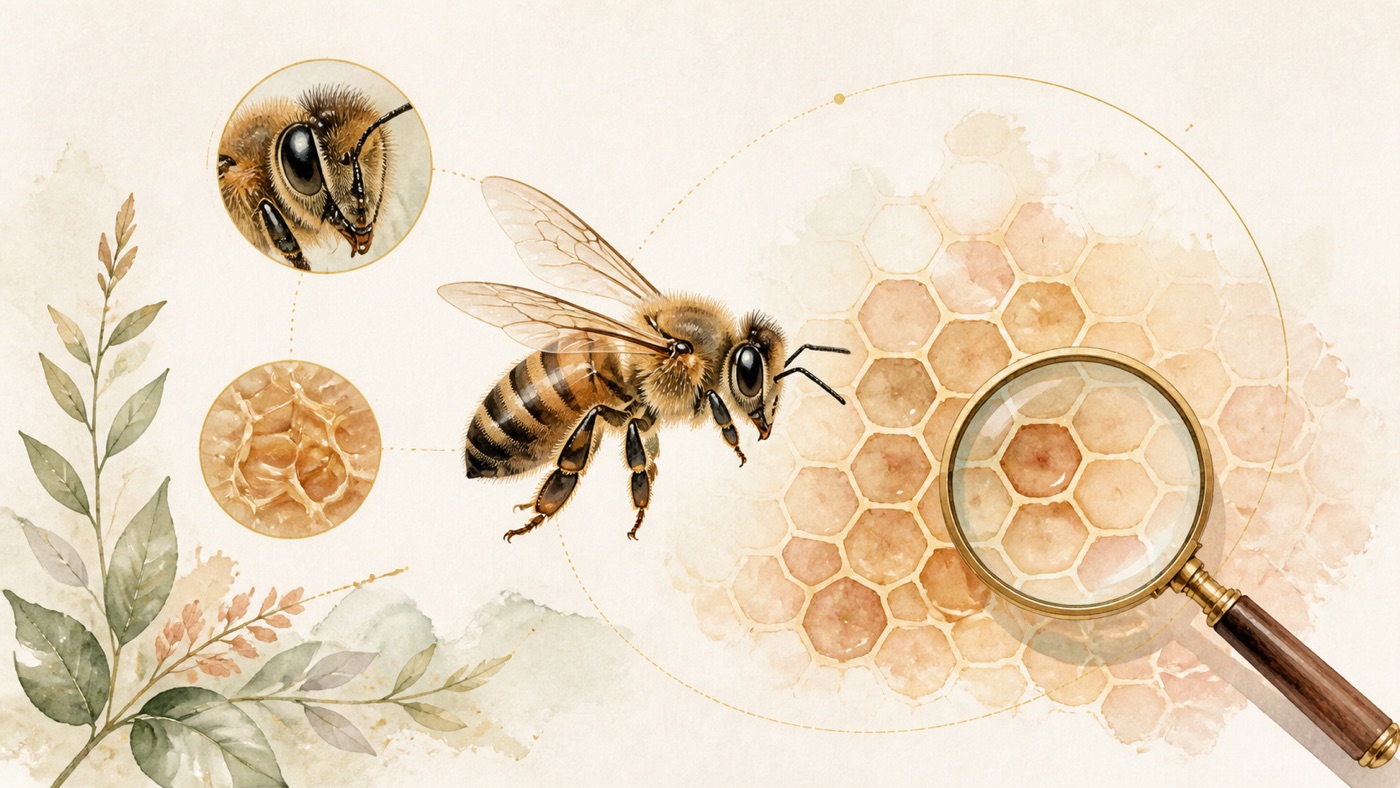
Honeybees|10 Common Diseases (cause → signs → examination → treatment direction → prevention) | Evidence chain
This record notes the source location and content hash of "Honeybees|10 Common Diseases (cause → signs → examination → treatment direction → prevention)", so the text can be checked against the original.
Honeybees|10 Common Diseases (cause → signs → examination → treatment direction → prevention) | Evidence chain
This record notes the source location and content hash of "Honeybees|10 Common Diseases (cause → signs → examination → treatment direction → prevention)", so the text can be checked against the original.
How to use this record to verify
This record exists so that anyone can check for themselves whether the text has been altered. Every chapter of the veterinary encyclopaedia carries a starting line number and a content hash (the first 16 characters of its SHA-256). Recompute the hash over the original chapter: if it matches the value recorded below, what is published here is identical to the source chapter. The source list at the end is the authoritative material cited by that chapter — a chapter-level correspondence, meaning those sources underpin the chapter as a whole rather than mapping sentence by sentence. This is educational information and cannot replace a practising veterinarian; in an emergency, seek care immediately.
This record notes the source location of "Honeybees|10 Common Diseases (cause → signs → examination → treatment direction → prevention) | Evidence chain": the section beginning at line 356 of `27-T8-農場與T9-馬.md` in the veterinary encyclopaedia. The SHA-256 of that section (first 16 characters) is `c2464b4400572581`, which anyone can recompute to confirm the content has not been altered.
Source location
- File: Veterinary Animal Encyclopaedia — farm animals and horses
- Starting line: line 356
- Section title: (H) 蜜蜂 Honeybee(*Apis mellifera*)—— 12 欄調整為「蜂群」層級
- Disease-table line range:lines 375–384(共 10 列)
- Content hash: `c2464b4400572581`
- Character count: 3,903
Row-level anchors
Every row of the disease table carries a row-level anchor in the source chapter (claim id plus a SHA-256 of the row content); the anchor file is `planning-out/anchor-436.tsv`. Of the 10 rows in this section, 10 have a row-level anchor. One source row may map to several claim ids, listed separated by /:
| Table row | Source chapter line | claim id |
|---|---|---|
| 1 | 375 | I183 |
| 2 | 376 | F095 |
| 3 | 377 | F096 |
| 4 | 378 | L034 |
| 5 | 379 | I184 |
| 6 | 380 | L035 |
| 7 | 381 | L036 |
| 8 | 382 | L037 |
| 9 | 383 | F097 |
| 10 | 384 | L038 |
FAQ
- What is American foulbrood American Foulbrood (AFB, *Paenibacillus larvae*), and what should send you to a veterinarian straight away?
- Bacterial spores; the spores are extremely persistent in the environment, most jurisdictions list a confirmed colony as a notifiable disease, and destruction of the colony and equipment is often required to prevent spread. It presents with larval death and decay, sunken and perforated cell cappings, and a distinctive foul odour. The direction of handling is that it is dealt with under the regulations in most jurisdictions (suspected cases should be reported to the local beekeeping authority/quarantine service; it is not for the beekeeper to decide how to handle them). This row belongs to the category in the original chapter that needs prompt attention; the actual judgement still rests with a veterinarian assessing the individual case, and no drug names or dosages are given here.
- アメリカ腐蛆病 American Foulbrood(AFB、*Paenibacillus larvae*)とはどのような疾患で、何が見えたらすぐ獣医師に連絡すべきですか。 — 細菌の芽胞によるもので、芽胞は環境中で極めて持続性が高く、多くの地域では確定した蜂群を法定の届出疾病としており、拡大を防ぐために蜂群と器具の焼却処分を要することが多いものです。幼虫の死亡と腐敗、巣房の蓋の陥没と穿孔、特有の悪臭が現れます。対処の方向性としては、多くの地域では法令に従って処理されます(疑い例は地元の養蜂主管機関/検疫当局に届け出るべきであり、養蜂家が自分で処理方法を決めるものではありません)。この行は原章で早急な対応を要する類型に属します。実際の判断は獣医師が個別に評価する必要があり、本文では薬剤名と用量は書きません。
- What is American foulbrood American Foulbrood (AFB, *Paenibacillus larvae*), and what should send you to a veterinarian straight away? — Bacterial spores; the spores are extremely persistent in the environment, most jurisdictions list a confirmed colony as a notifiable disease, and destruction of the colony and equipment is often required to prevent spread. It presents with larval death and decay, sunken and perforated cell cappings, and a distinctive foul odour. The direction of handling is that it is dealt with under the regulations in most jurisdictions (suspected cases should be reported to the local beekeeping authority/quarantine service; it is not for the beekeeper to decide how to handle them). This row belongs to the category in the original chapter that needs prompt attention; the actual judgement still rests with a veterinarian assessing the individual case, and no drug names or dosages are given here.
- What causes varroosis Varroosis (*Varroa destructor*), and what matters most in preventing it?
- An external parasitic mite, the foremost threat to colony health worldwide, and a vector for several viruses. It presents with mites visible attached to larvae and adult bees, colony weakening, and worsening alongside viral disease. The key to prevention is regular monitoring and planned control, together with breeding queens selected for mite-resistant traits. The treatment direction must be assessed by a veterinarian case by case, and no drug names or dosages are given here.
- バロア病 Varroosis(*Varroa destructor*)の原因と予防の要点は何ですか。 — 外部寄生性のダニで、世界の蜂群の健康にとって最大の脅威であり、複数のウイルスを媒介しうるものです。幼虫や成蜂の体表にダニの付着が見られ、群れが衰弱し、ウイルス病と重なって悪化します。予防の要点は、定期的なモニタリングと計画的な防除、そして女王蜂の遺伝的なダニ抵抗性形質の選抜です。治療の方向性は獣医師が個別に評価する必要があり、本文では薬剤名と用量は書きません。
- What causes varroosis Varroosis (*Varroa destructor*), and what matters most in preventing it? — An external parasitic mite, the foremost threat to colony health worldwide, and a vector for several viruses. It presents with mites visible attached to larvae and adult bees, colony weakening, and worsening alongside viral disease. The key to prevention is regular monitoring and planned control, together with breeding queens selected for mite-resistant traits. The treatment direction must be assessed by a veterinarian case by case, and no drug names or dosages are given here.
- What causes European foulbrood European Foulbrood (EFB, *Melissococcus plutonius*), and what matters most in preventing it?
- Bacterial infection, milder than AFB but still contagious. It presents with larval death but a less pronounced odour, and signs milder than in AFB. The key to prevention is colony stress management (avoiding overcrowding and undernutrition) together with equipment hygiene. The treatment direction must be assessed by a veterinarian case by case, and no drug names or dosages are given here.
- ヨーロッパ腐蛆病 European Foulbrood(EFB、*Melissococcus plutonius*)の原因と予防の要点は何ですか。 — 細菌感染であり、AFB より軽度ですが伝染性はあります。幼虫は死亡しますが臭気は目立ちにくく、症状は AFB より穏やかです。予防の要点は、蜂群のストレス管理(過密や栄養不足を避ける)と器具の衛生です。治療の方向性は獣医師が個別に評価する必要があり、本文では薬剤名と用量は書きません。
- What causes European foulbrood European Foulbrood (EFB, *Melissococcus plutonius*), and what matters most in preventing it? — Bacterial infection, milder than AFB but still contagious. It presents with larval death but a less pronounced odour, and signs milder than in AFB. The key to prevention is colony stress management (avoiding overcrowding and undernutrition) together with equipment hygiene. The treatment direction must be assessed by a veterinarian case by case, and no drug names or dosages are given here.
Source anchors
- Merck 獸醫手冊|農場動物與馬章引用 · https://www.merckvetmanual.com/digestive-system/diseases-of-the-ruminant-forestomach/grain-overload-in-ruminants · 在 IDAEO 的其他引用
- Merck 獸醫手冊|農場動物與馬章引用 · https://www.merckvetmanual.com/digestive-system/diseases-of-the-ruminant-forestomach/subacute-ruminal-acidosis-in-cattle-and-sheep · 在 IDAEO 的其他引用
- Merck 獸醫手冊|農場動物與馬章引用 · https://www.merckvetmanual.com/exotic-and-laboratory-animals/miniature-pet-pigs/overview-of-miniature-pet-pigs · 在 IDAEO 的其他引用
- Merck 獸醫手冊|農場動物與馬章引用 · https://www.merckvetmanual.com/generalized-conditions/hendra-virus-infection/hendra-virus-infection-in-horses · 在 IDAEO 的其他引用
- Merck 獸醫手冊|農場動物與馬章引用 · https://www.merckvetmanual.com/horse-owners/introduction-to-horses/description-and-physical-characteristics-of-horses · 在 IDAEO 的其他引用
- Merck 獸醫手冊|農場動物與馬章引用 · https://www.merckvetmanual.com/infectious-diseases/clostridial-diseases/clostridial-vaccines-for-animals · 在 IDAEO 的其他引用
- Merck 獸醫手冊|農場動物與馬章引用 · https://www.merckvetmanual.com/management-and-nutrition/preventative-health-care-and-husbandry-of-horses/dental-care-of-horses · 在 IDAEO 的其他引用
- Merck 獸醫手冊|農場動物與馬章引用 · https://www.merckvetmanual.com/management-and-nutrition/preventative-health-care-and-husbandry-of-horses/vaccination-program-for-horses · 在 IDAEO 的其他引用
- Merck 獸醫手冊|農場動物與馬章引用 · https://www.merckvetmanual.com/multimedia/table/vital-signs-in-adult-camelids · 在 IDAEO 的其他引用
- Merck 獸醫手冊|農場動物與馬章引用 · https://www.merckvetmanual.com/reference-values-and-conversion-tables/reference-guides/normal-rectal-temperature-ranges · 在 IDAEO 的其他引用
- Merck 獸醫手冊|農場動物與馬章引用 · https://www.merckvetmanual.com/reference-values-and-conversion-tables/reference-guides/resting-heart-rates · 在 IDAEO 的其他引用
- Merck 獸醫手冊|農場動物與馬章引用 · https://www.merckvetmanual.com/reference-values-and-conversion-tables/reference-guides/resting-respiratory-rates · 在 IDAEO 的其他引用
- Merck 獸醫手冊|農場動物與馬章引用 · https://www.merckvetmanual.com/toxicology/copper-poisoning/copper-poisoning-in-animals · 在 IDAEO 的其他引用
- PMC 全文|農場動物與馬章引用 · https://pmc.ncbi.nlm.nih.gov/articles/PMC6125241/ · 在 IDAEO 的其他引用
- PubMed 文獻|農場動物與馬章引用 · https://pubmed.ncbi.nlm.nih.gov/11295509/ · 在 IDAEO 的其他引用
- WOAH 世界動物衛生組織|農場動物與馬章引用 · https://www.woah.org/en/disease/diseases-of-bees/ · 在 IDAEO 的其他引用
- WOAH 世界動物衛生組織|農場動物與馬章引用 · https://www.woah.org/en/disease/foot-and-mouth-disease/ · 在 IDAEO 的其他引用
- WOAH 世界動物衛生組織|農場動物與馬章引用 · https://www.woah.org/en/what-we-do/animal-health-and-welfare/animal-diseases/ · 在 IDAEO 的其他引用
- aaep.org|農場動物與馬章引用 · https://aaep.org/ · 在 IDAEO 的其他引用
- extension.arizona.edu|農場動物與馬章引用 · https://extension.arizona.edu/sites/extension.arizona.edu/files/pubs/az2014-2022.pdf · 在 IDAEO 的其他引用
- extension.psu.edu|農場動物與馬章引用 · https://extension.psu.edu/animals-and-livestock/llamas-and-alpacas/health-and-care · 在 IDAEO 的其他引用
- u.osu.edu|農場動物與馬章引用 · https://u.osu.edu/gofarmohio/2026/06/16/livestock-biosecurity-basics-for-the-small-farm/ · 在 IDAEO 的其他引用
- www.canr.msu.edu|農場動物與馬章引用 · https://www.canr.msu.edu/news/what-is-the-buzz-around-cow-longevity · 在 IDAEO 的其他引用
- www.thedonkeysanctuary.org.uk|農場動物與馬章引用 · https://www.thedonkeysanctuary.org.uk/for-professionals · 在 IDAEO 的其他引用
Cite this article
Jane・《Honeybees|10 Common Diseases (cause → signs → examination → treatment direction → prevention) | Evidence chain》・IDAEO 知識庫・2026-08-13・https://km.idaeo.ai/post/reports/vet-honeybee-diseases-evidenceUpdated 2026-08-15