

🏛 Part of the "reports" topic shelf →
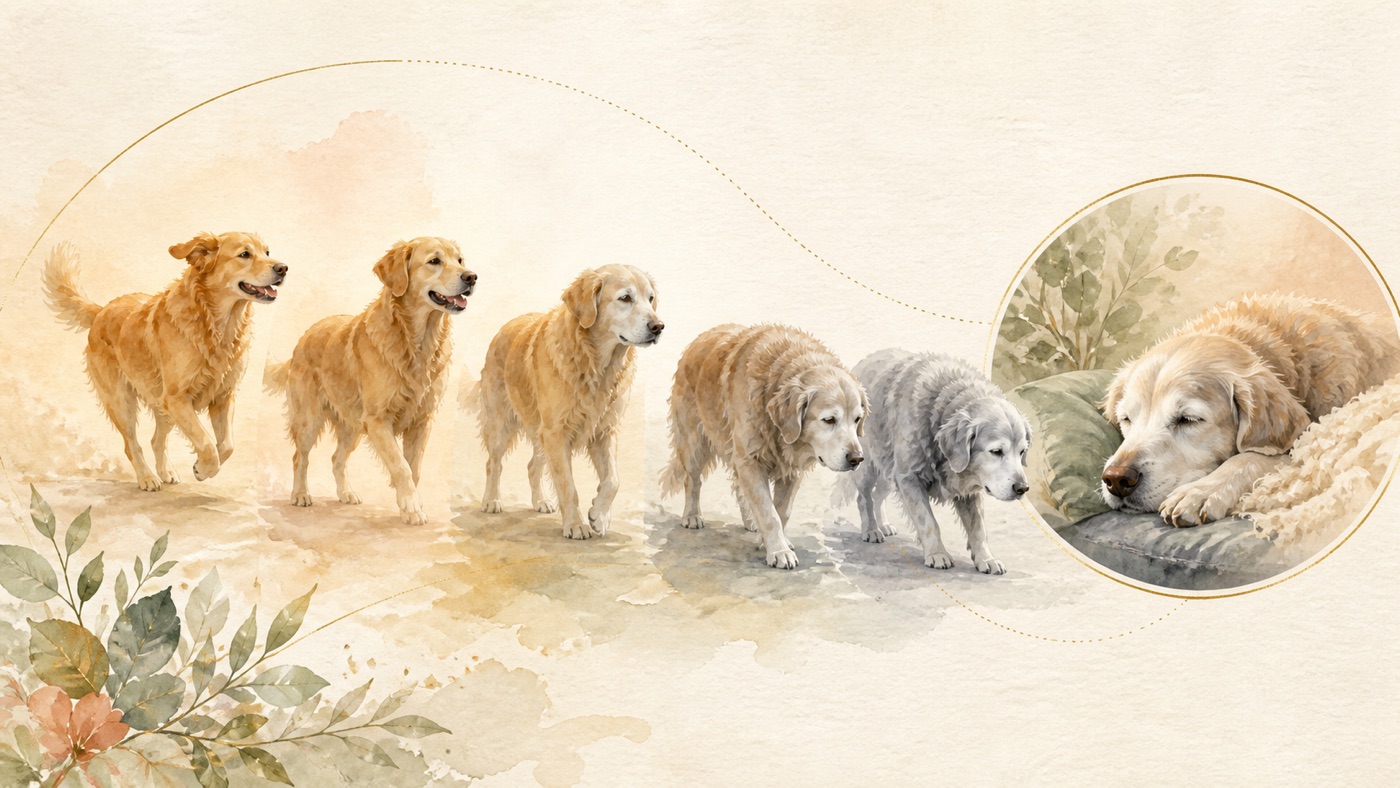
Dogs | Old Age, Hospice, and Euthanasia Decisions | Evidence chain
This record notes the source location and content hash of "Dogs | Old Age, Hospice, and Euthanasia Decisions", so the text can be checked against the original.
Dogs | Old Age, Hospice, and Euthanasia Decisions | Evidence chain
This record notes the source location and content hash of "Dogs | Old Age, Hospice, and Euthanasia Decisions", so the text can be checked against the original.
How to use this record to verify
This record exists so that anyone can check for themselves whether the text has been altered. Every chapter of the veterinary encyclopaedia carries a starting line number and a content hash (the first 16 characters of its SHA-256). Recompute the hash over the original chapter: if it matches the value recorded below, what is published here is identical to the source chapter. The source list at the end is the authoritative material cited by that chapter — a chapter-level correspondence, meaning those sources underpin the chapter as a whole rather than mapping sentence by sentence. This is educational information and cannot replace a practising veterinarian; in an emergency, seek care immediately.
This record notes the source location of "Dogs | Old Age, Hospice, and Euthanasia Decisions | Evidence chain": the section beginning at line 884 of `20-T1-犬.md` in the veterinary encyclopaedia. The SHA-256 of that section (first 16 characters) is `3f9df4d717f11e8a`, which anyone can recompute to confirm the content has not been altered.
Source location
- File: Veterinary Animal Encyclopaedia — dog
- Starting line: line 884
- Chapter section title: §11 老年、安寧與安樂死判斷
- Content hash: `3f9df4d717f11e8a`
- Character count: 4,283
FAQ
- At what age is a dog "old"?
- The rule is body size, not age alone: giant and large breeds reach old age far earlier than small breeds. The AAHA 2019 guidelines set no fixed age and use a relative definition instead: senior is "the last 25% of estimated lifespan through end of life," projected from the estimated lifespan for the breed and body size. Once a dog is senior, checkups should become more frequent — most guidelines suggest every six months — with blood pressure and urine specific gravity added, plus routine pain and cognitive assessments.
- 犬は何歳から高齢ですか? — 判定の原則は年齢だけでなく体格で、超大型犬・大型犬は小型犬よりはるかに早く高齢期に入ります。AAHA 2019 ガイドラインは固定の年齢を設けず、「推定寿命の最後の 25% から生命の終わりまで」という相対的な定義を採用し、品種と体格ごとの推定寿命から推し量ります。高齢期に入ったら健診頻度を上げ(多くのガイドラインは半年ごとを推奨)、血圧と尿比重を追加し、痛みと認知の定期評価を始めます。
- At what age is a dog "old"? — The rule is body size, not age alone: giant and large breeds reach old age far earlier than small breeds. The AAHA 2019 guidelines set no fixed age and use a relative definition instead: senior is "the last 25% of estimated lifespan through end of life," projected from the estimated lifespan for the breed and body size. Once a dog is senior, checkups should become more frequent — most guidelines suggest every six months — with blood pressure and urine specific gravity added, plus routine pain and cognitive assessments.
- My old dog has gotten lazy and inactive — is that normal aging?
- Not necessarily; that is the most common misreading of pain in older dogs. Dogs do not cry out in pain — they go quiet. "He's old and doesn't like to move" may be arthritis, back pain, or dental pain; "grumpy lately," especially flinching or baring teeth when touched somewhere, usually means pain; "pacing at night" may be pain, cognitive dysfunction, hypertension, or hypoxia; "eating slowly" may be dental pain, an oral tumor, or nausea. Pain must be treated.
- 老犬が怠けて動かなくなったのは、正常な老化ですか? — そうとは限りません。それは高齢犬の痛みで最も多い見誤りです。犬は痛みで鳴かず、静かになります。「年で動きたがらない」は関節炎、背中の痛み、歯の痛みかもしれません。「気難しくなった」、特にある場所を触られると避けたり歯をむき出したりするのは、たいてい痛みです。「夜うろうろする」は痛み、認知機能不全、高血圧、低酸素の可能性があり、「食べるのが遅い」は歯の痛み、口腔腫瘍、吐き気の可能性があります。痛みは治療が必要です。
- My old dog has gotten lazy and inactive — is that normal aging? — Not necessarily; that is the most common misreading of pain in older dogs. Dogs do not cry out in pain — they go quiet. "He's old and doesn't like to move" may be arthritis, back pain, or dental pain; "grumpy lately," especially flinching or baring teeth when touched somewhere, usually means pain; "pacing at night" may be pain, cognitive dysfunction, hypertension, or hypoxia; "eating slowly" may be dental pain, an oral tumor, or nausea. Pain must be treated.
- How do I judge my dog's quality of life, and when should I discuss euthanasia with the veterinarian?
- Decide on the trend, not on the emotions of a single day. Score repeatedly with a structured scale and watch the trend; write down now the 5 things this dog loves most and reassess when it can no longer do 3 of them; add a good day/bad day diary, and when bad days start to outnumber good days and the trend cannot be reversed, it is time to discuss timing with the veterinarian. Uncontrollable pain, the distress of being unable to breathe, or persistent inability to eat or drink call for an immediate discussion.
- 犬の生活の質はどう判断し、いつ獣医師と安楽死を相談すべきですか? — その日の感情ではなく、傾向で決めます。構造化スケールで定期的に繰り返し採点して傾向を見る。今のうちに、この犬が一番好きな 5 つのことを書き出し、そのうち 3 つができなくなったら見直す。さらに良い日/悪い日の日誌を付け、悪い日が良い日より多くなり始めて傾向が戻らないなら、獣医師とタイミングを相談すべき時です。コントロールできない痛み、呼吸できない苦しみ、飲食が続けてできない場合は、すぐに相談してください。
- How do I judge my dog's quality of life, and when should I discuss euthanasia with the veterinarian? — Decide on the trend, not on the emotions of a single day. Score repeatedly with a structured scale and watch the trend; write down now the 5 things this dog loves most and reassess when it can no longer do 3 of them; add a good day/bad day diary, and when bad days start to outnumber good days and the trend cannot be reversed, it is time to discuss timing with the veterinarian. Uncontrollable pain, the distress of being unable to breathe, or persistent inability to eat or drink call for an immediate discussion.
Source anchors
- Merck 獸醫手冊|犬章引用 · https://www.merckvetmanual.com/management-and-nutrition/management-of-the-neonate/management-of-the-neonate-in-dogs-and-cats · 在 IDAEO 的其他引用
- Merck 獸醫手冊|犬章引用 · https://www.merckvetmanual.com/multimedia/table/parameters-to-evaluate-during-triage · 在 IDAEO 的其他引用
- Merck 獸醫手冊|犬章引用 · https://www.merckvetmanual.com/reproductive-system/reproductive-diseases-of-the-female-small-animal/dystocia-in-small-animals · 在 IDAEO 的其他引用
- PMC 全文|犬章引用 · https://pmc.ncbi.nlm.nih.gov/articles/PMC10385239/ · 在 IDAEO 的其他引用
- PMC 全文|犬章引用 · https://pmc.ncbi.nlm.nih.gov/articles/PMC10705156/ · 在 IDAEO 的其他引用
- PMC 全文|犬章引用 · https://pmc.ncbi.nlm.nih.gov/articles/PMC11096582/ · 在 IDAEO 的其他引用
- PMC 全文|犬章引用 · https://pmc.ncbi.nlm.nih.gov/articles/PMC5421102/ · 在 IDAEO 的其他引用
- PMC 全文|犬章引用 · https://pmc.ncbi.nlm.nih.gov/articles/PMC7608676/ · 在 IDAEO 的其他引用
- WSAVA|犬章引用 · https://wsava.org/wp-content/uploads/2021/04/Selecting-a-pet-food-for-your-pet-updated-2021_WSAVA-Global-Nutrition-Toolkit.pdf · 在 IDAEO 的其他引用
- AAHA|犬章引用 · https://www.aaha.org/wp-content/uploads/globalassets/02-guidelines/behavior-management/2015_aaha_canine_and_feline_behavior_management_guidelines_final.pdf · 在 IDAEO 的其他引用
- AAHA|犬章引用 · https://www.aaha.org/wp-content/uploads/globalassets/02-guidelines/canine-life-stage/canine_life_stage_guidelines.pdf · 在 IDAEO 的其他引用
- WOAH 世界動物衛生組織|犬章引用 · https://www.woah.org/en/disease/rabies/ · 在 IDAEO 的其他引用
- vetmed.illinois.edu|犬章引用 · https://vetmed.illinois.edu/pet-health-columns/never-give-medications-for-people-to-pets/ · 在 IDAEO 的其他引用
Cite this article
Jane・《Dogs | Old Age, Hospice, and Euthanasia Decisions | Evidence chain》・IDAEO 知識庫・2026-08-13・https://km.idaeo.ai/post/reports/vet-dog-senior-and-end-of-life-evidenceUpdated 2026-08-15