Part of the "Veterinary" topic shelf → ← Back to the article:Cats | E. The 5 Deadly Mistakes Owners Make Most Often (in plain language, no jargon)
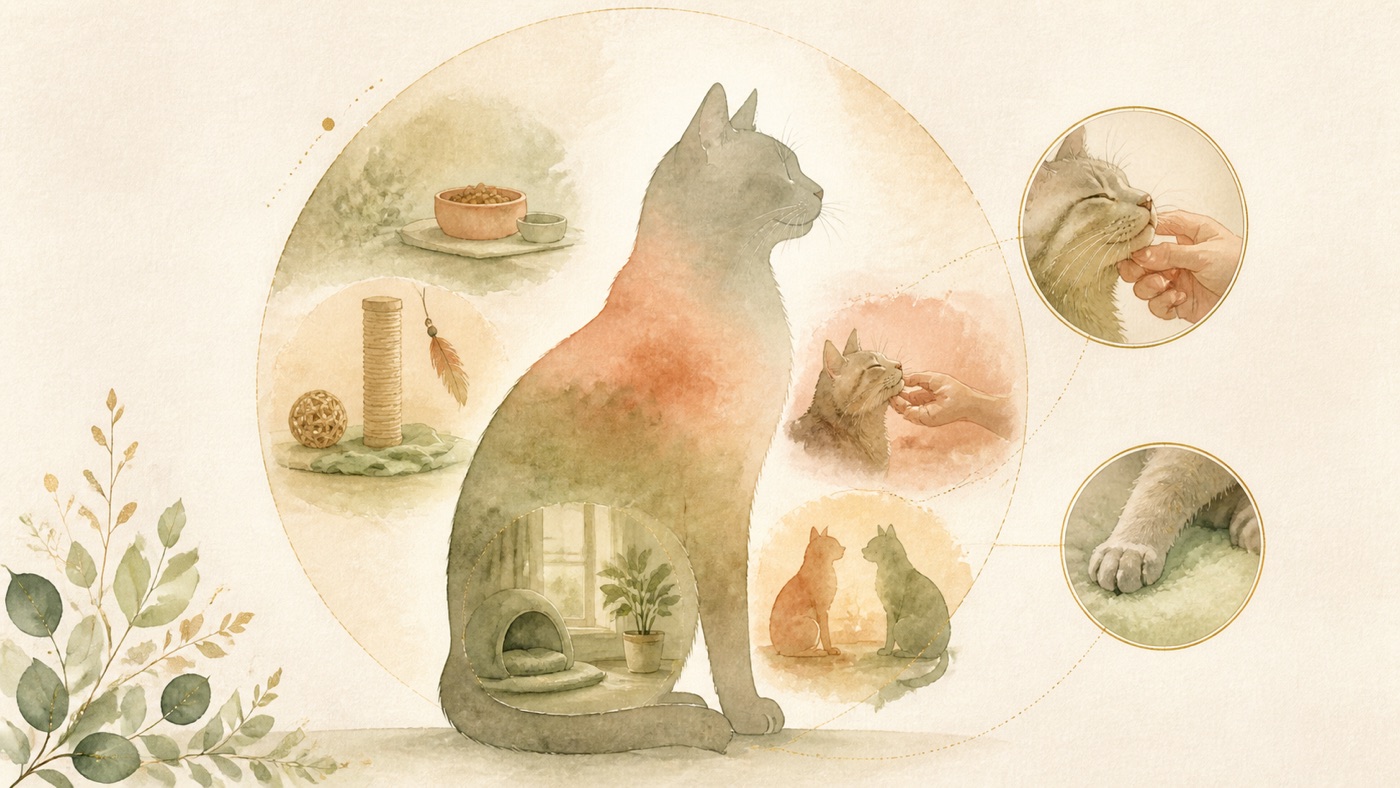
Cats | E. The 5 Deadly Mistakes Owners Make Most Often (in plain language, no jargon) | Evidence chain
This record notes the source location and content hash of "Cats | E. The 5 Deadly Mistakes Owners Make Most Often (in plain language, no jargon)", so the text can be checked against the original.
This record notes the source location and content hash of "Cats | E. The 5 Deadly Mistakes Owners Make Most Often (in plain language, no jargon)", so the text can be checked against the original.
How to use this record to verify
This record exists so that anyone can check for themselves whether the text has been altered. Every chapter of the veterinary encyclopaedia carries a starting line number and a content hash (the first 16 characters of its SHA-256). Recompute the hash over the original chapter: if it matches the value recorded below, what is published here is identical to the source chapter. The source list at the end is the authoritative material cited by that chapter — a chapter-level correspondence, meaning those sources underpin the chapter as a whole rather than mapping sentence by sentence. This is educational information and cannot replace a practising veterinarian; in an emergency, seek care immediately.
This record notes the source location of "Cats | E. The 5 Deadly Mistakes Owners Make Most Often (in plain language, no jargon) | Evidence chain": the section beginning at line 449 of `21-T2-貓.md` in the veterinary encyclopaedia. The SHA-256 of that section (first 16 characters) is `5f9462eb9e6b38fa`, which anyone can recompute to confirm the content has not been altered.

Source location
- File: Veterinary Animal Encyclopaedia — cat
- Starting line: line 449
- Chapter section title: E. 飼主最常犯的 5 個致命錯誤(白話,不用術語)
- Content hash: `5f9462eb9e6b38fa`
- Character count: 1,017
FAQ
- Can I watch and wait for a few days when my cat is not eating?
- No. A cat cannot go hungry. After more than a day without food, its body dumps fat into the liver all at once and the liver starts to fail, and the fatter the cat, the faster it happens. Not eating is a sign of illness, not pickiness — if a cat has not eaten for a whole day, see a vet.
- My male cat keeps going to the litter box but cannot urinate. Can it wait until tomorrow?
- No. This is an emergency that kills within hours. Once the urethra is blocked, urine cannot leave, the bladder can rupture, and the potassium building up in the blood can stop the heart. If a male cat keeps entering the litter box, squats for a long time, passes only a few drops or nothing at all, cries, licks its rear, or lies flat and will not move, go to the vet immediately, even in the middle of the night.
- Can I keep lilies in the house?
- A home with a cat should have no lilies. If a cat merely chews one leaf, licks pollen that dropped onto the table, or drinks the vase water, its kidneys can fail outright, and at first it only looks a little listless. When a bouquet arrives, pull out the lilies first; if the cat has already been exposed, take it to the vet immediately instead of waiting for symptoms.
Source anchors
- Merck 獸醫手冊|貓章引用 · https://www.merckvetmanual.com/multimedia/table/parameters-to-evaluate-during-triage · Other citations on IDAEO
- Merck 獸醫手冊|貓章引用 · https://www.merckvetmanual.com/multimedia/table/resting-heart-rates · Other citations on IDAEO
- Merck 獸醫手冊|貓章引用 · https://www.merckvetmanual.com/multimedia/table/resting-respiratory-rates · Other citations on IDAEO
- Merck 獸醫手冊|貓章引用 · https://www.merckvetmanual.com/reference-values-and-conversion-tables/reference-guides/normal-rectal-temperature-ranges · Other citations on IDAEO
- Merck 獸醫手冊|貓章引用 · https://www.merckvetmanual.com/reproductive-system/reproductive-diseases-of-the-female-small-animal/dystocia-in-small-animals · Other citations on IDAEO
- PMC 全文|貓章引用 · https://pmc.ncbi.nlm.nih.gov/articles/PMC10459272/ · Other citations on IDAEO
- PMC 全文|貓章引用 · https://pmc.ncbi.nlm.nih.gov/articles/PMC10845436/ · Other citations on IDAEO
- PMC 全文|貓章引用 · https://pmc.ncbi.nlm.nih.gov/articles/PMC11383066/ · Other citations on IDAEO
- PMC 全文|貓章引用 · https://pmc.ncbi.nlm.nih.gov/articles/PMC6271319/ · Other citations on IDAEO
- PMC 全文|貓章引用 · https://pmc.ncbi.nlm.nih.gov/articles/PMC9989186/ · Other citations on IDAEO
- PubMed 文獻|貓章引用 · https://pubmed.ncbi.nlm.nih.gov/12075546/ · Other citations on IDAEO
- PubMed 文獻|貓章引用 · https://pubmed.ncbi.nlm.nih.gov/17552444/ · Other citations on IDAEO
- PubMed 文獻|貓章引用 · https://pubmed.ncbi.nlm.nih.gov/21601744/ · Other citations on IDAEO
- PubMed 文獻|貓章引用 · https://pubmed.ncbi.nlm.nih.gov/22676281/ · Other citations on IDAEO
- PubMed 文獻|貓章引用 · https://pubmed.ncbi.nlm.nih.gov/23551140/ · Other citations on IDAEO
- PubMed 文獻|貓章引用 · https://pubmed.ncbi.nlm.nih.gov/24966283/ · Other citations on IDAEO
- PubMed 文獻|貓章引用 · https://pubmed.ncbi.nlm.nih.gov/26101312/ · Other citations on IDAEO
- PubMed 文獻|貓章引用 · https://pubmed.ncbi.nlm.nih.gov/26639825/ · Other citations on IDAEO
- PubMed 文獻|貓章引用 · https://pubmed.ncbi.nlm.nih.gov/30971357/ · Other citations on IDAEO
- PubMed 文獻|貓章引用 · https://pubmed.ncbi.nlm.nih.gov/31836868/ · Other citations on IDAEO
- PubMed 文獻|貓章引用 · https://pubmed.ncbi.nlm.nih.gov/31916872/ · Other citations on IDAEO
- PubMed 文獻|貓章引用 · https://pubmed.ncbi.nlm.nih.gov/8947867/ · Other citations on IDAEO
- AAFP 貓科醫學會|貓章引用 · https://catvets.com/2022-aafp-everycat-feline-infectious-peritonitis-diagnosis-guidelines · Other citations on IDAEO
- AAFP 貓科醫學會|貓章引用 · https://catvets.com/resource/aaha-aafp-feline-life-stage-guidelines/ · Other citations on IDAEO
- WSAVA|貓章引用 · https://wsava.org/wp-content/uploads/2020/01/Cat-Body-Condition-Scoring-2017.pdf · Other citations on IDAEO
Cite this article
Jane・《Cats | E. The 5 Deadly Mistakes Owners Make Most Often (in plain language, no jargon) | Evidence chain》・IDAEO 知識庫・2026-08-13・https://km.idaeo.ai/post/reports/vet-cat-owner-mistakes-evidenceUpdated 2026-08-15