
🏛 Part of the "reports" topic shelf →
When can I eat after an implant? May I drink coffee or tea?|證據鏈
本頁是〈When can I eat after an implant? May I drink coffee or tea?〉的事實單元帳:每一條主張對應的來源、證據等級、地域與期間、原文引句與限制,逐條攤開。
When can I eat after an implant? May I drink coffee or tea?|證據鏈
F-Units (fact-unit account)
- F1|Topic basis: full GSC reconciliation across 14 clinic sites; 13 terms including 「植牙後多久可以吃東西」 and 「植牙後可以喝咖啡嗎」 total 160,673 impressions across 4 sites|source #23|confidence=high|basis=internal_dataset|period=GSC retention window (from 2025-03-22)|geo: TW|caveat: impressions are property-level figures, not de-duplicated traffic; internal data, not a medical claim.
- F25|The most prevalent oral-surgery complications are haemorrhage in anticoagulated patients, infection in immunosuppressed patients, and osteonecrosis in patients taking antiresorptive drugs; edema, pain, and inflammation are also common postoperative concerns|source #19|confidence=verified|basis=peer_reviewed (PMID 40952869, systematic review of 23 studies)|period=2024|geo: universal|span:「The most prevalent complications in oral surgery are hemorrhage in anticoagulated patients, infections in immunosuppressed patients, and osteonecrosis in patients who take antiresorptive drugs」「Edema, pain, and inflammation are also common post-operative concerns」|caveat: oral surgery in high-risk medication populations, not implant-specific; this card cites categories, not management advice.
- F2|Structured editorial framework: the four stages—numbness not yet resolved / postoperative 24 to 48 hours / first week / osseointegration—organize communication from F3 to F12|source #24|confidence=n/a|basis=editorial_framework|period=2026-08-05|geo: universal|caveat: not a diagnostic tool or clinical guideline.
- F3|In the no-reversal-drug control group, median soft-tissue anaesthesia recovery was lower lip 155 minutes, tongue 125 minutes, upper lip 133 minutes|source #1|confidence=verified|basis=peer_reviewed (PMID 18682623, two multicentre randomized double-blind phase III trials, 484 participants)|period=2008|geo: universal|span:「Median recovery times in the lower lip and tongue for subjects in the sham group were 155 minutes and 125 minutes, respectively. Upper lip median recovery times were 50 minutes for subjects in the PM group and 133 minutes for subjects in the sham group」|caveat: restorative/prophylaxis procedures with vasoconstrictor-containing local anaesthetic, not implant surgery; cited only for the hours-scale duration.
- F4|Shortening soft-tissue anaesthesia may reduce self-inflicted injury after inferior alveolar nerve block|source #2|confidence=verified|basis=peer_reviewed (PMID 24654413, literature review)|period=2014|geo: universal|span:「would significantly reduce the duration of soft tissue anesthesia, and subsequently may reduce the incidence of the undesirable post-treatment self-inflicted injuries associated with inferior alveolar nerve block」|caveat: paediatric review; wording is “may”; no adult quantitative inference.
- F5|Daily VAS records through the first week and day 14: straightforward implant placement was comparable with simple extraction; implant plus grafting had higher swelling/bruising and analgesic use in the first three days; one-week complication prevalence 20% with implant plus grafting, 12.7% with straightforward implant; all scores declined rapidly within two weeks|source #3|confidence=verified|basis=peer_reviewed (PMID 26970296, comparative study, 339 patients)|period=2017|geo: universal|span:「implant placement with GBR (IGBR) resulted in significant higher level of swelling (AUC: Mean = 9.1) and bruising (Mean = 4.2) for the same period with also the highest use of painkillers」「Healing outcomes of straightforward implant placement (I) were comparable to that of a simple extraction (SE)」「Prevalence for complications 1 week postoperatively was IGBR (20%), P (15.6%), I (12.7%)」|caveat: two centres in Hong Kong and Nanjing, non-randomized, group-level course.
- F6|After larger full-arch implant reconstruction, mean pain scores in all groups were below 5 VAS on postoperative day 28|source #4|confidence=verified|basis=peer_reviewed (PMID 31549424, prospective clinical study; groups of 25, 25, and 20 patients)|period=2020|geo: universal|span:「On postoperative day 28, the mean pain scores in all groups declined to values below 5 VAS」|caveat: All-on-4 and zygomatic implants; extensive surgery, not a single implant.
- F7|Cold therapy had small pain benefit on day 2 and 3 after third-molar surgery; no evidence for swelling or trismus, evidence quality low|source #5|confidence=verified|basis=peer_reviewed (PMID 30798949, systematic review/meta-analysis, 6 randomized trials)|period=2019|geo: universal|span:「No evidence was found that cryotherapy was effective in reducing trismus and facial swelling. The quality of evidence was graded as low」|caveat: third-molar, not implant surgery; cooling methods not standardized.
- F8|Local postoperative dental haemostatics include gauze pressure; self-interrupting antithrombotics due to bleeding fear or postoperative bleeding increases thromboembolic-event risk|source #6|confidence=verified|basis=peer_reviewed (PMID 30155575, systematic review)|period=2019|geo: universal|span:「The investigated haemostatics included gauze pressure」「The interruption of antithrombotics prior to tooth removal because of the fear of bleeding or following postoperative bleeding increases the risk of thromboembolic events」|caveat: extraction setting; cited only for haemostatic category and interruption risk.
- F9|Two weeks of two different chlorhexidine concentrations after periodontal/implant surgery: no statistically significant difference in early wound healing or plaque index; more staining and taste discomfort with higher concentration|source #7|confidence=verified|basis=peer_reviewed (PMID 26795622, randomized clinical study, 40 patients)|period=2016|geo: universal|span:「Forty patients scheduled for flap surgery to treat periodontal pockets or accommodate dental implants were randomly assigned」「No statistically significant differences were observed between the two protocols regarding early wound healing and plaque index」|caveat: small sample; cites the existence of chemical plaque-control bridging and side effects; no product/concentration recommendation.
- F10|Conventional loading keeps implants load-free 3 to 8 months for osseointegration; immediate within 1 week, early between 1 week and 2 months, conventional after 2 months; 26 randomized trials, 1,217 participants, 2,120 implants, mean implant-failure rate 2.5%; no convincing clinically important difference in prosthesis failure, implant failure, or bone loss by loading time|source #8|confidence=verified|basis=peer_reviewed (PMID 23543525, Cochrane systematic review/meta-analysis)|period=2013 (search through 2012-06)|geo: universal|span:「dental implants are kept load-free for 3 to 8 months to establish osseointegration (conventional loading)」「immediate (within 1 week), early (between 1 week and 2 months), and conventional (after 2 months) loading」「the mean rate of implant failure in all 26 trials was a low 2.5%」「Overall there was no convincing evidence of a clinically important difference in prosthesis failure, implant failure, or bone loss associated with different loading times」|caveat: 2013 review, follow-up 4 months to 1 year; 12 studies high risk of bias.
- F11|Weighted cumulative survival by placement/loading combination was at least 96.0%; Type 2-3B (early placement plus early loading) had no recorded failure during included follow-up; high heterogeneity prevented meta-analysis, and Type 2-3B was clinically insufficiently documented|source #9|confidence=verified|basis=peer_reviewed (PMID 30328194, systematic review, 69 publications)|period=2018|geo: universal|span:「The weighted cumulative survival rate of each type of placement and loading protocol was 98.4% (Type 1A), 98.2% (Type 1B), 96.0% (Type 1C)」「Type 2-3A and Type 2-3B were clinically insufficiently documented (CID)」「Considerable heterogeneity in study design was found, and therefore, a meta-analysis of controlled studies was not possible」|caveat: fixed implant prostheses in partly edentulous patients, follow-up at least 12 months; study-level survival, not a personal success promise. 2018 version; a 2026-02 update PMID 41574557 (140 publications/10,456 implants) exists in card #25 F16. This card uses only loading classification, not combination survival figures.
- F12|Immediate and conventional single-implant crowns were comparable in implant survival and marginal bone loss, mainly where insertion torque was at least 20 to 45 Ncm or ISQ at least 60 to 65 and no simultaneous bone augmentation was required|source #10|confidence=verified|basis=peer_reviewed (PMID 24660200, systematic review/meta-analysis; 10 immediate-versus-conventional plus 1 immediate-versus-early randomized trials)|period=2014|geo: universal|span:「Immediately and conventionally loaded single-implant crowns are equally successful regarding implant survival and marginal bone loss. This conclusion is primarily derived from studies evaluating implants inserted with a torque ≥ 20 to 45 Ncm or an implant stability quotient (ISQ) ≥ 60 to 65 and with no need for simultaneous bone augmentation」|caveat: strict conditions; no extrapolation to all cases; authors said esthetic/satisfaction evidence insufficient.
- F13|In a prospective cohort of 102 posterior-maxilla implant patients, daily caffeine at least 400 mg versus at most 100 mg showed no statistically significant ISQ difference at 4, 6, or 8 weeks (p=0.13, 0.36, 0.08)|source #11|confidence=verified|basis=peer_reviewed (PMID 35783490)|period=2022|geo: universal|span:「The mean of ISQ between the two groups at 4, 6 and 8 weeks after implant placement was not statistically different. (p= 0.13, p= 0.36 and p= 0.08 respectively)」「Acquired data suggest that caffeine intake may not have a negative effect on implant stability in the healing period at the posterior of the maxilla」|caveat: non-randomized, posterior maxilla only; stability rather than failure; habitual intake, not same-day temperature/timing.
- F14|In rats, long-term caffeine intake had 87% higher implant removal torque than controls; authors called for clinical studies|source #12|confidence=verified|basis=peer_reviewed (PMID 34363706, animal experiment, 5 animals per group)|period=2021|geo: universal|span:「implants in the CAF group had an 87% significant increase in RTQ compared to the control」「Clinical studies are worth pursuing to verify this experimental observation」|caveat: animal study; no human clinical recommendation.
- F15|Systematic review/meta-analysis (102 studies, 13,030 patients; conclusions framed over 10-year follow-up): patient-level peri-implant mucositis prevalence 46%, peri-implantitis 21%; periodontitis, obesity, smoking risk indicators for mucositis; periodontitis, diabetes, smoking, alcohol for peri-implantitis; authors explicitly identified only risk indicators|source #13|confidence=verified|basis=peer_reviewed (PMID 40489307, AO/AAP systematic review/meta-analysis)|period=2025|geo: universal|span:「More than half of the patients treated with dental implants were affected by PIDs over a 10-year follow-up period」「Prevalence rates at the patient level for peri-implant mucositis and peri-implantitis were 46% … and 21%」「the significant risk indicators were periodontitis, diabetes mellitus, smoking habits, and alcohol consumption」「Only risk indicators could be identified in the selected evidence」|caveat: indicators are associations, not causality; long-term population prevalence, not individual probability.
- F16|Retrospective cohort (103 patients, 295 implants, at least 5 years): heavy versus mild alcohol consumption associated with more late failure (p=0.0135); mild versus no consumption associated with less late failure (p=0.0494)|source #14|confidence=verified|basis=peer_reviewed (PMID 33744204)|period=2021|geo: universal|span:「Compared to nonconsumption, mild consumption was associated with a 75% decrease in late implant failure (P = .0494)」「Compared to mild consumption, heavy consumption was associated with an 847% increase in late failure (P = .0135)」|caveat: single-centre Veterans hospital, 93% male, retrospective, residual confounding not excluded; must not be used to recommend alcohol.
- F17|Smokers had higher implant-failure risk (odds ratio 2.402, p < 0.001) and marginal-bone-loss mean difference 0.580 mm|source #15|confidence=verified|basis=peer_reviewed (PMID 35056347, systematic review/meta-analysis, 292 included publications)|period=2021|geo: universal|span:「implants in smokers had a higher failure risk in comparison with non-smokers (OR 2.402, p < 0.001)」「MBL mean difference (MD) between the groups was 0.580 mm」|caveat: same anchor as card #28 F8; observational evidence aggregation, not causal inference.
- F18|Meta-analysis (13 studies, 478 smokers, 1,207 non-smokers): smoking increased annual peri-implant bone-loss rate by 0.164 mm/year|source #16|confidence=verified|basis=peer_reviewed (PMID 24373525)|period=2014 (search through 2012-01)|geo: universal|span:「the meta-analysis of these 13 studies (478 smokers and 1207 non-smokers) revealed a high level of heterogeneity and that smoking increases the annual rate of bone loss by 0.164 mm/year」|caveat: high heterogeneity; evidence level for systemic-disease populations very low.
- F19|Prospective study (78 patients, 223 implants): continuing smokers had significantly higher failure than non-smokers (p < .005) and cessation-protocol followers (p < .05); cessation-protocol and non-smoker groups had no statistically significant difference|source #17|confidence=verified|basis=peer_reviewed (PMID 8990637)|period=1996|geo: universal|span:「There was a statistically significant difference between failure rates in the NS and SNQ groups (P < .005) and between the SQ and SNQ groups (P < .05), but none between the NS and SQ groups」|caveat: one operator, early implant systems, non-randomized; abstract gives no cessation start/end days, so this card must not supply any.
- F20|Literature advises written postoperative instructions because anxious or painful patients may not retain verbal information|source #18|confidence=verified|basis=peer_reviewed (PMID 23726490, clinical and medicolegal review)|period=2013|geo: universal|span:「Providing written postoperative instructions detailing emergency arrangements, patients who are anxious or in pain may not retain oral information」|caveat: UK practice review, not Taiwan legal requirement; Taiwan information duty in F21.
- F21|Article 81 of Taiwan's Medical Care Act requires medical institutions to inform the patient or legal representative, spouse, relative, or related person of condition, treatment plan, procedures, medication, prognosis, and possible adverse reactions|source #20|confidence=verified (tested 200 and text-matched 2026-08-05)|basis=law|period=current text|geo: TW|caveat: statutory quotation, not legal advice; same anchor as card #28 F18.
- F22|Article 24 of Taiwan's Tobacco Hazards Prevention Act permits the central competent authority to designate medical institutions and public-interest organizations to provide and subsidize smoking-cessation services|source #22|confidence=verified (tested 200 and text-matched 2026-08-05)|basis=law|period=current text|geo: TW|caveat: establishes the system only; this card lists no provider and no cost.
- F23|Paragraph 2, Article 87 of Taiwan's Medical Care Act: publication of medical knowledge/research reports, patient health education, and academic publications not involving solicitation are not medical advertising|source #21|confidence=verified (tested 200 and text-matched 2026-08-05)|basis=law|period=current text|geo: TW|caveat: basis for the card's positioning.
- F24|Structured evidence-gap statement: on 2026-08-05 this site searched PubMed E-utilities, including dental implant postoperative instructions / soft diet postoperative / caffeine osseointegration / alcohol dental implant failure / diet recommendations after oral surgery, and obtained no direct clinical study on food prohibitions for particular postoperative days, food temperature and post-implant bleeding, straw use, particular foods speeding osseointegration, or tea after implant surgery|source #24|confidence=n/a|basis=editorial_framework|period=2026-08-05|geo: universal|caveat: limited to English PubMed and these search strings; not obtained does not mean disproved; editorial statement, not a pending claim.
Sources
All were accessed 2026-08-05; PubMed records were retrieved as abstracts through E-utilities and their record pages tested at HTTP 200.
- Hersh EV, Moore PA, Papas AS, et al. Reversal of soft-tissue local anesthesia with phentolamine mesylate in adolescents and adults. J Am Dent Assoc. 2008;139(8):1080-1093. PMID 18682623
- Smith T, Urquiola R, Oueis H, et al. Comparison of articaine and lidocaine in the pediatric population. J Mich Dent Assoc. 2014;96(1):34-37. PMID 24654413
- Yao J, Lee KK, McGrath C, et al. Comparison of patient-centered outcomes after routine implant placement, teeth extraction, and periodontal surgical procedures. Clin Oral Implants Res. 2017;28(4):373-380. PMID 26970296
- Korsch M, Baum A, Bartols A. Postoperative discomfort after implant placement according to the All-on-4 concept with or without Zygoma implants: A prospective clinical study. Clin Oral Implants Res. 2020;31(2):133-143. PMID 31549424
- do Nascimento-Júnior EM, Dos Santos GMS, Tavares Mendes ML, et al. Cryotherapy in reducing pain, trismus, and facial swelling after third-molar surgery: Systematic review and meta-analysis of randomized clinical trials. J Am Dent Assoc. 2019;150(4):269-277.e1. PMID 30798949
- Ockerman A, Bornstein MM, Leung YY, et al. Local haemostatic measures after tooth removal in patients on antithrombotic therapy: a systematic review. Clin Oral Investig. 2019;23(4):1695-1708. PMID 30155575
- Laugisch O, Ramseier CA, Salvi GE, et al. Effects of two different post-surgical protocols including either 0.05 % chlorhexidine herbal extract or 0.1 % chlorhexidine on post-surgical plaque control, early wound healing and patient acceptance following standard periodontal surgery and implant placement. Clin Oral Investig. 2016;20(8):2175-2183. PMID 26795622
- Esposito M, Grusovin MG, Maghaireh H, Worthington HV. Interventions for replacing missing teeth: different times for loading dental implants. Cochrane Database Syst Rev. 2013;(3):CD003878. PMID 23543525
- Gallucci GO, Hamilton A, Zhou W, Buser D, Chen S. Implant placement and loading protocols in partially edentulous patients: A systematic review. Clin Oral Implants Res. 2018;29 Suppl 16:106-134. PMID 30328194 (a 2026-02 update, PMID 41574557, exists; see card #25)
- Benic GI, Mir-Mari J, Hämmerle CH. Loading protocols for single-implant crowns: a systematic review and meta-analysis. Int J Oral Maxillofac Implants. 2014;29 Suppl:222-238. PMID 24660200
- Jafarian M, Tabrizi R, Haghi S, Shafiei S. Does Caffeine Affect Dental Implant Stability? A Prospective Cohort Study. J Dent (Shiraz). 2022;23(2):102-105. PMID 35783490
- Omar O, Abuohashish HM, Alkhamis T, Al-Qarni F. Habitual caffeine intake affects implant osseointegration: An in vivo study. J Periodontal Res. 2021;56(6):1070-1078. PMID 34363706
- Galarraga-Vinueza ME, Pagni S, Finkelman M, et al. Prevalence, incidence, systemic, behavioral, and patient-related risk factors and indicators for peri-implant diseases: An AO/AAP systematic review and meta-analysis. J Periodontol. 2025;96(6):587-633. PMID 40489307
- Carr BR, Boggess WJ, Coburn JF, et al. Does alcohol consumption protect against late dental implant failures? Oral Surg Oral Med Oral Pathol Oral Radiol. 2021;131(6):631-637. PMID 33744204
- Mustapha AD, Salame Z, Chrcanovic BR. Smoking and Dental Implants: A Systematic Review and Meta-Analysis. Medicina (Kaunas). 2021;58(1):39. PMID 35056347
- Clementini M, Rossetti PH, Penarrocha D, et al. Systemic risk factors for peri-implant bone loss: a systematic review and meta-analysis. Int J Oral Maxillofac Surg. 2014;43(3):323-334. PMID 24373525
- Bain CA. Smoking and implant failure--benefits of a smoking cessation protocol. Int J Oral Maxillofac Implants. 1996;11(6):756-759. PMID 8990637
- Rees J. Medicolegal implications of dental implant therapy. Prim Dent J. 2013;2(2):34-38. PMID 23726490
- Morgado-Sevillano D, Rodríguez-Molinero J, García-Bravo C, et al. Oral surgery considerations in patients at high-risk of complications related to drug intake: A systematic review. Saudi Dent J. 2024;36(12):1503-1508. PMID 40952869
- Taiwan Medical Care Act, Article 81
- Taiwan Medical Care Act, Article 87
- Taiwan Tobacco Hazards Prevention Act, Article 24
- Internal data: `analysis/reports/km-dental-backlog.md` #20 appendix (13 terms x 4 sites; 160,673 total impressions)
- Editorial framework: this site's four-stage timeline and evidence-gap statement (no external source; labelled structured editorial summary)
Internal citation chain
- For signs after simultaneous bone grafting and when to return: Does bone-graft material cause sequelae? What if it fails? (KM-DENTAL-28) (smoking anchor F17 = its F8; haemostasis/antithrombotic anchor F8 = its F14).
- For cost components and reading a quotation: How much does one implant cost? (KM-DENTAL-09).
- For recovery after subsequent crown/gingival surgery: What is crown-lengthening surgery? Cost, insurance, and pain (KM-DENTAL-17).
FAQ
- When can I eat after an implant?
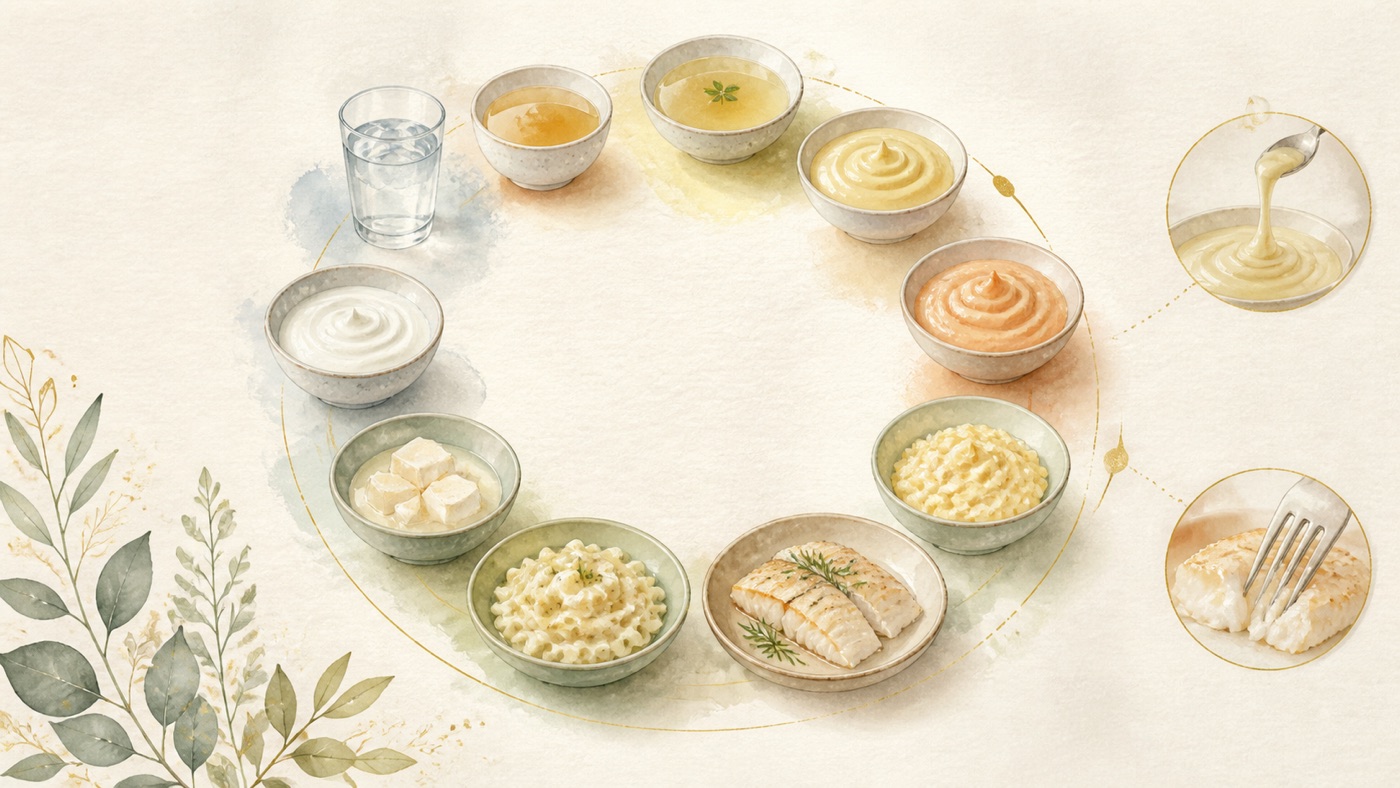
- **There is no one number of days for everyone.** The literature supports median soft-tissue anaesthesia recovery of roughly one to two-plus hours in the control group [F3] and risk of self-injury before sensation returns [F4]. Clinically, eating is therefore generally deferred until sensation returns, but the actual time follows the surgeon's instruction.[F21] Progress afterward depends on surgical extent and loading plan.[F5][F10][F12] Follow written postoperative instructions.[F20][F21]
- インプラント後、いつ食べられますか? — **全員に当てはまる日数は文献にありません。** 対照群の軟組織麻酔の回復中央値は一~二時間余りで [F3]、感覚が戻らないと自傷しやすい [F4] ため、臨床では食事を待つよう勧めることが一般的です。実際の時期は手術歯科医師の指示に従います [F21]。その後は手術範囲と負荷計画によるので [F5][F10][F12]、書面の術後指示を守ってください [F20][F21]。
- When can I eat after an implant? — **There is no one number of days for everyone.** The literature supports median soft-tissue anaesthesia recovery of roughly one to two-plus hours in the control group [F3] and risk of self-injury before sensation returns [F4]. Clinically, eating is therefore generally deferred until sensation returns, but the actual time follows the surgeon's instruction.[F21] Progress afterward depends on surgical extent and loading plan.[F5][F10][F12] Follow written postoperative instructions.[F20][F21]
- May I drink coffee after an implant?
- **Existing clinical research did not show habitual caffeine intake to reduce implant stability during healing (102-person prospective cohort; no statistically significant ISQ difference at 4, 6, or 8 weeks); it measured usual intake and did not cover same-day timing or temperature.**[F13] Animal evidence points the other way but cannot be extrapolated to people.[F14] The relevant concerns are temperature judgment before numbness resolves [F3][F4] and the institution's individual instructions.[F20][F21]
- インプラント後、コーヒーは飲めますか? — **習慣的カフェイン摂取が治癒期の安定性を下げることは、102 人の前向きコホートで示されませんでした。術後 4、6、8 週の ISQ に統計学的差はなく、研究は当日の飲む時期や温度を扱っていません。**[F13] 動物研究は反対方向ですが人に外挿できません [F14]。麻酔が残る間の温度判断 [F3][F4] と、施設からの個別指示 [F20][F21] が実際の注意点です。
- May I drink coffee after an implant? — **Existing clinical research did not show habitual caffeine intake to reduce implant stability during healing (102-person prospective cohort; no statistically significant ISQ difference at 4, 6, or 8 weeks); it measured usual intake and did not cover same-day timing or temperature.**[F13] Animal evidence points the other way but cannot be extrapolated to people.[F14] The relevant concerns are temperature judgment before numbness resolves [F3][F4] and the institution's individual instructions.[F20][F21]
- What about tea?
- **This search obtained no clinical study of tea after implant surgery.**[F24] As with coffee, neither alarm nor endorsement is supported; use temperature, cleaning, and clinician instructions.[F3][F21]
- お茶は飲めますか? — **インプラント術後の茶飲用について、当サイトは臨床研究を取得できませんでした。**[F24] コーヒーと同じく、怖がらせも保証もしません。温度、清掃、歯科医師の指示で判断してください [F3][F21]。
- What about tea? — **This search obtained no clinical study of tea after implant surgery.**[F24] As with coffee, neither alarm nor endorsement is supported; use temperature, cleaning, and clinician instructions.[F3][F21]
Source anchors
- Hersh EV, Moore PA, Papas AS, et al. Reversal of soft-tissue local anesthesia with phentolamine mesylate in adolescents and adults. J Am Dent Assoc.… · https://pubmed.ncbi.nlm.nih.gov/18682623/ · 在 IDAEO 的其他引用
- Smith T, Urquiola R, Oueis H, et al. Comparison of articaine and lidocaine in the pediatric population. J Mich Dent Assoc. 2014;96(1):34-37. PMID 24654413 · https://pubmed.ncbi.nlm.nih.gov/24654413/ · 在 IDAEO 的其他引用
- Yao J, Lee KK, McGrath C, et al. Comparison of patient-centered outcomes after routine implant placement, teeth extraction, and periodontal surgical… · https://pubmed.ncbi.nlm.nih.gov/26970296/ · 在 IDAEO 的其他引用
- Korsch M, Baum A, Bartols A. Postoperative discomfort after implant placement according to the All-on-4 concept with or without Zygoma implants: A… · https://pubmed.ncbi.nlm.nih.gov/31549424/ · 在 IDAEO 的其他引用
- do Nascimento-Júnior EM, Dos Santos GMS, Tavares Mendes ML, et al. Cryotherapy in reducing pain, trismus, and facial swelling after third-molar surgery:… · https://pubmed.ncbi.nlm.nih.gov/30798949/ · 在 IDAEO 的其他引用
- Ockerman A, Bornstein MM, Leung YY, et al. Local haemostatic measures after tooth removal in patients on antithrombotic therapy: a systematic review. Clin… · https://pubmed.ncbi.nlm.nih.gov/30155575/ · 在 IDAEO 的其他引用
- Laugisch O, Ramseier CA, Salvi GE, et al. Effects of two different post-surgical protocols including either 0.05 % chlorhexidine herbal extract or 0.1 %… · https://pubmed.ncbi.nlm.nih.gov/26795622/ · 在 IDAEO 的其他引用
- Esposito M, Grusovin MG, Maghaireh H, Worthington HV. Interventions for replacing missing teeth: different times for loading dental implants. Cochrane… · https://pubmed.ncbi.nlm.nih.gov/23543525/ · 在 IDAEO 的其他引用
- Gallucci GO, Hamilton A, Zhou W, Buser D, Chen S. Implant placement and loading protocols in partially edentulous patients: A systematic review. Clin Oral… · https://pubmed.ncbi.nlm.nih.gov/30328194/ · 在 IDAEO 的其他引用
- Benic GI, Mir-Mari J, Hämmerle CH. Loading protocols for single-implant crowns: a systematic review and meta-analysis. Int J Oral Maxillofac Implants.… · https://pubmed.ncbi.nlm.nih.gov/24660200/ · 在 IDAEO 的其他引用
- Jafarian M, Tabrizi R, Haghi S, Shafiei S. Does Caffeine Affect Dental Implant Stability? A Prospective Cohort Study. J Dent (Shiraz). 2022;23(2):102-105.… · https://pubmed.ncbi.nlm.nih.gov/35783490/ · 在 IDAEO 的其他引用
- Omar O, Abuohashish HM, Alkhamis T, Al-Qarni F. Habitual caffeine intake affects implant osseointegration: An in vivo study. J Periodontal Res.… · https://pubmed.ncbi.nlm.nih.gov/34363706/ · 在 IDAEO 的其他引用
- Galarraga-Vinueza ME, Pagni S, Finkelman M, et al. Prevalence, incidence, systemic, behavioral, and patient-related risk factors and indicators for… · https://pubmed.ncbi.nlm.nih.gov/40489307/ · 在 IDAEO 的其他引用
- Carr BR, Boggess WJ, Coburn JF, et al. Does alcohol consumption protect against late dental implant failures? Oral Surg Oral Med Oral Pathol Oral Radiol.… · https://pubmed.ncbi.nlm.nih.gov/33744204/ · 在 IDAEO 的其他引用
- Mustapha AD, Salame Z, Chrcanovic BR. Smoking and Dental Implants: A Systematic Review and Meta-Analysis. Medicina (Kaunas). 2021;58(1):39. PMID 35056347 · https://pubmed.ncbi.nlm.nih.gov/35056347/ · 在 IDAEO 的其他引用
- Clementini M, Rossetti PH, Penarrocha D, et al. Systemic risk factors for peri-implant bone loss: a systematic review and meta-analysis. Int J Oral… · https://pubmed.ncbi.nlm.nih.gov/24373525/ · 在 IDAEO 的其他引用
- Bain CA. Smoking and implant failure--benefits of a smoking cessation protocol. Int J Oral Maxillofac Implants. 1996;11(6):756-759. PMID 8990637 · https://pubmed.ncbi.nlm.nih.gov/8990637/ · 在 IDAEO 的其他引用
- Rees J. Medicolegal implications of dental implant therapy. Prim Dent J. 2013;2(2):34-38. PMID 23726490 · https://pubmed.ncbi.nlm.nih.gov/23726490/ · 在 IDAEO 的其他引用
- Morgado-Sevillano D, Rodríguez-Molinero J, García-Bravo C, et al. Oral surgery considerations in patients at high-risk of complications related to drug… · https://pubmed.ncbi.nlm.nih.gov/40952869/ · 在 IDAEO 的其他引用
- 醫療法 第 81 條(全國法規資料庫 · https://law.moj.gov.tw/LawClass/LawSingle.aspx?pcode=L0020021&flno=81 · 在 IDAEO 的其他引用
- 醫療法 第 87 條(全國法規資料庫 · https://law.moj.gov.tw/LawClass/LawSingle.aspx?pcode=L0020021&flno=87 · 在 IDAEO 的其他引用
- 菸害防制法 第 24 條(全國法規資料庫 · https://law.moj.gov.tw/LawClass/LawSingle.aspx?pcode=L0070021&flno=24 · 在 IDAEO 的其他引用
Cite this article
Lucy・《When can I eat after an implant? May I drink coffee or tea?|證據鏈》・IDAEO 知識庫・2026-08-13・https://km.idaeo.ai/post/reports/dental-implant-aftercare-diet-evidenceUpdated 2026-08-27