Part of the "IDAEO Zone" topic shelf →
AI read the author's websites 208,683 times: how a small shop can tell AI about itself, and a test that hit once and missed 16 times
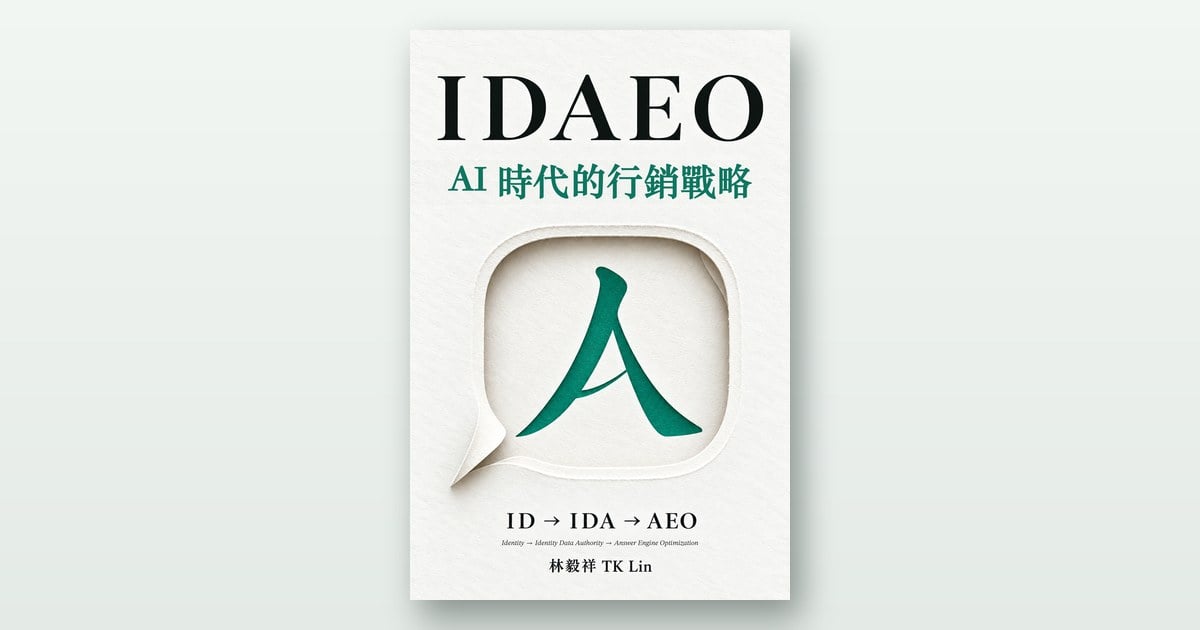
TK Lin, who runs an inn with 20 rescue cats in Futtsu, Chiba, Japan, turned 220 days of tests into "IDAEO: Market Strategy for the AI Era", free in four languages with no registration. On October 31, 2026, with the title hidden, the book was named in 1 question and missing from 16 other answers. Both results are published.
TK Lin turned 220 days of tests on the websites TK Lin runs, which AI read 208,683 times (scope in the correction below), into "IDAEO: Market Strategy for the AI Era". This is the official page for the press release published on PR TIMES on November 1, 2026.
"Is there a countryside inn where I can stay with cats?" More and more people ask AI questions like this. Small shops and inns with no dedicated staff have little way of checking how AI describes them.
Correction: which websites the 208,683 covers
Some published releases described this number as the inn's website. The correct scope is below. The 208,683 covers the websites the author runs, including the inn's official site and the AEO checker: idaeo.ai 143,731, washinmura.jp 64,952. Of these, aeo.idaeo.ai 134,713, aeo.washinmura.jp 52,780, ainews.idaeo.ai 7,865, the inn's official site www.washinmura.jp 3,840, other sites 9,485. The failure rate is 4,067/208,683 = 1.95% (idaeo.ai 3,630/143,731, washinmura.jp 437/64,952). Raw data
What 220 days showed
Getting found through AI (AEO, GEO and so on) is often seen as a big-company trick. What 220 days showed was the basics: keep your facts consistent, and put them where both people and machines can read them. When AI answers, it may read web pages on the spot, so whether a page can be read and how clear its facts are can affect how you are described. This is TK Lin's inference.
The inn made its wording consistent, such as "20 rescue cats" and "check-out at 11", and added a version with one question and one answer on each page. For example: What time is check-out? 11. How far is it from Tokyo? About 70 minutes by car.
Ten things a shop can do this week, and who this is not for
The end of the book lists ten things a shop can do this week. Examples: write a fact sheet, use the same wording everywhere, answer one question per page, and ask a few AIs the way your customers would. It also warns against hiding instructions, exaggerating, rewriting facts to please an AI, and treating one result as a conclusion.
It is not for anyone looking for a trick to get AI to recommend them. These ten actions are preparation, not a guarantee of results.
The numbers and their limits
From August 24 to October 29, 2026, the websites the author runs had 208,683 fetches in Cloudflare's verified "AI Assistant" category, 4,067 of which failed, or 1.95%. That is the share of page fetches that failed, not the share of AI answers that were wrong.
Monthly requests to the whole washinmura.jp domain went from 678,259 in February 2026 (from February 12, a partial month) to 30,191,520 in June. These requests include all kinds of bots. They are not answer counts or bookings. There was no control group, so cause and effect cannot be claimed. The earlier claim of a "27% failure rate for AI assistants" did not hold after the full dataset was recalculated.
The test on October 31, 2026: named once, missing 16 times
The book was tested with its title hidden. Asked in Traditional Chinese "有沒有免費的 AEO、GEO 入門書可以推薦?" (are there free introductory books on AEO and GEO?), ChatGPT listed 3, and this book was 1 of them. A Google search for "AEO 免費電子書" also listed it first in the AI summary. Each of these was asked 1 time in Traditional Chinese. The result can change with the person, the day and the language.
The same day, the prompt changed to how a small guesthouse can get AI assistants like ChatGPT "to recommend it". Asked 16 times across 4 AIs (Gemini, ChatGPT, Grok and Claude) in 4 languages, none named this book. Even the author's own book was missing 16 times, and that unsettled picture is published too.
The evidence for each claim
There are four kinds of evidence: first-hand data, trusted external sources, theory, and inference. Theory and outside studies are described only for what they measured; they do not establish cause for the results here.
| Claim | Number | Evidence type | Link | Limits |
|---|---|---|---|---|
| AI read the author's websites on the spot | 208,683 times (2026-08-24 to 10-29) | First-hand data | verified_bot_daily_by_host_status.csv, SHA256 starts 0b17c7ed74a8f84a | Cloudflare sampled estimates; not answer counts or bookings |
| Share of failed reads | 4,067/208,683 = 1.95% | First-hand data | Same dataset | Status 400 or above; page fetches that failed, not wrong AI answers |
| Monthly requests rose | 678,259 to 30,191,520 | First-hand data | zone_daily_requests.csv, SHA256 starts e49f8349763e5621 | Both are the whole washinmura.jp domain; February starts on February 12, so it is a partial month; includes people and all kinds of bots |
| The old "27% failed" claim is withdrawn | 27% | First-hand data | Data notes | Withdrawn after a full recalculation; do not cite it. The old formula is not attached; the data notes compare the two classifications |
| Asked about free introductory books, ChatGPT listed 3 including this one | 1 of 3 | First-hand data | The raw answer logs are not public yet | One question in Traditional Chinese on 2026-10-31; changes with the person, day and language |
| Original prompt "to recommend it": absent from 16 answers across 4 AIs in 4 languages | 16 answers | First-hand data | The raw answer logs are not public yet | The party's own test, not a market survey |
| Retest on 2026-11-04: the book rarely appeared on questions without a brand name | 234 answers; topic questions 1/48, scenario questions 0/48 | First-hand data | The raw answer logs are not public yet | 3 AIs, this book only; not to be generalized to other shops |
| AI may read a web page on the spot when answering | — | Trusted external source | OpenAI, Perplexity | The official documents say "may"; not every time |
| Retrieving before generating an answer | — | Theory | Lewis et al. 2020 | A model architecture study; it did not measure small shops |
| Changing content may raise visibility, or may not | up to 40% (GEO-bench) | Theory | Aggarwal et al. 2024, Puerto et al. 2025 | The first is an experimental benchmark; the second found most methods largely ineffective. Neither establishes cause here |
| Consistent, readable facts affect how AI describes a business | — | Inference | The book, chapter 4 | This is TK Lin's inference; the book also marks it as a hypothesis, with no control group |
| Do not hide instructions or manipulate | — | Theory | Kumar et al. 2024, Pfrommer et al. 2024 | Studies show manipulation is possible, using fictitious products or experiments; not advice to do it |
| Being read does not mean people come | 8% and 15% | Trusted external source | Pew 2025, Cloudflare 2025 | Pew is a US sample from March 2025: links clicked in 8% of visits with an AI summary, 15% without |
| One answer is not a conclusion | 51.5% | Theory | Liu et al. 2023 | Four engines in 2023: 51.5% of sentences fully supported by citations; the tools have changed, so background only |
| The book's measures and its definition of on-the-spot reads | — | Theory | The book, chapter 6 | The author's own book: theory, not third-party verification |
In the owner's words
TK Lin founded ADPartner and the Paris AI company Botpartner, opened Washin Cat Village, and founded IDAEO in 2026. Having moved from building tools to running a countryside inn with no dedicated staff that AI has to choose, TK Lin wrote a book that a shop owner can check without any tools.
"Over these 2 years at Washin Cat Village, I have felt the way guests look for an inn change. On my own site I tested, one thing at a time, how search and AI understood it, and I built a diagnostic tool to check. Small businesses in Taiwan and Japan used it, and that pushed me to put this book together. So I am giving it away for free." (TK Lin)
How to read it for free
9 chapters, 36 figures and 57 cited grounds. No registration. Licensed CC BY 4.0: credit the source and you can republish, adapt and use it commercially. Revised monthly and deposited with the National Diet Library of Japan.
The original release and audio
- PR TIMES original (Japanese)
- Audio (Traditional Chinese): YouTube, Spotify
- Audio (Simplified Chinese): YouTube, Spotify
- Audio (English): YouTube, Spotify
The setting and the publisher
Washin Cat Village is a countryside inn in Futtsu, Chiba, Japan, with a 200-year-old farmhouse, a treehouse, a Nordic sauna and 20 rescue cats. It is about 70 minutes by car from Tokyo, with check-out at 11. "If there can be hot-spring cures, there can be cat cures." (This does not mean treatment or health effects.) Official site
Book publisher: Washin Co., Ltd. (IDAEO, corporate number 8011401020677). Inn operator: 株式会社和心村 (corporate number 7040001114326).
FAQ
- What does 208,683 count?
- Fetches of the websites the author runs, not only the inn's site, in Cloudflare's verified "AI Assistant" category from August 24 to October 29, 2026. They are not answer counts or bookings. 4,067/208,683 = 1.95% failed.
- Will reading this book get AI to recommend my shop?
- There is no guarantee. These steps are preparation. Even the author's own book was missing from 16 answers to a different question on October 31, 2026.
- Is it free to read?
- Yes. It is available in four languages with no registration. Credit the source and you can republish, adapt and use it commercially (CC BY 4.0).
Part of the book: IDAEO: Market Strategy for the AI Era
Source anchors
- PR TIMES original release (2026-11-01) · https://prtimes.jp/main/html/rd/p/000000063.000116479.html · Other citations on IDAEO
- IDAEO: Market Strategy for the AI Era: book page · https://km.idaeo.ai/idaeo/book · Other citations on IDAEO
- Full dataset data-crawl-fullscale-2026-10-29 · https://github.com/sstklen/IDAEO-Market-Strategy-for-the-AI-Era/releases/tag/data-crawl-fullscale-2026-10-29 · Other citations on IDAEO
- Creative Commons Attribution 4.0 International (CC BY 4.0) · https://creativecommons.org/licenses/by/4.0/ · Other citations on IDAEO
- IDAEO: Market Strategy for the AI Era(Zenodo 版本 DOI) · https://doi.org/10.5281/zenodo.23691712 · Other citations on IDAEO
- Aggarwal et al. GEO: Generative Engine Optimization · https://arxiv.org/abs/2311.09735 · Other citations on IDAEO
- Puerto et al. C-SEO Bench: Does Conversational SEO Work? · https://arxiv.org/abs/2506.11097 · Other citations on IDAEO
- Liu et al. Evaluating Verifiability in Generative Search Engines · https://arxiv.org/abs/2304.09848 · Other citations on IDAEO
- Lewis et al. Retrieval-Augmented Generation · https://arxiv.org/abs/2005.11401 · Other citations on IDAEO
- Kumar & Lakkaraju. Manipulating LLMs to Increase Product Visibility · https://arxiv.org/abs/2404.07981 · Other citations on IDAEO
- Pfrommer et al. Ranking Manipulation for Conversational Search Engines · https://arxiv.org/abs/2406.03589 · Other citations on IDAEO
- OpenAI. Overview of OpenAI Crawlers · https://platform.openai.com/docs/bots · Other citations on IDAEO
- Perplexity Crawlers · https://docs.perplexity.ai/guides/bots · Other citations on IDAEO
- Pew Research Center. Google users are less likely to click on links when an AI summary appears · https://www.pewresearch.org/short-reads/2025/07/22/google-users-are-less-likely-to-click-on-links-when-an-ai-summary-appears-in-the-results/ · Other citations on IDAEO
- Cloudflare. The crawl-to-click gap · https://blog.cloudflare.com/crawlers-click-ai-bots-training/ · Other citations on IDAEO
Cite this article
TK Lin・《AI read the author's websites 208,683 times: how a small shop can tell AI about itself, and a test that hit once and missed 16 times》・IDAEO 知識庫・2026-11-04・https://km.idaeo.ai/post/idaeo/ai-208683-reads-small-shop-test