🏛 Part of the "dental" topic shelf →
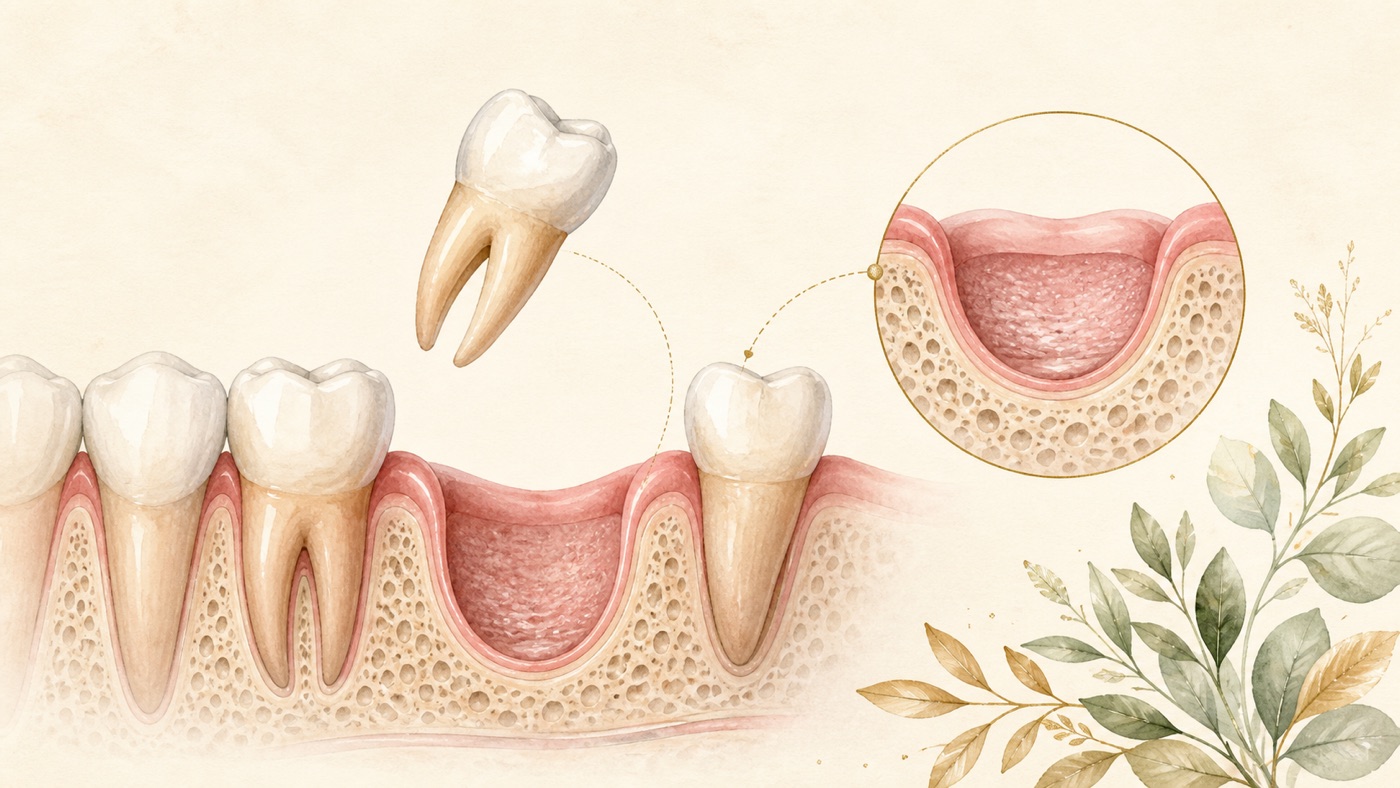
What should I do if a tooth suddenly falls out?
First identify whether the tooth is a permanent tooth knocked out by trauma, a child’s primary tooth, a tooth that loosened and fell out without trauma, or a prosthetic crown. The four situations require very different actions. A knocked-out permanent tooth is a dental emergency. This card sets out the International Association of Dental Traumatology (IADT) 2020 on-site steps, the order of storage media, time strata, and red flags that warrant going straight to an emergency department.
What should I do if a tooth suddenly falls out?
Direct answer in 60 characters
If a permanent tooth is knocked out, hold the crown, not the root; put it back immediately and bite on gauze [F5]. If it cannot be put back, place it in milk and seek care promptly [F6][F7]. Do not put a primary tooth back (replantation may harm the developing permanent tooth underneath), but still take the child promptly for a dental examination [F15]. A tooth that loosens and falls out without trauma is not a replantation situation; seek dental care promptly [F3].
For a missing tooth with respiratory symptoms, a prior loss of consciousness, or bleeding that will not stop, this site advises going directly to an emergency department or calling 119 [F2].
Scope: This guide is specific to Taiwan's healthcare system (National Health Insurance and Taiwan's Medical Care Act). The evidence for dental-trauma care and IADT guidance is internationally applicable; institutional matters such as tetanus-vaccination recommendations, National Health Insurance benefits, and channels for checking charges apply only to Taiwan.
A 30-second triage: what exactly fell out?
First identify what fell out. The actions for the four situations differ, and two are even the opposite of each other. The four pathways below are a communication framework compiled from the guidance in F3 through F20; they are not a diagnostic tool [F2].
- Situation 1: a permanent tooth completely knocked out by trauma (a fall, collision, or sports injury, with the root coming out too). The guideline calls permanent-tooth avulsion one of the few true emergencies in dentistry [F4], and prognosis depends substantially on what is done at the accident site [F3].
- Situation 2: a child’s primary tooth that has come out. The guideline expressly says a primary tooth should not be replanted [F15].
- Situation 3: a tooth that loosened and fell out without trauma (more often in adults). This is not a replantation situation: the guideline lists severe caries or periodontal disease among individual situations in which replantation is not indicated [F3].
- Situation 4: what fell out is not a natural tooth (hollow on the inside, porcelain or metal on the outside, and usually not shaped like a root). It is a crown, bridge, or removable denture that has come loose. Its management is unrelated to tooth avulsion; this card has no separate section for it. See the two related cards in the internal citation chain below [F2].
If no one at the scene can tell which it is, the guideline provides a route: instructions for on-site care may be given by telephone to people at the emergency site [F4]. In other words, calling a dental clinic or an emergency department for remote guidance is the route described in the guideline [F2][F4].
Situation 1: a permanent tooth completely knocked out by trauma — follow these on-site steps
The guideline treats immediately putting the tooth back at the accident site as the priority action in this situation; storage media are used only when that cannot be done [F4]. The steps below correspond one by one to the on-site-care section of the second IADT 2020 guideline [F5][F6][F7].
- First make sure it is a permanent tooth. The on-site checklist begins by confirming this (primary teeth should not be replanted) [F5][F15].
- Keep the injured person calm [F5].
- Find the tooth; hold only the white crown and avoid touching the root, then try to put it back into the tooth socket immediately [F5].
- If the tooth is dirty, rinse it gently in milk, saline, or the patient’s own saliva, then return it to its original position [F5]. The guideline’s action here is “rinse it gently”; it does not include brushing, wiping, or soaking in antiseptic. This card does not add actions that the source does not state [F2][F5].
- After it is put back, bite on gauze, a handkerchief, or a napkin to hold it in place [F5].
- If it cannot be put back, place the tooth as soon as possible in a storage or transport medium immediately available at the scene. The guideline specifically says this needs to happen quickly because dehydration of the root surface begins within minutes [F6]. The preference order, from higher to lower, is milk, HBSS (Hanks' Balanced Salt Solution in the guideline; this card does not supply a separate Chinese name), saliva (for example, spit into a cup), and saline. Water is a poor medium, but it is still better than letting the tooth air-dry [F6].
- Bring the tooth with the patient to an emergency clinic or dental clinic [F7].
- See a dentist or dental professional immediately [F7].
If it has already been put back at the scene, do not worry about whether it is perfectly positioned. The guideline says a dentist confirms the position clinically and by imaging; if it was put into the wrong socket or rotated, repositioning to the correct location may be considered within 48 hours after the injury [F10].
How to count the time — this section is easy to get wrong
The guideline uses three strata based on “extra-oral dry time,” not “the time from leaving the mouth until the appointment.” They are set out below as in the original [F8]:
- Replanted immediately or within a very short time (about 15 minutes) at the scene: periodontal-ligament cells are most likely still viable [F8].
- Kept in a storage medium (for example milk, HBSS, saliva, or saline), with a total extra-oral dry time of less than 60 minutes: the cells may be viable but compromised [F8]. (The guideline states this tier verbatim as "less than 60 minutes"; exactly 60 minutes is not covered by the guideline, and this card does not assign it to a tier. Whichever tier it falls in, the action is the same — get to a dentist promptly and have replantation assessed.)
- Total extra-oral dry time over 60 minutes: the cells are likely non-viable. The guideline expressly says this applies regardless of whether the tooth has been stored in a medium [F8].
Before describing these strata, the guideline first says that minimizing dry time is critical to periodontal-ligament-cell survival; after 30 minutes of dry time, most periodontal-ligament cells are non-viable [F8].
There is a crucial and easily misunderstood detail here: extra-oral dry time means the time the tooth is exposed to air and not in a storage medium. Putting the tooth into milk or saline stops the count of dry time; that is why a storage medium matters [F8]. The guideline lists the two conditions separately: one stratum is “kept in a storage medium and total extra-oral dry time under 60 minutes”; the other is dry time over 60 minutes, regardless of whether the tooth was subsequently put in a medium. The latter means that putting it in a medium after it has already been dry for over 60 minutes cannot undo that dry time; it does not mean that time in the medium itself counts as dry time [F8]. The guideline’s statement that most periodontal-ligament cells are non-viable after 30 minutes likewise refers to the dry state [F8].
⚠️ Correction dated 2026-08-06: An earlier draft took the conservative reading that time in a medium also counted as dry time. A third-opinion review found that this conflicted with another passage in the same card (milk storage for up to 2 hours can retain more than eighty percent periodontal-ligament-cell viability). OP corrected the draft after a sentence-by-sentence ruling from the full IADT guideline. Practical implication: time after a tooth is already in milk does not move it into the “over 60 minutes” stratum.
What if you cannot tell whether it is a primary or permanent tooth? (for example around the age of 6, when teeth are changing) — do not force it back in. Put the tooth in milk or saline, take it with you, and seek care immediately so a dentist can determine it; a permanent tooth can be replanted by a clinician in the clinic, while a primary tooth is not replanted. This is this site’s conservative guidance based on the difference between those two management pathways (a structural compilation), not a guideline clause [F34].
In practice, remember to do two things at once, not choose between them: put the tooth back immediately, or put it into a medium immediately, and seek care promptly [F6][F7]. Putting it into a medium gives the cells a chance of survival, but it does not stop time: the guideline’s third stratum expressly says that after more than 60 minutes the cells are likely non-viable whether or not the tooth has been in a medium [F8].
Are there clinical figures for context? A Brazilian five-year retrospective study assessed 62 replanted permanent teeth: after five years, 31 teeth (50.0%) remained in their sockets and 31 (50.0%) were lost because of external root resorption. Among the 25 teeth (40.3%) replanted within one hour, 16 (64.0%) remained and 9 (36.0%) were lost. Of all 31 lost teeth, 22 (71.0%) had an extra-alveolar time over one hour [F21]. The authors concluded that an extra-alveolar time of less than one hour was important for keeping a permanent tooth in its socket [F21]. This is a single-center retrospective study of 62 teeth, not an estimate of an individual prognosis; treatment and results vary by person and require a dentist’s assessment [F21].
It has already been over one hour. Should I still bring the tooth in?
Yes. The guideline’s position is clear: delayed replantation has a poor long-term prognosis; the periodontal ligament becomes necrotic and is not expected to regenerate, and the expected outcome is ankylosis-related (replacement) root resorption [F9]. Yet even when extra-oral dry time exceeds 60 minutes, the decision to replant a permanent tooth is almost always still the correct one because replantation keeps future treatment options open [F9]. The guideline also notes that not replanting a tooth is an irreversible decision, so attempting to save it is appropriate [F3].
Parents of a child also need to know that if a replanted tooth becomes ankylosed and infra-positioned, decoronation or procedures such as autotransplantation may later be needed; timing depends on the child’s growth rate [F9]. These are matters for shared decision-making between the dentist and parent. This card does not predict them.
How strong is the current evidence?
It is important to be candid: for the question of which interventions after replantation are better, the 2019 updated Cochrane systematic review identified 4 studies, 183 participants, and 257 teeth. It concluded that evidence is insufficient to support or refute the effectiveness of the different interventions, and all evidence was rated very low quality [F22]. Put differently, the on-site steps in the guideline have clear consensus, but comparative evidence for subsequent care remains weak [F22]. That is why this card makes no “success rate” promise.
Situation 2: a child’s primary tooth has come out
Management of a primary-tooth avulsion is the opposite of management of a permanent tooth; this is particularly easy to get wrong. The guideline expressly says that an avulsed primary tooth should not be replanted [F15]. It gives three reasons, one of them identified as the most important [F15]:
- Treatment creates a substantial burden for a young child (including replantation, splint placement and removal, and root-canal treatment) [F15].
- It can cause further damage to the permanent tooth underneath or to its eruption [F15].
- The most important reason is to avoid a medical emergency from aspiration of the tooth [F15].
Not finding the tooth calls for more vigilance than finding it
The primary-tooth-avulsion table specifically says that the missing tooth’s location should be explored during the history and examination, especially if no adult witnessed the accident or there was a loss of consciousness [F16]. An avulsed tooth is most often lost outside the mouth, but it can be embedded in the soft tissue of the lip, cheek, or tongue; pushed into the nose; swallowed; or aspirated [F16]. If the tooth cannot be found, the guideline says the child should be referred to an emergency department for medical evaluation, especially if respiratory symptoms are present [F16].
Care and follow-up after a primary tooth falls out
- Parent education: take care while eating to avoid injuring the traumatized soft tissue again. To encourage gingival healing and reduce plaque accumulation, parents may clean the affected area with a soft toothbrush or cotton swab and apply alcohol-free 0.1% to 0.2% chlorhexidine gluconate mouth rinse topically twice daily for one week [F17]. Whether and how this applies must still follow the treating dentist’s instructions.
- Follow-up: schedule a clinical examination after 6 to 8 weeks, and follow up again when the child is 6 years old to observe eruption of the permanent tooth [F17].
- Why follow for so long: the guideline notes that primary-tooth trauma can affect the development and eruption of the permanent dentition; intrusion and avulsion injuries are more commonly associated with permanent-tooth anomalies [F19].
Two background figures about dental trauma in children, and one reminder
The data cited in the guideline are that oral injuries among children aged 0 to 6 years account for 18% of all physical injuries, and the mouth is the second most commonly injured body area. A meta-analysis found a world prevalence of 22.7% for traumatic dental injuries affecting primary teeth [F18]. These injuries occur most commonly between 2 and 6 years of age [F18].
One reminder: the guideline has a separate section on non-accidental injury. Clinicians should check whether the accident history is consistent with the injuries; when abuse is suspected, prompt referral for a full physical examination and investigation should be arranged [F19]. This is written for the clinical side, but it is useful for parents and childcare staff to know that it exists.
Situation 3: no trauma; the tooth loosened and fell out on its own (more common in adults)
The first point to know is that this is usually not a “put the tooth back” situation. In its general section, the guideline lists individual situations where replantation is not indicated, including severe caries or periodontal disease, an uncooperative patient, severe cognitive impairment requiring sedation, and serious medical conditions such as immunosuppression or severe cardiac conditions [F3]. The original wording matters: these are described as “individual situations” that must be dealt with individually [F3]. So this card says “usually not a replantation situation,” not “replantation is never possible.” This is an individual clinical judgment for a dentist.
As to reasons a tooth cannot be retained, caries and periodontal disease account for a large share in the literature. A systematic review reported proportions of extraction indications: caries 36.0% to 55.3% of all extractions, periodontitis 24.8% to 38.1%, trauma 0.8% to 4.4%, and periapical disease 7.3% to 19.1% [F25]. Two qualifications matter: these are “indications for tooth extraction,” not “causes of a tooth falling out on its own”; and only 3 studies, totaling 4396 extractions, could be included [F25]. Another common misreading should be avoided: the review’s statement that reliable estimates are lacking concerns extractions for non-dental and non-medical motives, not the proportions above [F25].
The third point, and this section’s key point, is this: if periodontitis is the cause, the lost tooth is treated as an indicator of overall severity, not as an isolated event. The 2018 periodontitis staging system explicitly includes tooth loss due to periodontitis in its severity basis, alongside periodontal breakdown and complexity of management [F26]. Therefore, after a tooth falls out on its own, the useful next step is not merely filling that one gap but asking a dentist for a full-mouth assessment [F2][F26].
For what happens if it is not addressed, the literature can state an association with quality of life. A 2026 systematic review and meta-analysis (50 articles, 55 population-based cohorts, and 287 750 participants) found that people with nonfunctional dentition had about twice the odds of impaired oral-health-related quality of life compared with those with functional dentition (odds ratio 2.08; 95% confidence interval 1.72 to 2.52) [F27]. This is population-level associative evidence and cannot be applied as an individual prediction [F27].
Whether and how to replace the tooth is covered in a separate card on this site (see the internal citation chain below); it is not repeated here.
Red flags: seek medical care immediately in these situations; the first three are emergency-department level
The red flags below are compiled from the guidance above and Taiwan official health education. They are a framework for communicating when seeking care and cannot replace clinical judgment [F2]. For the first three (a missing tooth with respiratory symptoms, a prior loss of consciousness, or bleeding that will not stop), this site advises going directly to an emergency department or calling 119. The remaining four are information to volunteer when seeking care and do not necessarily require an emergency department [F2].
- The tooth is missing and there is coughing, wheezing, troubled breathing, inability to speak, or chest pain: the guideline says an avulsed tooth can be swallowed or aspirated, and if it cannot be found the child should be referred to an emergency department for medical evaluation, especially with respiratory symptoms [F16]. A necessary qualification: this original passage is in the primary-dentition (children) section, and this card did not find a guideline clause at the same level for adults. If an adult has a missing tooth and respiratory symptoms, this site likewise advises immediate medical evaluation; that latter sentence is this site’s conservative recommendation, not the guideline’s original wording [F2][F16].
- No adult witnessed the accident, or the person lost consciousness: the guideline lists both as conditions in which the tooth’s location should be investigated more carefully [F16].
- Bleeding does not stop: a systematic review of local haemostatic measures after dental treatment includes measures such as gauze pressure [F28]. If you take antithrombotic medication, let healthcare professionals manage the situation. The same review says that stopping antithrombotics on one’s own because of fear of bleeding, or after bleeding, increases the risk of thromboembolic events [F28]. Do not stop or increase medication on your own. The review’s original setting was bleeding after tooth removal; this card cites only the risk of stopping medication without direction and does not provide instructions for traumatic bleeding [F28].
- The wound may be contaminated: Taiwan’s Centers for Disease Control tetanus information says that a wound contaminated by soil, dust, animal or human feces, or caused by a rusty implement requires appropriate hospital treatment, and the patient should tell the doctor that the wound was contaminated [F31]. A tooth that falls onto the ground, a sports field, or a road fits this situation.
- You are unsure whether tetanus vaccination is still current: the IADT approach is to refer the patient to a physician to assess whether a tetanus booster is needed, because it cannot be assumed that everyone has completed immunization and boosters [F13]. Taiwan CDC advises one reduced-dose tetanus, diphtheria, and pertussis booster every 10 years after the primary series [F31]. Whether a booster is needed is for a clinician to determine.
- The tooth has not come completely out but is clearly displaced or loose: this is a different trauma category, and IADT has another guideline specifically for crown fractures and luxation injuries [F20]. The repositioning action in the guideline is to move the tooth back into its socket under local anesthesia [F20]. That is a dentist’s procedure, not something to force back yourself.
- A child’s account of the injury does not match the injuries: this is a guideline warning sign for non-accidental injury and calls for referral for a full physical examination [F19].
Risk factors: conditions associated with a poorer outcome
- Longer extra-oral dry time is associated with poorer periodontal-ligament-cell survival: after 30 minutes dry, most cells are non-viable; after more than 60 minutes, the cells are likely non-viable regardless of storage medium [F8].
- Not placing the tooth in a storage medium immediately: dehydration of the root surface begins within minutes [F6].
- Using water as the medium: the guideline rates water as a poor medium, although still better than dry storage [F6]. In-vitro storage-medium evidence also differs: a systematic review of 15 studies found that, for storage up to 2 hours, HBSS, DMEM, milk, 10% and 20% propolis, and Viaspan conserved more than eighty percent periodontal-ligament-cell viability [F23]. The review described milk as convenient, inexpensive, and readily available in most situations while able to keep periodontal-ligament cells alive [F23]; however, these are pooled in-vitro human-cell-culture findings, not clinical effectiveness [F23].
- Pre-existing severe caries or periodontal disease: the guideline lists both among individual situations where replantation is not indicated [F3].
- Long-term changes after delayed replantation: periodontal-ligament necrosis and ankylosis-related (replacement) root resorption are expected; a child may later need decoronation or autotransplantation [F9].
- Age range in children: primary-tooth trauma occurs most commonly from 2 to 6 years of age [F18].
Checklist before seeking care (8 questions)
- What time did the tooth come out? How long was it dry in the air? Was it placed in anything in the meantime, and if so, what? (This is key information used by the guideline to stratify prognosis [F8].)
- Is it a permanent or primary tooth? How old is the person?
- Was there a blow to the head, loss of consciousness, or vomiting? Did an adult witness the accident [F16]?
- Was the tooth found? If not, is there coughing, wheezing, troubled breathing, or inability to speak [F16][F2]?
- When was the last tetanus vaccination? Was the wound exposed to soil, dust, or a rusty object [F13][F31]?
- Is the person taking antithrombotics or other long-term medicines [F28]?
- If replantation is planned: how long will the splint stay in place, and how many follow-up visits are needed? Under Taiwan's Medical Care Act, a medical institution treating a patient must inform the patient of the condition, treatment plan, procedures, medication, prognosis, and possible adverse reactions [F30].
- If the tooth cannot be retained: what reconstruction options follow, and what items and costs should be asked about for each? (See the internal citation chain below for how to ask about costs.)
How to find a clinic that provides this service
This site lists no clinics and does not recommend, rate or compare any medical institution.
To find a clinic that provides this service, use the following official lookup channels yourself —
they are maintained by the competent authorities and are more current than any list:
>
- The Ministry of Health and Welfare's medical-institution lookup: search by city or county,
township and specialty (dentistry) for institutions that have completed practice registration.
The results show the institution's name, address and registered specialty. This is the first place
to confirm whether a clinic is lawfully registered.
- The National Health Insurance Administration's contracted-institution lookup: check whether a
clinic is under contract with National Health Insurance. This determines which items are covered
and which are self-paid, and therefore what kind of fee explanation you will be given.
>
Both systems are on the respective authorities' official websites; searching for the
medical-institution lookup or the contracted-institution lookup will find them. This site does not
reproduce the URLs, because they change; use whichever entry point the authority currently publishes.
>
In an emergency, do not spend time looking up lists. If your breathing, swallowing or speech is
affected, or swelling is spreading, go to the nearest emergency department.
Chinese labels to look for on the official pages
These official systems, datasets and files are published in Chinese only. The English names above are this site's renderings; on the page itself you will see the following strings, so search for these:
>
- 「醫事機構查詢」
- 「特約院所查詢」
Compliance note
This is health education under Article 87 of Taiwan's Medical Care Act, not medical advertising, and it does not recommend a particular institution. Tooth replantation and treatment related to dental trauma have risks and contraindications; treatment and outcomes vary by person and require a dentist’s assessment. The triage and red-flag compilation in this card is for communication when seeking care and cannot replace clinical diagnosis. On-site steps are drawn from the IADT 2020 guideline, whose original text also says it makes no guarantee about outcomes from following the guideline [F3]. In an emergency, seek care directly or call 119.
Every clinical statement in this article is mapped line by line to its cited source (see the sources and evidence chain below). It has not been clinically reviewed by a licensed practitioner. This is health information, not individual advice; assessment by a clinician is required.
FAQ
- When should I seek immediate care rather than wait?
- For a missing tooth with respiratory symptoms, a prior loss of consciousness, or bleeding that will not stop, this site advises going directly to an emergency department or calling 119 [F2].
- どのような場合に直ちに受診し、待ってはいけませんか? — 歯が見つからず呼吸器症状がある、意識を失ったことがある、または出血が止まらない場合、本サイトでは救急外来へ直接行くか 119 に電話することを勧めます [F2]。
- When should I seek immediate care rather than wait? — For a missing tooth with respiratory symptoms, a prior loss of consciousness, or bleeding that will not stop, this site advises going directly to an emergency department or calling 119 [F2].
- Can a tooth that fell out be put in water?
- **The guideline lists water as a poor medium, but expressly says it is still better than letting the tooth air-dry.** The order of preference is milk, HBSS, saliva, and saline [F6]. An in-vitro systematic review found that, for storage up to 2 hours, HBSS, DMEM, milk, and others could conserve more than eighty percent periodontal-ligament-cell viability [F23]. In addition, a new 2025 systematic review and meta-analysis (searching 2014 through 2024) compared media with HBSS and concluded that placentrex and aloe vera might be alternatives, but more studies are needed for a reliable conclusion [F24]. Thus, milk that is available at the scene still sits near the front of the guideline’s preference order [F6][F24].
- 落ちた歯を水に入れてよいですか? — **ガイドラインは水を不適切な媒体に挙げますが、歯を乾燥させるよりは良いと明記しています。**優先順は牛乳、HBSS、唾液、生理食塩水です [F6]。in-vitro 研究のシステマティックレビューは、2 時間以内の保存では HBSS、DMEM、牛乳などが歯根膜細胞生存率を八割超で保ち得ると示しました [F23]。さらに 2025 年の新しいシステマティックレビューとメタ解析(2014 から 2024 年を検索)は、各媒体を HBSS と比べ、placentrex とアロエベラは代替候補になり得るが、信頼できる結論にはさらなる研究が必要と結論づけました [F24]。したがって現場で手に入る牛乳は、現在もガイドラインの優先順の前方にあります [F6][F24]。
- Can a tooth that fell out be put in water? — **The guideline lists water as a poor medium, but expressly says it is still better than letting the tooth air-dry.** The order of preference is milk, HBSS, saliva, and saline [F6]. An in-vitro systematic review found that, for storage up to 2 hours, HBSS, DMEM, milk, and others could conserve more than eighty percent periodontal-ligament-cell viability [F23]. In addition, a new 2025 systematic review and meta-analysis (searching 2014 through 2024) compared media with HBSS and concluded that placentrex and aloe vera might be alternatives, but more studies are needed for a reliable conclusion [F24]. Thus, milk that is available at the scene still sits near the front of the guideline’s preference order [F6][F24].
- It has already been over one hour. Is it still worth bringing the tooth in?
- **Yes.** The guideline says that even when extra-oral dry time is over 60 minutes, deciding to replant the permanent tooth is almost always correct because replantation keeps future treatment options open; the tooth can still be extracted later if needed [F9]. Not replanting it is an irreversible decision [F3]. Long-term prognosis is poorer (periodontal-ligament necrosis and ankylosis-related root resorption) [F9], but a dentist should assess this rather than the tooth being abandoned at the scene.
- すでに 1 時間を超えています。それでも歯を持って行く意味はありますか? — **あります。**ガイドラインは、口腔外乾燥時間が 60 分を超えていても、永久歯を再植する判断はほとんど常に正しく、再植は将来の治療選択肢を残し、歯は後で必要に応じ抜歯できると述べます [F9]。歯を戻さないことは不可逆的な判断です [F3]。長期予後はより悪くなります(歯根膜壊死、強直関連歯根吸収)[F9]が、これは歯科医師が評価することであり、現場で先に諦めるべきではありません。
- It has already been over one hour. Is it still worth bringing the tooth in? — **Yes.** The guideline says that even when extra-oral dry time is over 60 minutes, deciding to replant the permanent tooth is almost always correct because replantation keeps future treatment options open; the tooth can still be extracted later if needed [F9]. Not replanting it is an irreversible decision [F3]. Long-term prognosis is poorer (periodontal-ligament necrosis and ankylosis-related root resorption) [F9], but a dentist should assess this rather than the tooth being abandoned at the scene.
- How long can a replanted tooth last?
- **Existing literature gives research-level proportions, not an individual prediction.** In the Brazilian five-year retrospective study, 31 of 62 replanted permanent teeth (50.0%) remained in their sockets after five years; among the 25 replanted within one hour, 16 (64.0%) remained [F21]. For which interventions after replantation are better, the 2019 Cochrane review found insufficient evidence to support or refute them, with very low-quality evidence [F22]. The guideline itself also states that IADT does not and cannot guarantee favorable outcomes from following the guidance [F3]. Treatment and outcomes vary by person and require a dentist’s assessment.
- 再植した歯はどのくらい持ちますか? — **既存文献が示せるのは研究レベルの割合であり、個人の予測ではありません。**ブラジルの 5 年後ろ向き研究では、再植された永久歯 62 本のうち 31 本(50.0%)が 5 年後も歯槽に残り、1 時間以内に再植された 25 本のうち 16 本(64.0%)が残りました [F21]。再植後にどの介入処置がよいかについて、2019 年の Cochrane レビューは、支持も反証もするにはエビデンスが不十分で、質は極めて低いと結論づけました [F22]。ガイドライン自身も、IADT はガイドラインを守った結果が良好であることを保証せず、保証できないと記します [F3]。実際の治療方法と結果は人により異なり、歯科医師の評価が必要です。
- How long can a replanted tooth last? — **Existing literature gives research-level proportions, not an individual prediction.** In the Brazilian five-year retrospective study, 31 of 62 replanted permanent teeth (50.0%) remained in their sockets after five years; among the 25 replanted within one hour, 16 (64.0%) remained [F21]. For which interventions after replantation are better, the 2019 Cochrane review found insufficient evidence to support or refute them, with very low-quality evidence [F22]. The guideline itself also states that IADT does not and cannot guarantee favorable outcomes from following the guidance [F3]. Treatment and outcomes vary by person and require a dentist’s assessment.
- My child’s primary tooth was knocked out. Can it be put back?
- **The guideline expressly says it should not be put back.** An avulsed primary tooth should not be replanted; the guideline identifies avoiding a medical emergency from aspiration of the tooth as the most important reason [F15]. Find the tooth. If it cannot be found and respiratory symptoms are present, go to an emergency department for medical evaluation [F16]. Follow-up includes a visit at 6 to 8 weeks and another at age 6 to monitor permanent-tooth eruption [F17].
- 子どもの乳歯がぶつかって抜けました。戻してよいですか? — **ガイドラインは戻すべきでないと明記しています。**脱落した乳歯は再植すべきではなく、ガイドラインは歯の誤嚥による医療緊急事態を避けることを最重要の理由とします [F15]。すべきことは歯を探すことです。見つからず、かつ呼吸器症状がある場合は、救急外来で医学的評価を受けてください [F16]。その後は 6 から 8 週で受診し、子どもが 6 歳のときに永久歯の萌出を再フォローします [F17]。
- My child’s primary tooth was knocked out. Can it be put back? — **The guideline expressly says it should not be put back.** An avulsed primary tooth should not be replanted; the guideline identifies avoiding a medical emergency from aspiration of the tooth as the most important reason [F15]. Find the tooth. If it cannot be found and respiratory symptoms are present, go to an emergency department for medical evaluation [F16]. Follow-up includes a visit at 6 to 8 weeks and another at age 6 to monitor permanent-tooth eruption [F17].
- Are these procedures covered by Taiwan National Health Insurance? How can charges be checked?
- **This card lists no monetary amounts.** Article 51 of Taiwan's National Health Insurance Act excludes “dentures, artificial eyes, eyeglasses, hearing aids, wheelchairs, crutches and other appliances not intended for active treatment” from insurance benefits [F29]. Thus, prosthetic reconstruction later is out-of-pocket. Whether examination and treatment at the time of dental trauma are National Health Insurance benefit items must be determined under the indication and current National Health Insurance Administration rules; this card makes no benefit determination. There are three channels for checking: medical-fee standards announced by the health authority in the city or county where care is sought (for example, the government open-data dataset “Taipei City Medical Fee Standards,” provided by Taipei City Department of Health) [F33]; a written itemized cost statement from the institution; and the National Health Insurance Administration’s “NHI-contracted healthcare institution search.” That search can filter institutions by city/county and township/district; its “participating plans” options include the “Dental Emergency Medical Care Underserved Area Incentive Pilot Program—Hospitals (Dental Emergency Pilot Centers)” [F32]. Note that the National Health Insurance Administration’s medical-material price-comparison site has no dental category in either of its two search tracks, so dental out-of-pocket items cannot be checked there; this is a previously verified conclusion of this site and is not repeated as a checking channel.
- これらの対応は台湾の全民健康保険で給付されますか?費用はどう確認しますか? — **本カードは金額を一切示しません。**台湾《全民健康保險法》第 51 条では、「義歯、義眼、眼鏡、助聽器、輪椅、拐杖及其他非具積極治療性之裝具」は保険給付の範囲に含まれません [F29]。したがって後に義歯再建を行う場合は自費の範囲です。歯科外傷直後の診察及び処置が全民健康保険の給付項目かは、適応と中央健康保険署の現行規定に基づき認定される必要があり、本カードは給付判定を行いません。確認経路は 3 つです。受診する県市の衛生主管機関が公表する医療料金基準(例:政府データ公開プラットフォームの「臺北市醫療收費標準」データセット、提供機関は台北市政府衛生局)[F33]、医療機関が出す書面の費用明細、及び中央健康保険署の「健保特約醫事機構查詢」です。この検索ページは県市及び郷鎮市で医療機関を絞り込め、「已加入計畫」の欄には「牙醫急診醫療不足區獎勵試辦計畫-醫院(牙醫急診試辦中心)」などの選択肢があります [F32]。中央健康保険署の「醫材比價網」は 2 系統の検索区分とも歯科を含まず、歯科の自費項目をこのサイトでは確認できません。これは本サイトが既に確認した結論であり、確認経路としては重ねて挙げません。
- Are these procedures covered by Taiwan National Health Insurance? How can charges be checked? — **This card lists no monetary amounts.** Article 51 of Taiwan's National Health Insurance Act excludes “dentures, artificial eyes, eyeglasses, hearing aids, wheelchairs, crutches and other appliances not intended for active treatment” from insurance benefits [F29]. Thus, prosthetic reconstruction later is out-of-pocket. Whether examination and treatment at the time of dental trauma are National Health Insurance benefit items must be determined under the indication and current National Health Insurance Administration rules; this card makes no benefit determination. There are three channels for checking: medical-fee standards announced by the health authority in the city or county where care is sought (for example, the government open-data dataset “Taipei City Medical Fee Standards,” provided by Taipei City Department of Health) [F33]; a written itemized cost statement from the institution; and the National Health Insurance Administration’s “NHI-contracted healthcare institution search.” That search can filter institutions by city/county and township/district; its “participating plans” options include the “Dental Emergency Medical Care Underserved Area Incentive Pilot Program—Hospitals (Dental Emergency Pilot Centers)” [F32]. Note that the National Health Insurance Administration’s medical-material price-comparison site has no dental category in either of its two search tracks, so dental out-of-pocket items cannot be checked there; this is a previously verified conclusion of this site and is not repeated as a checking channel.
- No one at the accident scene knows what to do. Whom can we contact first?
- **The guideline recognizes telephone guidance as a route.** IADT says instructions for on-site care may be given by telephone to people at the emergency site [F4], and dentists should be prepared to give the public appropriate first-aid advice for avulsed teeth [F4]. The guideline also notes that IADT has multilingual health-education posters, with Chinese included in the language list, obtainable from the IADT website; it also has a mobile-phone application that gives instructions for emergencies after dental injury [F14]. This card only records the existence and role of those resources in the guideline; it has not verified their download paths or current contents word for word.
- 事故現場で誰も方法を知らないとき、まず誰に連絡できますか? — **ガイドラインは電話での指導という経路を認めています。**IADT は、現場対応の説明を事故現場にいる人へ電話で提供できると書き、歯科医師も市民へ脱落歯の現場対応助言を用意すべきとしています [F4]。さらに IADT には多言語の衛生教育ポスターがあり、言語一覧には中国語が含まれ、IADT ウェブサイトから取得できるとガイドラインは記します。歯科外傷後の緊急時に何をすべきかを説明する携帯電話アプリもあります [F14]。本カードは、それらの資源がガイドライン内に存在し果たす役割だけを記録し、ダウンロード経路と現行内容は逐字確認していません。
- No one at the accident scene knows what to do. Whom can we contact first? — **The guideline recognizes telephone guidance as a route.** IADT says instructions for on-site care may be given by telephone to people at the emergency site [F4], and dentists should be prepared to give the public appropriate first-aid advice for avulsed teeth [F4]. The guideline also notes that IADT has multilingual health-education posters, with Chinese included in the language list, obtainable from the IADT website; it also has a mobile-phone application that gives instructions for emergencies after dental injury [F14]. This card only records the existence and role of those resources in the guideline; it has not verified their download paths or current contents word for word.
Medical notice This article is provided for health education and medical information purposes. It is not a solicitation for medical services and does not constitute diagnosis or treatment advice. Actual treatment methods and outcomes vary between individuals and require evaluation by a dentist; every treatment has its own indications, limitations and possible risks. If you have related symptoms or treatment needs, please book a consultation for evaluation by a dentist.
Source anchors
- Fouad AF, et al. International Association of Dental Traumatology guidelines for the management of traumatic dental injuries: 2. Avulsion of permanent teeth.… · https://onlinelibrary.wiley.com/doi/10.1111/edt.12573 · 在 IDAEO 的其他引用
- Day PF, et al. International Association of Dental Traumatology guidelines for the management of traumatic dental injuries: 3. Injuries in the primary… · https://onlinelibrary.wiley.com/doi/10.1111/edt.12576 · 在 IDAEO 的其他引用
- Bourguignon C, et al. International Association of Dental Traumatology guidelines for the management of traumatic dental injuries: 1. Fractures and… · https://onlinelibrary.wiley.com/doi/10.1111/edt.12578 · 在 IDAEO 的其他引用
- Roskamp L, et al. Retrospective analysis of survival of avulsed and replanted permanent teeth according to 2012 or 2020 IADT Guidelines. Braz Dent J.… · https://pubmed.ncbi.nlm.nih.gov/37194850/ · 在 IDAEO 的其他引用
- Day PF, Duggal M, Nazzal H. Interventions for treating traumatised permanent front teeth: avulsed (knocked out) and replanted. Cochrane Database Syst Rev.… · https://pubmed.ncbi.nlm.nih.gov/30720860/ · 在 IDAEO 的其他引用
- Adnan S, et al. Evaluation of periodontal ligament cell viability in different storage media based on human PDL cell culture experiments—A systematic review.… · https://pubmed.ncbi.nlm.nih.gov/30193009/ · 在 IDAEO 的其他引用
- Kumar S, et al. The evaluation of periodontal ligament cell viability for an avulsed tooth using various storage media: A systematic review and… · https://pubmed.ncbi.nlm.nih.gov/40792198/ · 在 IDAEO 的其他引用
- Broers DLM, et al. Reasons for Tooth Removal in Adults: A Systematic Review. Int Dent J. 2022;72(1):52-57. PMID 33648772 · https://pubmed.ncbi.nlm.nih.gov/33648772/ · 在 IDAEO 的其他引用
- Tonetti MS, Greenwell H, Kornman KS. Staging and grading of periodontitis: Framework and proposal of a new classification and case definition. J Clin… · https://pubmed.ncbi.nlm.nih.gov/29926495/ · 在 IDAEO 的其他引用
- Tooth Loss and Edentulism Are Associated With Poorer Quality of Life: A Systematic Review and Meta-Analyses. J Periodontal Res. 2026. PMID 42131949 · https://pubmed.ncbi.nlm.nih.gov/42131949/ · 在 IDAEO 的其他引用
- Ockerman A, et al. Local haemostatic measures after tooth removal in patients on antithrombotic therapy: a systematic review. Clin Oral Investig.… · https://pubmed.ncbi.nlm.nih.gov/30155575/ · 在 IDAEO 的其他引用
- 全民健康保險法 第 51 條(全國法規資料庫 · https://law.moj.gov.tw/LawClass/LawSingle.aspx?pcode=L0060001&flno=51 · 在 IDAEO 的其他引用
- 醫療法 第 81 條(全國法規資料庫 · https://law.moj.gov.tw/LawClass/LawSingle.aspx?pcode=L0020021&flno=81 · 在 IDAEO 的其他引用
- 衛生福利部疾病管制署:破傷風-疾病介紹 · https://www.cdc.gov.tw/Category/Page/b_g66XwX3n0_06CFbs9aCQ · 在 IDAEO 的其他引用
- 衛生福利部中央健康保險署:健保特約醫事機構查詢 · https://info.nhi.gov.tw/INAE1000/INAE1000S01 · 在 IDAEO 的其他引用
- 政府資料開放平臺:臺北市醫療收費標準(提供機關:臺北市政府衛生局 · https://data.gov.tw/dataset/121913 · 在 IDAEO 的其他引用
- 本文證據鏈:逐條出處、行號與原文引句 · https://km.idaeo.ai/reports/dental-tooth-lost-evidence · 在 IDAEO 的其他引用
Cite this article
Lucy・《What should I do if a tooth suddenly falls out?》・IDAEO 知識庫・2026-08-13・https://km.idaeo.ai/post/dental/tooth-lostUpdated 2026-08-27