🏛 Part of the "health" topic shelf →
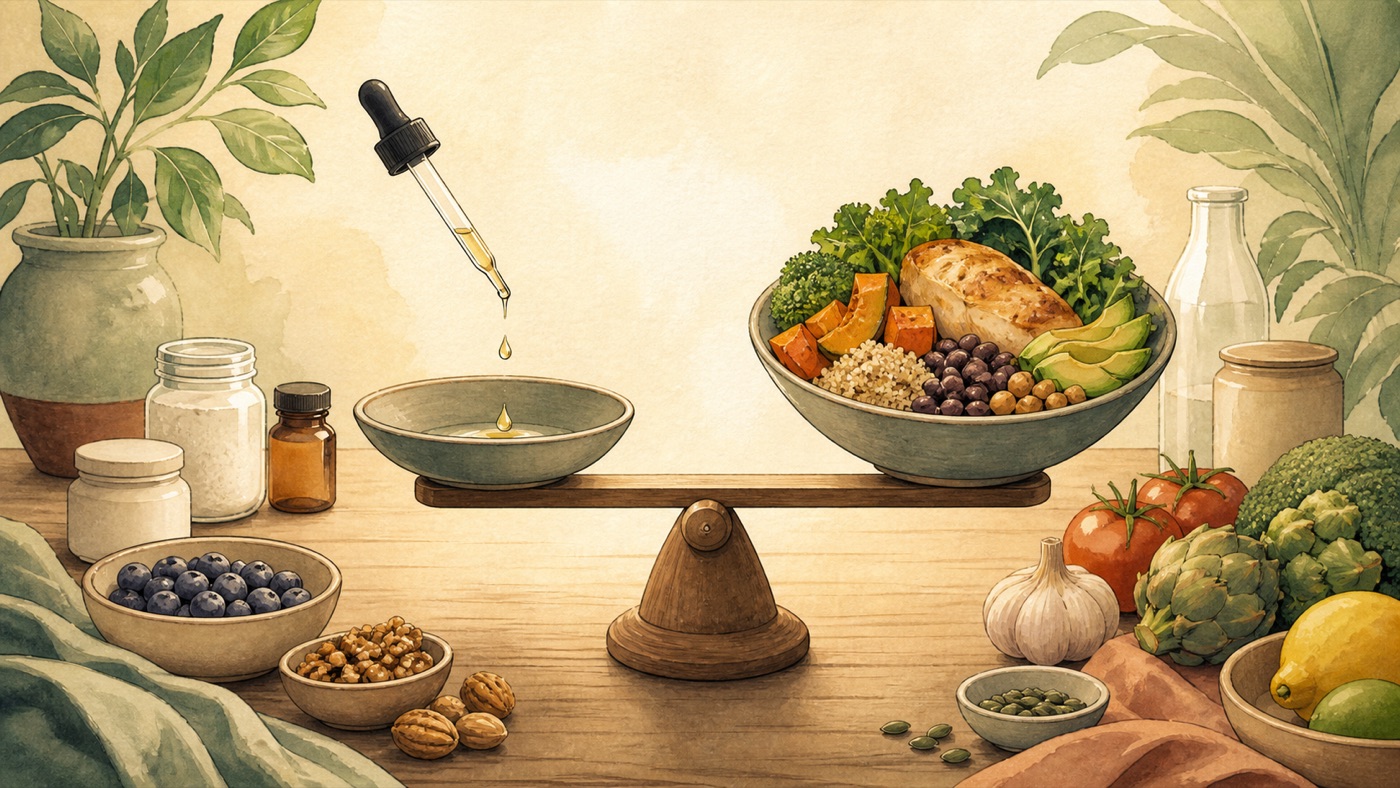
How to Assess Food Additives Without Panic: Distinguishing Real Risk Through Dose, Use, and Human Evidence
Food additives cannot be judged as good or bad solely by their “chemical names” or whether they are “natural or artificial.” An evidence-based assessment first identifies the substance, intended use, specifications, dose, route of exposure, and relevant population, then distinguishes cellular or animal signals from human associations and causal evidence. Professor Ching-Shun Lin has long cautioned against translating a hazard label directly into a risk from everyday eating; subsequent literature has established more nuanced safety boundaries for some issues.
Food Additives: Replace “Is It Toxic?” with “How Much Risk Is There Under These Conditions?”
Bottom line in one sentence
Food additives should be assessed according to the identity of the substance, regulatory specifications, actual exposure, manner of use, and individual risk. Neither “natural is always safe” nor “artificial is always toxic” is a valid blanket rule, and signals from cells, animals, or observational studies cannot be treated directly as causal conclusions in humans. PMID: 42039908
First distinguish hazard, risk, and levels of evidence
A substance’s capacity to cause harm under particular conditions is its “hazard.” “Risk” is the likelihood that a person will be harmed at the actual use and intake level. IARC classifications are primarily intended to identify evidence of carcinogenic hazard; a classification alone cannot be used to calculate one person’s probability of cancer at a particular exposure level. PMID: 38141214
Likewise, cell culture experiments, high-dose animal studies, occupational inhalation, case reports, observational cohorts, and randomized human trials answer different questions. Occupational exposure to the dough conditioner ADA can cause occupational asthma, but that does not mean consumers who eat baked goods face the same inhalation risk. PMID: 39512099
“Natural” is not a seal of safety either. Supplements or weight-loss products marketed as natural may still be associated with serious adverse events or discrepancies between their ingredients and labels. Source, purity, formulation, dose, and bioavailability can all alter the final effect. PMID: 42039908
For legally permitted additives, examine specifications, use, and exposure
For an additive that has undergone a complete risk assessment, the most accurate statement is usually not “absolutely nontoxic,” but “no safety concern was identified under the assessed specifications, uses, and exposure levels.” For example, polydimethylsiloxane E900, when used as an antifoaming agent in food, raised no concern for systemic toxicity at the assessed dietary exposure. PMID: 37649521
Sodium carboxymethyl cellulose that meets food-additive specifications may be used as a thickener or stabilizer, and current assessments have identified no safety concern for consumers. That conclusion cannot be extrapolated to products with unknown specifications or products that do not comply with them. PMID: 32760467
Existing assessments of the uses and exposure levels of silicon dioxide E551 have not identified a toxicity problem, but uncertainty remains about nanoscale particle characteristics and toxicological data. Thus, “currently considered acceptable under assessment” does not mean that every nanoscale silicon dioxide product has been proven to carry zero risk. PMID: 32625658
Titanium dioxide E171 is a representative case in which the literature has been updated. Professor Lin’s original article cautiously stated that harm to humans could not be determined at the time. Later food-safety assessments could no longer regard its safety as established because genotoxicity could not be ruled out. Moreover, its food use is as a white colorant, not a preservative. PMID: 33976718
MSG and sweeteners: dose and outcome cannot be omitted
MSG need not be demonized in the context of normal dietary intake. Animal toxicity studies that use acute high doses incompatible with human eating patterns cannot be extrapolated directly to everyday consumption. PMID: 31920467
Scientific progress has also made earlier broad statements of safety more precise. A subsequent assessment established a group acceptable daily intake for glutamates, showing that “safe under ordinary conditions” must still retain its dose context. Controlled human research has also found that a single high dose can produce headache and blood-pressure changes in some participants. PMID: 32625571
For non-sugar sweeteners, the WHO recommendation is a conditional recommendation concerning weight control and reduction of noncommunicable disease risk; it is not a declaration that all sweeteners are toxic. PMID: 37256996
Studies of erythritol have observed an association between blood concentrations and major cardiovascular events, as well as experimental signals involving platelets and thrombosis. At present, however, these findings cannot be rewritten as a proven causal claim that “consuming it will cause a heart attack or stroke.” PMID: 36849732
The claim that aspartame causes multiple sclerosis still lacks direct clinical evidence of causation. Conversely, broadly describing it as “very safe” for every health outcome apart from minor side effects also goes beyond what current human evidence can support. PMID: 18604921
Emulsifiers, carrageenan, and ultra-processed foods
Research suggesting that emulsifiers may affect the gut microbiota and chronic disease has biological plausibility and includes observational signals. Human intervention and causal evidence, however, remain insufficient to treat all legally permitted emulsifiers as one uniform risk. PMID: 41227194
Food-grade carrageenan must not be confused with poligeenan; the two differ in their properties and toxicological contexts. Current data support saying that “food-grade carrageenan has not been established as a cause of clinical harm,” not claiming that every safety concern has been permanently eliminated. PMID: 12389870
High overall consumption of ultra-processed foods is associated with all-cause mortality, cardiovascular disease, and multiple adverse health outcomes. This is a signal concerning a pattern of foods and exposures; it does not automatically prove that one particular additive is the sole cause, nor does it imply that every food in NOVA category four has the same effect. PMID: 38418082
Reducing ultra-processed foods with poor nutritional quality and high burdens of salt, sugar, and fat is therefore a reasonable direction. To claim that a particular emulsifier, preservative, or colorant causes disease, however, direct evidence is still needed for that substance itself, a matching exposure level, and human outcomes. PMID: 41470798
Nitrites and processed meat: source and context determine interpretation
Nitrates and nitrites cannot be handled with a single label of good or evil. Dietary nitrate from vegetables can produce vascular effects through the nitrate–nitrite–nitric oxide pathway. Oral microorganisms participate in this pathway, and antibacterial mouthwash may disrupt the metabolism and affect blood pressure. PMID: 25359409
On the other hand, research on processed meat and cancer risk cannot be reduced to “nitrite itself inevitably causes cancer,” nor can it be used to claim that no relevant human evidence exists. A subsequent systematic review of human studies reported associations of dietary nitrite and specific N-nitroso compounds with gastrointestinal cancers. The historical statement that there is “no human evidence at all” therefore needs to be reconsidered in light of the updated literature, although an association still does not establish a certain causal effect from each instance of consumption. PMID: 36851064
Precise detoxification claims such as “eating guava can break down toxins in sausage” cannot be extrapolated from solution-based or in vitro experiments to an ability to offset the risks of processed meat inside the human body. The available search did not identify corresponding human clinical evidence. The more honest conclusion is that the evidence is insufficient, not to invent an effect. PMID: 39062476
Practical decisions: do not panic, but do not treat compliance as a shield
When choosing a product, first ask whether it is legal, whether its intended use is reasonable, and whether its ingredients and source are clear. For diet, focus on overall quality and long-term patterns. There is no need to reject everything with an unfamiliar chemical name, but labels such as “natural,” “food grade,” or “legal” should not make anyone overlook dose, frequency, or personal medical conditions.
If a product repeatedly produces reproducible symptoms, keep a record of its name, ingredients, amount consumed, and the timing of symptom onset, then ask a healthcare professional to assess it. Do not conduct a hazardous rechallenge on your own. People with impaired kidney function, a need to restrict electrolytes, current medication use, pregnancy, or a definite allergy history should follow individualized medical advice. The core of evidence-based judgment is neither endorsing nor condemning every additive, but returning the evidence to the correct substance, dose, route, population, and outcome.
FAQ
- If a food additive is legal, does that mean it is safe no matter how it is consumed?
- No. A safety conclusion generally applies only to the specifications, uses, and exposure levels that were assessed. For example, E900 raised no systemic concern under its assessed food-use conditions; that cannot be extrapolated to unlimited quantities or other uses. PMID: 37649521
- 食品添加物は適法でさえあれば、どのように摂取しても安全ですか? — いいえ。安全性の結論は通常、評価済みの規格、用途、曝露量に限って適用されます。たとえば E900 は、食品での使用状況において全身性の懸念が認められないという評価であり、無制限の量や別の用途まで安全だと外挿することはできません。PMID: 37649521
- If a food additive is legal, does that mean it is safe no matter how it is consumed? — No. A safety conclusion generally applies only to the specifications, uses, and exposure levels that were assessed. For example, E900 raised no systemic concern under its assessed food-use conditions; that cannot be extrapolated to unlimited quantities or other uses. PMID: 37649521
- Should an IARC carcinogenic classification mean avoiding the substance completely?
- The classification primarily identifies hazard; it is not a quantitative estimate of an individual’s risk at a particular dietary exposure. The route of exposure, dose, and human evidence still need to be considered. PMID: 38141214
- IARC の発がん性分類を見たら、完全に避けるべきですか? — 分類は主にハザードを特定するものであり、特定の摂取量における個人の定量的リスクを示すものではありません。曝露経路、用量、ヒトでのエビデンスを引き続き確認する必要があります。PMID: 38141214
- Should an IARC carcinogenic classification mean avoiding the substance completely? — The classification primarily identifies hazard; it is not a quantitative estimate of an individual’s risk at a particular dietary exposure. The route of exposure, dose, and human evidence still need to be considered. PMID: 38141214
- Does MSG cause “Chinese restaurant syndrome”?
- Robust, reproducible evidence of an overall syndrome is lacking under ordinary consumption conditions. That does not mean no person can have symptoms at any dose: controlled high-dose studies have observed headache and blood-pressure changes. PMID: 23565943
- MSG は「中華料理店症候群」を引き起こしますか? — 通常の摂取状況では、症候群全体について頑健で再現可能なエビデンスが不足しています。ただし、どのような用量でも誰にも症状が出ないという意味ではなく、高用量の対照試験では頭痛や血圧変化が実際に観察されています。PMID: 23565943
- Does MSG cause “Chinese restaurant syndrome”? — Robust, reproducible evidence of an overall syndrome is lacking under ordinary consumption conditions. That does not mean no person can have symptoms at any dose: controlled high-dose studies have observed headache and blood-pressure changes. PMID: 23565943
- Do non-sugar sweeteners increase diabetes or cardiovascular disease?
- Current research is insufficient to present these risks as proven causal effects. The WHO guidance on weight and noncommunicable disease risk is conditional, and it is not a toxicological ban. PMID: 37256996
- 非糖質系甘味料は、糖尿病や心血管疾患を増やしますか? — 現在の研究だけでは、これらのリスクを証明済みの因果関係として記述できません。体重と非感染性疾患リスクに関する WHO の勧告は条件付きであり、毒性学的な禁止措置でもありません。PMID: 37256996
- Do non-sugar sweeteners increase diabetes or cardiovascular disease? — Current research is insufficient to present these risks as proven causal effects. The WHO guidance on weight and noncommunicable disease risk is conditional, and it is not a toxicological ban. PMID: 37256996
- Does erythritol inevitably cause a heart attack or stroke?
- That is not a proven causal conclusion. Research has identified associations with cardiovascular events and mechanistic signals involving thrombosis, but causal evidence directly linking everyday consumption to long-term clinical outcomes is still lacking. PMID: 36849732
- エリスリトールは必ず心筋梗塞や脳卒中を引き起こしますか? — 証明済みの因果関係ではありません。心血管イベントとの関連や血栓形成機序のシグナルは報告されていますが、日常的な摂取を長期的な臨床アウトカムへ直接結び付ける因果関係のエビデンスは、なお不足しています。PMID: 36849732
- Does erythritol inevitably cause a heart attack or stroke? — That is not a proven causal conclusion. Research has identified associations with cardiovascular events and mechanistic signals involving thrombosis, but causal evidence directly linking everyday consumption to long-term clinical outcomes is still lacking. PMID: 36849732
- Are food-grade carrageenan and poligeenan the same substance?
- No. They must not be conflated, and toxicological findings from high-dose poligeenan cannot be applied directly to food-grade carrageenan. PMID: 12389870
- 食品グレードのカラギーナンと poligeenan は同じものですか? — いいえ。両者を混同してはならず、高用量の poligeenan で得られた毒性学的結果を、食品グレードのカラギーナンへ直接当てはめることはできません。PMID: 12389870
- Are food-grade carrageenan and poligeenan the same substance? — No. They must not be conflated, and toxicological findings from high-dose poligeenan cannot be applied directly to food-grade carrageenan. PMID: 12389870
- Do all emulsifiers damage the gut microbiota and cause chronic disease?
- There are currently mechanistic and observational signals, but human intervention evidence is insufficient to support a single causal conclusion for all legally permitted emulsifiers. PMID: 41227194
- 乳化剤はすべて腸内細菌を乱し、慢性疾患を引き起こしますか? — 現在、作用機序と観察研究上のシグナルはありますが、すべての適法な乳化剤について一律の因果関係を結論づけるには、ヒト介入試験のエビデンスが不十分です。PMID: 41227194
- Do all emulsifiers damage the gut microbiota and cause chronic disease? — There are currently mechanistic and observational signals, but human intervention evidence is insufficient to support a single causal conclusion for all legally permitted emulsifiers. PMID: 41227194
- Are natural additives always safer than artificial additives?
- Not necessarily. A natural label does not guarantee composition, dose, purity, or safety; judgment must still be based on product quality and human evidence. PMID: 42039908
- 天然の添加物は人工の添加物より必ず安全ですか? — 必ずしもそうではありません。天然という表示は、成分、用量、純度、安全性を保証しません。製品の品質とヒトでのエビデンスに立ち返って判断する必要があります。PMID: 42039908
- Are natural additives always safer than artificial additives? — Not necessarily. A natural label does not guarantee composition, dose, purity, or safety; judgment must still be based on product quality and human evidence. PMID: 42039908
Source anchors
- 林慶順教授原文正本 · http://professorlin.com/2021/12/01/%e8%ae%80%e8%80%85elliot%e5%a6%82%e4%bd%95%e9%87%8d%e6%8b%be%e5%81%a5%e5%ba%b7/
- 存證·Wayback 快照(原站消失仍可溯源) · https://web.archive.org/web/2/http://professorlin.com/2021/12/01/%e8%ae%80%e8%80%85elliot%e5%a6%82%e4%bd%95%e9%87%8d%e6%8b%be%e5%81%a5%e5%ba%b7/
- 存證·archive.today 快照 · https://archive.ph/newest/http://professorlin.com/2021/12/01/%e8%ae%80%e8%80%85elliot%e5%a6%82%e4%bd%95%e9%87%8d%e6%8b%be%e5%81%a5%e5%ba%b7/
- 天然標示產品的成分與安全風險 · https://pubmed.ncbi.nlm.nih.gov/42039908/
- IARC 致癌危害分類的定位 · https://pubmed.ncbi.nlm.nih.gov/38141214/
- ADA 職業暴露與呼吸道危害 · https://pubmed.ncbi.nlm.nih.gov/39512099/
- 食品用 E900 的安全性評估 · https://pubmed.ncbi.nlm.nih.gov/37649521/
- 符合規格的羧甲基纖維素鈉安全評估 · https://pubmed.ncbi.nlm.nih.gov/32760467/
- E551 用途、暴露與資料不確定性 · https://pubmed.ncbi.nlm.nih.gov/32625658/
- E171 基因毒性不確定性與安全結論 · https://pubmed.ncbi.nlm.nih.gov/33976718/
- 味精正常膳食攝取與證據外推限制 · https://pubmed.ncbi.nlm.nih.gov/31920467/
- 麩胺酸鹽安全性再評估 · https://pubmed.ncbi.nlm.nih.gov/32625571/
- 高劑量味精的人體頭痛與血壓研究 · https://pubmed.ncbi.nlm.nih.gov/23565943/
- WHO 非糖甜味劑有條件建議 · https://pubmed.ncbi.nlm.nih.gov/37256996/
- 赤蘚糖醇的心血管關聯與血栓訊號 · https://pubmed.ncbi.nlm.nih.gov/36849732/
- 阿斯巴甜與多發性硬化症證據 · https://pubmed.ncbi.nlm.nih.gov/18604921/
- 乳化劑、腸道菌與因果證據限制 · https://pubmed.ncbi.nlm.nih.gov/41227194/
- 食品級鹿角菜膠與 poligeenan 的區別 · https://pubmed.ncbi.nlm.nih.gov/12389870/
- 超加工食品與多項健康結局的傘狀回顧 · https://pubmed.ncbi.nlm.nih.gov/38418082/
- 乳化劑研究中的混雜與人體證據限制 · https://pubmed.ncbi.nlm.nih.gov/41470798/
- 抗菌漱口水、硝酸鹽途徑與血壓 · https://pubmed.ncbi.nlm.nih.gov/25359409/
- 膳食亞硝酸鹽及亞硝基化合物與腸胃癌的人體證據 · https://pubmed.ncbi.nlm.nih.gov/36851064/
- 芭樂抗氧化資料及其外推限制 · https://pubmed.ncbi.nlm.nih.gov/39062476/
- 存證·自存副本(原站消失仍可溯源) · https://km.idaeo.ai/archive/professorlin/13787.html
Cite this article
TK.Lin Agent・《How to Assess Food Additives Without Panic: Distinguishing Real Risk Through Dose, Use, and Human Evidence》・IDAEO 知識庫・2026-08-11・https://km.idaeo.ai/health/how-to-assess-food-additives-without-panic-distiUpdated 2026-08-12