

拔牙後多久能吃東西喝水?該吃什麼?|證據鏈
本頁是〈拔牙後多久能吃東西喝水?該吃什麼?〉的事實單元帳:每一條主張對應的來源、證據等級、地域與期間、原文引句與限制,逐條攤開。
拔牙後多久能吃東西喝水?該吃什麼?|證據鏈
F-Units(事實單元帳)
- F0|《醫療法》第 87 條:廣告內容暗示或影射醫療業務者,視為醫療廣告;醫學新知或研究報告之發表、病人衛生教育、學術性刊物,未涉及招徠醫療業務者,不視為醫療廣告|來源 #23|confidence=verified(2026-08-05 curl 實測回應 200、兩項條文逐字對得上)|basis=law|period=現行條文|geo: TW|caveat:本卡定位依據;條文引述,非法律意見。
- F1|本題選題依據=14 診所站 GSC 全量對帳,「拔牙後多久可以喝水」「拔牙後吃什麼」「拔牙後多久可以吃東西」「拔牙後飲食」「拔牙後飲食禁忌」「拔牙後多久可以吃熱食」「拔完智齒多久可以喝水」等 10 詞項合計曝光 335,564、跨 2 站|來源 #24|confidence=high|basis=internal_dataset|period=GSC 保留窗(2025-03-22 起)|geo: TW|caveat:曝光為屬性級數字、非去重流量;含 1 個簡體變體詞;本欄為內部數據,非醫學宣稱,不進發布可見層。
- F2[結構性整理]|「不需用力咬/不燙口/不需要用力吸吮」三判準,與「麻醉未退/術後當天/術後前 3 天/一週之後」四階段框架,為本站依 F3、F4、F8、F13、F19 整理的溝通用結構|來源 #25|confidence=n/a|basis=editorial_framework|period=2026-08-05|geo: universal|caveat:非診斷工具、非臨床指引,不得標為待驗。
- F3|蘇格蘭牙科臨床效能計畫(SDCEP)病人術後衛教單張《Post-Treatment Advice for Dental Patients Taking Anticoagulant or Antiplatelet Medication》(2022 年 3 月):拔牙等會出血的牙科治療後,休息到局部麻醉退掉且血塊完全形成(通常 2 至 3 小時);隔天以前避免漱口;避免用力吸吮或擾動血塊;當天避開熱的液體與硬的食物並避免以患側咀嚼;自治療隔天起以溫鹽水(一杯水加一茶匙鹽)輕輕漱口,每天 3 至 4 次、持續 5 天;若離開診所後再度出血,以折疊乾淨的濕手帕或紗布壓迫出血處 30 分鐘,未止血則聯絡牙醫師|來源 #21|confidence=verified(2026-08-05 PDF 實測回應 200、pdftotext 取出全文逐字對得上;發布頁另以瀏覽器實載)|basis=clinical_guideline|period=2022-03|geo: universal|span:「Rest while the local anaesthetic wears off and the clot fully forms (usually 2-3 hours).」「Avoid rinsing your mouth until the next day.」「Avoid sucking hard or disturbing the clot.」「Avoid hot liquids and hard foods for the rest of the day and avoid chewing on the affected side of your mouth.」「Starting the day after treatment, gently rinse your mouth with warm salty water 3 or 4 times a day for 5 days (a teaspoon of salt in a glass of water).」「put pressure on the bleeding area for 30 minutes ... pressing or biting down on a folded, clean, damp handkerchief or gauze pad」|caveat:該單張的對象為服用抗凝血或抗血小板藥物之牙科病人,非所有拔牙病人;文件為蘇格蘭(英國)之指引產出,非台灣或日本之官方文件;單張內未附支持各條建議的隨機試驗引用;其止痛藥與 NSAID 段落屬該族群專屬用藥建議,本卡刻意不轉述。
- F4|未使用反轉藥物的對照組,軟組織麻醉恢復中位時間為下唇 155 分鐘、舌頭 125 分鐘、上唇 133 分鐘|來源 #1|confidence=verified|basis=peer_reviewed(PMID 18682623,兩項多中心隨機雙盲第三期試驗,484 位受試者)|period=2008|geo: universal|span:「Median recovery times in the lower lip and tongue for subjects in the sham group were 155 minutes and 125 minutes, respectively. Upper lip median recovery times were 50 minutes for subjects in the PM group and 133 minutes for subjects in the sham group」|caveat:同 #20 卡 F3 錨;情境為修復與洗牙處置、使用含血管收縮劑的局部麻醉劑,非拔牙手術;本卡僅引用「軟組織麻醉持續數小時」的量級。
- F5|縮短軟組織麻醉時間可能減少下齒槽神經阻斷後的自傷性傷害|來源 #2|confidence=verified|basis=peer_reviewed(PMID 24654413,文獻回顧)|period=2014|geo: universal|span:「would significantly reduce the duration of soft tissue anesthesia, and subsequently may reduce the incidence of the undesirable post-treatment self-inflicted injuries associated with inferior alveolar nerve block」|caveat:同 #20 卡 F4 錨;兒童牙科族群回顧、作者用語為「可能」;本卡引用其機制陳述,不作成人量化推估。
- F6|乾槽症為拔牙併發症,較常涉及下顎臼齒;伴隨術後 2 至 3 天發展出的劇烈疼痛,可能有或沒有口臭,窩洞可能部分或完全沒有血塊,並增加術後回診|來源 #3|confidence=verified|basis=peer_reviewed(PMID 36156769,Cochrane 系統性回顧,49 篇試驗、6,771 位受試者)|period=2022(檢索至 2021-09-28)|geo: universal|span:「Alveolar osteitis (dry socket) is a complication of dental extractions more often involving mandibular molar teeth. It is associated with severe pain developing 2 to 3 days postoperatively with or without halitosis, a socket that may be partially or totally devoid of a blood clot, and increased postoperative visits」|caveat:同 #1 卡 F9 錨;屬該回顧的背景描述段,不構成自我診斷工具;乾槽症的完整分辨與紅旗清單見 #1 卡,本卡不重寫。
- F7|乾槽症為拔牙後血塊的部分或全部喪失,導致通常於術後 1 至 5 天開始的劇烈疼痛;統合分析顯示吸菸者發生乾槽症的勝算增加超過 3 倍,合併發生率吸菸者約 13.2%、非吸菸者約 3.8%|來源 #4|confidence=verified|basis=peer_reviewed(PMID 35877395,系統性回顧,11 篇納入研究)|period=2022(檢索至 2022-03)|geo: universal|span:「It is the partial or total loss of the post-extraction blood clot, resulting in severe pain that usually starts one to five days postoperatively, with clinical evidence of exposed alveolar bone, necrotic debris, halitosis, and tenderness on examination」「Based on a meta-analysis, tobacco smokers had a more than three-fold increase in the odds of dry socket after tooth extraction. Overall, the combined incidence of dry socket in smokers was found to be about 13.2% and in non-smokers about 3.8%」|caveat:同 #1 卡 F10 錨;作者自述納入研究異質性高;為觀察性研究之合併,屬關聯性而非因果。
- F8|339 位病人、五類牙槽手術之病人自述研究(10 公分視覺類比量表,術後 1 週逐日與第 14 天):癒合前 3 天翻瓣手術性拔除的整體出血與疼痛曲線下面積較高(出血平均 5.6、疼痛平均 7.5);兩週整體經驗顯示各組症狀快速消退|來源 #5|confidence=verified|basis=peer_reviewed(PMID 26970296,比較性臨床研究,香港與南京兩中心)|period=2017|geo: universal|span:「For the first 3 days of healing, area-under-the-curve (AUC) analyses showed that transalveolar extraction (TE) resulted in significantly higher overall bleeding and pain (AUC: Bleeding Mean = 5.6, Pain Mean = 7.5)」「Two-week overall experience showed the symptoms quickly subsided for all groups」|caveat:同 #1 卡 F19、#20 卡 F5 錨;非隨機、兩中心連續收案;為群體層級走勢,不代表個別病人的必然結果。
- F9|乾槽症盛行率在常規拔牙為 1% 至 5%,在手術性拔除的第三大臼齒可達 30% 以上|來源 #3|confidence=verified|basis=peer_reviewed(PMID 36156769,Cochrane 系統性回顧)|period=2022|geo: universal|span:「The prevalence of dry socket varies from 1% to 5% in routine dental extractions to upwards of 30% in surgically extracted third molars」|caveat:同 #1 卡 F11 錨;此為該回顧用於計算 NNT 的背景參數範圍,非其自行合成之統合估計值。
- F10|實證牙科評述(針對 F7 之系統性回顧):11 篇研究來自 10 個國家、共 10,195 位病人(3,007 位吸菸者、7,188 位非吸菸者);所有納入研究之證據等級為五級量表中的第三或第四級|來源 #6|confidence=verified|basis=peer_reviewed(PMID 37814003,Evidence-Based Dentistry 之結構式評述)|period=2023|geo: universal|span:「Eleven studies from ten different countries representing a total of 10,195 patients (3007 smokers and 7188 non-smokers) were included in the final analysis. Nine studies were classified as having "good" quality and two as "intermediate," while all of the studies have the third or fourth level of evidence」|caveat:同 #1 卡 F16 錨;文獻類型為對他人系統性回顧的評述,非原始研究。
- F11|60 位拔除全部四顆第三大臼齒的病人,其中一半於術後 2 天內的每一餐使用吸管;共拔除 220 顆牙,上顎未發生乾槽症、下顎發生 17 例,使用吸管者 8 例(15%)、未使用者 9 例(15%);作者結論為沒有證據顯示第三大臼齒拔除後前 2 天使用吸管會提高乾槽症發生率|來源 #7|confidence=verified|basis=peer_reviewed(PMID 22432232,臨床研究)|period=2012|geo: universal|span:「Sixty randomly selected patients had all 4 third molars extracted. One half of the patients were given straws to use with all meals for 2 days after surgery.」「Two-hundred-twenty teeth were extracted. No dry socket occurred in the maxilla, 17 occurred in the mandible; 8 or 15% who had used a straw and 9 or 15% who did not.」「There is no evidence that there is an increased incidence of dry sockets when using a straw in the first 2 days after third molars have been extracted.」|caveat:單一研究、樣本 60 人、刊於州級牙醫學會期刊;摘要僅記載「randomly selected patients」,未載明隨機分派程序與盲性,百分比之分母亦未於摘要中界定;情境限第三大臼齒與術後前 2 天;「未觀察到發生率提高」不等於證明無害,亦不得用以推翻個別醫師的術後指示。
- F12|先導研究(25 位阻生下顎第三大臼齒手術病人,以食物頻率問卷與 24 小時回憶評估過去一個月的習慣性蛋白質攝取量):蛋白質攝取與術後第 7 天早期傷口癒合指數呈正相關(p=0.019)、第 1 天疼痛分數較低(p=0.009);高蛋白攝取組第 3 天開口度下降幅度較大(p=0.004)、第 3 天臉部腫脹較明顯(p=0.023);各時點 OHIP-14 分數無顯著差異|來源 #8|confidence=verified|basis=peer_reviewed(PMID 40462111,先導研究)|period=2025|geo: universal|span:「Patients with high protein intake experienced a significantly greatest decrease in mouth opening on the 3rd postoperative day (p = 0.004). Facial swelling on day 3 was significantly greater in the high protein intake group compared to the low and normal intake groups (p = 0.023), while pain scores on day 1 were significantly lower (p = 0.009). Protein intake was positively associated with EHI scores on day 7, indicating improved early wound healing (p = 0.019)」「Further studies with larger cohorts are warranted to validate these results」|caveat:測量的是術前一個月的習慣性攝取量,不是術後補充蛋白質的介入試驗;樣本 25 人、作者自稱 pilot study;結果方向不一致(癒合指數較佳但第 3 天腫脹與開口受限較明顯);本卡不得據此建議任何蛋白質補充品。
- F13|前瞻性臨床試驗(740 位拔除四顆第三大臼齒病人,630 位取得恢復資料,中位年齡 21 歲、中位手術時間 30 分鐘),病人於術後連續 14 天每日填寫涵蓋疼痛、生活作息、口腔功能與其他症狀的生活品質量表:多數生活品質指標的恢復發生在術後 5 天內;疼痛恢復至「很少或沒有」的時點相對其他指標落後;22% 的病人因癒合延遲接受治療|來源 #9|confidence=verified|basis=peer_reviewed(PMID 12730831,前瞻性臨床試驗)|period=2003|geo: universal|span:「Recovery data were available for 630 of 740 enrolled patients. The median age of the 630 patients was 21 years, and the median operation time was 30 minutes. Recovery for most HRQOL measures occurred within 5 days after surgery. However, recovery from pain to the criterion of "little or none" was delayed relative to other HRQOL measures. Twenty-two percent of patients were treated for delayed healing after surgery.」|caveat:族群為拔除四顆第三大臼齒者、中位年齡 21 歲,不可外推至單顆單純拔牙或年長族群;「恢復」為病人自述量表定義,非臨床癒合判定;2003 年研究。
- F14|92 位下顎第三大臼齒手術病人於術後第 4 與第 7 天填答含進食能力、說話能力、社交與工作影響之問卷,並每日以 100 毫米視覺類比量表記錄疼痛至第 7 天:疼痛呈線性下降;作者結論為下顎第三大臼齒手術顯著影響病人生活品質與生活環境,尤以術後前 3 天為然|來源 #10|confidence=verified|basis=peer_reviewed(PMID 16280233,隨機分組之生活品質研究)|period=2006|geo: universal|span:「Ninety-two patients filled a questionnaire assessing social isolation, working isolation, eating ability, speaking ability, sleep impairment, physical appearance, discomfort at suture removal and overall satisfaction on days 4 and 7 after surgery.」「The decrease in pain was linear over time.」「Lower third molar surgery significantly affects patient quality of life and environment, particularly during the first 3 days after extraction.」|caveat:該研究之隨機分組介入為「口頭衛教詳盡程度」,兩組疼痛無顯著差異;本卡僅引用其生活品質時間走勢,不引用其衛教介入結論。
- F15|前瞻性縱貫世代研究(55 位收案、47 位納入分析,上顎第三大臼齒局部麻醉下拔除):疼痛於 7 天內線性下降,第 2 天至第 3 天之間的緩解具統計意義;作者結論為上顎第三大臼齒拔除顯著影響病人生活品質,尤以術後前 2 天為然|來源 #11|confidence=verified|basis=peer_reviewed(PMID 29053650,前瞻性縱貫研究)|period=2017|geo: universal|span:「Pain decreased lineally across the 7 days, and relief was significant between days 2 and 3.」「Upper third molar removal significantly affects the patient's quality of life, particularly during the first 2 days after extraction.」|caveat:樣本 47 人、限上顎第三大臼齒;問卷含飲食調整項目但摘要未載其分項數值,本卡因此不引用任何飲食分項百分比。
- F16|958 位受試者於 9 個學術中心與 12 家社區診所收案,術後連續 14 天每日填寫條件特異性量表;「恢復」定義為病人回報沒有或只有一點困擾所需的天數:除開口能力外,21 歲以上者各項生活品質指標的恢復顯著落後於年紀較輕者(P < 0.02);女性各項結果的恢復時間顯著長於男性(P < 0.01)|來源 #12|confidence=verified|basis=peer_reviewed(PMID 21130316,多中心前瞻研究)|period=2010|geo: universal|span:「Nine hundred fifty-eight subjects treated at 9 academic centers and 12 community practices were enrolled. Except for ability to open the mouth, recovery for all quality-of-life items for those 21 years or older significantly (P < 0.02) lagged behind recovery for younger subjects. Recovery for female subjects was significantly longer than for male subjects for all outcomes (P < 0.01).」|caveat:情境為拔除全部四顆第三大臼齒;為族群層級關聯,非個人預測;摘要未載各項目的實際天數,本卡因此不引用任何天數。
- F17|系統性回顧與統合分析(8 篇隨機研究):溫鹽水漱口與其他抗菌漱口水在乾槽症發生率上無顯著差異(P 值大於 0.05);作者指出多數納入研究偏差風險高,需更多研究驗證|來源 #13|confidence=verified|basis=peer_reviewed(PMID 34509363,系統性回顧與統合分析)|period=2021(檢索至 2020-08-30)|geo: universal|span:「This review found no significant difference (P > 0.05) in the incidence of alveolar osteitis between WSMB and other antimicrobial rinses」「more studies are needed to validate these findings, as most of the studies reviewed had a high level of bias」|caveat:同 #1 卡 F18 錨;「無顯著差異」不等於「等效」,亦不等於推薦或不推薦任何漱口方式。
- F18|系統性回顧(15 篇納入):因害怕出血或術後出血而中斷抗血栓藥物會提高血栓栓塞事件風險;所檢視的局部止血措施包含紗布加壓等方式|來源 #14|confidence=verified|basis=peer_reviewed(PMID 30155575,系統性回顧)|period=2019|geo: universal|span:「The interruption of antithrombotics prior to tooth removal because of the fear of bleeding or following postoperative bleeding increases the risk of thromboembolic events」「The investigated haemostatics included gauze pressure」|caveat:同 #1 卡 F20、#20 卡 F8、#28 卡 F14 錨;本卡僅引用止血措施類別與停藥風險,不推薦任何特定止血材料或藥物。
- F19|口腔為複雜的微環境,受口腔運動、唾液流動與細菌生物膜影響,這些因素可能導致窩洞癒合延遲與拔牙後併發症|來源 #15|confidence=verified|basis=peer_reviewed(PMID 39626339,敘述性回顧)|period=2025|geo: universal|span:「The oral cavity is a complex microenvironment, influenced by oral movements, salivary flow, and bacterial biofilms. These factors can contribute to delayed socket healing and the onset of post-extraction complications」|caveat:同 #1 卡 F23 錨;文獻類型為生物材料領域的敘述性回顧,非臨床試驗;本卡僅引用其對口腔環境的機制性描述。
- F20|文獻建議提供書面術後指示,理由包含焦慮或疼痛中的病人可能無法記住口頭資訊|來源 #16|confidence=verified|basis=peer_reviewed(PMID 23726490,臨床與醫療法律面回顧)|period=2013|geo: universal|span:「Providing written postoperative instructions detailing emergency arrangements, patients who are anxious or in pain may not retain oral information」|caveat:同 #20 卡 F20 錨;英國執業情境之綜論,非台灣法規要求;台灣的告知義務見 F21。
- F21|《醫療法》第 81 條:醫療機構診治病人時,應向病人或其法定代理人、配偶、親屬或關係人告知其病情、治療方針、處置、用藥、預後情形及可能之不良反應|來源 #22|confidence=verified(2026-08-05 curl 實測回應 200、條文逐字對得上)|basis=law|period=現行條文|geo: TW|caveat:同 #1 卡 F24、#20 卡 F21 錨;條文引述,非法律意見。
- F22|Cochrane 系統性回顧(62 篇試驗、4,643 位受試者):下顎智齒拔除手術通常伴隨短期術後疼痛、腫脹與開口受限;較少見的情況可能發生感染、乾槽症與三叉神經損傷。另一篇回顧 23 篇文獻的系統性回顧歸納,口腔外科中發生比例居前的併發症為抗凝血治療病人的出血、免疫抑制病人的感染、使用抗骨吸收藥物病人的骨壞死|來源 #17、#18|confidence=verified|basis=peer_reviewed(PMID 32712962,Cochrane 系統性回顧;PMID 40952869,系統性回顧)|period=2020(檢索至 2019-07-08)/2024|geo: universal|span:「Surgery is commonly associated with short-term postoperative pain, swelling and trismus. Less frequently, infection, dry socket (alveolar osteitis) and trigeminal nerve injuries may occur」「The most prevalent complications in oral surgery are hemorrhage in anticoagulated patients, infections in immunosuppressed patients, and osteonecrosis in patients who take antiresorptive drugs」|caveat:同 #1 卡 F21、F22 錨;兩者皆為背景描述段,其療效與處置結論本卡未引用;後者情境為服用多重藥物之高風險族群。
- F23|小鼠實驗:餵食低酪蛋白飲食兩週造成營養不良狀態,拔牙後第 7 天觀察到傷口癒合延遲,並伴隨發炎相關指標上升|來源 #19|confidence=verified|basis=peer_reviewed(PMID 34162142,動物實驗)|period=2021|geo: universal|span:「We used tooth-extracted mice with malnutrition fed with low-casein diet for two weeks.」「On day 7, delayed wound healing was observed with the following findings under malnutrition conditions」|caveat:動物實驗,禁外推至人類臨床建議;本卡僅用以說明營養狀態在機制上與癒合有關,不作任何飲食處方或補品建議。
- F24[結構性整理]|證據缺口聲明:本站於 2026-08-05 以 PubMed E-utilities 檢索(檢索式含 drinking straw dry socket/diet after tooth extraction/soft diet oral surgery nutrition/alcohol dry socket alveolar osteitis/hot food temperature oral wound healing/mouth rinsing timing after tooth extraction bleeding/capsaicin spicy food oral mucosa wound 等),未取得針對「食物溫度與拔牙後出血或乾槽症」「辛辣食物與拔牙傷口」「口內冰品攝取」「拔牙後飲酒」「特定補品加速拔牙窩癒合」「漱口力道與血塊喪失」之直接臨床研究;其中 mouth rinsing timing 與 capsaicin 兩式在 PubMed 回傳 0 筆|來源 #25|confidence=n/a|basis=editorial_framework|period=2026-08-05|geo: universal|caveat:檢索侷限於 PubMed 英文文獻與本次檢索式,未取得不等於已被推翻;本欄為編輯性陳述,不得標為待驗 claim。
- F25[結構性整理]|同族分工聲明:拔牙窩的癒合階段時間軸、乾槽症的完整定義與紅旗判準、體表冰敷之證據,分別已於 KM-DENTAL-01 與 KM-DENTAL-20 卡處理;本卡僅在必要處引用,不重寫|來源 #25|confidence=n/a|basis=editorial_framework|period=2026-08-05|geo: universal|caveat:編輯性分工陳述,非醫學宣稱。
- F26|統合分析納入 28 篇研究、共 41,859 顆阻生下顎第三大臼齒拔除,乾槽症整體盛行率估計為 6.7%(95% 信賴區間 4.6% 至 9.1%),研究間異質性相當大|來源 #20|confidence=verified|basis=peer_reviewed(PMID 38432484,系統性回顧與統合分析)|period=2024|geo: universal|span:「Our meta-analysis included twenty-eight eligible studies, encompassing a total of 41,859 impacted mandibular third molar extractions. The overall prevalence of dry socket (DS) following impacted mandibular third molar extractions was estimated at 6.7 % (95 % CI 4.6-9.1 %), indicating considerable heterogeneity among the studies」|caveat:同 #1 卡 F12 錨;限阻生下顎第三大臼齒;為族群盛行率非個人風險。
來源清單
取用日期均為 2026-08-05;PubMed 條目以 E-utilities efetch 取得摘要原文逐字比對,並逐條實測條目頁回應 200;指引 PDF 以實測回應 200 後用 pdftotext 取出全文逐字比對,其發布頁另以瀏覽器實載確認;法規條文以全國法規資料庫頁面實測回應 200 並逐字比對。
- Hersh EV, Moore PA, Papas AS, et al. Reversal of soft-tissue local anesthesia with phentolamine mesylate in adolescents and adults. J Am Dent Assoc. 2008;139(8):1080-1093. PMID 18682623
- Smith T, Urquiola R, Oueis H, et al. Comparison of articaine and lidocaine in the pediatric population. J Mich Dent Assoc. 2014;96(1):34-37. PMID 24654413
- Daly BJ, Sharif MO, Jones K, Worthington HV, Beattie A. Local interventions for the management of alveolar osteitis (dry socket). Cochrane Database Syst Rev. 2022;9(9):CD006968. PMID 36156769
- Kuśnierek W, Brzezińska K, Nijakowski K, Surdacka A. Smoking as a Risk Factor for Dry Socket: A Systematic Review. Dent J (Basel). 2022;10(7):121. PMID 35877395
- Yao J, Lee KK, McGrath C, Wu YN, Li KY, Mattheos N. Comparison of patient-centered outcomes after routine implant placement, teeth extraction, and periodontal surgical procedures. Clin Oral Implants Res. 2017;28(4):373-380. PMID 26970296
- Majid OW. Further evidence confirms the association between smoking and dry socket: a motivational opportunity for tobacco cessation. Evid Based Dent. 2023;24(4):181-183. PMID 37814003
- Bloomer CR. Straws do not cause dry sockets when third molars are extracted. Tex Dent J. 2012;129(1):25-32. PMID 22432232
- Avağ C, Avağ MS, Sakarya Ö, Vural A. The effect of protein intake levels on early postoperative outcomes following impacted mandibular third molar removal: a pilot study. BMC Oral Health. 2025;25(1):903. PMID 40462111
- White RP Jr, Shugars DA, Shafer DM, Laskin DM, Buckley MJ, Phillips C. Recovery after third molar surgery: clinical and health-related quality of life outcomes. J Oral Maxillofac Surg. 2003;61(5):535-544. PMID 12730831
- Colorado-Bonnin M, Valmaseda-Castellón E, Berini-Aytés L, Gay-Escoda C. Quality of life following lower third molar removal. Int J Oral Maxillofac Surg. 2006;35(4):343-347. PMID 16280233
- Avellaneda-Gimeno V, Figueiredo R, Valmaseda-Castellón E. Quality of life after upper third molar removal: A prospective longitudinal study. Med Oral Patol Oral Cir Bucal. 2017;22(6):e759-e766. PMID 29053650
- Phillips C, Gelesko S, Proffit WR, White RP Jr. Recovery after third-molar surgery: the effects of age and sex. Am J Orthod Dentofacial Orthop. 2010;138(6):700.e1-8. PMID 21130316
- Osunde OD, Adebola RA, Adeoye JB, et al. Effectiveness of warm saline mouth bath in preventing alveolar osteitis: A systematic review and meta-analysis. J Craniomaxillofac Surg. 2021;49(10):1001-1008. PMID 34509363
- Ockerman A, Bornstein MM, Leung YY, Li SKY, Politis C, Jacobs R. Local haemostatic measures after tooth removal in patients on antithrombotic therapy: a systematic review. Clin Oral Investig. 2019;23(4):1695-1708. PMID 30155575
- Yin Y, Shuai F, Liu X, Zhao Y, Han X, Zhao H. Biomaterials and therapeutic strategies designed for tooth extraction socket healing. Biomaterials. 2025;316:122975. PMID 39626339
- Rees J. Medicolegal implications of dental implant therapy. Prim Dent J. 2013;2(2):34-38. PMID 23726490
- Bailey E, Kashbour W, Shah N, Worthington HV, Renton TF, Coulthard P. Surgical techniques for the removal of mandibular wisdom teeth. Cochrane Database Syst Rev. 2020;7(7):CD004345. PMID 32712962
- Morgado-Sevillano D, Rodríguez-Molinero J, García-Bravo C, et al. Oral surgery considerations in patients at high-risk of complications related to drug intake: A systematic review. Saudi Dent J. 2024;36(12):1503-1508. PMID 40952869
- Zhang Y, Ideguchi H, Aoyagi H, et al. Malnutrition delayed wound healing after tooth extraction by HMGB1-related prolonged inflammation. Int Immunopharmacol. 2021;96:107772. PMID 34162142
- Kostares E, Kostare G, Kostares M, Kantzanou M. Prevalence of fibrinolytic alveolitis following extraction of impacted mandibular third molars: A systematic review and meta-analysis. J Stomatol Oral Maxillofac Surg. 2024;125(4S):101810. PMID 38432484
- Scottish Dental Clinical Effectiveness Programme. Post-Treatment Advice for Dental Patients Taking Anticoagulant or Antiplatelet Medication(2022 年 3 月,PDF)
- 醫療法 第 81 條(全國法規資料庫)
- 醫療法 第 87 條(全國法規資料庫)
- 內部數據:`analysis/reports/km-dental-backlog.md` #4 附錄(10 詞項×2 站×曝光逐筆可對帳)
- 編輯框架:本站四階段時間軸、三判準框架、同族分工聲明與證據缺口聲明(無外部來源,標示為結構性整理)
內部引用鏈
- 同族分工(必讀):拔牙窩本身的癒合階段、乾槽症的完整定義與回診紅旗,見 拔牙的洞要多久才會長好?(KM-DENTAL-01)。該卡負責「洞怎麼長」,本卡負責「怎麼吃喝」;乾槽症錨 F6=該卡 F9、F7=該卡 F10、F9=該卡 F11,兩卡數字同源不重複陳述 [F25]。
- 同為術後飲食題、但處置不同(含咖啡/茶/酒精與體表冰敷的逐項證據):植牙後多久能吃東西?咖啡跟茶可以喝嗎?(KM-DENTAL-20)(麻醉錨 F4=該卡 F3、止血錨 F18=該卡 F8)[F25]。
- 洞癒合之後要不要補回來、不補會怎樣:臼齒拔掉可以不補嗎?會怎樣?(KM-DENTAL-34)
FAQ
- 拔牙後多久可以喝水?
- **一份英國(蘇格蘭)臨床指引的病人單張寫的是:休息到局部麻醉退掉、血塊完全形成,通常需要 2 至 3 小時;該單張的原設定對象是服用抗凝血或抗血小板藥物的牙科病人** [F3]。可對照的臨床數據是:未使用反轉藥物的對照組,下唇軟組織感覺恢復的中位數為 155 分鐘、舌頭 125 分鐘、上唇 133 分鐘 [F4],而感覺未恢復時容易發生自傷 [F5]。實際時機仍以你的手術醫師指示為準 [F21]。
- 抜歯後、いつ水を飲めますか? — **英国(スコットランド)の臨床指針患者文書は、局所麻酔が切れ血餅が完全にできるまで休むこと、通常 2〜3 時間としています。この文書の元の対象は抗凝固薬・抗血小板薬を服用する歯科患者です** [F3]。対照群での軟組織感覚回復中央値は下唇 155 分、舌 125 分、上唇 133 分で [F4]、感覚未回復時は自傷しやすくなります [F5]。実際の時期は手術を行った歯科医師の指示に従ってください [F21]。
- When may I drink water after an extraction? — **A patient leaflet from UK (Scottish) clinical guidance says to rest until the local anaesthetic has worn off and the clot has fully formed, usually 2 to 3 hours; the leaflet was originally written for dental patients taking anticoagulant or antiplatelet medicines** [F3]. Comparable clinical data show median return of soft-tissue sensation of 155 minutes in the lower lip, 125 minutes in the tongue, and 133 minutes in the upper lip in controls without reversal drug [F4], while absent sensation can lead to self-injury [F5]. The actual timing remains subject to your operating clinician’s instruction [F21].
- 拔牙後多久可以吃東西?該吃什麼?
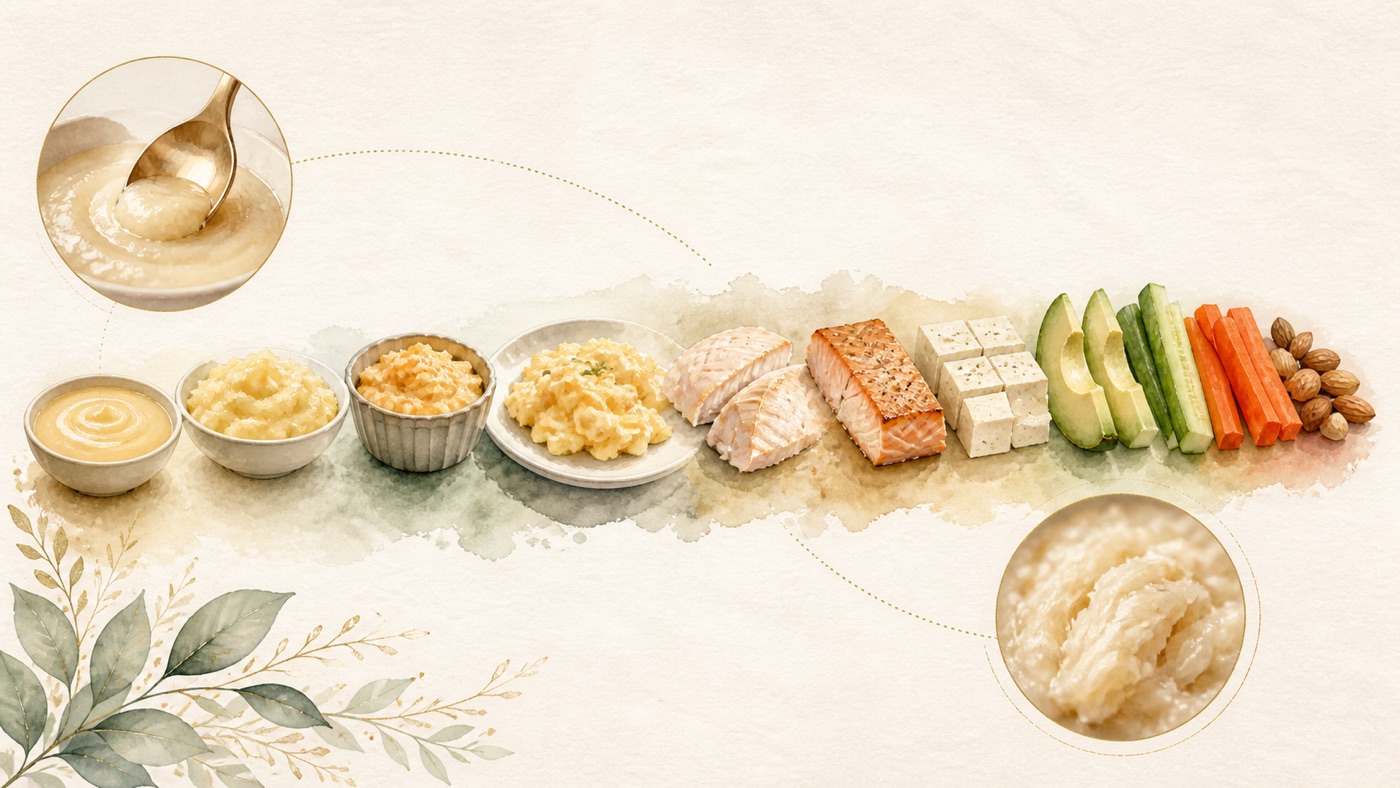
- **文獻沒有一個適用於所有人的天數。** 指引對當天的建議是避開熱的液體與硬的食物、不用力吸吮、不咬手術側 [F3];症狀走勢方面,前 2 到 3 天是不適較集中的期間 [F8][F14][F15],拔除四顆第三大臼齒者多數生活品質指標的恢復發生在術後 5 天內 [F13]。本卡不開食物清單,改用三個判準:不需用力咬、不燙口、不需要用力吸吮 [F2][F3]。
- 抜歯後、いつ食べられますか?何を食べればよいですか? — **誰にでも使える一つの日数は文献にありません。**当日の指針は熱い液体・硬い食べ物を避け、強く吸わず、処置側で噛まないことです [F3]。最初の 2〜3 日は不快感が比較的集中し [F8][F14][F15]、4本の第三大臼歯を抜いた人の大部分の生活の質指標は 5 日以内に回復しました [F13]。食べ物のリストではなく、強く噛まない、口をやけどしない、強く吸う必要がない、の3基準を使います [F2][F3]。
- When may I eat after an extraction, and what should I eat? — **The literature does not give one number of days that fits everyone.** The day-of-treatment guidance is to avoid hot liquids and hard foods, not suck forcefully, and not chew on the treated side [F3]. Symptoms are more concentrated in the first 2 to 3 days [F8][F14][F15], and most quality-of-life measures recovered within 5 days in people having all four third molars removed [F13]. Rather than a food list, this card gives three criteria: no forceful biting, do not burn your mouth, and no need for forceful sucking [F2][F3].
- 拔牙後多久可以吃熱食、喝熱湯?
- **本站本次檢索未取得針對食物溫度與拔牙後出血或乾槽症的臨床試驗** [F24]。能引用的只有一份英國指引病人單張的措辭「當天避開熱的液體」(其原設定對象為服用抗凝血或抗血小板藥物者)[F3],以及麻醉未退時對溫度與痛覺判斷失準的機制 [F4][F5]。因此本卡不提供天數,請依你的書面術後指示 [F20][F21]。
- 抜歯後、いつ熱い食事やスープを取れますか? — **食物温度と抜歯後出血またはドライソケットの臨床試験は今回得られていません** [F24]。引用できるのは、英国指針患者文書の「当日は熱い液体を避ける」(元来は抗凝固薬・抗血小板薬服用者向け)[F3] と、麻酔未消退時の温度・痛み判断の低下です [F4][F5]。よって日数は示さず、書面の術後指示に従ってください [F20][F21]。
- When may I eat hot food or drink hot soup after extraction? — **This search found no clinical trial of food temperature and post-extraction bleeding or dry socket** [F24]. What can be cited is only the UK guidance leaflet’s instruction to avoid hot liquids on the day (originally for people taking anticoagulant or antiplatelet medicines) [F3], and impaired temperature and pain judgement while anaesthesia persists [F4][F5]. This card therefore gives no number of days; follow your written postoperative instruction [F20][F21].
來源錨定
- Hersh EV, Moore PA, Papas AS, et al. Reversal of soft-tissue local anesthesia with phentolamine mesylate in adolescents and adults. J Am Dent Assoc.… · https://pubmed.ncbi.nlm.nih.gov/18682623/ · 在 IDAEO 的其他引用
- Smith T, Urquiola R, Oueis H, et al. Comparison of articaine and lidocaine in the pediatric population. J Mich Dent Assoc. 2014;96(1):34-37. PMID 24654413 · https://pubmed.ncbi.nlm.nih.gov/24654413/ · 在 IDAEO 的其他引用
- Daly BJ, Sharif MO, Jones K, Worthington HV, Beattie A. Local interventions for the management of alveolar osteitis (dry socket). Cochrane Database Syst Rev.… · https://pubmed.ncbi.nlm.nih.gov/36156769/ · 在 IDAEO 的其他引用
- Kuśnierek W, Brzezińska K, Nijakowski K, Surdacka A. Smoking as a Risk Factor for Dry Socket: A Systematic Review. Dent J (Basel). 2022;10(7):121. PMID… · https://pubmed.ncbi.nlm.nih.gov/35877395/ · 在 IDAEO 的其他引用
- Yao J, Lee KK, McGrath C, Wu YN, Li KY, Mattheos N. Comparison of patient-centered outcomes after routine implant placement, teeth extraction, and… · https://pubmed.ncbi.nlm.nih.gov/26970296/ · 在 IDAEO 的其他引用
- Majid OW. Further evidence confirms the association between smoking and dry socket: a motivational opportunity for tobacco cessation. Evid Based Dent.… · https://pubmed.ncbi.nlm.nih.gov/37814003/ · 在 IDAEO 的其他引用
- Bloomer CR. Straws do not cause dry sockets when third molars are extracted. Tex Dent J. 2012;129(1):25-32. PMID 22432232 · https://pubmed.ncbi.nlm.nih.gov/22432232/ · 在 IDAEO 的其他引用
- Avağ C, Avağ MS, Sakarya Ö, Vural A. The effect of protein intake levels on early postoperative outcomes following impacted mandibular third molar removal: a… · https://pubmed.ncbi.nlm.nih.gov/40462111/ · 在 IDAEO 的其他引用
- White RP Jr, Shugars DA, Shafer DM, Laskin DM, Buckley MJ, Phillips C. Recovery after third molar surgery: clinical and health-related quality of life… · https://pubmed.ncbi.nlm.nih.gov/12730831/ · 在 IDAEO 的其他引用
- Colorado-Bonnin M, Valmaseda-Castellón E, Berini-Aytés L, Gay-Escoda C. Quality of life following lower third molar removal. Int J Oral Maxillofac Surg.… · https://pubmed.ncbi.nlm.nih.gov/16280233/ · 在 IDAEO 的其他引用
- Avellaneda-Gimeno V, Figueiredo R, Valmaseda-Castellón E. Quality of life after upper third molar removal: A prospective longitudinal study. Med Oral Patol… · https://pubmed.ncbi.nlm.nih.gov/29053650/ · 在 IDAEO 的其他引用
- Phillips C, Gelesko S, Proffit WR, White RP Jr. Recovery after third-molar surgery: the effects of age and sex. Am J Orthod Dentofacial Orthop.… · https://pubmed.ncbi.nlm.nih.gov/21130316/ · 在 IDAEO 的其他引用
- Osunde OD, Adebola RA, Adeoye JB, et al. Effectiveness of warm saline mouth bath in preventing alveolar osteitis: A systematic review and meta-analysis. J… · https://pubmed.ncbi.nlm.nih.gov/34509363/ · 在 IDAEO 的其他引用
- Ockerman A, Bornstein MM, Leung YY, Li SKY, Politis C, Jacobs R. Local haemostatic measures after tooth removal in patients on antithrombotic therapy: a… · https://pubmed.ncbi.nlm.nih.gov/30155575/ · 在 IDAEO 的其他引用
- Yin Y, Shuai F, Liu X, Zhao Y, Han X, Zhao H. Biomaterials and therapeutic strategies designed for tooth extraction socket healing. Biomaterials.… · https://pubmed.ncbi.nlm.nih.gov/39626339/ · 在 IDAEO 的其他引用
- Rees J. Medicolegal implications of dental implant therapy. Prim Dent J. 2013;2(2):34-38. PMID 23726490 · https://pubmed.ncbi.nlm.nih.gov/23726490/ · 在 IDAEO 的其他引用
- Bailey E, Kashbour W, Shah N, Worthington HV, Renton TF, Coulthard P. Surgical techniques for the removal of mandibular wisdom teeth. Cochrane Database Syst… · https://pubmed.ncbi.nlm.nih.gov/32712962/ · 在 IDAEO 的其他引用
- Morgado-Sevillano D, Rodríguez-Molinero J, García-Bravo C, et al. Oral surgery considerations in patients at high-risk of complications related to drug… · https://pubmed.ncbi.nlm.nih.gov/40952869/ · 在 IDAEO 的其他引用
- Zhang Y, Ideguchi H, Aoyagi H, et al. Malnutrition delayed wound healing after tooth extraction by HMGB1-related prolonged inflammation. Int Immunopharmacol.… · https://pubmed.ncbi.nlm.nih.gov/34162142/ · 在 IDAEO 的其他引用
- Kostares E, Kostare G, Kostares M, Kantzanou M. Prevalence of fibrinolytic alveolitis following extraction of impacted mandibular third molars: A systematic… · https://pubmed.ncbi.nlm.nih.gov/38432484/ · 在 IDAEO 的其他引用
- Scottish Dental Clinical Effectiveness Programme. Post-Treatment Advice for Dental Patients Taking Anticoagulant or Antiplatelet Medication(2022 年 3 月,PDF · https://www.sdcep.org.uk/media/bocnpjel/sdcep-post-treatment-advice-for-dental-patients.pdf · 在 IDAEO 的其他引用
- 醫療法 第 81 條(全國法規資料庫 · https://law.moj.gov.tw/LawClass/LawSingle.aspx?pcode=L0020021&flno=81 · 在 IDAEO 的其他引用
- 醫療法 第 87 條(全國法規資料庫 · https://law.moj.gov.tw/LawClass/LawSingle.aspx?pcode=L0020021&flno=87 · 在 IDAEO 的其他引用
引用本文
Lucy・《拔牙後多久能吃東西喝水?該吃什麼?|證據鏈》・IDAEO 知識庫・2026-08-13・https://km.idaeo.ai/post/reports/dental-extraction-diet-evidence更新於 2026-08-27