

🏛 Part of the "vet" topic shelf →
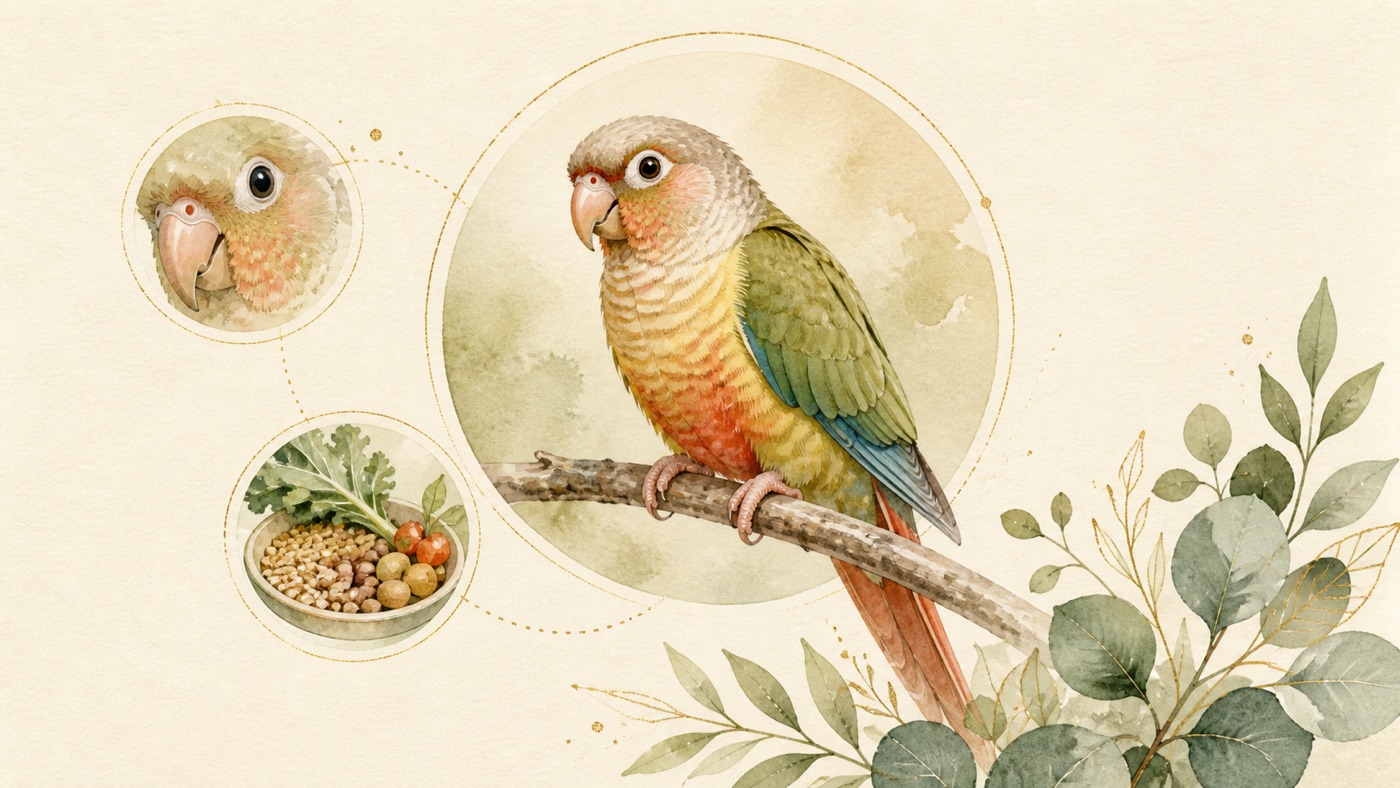
Small-to-medium parrots|10 common diseases (cause → signs → examination → treatment direction → prevention)
The 10 common diseases of small-to-medium parrots (budgerigar/cockatiel/monk parakeet) gathered into one table: 羽毛與喙病 PBFD (Psittacine Beak and Feather Disease), 多瘤病毒病 Polyomavirus, 鸚鵡披衣菌病/鸚鵡熱 Chlamydiosis (psittacosis), 麴菌病 Aspergillosis, 滴蟲病 Trichomoniasis, 卡蛋/輸卵管阻塞 Egg binding, 脂肪肝症 Hepatic lipidosis, 足底皮炎 Bumblefoot (pododermatitis), 拔羽症 Feather destructive behavior, and 重金屬中毒 Heavy metal toxicosis (lead/zinc). Each row lists cause, signs, examination, treatment direction and prevention, with the treatment direction given only as a category and never as a dose. It suits sorting out which direction an abnormality points in, or checking against the table when taking on a new bird.
Small-to-medium parrots|10 common diseases (cause → signs → examination → treatment direction → prevention)
This content is compiled from the disease table for small-to-medium parrots (budgerigar/cockatiel/monk parakeet) in the birds chapter of the veterinary animal encyclopedia. The same sign calls for different handling in different species, and copying what is done for another species can be harmful — first confirm which animal you are dealing with.
| # | Disease (Chinese/English) | Cause | Signs | Examination | Treatment direction | Prevention |
|---|---|---|---|---|---|---|
| 1 | 羽毛與喙病 PBFD (Psittacine Beak and Feather Disease) | Infection with circovirus | Abnormal feather loss, beak deformity | PCR testing, feather biopsy | No specific drug; supportive care. Medication must be prescribed by a veterinarian | Quarantine new birds, avoid mixing in birds of unknown origin |
| 2 | 多瘤病毒病 Polyomavirus | Viral infection; young birds at high risk | Sudden death, abdominal distension, abnormal feathering | PCR testing | Supportive care; no specific drug | Vaccination (where locally available), isolation and quarantine |
| 3 | 鸚鵡披衣菌病/鸚鵡熱 Chlamydiosis (psittacosis) | Infection with *Chlamydia psittaci* | Lethargy, respiratory discharge, green urate droppings | Serology/PCR | Antibiotics require a prescription (zoonotic, see column 9) | Quarantine, environmental disinfection, avoid stress |
| 4 | 麴菌病 Aspergillosis | Aspergillus infection of the respiratory tract/air sacs | Laboured breathing, tail bobbing, change of voice | Endoscopy, imaging, blood tests | Antifungal medication requires a prescription; long course | Avoid damp mouldy bedding, provide good ventilation |
| 5 | 滴蟲病 Trichomoniasis | Protozoal infection of the crop and oral cavity | Vomiting, difficulty swallowing, oral discharge | Crop swab microscopy | Antiprotozoal medication requires a prescription | Hygiene of drinking and feeding utensils, avoid contact with wild birds |
| 6 | 卡蛋/輸卵管阻塞 Egg binding | Insufficient calcium, over-frequent laying, environmental stress | Crouching and straining, abdominal swelling, inability to stand | Palpation, radiography | An emergency; seek veterinary care immediately (see column 8) | Adequate calcium and vitamin D3, avoid conditions that trigger continuous laying |
| 7 | 脂肪肝症 Hepatic lipidosis | Long-term high-oil seed diet, lack of exercise | Obesity, dull plumage colour, reduced activity | Blood biochemistry | Dietary adjustment plus medication prescribed by a veterinarian | Balanced diet, limit the proportion of high-oil seeds |
| 8 | 足底皮炎 Bumblefoot (pododermatitis) | Uniform perch material, obesity, unhygienic cage | Redness and swelling of the sole, lameness | Visual examination, sampling where necessary | Wound care plus antibiotics requiring a prescription | Vary perch thickness, control body weight |
| 9 | 拔羽症 Feather destructive behavior | Medical factors (skin disease, pain) interwoven with behavioural factors (boredom, stress, social deprivation) | Local or extensive feather loss with exposed skin | Rule out medical factors first, then assess behavioural factors | A veterinarian must screen for causes first; behavioural treatment needs professional intervention | Environmental enrichment, social interaction, avoid long-term solitary caging |
| 10 | 重金屬中毒 Heavy metal toxicosis (lead/zinc) | Chewing lead-containing paint, galvanised cage mesh, metal toys | Seizures, lethargy, green watery droppings | Blood lead/zinc testing, radiography for metallic foreign bodies | An emergency; detoxification treatment requires veterinary prescription | Remove metal objects of unknown origin, choose bird-safe cage fittings |
The 10 rows above are transcribed cell by cell from the original encyclopedia chapter, neither rewritten nor condensed; treatment directions give only the category, never a drug name or dose, and medication must be prescribed by a veterinarian. The line number and content hash of each row in the original chapter are given in the evidence chain at the end.
Limits of this content
This content comes from the birds chapter of the veterinary encyclopedia (see the evidence chain for the original location and content hash). The sources at the end are the authoritative materials cited by that chapter; the correspondence is at chapter level, which does not mean every sentence is traced sentence by sentence back to a given source. This material is for education and cannot replace diagnosis and prescription by a practising veterinarian; in an emergency, seek veterinary care immediately. This text has not been clinically reviewed by a named veterinarian.
FAQ
- What is 卡蛋/輸卵管阻塞 Egg binding, and what should make me look for a vet straight away?
- Insufficient calcium, over-frequent laying, environmental stress. It presents as crouching and straining, abdominal swelling and inability to stand. The handling direction is that it is an emergency and needs immediate veterinary care (see column 8). This row belongs to the type in the original chapter that needs prompt handling; the actual judgement still rests with a veterinarian assessing the individual case, and this text gives no drug names or doses.
- 卡蛋/輸卵管阻塞 Egg binding とは何ですか。何が見えたらすぐ獣医師を呼ぶべきですか。 — カルシウム不足、産卵の頻発、環境ストレスです。うずくまっていきむ、腹部の膨隆、起立不能が現れます。対処の方向性は、急症でありただちに受診が必要(第 8 欄を参照)ということです。この行は元の章では速やかな対応を要する類型に属します。実際の判断は獣医師が個々の症例に応じて評価する必要があり、本文は薬剤名と用量を書きません。
- What is 卡蛋/輸卵管阻塞 Egg binding, and what should make me look for a vet straight away? — Insufficient calcium, over-frequent laying, environmental stress. It presents as crouching and straining, abdominal swelling and inability to stand. The handling direction is that it is an emergency and needs immediate veterinary care (see column 8). This row belongs to the type in the original chapter that needs prompt handling; the actual judgement still rests with a veterinarian assessing the individual case, and this text gives no drug names or doses.
- What is 重金屬中毒 Heavy metal toxicosis (lead/zinc), and what should make me look for a vet straight away?
- Chewing lead-containing paint, galvanised cage mesh, metal toys. It presents as seizures, lethargy and green watery droppings. The handling direction is that detoxification treatment requires a veterinary prescription and it is an emergency. This row belongs to the type in the original chapter that needs prompt handling; the actual judgement still rests with a veterinarian assessing the individual case, and this text gives no drug names or doses.
- 重金屬中毒 Heavy metal toxicosis(鉛/鋅) とは何ですか。何が見えたらすぐ獣医師を呼ぶべきですか。 — 鉛を含む塗料、亜鉛メッキの金網、金属製おもちゃをかじることです。痙攣、元気消失、緑色の水様便が現れます。対処の方向性は、急症であり解毒治療は獣医師の処方が必要ということです。この行は元の章では速やかな対応を要する類型に属します。実際の判断は獣医師が個々の症例に応じて評価する必要があり、本文は薬剤名と用量を書きません。
- What is 重金屬中毒 Heavy metal toxicosis (lead/zinc), and what should make me look for a vet straight away? — Chewing lead-containing paint, galvanised cage mesh, metal toys. It presents as seizures, lethargy and green watery droppings. The handling direction is that detoxification treatment requires a veterinary prescription and it is an emergency. This row belongs to the type in the original chapter that needs prompt handling; the actual judgement still rests with a veterinarian assessing the individual case, and this text gives no drug names or doses.
- What causes 羽毛與喙病 PBFD (Psittacine Beak and Feather Disease), and what matters most in prevention?
- Infection with circovirus. It presents as abnormal feather loss and beak deformity. The key to prevention is quarantining new birds and avoiding mixing in birds of unknown origin. The treatment direction rests with a veterinarian assessing the individual case, and this text gives no drug names or doses.
- 羽毛與喙病 PBFD(Psittacine Beak and Feather Disease) の原因と予防の要点は何ですか。 — サーコウイルス circovirus の感染です。羽毛の異常な脱落、くちばしの変形が現れます。予防の要点は、新しい鳥の検疫隔離と、出所不明の個体との混飼を避けることです。治療の方向性は獣医師が個々の症例に応じて評価する必要があり、本文は薬剤名と用量を書きません。
- What causes 羽毛與喙病 PBFD (Psittacine Beak and Feather Disease), and what matters most in prevention? — Infection with circovirus. It presents as abnormal feather loss and beak deformity. The key to prevention is quarantining new birds and avoiding mixing in birds of unknown origin. The treatment direction rests with a veterinarian assessing the individual case, and this text gives no drug names or doses.
Source anchors
Cite this article
Jane・《Small-to-medium parrots|10 common diseases (cause → signs → examination → treatment direction → prevention)》・IDAEO 知識庫・2026-08-13・https://km.idaeo.ai/post/vet/small-parrot-diseasesUpdated 2026-08-15