Part of the "Veterinary" topic shelf → Evidence chain for this article →
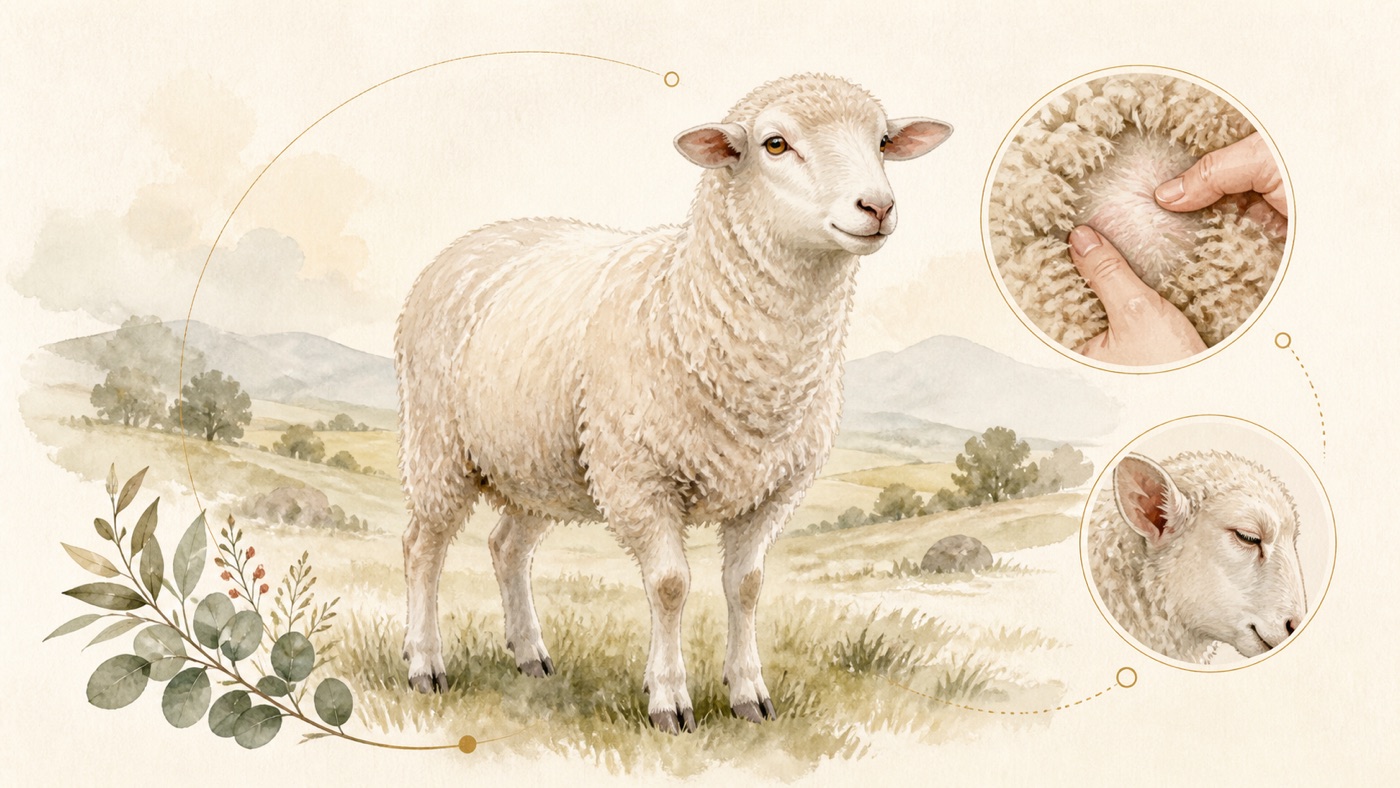
Sheep and Goats|10 Common Diseases (cause → signs → examination → treatment direction → prevention)
One table gathers ten common diseases of sheep and goats (*Ovis aries*/*Capra hircus*): haemonchosis (barber pole worm), enterotoxemia/overeating disease, foot rot, caseous lymphadenitis (CLA), pregnancy toxemia, copper toxicosis (sheep are at particular risk — see the treatment column), mastitis, coccidiosis, caprine arthritis encephalitis/ovine progressive pneumonia (CAE in goats/OPP in sheep) and dystocia. Each row sets out cause, signs, examination, treatment direction and prevention, with the treatment direction given only as a category and never as a dose. It suits the moment when you take on a new group of animals, or when something looks wrong and you want to narrow down the direction first.
This content is compiled from the disease table for sheep and goats (*Ovis aries*/*Capra hircus*) in the farm animals and horses chapter of the veterinary animal encyclopedia. The same sign calls for different handling in different species, and copying what is done for another species can be harmful — first confirm which animal you are dealing with.
| # | Disease | Cause | Signs | Examination | Treatment direction | Prevention |
|---|---|---|---|---|---|---|
| 1 | Haemonchosis (barber pole worm) | Blood-feeding parasite infection, favoured by warm and humid climates | Severe anaemia, submandibular oedema (bottle jaw), weakness; often one of those causes of death that stays hidden until it is already severe | FAMACHA scoring, faecal egg count, packed cell volume | Emergency-level (severe anaemia); anthelmintics require a veterinary prescription | Strategic deworming management, rotational grazing to reduce infection pressure |
| 2 | Enterotoxemia/overeating disease | *Clostridium perfringens* toxin, commonly associated with abrupt feed changes/overeating | Most often sudden death with no warning signs, or convulsions and abdominal pain | Pathology and toxin testing (confirmation usually requires necropsy) | Most cases are beyond treatment in time; the prognosis in acute cases is very poor | Vaccination, avoiding abrupt feed changes (see the link to acidosis in 3.1) |
| 3 | Foot rot | Bacterial infection, triggered by wet conditions | Lameness, malodour and swelling of the hoof | Hoof examination | Antibiotics require a prescription and must be paired with environmental management | Dry environment, regular hoof trimming |
| 4 | Caseous lymphadenitis (CLA) | Chronic *Corynebacterium pseudotuberculosis* infection | Recurring lymph node abscesses | Abscess culture | Requires veterinary handling; chronic and readily transmitted within the group | Isolate affected individuals, disinfect equipment |
| 5 | Pregnancy toxemia | Negative energy balance in late multiple pregnancy | Reduced appetite, dullness, neurological signs | Blood ketone testing | An emergency; requires urgent veterinary intervention | Nutritional management in late pregnancy |
| 6 | Copper toxicosis (sheep are at particular risk — see the treatment column) | Ingestion of high-copper minerals or an error in the feed formulation | Inconspicuous at first; jaundice and haemoglobinuria during an acute haemolytic crisis | Blood copper concentration testing | An emergency; requires urgent veterinary handling | Formulate minerals separately by species; never feed them interchangeably |
| 7 | Mastitis | Bacterial infection | Swollen, reddened udder; abnormal milk character | Milk culture | Antibiotics require a prescription, and withdrawal periods apply | Milking hygiene management |
| 8 | Coccidiosis | Young animals are at high risk | Diarrhoea, wasting | Faecal microscopy | Antiprotozoal drugs require a prescription | Environmental hygiene, avoiding overcrowding |
| 9 | Caprine arthritis encephalitis/ovine progressive pneumonia, CAE (goats)/OPP (sheep) | Retroviral infection; carriers remain infected for life | Arthritis, chronic wasting, neurological signs (CAE) | Serological testing | No cure; supportive care only | Screen breeding stock by serology, avoid mixing carriers into the group |
| 10 | Dystocia | Malpresentation, multiple fetuses, a relatively narrow pelvis | Prolonged straining without progress | Obstetric examination | An emergency; requires veterinary intervention | Nutrition and body condition management during pregnancy |
The ten rows above are copied cell by cell from the encyclopedia chapter, neither rewritten nor condensed; the treatment direction is always given as a category only, never as a drug name or dose, and medication requires a veterinary prescription. The line number and content hash of each row in the source chapter are given in the evidence chain at the end.
Limits of this content
This content comes from the farm animals and horses chapter of the veterinary encyclopedia (see the evidence chain for the original location and content hash). The sources at the end are the authoritative materials cited by that chapter; the correspondence is at chapter level, which does not mean every sentence is traced sentence by sentence back to a given source. This material is for education and cannot replace diagnosis and prescription by a practising veterinarian; in an emergency, seek veterinary care immediately. This text has not been clinically reviewed by a named veterinarian.

FAQ
- What is haemonchosis (barber pole worm), and what should send you to a veterinarian at once?
- It is a blood-feeding parasite infection, favoured by warm and humid climates. It presents with severe anaemia, submandibular oedema (bottle jaw) and weakness, and it is often one of those causes of death that stays hidden until it is already severe. The treatment direction is emergency-level (severe anaemia), and anthelmintics require a veterinary prescription. This row belongs to the group that the source chapter treats as needing prompt handling; the actual judgement still rests with a veterinarian assessing the individual case, and no drug names or doses are given here.
- What is pregnancy toxemia, and what should send you to a veterinarian at once?
- It is a negative energy balance in late multiple pregnancy. It presents with reduced appetite, dullness and neurological signs. The treatment direction is that it is an emergency requiring urgent veterinary intervention. This row belongs to the group that the source chapter treats as needing prompt handling; the actual judgement still rests with a veterinarian assessing the individual case, and no drug names or doses are given here.
- What is copper toxicosis (sheep are at particular risk — see the treatment column), and what should send you to a veterinarian at once?
- It follows ingestion of high-copper minerals or an error in the feed formulation. It is inconspicuous at first, with jaundice and haemoglobinuria appearing during an acute haemolytic crisis. The treatment direction is that it is an emergency requiring urgent veterinary handling. This row belongs to the group that the source chapter treats as needing prompt handling; the actual judgement still rests with a veterinarian assessing the individual case, and no drug names or doses are given here.
Source anchors
- Merck 獸醫手冊|農場動物與馬章引用 · https://www.merckvetmanual.com/digestive-system/diseases-of-the-ruminant-forestomach/grain-overload-in-ruminants · Other citations on IDAEO
- Merck 獸醫手冊|農場動物與馬章引用 · https://www.merckvetmanual.com/digestive-system/diseases-of-the-ruminant-forestomach/subacute-ruminal-acidosis-in-cattle-and-sheep · Other citations on IDAEO
- Merck 獸醫手冊|農場動物與馬章引用 · https://www.merckvetmanual.com/exotic-and-laboratory-animals/miniature-pet-pigs/overview-of-miniature-pet-pigs · Other citations on IDAEO
- Merck 獸醫手冊|農場動物與馬章引用 · https://www.merckvetmanual.com/generalized-conditions/hendra-virus-infection/hendra-virus-infection-in-horses · Other citations on IDAEO
- Merck 獸醫手冊|農場動物與馬章引用 · https://www.merckvetmanual.com/horse-owners/introduction-to-horses/description-and-physical-characteristics-of-horses · Other citations on IDAEO
- Merck 獸醫手冊|農場動物與馬章引用 · https://www.merckvetmanual.com/infectious-diseases/clostridial-diseases/clostridial-vaccines-for-animals · Other citations on IDAEO
- Merck 獸醫手冊|農場動物與馬章引用 · https://www.merckvetmanual.com/management-and-nutrition/preventative-health-care-and-husbandry-of-horses/dental-care-of-horses · Other citations on IDAEO
- Merck 獸醫手冊|農場動物與馬章引用 · https://www.merckvetmanual.com/management-and-nutrition/preventative-health-care-and-husbandry-of-horses/vaccination-program-for-horses · Other citations on IDAEO
- Merck 獸醫手冊|農場動物與馬章引用 · https://www.merckvetmanual.com/multimedia/table/vital-signs-in-adult-camelids · Other citations on IDAEO
- Merck 獸醫手冊|農場動物與馬章引用 · https://www.merckvetmanual.com/reference-values-and-conversion-tables/reference-guides/normal-rectal-temperature-ranges · Other citations on IDAEO
- Merck 獸醫手冊|農場動物與馬章引用 · https://www.merckvetmanual.com/reference-values-and-conversion-tables/reference-guides/resting-heart-rates · Other citations on IDAEO
- Merck 獸醫手冊|農場動物與馬章引用 · https://www.merckvetmanual.com/reference-values-and-conversion-tables/reference-guides/resting-respiratory-rates · Other citations on IDAEO
- Merck 獸醫手冊|農場動物與馬章引用 · https://www.merckvetmanual.com/toxicology/copper-poisoning/copper-poisoning-in-animals · Other citations on IDAEO
- PMC 全文|農場動物與馬章引用 · https://pmc.ncbi.nlm.nih.gov/articles/PMC6125241/ · Other citations on IDAEO
- PubMed 文獻|農場動物與馬章引用 · https://pubmed.ncbi.nlm.nih.gov/11295509/ · Other citations on IDAEO
- WOAH 世界動物衛生組織|農場動物與馬章引用 · https://www.woah.org/en/disease/diseases-of-bees/ · Other citations on IDAEO
- WOAH 世界動物衛生組織|農場動物與馬章引用 · https://www.woah.org/en/disease/foot-and-mouth-disease/ · Other citations on IDAEO
- WOAH 世界動物衛生組織|農場動物與馬章引用 · https://www.woah.org/en/what-we-do/animal-health-and-welfare/animal-diseases/ · Other citations on IDAEO
- aaep.org|農場動物與馬章引用 · https://aaep.org/ · Other citations on IDAEO
- extension.arizona.edu|農場動物與馬章引用 · https://extension.arizona.edu/sites/extension.arizona.edu/files/pubs/az2014-2022.pdf · Other citations on IDAEO
- extension.psu.edu|農場動物與馬章引用 · https://extension.psu.edu/animals-and-livestock/llamas-and-alpacas/health-and-care · Other citations on IDAEO
- u.osu.edu|農場動物與馬章引用 · https://u.osu.edu/gofarmohio/2026/06/16/livestock-biosecurity-basics-for-the-small-farm/ · Other citations on IDAEO
- www.canr.msu.edu|農場動物與馬章引用 · https://www.canr.msu.edu/news/what-is-the-buzz-around-cow-longevity · Other citations on IDAEO
- www.thedonkeysanctuary.org.uk|農場動物與馬章引用 · https://www.thedonkeysanctuary.org.uk/for-professionals · Other citations on IDAEO
Cite this article
Jane・《Sheep and Goats|10 Common Diseases (cause → signs → examination → treatment direction → prevention)》・IDAEO 知識庫・2026-08-13・https://km.idaeo.ai/post/vet/sheep-goat-diseasesUpdated 2026-08-15