

🏛 Part of the "vet" topic shelf →
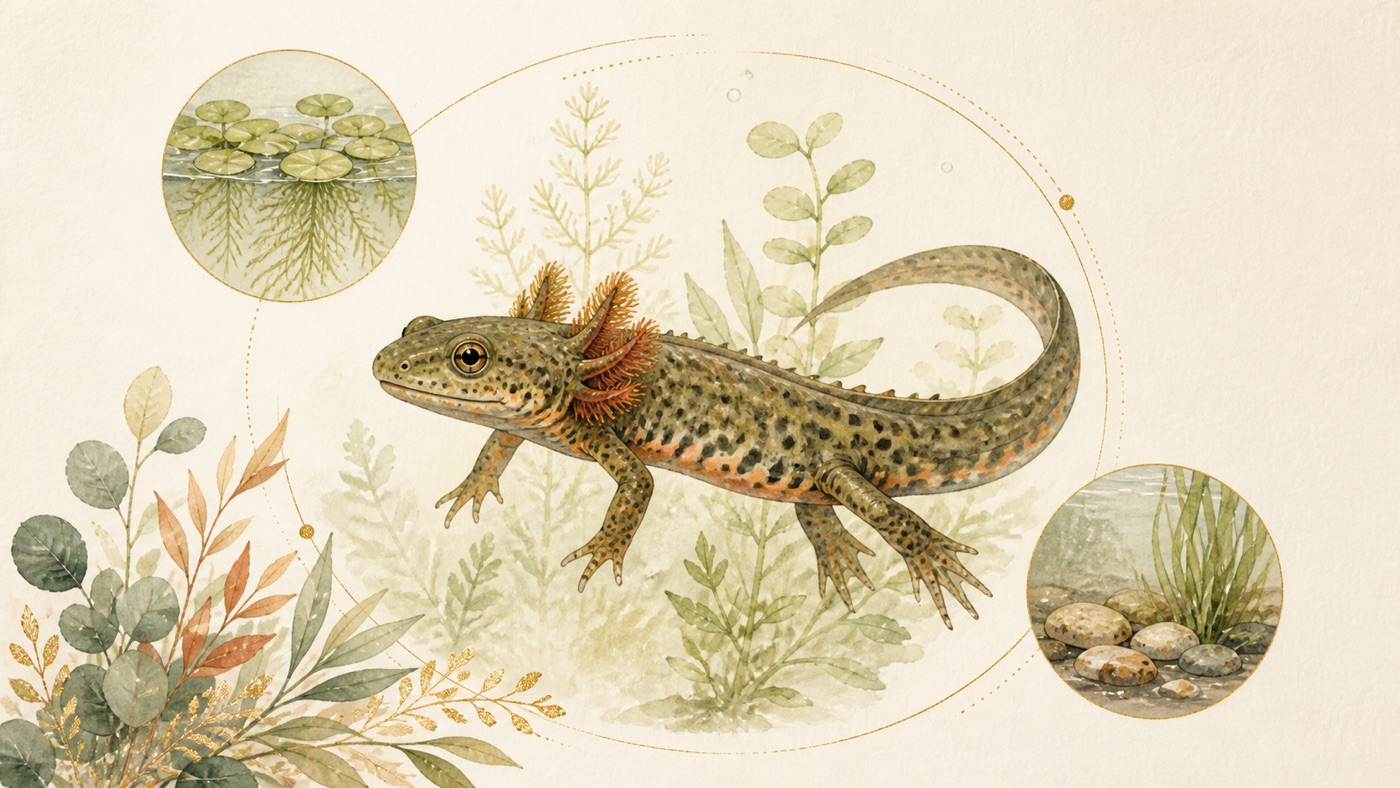
Salamander/Newt|10 Common Diseases (cause → signs → examination → treatment direction → prevention)
Ten common diseases of salamanders and newts (axolotl/Mexican axolotl/fire salamander/oriental newt) gathered into one table: Saprolegniasis, Impaction, Gill infection/atrophy, bacterial septicaemia (red-leg-like), Trauma (limb bites/impact injuries), Dehydration, Metabolic bone disease (MBD), Endoparasitism, Obesity, and Neoplasia. Each row lists cause, signs, examination, treatment direction and prevention; the treatment column gives categories only, never doses. It suits checking against when something looks wrong and you need to narrow down the direction first, or when taking on a new animal.
Salamander/Newt|10 Common Diseases (cause → signs → examination → treatment direction → prevention)
This content is compiled from the disease table for the Salamander/Newt (axolotl/Mexican axolotl/fire salamander/oriental newt) in the reptiles and amphibians chapter of the veterinary animal encyclopedia. The same sign calls for different handling in different species, and copying what is done for another species can be harmful — first confirm which animal you are dealing with.
| # | Disease (Chinese/English) | Cause | Signs | Examination | Treatment direction | Prevention |
|---|---|---|---|---|---|---|
| 1 | Saprolegniasis | Fungal infection triggered by poor water quality; common in axolotls | Cotton-wool-like white growth on the skin/gills | Visual examination, microscopy | Prescription medication from a veterinarian, with water quality corrected first | Regular water changes, maintaining water quality |
| 2 | Impaction | Ingestion of substrate (axolotls are at high risk) | Refusal to feed, abdominal distension | Palpation, imaging | Severe cases require surgery | Using fine sand or a bare tank bottom |
| 3 | Gill infection/atrophy | Poor water quality (a risk particular to axolotls) | Darkening and shrinking of the external gills | Visual examination | Management by a veterinarian, with water quality corrected first | Maintaining water quality and a suitable water temperature |
| 4 | Bacterial septicaemia (red-leg-like) | Poor water quality, stress | Reddening of the skin, lethargy | Visual examination, bacterial culture | Antibiotics require a prescription; this is an emergency | Maintaining water quality, avoiding stress |
| 5 | Trauma (limb bites/impact injuries) | Animals housed together biting each other, problems with the structure of the environment | Loss of a limb or gill tissue with bleeding | Visual examination | Management by a veterinarian; axolotls can regenerate, but the wound still needs care | Avoiding housing aggressive animals together at high density |
| 6 | Dehydration | Insufficient environmental humidity for terrestrial species | Dry, cracked skin, reduced activity | Visual examination | Fluid replacement assessed by a veterinarian | Maintaining suitable humidity |
| 7 | Metabolic bone disease (MBD) | Calcium deficiency/lack of UVB in terrestrial species (the risk is lower in aquatic species) | Abnormal skeletal development | Palpation, X-ray | Calcium supplementation assessed by a veterinarian | Providing suitable UVB and calcium for terrestrial species |
| 8 | Endoparasitism | Poor environmental hygiene, wild-caught animals | Weight loss, reduced activity | Faecal microscopy | Anthelmintics require a prescription | Quarantine, regular faecal examination |
| 9 | Obesity | Overfeeding | A round body shape, reduced activity | Body condition assessment | Adjusting feeding frequency | Controlling the amount fed according to body size |
| 10 | Neoplasia | Older animals | Masses on the body surface, abnormal movement | Visual examination, imaging, biopsy | Treatment direction assessed by a veterinarian | Regular health checks for early detection |
The 10 rows above are copied cell for cell from the encyclopedia chapter, neither rewritten nor condensed; the treatment column gives categories only, never drug names or doses, and any medication must be prescribed by a veterinarian. The line number and content hash of each row in the source chapter are in the evidence chain at the end.
Limits of this content
This content comes from the reptiles and amphibians chapter of the veterinary encyclopedia (see the evidence chain for the original location and content hash). The sources at the end are the authoritative materials cited by that chapter; the correspondence is at chapter level, which does not mean every sentence is traced sentence by sentence back to a given source. This material is for education and cannot replace diagnosis and prescription by a practising veterinarian; in an emergency, seek veterinary care immediately. This text has not been clinically reviewed by a named veterinarian.
FAQ
- What is bacterial septicaemia (the red-leg-like form), and what should make you call the vet at once?
- Poor water quality and stress. You will see reddening of the skin and lethargy. The direction of management is antibiotics, which require a prescription, and this is an emergency. This row belongs to the group in the source chapter that needs prompt attention; the actual judgement still rests with a veterinarian case by case, and this text gives no drug names or doses.
- 細菌性敗血症(レッドレッグ様) とは何ですか。何が見えたらすぐ獣医師を呼ぶべきですか。 — 水質の不良、ストレスが原因です。皮膚の発赤、嗜眠が現れます。対処の方向性は抗生物質で、処方が必要であり、急症です。この行は元の章では速やかな対応を要する類型に属します。実際の判断は獣医師が症例ごとに評価する必要があり、本文には薬剤名と用量を書きません。
- What is bacterial septicaemia (the red-leg-like form), and what should make you call the vet at once? — Poor water quality and stress. You will see reddening of the skin and lethargy. The direction of management is antibiotics, which require a prescription, and this is an emergency. This row belongs to the group in the source chapter that needs prompt attention; the actual judgement still rests with a veterinarian case by case, and this text gives no drug names or doses.
- What causes saprolegniasis and what matters most in preventing it?
- Fungal infection triggered by poor water quality, common in axolotls. You will see cotton-wool-like white growth on the skin or gills. Prevention rests on regular water changes and maintaining water quality. The treatment direction must be assessed by a veterinarian case by case; this text gives no drug names or doses.
- 水カビ病 Saprolegniasis の原因と予防の要点は何ですか。 — 水質不良により誘発される真菌感染で、ウーパールーパーで多く見られます。皮膚/鰓に綿状の白いものが現れます。予防の要点は定期的な水換えと水質の維持です。治療の方向性は獣医師が症例ごとに評価する必要があり、本文には薬剤名と用量を書きません。
- What causes saprolegniasis and what matters most in preventing it? — Fungal infection triggered by poor water quality, common in axolotls. You will see cotton-wool-like white growth on the skin or gills. Prevention rests on regular water changes and maintaining water quality. The treatment direction must be assessed by a veterinarian case by case; this text gives no drug names or doses.
- What causes impaction and what matters most in preventing it?
- Ingestion of substrate, with axolotls at high risk. You will see refusal to feed and abdominal distension. Prevention rests on using fine sand or a bare tank bottom. The treatment direction must be assessed by a veterinarian case by case; this text gives no drug names or doses.
- 腸閉塞 Impaction の原因と予防の要点は何ですか。 — 床材の誤飲が原因で、ウーパールーパーは高リスクです。拒食、腹部膨満が現れます。予防の要点は細かい砂を使うか、水槽の底を敷かないことです。治療の方向性は獣医師が症例ごとに評価する必要があり、本文には薬剤名と用量を書きません。
- What causes impaction and what matters most in preventing it? — Ingestion of substrate, with axolotls at high risk. You will see refusal to feed and abdominal distension. Prevention rests on using fine sand or a bare tank bottom. The treatment direction must be assessed by a veterinarian case by case; this text gives no drug names or doses.
Source anchors
- Merck 獸醫手冊|爬蟲與兩棲章引用 · https://www.merckvetmanual.com/exotic-and-laboratory-animals/amphibians/overview-of-amphibians · 在 IDAEO 的其他引用
- Merck 獸醫手冊|爬蟲與兩棲章引用 · https://www.merckvetmanual.com/exotic-and-laboratory-animals/reptiles/management-and-husbandry-of-reptiles · 在 IDAEO 的其他引用
- Merck 獸醫手冊|爬蟲與兩棲章引用 · https://www.merckvetmanual.com/exotic-and-laboratory-animals/reptiles/nutritional-metabolic-and-endocrine-diseases-of-reptiles · 在 IDAEO 的其他引用
- Merck 獸醫手冊|爬蟲與兩棲章引用 · https://www.merckvetmanual.com/exotic-and-laboratory-animals/reptiles/overview-of-reptiles · 在 IDAEO 的其他引用
- Merck 獸醫手冊|爬蟲與兩棲章引用 · https://www.merckvetmanual.com/management-and-nutrition/nutrition-exotic-and-zoo-animals/nutrition-in-reptiles · 在 IDAEO 的其他引用
- Merck 獸醫手冊|爬蟲與兩棲章引用 · https://www.merckvetmanual.com/multimedia/table/average-life-span-of-reptiles-in-captivity · 在 IDAEO 的其他引用
- Merck 獸醫手冊|爬蟲與兩棲章引用 · https://www.merckvetmanual.com/multimedia/table/important-husbandry-requirements-for-selected-reptiles · 在 IDAEO 的其他引用
- Merck 獸醫手冊|爬蟲與兩棲章引用 · https://www.merckvetmanual.com/multimedia/table/normal-reference-ranges-for-routine-water-quality-analysis · 在 IDAEO 的其他引用
- Merck 獸醫手冊|爬蟲與兩棲章引用 · https://www.merckvetmanual.com/reference-values-and-conversion-tables/reference-guides/resting-respiratory-rates · 在 IDAEO 的其他引用
- PMC 全文|爬蟲與兩棲章引用 · https://pmc.ncbi.nlm.nih.gov/articles/PMC10000224/ · 在 IDAEO 的其他引用
- animals.sandiegozoo.org|爬蟲與兩棲章引用 · https://animals.sandiegozoo.org/animals/african-spurred-tortoise · 在 IDAEO 的其他引用
- arav.org|爬蟲與兩棲章引用 · https://arav.org/about/ · 在 IDAEO 的其他引用
- www.marylandzoo.org|爬蟲與兩棲章引用 · https://www.marylandzoo.org/animal/sulcata-tortoise/ · 在 IDAEO 的其他引用
- www.ncbi.nlm.nih.gov|爬蟲與兩棲章引用 · https://www.ncbi.nlm.nih.gov/nlmcatalog/?term=Journal+of+Herpetological+Medicine+and+Surgery · 在 IDAEO 的其他引用
- www.uticazoo.org|爬蟲與兩棲章引用 · https://www.uticazoo.org/sulcatatortoise/ · 在 IDAEO 的其他引用
Cite this article
Jane・《Salamander/Newt|10 Common Diseases (cause → signs → examination → treatment direction → prevention)》・IDAEO 知識庫・2026-08-13・https://km.idaeo.ai/post/vet/salamander-newt-diseasesUpdated 2026-08-15