Part of the "Veterinary" topic shelf → Evidence chain for this article →
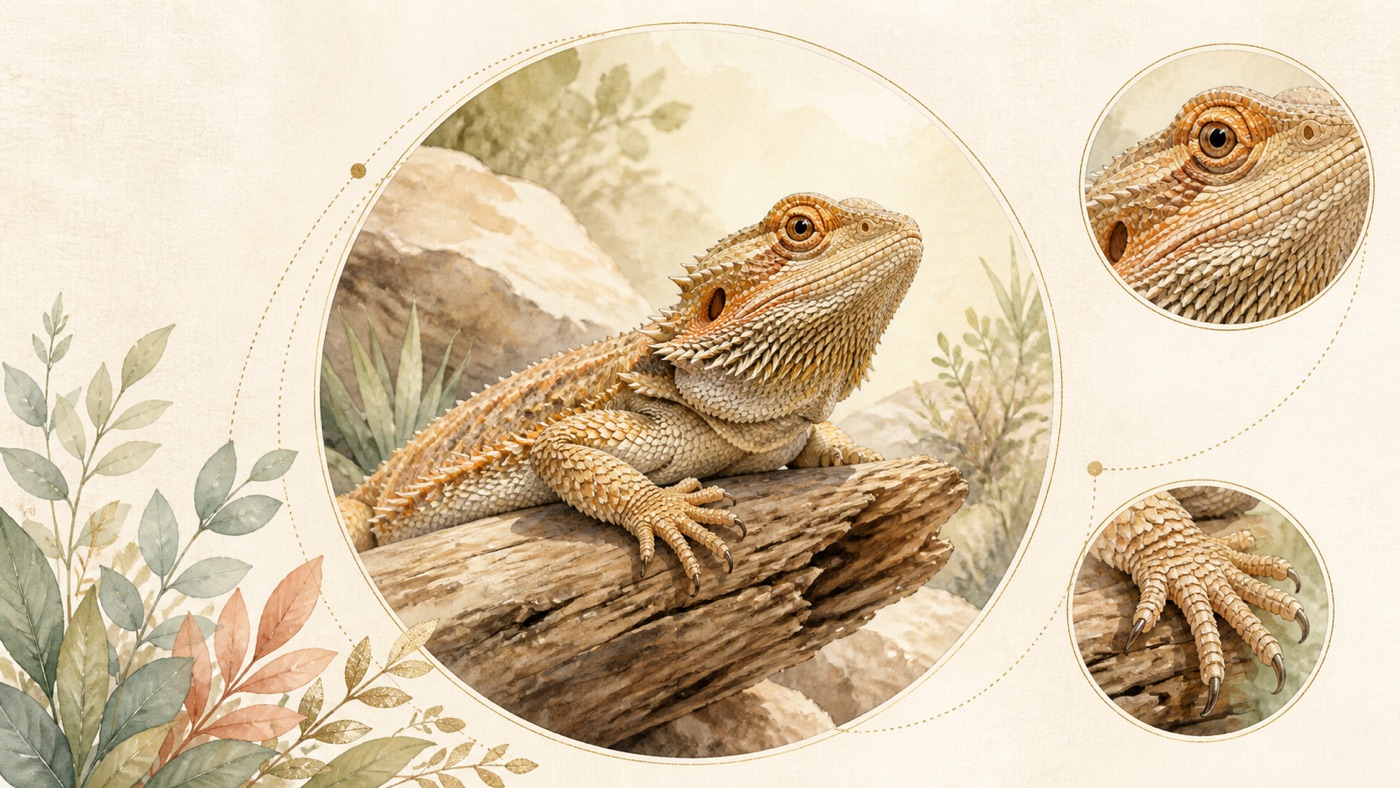
Common health problems in pet reptiles and amphibians: causes, signs and prevention
Most health problems in pet reptiles and amphibians come from husbandry — the thermal gradient, UVB, humidity and hygiene. This article brings together the entries from the reptiles and amphibians chapters of the veterinary reference and lists, entry by entry, the cause, signs, direction of work-up, direction of treatment and prevention, with the source noted for each. First confirm which animal you are dealing with, then read on.
First confirm which animal you are dealing with. The same disease name is handled differently in different species, and copying what is done for another species can do harm. This article is compiled from the reptiles and amphibians chapter and the fish, aquarium and invertebrates chapter of the veterinary reference, with the source noted entry by entry.
Metabolic bone disease (MBD)
- Cause: Calcium deficiency, lack of UVB
- Signs: Softening and deformity of the shell or skeleton
- Work-up: Palpation, radiography
- Treatment direction: Calcium supplementation and UVB correction need veterinary assessment
- Prevention: Adequate UVB and a calcium-sufficient diet

Thermal burn
- Cause: Heating equipment without thermostatic protection, with the lizard resting directly against the heat source
- Signs: Burned and ulcerated skin
- Work-up: Visual examination
- Treatment direction: Wound management by a veterinarian
- Prevention: Pair heating equipment with a thermostat and a guard
Dysecdysis
- Cause: Insufficient humidity, with old skin retained especially on the toes and eyelids
- Signs: Rings of old skin constricting the toes, retained eyelid skin
- Work-up: Visual examination
- Treatment direction: A veterinarian softens and removes the retained skin; severe cases need treatment
- Prevention: Provide a humid hide
Dehydration
- Applies to: Spiders and scorpions
- Cause: Insufficient ambient humidity or water supply
- Signs: Visibly shrunken, sunken abdomen; sluggish movement of the legs
- Treatment direction (category only): Improve the water supply and humidity immediately
- Prevention: Check the water dish and ambient humidity regularly
Egg binding
- Cause: Females may produce infertile eggs even without mating
- Signs: Persistent digging without producing eggs
- Work-up: Palpation, radiography
- Treatment direction: An emergency; seek veterinary care immediately
- Prevention: Provide a laying site, schedule regular health checks
Endoparasitism
- Cause: Poor environmental hygiene, wild-caught individuals
- Signs: Weight loss, reduced activity
- Work-up: Faecal microscopy
- Treatment direction: Antiparasitic drugs require a prescription
- Prevention: Quarantine, regular faecal examination
Internal parasite infection
- Cause: Wild-caught individuals or poor environmental hygiene
- Signs: Weight loss, abnormal faeces
- Work-up: Faecal microscopy
- Treatment direction: Antiparasitic drugs require a prescription
- Prevention: Quarantine, regular faecal examination
Gout
- Cause: Dehydration, high-protein diet
- Signs: Joint swelling
- Work-up: Blood tests
- Treatment direction: Needs veterinary management
- Prevention: An adequate drinking-water system, a correct diet
Obesity and hepatic lipidosis
- Cause: Common in horned frogs; long-term overfeeding
- Signs: Marked obesity, reduced activity
- Work-up: Blood biochemistry
- Treatment direction: Dietary adjustment plus drugs that require a prescription
- Prevention: Control feeding frequency and portion size
Obesity
- Cause: Overfeeding with oversized prey
- Signs: Rounded body condition, reduced activity
- Work-up: Weight tracking, body condition scoring
- Treatment direction: Adjust feeding frequency and prey size
- Prevention: Control the amount fed according to body size
Limits of this content
This article brings together several entries on the same species from the veterinary reference: 10 entries and 10 source anchors in total (see the evidence chain). The sources listed at the end are the authoritative references cited by the chapters covered here; the mapping is chapter-level and does not mean that every sentence traces back to a particular listed source. This content is for education and does not replace diagnosis and prescription by a practising veterinarian; in an emergency, seek veterinary care immediately. Sources are noted entry by entry from the reference corpus (see the evidence chain at the end); it has not been clinically reviewed by a named veterinarian.
FAQ
- Why do reptiles so often develop softened, deformed bones?
- Mainly a lack of calcium and UVB. Prevention means adequate UVB and a calcium-sufficient diet; once deformity appears, a veterinarian should assess calcium supplementation and UVB correction.
- What should you watch out for with a reptile’s heating equipment?
- Without a thermostat, an animal resting directly against the heat source gets burned. Use a thermostat together with a guard.
- What should you do about incomplete shedding in a reptile?
- It usually comes from insufficient humidity, with retained skin most often on the toes and eyelids. Provide a humid hide; in severe cases a veterinarian should soften and remove it.
Source anchors
- Merck 獸醫手冊|爬蟲與兩棲章引用 · https://www.merckvetmanual.com/exotic-and-laboratory-animals/amphibians/overview-of-amphibians · Other citations on IDAEO
- Merck 獸醫手冊|爬蟲與兩棲章引用 · https://www.merckvetmanual.com/exotic-and-laboratory-animals/reptiles/management-and-husbandry-of-reptiles · Other citations on IDAEO
- Merck 獸醫手冊|爬蟲與兩棲章引用 · https://www.merckvetmanual.com/exotic-and-laboratory-animals/reptiles/nutritional-metabolic-and-endocrine-diseases-of-reptiles · Other citations on IDAEO
- Merck 獸醫手冊|爬蟲與兩棲章引用 · https://www.merckvetmanual.com/exotic-and-laboratory-animals/reptiles/overview-of-reptiles · Other citations on IDAEO
- Merck 獸醫手冊|爬蟲與兩棲章引用 · https://www.merckvetmanual.com/management-and-nutrition/nutrition-exotic-and-zoo-animals/nutrition-in-reptiles · Other citations on IDAEO
- Merck 獸醫手冊|爬蟲與兩棲章引用 · https://www.merckvetmanual.com/multimedia/table/average-life-span-of-reptiles-in-captivity · Other citations on IDAEO
- Merck 獸醫手冊|爬蟲與兩棲章引用 · https://www.merckvetmanual.com/multimedia/table/important-husbandry-requirements-for-selected-reptiles · Other citations on IDAEO
- Merck 獸醫手冊|爬蟲與兩棲章引用 · https://www.merckvetmanual.com/multimedia/table/normal-reference-ranges-for-routine-water-quality-analysis · Other citations on IDAEO
- Merck 獸醫手冊|爬蟲與兩棲章引用 · https://www.merckvetmanual.com/reference-values-and-conversion-tables/reference-guides/resting-respiratory-rates · Other citations on IDAEO
- PMC 全文|爬蟲與兩棲章引用 · https://pmc.ncbi.nlm.nih.gov/articles/PMC10000224/ · Other citations on IDAEO
- animals.sandiegozoo.org|爬蟲與兩棲章引用 · https://animals.sandiegozoo.org/animals/african-spurred-tortoise · Other citations on IDAEO
- arav.org|爬蟲與兩棲章引用 · https://arav.org/about/ · Other citations on IDAEO
- openlibrary.org|魚類與水族・無脊椎章引用 · https://openlibrary.org/works/OL19509478W · Other citations on IDAEO
- openlibrary.org|魚類與水族・無脊椎章引用 · https://openlibrary.org/works/OL21421796W · Other citations on IDAEO
- www.marylandzoo.org|爬蟲與兩棲章引用 · https://www.marylandzoo.org/animal/sulcata-tortoise/ · Other citations on IDAEO
- www.ncbi.nlm.nih.gov|爬蟲與兩棲章引用 · https://www.ncbi.nlm.nih.gov/nlmcatalog/?term=Journal+of+Herpetological+Medicine+and+Surgery · Other citations on IDAEO
- www.uticazoo.org|爬蟲與兩棲章引用 · https://www.uticazoo.org/sulcatatortoise/ · Other citations on IDAEO
- www.wavma.org|魚類與水族・無脊椎章引用 · https://www.wavma.org/ · Other citations on IDAEO
- 本文證據鏈:逐條出處、行號與原文引句 · https://km.idaeo.ai/reports/vet-reptile-common-problems-evidence · Other citations on IDAEO
Cite this article
Jane・《Common health problems in pet reptiles and amphibians: causes, signs and prevention》・IDAEO 知識庫・2026-08-13・https://km.idaeo.ai/post/vet/reptile-common-problemsUpdated 2026-08-15