

🏛 Part of the "vet" topic shelf →
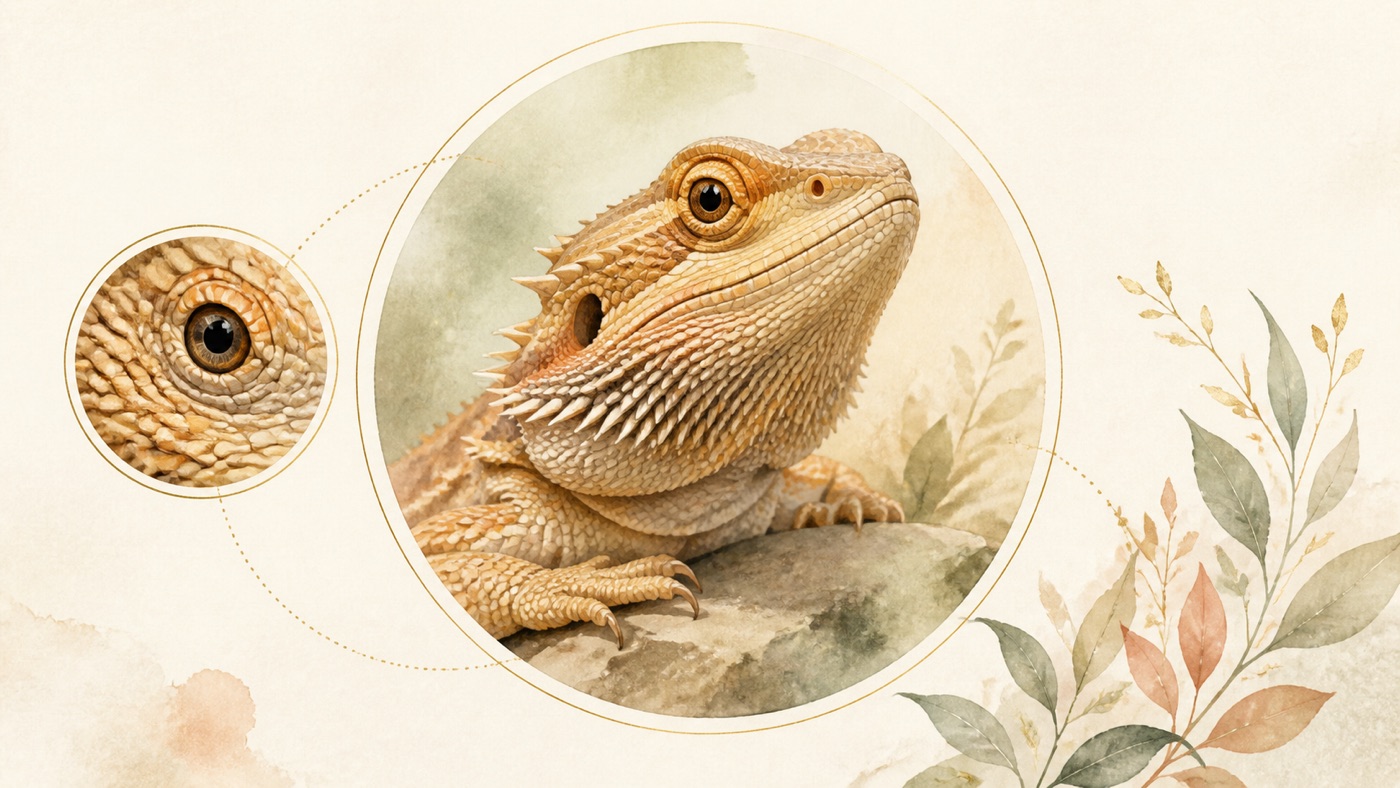
Reptiles and Amphibians|Group Overview
Representative species, lifespans and keeping profiles compared in one pass across nine groups: aquatic turtles, tortoises, bearded dragons, leopard geckos, chameleons, ball pythons, corn snakes, frogs and salamanders. Each entry in the lifespan column carries its source and verification status: bearded dragon 5 to 10 years, leopard gecko 20 years or more, ball python 15 to 20 years. Where three zoo sources disagree on the sulcata tortoise the figures are listed side by side rather than averaged, and where no authoritative value exists the entry is honestly left open. The shared premise is that these are all ectotherms, so their indicators must be read together with ambient temperature and humidity.
Reptiles and Amphibians|Group Overview
This content is compiled from the reptiles and amphibians chapter of the veterinary animal encyclopedia. The same sign calls for different handling in different species, and copying what is done for another species can be harmful — first confirm which animal you are dealing with.
| Group | Representative species (scientific name) | Lifespan | Keeping profile and key focus |
|---|---|---|---|
| Aquatic turtles | Red-eared slider *Trachemys scripta elegans* (also map turtles and musk turtles) | [Verification result: no single authoritative figure — the whitelisted sources give no precise year count for the lifespan of the red-eared slider. [No single authoritative figure for this item: the whitelisted sources give no reference value for a precise lifespan year count specific to the red-eared slider; the Merck reptile overview only states in general terms that the "lifespan of many reptiles can exceed 10–20 years"] It is commonly understood to reach 20–40 years, but no whitelisted source gives a precise range] (commonly understood to reach several decades; keepers often underestimate it) | The world's most widespread pet turtle and at the same time a serious invasive species; separate water and land zones plus water quality management are central |
| Tortoises | Sulcata tortoise *Centrochelys sulcata*, Hermann's tortoise *Testudo hermanni*, leopard tortoise *Stigmochelys pardalis*, Indian star tortoise *Geochelone elegans* | ⚠️ Listed side by side by species (choosing one or averaging is not allowed): three professional zoo sources disagree on the sulcata tortoise's lifespan — San Diego Zoo Wildlife Alliance "80 to 100 years"/Utica Zoo "Lifespan: 70 to 150 years"/Maryland Zoo "50+ years" (the methodological differences between the three are unclear, so averaging them into a single figure is not allowed); leopard tortoise 50+ years (Merck Vet Manual: "Leopard tortoise: 50+ years"); specific year counts for Hermann's tortoise/Indian star tortoise [No single authoritative figure for this item: the whitelisted sources give no reference value for a specific lifespan year count for Hermann's tortoise/the Indian star tortoise] (some species may outlive the keeper) | Herbivorous and in need of large space; the adult size of the sulcata tortoise is routinely and seriously underestimated, which is the main reason they are given up |
| Lizards|Bearded dragon | *Pogona vitticeps* | 5–10 years (in captivity) (Merck Vet Manual: "Bearded dragon: 5 to 10 years") | Desert-dwelling and diurnal; the usual first lizard for beginners, with high UVB requirements |
| Lizards|Leopard gecko | *Eublepharis macularius* | 20+ years (in captivity) (Merck Vet Manual: "Leopard gecko: 20+ years") | Desert-dwelling and nocturnal/crepuscular; the usual first gecko for beginners, with tail thickness as a health indicator |
| Lizards|Chameleons | Veiled chameleon *Chamaeleo calyptratus*, panther chameleon *Furcifer pardalis* | 3–8 years (in captivity, as a general figure for Old World chameleons, Merck Vet Manual: "Old World chameleons: 3 to 8 years"; this is a range for the chameleon family as a whole rather than a figure for each of the two species, and male and female chameleons often differ in lifespan, with no sex-specific figures found) (generally understood to be relatively short-lived compared with other reptiles) | Arboreal and strongly solitary; widely regarded as an advanced-level pet, with dehydration and stress as the main causes of death |
| Snakes|Ball python | *Python regius* | 15–20 years (in captivity) (Merck Vet Manual: "Ball python: 15 to 20 years") (commonly understood to reach several decades) | Docile with manageable size, the usual first snake for beginners, and a species famous for being a fussy eater |
| Snakes|Corn snake | *Pantherophis guttatus* | 10–15 years (in captivity) (Merck Vet Manual: "Corn snake: 10 to 15 years") | Relatively tolerant of environmental variation, with a strong tendency to escape, so a well-sealed enclosure is the management priority |
| Frogs | White's tree frog *Litoria caerulea*, horned frogs *Ceratophrys* spp., African clawed frog *Xenopus laevis* | [Verification result: no single authoritative figure — the Merck amphibian chapter gives only the general statement "Lifespans range from months to many years" for lifespan and does not break it down by species; [No single authoritative figure for this item: the whitelisted sources give no reference value for a specific lifespan year count for White's tree frog/horned frogs/the African clawed frog] the clinical literature on amphibian lifespan is itself thin, and this is not a matter of insufficient searching] | Highly permeable skin, so water quality and chemical residues on human hands are the central risks |
| Salamanders and newts | Axolotl *Ambystoma mexicanum*, fire salamander *Salamandra salamandra* | [No single authoritative figure for this item: the whitelisted sources give no reference value for a specific lifespan year count for the axolotl/fire salamander] | The axolotl stays aquatic for life and does not metamorphose; some salamanders have toxic skin secretions |
⚠️ On the lifespan column above: for Hermann's tortoise, the Indian star tortoise, the frogs (three species) and the salamanders (axolotl/fire salamander), it was confirmed (2026-07-30) that the whitelisted sources hold no single authoritative figure for a precise lifespan year count, and the verification result has been marked individually (see each column and 72-log); figures for the remaining species all carry a source and a verification date. Altering them from memory, or filling in figures without a source, is not allowed.
Shared physiological reminder: reptiles and amphibians are all ectotherms (ectotherm/poikilotherm) and do not hold a constant body temperature as mammals do, so their normal physiological indicators carry a different meaning from those of dogs and cats and must be read together with ambient temperature and humidity. "90% of reptile diseases arise from husbandry errors" is the most central premise of this Tier, which is why the third column (husbandry environment) of each group below is deliberately written at greater length than the others.
Limits of this content
This content comes from the reptiles and amphibians chapter of the veterinary encyclopedia (see the evidence chain for the original location and content hash). The sources at the end are the authoritative materials cited by that chapter; the correspondence is at chapter level, which does not mean every sentence is traced sentence by sentence back to a given source. This material is for education and cannot replace diagnosis and prescription by a practising veterinarian; in an emergency, seek veterinary care immediately. This text has not been clinically reviewed by a named veterinarian.
FAQ
- Why can a reptile's physiological indicators not be read the way a dog's or cat's are?
- Reptiles and amphibians are ectotherms and do not hold a constant body temperature as mammals do, so their normal physiological indicators carry a different meaning from those of dogs and cats and must be read together with ambient temperature and humidity. This is also why the husbandry environment column for each group is deliberately written at greater length than the others — husbandry error is the most central premise behind disease in these animals.
- なぜ爬虫類の生理指標を犬猫と同じように読んではいけないのですか。 — 爬虫類と両生類はいずれも変温動物で、哺乳類のような一定の体温を持たないため、正常な生理指標の読み方は犬猫とは異なり、環境の温度と湿度と合わせて解釈する必要があります。各グループの飼育環境の欄を意図的に他より厚く書いているのもこのためで、飼育環境の誤りはこの種の動物の疾病における最も中心的な前提です。
- Why can a reptile's physiological indicators not be read the way a dog's or cat's are? — Reptiles and amphibians are ectotherms and do not hold a constant body temperature as mammals do, so their normal physiological indicators carry a different meaning from those of dogs and cats and must be read together with ambient temperature and humidity. This is also why the husbandry environment column for each group is deliberately written at greater length than the others — husbandry error is the most central premise behind disease in these animals.
- What should I be prepared for before keeping a sulcata tortoise?
- Its adult size is routinely and seriously underestimated, which is exactly why these animals are given up; tortoises are herbivorous and need large space. On lifespan, three professional zoo sources give figures that do not agree (80 to 100 years, 70 to 150 years, and 50 years or more), the methodological differences are unclear, and they should not be averaged into a single figure. Some tortoise species may outlive the keeper.
- ケヅメリクガメを飼うにはどんな心構えが必要ですか。 — 成体のサイズが著しく過小評価されがちで、それがまさに飼育放棄の主な原因です。リクガメは植物食で広い空間を必要とします。寿命については、専門的な動物園 3 か所の出典が示す数値が一致しておらず(80〜100 年、70〜150 年、50 年以上)、方法論の違いも不明なため、1 つの数値に折衷すべきではありません。一部のリクガメは飼い主の一生を超えることがあります。
- What should I be prepared for before keeping a sulcata tortoise? — Its adult size is routinely and seriously underestimated, which is exactly why these animals are given up; tortoises are herbivorous and need large space. On lifespan, three professional zoo sources give figures that do not agree (80 to 100 years, 70 to 150 years, and 50 years or more), the methodological differences are unclear, and they should not be averaged into a single figure. Some tortoise species may outlive the keeper.
- What matters most when keeping frogs and salamanders?
- A frog's skin is highly permeable, so water quality and chemical residues on human hands are the central risks. As for salamanders, the axolotl stays aquatic for life and does not metamorphose, and some salamanders have toxic skin secretions. For both groups the authoritative sources hold little on precise lifespan year counts, and there is no single figure to quote.
- カエルとサンショウウオを飼ううえで最も注意すべきことは何ですか。 — カエルは皮膚の透過性が高く、水質と人の手に残る化学物質が中心的なリスクです。サンショウウオについては、ウーパールーパーは生涯水生で変態せず、一部の種の皮膚には毒性の分泌物があります。この 2 グループは権威ある出典における正確な寿命年数の資料が乏しく、引用できる単一の数値はありません。
- What matters most when keeping frogs and salamanders? — A frog's skin is highly permeable, so water quality and chemical residues on human hands are the central risks. As for salamanders, the axolotl stays aquatic for life and does not metamorphose, and some salamanders have toxic skin secretions. For both groups the authoritative sources hold little on precise lifespan year counts, and there is no single figure to quote.
Source anchors
- Merck 獸醫手冊|爬蟲與兩棲章引用 · https://www.merckvetmanual.com/exotic-and-laboratory-animals/amphibians/overview-of-amphibians · 在 IDAEO 的其他引用
- Merck 獸醫手冊|爬蟲與兩棲章引用 · https://www.merckvetmanual.com/exotic-and-laboratory-animals/reptiles/management-and-husbandry-of-reptiles · 在 IDAEO 的其他引用
- Merck 獸醫手冊|爬蟲與兩棲章引用 · https://www.merckvetmanual.com/exotic-and-laboratory-animals/reptiles/nutritional-metabolic-and-endocrine-diseases-of-reptiles · 在 IDAEO 的其他引用
- Merck 獸醫手冊|爬蟲與兩棲章引用 · https://www.merckvetmanual.com/exotic-and-laboratory-animals/reptiles/overview-of-reptiles · 在 IDAEO 的其他引用
- Merck 獸醫手冊|爬蟲與兩棲章引用 · https://www.merckvetmanual.com/management-and-nutrition/nutrition-exotic-and-zoo-animals/nutrition-in-reptiles · 在 IDAEO 的其他引用
- Merck 獸醫手冊|爬蟲與兩棲章引用 · https://www.merckvetmanual.com/multimedia/table/average-life-span-of-reptiles-in-captivity · 在 IDAEO 的其他引用
- Merck 獸醫手冊|爬蟲與兩棲章引用 · https://www.merckvetmanual.com/multimedia/table/important-husbandry-requirements-for-selected-reptiles · 在 IDAEO 的其他引用
- Merck 獸醫手冊|爬蟲與兩棲章引用 · https://www.merckvetmanual.com/multimedia/table/normal-reference-ranges-for-routine-water-quality-analysis · 在 IDAEO 的其他引用
- Merck 獸醫手冊|爬蟲與兩棲章引用 · https://www.merckvetmanual.com/reference-values-and-conversion-tables/reference-guides/resting-respiratory-rates · 在 IDAEO 的其他引用
- PMC 全文|爬蟲與兩棲章引用 · https://pmc.ncbi.nlm.nih.gov/articles/PMC10000224/ · 在 IDAEO 的其他引用
- animals.sandiegozoo.org|爬蟲與兩棲章引用 · https://animals.sandiegozoo.org/animals/african-spurred-tortoise · 在 IDAEO 的其他引用
- arav.org|爬蟲與兩棲章引用 · https://arav.org/about/ · 在 IDAEO 的其他引用
- www.marylandzoo.org|爬蟲與兩棲章引用 · https://www.marylandzoo.org/animal/sulcata-tortoise/ · 在 IDAEO 的其他引用
- www.ncbi.nlm.nih.gov|爬蟲與兩棲章引用 · https://www.ncbi.nlm.nih.gov/nlmcatalog/?term=Journal+of+Herpetological+Medicine+and+Surgery · 在 IDAEO 的其他引用
- www.uticazoo.org|爬蟲與兩棲章引用 · https://www.uticazoo.org/sulcatatortoise/ · 在 IDAEO 的其他引用
- 本文證據鏈:原始章節位置與內容雜湊 · https://km.idaeo.ai/reports/vet-reptile-amphibian-groups-evidence · 在 IDAEO 的其他引用
Cite this article
Jane・《Reptiles and Amphibians|Group Overview》・IDAEO 知識庫・2026-08-13・https://km.idaeo.ai/post/vet/reptile-amphibian-groupsUpdated 2026-08-15