

🏛 Part of the "vet" topic shelf →
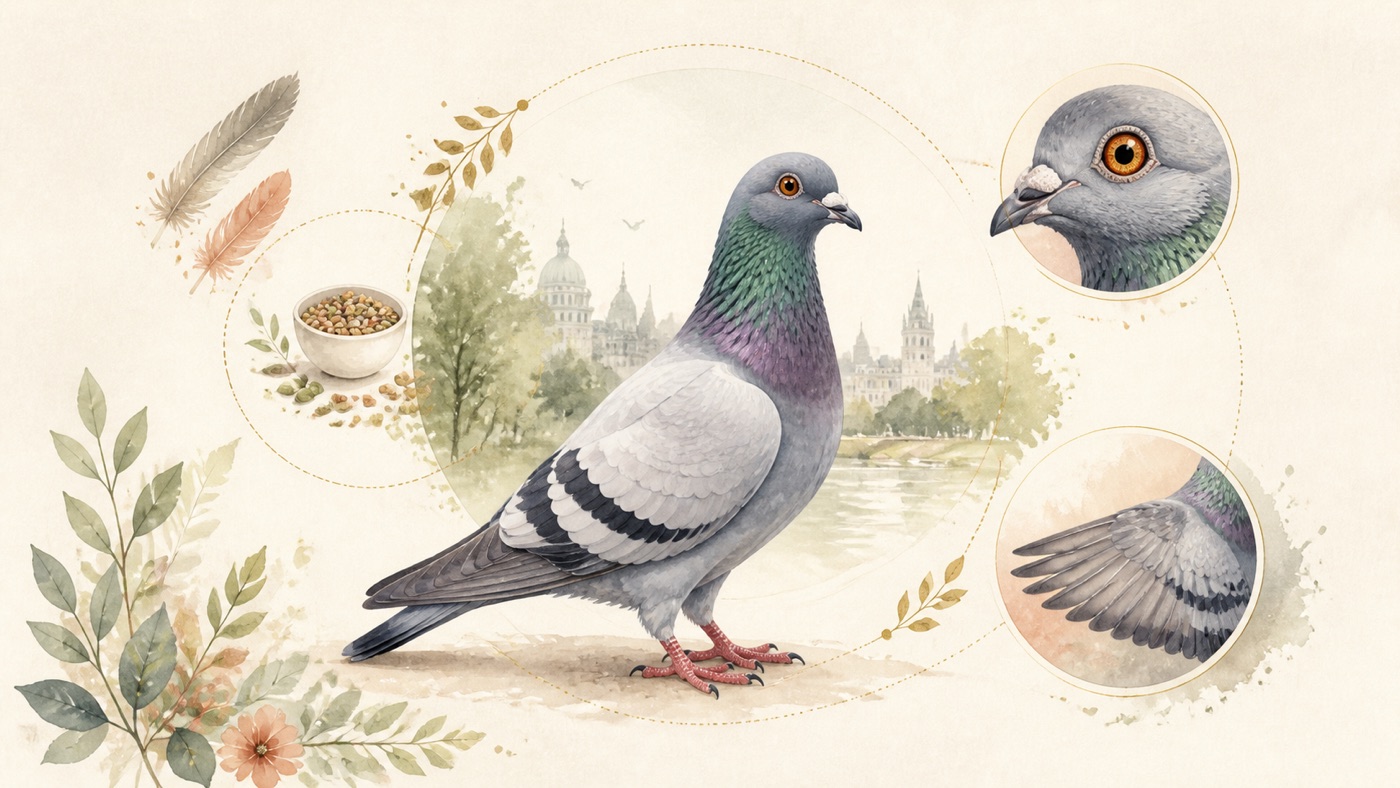
Pigeons|10 common diseases (cause → signs → examination → treatment direction → prevention)
The 10 common diseases of pigeons (Pigeon/Dove) gathered into one table: 鴿副黏液病毒病 Pigeon Paramyxovirus (PMV-1), 毛滴蟲病/鴿癬 Canker (Trichomoniasis), 球蟲病 Coccidiosis, 鴿痘 Pigeon pox, 副傷寒/沙門氏菌病 Paratyphoid (Salmonellosis), 呼吸道黴漿菌病 Respiratory mycoplasmosis, 麴菌病 Aspergillosis, 體外寄生蟲(羽蝨、鴿蜱) Ectoparasites, 嗉囊念珠菌病 Crop candidiasis, and 外傷(猛禽攻擊、撞擊物) Traumatic injury. Each row lists cause, signs, examination, treatment direction and prevention, with the treatment direction given only as a category and never as a dose. It suits sorting out which direction an abnormality points in, or checking against the table when taking on a new bird.
Pigeons|10 common diseases (cause → signs → examination → treatment direction → prevention)
This content is compiled from the disease table for pigeons (Pigeon/Dove) in the birds chapter of the veterinary animal encyclopedia. The same sign calls for different handling in different species, and copying what is done for another species can be harmful — first confirm which animal you are dealing with.
| # | Disease (Chinese/English) | Cause | Signs | Examination | Treatment direction | Prevention |
|---|---|---|---|---|---|---|
| 1 | 鴿副黏液病毒病 Pigeon Paramyxovirus (PMV-1) | Paramyxovirus infection | Neurological signs (twisting of the head and neck), diarrhoea, drop in egg production | PCR, assessment of clinical signs | No specific drug; supportive care. Vaccination is the main means of control | Vaccination ([Policy varies with local regulations and racing-pigeon association rules; this file gives no list of specific regions — it belongs to the do-not-fill category, please consult the local competent authority and a veterinarian]), quarantine and isolation |
| 2 | 毛滴蟲病/鴿癬 Canker (Trichomoniasis) | Protozoal infection of the mouth and throat | Yellow-white lesions in the mouth, difficulty swallowing, foul breath | Oral swab microscopy | Antiprotozoal medication requires a prescription | Hygiene of drinking and feeding utensils, avoid transmission by parent birds feeding squabs bill to bill |
| 3 | 球蟲病 Coccidiosis | Protozoal infection of the intestines | Diarrhoea, wasting, reduced activity | Faecal microscopy | Anticoccidial medication requires a prescription | Environmental hygiene, prevent faecal contamination of drinking water and food |
| 4 | 鴿痘 Pigeon pox | Poxvirus infection | Pox-like lesions on the skin or oral mucosa | Visual examination, lesion sampling | Supportive care; no specific drug | Vaccination (where locally available), isolate affected birds |
| 5 | 副傷寒/沙門氏菌病 Paratyphoid (Salmonellosis) | Salmonella infection | Diarrhoea, joint swelling, drop in egg production | Faecal culture | Antibiotics require a prescription (zoonotic) | Environmental hygiene, disinfection of drinking water |
| 6 | 呼吸道黴漿菌病 Respiratory mycoplasmosis | Mycoplasma infection of the respiratory tract | Abnormal breath sounds, nasal discharge, conjunctivitis | Swab testing | Antibiotics require a prescription | Good ventilation, reduce crowding density |
| 7 | 麴菌病 Aspergillosis | Aspergillus infection; mouldy bedding and grain are the main sources | Laboured breathing, reduced activity | Endoscopy, imaging | Antifungal medication requires a prescription | Keep grain and bedding dry and free of mould |
| 8 | 體外寄生蟲(羽蝨、鴿蜱) Ectoparasites | Poor environmental hygiene | Itching, poor feather condition, anaemia (with heavy infestation) | Visual examination, examination while preening | Antiparasitic medication requires a prescription | Regular environmental cleaning and individual checks |
| 9 | 嗉囊念珠菌病 Crop candidiasis | Fungal infection, mostly in squabs | Increased crop discharge, retarded growth | Crop swab microscopy | Antifungal medication requires a prescription | Hygiene of feeding utensils |
| 10 | 外傷(猛禽攻擊、撞擊物) Traumatic injury | Predators in the urban environment or collision with obstacles | Traumatic bleeding, fractures, impaired flight | Visual examination, radiography | Wound management requires veterinary assessment | Strengthen loft protection |
The 10 rows above are transcribed cell by cell from the original encyclopedia chapter, neither rewritten nor condensed; treatment directions give only the category, never a drug name or dose, and medication must be prescribed by a veterinarian. The line number and content hash of each row in the original chapter are given in the evidence chain at the end.
Limits of this content
This content comes from the birds chapter of the veterinary encyclopedia (see the evidence chain for the original location and content hash). The sources at the end are the authoritative materials cited by that chapter; the correspondence is at chapter level, which does not mean every sentence is traced sentence by sentence back to a given source. This material is for education and cannot replace diagnosis and prescription by a practising veterinarian; in an emergency, seek veterinary care immediately. This text has not been clinically reviewed by a named veterinarian.
FAQ
- What causes 鴿副黏液病毒病 Pigeon Paramyxovirus (PMV-1), and what matters most in prevention?
- Paramyxovirus infection. It presents as neurological signs (twisting of the head and neck), diarrhoea and a drop in egg production. The key to prevention is vaccination ([Policy varies with local regulations and racing-pigeon association rules; this file gives no list of specific regions — it belongs to the do-not-fill category, please consult the local competent authority and a veterinarian]) together with quarantine and isolation. The treatment direction rests with a veterinarian assessing the individual case, and this text gives no drug names or doses.
- 鴿副黏液病毒病 Pigeon Paramyxovirus(PMV-1) の原因と予防の要点は何ですか。 — パラミクソウイルスの感染です。神経症状(頭頸部のねじれ)、下痢、産卵の低下が現れます。予防の要点は、ワクチン接種(【方針は現地の法令とレースバト協会の規定によって異なり、本ファイルは具体的な地域リストを提供しません——記入禁止の類型に属します。現地の所管官庁と獣医師にお問い合わせください】)と検疫隔離です。治療の方向性は獣医師が個々の症例に応じて評価する必要があり、本文は薬剤名と用量を書きません。
- What causes 鴿副黏液病毒病 Pigeon Paramyxovirus (PMV-1), and what matters most in prevention? — Paramyxovirus infection. It presents as neurological signs (twisting of the head and neck), diarrhoea and a drop in egg production. The key to prevention is vaccination ([Policy varies with local regulations and racing-pigeon association rules; this file gives no list of specific regions — it belongs to the do-not-fill category, please consult the local competent authority and a veterinarian]) together with quarantine and isolation. The treatment direction rests with a veterinarian assessing the individual case, and this text gives no drug names or doses.
- What causes 毛滴蟲病/鴿癬 Canker (Trichomoniasis), and what matters most in prevention?
- Protozoal infection of the mouth and throat. It presents as yellow-white lesions in the mouth, difficulty swallowing and foul breath. The key to prevention is hygiene of drinking and feeding utensils and avoiding transmission by parent birds feeding squabs bill to bill. The treatment direction rests with a veterinarian assessing the individual case, and this text gives no drug names or doses.
- 毛滴蟲病/鴿癬 Canker(Trichomoniasis) の原因と予防の要点は何ですか。 — 原虫が口腔・咽頭に感染することです。口腔内の黄白色病変、嚥下困難、口臭が現れます。予防の要点は、飲水・給餌器具の衛生と、親鳥が幼鳩へ口移しで給餌することによる伝播を避けることです。治療の方向性は獣医師が個々の症例に応じて評価する必要があり、本文は薬剤名と用量を書きません。
- What causes 毛滴蟲病/鴿癬 Canker (Trichomoniasis), and what matters most in prevention? — Protozoal infection of the mouth and throat. It presents as yellow-white lesions in the mouth, difficulty swallowing and foul breath. The key to prevention is hygiene of drinking and feeding utensils and avoiding transmission by parent birds feeding squabs bill to bill. The treatment direction rests with a veterinarian assessing the individual case, and this text gives no drug names or doses.
- What causes 球蟲病 Coccidiosis, and what matters most in prevention?
- Protozoal infection of the intestines. It presents as diarrhoea, wasting and reduced activity. The key to prevention is environmental hygiene and preventing faecal contamination of drinking water and food. The treatment direction rests with a veterinarian assessing the individual case, and this text gives no drug names or doses.
- 球蟲病 Coccidiosis の原因と予防の要点は何ですか。 — 原虫が腸管に感染することです。下痢、痩削、活動性の低下が現れます。予防の要点は、環境衛生と、糞便による飲水・食物の汚染を避けることです。治療の方向性は獣医師が個々の症例に応じて評価する必要があり、本文は薬剤名と用量を書きません。
- What causes 球蟲病 Coccidiosis, and what matters most in prevention? — Protozoal infection of the intestines. It presents as diarrhoea, wasting and reduced activity. The key to prevention is environmental hygiene and preventing faecal contamination of drinking water and food. The treatment direction rests with a veterinarian assessing the individual case, and this text gives no drug names or doses.
Source anchors
Cite this article
Jane・《Pigeons|10 common diseases (cause → signs → examination → treatment direction → prevention)》・IDAEO 知識庫・2026-08-13・https://km.idaeo.ai/post/vet/pigeon-diseasesUpdated 2026-08-15