

🏛 Part of the "vet" topic shelf →
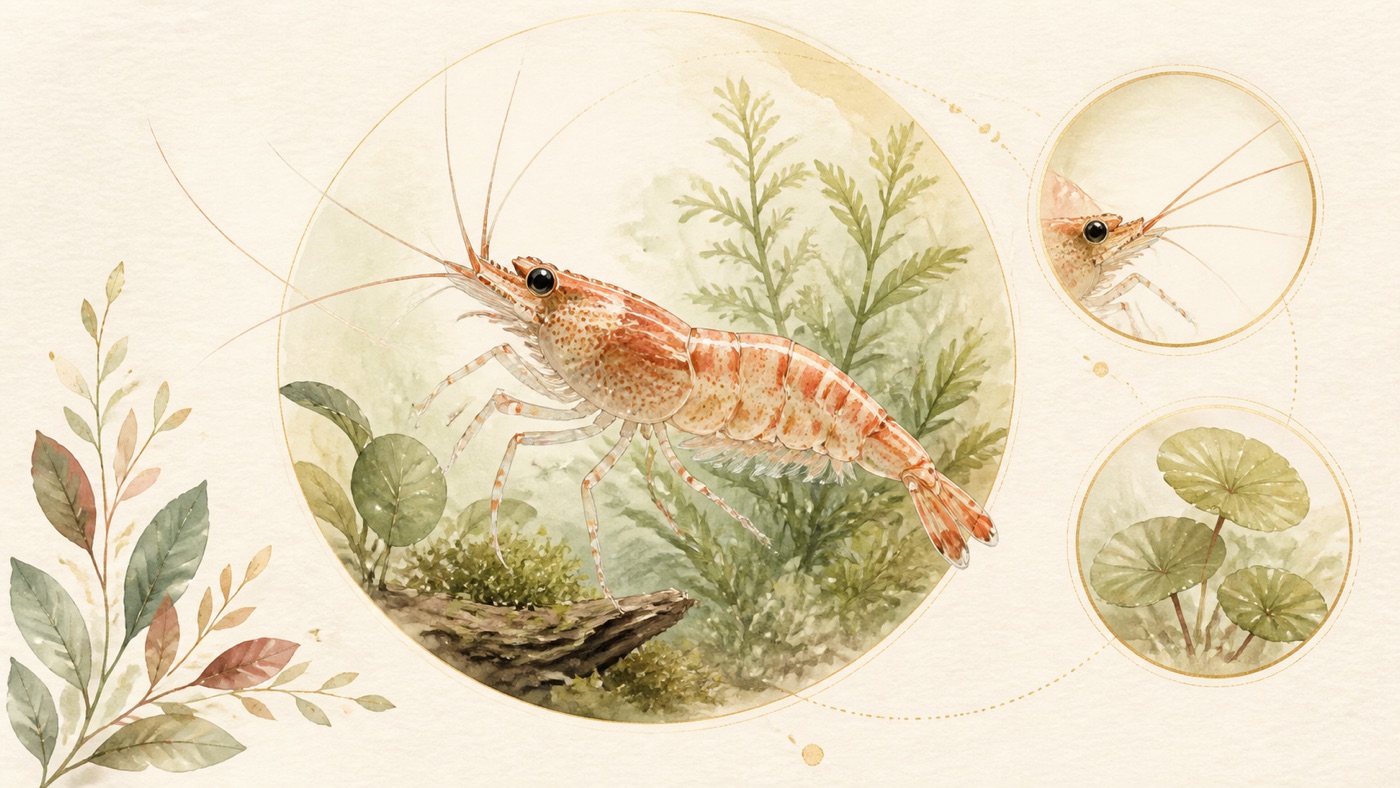
Fish and Aquarium・Invertebrates|T9 Ornamental Invertebrates — 12-Column Knowledge Tree
Ornamental shrimp, snails and corals together with pet tarantulas and scorpions, organised into a single care guide. Aquatic invertebrates run on the same nitrogen cycle as a fish tank, but their tolerance of ammonia, nitrite and copper ions is far lower than a fish's; terrestrial arachnids instead demand attention to substrate depth, temperature and humidity gradients, ventilation with escape-proofing, and a solitary nature. The material covers feeding frequency, failed moults and sheds, copper toxicity, coral bleaching and tissue necrosis, and honestly marks how thin the data is in this field — including the continuing scientific debate over whether arthropods perceive pain.
Fish and Aquarium・Invertebrates|T9 Ornamental Invertebrates — 12-Column Knowledge Tree
This content is compiled from the fish and aquarium / invertebrates chapter of the veterinary animal encyclopedia. The same sign calls for different handling in different species, and copying what is done for another species can be harmful — first confirm which animal you are dealing with.
⚠️ T9 is a field the original teaching material leaves entirely blank, and it is the Tier that is "long-tail but thinnest on data". In what follows, the aquatic invertebrate part (shrimp/snails/corals) can share its foundations with the T3 water quality science; the terrestrial arachnids (tarantulas/scorpions) are a completely different ecological system (terrestrial, not aquatic), and in most columns the two must be handled separately.
5.0 Scope and classification
| Major category | Subcategory | Definition |
|---|---|---|
| Aquatic invertebrates | Ornamental shrimp | Freshwater ornamental shrimp such as *Neocaridina* and *Caridina* |
| Aquatic invertebrates | Snail | Freshwater/marine ornamental snails such as the *Nerite snail* and the *Mystery snail* |
| Aquatic invertebrates | Coral | Reef-building/soft corals in a marine tank, such as LPS (large polyp stony coral), SPS (small polyp stony coral) and soft corals |
| Terrestrial arachnids | Tarantula | Large ornamental spiders such as those of the tarantula family |
| Terrestrial arachnids | Scorpion | Ornamental scorpions |
5.1 Species/varieties and lifespan
| Subcategory | Lifespan overview |
|---|---|
| Ornamental shrimp | Generally on the order of 1-2 years, varying with species and husbandry conditions [No single authoritative figure for this item: the whitelisted sources give no lifespan year reference value specific to ornamental shrimp] |
| Snail | Roughly on the order of 1-3 years, varying [No single authoritative figure for this item: the whitelisted sources give no lifespan year reference value specific to snails; the whitelisted sources hold no formal record of the lifespan of ornamental snails such as the apple snail and the mystery snail] |
| Coral | Corals are colonial organisms (a colony formed of many individual polyps), and a colony can in principle persist for several decades or more; the concept of "lifespan" differs from that of a single animal and has to be understood separately |
| Pet tarantula | Varies enormously by sex and species: females live markedly longer than males, and a male's lifespan shortens sharply after sexual maturity (the direction is clear). [Verification result: no single authoritative figure — no whitelisted source gives a single range across species, so each species must be verified individually. The tarantula family (Theraphosidae) contains a great many species whose lifespans differ enormously] |
| Scorpion | Roughly several years up to the order of 10 years, varying greatly by species [No single authoritative figure for this item: the whitelisted sources give no lifespan year reference value specific to scorpions; care material for pet scorpions is far less authoritative than that for dogs, cats and reptiles, echoing the honest note in column 5.12 of this text that "there is almost no dedicated veterinary teaching material"] |
5.2 Normal physiological indicators
| Subcategory | What to measure | How to measure it | Direction of abnormality |
|---|---|---|---|
| Ornamental shrimp/snails | Moult cycle (shrimp), activity level, coordination of antennae and walking legs | Visual observation | Prolonged inactivity after moulting, incomplete moult, death during moult |
| Coral | Degree of polyp extension, tissue colour, mucus output | Visual observation, comparing colour under illumination | Prolonged failure to extend, tissue shrinking and receding, colour fading sharply (a bleaching warning) |
| Tarantula/scorpion | Abdominal fullness (to judge dehydration or excess weight), coordination of the walking legs, moult cycle | Visual observation; for a scorpion health check an ultraviolet lamp can be used to observe the fluorescence of the exoskeleton (only as a reference for activity and exoskeleton integrity, not a disease diagnostic tool) | An abnormally shrunken abdomen = dehydration; uncoordinated or dragging legs = weakness or a moulting problem; prolonged refusal to feed must be distinguished from the normal pre-moult fasting period |
5.3 Husbandry environment (aquatic invertebrates vs terrestrial arachnids: completely different environmental logic)
5.3.1 Aquatic invertebrates (shrimp/snails/corals)
| Item | Content |
|---|---|
| Nitrogen cycle and water quality sensitivity | The same nitrogen cycle principle as for fish, but tolerance is far lower than a fish's — shrimp are many times more sensitive to ammonia, nitrite and copper ions than most fish, so introducing shrimp to a new tank is riskier than introducing fish |
| pH/hardness | Ornamental shrimp lines differ enormously: some lines (such as crystal shrimp) require a soft-water environment at lower pH, and their hardness (GH/KH) requirements are finer than those of an ordinary fish tank |
| Key water chemistry elements for coral | Calcium (Ca), magnesium (Mg) and carbonate alkalinity (KH) are the key elements for the skeletal formation and metabolism of stony corals and need regular monitoring and supplementation; light intensity and spectrum (PAR value) together with flow strength are also core variables for coral survival |
| Quarantine | Corals should be given a dip before introduction, to prevent hitchhiking harmful organisms (such as certain small creatures that graze on coral tissue) from entering the main tank |
5.3.2 Terrestrial arachnids (tarantulas/scorpions) — not an aquatic system at all
| Item | Content |
|---|---|
| Terrarium | Substrate depth must be sufficient for the animal to burrow or moult; by native range these fall into two broad types, tropical rainforest (high humidity) and desert (low humidity, dry), and confusing them can be fatal |
| Temperature and humidity gradients | Must be set according to the climate of the species' native range; excessive damp readily causes fungal infection, while excessive dryness causes dehydration |
| Ventilation and escape-proofing | Tarantulas and scorpions are both expert escapers, so the enclosure must combine ventilation with a secure, escape-proof seal |
| Hide and water dish | A hide must be provided; drinking water is supplied in a shallow dish rather than by soaking, since they are not aquatic animals |
| Height/fall risk | If an arboreal tarantula's enclosure is too shallow and lacks cushioning, a fall can rupture the abdomen, a common fatal accident (see sections seven and eight for detail) |
5.4 Nutrition and feeding
| Subcategory | Main diet | Common feeding errors |
|---|---|---|
| Ornamental shrimp/snails | Omnivorous: algae, sinking feed, blanched vegetable leaves | Overfeeding causes water quality to deteriorate rapidly (shrimp tolerate water quality swings even less well than fish) |
| Coral | Most stony corals (SPS) are largely autotrophic through photosynthesis by their symbiotic zooxanthellae, while some soft corals and LPS need supplementary feeding with plankton or amino acid products | Overfeeding species that need no supplementary feeding instead fouls the water and triggers algae problems |
| Pet tarantula/scorpion | Carnivorous, mainly on live prey (crickets, dubia roaches and the like), with a feeding frequency far lower than most keepers' instinct suggests (from several days to several weeks apart, depending on size) | Overfeeding causes obesity; live prey left in the enclosure can turn around and bite the spider during the vulnerable moulting period |
5.5 Behaviour and welfare
| Subcategory | Content |
|---|---|
| Ornamental shrimp/snails | Mostly group or semi-group behaviour with a nocturnal tendency; stress signals include reduced activity and abnormal colouration |
| Coral | Although they have no central nervous system, corals still show stress responses: polyps contract and fail to extend, and symbiotic algae are expelled (one of the early mechanisms of bleaching) |
| Pet tarantula/scorpion | Extremely solitary; most species cannot be housed together (high risk of cannibalism, see the fatal errors in section six); nocturnal; a defensive posture (front legs raised) is normal behaviour rather than a sign of aggression |
| The five welfare domains applied to arthropods | This is an emerging and contested field — whether arthropods possess the capacity to "perceive pain" remains under continuing scientific debate, and this text honestly marks that uncertainty rather than reaching a conclusion in its place |
5.6 Preventive medicine
| Item | Content |
|---|---|
| Vaccination | Not applicable; no such products exist |
| Quarantine | Corals, shrimp and snails should be observed in isolation or given a dip before introduction, to avoid carrying pathogens or harmful organisms into the main tank |
| Neutering | Not applicable |
| Health check frequency | Daily visual observation of activity and feeding response; for tarantulas and scorpions, additionally watch whether the moult cycle is normal |
5.7 Common diseases (Top 10; aquatic invertebrates and terrestrial arachnids are listed separately because the causes are entirely different)
| # | Disease | Applies to | Cause | Signs | Treatment direction (category only) | Prevention |
|---|---|---|---|---|---|---|
| 1 | Poor moult/moult death syndrome | Shrimp | Water quality swings, insufficient nutrition (iodine/calcium) | Death while stuck mid-moult, or prolonged immobility after moulting | Improve water quality stability; professional assessment of nutritional supplementation | Keep water parameters stable and avoid sharp swings |
| 2 | Copper toxicity | Shrimp, snails, corals | Excessive copper ion concentration in the water (commonly from misuse of copper-containing fish medication or from old pipework) | Large numbers dying suddenly within a short time | Immediately carry out a large water change and remove the copper source | Never use copper-containing medication in an invertebrate tank |
| 3 | Shell erosion | Snails | Low pH or a calcium-deficient environment eroding the shell material | Pits on the shell surface, thinning and brittleness | Adjust water quality and supplement a calcium source | Monitor pH and hardness |
| 4 | Coral bleaching | Coral | Sharp changes in light, water temperature or water quality causing symbiotic algae to be shed | Tissue colour rapidly fading towards white | Immediately remove the stressor (stabilise temperature and lighting) | Avoid sharp swings in water parameters |
| 5 | Coral tissue necrosis RTN/STN (Rapid/Slow Tissue Necrosis) | Coral (especially SPS) | The cause is often several stressors compounding, with the exact mechanism varying case by case | Tissue receding and sloughing rapidly within hours to days | Urgently isolate the affected coral and remove the necrotic portion (to be carried out by a professional) | Stabilise water quality; quarantine new corals |
| 6 | Internal parasites | Shrimp | Attachment of specific parasitic organisms (for example egg-attaching parasites) | Abnormal attachments on the shrimp's body or on the egg mass | Professional judgement is needed on how to handle it | Quarantine new shrimp |
| 7 | Poor shed/death during shed (dysecdysis) | Tarantulas, scorpions | Insufficient humidity, poor nutrition, or a problem in the individual itself; one of the most common causes of death in these animals | Death from being stuck in the old skin and unable to emerge during the shed, or missing limbs afterwards | A professional (exotic animal vet) is needed to assess whether intervention is possible | Maintain appropriate humidity and substrate depth |
| 8 | Dehydration | Tarantulas, scorpions | Insufficient environmental humidity or drinking water supply | Markedly shrunken, sunken abdomen and sluggish leg movement | Immediately improve the drinking water and humidity supply | Check the water dish and environmental humidity regularly |
| 9 | Fungal infection | Tarantulas, scorpions | Excessive environmental humidity with poor ventilation | Abnormal fungal patches on the body surface | Professional assessment and treatment are needed | Avoid an enclosure that is both too humid and poorly ventilated |
| 10 | Mite infestation | Tarantulas, scorpions | Pest mites breeding in the environment and attaching as parasites | Tiny moving organisms visible on the body surface or at the joints | Professional removal is needed, along with thorough cleaning of the environment | Avoid bringing mites in with live prey; clean the substrate regularly |
5.8 🚨 Emergency red flags
| Subject | Red flag sign |
|---|---|
| Tarantula | A ruptured abdomen leaking body fluid — this is an arthropod emergency with a very high mortality rate, commonly caused by a fall, and requires immediate help from an exotic animal vet |
| Tarantulas, scorpions | Lying on the back for a long time and unable to right itself; still stuck in the old skin well beyond the time a shed normally takes for that species |
| Shrimp, snails | Large numbers of individuals dying simultaneously within a short time (often pointing to copper toxicity or a sharp change in water quality, see item 2 of section seven) |
| Coral | Tissue receding rapidly within hours (pointing to RTN, see item 5 of section seven), requiring immediate isolation |
5.9 Zoonoses
| Subject | Explanation |
|---|---|
| Pet tarantula (bite) | The venom of most common pet tarantulas is not fatal to humans and mostly produces local swelling, pain and allergic reactions; even so it should be treated as a potential injury risk, and people prone to allergy are at higher risk |
| Pet tarantula (urticating hair, particular to New World tarantulas) | This is not an infectious disease but a physical defence mechanism: New World tarantulas kick fine hairs from the abdomen with their hind legs, and contact with skin or eyes can cause irritant dermatitis or ocular inflammation (ophthalmia nodosa), so avoid touching your eyes after handling them |
| Scorpion (sting) | Stings from most ornamental scorpions pose limited risk to a healthy adult, but stings from some species require medical assessment; the specific venom grading is [Verification result: no fixed figure should be given for this item — toxicity varies by species and an ordinary keeper cannot identify a species' venom grading unaided; judging the danger level of a particular species from memory is not allowed, and if signs appear, seek medical care immediately for professional assessment] |
| Aquatic invertebrates | A low-level opportunistic aquatic bacterial contact risk similar to that for T3 fish (see 4.9), with a relatively lower risk |
5.10 Household toxins and hazards
| Subject | Source of danger |
|---|---|
| Shrimp, snails, corals | The copper ion is the most critical fatal toxin, with a toxicity threshold for invertebrates far below that for fish — no copper-containing fish medication, copper-containing algaecide or old copper pipework may be used with an invertebrate tank |
| Shrimp, snails, corals | Household spray chemicals drifting into the water (as in T3, section ten) |
| Tarantulas, scorpions | Insecticide/mosquito spray — they are themselves arthropods, and their sensitivity to insecticide is close to that of the target insects being sprayed, making it a direct poisoning; insecticide sprays are strictly prohibited anywhere near the enclosure |
| Tarantulas, scorpions | Fragrance oils and aerosol products drifting into the space around the enclosure |
5.11 Old age, palliative care and euthanasia decisions
Data for this section is extremely thin, and for most species there is no standardised veterinary protocol — precisely the concrete expression of T9 being "long-tail but thinnest on data".
| Item | Content |
|---|---|
| Current state | Euthanasia methods for arthropods (tarantulas, scorpions) and aquatic invertebrates are mentioned occasionally in the exotic animal medicine literature (such as hypothermic methods), but fall far short of the degree of standardisation seen for dogs and cats |
| Recommendation | Where a euthanasia decision is involved, consult a veterinarian with experience in exotic animal / invertebrate medicine; keepers are advised not to make the judgement or carry out any procedure themselves |
| Scientific uncertainty in pain and welfare judgements | Whether arthropods possess pain perception remains under scientific debate (echoing section 5.5), which directly affects the basis for judging "palliative care" and "the timing of euthanasia", and this text honestly marks that uncertainty |
5.12 Authoritative sources
| Source | Status |
|---|---|
| (The original teaching material has no corresponding content at all) | The T9 portion of the original teaching material is zero |
| *Invertebrate Medicine* (edited by Lewbart) | ✅ Exists · verified — the original teaching material does not contain this book; verification confirms it is a real publication, currently in its 3rd edition, edited by Gregory A. Lewbart, published by John Wiley & Sons, ISBN-13 978-1-119-56943-5, published 2021/2022 (earlier editions: 2nd edition 2011, ISBN 978-0-470-96080-6; 1st edition 2006); verification route: ISBNsearch/OpenLibrary library catalogue records, verified 2026-07-30 |
| *Journal of Exotic Pet Medicine* | Line 117 of the original teaching material already lists this journal (for the "exotic pet" direction), and this section extends the claim that the journal may cover some invertebrate topics; the extended applicability requires verification and is not a verbatim endorsement by the original teaching material |
| World Aquatic Veterinary Medical Association (WAVMA) | ✅ Exists · verified — same verification result as 4.12 (verified 2026-07-30); the association's remit covers the whole scope of "aquatic veterinary medicine", and its website was not found to exclude aquatic invertebrates explicitly, though no verbatim statement of resources dedicated to aquatic invertebrate topics was found either, so this extended inference about scope still awaits topic-by-topic checking |
| Dedicated teaching material for terrestrial arachnids (tarantulas, scorpions) | Honest note: at present there is almost no dedicated veterinary teaching material; clinical information comes largely from extensions of zoo/exotic animal medicine and from experience accumulated over time in keeper communities, and its authority is not comparable to that of the canine, feline or fish fields |
Limits of this content
This content comes from the fish and aquarium / invertebrates chapter of the veterinary encyclopedia (see the evidence chain for the original location and content hash). The sources at the end are the authoritative materials cited by that chapter; the correspondence is at chapter level, which does not mean every sentence is traced sentence by sentence back to a given source. This material is for education and cannot replace diagnosis and prescription by a practising veterinarian; in an emergency, seek veterinary care immediately. This text has not been clinically reviewed by a named veterinarian.
FAQ
- Why can copper-containing fish medication not be used in an invertebrate tank?
- The toxicity threshold of copper ions for invertebrates is far below that for fish, making copper the most critical fatal toxin for these animals. Misusing copper-containing fish medication or copper-containing algaecide, or using water that has passed through old copper pipework, can cause shrimp, snails and corals to die in large numbers within a short time.
- 無脊椎動物の水槽で、なぜ銅を含む魚病薬を使ってはいけないのですか。 — 銅イオンの無脊椎動物に対する毒性の閾値は魚に対するそれよりはるかに低く、この種の動物にとって最も重要な致命的毒物だからです。銅を含む魚病薬や殺藻剤を誤って使ったり、古い銅の配管を通った水を使ったりすると、エビ、巻貝、サンゴが短時間に多数突然死することがあります。
- Why can copper-containing fish medication not be used in an invertebrate tank? — The toxicity threshold of copper ions for invertebrates is far below that for fish, making copper the most critical fatal toxin for these animals. Misusing copper-containing fish medication or copper-containing algaecide, or using water that has passed through old copper pipework, can cause shrimp, snails and corals to die in large numbers within a short time.
- What environmental conditions matter most when keeping pet tarantulas and scorpions?
- First distinguish the two broad types by native range — tropical rainforest (high humidity) and desert (dry) — because confusing them can be fatal. The substrate must be deep enough for the animal to burrow or moult, the enclosure must combine ventilation with escape-proofing, and a hide and a shallow water dish must be provided; if an arboreal species' enclosure is too shallow and lacks cushioning, a fall can rupture the abdomen.
- ペットのクモやサソリを飼ううえで、最も注意すべき環境条件は何ですか。 — まず原産地によって熱帯雨林型(高湿度)と砂漠型(乾燥)の 2 つに分ける必要があり、取り違えると致命的になります。床材は掘ったり脱皮したりできる深さが必要で、飼育ケージは通気と脱走防止を両立させ、隠れ場所と浅い水皿を用意します。樹上性の種のケージが浅すぎて緩衝がないと、落下により腹部が破裂することがあります。
- What environmental conditions matter most when keeping pet tarantulas and scorpions? — First distinguish the two broad types by native range — tropical rainforest (high humidity) and desert (dry) — because confusing them can be fatal. The substrate must be deep enough for the animal to burrow or moult, the enclosure must combine ventilation with escape-proofing, and a hide and a shallow water dish must be provided; if an arboreal species' enclosure is too shallow and lacks cushioning, a fall can rupture the abdomen.
- Are a tarantula's urticating hairs an infectious disease?
- No, they are a physical defence mechanism. New World tarantulas kick fine hairs from the abdomen with their hind legs, and contact with skin or eyes can cause irritant dermatitis or ocular inflammation, so avoid touching your eyes after handling them.
- クモの刺激毛は感染する病気ですか。 — 違います。それは物理的な防御機構です。新世界のオオツチグモは後脚で腹部の細かい毛を蹴り飛ばし、皮膚や目に触れると刺激性の皮膚炎や目の炎症を起こしうるため、扱ったあとは手で目に触れないようにしてください。
- Are a tarantula's urticating hairs an infectious disease? — No, they are a physical defence mechanism. New World tarantulas kick fine hairs from the abdomen with their hind legs, and contact with skin or eyes can cause irritant dermatitis or ocular inflammation, so avoid touching your eyes after handling them.
Source anchors
- openlibrary.org|魚類與水族・無脊椎章引用 · https://openlibrary.org/works/OL19509478W · 在 IDAEO 的其他引用
- openlibrary.org|魚類與水族・無脊椎章引用 · https://openlibrary.org/works/OL21421796W · 在 IDAEO 的其他引用
- www.wavma.org|魚類與水族・無脊椎章引用 · https://www.wavma.org/ · 在 IDAEO 的其他引用
- 本文證據鏈:原始章節位置與內容雜湊 · https://km.idaeo.ai/reports/vet-ornamental-invertebrates-evidence · 在 IDAEO 的其他引用
Cite this article
Jane・《Fish and Aquarium・Invertebrates|T9 Ornamental Invertebrates — 12-Column Knowledge Tree》・IDAEO 知識庫・2026-08-13・https://km.idaeo.ai/post/vet/ornamental-invertebratesUpdated 2026-08-15