

🏛 Part of the "vet" topic shelf →
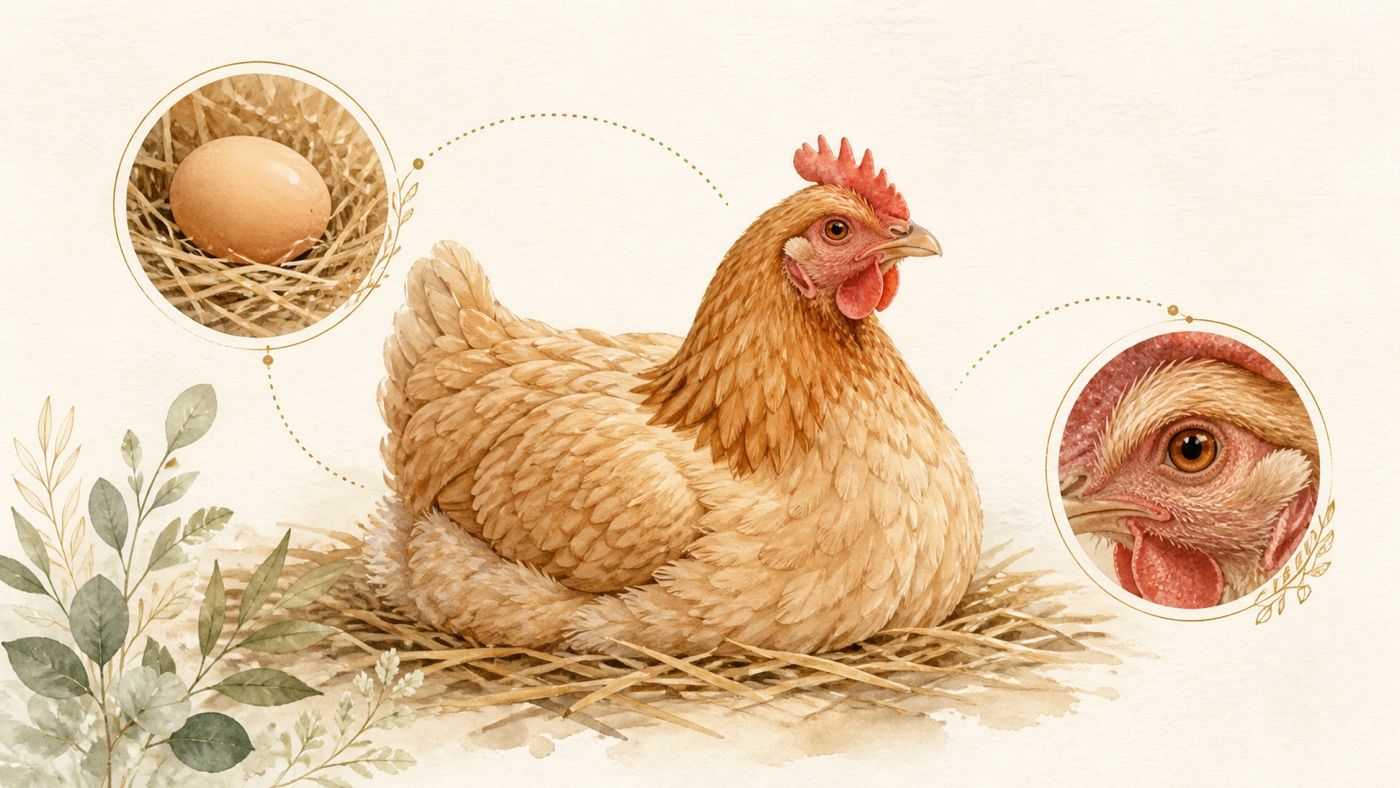
Laying Hens|10 Common Diseases (cause → signs → examination → treatment direction → prevention)
Ten common diseases of laying hens gathered into one table: Newcastle disease, avian influenza (HPAI), infectious bronchitis, Marek's disease, coccidiosis, salmonellosis, colibacillosis, infectious laryngotracheitis, external parasites (red mite/poultry lice, *Dermanyssus gallinae* and others), and fatty liver hemorrhagic syndrome. Each row lists cause, signs, examination, treatment direction and prevention; the treatment column gives categories only, never doses. It suits checking against when something looks wrong and you need to narrow down the direction first, or when taking on new birds.
Laying Hens|10 Common Diseases (cause → signs → examination → treatment direction → prevention)
This content is compiled from the disease table for laying hens in the backyard poultry chapter of the veterinary animal encyclopedia. The same sign calls for different handling in different species, and copying what is done for another species can be harmful — first confirm which animal you are dealing with.
| # | Disease (Chinese/English) | Cause | Signs | Examination | Treatment direction | Prevention |
|---|---|---|---|---|---|---|
| 1 | Newcastle disease | Viral infection; a notifiable disease in some jurisdictions | Respiratory signs, neurological signs (twisted neck), a sharp drop in laying | History taking, laboratory confirmation (PCR/serology) | No specific drug, supportive care; where the disease is suspected, see the reporting obligation in column B | Vaccination (per the local programme), quarantine of newly arrived birds, limiting contact with wild birds |
| 2 | Avian influenza (HPAI) | Viral infection; zoonotic and a notifiable disease | Dullness, sudden heavy mortality across the flock, laying stops, neurological signs | After reporting to the competent authority, official sampling confirms the diagnosis; keepers should not handle suspected cases themselves | This falls under statutory reporting and stamping-out measures (see columns B and C), not home treatment | Keeping wild and migratory birds out, biosecurity measures |
| 3 | Infectious bronchitis | Viral infection | Respiratory discharge, falling egg numbers and shell quality | History taking, laboratory testing | Supportive care; there is no specific drug | Vaccination (per the local programme), environmental hygiene |
| 4 | Marek's disease | A virus (herpesvirus family) causing lymphoma | Paralysis, tumours, stunted growth | Pathology/laboratory confirmation | No treatment; affected birds are mostly culled | Day-old chick vaccination (per the local programme), avoiding mixed-age flocks |
| 5 | Coccidiosis | A protozoan parasite of the gut; young chicks are at high risk | Bloody droppings, diarrhoea, stunted growth, dullness | Faecal microscopy | Antiparasitic medication must be prescribed by a veterinarian | Keeping litter dry, avoiding overcrowding |
| 6 | Salmonellosis | Bacterial infection; zoonotic (see item 9 and column D) | Diarrhoea, spread through the flock, some carriers show no obvious signs | Faecal culture | Antibiotics must be prescribed by a veterinarian, and dosing brings a withdrawal period into play (see column A) | Disinfecting drinkers and feeders, environmental hygiene, quarantine of newly arrived birds |
| 7 | Colibacillosis | Bacterial infection, often secondary to another disease or to stress | Diarrhoea, respiratory signs, reduced activity | Bacterial culture | Antibiotics must be prescribed by a veterinarian | Environmental hygiene, reducing stressors |
| 8 | Infectious laryngotracheitis | Viral infection of the respiratory tract | Laboured breathing, blood-tinged discharge on coughing | Laboratory confirmation | Supportive care | Vaccination (per the local programme), quarantine |
| 9 | External parasites (red mite/poultry lice) (*Dermanyssus gallinae* and others) | Poor environmental hygiene, hiding in crevices of the perches | Restlessness at night, feather damage, anaemia in heavy infestations | Night-time inspection of perch crevices, feather microscopy | Antiparasitic medication and environmental treatment need veterinary or professional guidance | Regular cleaning of perch crevices, environmental pest control |
| 10 | Fatty liver hemorrhagic syndrome | High-energy diet, lack of activity, obesity; more common in caged layers | Sudden death, haemorrhage in the liver (mostly found at post-mortem) | History taking, blood biochemistry | Veterinary assessment of dietary adjustment is required | A balanced diet, avoiding excessive restriction of space to move |
The 10 rows above are copied cell for cell from the encyclopedia chapter, neither rewritten nor condensed; the treatment column gives categories only, never drug names or doses, and any medication must be prescribed by a veterinarian. The line number and content hash of each row in the source chapter are in the evidence chain at the end.
Limits of this content
This content comes from the backyard poultry chapter of the veterinary encyclopedia (see the evidence chain for the original location and content hash). The sources at the end are the authoritative materials cited by that chapter; the correspondence is at chapter level, which does not mean every sentence is traced sentence by sentence back to a given source. This material is for education and cannot replace diagnosis and prescription by a practising veterinarian; in an emergency, seek veterinary care immediately. This text has not been clinically reviewed by a named veterinarian.
FAQ
- What is Newcastle disease, and what should make you call the vet at once?
- Viral infection; a notifiable disease in some jurisdictions. You will see respiratory signs, neurological signs (twisted neck) and a sharp drop in laying. The direction of management is that there is no specific drug, only supportive care; where the disease is suspected, see the reporting obligation in column B. In the source chapter this row belongs to the group needing prompt attention; the actual judgement still rests with the veterinarian case by case, and this text gives no drug names or doses.
- ニューカッスル病 Newcastle disease とは何ですか。何が見えたらすぐ獣医師を呼ぶべきですか。 — ウイルス感染であり、一部の地域では法定の届出疾病です。呼吸器症状、神経症状(首のねじれ)、産卵の急減が現れます。対処の方向性は、特効薬はなく支持療法というもので、疑わしい場合は B 欄の届出義務を参照します。この行は元の章で速やかな対応を要する類型に属します。実際の判断は個々の症例に応じて獣医師が行う必要があり、本文では薬剤名と用量は書きません。
- What is Newcastle disease, and what should make you call the vet at once? — Viral infection; a notifiable disease in some jurisdictions. You will see respiratory signs, neurological signs (twisted neck) and a sharp drop in laying. The direction of management is that there is no specific drug, only supportive care; where the disease is suspected, see the reporting obligation in column B. In the source chapter this row belongs to the group needing prompt attention; the actual judgement still rests with the veterinarian case by case, and this text gives no drug names or doses.
- What is avian influenza (HPAI), and what should make you call the vet at once?
- Viral infection; zoonotic and a notifiable disease. You will see dullness, sudden heavy mortality across the flock, laying stopping and neurological signs. The direction of management is that this falls under statutory reporting and stamping-out measures (see columns B and C), not home treatment. In the source chapter this row belongs to the group needing prompt attention; the actual judgement still rests with the veterinarian case by case, and this text gives no drug names or doses.
- 高病原性鳥インフルエンザ Avian influenza(HPAI)とは何ですか。何が見えたらすぐ獣医師を呼ぶべきですか。 — ウイルス感染であり、人獣共通感染症かつ法定の届出疾病です。沈鬱、群単位での急性大量死、産卵の停止、神経症状が現れます。対処の方向性は、法定の届出と殺処分の対象範囲(B・C 欄参照)であり、家庭での治療の対象ではないというものです。この行は元の章で速やかな対応を要する類型に属します。実際の判断は個々の症例に応じて獣医師が行う必要があり、本文では薬剤名と用量は書きません。
- What is avian influenza (HPAI), and what should make you call the vet at once? — Viral infection; zoonotic and a notifiable disease. You will see dullness, sudden heavy mortality across the flock, laying stopping and neurological signs. The direction of management is that this falls under statutory reporting and stamping-out measures (see columns B and C), not home treatment. In the source chapter this row belongs to the group needing prompt attention; the actual judgement still rests with the veterinarian case by case, and this text gives no drug names or doses.
- What causes infectious bronchitis, and what matters most in preventing it?
- Viral infection. You will see respiratory discharge and falling egg numbers and shell quality. The key to prevention is vaccination (per the local programme) and environmental hygiene. The direction of treatment rests with the veterinarian case by case, and this text gives no drug names or doses.
- 伝染性気管支炎 Infectious bronchitis の原因と予防の要点は何ですか。 — ウイルス感染です。呼吸器の分泌物、産卵数と卵殻品質の低下が現れます。予防の要点は、ワクチン(各地域の方針による)と環境衛生です。治療の方向性は獣医師が個別に評価する必要があり、本文では薬剤名と用量は書きません。
- What causes infectious bronchitis, and what matters most in preventing it? — Viral infection. You will see respiratory discharge and falling egg numbers and shell quality. The key to prevention is vaccination (per the local programme) and environmental hygiene. The direction of treatment rests with the veterinarian case by case, and this text gives no drug names or doses.
Source anchors
- Merck 獸醫手冊|家禽章引用 · https://www.merckvetmanual.com/exotic-and-laboratory-animals/backyard-poultry/overview-of-backyard-poultry · 在 IDAEO 的其他引用
- Merck 獸醫手冊|家禽章引用 · https://www.merckvetmanual.com/poultry/nutrition-and-management-poultry/vitamin-deficiencies-in-poultry · 在 IDAEO 的其他引用
- Merck 獸醫手冊|家禽章引用 · https://www.merckvetmanual.com/special-subjects/reference-guides/normal-rectal-temperature-ranges · 在 IDAEO 的其他引用
- MSD 獸醫手冊|家禽章引用 · https://www.msdvetmanual.com/multimedia/table/nutrient-requirements-of-pekin-ducks · 在 IDAEO 的其他引用
- extension.colostate.edu|家禽章引用 · https://extension.colostate.edu/resource/poultry/ · 在 IDAEO 的其他引用
- extension.psu.edu|家禽章引用 · https://extension.psu.edu/a-quick-guide-to-raising-pastured-broilers · 在 IDAEO 的其他引用
- livestock.extension.wisc.edu|家禽章引用 · https://livestock.extension.wisc.edu/articles/life-cycle-of-a-laying-hen/ · 在 IDAEO 的其他引用
- openlibrary.org|家禽章引用 · https://openlibrary.org/works/OL20728248W · 在 IDAEO 的其他引用
Cite this article
Jane・《Laying Hens|10 Common Diseases (cause → signs → examination → treatment direction → prevention)》・IDAEO 知識庫・2026-08-13・https://km.idaeo.ai/post/vet/laying-hen-diseasesUpdated 2026-08-15