

🏛 Part of the "vet" topic shelf →
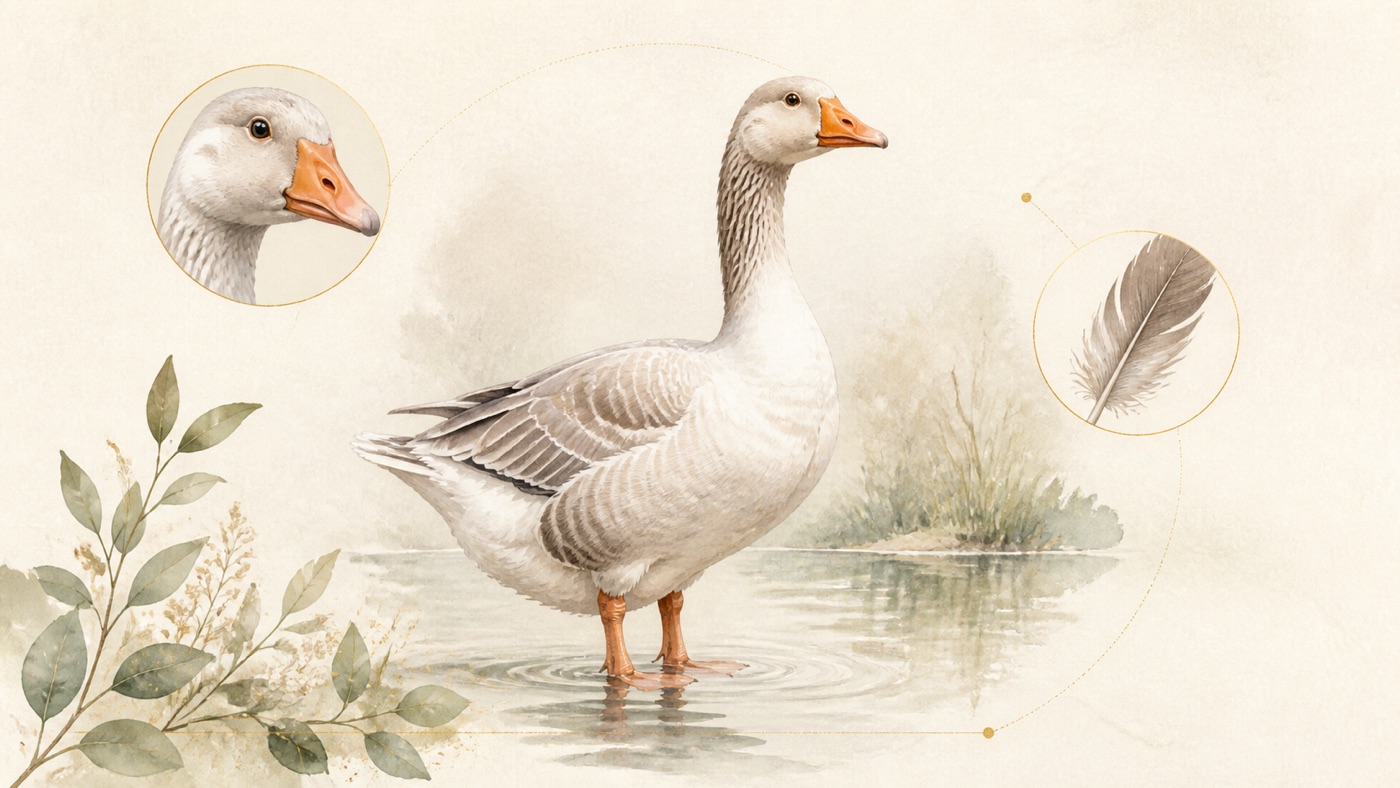
Geese|10 Common Diseases (cause → signs → examination → treatment direction → prevention)
Ten common diseases of geese gathered into one table: goose parvovirus (Derzsy's disease), avian influenza, angel wing, coccidiosis, aspergillosis, colibacillosis, gastrointestinal parasites, botulism, traumatic injury (intraspecific aggression, predators), and gout/renal disease. Each row lists cause, signs, examination, treatment direction and prevention; the treatment column gives categories only, never doses. It suits checking against when something looks wrong and you need to narrow down the direction first, or when taking on new birds.
Geese|10 Common Diseases (cause → signs → examination → treatment direction → prevention)
This content is compiled from the disease table for geese in the backyard poultry chapter of the veterinary animal encyclopedia. The same sign calls for different handling in different species, and copying what is done for another species can be harmful — first confirm which animal you are dealing with.
| # | Disease (Chinese/English) | Cause | Signs | Examination | Treatment direction | Prevention |
|---|---|---|---|---|---|---|
| 1 | Goose parvovirus (Derzsy's disease) | Viral infection, highly fatal in goslings | Sudden death, diarrhoea, neurological signs | Pathology/laboratory confirmation | Supportive care; mortality in goslings is high | Vaccination (per the local programme), quarantine of breeding geese |
| 2 | Avian influenza | Same as the duck group (waterfowl as natural hosts) | Anything from no obvious signs to sudden death | After reporting to the competent authority, official sampling confirms the diagnosis | This falls under statutory reporting and stamping-out measures | Keeping wild waterfowl away, biosecurity measures |
| 3 | Angel wing | Non-infectious, related to growth rate and diet in goslings | The wing tip twists outward and no longer sits against the body | Visual inspection | Caught early, corrective measures can be assessed by a veterinarian; left too long it is irreversible | A balanced diet for goslings, avoiding growth that is too rapid |
| 4 | Coccidiosis | Same as the chicken and duck groups | Diarrhoea, dullness | Faecal microscopy | Antiparasitic medication must be prescribed | Environmental hygiene |
| 5 | Aspergillosis | Damp, mouldy litter or feed | Laboured breathing, reduced activity | Endoscopy, imaging | Antifungal medication must be prescribed | Dry litter, protecting feed from damp |
| 6 | Colibacillosis | Same as the chicken and duck groups | Diarrhoea, reduced activity | Bacterial culture | Antibiotics must be prescribed | Environmental hygiene |
| 7 | Gastrointestinal parasites | Grazing habits mean more contact with soil and parasite eggs | Diarrhoea, wasting, stunted growth | Faecal microscopy | Antiparasitic medication must be prescribed | Regular faecal screening, rotational grazing |
| 8 | Botulism | Same as the duck group (stagnant/putrid water) | Progressive muscular weakness and paralysis | History, clinical assessment | An emergency; supportive care needs veterinary assessment | Keeping the water source clean |
| 9 | Traumatic injury (intraspecific aggression, predators) | Strongly territorial, with more conflict within the flock in the breeding season | Wounds and bleeding, lameness | Visual inspection | Wound management needs veterinary assessment | Managing density and space in the breeding season |
| 10 | Gout / renal disease | Less common; related to diet and water intake | Swollen joints, reduced activity | Blood biochemistry, imaging | Long-term veterinary assessment and management are required | A balanced diet, plenty of drinking water |
The 10 rows above are copied cell for cell from the encyclopedia chapter, neither rewritten nor condensed; the treatment column gives categories only, never drug names or doses, and any medication must be prescribed by a veterinarian. The line number and content hash of each row in the source chapter are in the evidence chain at the end.
Limits of this content
This content comes from the backyard poultry chapter of the veterinary encyclopedia (see the evidence chain for the original location and content hash). The sources at the end are the authoritative materials cited by that chapter; the correspondence is at chapter level, which does not mean every sentence is traced sentence by sentence back to a given source. This material is for education and cannot replace diagnosis and prescription by a practising veterinarian; in an emergency, seek veterinary care immediately. This text has not been clinically reviewed by a named veterinarian.
FAQ
- What is goose parvovirus (Derzsy's disease), and what should make you call the vet at once?
- Viral infection, highly fatal in goslings. You will see sudden death, diarrhoea and neurological signs. The direction of management is supportive care; mortality in goslings is high. In the source chapter this row belongs to the group needing prompt attention; the actual judgement still rests with the veterinarian case by case, and this text gives no drug names or doses.
- ガチョウパルボウイルス感染症 Goose parvovirus(Derzsy's disease)とは何ですか。何が見えたらすぐ獣医師を呼ぶべきですか。 — ウイルス感染であり、雛ガチョウでは致死率が高い疾患です。急死、下痢、神経症状が現れます。対処の方向性は、支持療法であり、雛ガチョウの死亡率は高いというものです。この行は元の章で速やかな対応を要する類型に属します。実際の判断は個々の症例に応じて獣医師が行う必要があり、本文では薬剤名と用量は書きません。
- What is goose parvovirus (Derzsy's disease), and what should make you call the vet at once? — Viral infection, highly fatal in goslings. You will see sudden death, diarrhoea and neurological signs. The direction of management is supportive care; mortality in goslings is high. In the source chapter this row belongs to the group needing prompt attention; the actual judgement still rests with the veterinarian case by case, and this text gives no drug names or doses.
- What is avian influenza, and what should make you call the vet at once?
- Same as the duck group (waterfowl as natural hosts). You will see anything from no obvious signs to sudden death. The direction of management is that this falls under statutory reporting and stamping-out measures. In the source chapter this row belongs to the group needing prompt attention; the actual judgement still rests with the veterinarian case by case, and this text gives no drug names or doses.
- 高病原性鳥インフルエンザ Avian influenza とは何ですか。何が見えたらすぐ獣医師を呼ぶべきですか。 — アヒルのグループと同じで、水禽としての自然宿主の役割によるものです。明らかな症状がない状態から急死までさまざまな症状が現れます。対処の方向性は、法定の届出と殺処分の対象範囲というものです。この行は元の章で速やかな対応を要する類型に属します。実際の判断は個々の症例に応じて獣医師が行う必要があり、本文では薬剤名と用量は書きません。
- What is avian influenza, and what should make you call the vet at once? — Same as the duck group (waterfowl as natural hosts). You will see anything from no obvious signs to sudden death. The direction of management is that this falls under statutory reporting and stamping-out measures. In the source chapter this row belongs to the group needing prompt attention; the actual judgement still rests with the veterinarian case by case, and this text gives no drug names or doses.
- What is botulism, and what should make you call the vet at once?
- Same as the duck group (stagnant/putrid water). You will see progressive muscular weakness and paralysis. The direction of management is that this is an emergency and supportive care needs veterinary assessment. In the source chapter this row belongs to the group needing prompt attention; the actual judgement still rests with the veterinarian case by case, and this text gives no drug names or doses.
- ボツリヌス症 Botulism とは何ですか。何が見えたらすぐ獣医師を呼ぶべきですか。 — アヒルのグループと同じで、停滞・腐敗した水源によるものです。進行性の筋の脱力と麻痺が現れます。対処の方向性は、救急疾患であり支持療法には獣医師の評価が必要というものです。この行は元の章で速やかな対応を要する類型に属します。実際の判断は個々の症例に応じて獣医師が行う必要があり、本文では薬剤名と用量は書きません。
- What is botulism, and what should make you call the vet at once? — Same as the duck group (stagnant/putrid water). You will see progressive muscular weakness and paralysis. The direction of management is that this is an emergency and supportive care needs veterinary assessment. In the source chapter this row belongs to the group needing prompt attention; the actual judgement still rests with the veterinarian case by case, and this text gives no drug names or doses.
Source anchors
- Merck 獸醫手冊|家禽章引用 · https://www.merckvetmanual.com/exotic-and-laboratory-animals/backyard-poultry/overview-of-backyard-poultry · 在 IDAEO 的其他引用
- Merck 獸醫手冊|家禽章引用 · https://www.merckvetmanual.com/poultry/nutrition-and-management-poultry/vitamin-deficiencies-in-poultry · 在 IDAEO 的其他引用
- Merck 獸醫手冊|家禽章引用 · https://www.merckvetmanual.com/special-subjects/reference-guides/normal-rectal-temperature-ranges · 在 IDAEO 的其他引用
- MSD 獸醫手冊|家禽章引用 · https://www.msdvetmanual.com/multimedia/table/nutrient-requirements-of-pekin-ducks · 在 IDAEO 的其他引用
- extension.colostate.edu|家禽章引用 · https://extension.colostate.edu/resource/poultry/ · 在 IDAEO 的其他引用
- extension.psu.edu|家禽章引用 · https://extension.psu.edu/a-quick-guide-to-raising-pastured-broilers · 在 IDAEO 的其他引用
- livestock.extension.wisc.edu|家禽章引用 · https://livestock.extension.wisc.edu/articles/life-cycle-of-a-laying-hen/ · 在 IDAEO 的其他引用
- openlibrary.org|家禽章引用 · https://openlibrary.org/works/OL20728248W · 在 IDAEO 的其他引用
Cite this article
Jane・《Geese|10 Common Diseases (cause → signs → examination → treatment direction → prevention)》・IDAEO 知識庫・2026-08-13・https://km.idaeo.ai/post/vet/goose-diseasesUpdated 2026-08-15