

🏛 Part of the "vet" topic shelf →
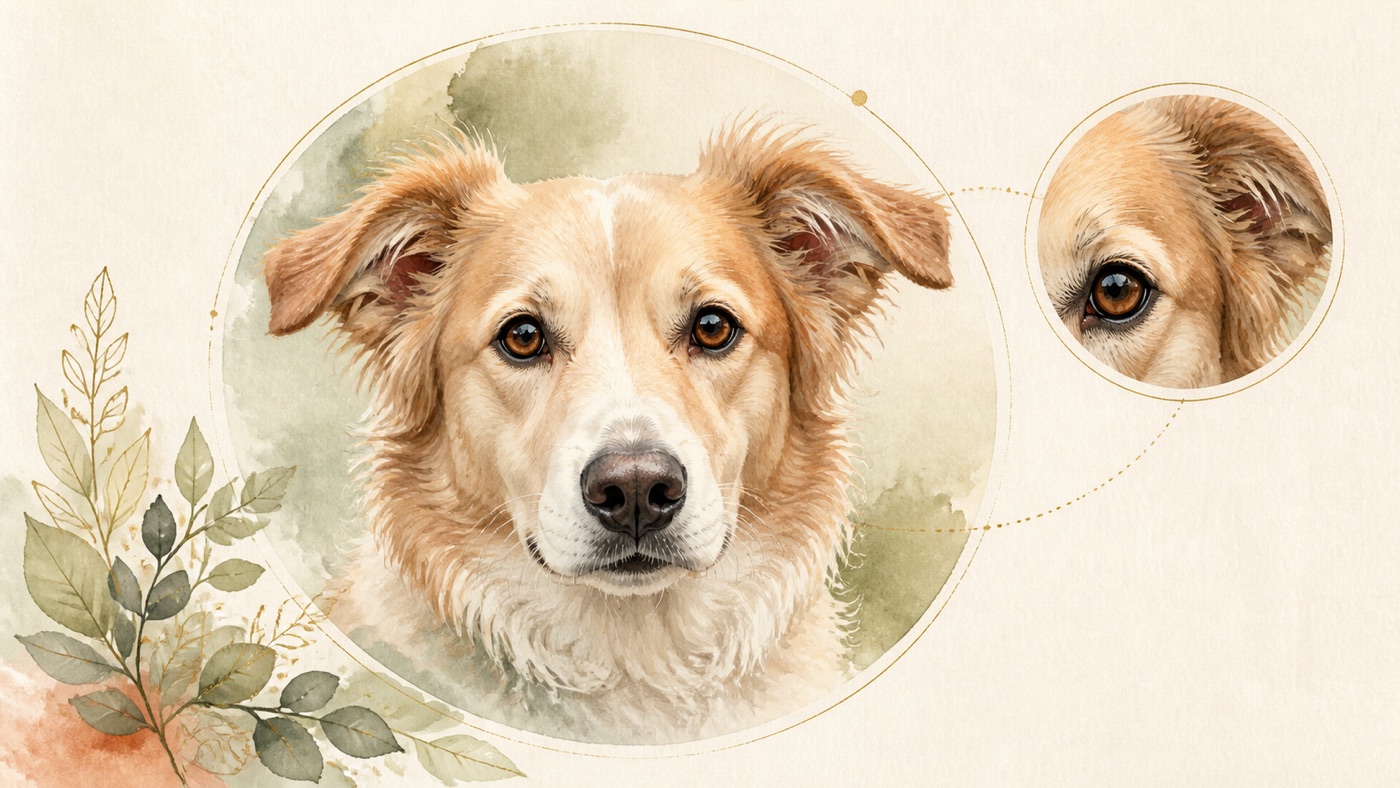
Symptom Triage|Eyes, Ears and Mouth
Triage for six groups of head signals: a red, swollen, watering eye with a cloudy cornea; unequal pupils or sudden blindness; ear scratching, head shaking and a foul smell; a head tilt, circling and flickering eyes; drooling, bad breath and dropping food; and a change in gum or mucous membrane colour. Corneal and intraocular pressure problems are counted in hours and can end in blindness. Blue mucous membranes mean lack of oxygen, pale means anaemia or shock, and yellow means a liver, biliary or haemolytic problem, all of which need immediate handling. It also shows how to press the gum and time the refill, and which situations to photograph and which to film for the veterinarian.
Symptom Triage|Eyes, Ears and Mouth
This section is compiled from the Symptom Triage chapter of the veterinary animal encyclopedia. The same symptom calls for different handling in different species, and copying what is done for another species can be harmful — first confirm which animal you are dealing with.
| Symptom (what the owner sees) | Species where it is common | Possible direction | What the owner can observe / record at home | Matching specialty |
|---|---|---|---|---|
| Red, swollen or watering eye, squinting, a cornea that turns white or cloudy | Dogs and cats (corneal ulcer, glaucoma, uveitis), brachycephalic dogs and cats (risk of eyeball proptosis) | Emergency (corneal and intraocular pressure problems are counted in hours and can end in blindness) | Photograph the eye, note whether the animal rubs it and whether there is light avoidance | Pathology and Forensics* (a local tissue lesion diagnostic lens; ophthalmology itself is not among the 8 specialties in the original teaching material) |
| Pupils of unequal size (asymmetric between the two eyes) or sudden loss of vision | Dogs and cats (neurological lesion, high blood pressure, retinal detachment) | Emergency | Compare the pupil response left and right with a torch, and note any bumping into walls or head tilt | Neurology (pupils and vision belong to central nervous conduction pathways; the original teaching material explicitly lists "neuroimaging", an exact match) |
| Frequent ear scratching, head shaking, ear canal discharge with a foul smell | Dogs and cats (otitis externa, common in allergic breeds such as the West Highland White Terrier), rabbits (ear mites) | Mostly mild to needing a veterinary visit (persistent head shaking or foul-smelling discharge needs a visit) | Colour and smell of the ear canal discharge, whether one or both ears are affected, and whether a head tilt is present | Population Medicine* (the population management angle for contact spread such as ear mites between pets) |
| Head tilted to one side, circling, loss of balance, involuntary flickering of the eyes | Dogs and cats (vestibular disease), rabbits (torticollis, often suggesting encephalitozoonosis or a middle ear lesion) | Emergency | Film the walking and head posture, and note whether vomiting is present | Neurology (the vestibular system and balance are core neurology; explicitly listed in the original teaching material, an exact match) |
| Drooling, bad breath, chewing on one side only, dropping food halfway through a meal | Dogs and cats (periodontal disease, tooth resorption, oral ulcer), rabbits and rodents (overgrown teeth), birds (stomatitis) | Veterinary visit needed (in cats especially, oral pain is easily misread as "getting old and quieter in character") | Lift the lip once a month to check gums and tartar, record whether the animal eats only soft food, and track weight changes | Public Health* (chronic oral infection and antimicrobial stewardship is the closest lens; dentistry itself is not among the 8 specialties in the original teaching material) |
| Change in gum or mucous membrane colour (pale, blue, yellow, brick red) | Applies to almost all mammals; a window onto whole-body status | Emergency (blue = lack of oxygen, pale = anaemia or shock, yellow = a liver, biliary or haemolytic problem; all need immediate handling) | Lift the upper lip to look at gum colour, then press with a finger until it blanches, release, and time how fast the pink returns (capillary refill time) | Cardiology (perfusion and lack of oxygen are core to cardiology, explicitly listed in the original teaching material) / Pathology and Forensics* (determining the hepatobiliary cause of jaundice) |
Limits of this content
This content comes from the Symptom Triage chapter of the veterinary encyclopedia (see the evidence chain for the original location and content hash). The sources at the end are the authoritative references cited by that chapter; the mapping is at chapter level, which does not mean every sentence is traced individually back to a given source. This content is for education and cannot replace the diagnosis and prescription of a practising veterinarian; in an emergency seek care immediately. This text has not been clinically reviewed by a named veterinarian.
FAQ
- My dog's eye is suddenly red, swollen and squinting, and the cornea has turned white. Can it wait until tomorrow?
- Waiting is not advised. Corneal and intraocular pressure problems are counted in hours and can end in blindness, so this is an emergency. Photograph the eye first, note whether the dog rubs it or avoids light, and seek care as soon as possible.
- 犬の眼が急に充血して腫れ、目を細め、角膜が白くなりました。翌日まで待てますか。 — 待つことはおすすめしません。角膜と眼圧に関わる問題は時間単位で進み、失明に至るため急症です。まず眼の状態を写真で記録し、眼をこすっていないか、まぶしがっていないかに注意して、できるだけ早く受診してください。
- My dog's eye is suddenly red, swollen and squinting, and the cornea has turned white. Can it wait until tomorrow? — Waiting is not advised. Corneal and intraocular pressure problems are counted in hours and can end in blindness, so this is an emergency. Photograph the eye first, note whether the dog rubs it or avoids light, and seek care as soon as possible.
- My rabbit's head is tilted to one side and it walks in circles. Are its ears just dirty?
- A head tilted to one side, circling, loss of balance and involuntary flickering of the eyes is an emergency. In dogs and cats this may be vestibular disease; in rabbits, torticollis often suggests encephalitozoonosis or a middle ear lesion. Film the walking and head posture, note whether vomiting is present, and seek care immediately.
- ウサギの頭が片側に傾き、旋回して歩きます。耳が汚れているだけですか。 — 頭が片側に傾く、旋回歩行、平衡障害、眼球が不随意に揺れる状態は急症です。犬猫では前庭疾患のことがあり、ウサギの斜頸は脳炎原虫(エンセファリトゾーン)感染や中耳の病巣を示すことが多いです。歩行と頭部の姿勢を動画で記録し、嘔吐を伴わないかに注意して、直ちに受診してください。
- My rabbit's head is tilted to one side and it walks in circles. Are its ears just dirty? — A head tilted to one side, circling, loss of balance and involuntary flickering of the eyes is an emergency. In dogs and cats this may be vestibular disease; in rabbits, torticollis often suggests encephalitozoonosis or a middle ear lesion. Film the walking and head posture, note whether vomiting is present, and seek care immediately.
- What can gum colour tell me?
- Gum and mucous membrane colour is a window onto whole-body status: blue means lack of oxygen, pale means anaemia or shock, and yellow means a liver, biliary or haemolytic problem, all of which need immediate handling. To check, lift the upper lip to look at the gum colour, then press with a finger until it blanches, release, and time how fast the pink returns — the capillary refill time.
- 歯肉の色から何が分かりますか。 — 歯肉と粘膜の色は全身状態を映す窓です。紫は酸素不足、蒼白は貧血またはショック、黄色は肝胆道または溶血の問題を意味し、いずれも直ちに対応が必要です。方法は、上唇をめくって歯肉の色を見て、指で押して白くしてから離し、ピンクに戻る速さ、すなわち毛細血管再充満時間を測ります。
- What can gum colour tell me? — Gum and mucous membrane colour is a window onto whole-body status: blue means lack of oxygen, pale means anaemia or shock, and yellow means a liver, biliary or haemolytic problem, all of which need immediate handling. To check, lift the upper lip to look at the gum colour, then press with a finger until it blanches, release, and time how fast the pink returns — the capillary refill time.
Source anchors
- Merck 獸醫手冊|症狀鑑別章引用 · https://www.merckvetmanual.com/toxicology/insecticide-and-acaricide-organic-toxicity/plant-derived-insecticide-toxicosis-in-animals · 在 IDAEO 的其他引用
- PMC 全文|症狀鑑別章引用 · https://pmc.ncbi.nlm.nih.gov/articles/PMC10385239/ · 在 IDAEO 的其他引用
- PMC 全文|症狀鑑別章引用 · https://pmc.ncbi.nlm.nih.gov/articles/PMC10705156/ · 在 IDAEO 的其他引用
- 本文證據鏈:原始章節位置與內容雜湊 · https://km.idaeo.ai/reports/vet-eyes-ears-mouth-evidence · 在 IDAEO 的其他引用
Cite this article
Jane・《Symptom Triage|Eyes, Ears and Mouth》・IDAEO 知識庫・2026-08-13・https://km.idaeo.ai/post/vet/eyes-ears-mouthUpdated 2026-08-15