

🏛 Part of the "vet" topic shelf →
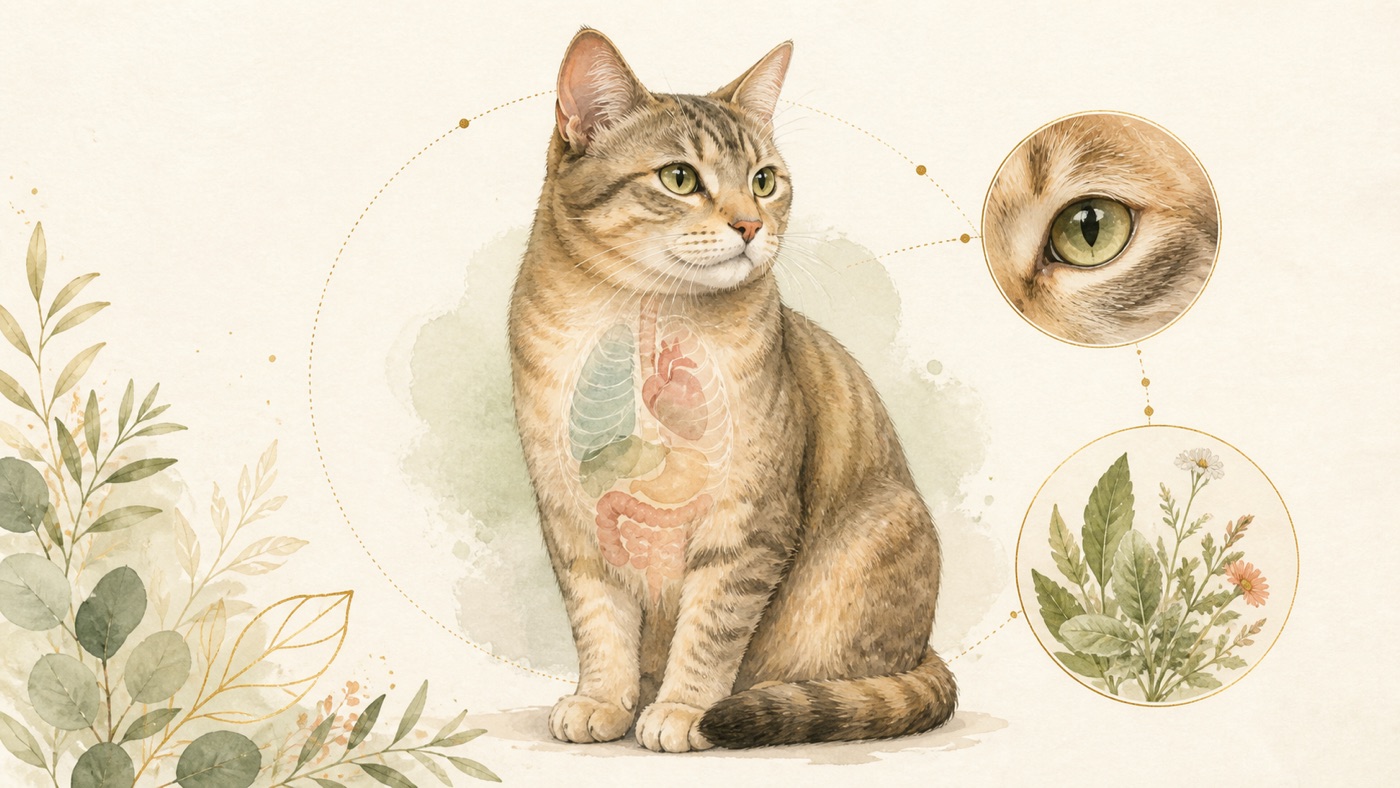
Cats | 15 Common Diseases (Cause → Signs → Examination → Treatment Direction → Prevention)
This brings the 15 common diseases of the cat (Felis catus) together in one table: chronic kidney disease (CKD), periodontal disease and tooth resorption / chronic gingivostomatitis, feline lower urinary tract disease (FLUTD) / feline idiopathic cystitis (FIC) / urethral obstruction, obesity, diabetes mellitus, hyperthyroidism, feline upper respiratory tract disease, hypertrophic cardiomyopathy (HCM) ± arterial thromboembolism (ATE) / congestive heart failure, chronic enteropathy (IBD) and small cell lymphoma with triaditis, linear foreign body / GI obstruction, feline atopic skin syndrome and flea allergy dermatitis with ear mites, osteoarthritis / degenerative joint disease (DJD), feline leukemia virus (FeLV) and feline immunodeficiency virus (FIV), feline infectious peritonitis (FIP), and the tumour group (lymphoma / mammary carcinoma / squamous cell carcinoma SCC / injection-site fibrosarcoma). Each row lists cause, signs, examination, treatment direction and prevention, with treatment direction given only by category and never as a dosage. It suits working out which direction an abnormality points in, or checking against the table when taking on a new cat.
Cats | 15 Common Diseases (Cause → Signs → Examination → Treatment Direction → Prevention)
This article is compiled from the disease table for the cat (Felis catus) in the cat section of the veterinary encyclopedia. The same symptom calls for different handling in different species, and following another species' approach can be harmful — first confirm which animal you are dealing with.
| # | Disease | Cause | Signs | Examination | Treatment direction (no dosages) | Prevention / early detection |
|---|---|---|---|---|---|---|
| 1 | Chronic kidney disease (CKD) | Multifactorial; one of the most common chronic fatal diseases in older cats | Increased drinking and urination, weight loss, poor appetite, vomiting, bad breath, dehydration, anaemia | Blood biochemistry (creatinine, SDMA), urine specific gravity, urine protein (UPC), blood pressure, ultrasound; staged according to the International Renal Interest Society (IRIS) (✅ existence verified: IRIS Ltd. official site, "IRIS Staging of Chronic Kidney Disease (CKD)", <https://iris-kidney.com/>, verified 2026-07-30) | Renal prescription diet (phosphorus restriction at its core), securing water intake, phosphate binder class, blood pressure control (antihypertensive drug class), proteinuria control (RAAS inhibitor class), potassium supplementation, antiemetic and appetite-stimulant drug classes, erythropoiesis-stimulating class for anaemia | Six-monthly health checks plus urinalysis for older cats; early on, only urine specific gravity and body weight change first |
| 2 | Periodontal disease and tooth resorption (periodontal disease / tooth resorption), chronic gingivostomatitis (gingivostomatitis) | Dental plaque; the cause of resorptive lesions is unknown; viral and immune factors | Bad breath, drooling, chewing on one side, dropping food, suddenly eating only soft food, hiding when the face is touched, weight loss | Full mouth examination under anaesthesia plus dental radiographs (without radiographs the diagnosis is missed) | Professional scaling and any necessary extractions (resorptive lesions usually require extraction), pain management drug classes; stomatitis requires long-term immunomodulation assessment | Daily brushing; look inside the mouth monthly; annual oral assessment |
| 3 | Feline lower urinary tract disease (FLUTD) / feline idiopathic cystitis (FIC) / urethral obstruction | Stress, obesity, dry food with low water content, crystals / stones, the narrow urethra of male cats | Frequent trips to the litter box, small volumes or nothing passed, blood in the urine, licking the genitals, vocalising, urinating outside the box; once obstructed: no urine at all, abdominal pain, vomiting, collapse, low body temperature | Palpation of the bladder (hard as a ball when obstructed), urinalysis, blood potassium and renal values, imaging to look for stones | Obstruction = an immediate emergency: analgesia and sedation, urinary catheterisation to relieve pressure, fluids and correction of hyperkalaemic arrhythmia, hospitalised monitoring; non-obstructive FIC is managed mainly by environmental modification plus wet food plus analgesia; repeated severe obstruction may require urethral surgery | Wet food to raise urine output, litter boxes at n+1, less stress, weight control; owners of male cats must be able to recognise what obstruction looks like |
| 4 | Obesity | Excess calories plus insufficient activity plus no adjustment after neutering | Ribs cannot be felt, no waist, unable to groom the back half of the body, unable to jump up | BCS / MCS, body weight trend | A slow weight-loss plan designed by a veterinarian (rapid weight loss is forbidden), measured feeding, more hunting-style activity | Actively reduce the ration after neutering; weigh monthly |
| 5 | Diabetes mellitus | Obesity, genetic predisposition (such as the Burmese), other endocrine disease, insulin resistance | Increased drinking and urination, eating more yet losing weight, hind limb weakness (plantigrade stance), dullness; progression to diabetic ketoacidosis (DKA) = an emergency | Blood glucose plus fructosamine (to avoid misreading stress hyperglycaemia), urine glucose and ketones, screening for other comorbidities | Insulin class (prescribed and adjusted by a veterinarian only, with home blood glucose / continuous glucose monitoring), applicability of newer oral glucose-lowering options: the official FDA Freedom of Information Summary confirms that the first oral non-insulin glycaemic management drug for cats was approved on 2022-12-08 — "Bexacat™ (bexagliflozin tablets)...is indicated to improve glycemic control in otherwise healthy cats with diabetes mellitus not previously treated with insulin" (NADA 141-566) <https://animaldrugsatfda.fda.gov/adafda/app/search/public/document/downloadFoi/13222>, verified 2026-07-30 (under the drug rule this article lists no dosages or dosing intervals; case selection and whether to use it must be judged by a veterinarian; the drug carries a safety warning of an increased risk of ketoacidosis in cats already on insulin and is not a universal substitute), low-carbohydrate high-protein diet, weight loss; cats have a chance of entering remission | Weight control is the most effective prevention; do not judge from a single high blood glucose reading on your own |
| 6 | Hyperthyroidism | Mostly benign thyroid hyperplasia (older cats) | Eating a lot yet losing weight, over-activity, more vocalising, vomiting and diarrhoea, unkempt coat, fast heart rate, hypertension | Total T4 (with other thyroid parameters where needed), blood pressure, renal values (renal function may become apparent after treatment) | Radioiodine treatment (curative, requires a specialist facility), antithyroid drug classes (long-term oral or transdermal, requiring regular monitoring), surgery, iodine-restricted prescription diet; renal function and blood pressure must be monitored at the same time | Six-monthly health checks for older cats with T4 added |
| 7 | Feline upper respiratory tract disease | FHV-1, FCV, *Chlamydia felis*, *Mycoplasma*, secondary bacteria; stress reactivates FHV-1 | Sneezing, nasal and ocular discharge, red painful eyes, oral ulcers, fever, poor appetite (a cat that cannot smell will not eat) | Physical examination, ophthalmic staining (corneal ulcers), pathogen testing where needed | Supportive care (humidification, cleaning, appetite stimulation), ophthalmic drug classes, antibiotic classes where needed (only for secondary bacterial infection, following antimicrobial use guidelines), antiviral drug classes for severe FHV | Vaccination, less crowding stress, quarantine for new cats, hygiene in multi-cat households |
| 8 | Hypertrophic cardiomyopathy (HCM) ± arterial thromboembolism (ATE) / congestive heart failure | Genetic (Maine Coon, Ragdoll, British Shorthair, Sphynx and others) | May be completely asymptomatic for a long time; when it presents: sudden rapid breathing, open-mouth breathing, sudden hind limb paralysis with severe pain and coldness (ATE), sudden death; cats usually do not cough | Auscultation (a murmur may or may not be present), echocardiography is the confirmatory test, thoracic imaging, NT-proBNP class markers, blood pressure | Heart failure emergency care (oxygen, thoracocentesis, diuretic classes), antithrombotic drug classes, drug classes to control heart rate and filling; home SRR monitoring for follow-up | Regular echocardiography for high-risk breeds; count the sleeping respiratory rate at home every week |
| 9 | Chronic enteropathy (IBD) and small cell lymphoma; triaditis | Immune, dietary and microbial factors; simultaneous inflammation of pancreas plus biliary tract and liver plus intestine is a combination particular to cats | Long-term intermittent vomiting (not "normal hairball vomiting"), slow weight loss, soft stools or constipation, fluctuating appetite | Blood tests (including pancreatic parameters, cobalamin B12, folate), ultrasound, endoscopy or full-thickness biopsy to distinguish inflammation from lymphoma | Diet trial (hydrolysed or novel protein), B12 supplementation, immunomodulatory drug classes, oral chemotherapy drug classes for small cell lymphoma (the prognosis is often better than expected) | "Vomiting often" is not normal; beyond a certain frequency it needs investigating (Cornell Feline Health Center: "cats that vomit more frequently than once per week...should be evaluated by a veterinarian promptly" <https://www.vet.cornell.edu/departments-centers-and-institutes/cornell-feline-health-center/health-information/feline-health-topics/vomiting>, verified 2026-07-30; the same source also notes that occasional hairball vomiting (roughly once every 1–2 weeks) is largely within the normal range, but vomiting more than once a week warrants veterinary attention, with wide individual variation) |
| 10 | Linear foreign body / GI obstruction | Swallowed thread, yarn, hair ties, dental floss, Christmas tinsel, toy parts | Repeated vomiting, not eating, abdominal pain, dehydration; the end of the thread may protrude under the tongue or from the anus | Physical examination (check under the tongue!), imaging (radiographs / ultrasound) | Never pull on a protruding thread yourself (it will saw through the intestine); after imaging assessment, surgery or endoscopic retrieval is usually needed | Put all string and cord away in a drawer; supervise toy use and limit the time |
| 11 | Feline atopic skin syndrome and flea allergy dermatitis (feline atopic skin syndrome / flea allergy dermatitis), ear mites | Fleas, environmental allergens, food allergy; ear mites spread by contact | Scratch wounds on the head and neck, symmetrical hair loss (in fact over-grooming), miliary dermatitis on the chin, dirty black debris in the ears, head shaking | Flea comb, skin scrapings and cytology, otoscopy and microscopy of ear wax, diet trial | Thorough flea control (all animals in the household at the same time), anti-inflammatory and anti-pruritic drug classes, ear mite drug classes, diet trial where needed | Year-round flea prevention (indoor cats too) |
| 12 | Osteoarthritis / degenerative joint disease (osteoarthritis / DJD) | Ageing, body weight, breed skeletal abnormalities (Scottish Fold, Munchkin) | Almost never lame: not jumping up, slower on stairs, less grooming, urinating outside the box (cannot step in), hiding when touched, worse temper | Palpation plus imaging; home video and activity questionnaires are more sensitive than an examination in the consulting room (tools such as feline musculoskeletal pain indices — ✅ existence verified: Feline Musculoskeletal Pain Index (FMPI): Benito J, Hansen B, Depuy V, et al. "Feline musculoskeletal pain index: responsiveness and testing of criterion validity." *J Vet Intern Med* 2013;27(3):474-82; PMID 23551140; and the earlier Client-Specific Outcome Measures (CSOM): Lascelles BDX, Hansen BD, Roe S, et al. "Evaluation of client-specific outcome measures and activity monitoring to measure pain relief in cats with osteoarthritis." *J Vet Intern Med* 2007;21(3):410-6; PMID 17552444; <https://pubmed.ncbi.nlm.nih.gov/23551140/>, <https://pubmed.ncbi.nlm.nih.gov/17552444/>, verified 2026-07-30) | Weight loss (the single most effective measure), environmental modification (low-sided litter boxes, ramps, raised food bowls), long-term pain control drug classes specific to cats (never repurpose human or canine analgesics), joint support and rehabilitation | At every health check for an older cat, ask "can it still jump up?" |
| 13 | Feline leukemia virus (FeLV) and feline immunodeficiency virus (FIV) | FeLV: close contact / saliva / dam to kitten; FIV: mainly deep bite wounds from fighting | FeLV: anaemia, lymphoma, immunosuppression, recurrent infections; FIV: chronic stomatitis, recurrent infections, wasting (can be asymptomatic for a long time) | Blood screening test plus confirmatory testing (following current testing pathways — ✅ existence verified: Little S, Levy J, Hartmann K, et al. "2020 AAFP Feline Retrovirus Testing and Management Guidelines." *J Feline Med Surg* 2020;22(1):5-30; PMID 31916872; <https://pubmed.ncbi.nlm.nih.gov/31916872/>, verified 2026-07-30) | No cure; quality of life is extended through supportive care, active management of secondary infections, good nutrition and keeping the cat indoors | Test new cats before they join the household; assess the FeLV vaccine according to risk; avoid free roaming and fighting; neutering reduces roaming and fighting |
| 14 | Feline infectious peritonitis (FIP) | Mutation of feline coronavirus plus the individual immune response; kittens and multi-cat / shelter environments carry higher risk | Recurrent fever unresponsive to antibiotics, dullness and poor appetite, abdominal distension (wet form, effusion), ocular and neurological signs (dry form) | Imaging plus effusion analysis, blood test patterns; current diagnostic pathways can refer to the 2022 AAFP/EveryCat Feline Infectious Peritonitis Diagnosis guideline (the catvets.com guideline landing page <https://catvets.com/2022-aafp-everycat-feline-infectious-peritonitis-diagnosis-guidelines> is accessible, verified 2026-07-30, although that page provides only a disease overview — "Feline infectious peritonitis (FIP) is one of the most important infectious diseases and causes of death in cats; young cats less than 2 years of age are especially vulnerable" — and does not contain the verbatim diagnostic steps, so the specific diagnostic steps 【Verification note: no single authoritative verbatim content available to cite — the guideline exists and its landing page can be confirmed, but the full diagnostic pathway content is not present on the accessible page, 2026-07-30】) | The treatment landscape has changed: nucleoside analogue antivirals (such as GS-441524) are now used clinically, and access, legality and protocols vary enormously by region and by point in time (AVMA: "Most antiviral preparations currently used to treat FIP are acquired via compounding pharmacies" and "the antiviral medication must be prescribed by a veterinarian for a specific cat patient for the treatment of FIP"; from 2024 the US FDA has exercised regulatory discretion over GS-441524 from compliant compounding pharmacies, <https://www.avma.org/news/new-fip-guidelines-highlight-available-antivirals-shorter-treatment-course>, verified 2026-07-30; Europe follows the separate ABCD guidance, and regulations everywhere continue to change, so no single one is adopted here); diagnosis, prescribing and monitoring must be carried out by a veterinarian, and buying the drug through illegal channels and administering it yourself is forbidden (dosages and courses are outside the scope of this file) | Reduce crowding stress for kittens, environmental hygiene, avoid excessive crowding in multi-cat homes |
| 15 | Tumour group (lymphoma / mammary carcinoma / squamous cell carcinoma SCC / injection-site fibrosarcoma) | Multifactorial; FeLV-associated lymphoma; sun exposure of the ears and nose in white cats and SCC; mammary carcinoma associated with not being neutered | Lumps, weight loss, non-healing oral wounds with drooling (oral SCC), a persistent lump at an injection site | Fine-needle aspiration / biopsy (sample the lump when you see it, do not "watch and wait"), imaging for staging | Surgery, chemotherapy drug classes, radiotherapy, pain and nutritional support; a high proportion of feline mammary tumours are malignant, and the extent of excision must be decided by a specialist | Early neutering lowers mammary carcinoma risk; keep white cats out of prolonged sun; feel over the whole body once a month; record injection sites |
The 15 rows above are copied cell by cell from the original encyclopedia section, without rewriting or condensing; treatment direction is given mainly by category and lists no dosages or dosing intervals; where a specific drug name is quoted verbatim it is the wording of the original section, and medication must be prescribed by a veterinarian. The line number and content hash of each row in the original section are given in the evidence chain at the end.
Limits of this content
The content of this article comes from the cat section of the veterinary encyclopedia (see the evidence chain for the original location and content hash). The sources listed at the end are the authoritative references cited by that chapter; the correspondence is at the chapter level and does not mean every sentence traces back to that specific source. This content is for educational purposes and cannot replace diagnosis and prescriptions from a practicing veterinarian; seek veterinary care immediately in an emergency. This text has not been clinically reviewed by a named veterinarian.
FAQ
- What are feline lower urinary tract disease (FLUTD) / feline idiopathic cystitis (FIC) / urethral obstruction, and what should send you to a veterinarian immediately?
- Stress, obesity, dry food with low water content, crystals / stones, and the narrow urethra of male cats. Signs are frequent trips to the litter box, small volumes or nothing passed, blood in the urine, licking the genitals, vocalising, urinating outside the box; once obstructed: no urine at all, abdominal pain, vomiting, collapse, low body temperature. The direction of management is that obstruction = an immediate emergency: analgesia and sedation, urinary catheterisation to relieve pressure, fluids and correction of hyperkalaemic arrhythmia, hospitalised monitoring; non-obstructive FIC is managed mainly by environmental modification plus wet food plus analgesia; repeated severe obstruction may require urethral surgery. This row belongs to the category in the original section that needs prompt attention; the actual judgement still rests with a veterinarian on a case-by-case basis, and medication and dosages must be prescribed by a veterinarian.
- 下部尿路疾患(FLUTD)/猫特発性膀胱炎(FIC)/尿道閉塞(urethral obstruction)とは何ですか。何が見えたらすぐ獣医師を呼ぶべきですか。 — ストレス、肥満、水分の少ないドライフード、結晶/結石、雄猫の細い尿道が原因です。頻繁にトイレに行く、量が少ないか出ない、血尿、陰部をなめる、鳴く、トイレ以外での排尿が現れます;閉塞後は、まったく尿が出ない、腹部の痛み、嘔吐、ぐったりする、低体温が現れます。対処の方向性は、閉塞=ただちに緊急であり、鎮痛・鎮静、カテーテルによる減圧、輸液と高カリウム血症による不整脈の是正、入院下でのモニタリングです;非閉塞性の FIC は環境改善+ウェットフード+鎮痛が中心で、重度の閉塞を繰り返す場合は尿道手術が必要になることがあります。この行は元の章で速やかな対応が必要な類型に属します。実際の判断は獣医師が個別の症例に応じて行う必要があり、投薬と用量は獣医師の処方によります。
- What are feline lower urinary tract disease (FLUTD) / feline idiopathic cystitis (FIC) / urethral obstruction, and what should send you to a veterinarian immediately? — Stress, obesity, dry food with low water content, crystals / stones, and the narrow urethra of male cats. Signs are frequent trips to the litter box, small volumes or nothing passed, blood in the urine, licking the genitals, vocalising, urinating outside the box; once obstructed: no urine at all, abdominal pain, vomiting, collapse, low body temperature. The direction of management is that obstruction = an immediate emergency: analgesia and sedation, urinary catheterisation to relieve pressure, fluids and correction of hyperkalaemic arrhythmia, hospitalised monitoring; non-obstructive FIC is managed mainly by environmental modification plus wet food plus analgesia; repeated severe obstruction may require urethral surgery. This row belongs to the category in the original section that needs prompt attention; the actual judgement still rests with a veterinarian on a case-by-case basis, and medication and dosages must be prescribed by a veterinarian.
- What is diabetes mellitus, and what should send you to a veterinarian immediately?
- Obesity, genetic predisposition (such as the Burmese), other endocrine disease, and insulin resistance. Signs are increased drinking and urination, eating more yet losing weight, hind limb weakness (plantigrade stance), dullness; progression to diabetic ketoacidosis (DKA) = an emergency. The direction of management is the insulin class (prescribed and adjusted by a veterinarian only, with home blood glucose / continuous glucose monitoring), applicability of newer oral glucose-lowering options: the official FDA Freedom of Information Summary confirms that the first oral non-insulin glycaemic management drug for cats was approved on 2022-12-08 — "Bexacat™ (bexagliflozin tablets)...is indicated to improve glycemic control in otherwise healthy cats with diabetes mellitus not previously treated with insulin" (NADA 141-566) <https://animaldrugsatfda.fda.gov/adafda/app/search/public/document/downloadFoi/13222>, verified 2026-07-30 (under the drug rule this article lists no dosages or dosing intervals; case selection and whether to use it must be judged by a veterinarian; the drug carries a safety warning of an increased risk of ketoacidosis in cats already on insulin and is not a universal substitute), low-carbohydrate high-protein diet, weight loss; cats have a chance of entering remission. This row belongs to the category in the original section that needs prompt attention; the actual judgement still rests with a veterinarian on a case-by-case basis, and medication and dosages must be prescribed by a veterinarian.
- 糖尿病(diabetes mellitus)とは何ですか。何が見えたらすぐ獣医師を呼ぶべきですか。 — 肥満、遺伝的素因(バーミーズなど)、他の内分泌疾患、インスリン抵抗性が原因です。多飲多尿、よく食べるのに痩せる、後肢の脱力(蹠行姿勢)、元気がないという症状が現れ、悪化すると糖尿病性ケトアシドーシス(DKA)=緊急となります。対処の方向性はインスリンの分類(獣医師による処方と調整のみ、家庭での血糖/持続グルコースモニタリング)、経口血糖降下薬という新しい選択肢の適用可否:FDA 公式の Freedom of Information Summary により、猫用として初の経口非インスリン血糖管理薬が 2022-12-08 に承認されたことが確認されています——「Bexacat™ (bexagliflozin tablets)...is indicated to improve glycemic control in otherwise healthy cats with diabetes mellitus not previously treated with insulin」(NADA 141-566)<https://animaldrugsatfda.fda.gov/adafda/app/search/public/document/downloadFoi/13222>、確認 2026-07-30(本記事は薬物に関する原則に従い用量と投与間隔を記載しません;適用となる症例の選択と使用の可否は獣医師が判断します;本剤はすでにインスリンを使用している猫でケトアシドーシスを悪化させる安全性の警告があり、万能の代替ではありません)、低炭水化物・高タンパクの食事、減量です;猫は寛解(remission)に入る可能性があります。この行は元の章で速やかな対応が必要な類型に属します。実際の判断は獣医師が個別の症例に応じて行う必要があり、投薬と用量は獣医師の処方によります。
- What is diabetes mellitus, and what should send you to a veterinarian immediately? — Obesity, genetic predisposition (such as the Burmese), other endocrine disease, and insulin resistance. Signs are increased drinking and urination, eating more yet losing weight, hind limb weakness (plantigrade stance), dullness; progression to diabetic ketoacidosis (DKA) = an emergency. The direction of management is the insulin class (prescribed and adjusted by a veterinarian only, with home blood glucose / continuous glucose monitoring), applicability of newer oral glucose-lowering options: the official FDA Freedom of Information Summary confirms that the first oral non-insulin glycaemic management drug for cats was approved on 2022-12-08 — "Bexacat™ (bexagliflozin tablets)...is indicated to improve glycemic control in otherwise healthy cats with diabetes mellitus not previously treated with insulin" (NADA 141-566) <https://animaldrugsatfda.fda.gov/adafda/app/search/public/document/downloadFoi/13222>, verified 2026-07-30 (under the drug rule this article lists no dosages or dosing intervals; case selection and whether to use it must be judged by a veterinarian; the drug carries a safety warning of an increased risk of ketoacidosis in cats already on insulin and is not a universal substitute), low-carbohydrate high-protein diet, weight loss; cats have a chance of entering remission. This row belongs to the category in the original section that needs prompt attention; the actual judgement still rests with a veterinarian on a case-by-case basis, and medication and dosages must be prescribed by a veterinarian.
- What is hypertrophic cardiomyopathy (HCM) ± arterial thromboembolism (ATE) / congestive heart failure, and what should send you to a veterinarian immediately?
- Genetic (Maine Coon, Ragdoll, British Shorthair, Sphynx and others). Signs are that it may be completely asymptomatic for a long time; when it presents: sudden rapid breathing, open-mouth breathing, sudden hind limb paralysis with severe pain and coldness (ATE), sudden death; cats usually do not cough. The direction of management is heart failure emergency care (oxygen, thoracocentesis, diuretic classes), antithrombotic drug classes, drug classes to control heart rate and filling; home SRR monitoring for follow-up. This row belongs to the category in the original section that needs prompt attention; the actual judgement still rests with a veterinarian on a case-by-case basis, and medication and dosages must be prescribed by a veterinarian.
- 肥大型心筋症(HCM)±大動脈血栓塞栓症(arterial thromboembolism, ATE)/うっ血性心不全とは何ですか。何が見えたらすぐ獣医師を呼ぶべきですか。 — 遺伝(メインクーン、ラグドール、ブリティッシュショートヘア、スフィンクスなど)が原因です。長期間まったく無症状のことがあり、発症時には突然の呼吸促迫、開口呼吸、後肢の突然の麻痺と激しい痛み・冷感(ATE)、突然死が現れます;猫は通常咳をしません。対処の方向性は心不全の救急対応(酸素、胸水の抜去、利尿薬の分類)、抗血栓薬の分類、心拍数と充満を管理する薬の分類であり、家庭での SRR モニタリングによる経過観察を行います。この行は元の章で速やかな対応が必要な類型に属します。実際の判断は獣医師が個別の症例に応じて行う必要があり、投薬と用量は獣医師の処方によります。
- What is hypertrophic cardiomyopathy (HCM) ± arterial thromboembolism (ATE) / congestive heart failure, and what should send you to a veterinarian immediately? — Genetic (Maine Coon, Ragdoll, British Shorthair, Sphynx and others). Signs are that it may be completely asymptomatic for a long time; when it presents: sudden rapid breathing, open-mouth breathing, sudden hind limb paralysis with severe pain and coldness (ATE), sudden death; cats usually do not cough. The direction of management is heart failure emergency care (oxygen, thoracocentesis, diuretic classes), antithrombotic drug classes, drug classes to control heart rate and filling; home SRR monitoring for follow-up. This row belongs to the category in the original section that needs prompt attention; the actual judgement still rests with a veterinarian on a case-by-case basis, and medication and dosages must be prescribed by a veterinarian.
Source anchors
- Merck 獸醫手冊|貓章引用 · https://www.merckvetmanual.com/multimedia/table/parameters-to-evaluate-during-triage · 在 IDAEO 的其他引用
- Merck 獸醫手冊|貓章引用 · https://www.merckvetmanual.com/multimedia/table/resting-heart-rates · 在 IDAEO 的其他引用
- Merck 獸醫手冊|貓章引用 · https://www.merckvetmanual.com/multimedia/table/resting-respiratory-rates · 在 IDAEO 的其他引用
- Merck 獸醫手冊|貓章引用 · https://www.merckvetmanual.com/reference-values-and-conversion-tables/reference-guides/normal-rectal-temperature-ranges · 在 IDAEO 的其他引用
- Merck 獸醫手冊|貓章引用 · https://www.merckvetmanual.com/reproductive-system/reproductive-diseases-of-the-female-small-animal/dystocia-in-small-animals · 在 IDAEO 的其他引用
- PMC 全文|貓章引用 · https://pmc.ncbi.nlm.nih.gov/articles/PMC10459272/ · 在 IDAEO 的其他引用
- PMC 全文|貓章引用 · https://pmc.ncbi.nlm.nih.gov/articles/PMC10845436/ · 在 IDAEO 的其他引用
- PMC 全文|貓章引用 · https://pmc.ncbi.nlm.nih.gov/articles/PMC11383066/ · 在 IDAEO 的其他引用
- PMC 全文|貓章引用 · https://pmc.ncbi.nlm.nih.gov/articles/PMC6271319/ · 在 IDAEO 的其他引用
- PMC 全文|貓章引用 · https://pmc.ncbi.nlm.nih.gov/articles/PMC9989186/ · 在 IDAEO 的其他引用
- PubMed 文獻|貓章引用 · https://pubmed.ncbi.nlm.nih.gov/12075546/ · 在 IDAEO 的其他引用
- PubMed 文獻|貓章引用 · https://pubmed.ncbi.nlm.nih.gov/17552444/ · 在 IDAEO 的其他引用
- PubMed 文獻|貓章引用 · https://pubmed.ncbi.nlm.nih.gov/21601744/ · 在 IDAEO 的其他引用
- PubMed 文獻|貓章引用 · https://pubmed.ncbi.nlm.nih.gov/22676281/ · 在 IDAEO 的其他引用
- PubMed 文獻|貓章引用 · https://pubmed.ncbi.nlm.nih.gov/23551140/ · 在 IDAEO 的其他引用
- PubMed 文獻|貓章引用 · https://pubmed.ncbi.nlm.nih.gov/24966283/ · 在 IDAEO 的其他引用
- PubMed 文獻|貓章引用 · https://pubmed.ncbi.nlm.nih.gov/26101312/ · 在 IDAEO 的其他引用
- PubMed 文獻|貓章引用 · https://pubmed.ncbi.nlm.nih.gov/26639825/ · 在 IDAEO 的其他引用
- PubMed 文獻|貓章引用 · https://pubmed.ncbi.nlm.nih.gov/30971357/ · 在 IDAEO 的其他引用
- PubMed 文獻|貓章引用 · https://pubmed.ncbi.nlm.nih.gov/31836868/ · 在 IDAEO 的其他引用
- PubMed 文獻|貓章引用 · https://pubmed.ncbi.nlm.nih.gov/31916872/ · 在 IDAEO 的其他引用
- PubMed 文獻|貓章引用 · https://pubmed.ncbi.nlm.nih.gov/8947867/ · 在 IDAEO 的其他引用
- AAFP 貓科醫學會|貓章引用 · https://catvets.com/2022-aafp-everycat-feline-infectious-peritonitis-diagnosis-guidelines · 在 IDAEO 的其他引用
- AAFP 貓科醫學會|貓章引用 · https://catvets.com/resource/aaha-aafp-feline-life-stage-guidelines/ · 在 IDAEO 的其他引用
- WSAVA|貓章引用 · https://wsava.org/wp-content/uploads/2020/01/Cat-Body-Condition-Scoring-2017.pdf · 在 IDAEO 的其他引用
Cite this article
Jane・《Cats | 15 Common Diseases (Cause → Signs → Examination → Treatment Direction → Prevention)》・IDAEO 知識庫・2026-08-13・https://km.idaeo.ai/post/vet/cat-common-diseasesUpdated 2026-08-15