

🏛 Part of the "vet" topic shelf →
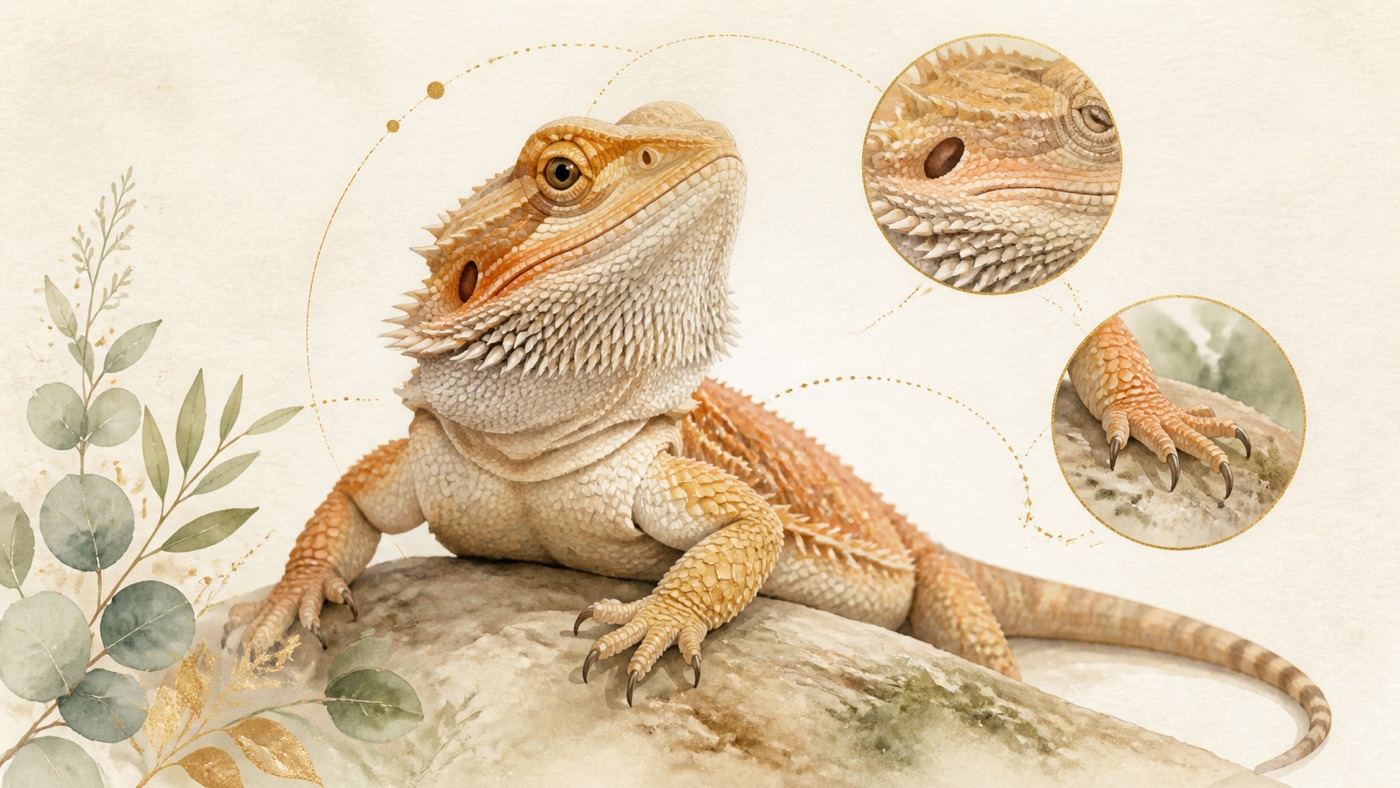
Bearded dragon|10 Common Diseases (cause → signs → examination → treatment direction → prevention)
Ten common diseases of the bearded dragon (Pogona vitticeps) gathered into one table: Metabolic Bone Disease (MBD), Impaction, Atadenovirus infection, parasitic infection (Coccidia and others), Respiratory infection, Tail/toe necrosis, Stomatitis, Gout, Egg binding, and Thermal burn. Each row lists cause, signs, examination, treatment direction and prevention; the treatment column gives categories only, never doses. It suits checking against when something looks wrong and you need to narrow down the direction first, or when taking on a new individual.
Bearded dragon|10 Common Diseases (cause → signs → examination → treatment direction → prevention)
This content is compiled from the disease table for the bearded dragon (Pogona vitticeps) in the reptiles and amphibians chapter of the veterinary animal encyclopedia. The same sign calls for different handling in different species, and copying what is done for another species can be harmful — first confirm which animal you are dealing with.
| # | Disease (Chinese/English) | Cause | Signs | Examination | Treatment direction | Prevention |
|---|---|---|---|---|---|---|
| 1 | Metabolic Bone Disease (MBD) | Calcium deficiency, lack of UVB; one of the most common diseases in bearded dragons | Softening of the jaw bone, weakness in the limbs, spinal deformity | Palpation, radiography, blood calcium testing | Calcium supplementation and UVB correction need veterinary assessment | Adequate UVB and calcium powder supplementation |
| 2 | Impaction | Ingested substrate (fine sand/small particles) | Refusal to eat, abdominal distension, inability to defecate | Palpation, radiography | Severe cases require surgery; veterinary handling is needed | Avoiding substrate that is easily ingested |
| 3 | Atadenovirus | A virus common in bearded dragons, with higher risk in juveniles | Neurological signs, wasting, sudden death (especially in juveniles) | PCR testing | Supportive care; there is no specific drug | Quarantining new individuals, avoiding mixing with individuals of unknown origin |
| 4 | Parasitic infection (Coccidia and others) | Poor environmental hygiene, mixed housing | Wasting, watery faeces | Faecal microscopy | Antiprotozoal medication requires a prescription | Regular faecal checks, environmental hygiene |
| 5 | Respiratory infection | Insufficient temperature, inappropriate humidity | Open-mouth breathing, nasal discharge | Auscultation, imaging | Antibiotics require a prescription | Maintaining an appropriate temperature gradient |
| 6 | Tail/toe necrosis | Poor environmental humidity/hygiene, or retained shed constricting the part | Local blackening, tissue necrosis | Visual examination | Veterinary handling is needed; severe cases require amputation | Appropriate humidity, ensuring shedding is complete |
| 7 | Stomatitis | Bacterial infection, trauma | Redness and swelling in the mouth, refusal to eat | Visual examination | Antibiotics require a prescription | Environmental hygiene, avoiding trauma |
| 8 | Gout | Dehydration or a high-protein diet | Swollen joints, reduced appetite | Blood tests | Veterinary handling is needed | Adequate water intake, correct dietary proportions |
| 9 | Egg binding | Females can lay infertile eggs even without mating | Continued digging without being able to lay | Palpation, radiography | This is an emergency; seek care immediately | Providing a nesting environment, regular health checks |
| 10 | Thermal burn | Heating equipment without thermostatic protection, with the lizard resting directly against the heat source | Burned and ulcerated skin | Visual examination | Wound management requires veterinary handling | Pairing heating equipment with a thermostat and a guard |
The 10 rows above are copied cell for cell from the encyclopedia chapter, neither rewritten nor condensed; the treatment column gives categories only, never drug names or doses, and any medication must be prescribed by a veterinarian. The line number and content hash of each row in the source chapter are in the evidence chain at the end.
Limits of this content
This content comes from the reptiles and amphibians chapter of the veterinary encyclopedia (see the evidence chain for the original location and content hash). The sources at the end are the authoritative materials cited by that chapter; the correspondence is at chapter level, which does not mean every sentence is traced sentence by sentence back to a given source. This material is for education and cannot replace diagnosis and prescription by a practising veterinarian; in an emergency, seek veterinary care immediately. This text has not been clinically reviewed by a named veterinarian.
FAQ
- What is egg binding, and what should make you look for a vet immediately?
- Females can lay infertile eggs even without mating. You will see continued digging without being able to lay. The direction of management is that this is an emergency and care should be sought immediately. In the source chapter this row belongs to the category needing prompt handling; the actual judgement still rests with a veterinarian case by case, and this text gives no drug names or doses.
- 卵閉塞 Egg binding とは何ですか。何が見えたらすぐ獣医師を呼ぶべきですか。 — 雌は交尾しなくても無精卵を産むことがあるためです。掘り続けるが産卵できないという状態が現れます。対処の方向性は、救急疾患でありただちに受診が必要というものです。この行は元の章で速やかな対応を要する類型に属します。実際の判断は個々の症例に応じて獣医師が行う必要があり、本文では薬剤名と用量は書きません。
- What is egg binding, and what should make you look for a vet immediately? — Females can lay infertile eggs even without mating. You will see continued digging without being able to lay. The direction of management is that this is an emergency and care should be sought immediately. In the source chapter this row belongs to the category needing prompt handling; the actual judgement still rests with a veterinarian case by case, and this text gives no drug names or doses.
- What causes Metabolic Bone Disease (MBD) and what matters most in preventing it?
- Calcium deficiency and lack of UVB; it is one of the most common diseases in bearded dragons. You will see softening of the jaw bone, weakness in the limbs and spinal deformity. The key to prevention is adequate UVB and calcium powder supplementation. The direction of treatment must be assessed by a veterinarian case by case, and this text gives no drug names or doses.
- 代謝性骨疾患 MBD の原因と予防の要点は何ですか。 — カルシウム不足、UVB 不足が原因で、フトアゴヒゲトカゲで最も多い疾患の一つです。下顎骨の軟化、四肢の脱力、脊柱の変形が現れます。予防の要点は十分な UVB とカルシウム剤の添加です。治療の方向性は個々の症例に応じて獣医師が判断する必要があり、本文では薬剤名と用量は書きません。
- What causes Metabolic Bone Disease (MBD) and what matters most in preventing it? — Calcium deficiency and lack of UVB; it is one of the most common diseases in bearded dragons. You will see softening of the jaw bone, weakness in the limbs and spinal deformity. The key to prevention is adequate UVB and calcium powder supplementation. The direction of treatment must be assessed by a veterinarian case by case, and this text gives no drug names or doses.
- What causes impaction and what matters most in preventing it?
- Ingested substrate (fine sand/small particles). You will see refusal to eat, abdominal distension and inability to defecate. The key to prevention is avoiding substrate that is easily ingested. The direction of treatment must be assessed by a veterinarian case by case, and this text gives no drug names or doses.
- 腸閉塞 Impaction の原因と予防の要点は何ですか。 — 床材(細かい砂/小粒)の誤食が原因です。拒食、腹部膨満、排便できないという状態が現れます。予防の要点は誤食しやすい床材を避けることです。治療の方向性は個々の症例に応じて獣医師が判断する必要があり、本文では薬剤名と用量は書きません。
- What causes impaction and what matters most in preventing it? — Ingested substrate (fine sand/small particles). You will see refusal to eat, abdominal distension and inability to defecate. The key to prevention is avoiding substrate that is easily ingested. The direction of treatment must be assessed by a veterinarian case by case, and this text gives no drug names or doses.
Source anchors
- Merck 獸醫手冊|爬蟲與兩棲章引用 · https://www.merckvetmanual.com/exotic-and-laboratory-animals/amphibians/overview-of-amphibians · 在 IDAEO 的其他引用
- Merck 獸醫手冊|爬蟲與兩棲章引用 · https://www.merckvetmanual.com/exotic-and-laboratory-animals/reptiles/management-and-husbandry-of-reptiles · 在 IDAEO 的其他引用
- Merck 獸醫手冊|爬蟲與兩棲章引用 · https://www.merckvetmanual.com/exotic-and-laboratory-animals/reptiles/nutritional-metabolic-and-endocrine-diseases-of-reptiles · 在 IDAEO 的其他引用
- Merck 獸醫手冊|爬蟲與兩棲章引用 · https://www.merckvetmanual.com/exotic-and-laboratory-animals/reptiles/overview-of-reptiles · 在 IDAEO 的其他引用
- Merck 獸醫手冊|爬蟲與兩棲章引用 · https://www.merckvetmanual.com/management-and-nutrition/nutrition-exotic-and-zoo-animals/nutrition-in-reptiles · 在 IDAEO 的其他引用
- Merck 獸醫手冊|爬蟲與兩棲章引用 · https://www.merckvetmanual.com/multimedia/table/average-life-span-of-reptiles-in-captivity · 在 IDAEO 的其他引用
- Merck 獸醫手冊|爬蟲與兩棲章引用 · https://www.merckvetmanual.com/multimedia/table/important-husbandry-requirements-for-selected-reptiles · 在 IDAEO 的其他引用
- Merck 獸醫手冊|爬蟲與兩棲章引用 · https://www.merckvetmanual.com/multimedia/table/normal-reference-ranges-for-routine-water-quality-analysis · 在 IDAEO 的其他引用
- Merck 獸醫手冊|爬蟲與兩棲章引用 · https://www.merckvetmanual.com/reference-values-and-conversion-tables/reference-guides/resting-respiratory-rates · 在 IDAEO 的其他引用
- PMC 全文|爬蟲與兩棲章引用 · https://pmc.ncbi.nlm.nih.gov/articles/PMC10000224/ · 在 IDAEO 的其他引用
- animals.sandiegozoo.org|爬蟲與兩棲章引用 · https://animals.sandiegozoo.org/animals/african-spurred-tortoise · 在 IDAEO 的其他引用
- arav.org|爬蟲與兩棲章引用 · https://arav.org/about/ · 在 IDAEO 的其他引用
- www.marylandzoo.org|爬蟲與兩棲章引用 · https://www.marylandzoo.org/animal/sulcata-tortoise/ · 在 IDAEO 的其他引用
- www.ncbi.nlm.nih.gov|爬蟲與兩棲章引用 · https://www.ncbi.nlm.nih.gov/nlmcatalog/?term=Journal+of+Herpetological+Medicine+and+Surgery · 在 IDAEO 的其他引用
- www.uticazoo.org|爬蟲與兩棲章引用 · https://www.uticazoo.org/sulcatatortoise/ · 在 IDAEO 的其他引用
Cite this article
Jane・《Bearded dragon|10 Common Diseases (cause → signs → examination → treatment direction → prevention)》・IDAEO 知識庫・2026-08-13・https://km.idaeo.ai/post/vet/bearded-dragon-diseasesUpdated 2026-08-15