

🏛 Part of the "reports" topic shelf →
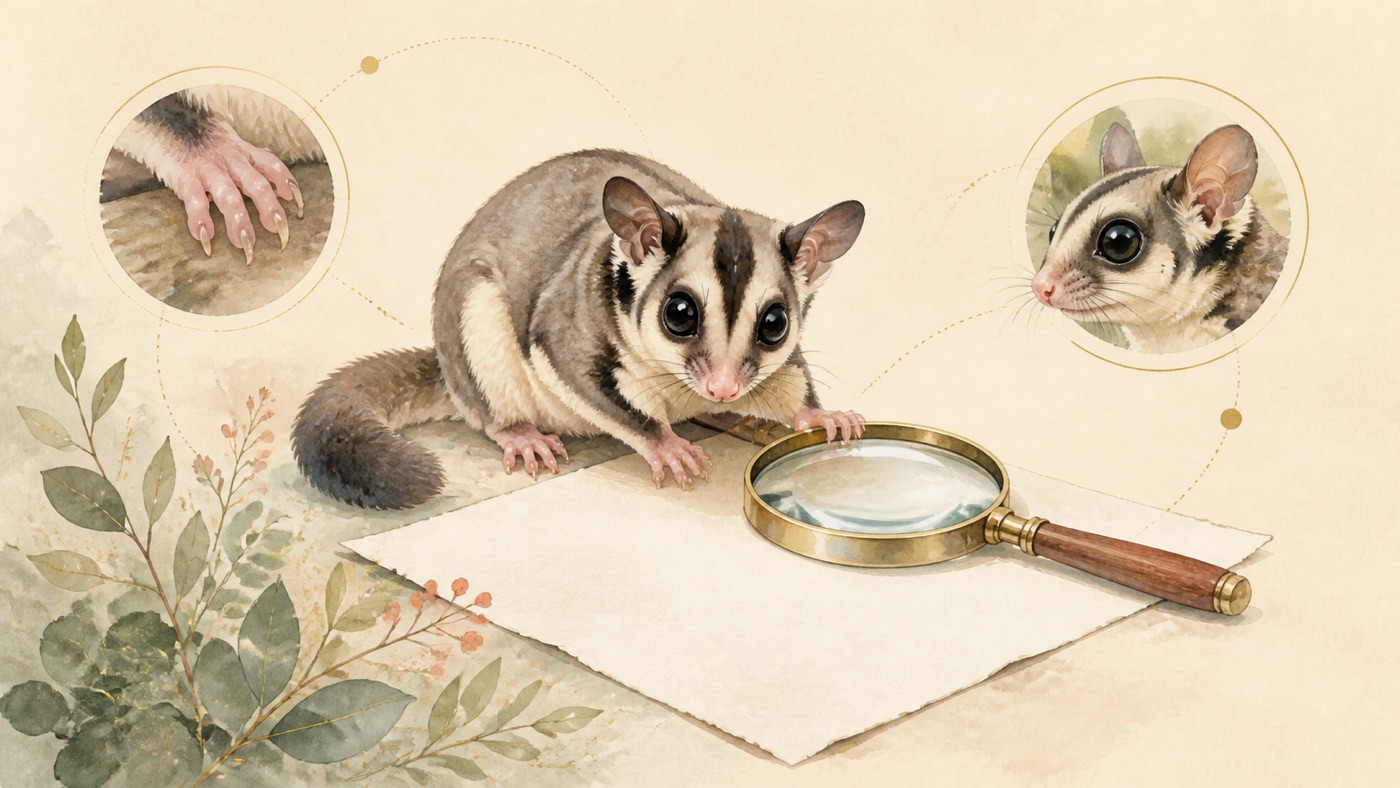
Sugar glider|Husbandry and health, a 12-column knowledge tree | Evidence chain
This record notes the source location and content hash of "Sugar glider|Husbandry and health, a 12-column knowledge tree", so the text can be checked against the original.
Sugar glider|Husbandry and health, a 12-column knowledge tree | Evidence chain
This record notes the source location and content hash of "Sugar glider|Husbandry and health, a 12-column knowledge tree", so the text can be checked against the original.
How to use this record to verify
This record exists so that anyone can check for themselves whether the text has been altered. Every chapter of the veterinary encyclopaedia carries a starting line number and a content hash (the first 16 characters of its SHA-256). Recompute the hash over the original chapter: if it matches the value recorded below, what is published here is identical to the source chapter. The source list at the end is the authoritative material cited by that chapter — a chapter-level correspondence, meaning those sources underpin the chapter as a whole rather than mapping sentence by sentence. This is educational information and cannot replace a practising veterinarian; in an emergency, seek care immediately.
This record notes the source location of "Sugar glider|Husbandry and health, a 12-column knowledge tree | Evidence chain": the section beginning at line 156 of `25-T6-小型哺乳.md` in the veterinary encyclopaedia. The SHA-256 of that section (first 16 characters) is `c598d2b3ffb5b71e`, which anyone can recompute to confirm the content has not been altered.
Source location
- File: Veterinary Animal Encyclopaedia — small mammals
- Starting line: line 156
- Section title: (7)蜜袋鼯 Sugar Glider(*Petaurus breviceps*)
- Table line range: lines 156–175(共 12 欄)
- Content hash: `c598d2b3ffb5b71e`
- Character count: 5,058
Anchor granularity
This chapter has no entries at all in the project’s row-level anchor file `planning-out/anchor-436.tsv` (its 490 anchors cover eight chapters: dogs, cats, fish and aquarium, reptiles and amphibians, birds, backyard poultry, farm animals and horses, and wildlife). What can therefore be verified here is only the chapter-level content hash listed above, with no per-row claim ids — the same level as this site’s existing chapter overview and index articles. The source chapter itself went through two rounds of verification (`70-查證log-25-T6-小型哺乳.md`, `72-第二輪查證log-23爬蟲22魚25小哺.md`); every value filled into a column carries a clickable URL and a verbatim English quotation.
Deliberate gaps, stated honestly
Where no whitelisted authoritative source could be found for a figure, the source chapter leaves it blank and says why (for example, species-specific times-to-vet for guinea pigs, chinchillas and sugar gliders). This site keeps those gaps as they are: no figure has been supplied on the source’s behalf, and no figure has been extrapolated from another species.
FAQ
- What is most easily got wrong when feeding a sugar glider?
- Omnivorous, with strict control of the calcium-to-phosphorus ratio required (common commercial insect/fruit diets are too high in phosphorus and too low in calcium, which over time predisposes to metabolic bone disease). Common feeding errors: making fruit the staple and neglecting calcium supplementation, feeding a single item such as mealworms and unbalancing the phosphorus-calcium ratio, and believing the myth that 「sugar gliders only eat sweet things」, which produces nutritional imbalance.
- フクロモモンガの給餌で最も間違えやすいのは何ですか。 — 雑食性で、カルシウムとリンの比率を厳密に管理する必要があります(一般的な市販の昆虫/果物中心の食餌はリンが多くカルシウムが不足しがちで、長期的には代謝性骨疾患を招きやすい)。よくある給餌の誤り:果物を主食にしてカルシウム補給を怠る、ミルワームなど単一の餌に偏りリンとカルシウムのバランスを崩す、「フクロモモンガは甘いものだけを食べる」という誤解による栄養の偏り。
- What is most easily got wrong when feeding a sugar glider? — Omnivorous, with strict control of the calcium-to-phosphorus ratio required (common commercial insect/fruit diets are too high in phosphorus and too low in calcium, which over time predisposes to metabolic bone disease). Common feeding errors: making fruit the staple and neglecting calcium supplementation, feeding a single item such as mealworms and unbalancing the phosphorus-calcium ratio, and believing the myth that 「sugar gliders only eat sweet things」, which produces nutritional imbalance.
- What signs in a sugar glider mean going to a veterinarian straight away?
- Sudden hindlimb weakness or paralysis (suspected hypocalcaemia), severe bleeding from self-mutilation, persistent seizures, refusal of food or a marked drop in appetite (a sugar-glider-specific time threshold for emergency care was not obtained from the whitelisted sources, so this project gives no figure; the species has a high metabolic rate and tolerates fasting poorly, so the sooner care is sought the better — do not wait against any number of hours, verified 2026-07-30).
- フクロモモンガにどんな状態が現れたらすぐに受診すべきですか。 — 後肢の突然の脱力または麻痺(低カルシウム血症の疑い)、自傷による重度の出血、痙攣の持続、拒食または食欲の明らかな低下(フクロモモンガに固有の救急受診時間はホワイトリストの出典から得られなかったため、本プロジェクトは数字を示しません;本種は代謝率が高く絶食に耐えられないため、受診は早いほどよく、いかなる時間数も待たないでください、確認2026-07-30)。
- What signs in a sugar glider mean going to a veterinarian straight away? — Sudden hindlimb weakness or paralysis (suspected hypocalcaemia), severe bleeding from self-mutilation, persistent seizures, refusal of food or a marked drop in appetite (a sugar-glider-specific time threshold for emergency care was not obtained from the whitelisted sources, so this project gives no figure; the species has a high metabolic rate and tolerates fasting poorly, so the sooner care is sought the better — do not wait against any number of hours, verified 2026-07-30).
- What is the most common disease in sugar gliders?
- 1. Nutritional secondary hyperparathyroidism/metabolic bone disease (NSHP/MBD): chronic calcium-phosphorus imbalance (a high-phosphorus, low-calcium diet) → hindlimb weakness, fractures, paralysis, hypocalcaemic seizures → serum calcium testing/radiography → calcium supplementation and dietary correction (prescription plus nutritional planning) → lifelong strict maintenance of a correct calcium-phosphorus ratio is the fundamental prevention.
- フクロモモンガで最もよくある疾患は何ですか。 — 1. 栄養性代謝性骨疾患(NSHP/MBD):長期のカルシウム・リン比の不均衡(高リン低カルシウムの食餌)→後肢の脱力、骨折、麻痺、低カルシウム血症による痙攣→血中カルシウム検査/X線→カルシウム補給と食餌の是正(処方+栄養計画)→生涯にわたり正しいカルシウム・リン比の食餌を厳守することが根本的な予防。
- What is the most common disease in sugar gliders? — 1. Nutritional secondary hyperparathyroidism/metabolic bone disease (NSHP/MBD): chronic calcium-phosphorus imbalance (a high-phosphorus, low-calcium diet) → hindlimb weakness, fractures, paralysis, hypocalcaemic seizures → serum calcium testing/radiography → calcium supplementation and dietary correction (prescription plus nutritional planning) → lifelong strict maintenance of a correct calcium-phosphorus ratio is the fundamental prevention.
Source anchors
- Merck 獸醫手冊|小型哺乳章引用 · https://www.merckvetmanual.com/exotic-and-laboratory-animals/sugar-gliders/overview-of-sugar-gliders · 在 IDAEO 的其他引用
- AEMV 異寵獸醫學會|小型哺乳章引用 · https://aemv.org/wp-content/uploads/2024/10/aemv_trifold_sugar_glider_we.pdf · 在 IDAEO 的其他引用
- 普渡大學獸醫院|小型哺乳章引用 · https://vet.purdue.edu/hospital/small-animal/articles/sugar-gliders.php · 在 IDAEO 的其他引用
- Merck 獸醫手冊|小型哺乳章引用 · https://www.merckvetmanual.com/all-other-pets/sugar-gliders/routine-health-care-of-sugar-gliders · 在 IDAEO 的其他引用
- 北卡州立大學獸醫院|小型哺乳章引用 · https://hospital.cvm.ncsu.edu/services/small-animals/nutrition/caring-for-your-pet-sugar-glider/ · 在 IDAEO 的其他引用
- Merck 獸醫手冊|小型哺乳章引用 · https://www.merckvetmanual.com/exotic-and-laboratory-animals/sugar-gliders/diseases-and-syndromes-of-sugar-gliders · 在 IDAEO 的其他引用
Cite this article
Jane・《Sugar glider|Husbandry and health, a 12-column knowledge tree | Evidence chain》・IDAEO 知識庫・2026-08-13・https://km.idaeo.ai/post/reports/vet-sugar-glider-guide-evidenceUpdated 2026-08-15