Part of the "Veterinary" topic shelf → ← Back to the article:Symptom Triage|Skin, Hair, Feathers and Scales
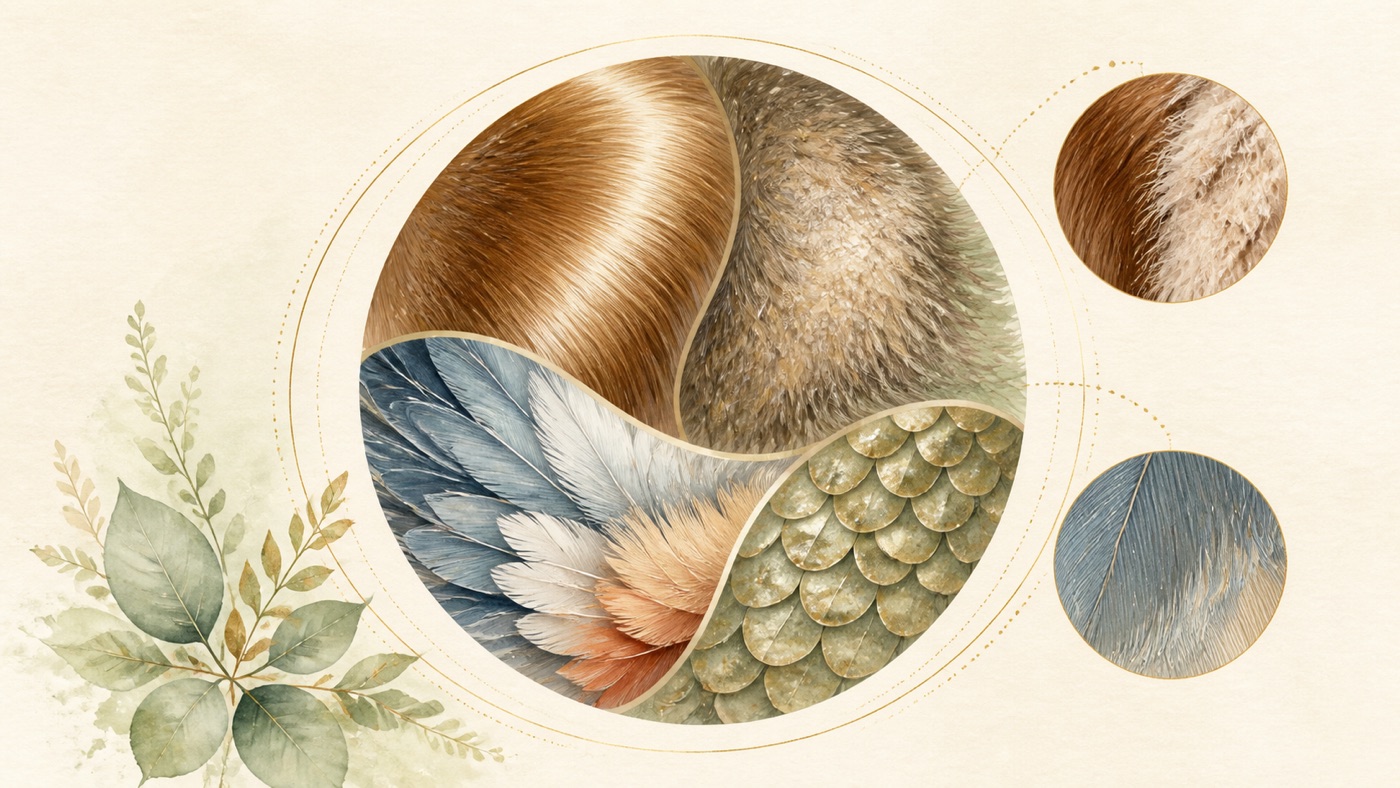
Symptom Triage|Skin, Hair, Feathers and Scales | Evidence chain
This record notes the source location and content hash of "Symptom Triage|Skin, Hair, Feathers and Scales", so the text can be checked against the original.
This record notes the source location and content hash of "Symptom Triage|Skin, Hair, Feathers and Scales", so the text can be checked against the original.
How to use this record to verify
This record exists so that anyone can check for themselves whether the text has been altered. Every chapter of the veterinary encyclopaedia carries a starting line number and a content hash (the first 16 characters of its SHA-256). Recompute the hash over the original chapter: if it matches the value recorded below, what is published here is identical to the source chapter. The source list at the end is the authoritative material cited by that chapter — a chapter-level correspondence, meaning those sources underpin the chapter as a whole rather than mapping sentence by sentence. This is educational information and cannot replace a practising veterinarian; in an emergency, seek care immediately.
This record notes the source location of "Symptom Triage|Skin, Hair, Feathers and Scales | Evidence chain": the section beginning at line 62 of `30-索引-症狀鑑別.md` in the veterinary encyclopaedia. The SHA-256 of that section (first 16 characters) is `1e1cb92a93a7bdf5`, which anyone can recompute to confirm the content has not been altered.

Source location
- File: Veterinary Animal Encyclopaedia — Symptom Triage
- Starting line: line 62
- Chapter section title: 五、皮膚、毛髮、羽毛、鱗片
- Content hash: `1e1cb92a93a7bdf5`
- Character count: 893
FAQ
- I found a firm lump in the skin. Can I watch it for a while first?
- No. Once a firm lump or a wound that will not heal is found, it should be examined rather than "watched a bit longer". Record the size of the lump, how fast it grows, whether its location is a recent injection site, and whether it affects movement; tumours and injection-site fibrosarcoma in dogs and cats are both within the differential.
- My parrot sits fluffed up and motionless all day. Is it just sleepy?
- Birds have a fast metabolism, so sitting fluffed up is itself an important red flag and calls for heightened alertness regardless of apparent severity. Photograph the posture and feather condition, confirm whether the bird is still eating, note any abnormal droppings colour, and seek veterinary care as soon as possible.
- My frog's hind limbs and belly have turned red. Do the other frogs need handling too?
- Yes. Red leg syndrome in frogs and salamanders is highly contagious and is an emergency that calls for immediate isolation and veterinary care. Separate the affected individual from the others right away, and record whether water quality has deteriorated recently.
Source anchors
- Merck 獸醫手冊|症狀鑑別章引用 · https://www.merckvetmanual.com/toxicology/insecticide-and-acaricide-organic-toxicity/plant-derived-insecticide-toxicosis-in-animals · Other citations on IDAEO
- PMC 全文|症狀鑑別章引用 · https://pmc.ncbi.nlm.nih.gov/articles/PMC10385239/ · Other citations on IDAEO
- PMC 全文|症狀鑑別章引用 · https://pmc.ncbi.nlm.nih.gov/articles/PMC10705156/ · Other citations on IDAEO
Cite this article
Jane・《Symptom Triage|Skin, Hair, Feathers and Scales | Evidence chain》・IDAEO 知識庫・2026-08-13・https://km.idaeo.ai/post/reports/vet-skin-coat-feathers-scales-evidenceUpdated 2026-08-15