

🏛 Part of the "reports" topic shelf →
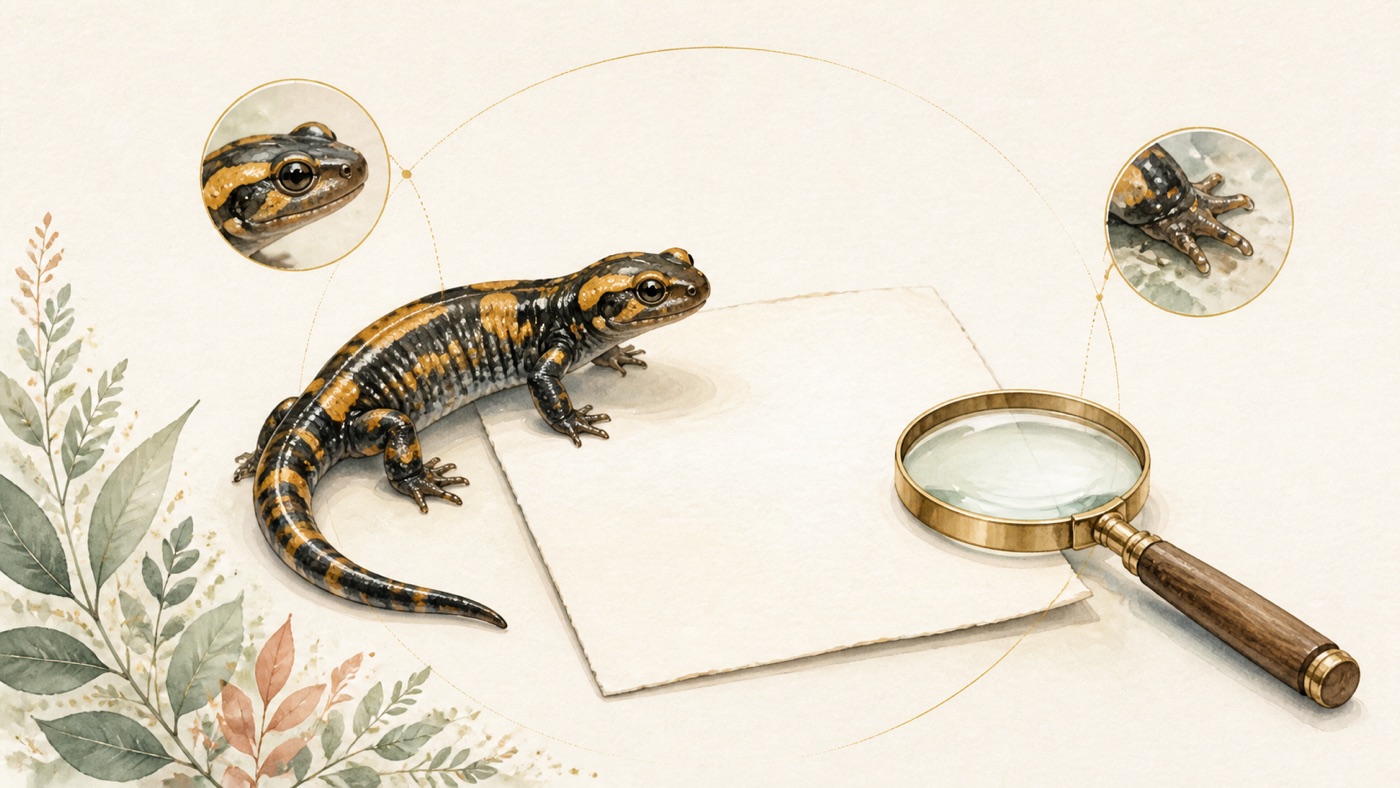
Salamander/Newt|10 Common Diseases (cause → signs → examination → treatment direction → prevention) | Evidence chain
This record notes the source location and content hash of "Salamander/Newt|10 Common Diseases (cause → signs → examination → treatment direction → prevention)", so the text can be checked against the original.
Salamander/Newt|10 Common Diseases (cause → signs → examination → treatment direction → prevention) | Evidence chain
This record notes the source location and content hash of "Salamander/Newt|10 Common Diseases (cause → signs → examination → treatment direction → prevention)", so the text can be checked against the original.
How to use this record to verify
This record exists so that anyone can check for themselves whether the text has been altered. Every chapter of the veterinary encyclopaedia carries a starting line number and a content hash (the first 16 characters of its SHA-256). Recompute the hash over the original chapter: if it matches the value recorded below, what is published here is identical to the source chapter. The source list at the end is the authoritative material cited by that chapter — a chapter-level correspondence, meaning those sources underpin the chapter as a whole rather than mapping sentence by sentence. This is educational information and cannot replace a practising veterinarian; in an emergency, seek care immediately.
This record notes the source location of "Salamander/Newt|10 Common Diseases (cause → signs → examination → treatment direction → prevention) | Evidence chain": the section beginning at line 363 of `23-T4-爬蟲兩棲.md` in the veterinary encyclopaedia. The SHA-256 of that section (first 16 characters) is `35e272f8d84b36c4`, which anyone can recompute to confirm the content has not been altered.
Source location
- File: Veterinary Animal Encyclopaedia — reptiles and amphibians
- Starting line: line 363
- Section title: (I) 蠑螈 Salamander/Newt(六角恐龍/墨西哥鈍口螈/火蠑螈/東方蠑螈)
- Disease-table line range:lines 380–389(共 10 列)
- Content hash: `35e272f8d84b36c4`
- Character count: 2,330
Row-level anchors
Every row of the disease table carries a row-level anchor in the source chapter (claim id plus a SHA-256 of the row content); the anchor file is `planning-out/anchor-436.tsv`. Of the 10 rows in this section, 10 have a row-level anchor:
| Table row | Source chapter line | claim id |
|---|---|---|
| 1 | 380 | I055 |
| 2 | 381 | F071 |
| 3 | 382 | I056 |
| 4 | 383 | F072 |
| 5 | 384 | F073 |
| 6 | 385 | I057 |
| 7 | 386 | I058 |
| 8 | 387 | I059 |
| 9 | 388 | I060 |
| 10 | 389 | I061 |
FAQ
- What is bacterial septicaemia (the red-leg-like form), and what should make you call the vet at once?
- Poor water quality and stress. You will see reddening of the skin and lethargy. The direction of management is antibiotics, which require a prescription, and this is an emergency. This row belongs to the group in the source chapter that needs prompt attention; the actual judgement still rests with a veterinarian case by case, and this text gives no drug names or doses.
- 細菌性敗血症(レッドレッグ様) とは何ですか。何が見えたらすぐ獣医師を呼ぶべきですか。 — 水質の不良、ストレスが原因です。皮膚の発赤、嗜眠が現れます。対処の方向性は抗生物質で、処方が必要であり、急症です。この行は元の章では速やかな対応を要する類型に属します。実際の判断は獣医師が症例ごとに評価する必要があり、本文には薬剤名と用量を書きません。
- What is bacterial septicaemia (the red-leg-like form), and what should make you call the vet at once? — Poor water quality and stress. You will see reddening of the skin and lethargy. The direction of management is antibiotics, which require a prescription, and this is an emergency. This row belongs to the group in the source chapter that needs prompt attention; the actual judgement still rests with a veterinarian case by case, and this text gives no drug names or doses.
- What causes saprolegniasis and what matters most in preventing it?
- Fungal infection triggered by poor water quality, common in axolotls. You will see cotton-wool-like white growth on the skin or gills. Prevention rests on regular water changes and maintaining water quality. The treatment direction must be assessed by a veterinarian case by case; this text gives no drug names or doses.
- 水カビ病 Saprolegniasis の原因と予防の要点は何ですか。 — 水質不良により誘発される真菌感染で、ウーパールーパーで多く見られます。皮膚/鰓に綿状の白いものが現れます。予防の要点は定期的な水換えと水質の維持です。治療の方向性は獣医師が症例ごとに評価する必要があり、本文には薬剤名と用量を書きません。
- What causes saprolegniasis and what matters most in preventing it? — Fungal infection triggered by poor water quality, common in axolotls. You will see cotton-wool-like white growth on the skin or gills. Prevention rests on regular water changes and maintaining water quality. The treatment direction must be assessed by a veterinarian case by case; this text gives no drug names or doses.
- What causes impaction and what matters most in preventing it?
- Ingestion of substrate, with axolotls at high risk. You will see refusal to feed and abdominal distension. Prevention rests on using fine sand or a bare tank bottom. The treatment direction must be assessed by a veterinarian case by case; this text gives no drug names or doses.
- 腸閉塞 Impaction の原因と予防の要点は何ですか。 — 床材の誤飲が原因で、ウーパールーパーは高リスクです。拒食、腹部膨満が現れます。予防の要点は細かい砂を使うか、水槽の底を敷かないことです。治療の方向性は獣医師が症例ごとに評価する必要があり、本文には薬剤名と用量を書きません。
- What causes impaction and what matters most in preventing it? — Ingestion of substrate, with axolotls at high risk. You will see refusal to feed and abdominal distension. Prevention rests on using fine sand or a bare tank bottom. The treatment direction must be assessed by a veterinarian case by case; this text gives no drug names or doses.
Source anchors
- Merck 獸醫手冊|爬蟲與兩棲章引用 · https://www.merckvetmanual.com/exotic-and-laboratory-animals/amphibians/overview-of-amphibians · 在 IDAEO 的其他引用
- Merck 獸醫手冊|爬蟲與兩棲章引用 · https://www.merckvetmanual.com/exotic-and-laboratory-animals/reptiles/management-and-husbandry-of-reptiles · 在 IDAEO 的其他引用
- Merck 獸醫手冊|爬蟲與兩棲章引用 · https://www.merckvetmanual.com/exotic-and-laboratory-animals/reptiles/nutritional-metabolic-and-endocrine-diseases-of-reptiles · 在 IDAEO 的其他引用
- Merck 獸醫手冊|爬蟲與兩棲章引用 · https://www.merckvetmanual.com/exotic-and-laboratory-animals/reptiles/overview-of-reptiles · 在 IDAEO 的其他引用
- Merck 獸醫手冊|爬蟲與兩棲章引用 · https://www.merckvetmanual.com/management-and-nutrition/nutrition-exotic-and-zoo-animals/nutrition-in-reptiles · 在 IDAEO 的其他引用
- Merck 獸醫手冊|爬蟲與兩棲章引用 · https://www.merckvetmanual.com/multimedia/table/average-life-span-of-reptiles-in-captivity · 在 IDAEO 的其他引用
- Merck 獸醫手冊|爬蟲與兩棲章引用 · https://www.merckvetmanual.com/multimedia/table/important-husbandry-requirements-for-selected-reptiles · 在 IDAEO 的其他引用
- Merck 獸醫手冊|爬蟲與兩棲章引用 · https://www.merckvetmanual.com/multimedia/table/normal-reference-ranges-for-routine-water-quality-analysis · 在 IDAEO 的其他引用
- Merck 獸醫手冊|爬蟲與兩棲章引用 · https://www.merckvetmanual.com/reference-values-and-conversion-tables/reference-guides/resting-respiratory-rates · 在 IDAEO 的其他引用
- PMC 全文|爬蟲與兩棲章引用 · https://pmc.ncbi.nlm.nih.gov/articles/PMC10000224/ · 在 IDAEO 的其他引用
- animals.sandiegozoo.org|爬蟲與兩棲章引用 · https://animals.sandiegozoo.org/animals/african-spurred-tortoise · 在 IDAEO 的其他引用
- arav.org|爬蟲與兩棲章引用 · https://arav.org/about/ · 在 IDAEO 的其他引用
- www.marylandzoo.org|爬蟲與兩棲章引用 · https://www.marylandzoo.org/animal/sulcata-tortoise/ · 在 IDAEO 的其他引用
- www.ncbi.nlm.nih.gov|爬蟲與兩棲章引用 · https://www.ncbi.nlm.nih.gov/nlmcatalog/?term=Journal+of+Herpetological+Medicine+and+Surgery · 在 IDAEO 的其他引用
- www.uticazoo.org|爬蟲與兩棲章引用 · https://www.uticazoo.org/sulcatatortoise/ · 在 IDAEO 的其他引用
Cite this article
Jane・《Salamander/Newt|10 Common Diseases (cause → signs → examination → treatment direction → prevention) | Evidence chain》・IDAEO 知識庫・2026-08-13・https://km.idaeo.ai/post/reports/vet-salamander-newt-diseases-evidenceUpdated 2026-08-15