Part of the "Veterinary" topic shelf → ← Back to the article:Reptiles and Amphibians|Group Overview
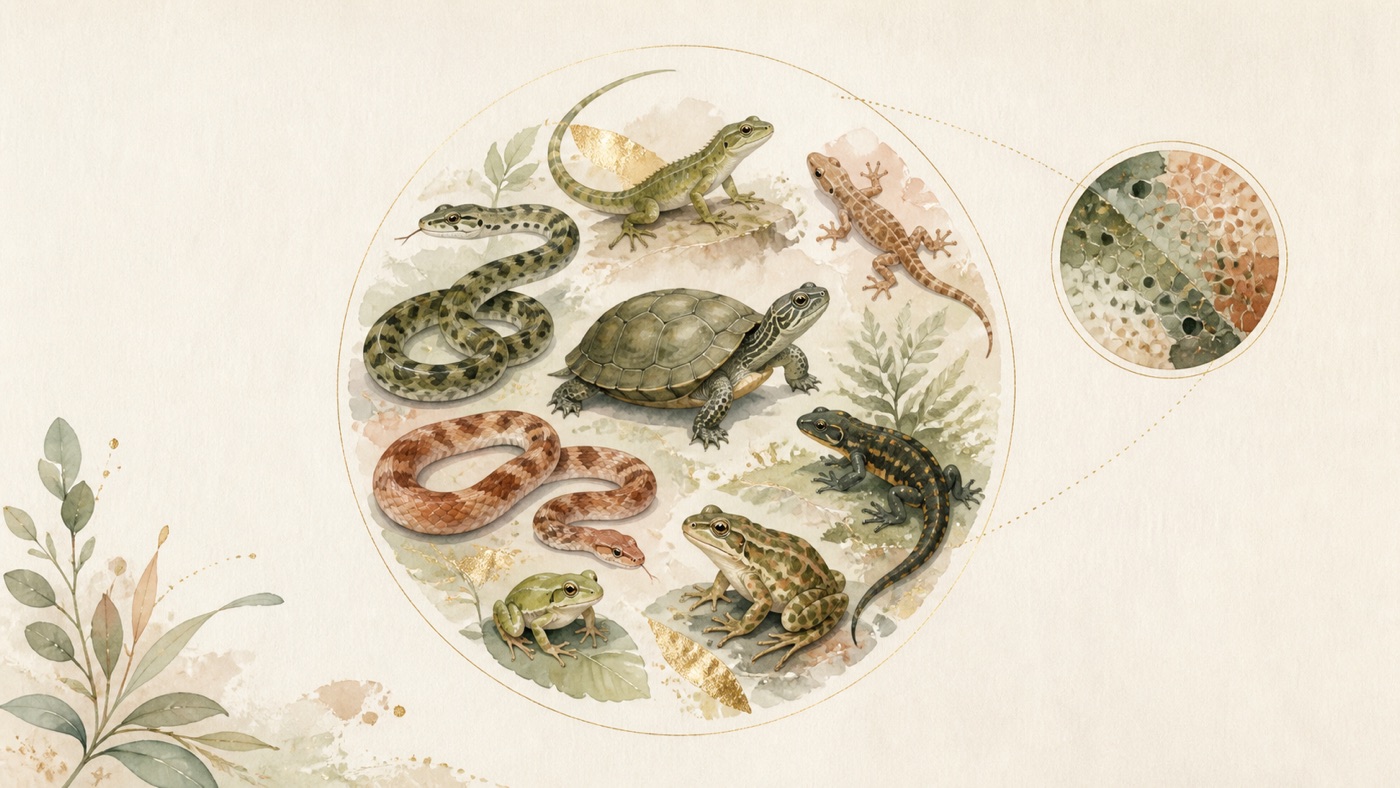
Reptiles and Amphibians|Group Overview | Evidence chain
This record notes the source location and content hash of "Reptiles and Amphibians|Group Overview", so the text can be checked against the original.
This record notes the source location and content hash of "Reptiles and Amphibians|Group Overview", so the text can be checked against the original.
How to use this record to verify
This record exists so that anyone can check for themselves whether the text has been altered. Every chapter of the veterinary encyclopaedia carries a starting line number and a content hash (the first 16 characters of its SHA-256). Recompute the hash over the original chapter: if it matches the value recorded below, what is published here is identical to the source chapter. The source list at the end is the authoritative material cited by that chapter — a chapter-level correspondence, meaning those sources underpin the chapter as a whole rather than mapping sentence by sentence. This is educational information and cannot replace a practising veterinarian; in an emergency, seek care immediately.
This record notes the source location of "Reptiles and Amphibians|Group Overview | Evidence chain": the section beginning at line 21 of `23-T4-爬蟲兩棲.md` in the veterinary encyclopaedia. The SHA-256 of that section (first 16 characters) is `157d8f46adde8c2a`, which anyone can recompute to confirm the content has not been altered.

Source location
- File: Veterinary Animal Encyclopaedia — reptiles and amphibians
- Starting line: line 21
- Chapter section title: 二、9 群總覽
- Content hash: `157d8f46adde8c2a`
- Character count: 3,721
FAQ
- Why can a reptile's physiological indicators not be read the way a dog's or cat's are?
- Reptiles and amphibians are ectotherms and do not hold a constant body temperature as mammals do, so their normal physiological indicators carry a different meaning from those of dogs and cats and must be read together with ambient temperature and humidity. This is also why the husbandry environment column for each group is deliberately written at greater length than the others — husbandry error is the most central premise behind disease in these animals.
- What should I be prepared for before keeping a sulcata tortoise?
- Its adult size is routinely and seriously underestimated, which is exactly why these animals are given up; tortoises are herbivorous and need large space. On lifespan, three professional zoo sources give figures that do not agree (80 to 100 years, 70 to 150 years, and 50 years or more), the methodological differences are unclear, and they should not be averaged into a single figure. Some tortoise species may outlive the keeper.
- What matters most when keeping frogs and salamanders?
- A frog's skin is highly permeable, so water quality and chemical residues on human hands are the central risks. As for salamanders, the axolotl stays aquatic for life and does not metamorphose, and some salamanders have toxic skin secretions. For both groups the authoritative sources hold little on precise lifespan year counts, and there is no single figure to quote.
Source anchors
- Merck 獸醫手冊|爬蟲與兩棲章引用 · https://www.merckvetmanual.com/exotic-and-laboratory-animals/amphibians/overview-of-amphibians · Other citations on IDAEO
- Merck 獸醫手冊|爬蟲與兩棲章引用 · https://www.merckvetmanual.com/exotic-and-laboratory-animals/reptiles/management-and-husbandry-of-reptiles · Other citations on IDAEO
- Merck 獸醫手冊|爬蟲與兩棲章引用 · https://www.merckvetmanual.com/exotic-and-laboratory-animals/reptiles/nutritional-metabolic-and-endocrine-diseases-of-reptiles · Other citations on IDAEO
- Merck 獸醫手冊|爬蟲與兩棲章引用 · https://www.merckvetmanual.com/exotic-and-laboratory-animals/reptiles/overview-of-reptiles · Other citations on IDAEO
- Merck 獸醫手冊|爬蟲與兩棲章引用 · https://www.merckvetmanual.com/management-and-nutrition/nutrition-exotic-and-zoo-animals/nutrition-in-reptiles · Other citations on IDAEO
- Merck 獸醫手冊|爬蟲與兩棲章引用 · https://www.merckvetmanual.com/multimedia/table/average-life-span-of-reptiles-in-captivity · Other citations on IDAEO
- Merck 獸醫手冊|爬蟲與兩棲章引用 · https://www.merckvetmanual.com/multimedia/table/important-husbandry-requirements-for-selected-reptiles · Other citations on IDAEO
- Merck 獸醫手冊|爬蟲與兩棲章引用 · https://www.merckvetmanual.com/multimedia/table/normal-reference-ranges-for-routine-water-quality-analysis · Other citations on IDAEO
- Merck 獸醫手冊|爬蟲與兩棲章引用 · https://www.merckvetmanual.com/reference-values-and-conversion-tables/reference-guides/resting-respiratory-rates · Other citations on IDAEO
- PMC 全文|爬蟲與兩棲章引用 · https://pmc.ncbi.nlm.nih.gov/articles/PMC10000224/ · Other citations on IDAEO
- animals.sandiegozoo.org|爬蟲與兩棲章引用 · https://animals.sandiegozoo.org/animals/african-spurred-tortoise · Other citations on IDAEO
- arav.org|爬蟲與兩棲章引用 · https://arav.org/about/ · Other citations on IDAEO
- www.marylandzoo.org|爬蟲與兩棲章引用 · https://www.marylandzoo.org/animal/sulcata-tortoise/ · Other citations on IDAEO
- www.ncbi.nlm.nih.gov|爬蟲與兩棲章引用 · https://www.ncbi.nlm.nih.gov/nlmcatalog/?term=Journal+of+Herpetological+Medicine+and+Surgery · Other citations on IDAEO
- www.uticazoo.org|爬蟲與兩棲章引用 · https://www.uticazoo.org/sulcatatortoise/ · Other citations on IDAEO
Cite this article
Jane・《Reptiles and Amphibians|Group Overview | Evidence chain》・IDAEO 知識庫・2026-08-13・https://km.idaeo.ai/post/reports/vet-reptile-amphibian-groups-evidenceUpdated 2026-08-15