

🏛 Part of the "reports" topic shelf →
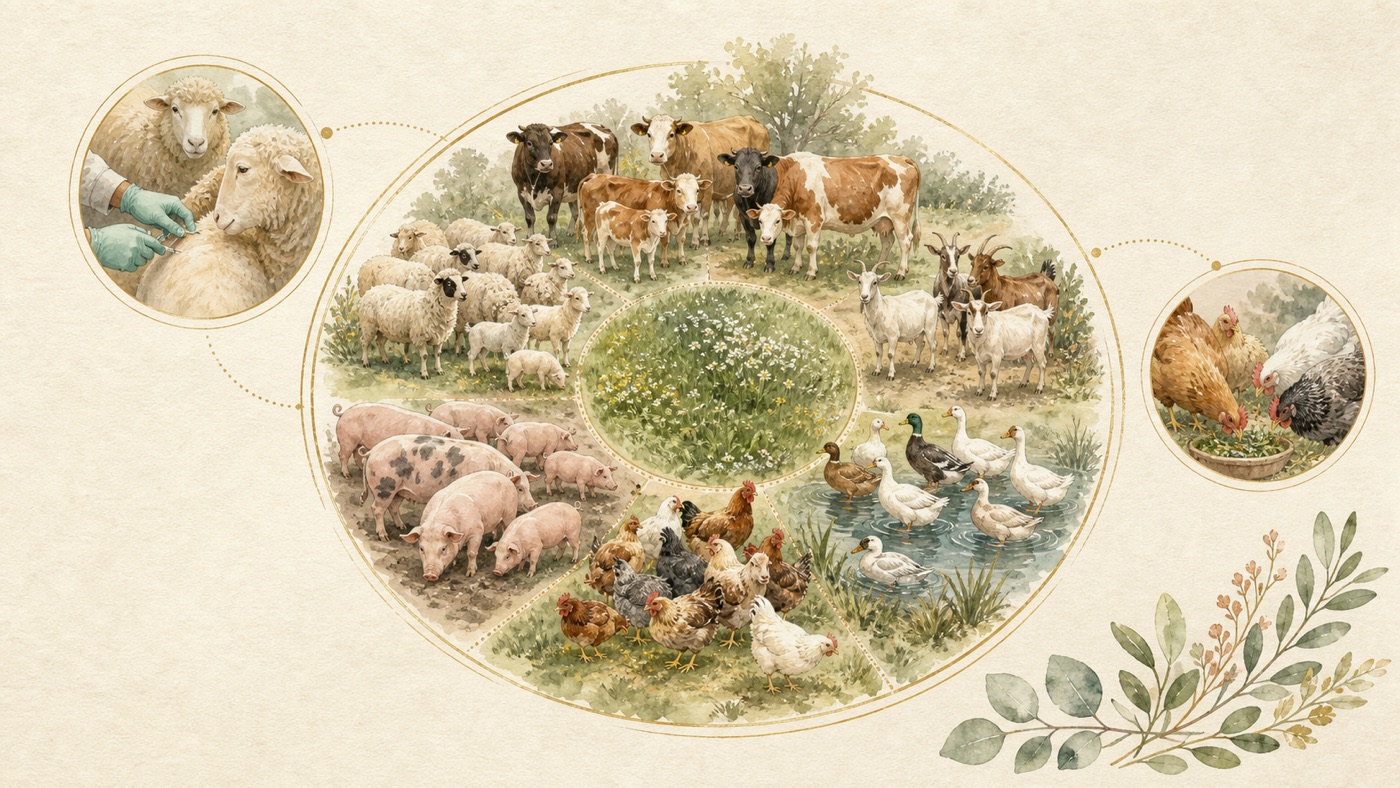
Farm Animals and Horses|🔴 Supplementary Column C: Handling at the Group Level | Evidence chain
This record notes the source location and content hash of "Farm Animals and Horses|🔴 Supplementary Column C: Handling at the Group Level", so the text can be checked against the original.
Farm Animals and Horses|🔴 Supplementary Column C: Handling at the Group Level | Evidence chain
This record notes the source location and content hash of "Farm Animals and Horses|🔴 Supplementary Column C: Handling at the Group Level", so the text can be checked against the original.
How to use this record to verify
This record exists so that anyone can check for themselves whether the text has been altered. Every chapter of the veterinary encyclopaedia carries a starting line number and a content hash (the first 16 characters of its SHA-256). Recompute the hash over the original chapter: if it matches the value recorded below, what is published here is identical to the source chapter. The source list at the end is the authoritative material cited by that chapter — a chapter-level correspondence, meaning those sources underpin the chapter as a whole rather than mapping sentence by sentence. This is educational information and cannot replace a practising veterinarian; in an emergency, seek care immediately.
This record notes the source location of "Farm Animals and Horses|🔴 Supplementary Column C: Handling at the Group Level | Evidence chain": the section beginning at line 463 of `27-T8-農場與T9-馬.md` in the veterinary encyclopaedia. The SHA-256 of that section (first 16 characters) is `e7cdacd329bafb7e`, which anyone can recompute to confirm the content has not been altered.
Source location
- File: Veterinary Animal Encyclopaedia — farm animals and horses
- Starting line: line 463
- Chapter section title: 八、🔴 附加欄 C:群體層級處置
- Content hash: `e7cdacd329bafb7e`
- Character count: 2,197
FAQ
- Only one animal is abnormal and the rest are fine. Do I need to handle the whole group?
- This is most likely an individual-level problem, and the first step is to isolate that animal immediately and observe it, then contact a veterinarian to assess history, environment and the individual's particular circumstances. The common misjudgement is treating it as a group problem and over-treating the whole group, or the reverse, paying no attention at all to how the other animals develop afterwards.
- 一頭だけ異常で他は正常です。群全体に対応が必要ですか。 — この状況は個体レベルの問題である可能性が最も高く、最初の一手はその個体を直ちに隔離して観察し、獣医師に連絡して既往、環境、その個体固有の状況を評価してもらうことです。よくある誤判断は、集団の問題と考えて群全体を過剰に処置すること、あるいは逆に他の個体のその後の変化をまったく見ないことです。
- Only one animal is abnormal and the rest are fine. Do I need to handle the whole group? — This is most likely an individual-level problem, and the first step is to isolate that animal immediately and observe it, then contact a veterinarian to assess history, environment and the individual's particular circumstances. The common misjudgement is treating it as a group problem and over-treating the whole group, or the reverse, paying no attention at all to how the other animals develop afterwards.
- Animals started falling ill after a change of feed or water. Can I watch and see first?
- That is not advisable. This is most likely a feed or water level problem, and you should stop using the suspect batch immediately, keep a sample and contact a veterinarian to assess. Treating it as a coincidence and continuing to feed the same batch will lead to more animals falling ill one after another.
- 飼料や水源を変えた後に動物が次々と発症しました。まず様子を見てもよいですか。 — 適切ではありません。この状況は飼料または水源レベルの問題である可能性が最も高く、直ちに疑わしいロットの使用を止めて検体を保存し、獣医師に連絡して評価を受けるべきです。偶然と考えて同じロットを与え続けると、より多くの個体が次々と発症します。
- Animals started falling ill after a change of feed or water. Can I watch and see first? — That is not advisable. This is most likely a feed or water level problem, and you should stop using the suspect batch immediately, keep a sample and contact a veterinarian to assess. Treating it as a coincidence and continuing to feed the same batch will lead to more animals falling ill one after another.
- How long should newly bought animals be isolated before joining the group?
- The general biosecurity recommendation is to isolate newly introduced animals for at least 30 days and avoid nose-to-nose contact with the resident animals. This is a general recommendation rather than a mandated period; the actual duration should be adjusted according to species, disease risk and the advice of the local veterinarian or competent authority, and it should not be applied rigidly as a universal rule.
- 新しく買ってきた動物はどのくらい隔離してから群に合わせますか。 — 一般的なバイオセキュリティ上の推奨は、新しく導入した動物を少なくとも 30 日隔離し、元からいる動物と鼻と鼻が触れる接触を避けることです。これは一般的な推奨日数であり強制された日数ではありません。実際には動物種、疾病リスク、地域の獣医師や主管官庁の助言に応じて調整すべきで、どこでも通用する硬い規則として機械的に当てはめるのは適切ではありません。
- How long should newly bought animals be isolated before joining the group? — The general biosecurity recommendation is to isolate newly introduced animals for at least 30 days and avoid nose-to-nose contact with the resident animals. This is a general recommendation rather than a mandated period; the actual duration should be adjusted according to species, disease risk and the advice of the local veterinarian or competent authority, and it should not be applied rigidly as a universal rule.
Source anchors
- Merck 獸醫手冊|農場動物與馬章引用 · https://www.merckvetmanual.com/digestive-system/diseases-of-the-ruminant-forestomach/grain-overload-in-ruminants · 在 IDAEO 的其他引用
- Merck 獸醫手冊|農場動物與馬章引用 · https://www.merckvetmanual.com/digestive-system/diseases-of-the-ruminant-forestomach/subacute-ruminal-acidosis-in-cattle-and-sheep · 在 IDAEO 的其他引用
- Merck 獸醫手冊|農場動物與馬章引用 · https://www.merckvetmanual.com/exotic-and-laboratory-animals/miniature-pet-pigs/overview-of-miniature-pet-pigs · 在 IDAEO 的其他引用
- Merck 獸醫手冊|農場動物與馬章引用 · https://www.merckvetmanual.com/generalized-conditions/hendra-virus-infection/hendra-virus-infection-in-horses · 在 IDAEO 的其他引用
- Merck 獸醫手冊|農場動物與馬章引用 · https://www.merckvetmanual.com/horse-owners/introduction-to-horses/description-and-physical-characteristics-of-horses · 在 IDAEO 的其他引用
- Merck 獸醫手冊|農場動物與馬章引用 · https://www.merckvetmanual.com/infectious-diseases/clostridial-diseases/clostridial-vaccines-for-animals · 在 IDAEO 的其他引用
- Merck 獸醫手冊|農場動物與馬章引用 · https://www.merckvetmanual.com/management-and-nutrition/preventative-health-care-and-husbandry-of-horses/dental-care-of-horses · 在 IDAEO 的其他引用
- Merck 獸醫手冊|農場動物與馬章引用 · https://www.merckvetmanual.com/management-and-nutrition/preventative-health-care-and-husbandry-of-horses/vaccination-program-for-horses · 在 IDAEO 的其他引用
- Merck 獸醫手冊|農場動物與馬章引用 · https://www.merckvetmanual.com/multimedia/table/vital-signs-in-adult-camelids · 在 IDAEO 的其他引用
- Merck 獸醫手冊|農場動物與馬章引用 · https://www.merckvetmanual.com/reference-values-and-conversion-tables/reference-guides/normal-rectal-temperature-ranges · 在 IDAEO 的其他引用
- Merck 獸醫手冊|農場動物與馬章引用 · https://www.merckvetmanual.com/reference-values-and-conversion-tables/reference-guides/resting-heart-rates · 在 IDAEO 的其他引用
- Merck 獸醫手冊|農場動物與馬章引用 · https://www.merckvetmanual.com/reference-values-and-conversion-tables/reference-guides/resting-respiratory-rates · 在 IDAEO 的其他引用
- Merck 獸醫手冊|農場動物與馬章引用 · https://www.merckvetmanual.com/toxicology/copper-poisoning/copper-poisoning-in-animals · 在 IDAEO 的其他引用
- PMC 全文|農場動物與馬章引用 · https://pmc.ncbi.nlm.nih.gov/articles/PMC6125241/ · 在 IDAEO 的其他引用
- PubMed 文獻|農場動物與馬章引用 · https://pubmed.ncbi.nlm.nih.gov/11295509/ · 在 IDAEO 的其他引用
- WOAH 世界動物衛生組織|農場動物與馬章引用 · https://www.woah.org/en/disease/diseases-of-bees/ · 在 IDAEO 的其他引用
- WOAH 世界動物衛生組織|農場動物與馬章引用 · https://www.woah.org/en/disease/foot-and-mouth-disease/ · 在 IDAEO 的其他引用
- WOAH 世界動物衛生組織|農場動物與馬章引用 · https://www.woah.org/en/what-we-do/animal-health-and-welfare/animal-diseases/ · 在 IDAEO 的其他引用
- aaep.org|農場動物與馬章引用 · https://aaep.org/ · 在 IDAEO 的其他引用
- extension.arizona.edu|農場動物與馬章引用 · https://extension.arizona.edu/sites/extension.arizona.edu/files/pubs/az2014-2022.pdf · 在 IDAEO 的其他引用
- extension.psu.edu|農場動物與馬章引用 · https://extension.psu.edu/animals-and-livestock/llamas-and-alpacas/health-and-care · 在 IDAEO 的其他引用
- u.osu.edu|農場動物與馬章引用 · https://u.osu.edu/gofarmohio/2026/06/16/livestock-biosecurity-basics-for-the-small-farm/ · 在 IDAEO 的其他引用
- www.canr.msu.edu|農場動物與馬章引用 · https://www.canr.msu.edu/news/what-is-the-buzz-around-cow-longevity · 在 IDAEO 的其他引用
- www.thedonkeysanctuary.org.uk|農場動物與馬章引用 · https://www.thedonkeysanctuary.org.uk/for-professionals · 在 IDAEO 的其他引用
Cite this article
Jane・《Farm Animals and Horses|🔴 Supplementary Column C: Handling at the Group Level | Evidence chain》・IDAEO 知識庫・2026-08-13・https://km.idaeo.ai/post/reports/vet-herd-level-management-evidenceUpdated 2026-08-15