Part of the "Veterinary" topic shelf → ← Back to the article:Symptom Triage|Eyes, Ears and Mouth
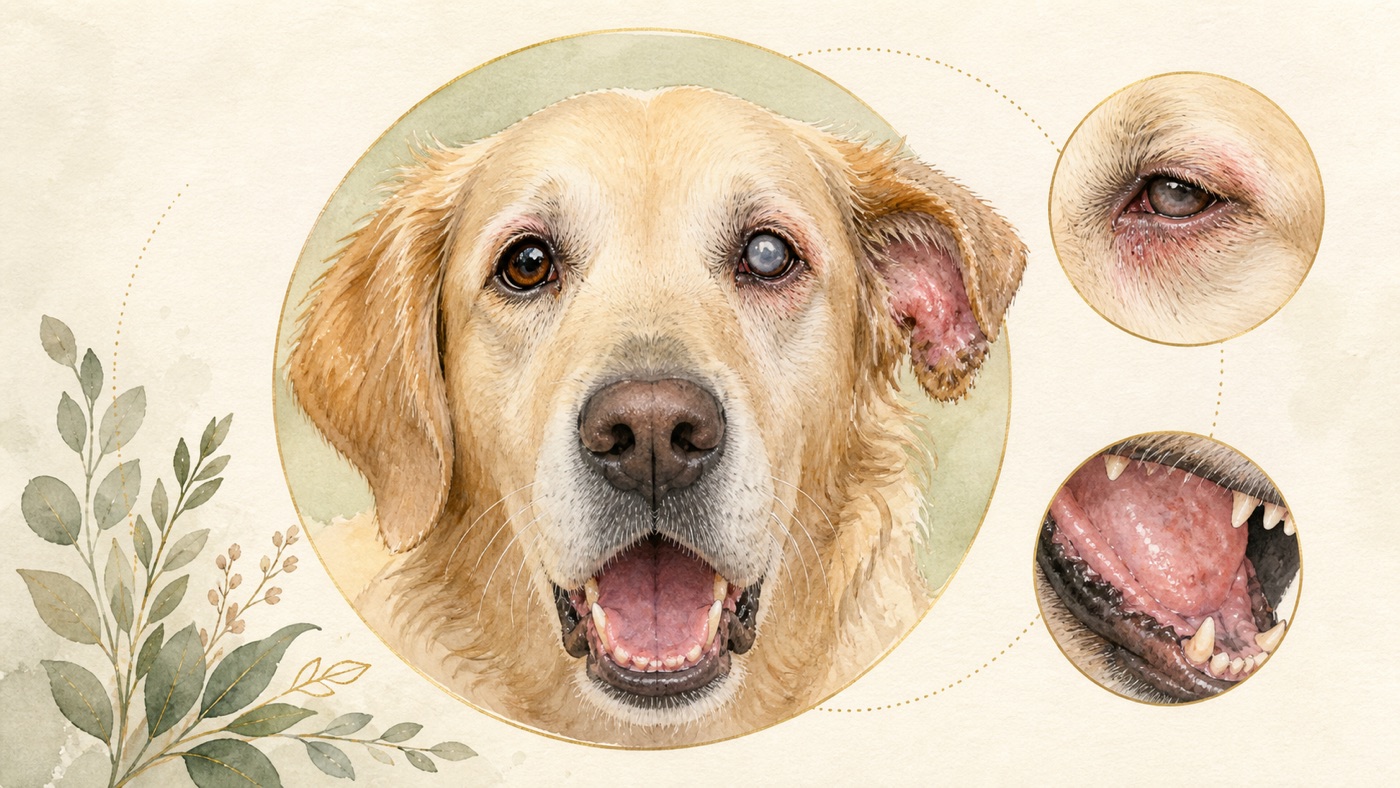
Symptom Triage|Eyes, Ears and Mouth | Evidence chain
This record notes the source location and content hash of "Symptom Triage|Eyes, Ears and Mouth", so the text can be checked against the original.
This record notes the source location and content hash of "Symptom Triage|Eyes, Ears and Mouth", so the text can be checked against the original.
How to use this record to verify
This record exists so that anyone can check for themselves whether the text has been altered. Every chapter of the veterinary encyclopaedia carries a starting line number and a content hash (the first 16 characters of its SHA-256). Recompute the hash over the original chapter: if it matches the value recorded below, what is published here is identical to the source chapter. The source list at the end is the authoritative material cited by that chapter — a chapter-level correspondence, meaning those sources underpin the chapter as a whole rather than mapping sentence by sentence. This is educational information and cannot replace a practising veterinarian; in an emergency, seek care immediately.
This record notes the source location of "Symptom Triage|Eyes, Ears and Mouth | Evidence chain": the section beginning at line 73 of `30-索引-症狀鑑別.md` in the veterinary encyclopaedia. The SHA-256 of that section (first 16 characters) is `602e8ec490a9fe2f`, which anyone can recompute to confirm the content has not been altered.

Source location
- File: Veterinary Animal Encyclopaedia — Symptom Triage
- Starting line: line 73
- Chapter section title: 六、眼、耳、口腔
- Content hash: `602e8ec490a9fe2f`
- Character count: 931
FAQ
- My dog's eye is suddenly red, swollen and squinting, and the cornea has turned white. Can it wait until tomorrow?
- Waiting is not advised. Corneal and intraocular pressure problems are counted in hours and can end in blindness, so this is an emergency. Photograph the eye first, note whether the dog rubs it or avoids light, and seek care as soon as possible.
- My rabbit's head is tilted to one side and it walks in circles. Are its ears just dirty?
- A head tilted to one side, circling, loss of balance and involuntary flickering of the eyes is an emergency. In dogs and cats this may be vestibular disease; in rabbits, torticollis often suggests encephalitozoonosis or a middle ear lesion. Film the walking and head posture, note whether vomiting is present, and seek care immediately.
- What can gum colour tell me?
- Gum and mucous membrane colour is a window onto whole-body status: blue means lack of oxygen, pale means anaemia or shock, and yellow means a liver, biliary or haemolytic problem, all of which need immediate handling. To check, lift the upper lip to look at the gum colour, then press with a finger until it blanches, release, and time how fast the pink returns — the capillary refill time.
Source anchors
- Merck 獸醫手冊|症狀鑑別章引用 · https://www.merckvetmanual.com/toxicology/insecticide-and-acaricide-organic-toxicity/plant-derived-insecticide-toxicosis-in-animals · Other citations on IDAEO
- PMC 全文|症狀鑑別章引用 · https://pmc.ncbi.nlm.nih.gov/articles/PMC10385239/ · Other citations on IDAEO
- PMC 全文|症狀鑑別章引用 · https://pmc.ncbi.nlm.nih.gov/articles/PMC10705156/ · Other citations on IDAEO
Cite this article
Jane・《Symptom Triage|Eyes, Ears and Mouth | Evidence chain》・IDAEO 知識庫・2026-08-13・https://km.idaeo.ai/post/reports/vet-eyes-ears-mouth-evidenceUpdated 2026-08-15