

🏛 Part of the "reports" topic shelf →
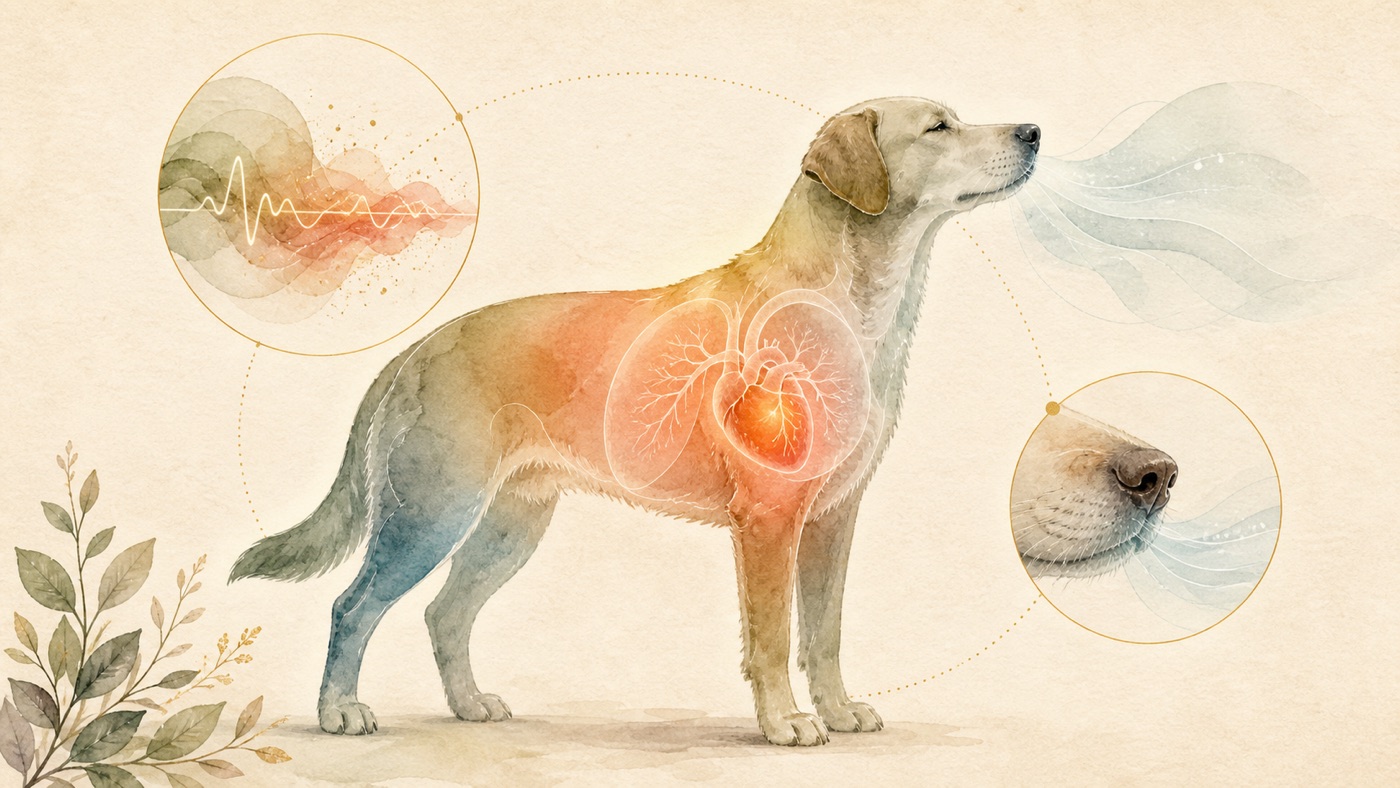
Dogs | Normal physiological parameters (what to measure + how + what deviations mean) | Evidence chain
This record notes the source location and content hash of "Dogs | Normal physiological parameters (what to measure + how + what deviations mean)", so the text can be checked against the original.
Dogs | Normal physiological parameters (what to measure + how + what deviations mean) | Evidence chain
This record notes the source location and content hash of "Dogs | Normal physiological parameters (what to measure + how + what deviations mean)", so the text can be checked against the original.
How to use this record to verify
This record exists so that anyone can check for themselves whether the text has been altered. Every chapter of the veterinary encyclopaedia carries a starting line number and a content hash (the first 16 characters of its SHA-256). Recompute the hash over the original chapter: if it matches the value recorded below, what is published here is identical to the source chapter. The source list at the end is the authoritative material cited by that chapter — a chapter-level correspondence, meaning those sources underpin the chapter as a whole rather than mapping sentence by sentence. This is educational information and cannot replace a practising veterinarian; in an emergency, seek care immediately.
This record notes the source location of "Dogs | Normal physiological parameters (what to measure + how + what deviations mean) | Evidence chain": the section beginning at line 230 of `20-T1-犬.md` in the veterinary encyclopaedia. The SHA-256 of that section (first 16 characters) is `4a2f008c8e2bb774`, which anyone can recompute to confirm the content has not been altered.
Source location
- File: Veterinary Animal Encyclopaedia — dog
- Starting line: line 230
- Chapter section title: §2 正常生理指標(要量哪些 + 怎麼量 + 異常方向)
- Content hash: `4a2f008c8e2bb774`
- Character count: 4,615
FAQ
- What is a normal body temperature for a dog?
- A rectal temperature of 37.5 to 39.2°C (99.5 to 102.5°F). Measure it with a digital rectal thermometer and lubricant, insert gently, and wait for the reading to stabilize; ear and infrared forehead readings have large errors and cannot be used to make a judgment. A high temperature with continuous panting in a hot environment should raise the question of heatstroke; a high temperature with dullness points toward infection or inflammation. A low temperature with weakness means shock, hypothermia or energy exhaustion, which is overlooked more often than a high temperature and is more urgent.
- 犬の正常な体温は何度ですか。 — 直腸温で 37.5 から 39.2°C(99.5 から 102.5°F)です。測り方は電子体温計に潤滑剤を使い、やさしく挿入して値が安定するまで待ちます。耳式や赤外線の額での測定は誤差が大きく、判断には使えません。体温が高くパンティングが続き高温の環境にいるときは熱中症を考えます。体温が高く元気がないときは感染や炎症に傾きます。体温が低くぐったりしているのはショック、低体温、エネルギーの枯渇を意味し、高体温より見落とされやすく、より緊急です。
- What is a normal body temperature for a dog? — A rectal temperature of 37.5 to 39.2°C (99.5 to 102.5°F). Measure it with a digital rectal thermometer and lubricant, insert gently, and wait for the reading to stabilize; ear and infrared forehead readings have large errors and cannot be used to make a judgment. A high temperature with continuous panting in a hot environment should raise the question of heatstroke; a high temperature with dullness points toward infection or inflammation. A low temperature with weakness means shock, hypothermia or energy exhaustion, which is overlooked more often than a high temperature and is more urgent.
- How can I tell at home that my dog's heart disease is getting worse?
- Count the sleeping respiratory rate. While the dog is asleep, count the rise and fall of chest and abdomen for a full minute, or for half a minute multiplied by two, and record it repeatedly to build a trend. In healthy dogs the sleeping respiratory rate averages about 16 breaths per minute, and veterinary cardiology practice often cites fewer than 30 breaths per minute as a reference line for ruling out congestive heart failure. A rate that keeps rising is one of the earliest home signals of worsening heart disease or pulmonary edema; a dog with known heart disease should be recorded daily or weekly on a fixed schedule.
- 犬の心臓病が悪化していることを自宅でどう見分けますか。 — 睡眠時呼吸数を数えます。犬が眠っているあいだに胸と腹の上下を 1 分間、または 30 秒数えて 2 倍し、続けて記録して推移にします。健康な犬の睡眠時呼吸数は平均で毎分およそ 16 回で、獣医循環器の臨床では毎分 30 回未満がうっ血性心不全を除外する参考線としてしばしば引用されます。上昇し続けることは心臓病の悪化や肺水腫の最も早い家庭でのサインの一つです。心臓病が分かっている犬は毎日または毎週、決まった形で記録してください。
- How can I tell at home that my dog's heart disease is getting worse? — Count the sleeping respiratory rate. While the dog is asleep, count the rise and fall of chest and abdomen for a full minute, or for half a minute multiplied by two, and record it repeatedly to build a trend. In healthy dogs the sleeping respiratory rate averages about 16 breaths per minute, and veterinary cardiology practice often cites fewer than 30 breaths per minute as a reference line for ruling out congestive heart failure. A rate that keeps rising is one of the earliest home signals of worsening heart disease or pulmonary edema; a dog with known heart disease should be recorded daily or weekly on a fixed schedule.
- What does the color of my dog's gums mean?
- Lift the upper lip and look at the gums; the color should be pink. Press with a finger until it blanches, release, and a return within 1 to 2 seconds means normal perfusion, while more than 2 seconds means poor perfusion. Pale means anemia or shock (including internal bleeding), brick red means sepsis or heatstroke, purple means hypoxia and calls for immediate care, yellow points to a liver, biliary or hemolytic problem, and petechiae indicate a coagulation or platelet problem.
- 犬の歯ぐきの色は何を意味しますか。 — 上唇をめくって歯ぐきを見ます。色はピンクであるべきです。指で押して白くしてから離し、1 から 2 秒で戻れば灌流は正常、2 秒を超えれば灌流不良です。蒼白は貧血またはショック(内出血を含む)、レンガ色は敗血症または熱中症、紫は低酸素でただちに受診が必要、黄色は肝臓・胆道・溶血の問題を示し、点状出血が出ていれば凝固または血小板の問題です。
- What does the color of my dog's gums mean? — Lift the upper lip and look at the gums; the color should be pink. Press with a finger until it blanches, release, and a return within 1 to 2 seconds means normal perfusion, while more than 2 seconds means poor perfusion. Pale means anemia or shock (including internal bleeding), brick red means sepsis or heatstroke, purple means hypoxia and calls for immediate care, yellow points to a liver, biliary or hemolytic problem, and petechiae indicate a coagulation or platelet problem.
Source anchors
- Merck 獸醫手冊|犬章引用 · https://www.merckvetmanual.com/management-and-nutrition/management-of-the-neonate/management-of-the-neonate-in-dogs-and-cats · 在 IDAEO 的其他引用
- Merck 獸醫手冊|犬章引用 · https://www.merckvetmanual.com/multimedia/table/parameters-to-evaluate-during-triage · 在 IDAEO 的其他引用
- Merck 獸醫手冊|犬章引用 · https://www.merckvetmanual.com/reproductive-system/reproductive-diseases-of-the-female-small-animal/dystocia-in-small-animals · 在 IDAEO 的其他引用
- PMC 全文|犬章引用 · https://pmc.ncbi.nlm.nih.gov/articles/PMC10385239/ · 在 IDAEO 的其他引用
- PMC 全文|犬章引用 · https://pmc.ncbi.nlm.nih.gov/articles/PMC10705156/ · 在 IDAEO 的其他引用
- PMC 全文|犬章引用 · https://pmc.ncbi.nlm.nih.gov/articles/PMC11096582/ · 在 IDAEO 的其他引用
- PMC 全文|犬章引用 · https://pmc.ncbi.nlm.nih.gov/articles/PMC5421102/ · 在 IDAEO 的其他引用
- PMC 全文|犬章引用 · https://pmc.ncbi.nlm.nih.gov/articles/PMC7608676/ · 在 IDAEO 的其他引用
- WSAVA|犬章引用 · https://wsava.org/wp-content/uploads/2021/04/Selecting-a-pet-food-for-your-pet-updated-2021_WSAVA-Global-Nutrition-Toolkit.pdf · 在 IDAEO 的其他引用
- AAHA|犬章引用 · https://www.aaha.org/wp-content/uploads/globalassets/02-guidelines/behavior-management/2015_aaha_canine_and_feline_behavior_management_guidelines_final.pdf · 在 IDAEO 的其他引用
- AAHA|犬章引用 · https://www.aaha.org/wp-content/uploads/globalassets/02-guidelines/canine-life-stage/canine_life_stage_guidelines.pdf · 在 IDAEO 的其他引用
- WOAH 世界動物衛生組織|犬章引用 · https://www.woah.org/en/disease/rabies/ · 在 IDAEO 的其他引用
- vetmed.illinois.edu|犬章引用 · https://vetmed.illinois.edu/pet-health-columns/never-give-medications-for-people-to-pets/ · 在 IDAEO 的其他引用
Cite this article
Jane・《Dogs | Normal physiological parameters (what to measure + how + what deviations mean) | Evidence chain》・IDAEO 知識庫・2026-08-13・https://km.idaeo.ai/post/reports/vet-dog-vital-signs-evidenceUpdated 2026-08-15