Part of the "Veterinary" topic shelf → ← Back to the article:Dogs | Nutrition and feeding (including what owners get wrong most often)
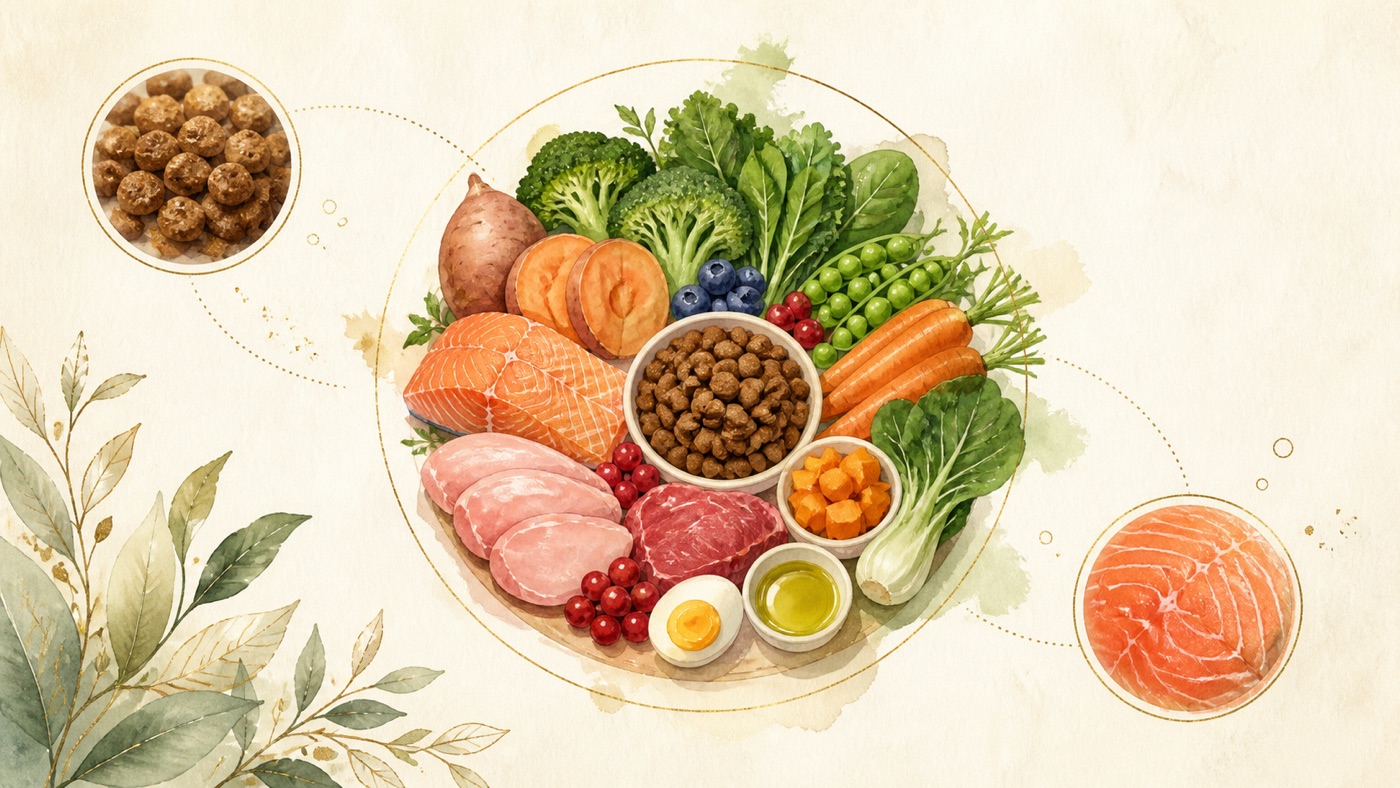
Dogs | Nutrition and feeding (including what owners get wrong most often) | Evidence chain
This record notes the source location and content hash of "Dogs | Nutrition and feeding (including what owners get wrong most often)", so the text can be checked against the original.
This record notes the source location and content hash of "Dogs | Nutrition and feeding (including what owners get wrong most often)", so the text can be checked against the original.
How to use this record to verify
This record exists so that anyone can check for themselves whether the text has been altered. Every chapter of the veterinary encyclopaedia carries a starting line number and a content hash (the first 16 characters of its SHA-256). Recompute the hash over the original chapter: if it matches the value recorded below, what is published here is identical to the source chapter. The source list at the end is the authoritative material cited by that chapter — a chapter-level correspondence, meaning those sources underpin the chapter as a whole rather than mapping sentence by sentence. This is educational information and cannot replace a practising veterinarian; in an emergency, seek care immediately.
This record notes the source location of "Dogs | Nutrition and feeding (including what owners get wrong most often) | Evidence chain": the section beginning at line 310 of `20-T1-犬.md` in the veterinary encyclopaedia. The SHA-256 of that section (first 16 characters) is `1a8886ffb3f8c086`, which anyone can recompute to confirm the content has not been altered.

Source location
- File: Veterinary Animal Encyclopaedia — dog
- Starting line: line 310
- Chapter section title: §4 營養與餵食(含飼主最常餵錯什麼)
- Content hash: `1a8886ffb3f8c086`
- Character count: 3,791
FAQ
- How many treats can a dog have?
- Treats should be limited to a small part of the daily calories. The UC Davis veterinary teaching hospital advises that treats and additional food items should not exceed 10% of the daily caloric intake, and that they be deducted from the main diet. Treats and human food often take up a large share of the calories without providing balanced nutrition, which is why many dogs gain weight for no apparent reason.
- Should I feed the amount recommended on the bag?
- The chart on the bag is a population average, a starting point rather than an answer. Individual variation is large, so feel the ribs and weigh the dog monthly and adjust by body condition score. Also avoid keeping the bowl permanently full for free feeding — it not only leads to weight gain but also hides changes in appetite, and a change in appetite is one of the earliest signals of illness.
- Can I cook fresh food for my dog myself?
- Yes, but the recipe has to be calculated by a veterinary nutritionist first, with periodic blood work afterwards. Home-cooked food that was never calculated commonly shows calcium-phosphorus imbalance, deficiency or excess of vitamin D, vitamin E or iodine, and insufficient essential amino acids, resulting in skeletal deformity in puppies and cardiomyopathy in adults. When changing food, mix it gradually over several days as well, since switching all at once readily causes acute gastroenteritis and diarrhea.
Source anchors
- Merck 獸醫手冊|犬章引用 · https://www.merckvetmanual.com/management-and-nutrition/management-of-the-neonate/management-of-the-neonate-in-dogs-and-cats · Other citations on IDAEO
- Merck 獸醫手冊|犬章引用 · https://www.merckvetmanual.com/multimedia/table/parameters-to-evaluate-during-triage · Other citations on IDAEO
- Merck 獸醫手冊|犬章引用 · https://www.merckvetmanual.com/reproductive-system/reproductive-diseases-of-the-female-small-animal/dystocia-in-small-animals · Other citations on IDAEO
- PMC 全文|犬章引用 · https://pmc.ncbi.nlm.nih.gov/articles/PMC10385239/ · Other citations on IDAEO
- PMC 全文|犬章引用 · https://pmc.ncbi.nlm.nih.gov/articles/PMC10705156/ · Other citations on IDAEO
- PMC 全文|犬章引用 · https://pmc.ncbi.nlm.nih.gov/articles/PMC11096582/ · Other citations on IDAEO
- PMC 全文|犬章引用 · https://pmc.ncbi.nlm.nih.gov/articles/PMC5421102/ · Other citations on IDAEO
- PMC 全文|犬章引用 · https://pmc.ncbi.nlm.nih.gov/articles/PMC7608676/ · Other citations on IDAEO
- WSAVA|犬章引用 · https://wsava.org/wp-content/uploads/2021/04/Selecting-a-pet-food-for-your-pet-updated-2021_WSAVA-Global-Nutrition-Toolkit.pdf · Other citations on IDAEO
- AAHA|犬章引用 · https://www.aaha.org/wp-content/uploads/globalassets/02-guidelines/behavior-management/2015_aaha_canine_and_feline_behavior_management_guidelines_final.pdf · Other citations on IDAEO
- AAHA|犬章引用 · https://www.aaha.org/wp-content/uploads/globalassets/02-guidelines/canine-life-stage/canine_life_stage_guidelines.pdf · Other citations on IDAEO
- WOAH 世界動物衛生組織|犬章引用 · https://www.woah.org/en/disease/rabies/ · Other citations on IDAEO
- vetmed.illinois.edu|犬章引用 · https://vetmed.illinois.edu/pet-health-columns/never-give-medications-for-people-to-pets/ · Other citations on IDAEO
Cite this article
Jane・《Dogs | Nutrition and feeding (including what owners get wrong most often) | Evidence chain》・IDAEO 知識庫・2026-08-13・https://km.idaeo.ai/post/reports/vet-dog-nutrition-evidenceUpdated 2026-08-15