Part of the "Veterinary" topic shelf → ← Back to the article:Aquatic turtles|Husbandry and care (the disease column is covered in a separate article)
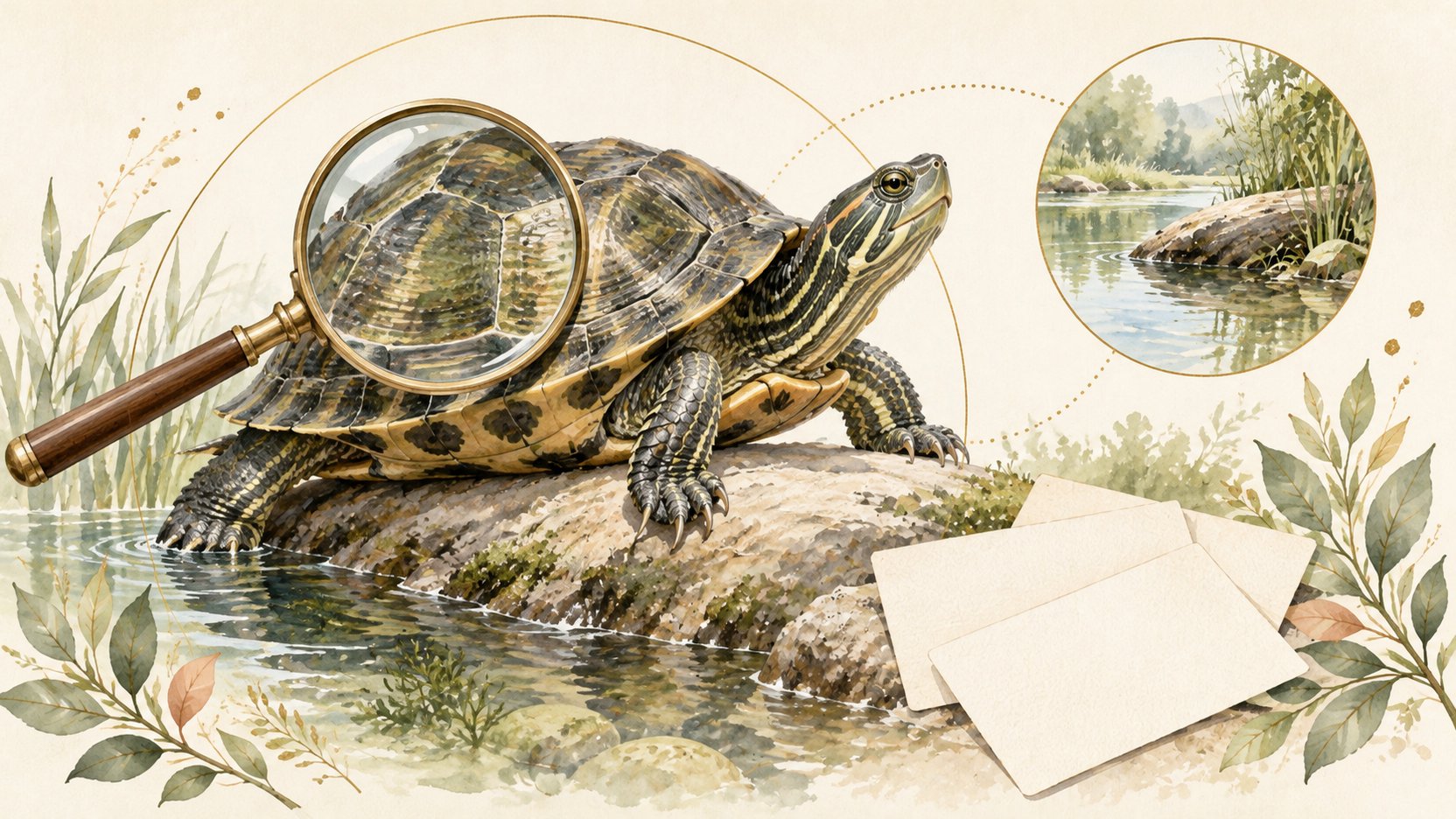
Aquatic turtles|Husbandry and care (the disease column is covered in a separate article) | Evidence chain
This record notes the source location and content hash of "Aquatic turtles|Husbandry and care (the disease column is covered in a separate article)", so the text can be checked against the original.
This record notes the source location and content hash of "Aquatic turtles|Husbandry and care (the disease column is covered in a separate article)", so the text can be checked against the original.
How to use this record to verify
This record exists so that anyone can check for themselves whether the text has been altered. Every chapter of the veterinary encyclopaedia carries a starting line number and a content hash (the first 16 characters of its SHA-256). Recompute the hash over the original chapter: if it matches the value recorded below, what is published here is identical to the source chapter. The source list at the end is the authoritative material cited by that chapter — a chapter-level correspondence, meaning those sources underpin the chapter as a whole rather than mapping sentence by sentence. This is educational information and cannot replace a practising veterinarian; in an emergency, seek care immediately.
This record notes the source location of "Aquatic turtles|Husbandry and care (the disease column is covered in a separate article) | Evidence chain": the section beginning at line 43 of `23-T4-爬蟲兩棲.md` in the veterinary encyclopaedia. The SHA-256 of that section (first 16 characters) is `271ba411ebe77bd2`, which anyone can recompute to confirm the content has not been altered.

Source location
- File: Veterinary Animal Encyclopaedia — reptiles and amphibians
- Starting line: line 43
- Section title: (A) 水龜 Aquatic Turtle(紅耳彩龜/地圖龜/麝香龜)
- Line range: lines 43–82
- Content hash: `271ba411ebe77bd2`
- Character count: 5,738
Relationship to the disease table
This article covers the columns of the species’ 12-column knowledge tree other than the disease column; the disease column has been published as a separate article, so the two do not overlap.
Proposed revisions pending review
This section has 1 place(s) carrying an editorial note in the source chapter with a proposed revision that is not yet adopted and awaiting veterinary review. This site publishes only the official source text.
FAQ
- What should I watch for regarding species / breed and lifespan in aquatic turtles?
- The red-eared slider (Brazilian turtle) is the most widespread pet aquatic turtle worldwide, and is at the same time listed by the International Union for Conservation of Nature as a serious invasive species (abandonment and release into the wild damages local ecosystems, and many countries have controls on its sale or release). The commonly held understanding is that its lifespan can reach several decades; the specific number of years 【No single authoritative figure for this item: the whitelisted sources give no reference value for a lifespan figure specific to the red-eared slider; the Merck reptile overview only states in general terms that the "lifespan of many reptiles can exceed 10–20 years" <https://www.merckvetmanual.com/exotic-and-laboratory-animals/reptiles/overview-of-reptiles>, verified 2026-07-30】, and keepers commonly underestimate it, which leads to long-term abandonment problems. The actual judgement still rests with a veterinarian on a case-by-case basis, and this article gives no drug names or dosages.
- What should I watch for regarding normal physiological indicators in aquatic turtles?
- What to measure: body weight, shell hardness and surface colour, activity level and appetite, the character of faeces and urates, and whether the skin and shell show ulceration or discharge. How to measure: weigh regularly on a waterproof electronic scale and record the trend; palpate to feel whether the shell is soft or hard and whether there is abnormal depression; heart rate and respiration are mostly assessed by a veterinarian with Doppler ultrasound or a stethoscope (difficult for a keeper to measure directly, so behavioural observation is the main route). Abnormal directions: continuing weight loss, abnormal softening or flaking of the shell with a foul smell (a shell-rot warning sign), long-term inability to float or to dive, refusal to eat, and swollen eyelids (a vitamin A deficiency warning sign). General body weight / shell reference values 【No single authoritative figure for this item: the whitelisted sources give no reference value for general body weight / shell reference values specific to chelonians; body weight and shell condition in chelonians vary enormously by species, age and sex, and clinically there is no standardised table of general reference values, so an individual's long-term weight trend should be assessed by a veterinarian rather than a fixed figure applied, verified 2026-07-30】. The actual judgement still rests with a veterinarian on a case-by-case basis, and this article gives no drug names or dosages.
- What should I watch for regarding the husbandry environment for aquatic turtles?
- Two zones are needed, aquatic and terrestrial: a water area for swimming and a land area / basking platform for hauling out to bask. Water needs filtration plus regular water changes; accumulation of ammonia nitrogen and nitrite is one of the largest causes of disease (on the numerical standard: strictly speaking there is no "safe value", the ideal is 0 — the Merck Vet Manual water quality reference table lists the ideal for both total ammonia nitrogen and nitrite as "0 mg/L" <https://www.merckvetmanual.com/multimedia/table/normal-reference-ranges-for-routine-water-quality-analysis>, verified 2026-07-30; ⚠️this table addresses ornamental fish aquarium systems and is not a directly recommended value from a clinical husbandry guide for aquatic turtles, but it reflects the general nitrogen-cycle toxicology principle for aquatic systems: the lower the better, and setting your own "safe range" is not allowed). A UVB tube plus a heat lamp above the basking platform is needed to maintain a temperature gradient, and water and air temperature requirements vary by species (specific figures for the red-eared slider: ambient water temperature 22–27°C (72–81°F), the basking platform warmer than ambient by 5°C per the Merck note (roughly 27–32°C), with a further 5°C drop at night. The actual judgement still rests with a veterinarian on a case-by-case basis, and this article gives no drug names or dosages.
Source anchors
- Merck 獸醫手冊|爬蟲與兩棲章引用 · https://www.merckvetmanual.com/exotic-and-laboratory-animals/amphibians/overview-of-amphibians · Other citations on IDAEO
- Merck 獸醫手冊|爬蟲與兩棲章引用 · https://www.merckvetmanual.com/exotic-and-laboratory-animals/reptiles/management-and-husbandry-of-reptiles · Other citations on IDAEO
- Merck 獸醫手冊|爬蟲與兩棲章引用 · https://www.merckvetmanual.com/exotic-and-laboratory-animals/reptiles/nutritional-metabolic-and-endocrine-diseases-of-reptiles · Other citations on IDAEO
- Merck 獸醫手冊|爬蟲與兩棲章引用 · https://www.merckvetmanual.com/exotic-and-laboratory-animals/reptiles/overview-of-reptiles · Other citations on IDAEO
- Merck 獸醫手冊|爬蟲與兩棲章引用 · https://www.merckvetmanual.com/management-and-nutrition/nutrition-exotic-and-zoo-animals/nutrition-in-reptiles · Other citations on IDAEO
- Merck 獸醫手冊|爬蟲與兩棲章引用 · https://www.merckvetmanual.com/multimedia/table/average-life-span-of-reptiles-in-captivity · Other citations on IDAEO
- Merck 獸醫手冊|爬蟲與兩棲章引用 · https://www.merckvetmanual.com/multimedia/table/important-husbandry-requirements-for-selected-reptiles · Other citations on IDAEO
- Merck 獸醫手冊|爬蟲與兩棲章引用 · https://www.merckvetmanual.com/multimedia/table/normal-reference-ranges-for-routine-water-quality-analysis · Other citations on IDAEO
- Merck 獸醫手冊|爬蟲與兩棲章引用 · https://www.merckvetmanual.com/reference-values-and-conversion-tables/reference-guides/resting-respiratory-rates · Other citations on IDAEO
- PMC 全文|爬蟲與兩棲章引用 · https://pmc.ncbi.nlm.nih.gov/articles/PMC10000224/ · Other citations on IDAEO
- animals.sandiegozoo.org|爬蟲與兩棲章引用 · https://animals.sandiegozoo.org/animals/african-spurred-tortoise · Other citations on IDAEO
- arav.org|爬蟲與兩棲章引用 · https://arav.org/about/ · Other citations on IDAEO
- www.marylandzoo.org|爬蟲與兩棲章引用 · https://www.marylandzoo.org/animal/sulcata-tortoise/ · Other citations on IDAEO
- www.ncbi.nlm.nih.gov|爬蟲與兩棲章引用 · https://www.ncbi.nlm.nih.gov/nlmcatalog/?term=Journal+of+Herpetological+Medicine+and+Surgery · Other citations on IDAEO
- www.uticazoo.org|爬蟲與兩棲章引用 · https://www.uticazoo.org/sulcatatortoise/ · Other citations on IDAEO
Cite this article
Jane・《Aquatic turtles|Husbandry and care (the disease column is covered in a separate article) | Evidence chain》・IDAEO 知識庫・2026-08-13・https://km.idaeo.ai/post/reports/vet-aquatic-turtle-care-evidenceUpdated 2026-08-15