

🏛 Part of the "reports" topic shelf →
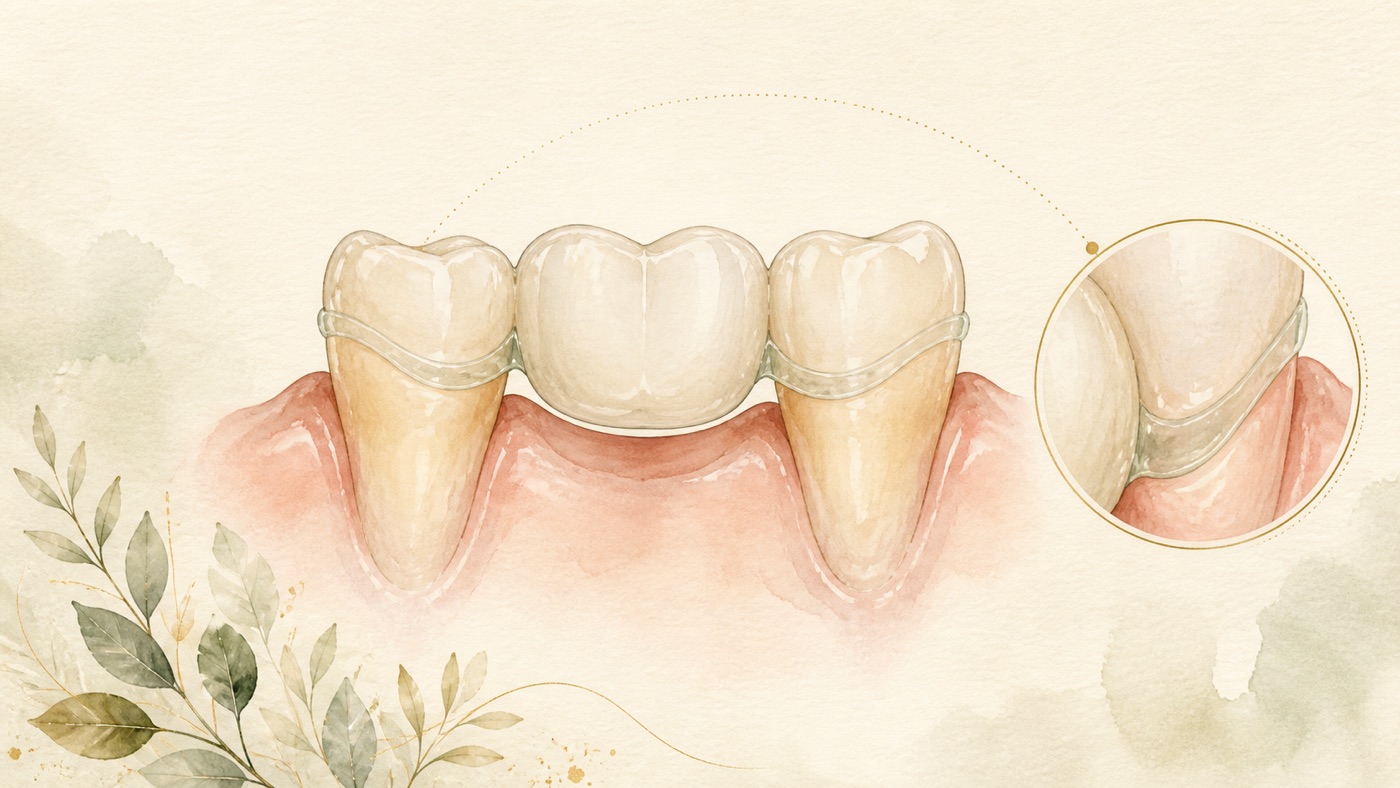
What Is a Resin-Bonded (Maryland) Bridge, and Who Is It For?|證據鏈
本頁是〈What Is a Resin-Bonded (Maryland) Bridge, and Who Is It For?〉的事實單元帳:每一條主張對應的來源、證據等級、地域與期間、原文引句與限制,逐條攤開。
What Is a Resin-Bonded (Maryland) Bridge, and Who Is It For?|證據鏈
F-Units (fact-unit ledger)
- F1|confidence: verified|basis: peer_reviewed (PMID 28191679, systematic review and meta-analysis)|period: studies with mean follow-up ≥5 years, published 2017; on 2026-08-06 rechecked with PubMed systematic review/meta-analysis filters (27 records). No update with the same scope (all resin-bonded bridges, ≥5 years) was found; newer reviews are subgroup topics (F4 ceramic cantilever / F8 posterior / F5 non-metal and single retainer), each listed separately in this card|geo: universal|span: 「Meta-analysis of these studies reporting on 2300 RBBs indicated an estimated survival of resin-bonded bridges of 91.4% (95 percent confidence interval [95% CI]: 86.7-94.4%) after 5 years and 82.9% (95% CI: 73.2-89.3%) after 10 years.」「A significantly higher survival rate was reported for RBBs with zirconia framework compared with RBBs from other materials.」「RBBs with one retainer had a significantly higher survival rate (P < 0.0001) and a lower de-bonding rate (P = 0.001) compared with RBBs retained by two or more retainers.」「the survival rate was higher for RBBs inserted in the anterior area of the oral cavity compared with posterior RBBs」「The most frequent complications were de-bonding (loss of retention), which occurred in 15% (95% CI: 10.9-20.6%) and chipping of the veneering material that was reported for 4.1% (95% CI: 1.8-9.5%) of the RBBs over an observation period of 5 years.」|caveat: Included 29 studies (including 17 from an earlier review); its survival calculation treats a bridge remaining in place after rebonding as surviving, unlike F7’s event definition, so the two figures must not be directly subtracted
- F2|confidence: verified|basis: peer_reviewed (PMID 26875611, systematic review and meta-analysis)|period: searched to 2014-12, published 2016|geo: universal|span: 「Of 1010 screened articles, one RCT and 4 cohort studies fit the inclusion criteria and were included in the meta-analysis. All included articles have a high risk of bias.」「Failure rates of single-retainer cantilever RBFDPs were lower than two-retainer fixed-fixed RBFDPs (OR 0.42, 95% CI 0.19-0.94, P=0.04).」「Metal-ceramic RBFDPs showed no difference of failure rates between cantilever RBFDPs and two-retainer fixed-fixed RBFDPs (OR 0.93, 95% CI 0.33-2.63, P=0.89).」「Debonding was not significantly different between cantilever RBFDPs and two-retainer fixed-fixed RBFDPs (OR 0.61, 95% CI 0.23-1.60, P=0.32).」|caveat: Only 5 studies included; authors report all at high risk of bias; limited to anterior region
- F3|confidence: verified|basis: peer_reviewed (PMID 28985448, systematic review)|period: studies with mean follow-up ≥3 years, published 2018|geo: universal|span: 「The estimated 5-year survival rate of all-ceramic RBFDPs was 91.2%.」「the estimated 5-year debonding rate and fracture rate were 12.2% and 4.8%, respectively」「Additionally, cantilevered all-ceramic RBFDPs had a higher survival rate (p < 0.01), lower debonding rate, (p < 0.05), and fracture rate (p < 0.01) compared with two-retainer all-ceramic RBFDPs.」「Zirconia ceramic RBFDPs had a lower incidence of failure but a higher debonding rate compared with glass-ceramic RBFDPs (p < 0.01).」「although all-ceramic RBFDPs have a favorable 5-year survival rate, this rate cannot represent the complete success of the treatment, since it may include typical complications such as debonding and fractures」|caveat: Included 1 randomized controlled trial and 7 cohort studies; limited to all-ceramic materials
- F4|confidence: verified|basis: peer_reviewed (PMID 38623053, systematic review)|period: searched to 2023-10, published 2024|geo: universal|span: 「Twelve studies met the eligibility criteria.」「The pooled data showed a statistically significant decrease in complication events when using cantilever designs compared with double retainer designs (p < 0.05); however, there were no differences found between the two designs in terms of restoration failure.」|caveat: Limited to ceramic cantilever designs in the anterior region; its conclusion differs from F2 on whether failure rates differ, so this card presents both without choosing one
- F5|confidence: verified|basis: peer_reviewed (PMID 42457533, systematic review)|period: searched to 2025-11-30; published online ahead of print on 2026-07-16, the most recently searched literature in this card|geo: universal|span: 「A comprehensive literature search of the MEDLINE, CENTRAL, Web of Science, and Ichushi databases up to November 30, 2025 was conducted」「There were no significant differences in survival rate, esthetics, OHRQoL, patient satisfaction, or periodontal condition between non-metal and metal retainer RBFPDs.」「Comparisons involving SR-RBFPDs suggested a tendency toward favorable survival and abutment tooth outcomes; however, these findings were based on a limited number of studies and should be interpreted with caution.」「the current evidence is limited and applies primarily to anterior single-tooth loss」|caveat: Online ahead of print, without volume or page numbers; the three comparisons included only 8, 6, and 3 studies respectively
- F6|confidence: verified|basis: peer_reviewed (PMID 30302909, systematic review and meta-analysis)|period: searched 1965-01 to 2017-03, published 2019|geo: universal|span: 「The key words used in the search were: Bridge OR bridges OR fixed partial OR fixed dental AND resin bonded OR Maryland OR ceramic bonded.」「Success was defined as the RBFPDs remaining in situ and not having experienced debonding, biological failures, or mechanical failures at the examination visit.」「Meta analyses of the included studies showed an estimated 5-year success rate of 88.18% for the metal framework RBFPDs and 84.41% for the nonmetal framework RBFPDs.」「The estimated 5-year success rate for each nonmetal material category was 92.07% for zirconia, 94.26% for In-Ceram alumina, and 84.83% for fiber-reinforced composite.」「The failure rate was not statistically significant among the single, double, and multiple retainers RBFPDs (P > .05).」「The 5-year clinical performance of RBFPDs is similar to the performance of conventional fixed partial dentures (FPDs) and implant-supported crowns.」|caveat: This card cites its “success-rate” definition, which is not the same measure as the “survival rate” in F1/F7; its conclusion differs in direction from F12’s direct comparative study, and this card presents both
- F7|confidence: verified|basis: peer_reviewed (PMID 28703151, systematic review)|period: published 2017|geo: universal|span: 「The predicted survival rate for 5 and 10 years are 83.6% and 64.9%, respectively. Functional survival after rebonding has not been considered in this study.」「Retentive tooth preparation, preparation confined to enamel, silicoating, supra gingival margins, Ni-Cr or Co-Cr alloys and no occlusion on pontic in lateral excursions have been reported to be associated with better survival rates.」「Pooled odds for retention of RBB in anterior segment when compared to posterior is 1.915 (95%CI - 0.847-4.329).」|caveat: Prognostic factors are a narrative summary, not causal inference; the confidence interval for anterior versus posterior crosses 1
- F8|confidence: verified|basis: peer_reviewed (PMID 42161568, systematic review)|period: studies with follow-up ≥5 years; published online ahead of print on 2026-05-19|geo: universal|span: 「A total of 15 out of 283 studies were analyzed statistically based on the inclusion criteria.」「The overall estimated 5-year and 10-year survival rate were 82.77% (95% CI: 75.88-87.85%) and 68.51% (95% CI: 57.57-77.17%), respectively.」「The estimated annual failure rate was 3.78% (95% CI: 2.59-5.52)」「non-cantilevered P-RBFPDs demonstrated nearly twice the estimated annual failure rate compared to two-unit cantilevered P-RBFPDs (4.19% Vs 2.20%)」「Two-unit cantilevered P-RBFPDs exhibited higher estimated survival rates at 5 and 10 years compared to non-cantilevered prostheses, although this difference was not statistically significant.」「The type of prosthesis and framework material did not significantly impact the clinical outcomes.」|caveat: Limited to posterior teeth; online ahead of print, without volume or page numbers
- F9|confidence: verified|basis: peer_reviewed (PMID 28688950, prospective clinical study)|period: published 2017|geo: universal|span: 「One hundred and eight zirconia ceramic cantilever RBFDPs were provided for 87 patients.」「Six debondings and 1 loss of restoration were recorded.」「All debonded RBFDPs were rebonded successfully with no further complications.」「Zirconia ceramic RBFDPs yielded a 10-year survival rate of 98.2% and a success rate of 92.0%.」|caveat: Single-centre study of one material and design (zirconia cantilever), not a meta-analysis; causes of missing teeth analysed in three groups;本卡正文所用「108 座」為該研究全文(PMC 開放取用)之樣本數,非摘要所載,2026-08-08 以 efetch db=pmc 取回全文確認
- F10|confidence: verified|basis: peer_reviewed (PMID 32956431, recalled cohort study)|period: mean follow-up 10.0 years, published 2020|geo: universal|span: 「Ten patients (mean age 32.4 years) who had received an RBFDP replacing a single anterior tooth were recalled after 10 years.」「Neither technical failures nor biologic complications were observed. All abutment teeth remained vital, and no secondary caries were detected.」「The RBFDP survival rate after a mean follow-up of 10.0 years (range 7.4 to 13.3 years) was 100%.」|caveat: Only 10 patients; this card cites qualitative observations only, not a survival-rate percentage or a basis to estimate magnitude
- F11|confidence: verified|basis: peer_reviewed (PMID 17594374, systematic review and meta-analysis)|period: studies with mean follow-up ≥5 years, published 2007 (same anchor: this site’s card #3 F8·S4 and card family #34)|geo: universal|span: 「an estimated 5-year survival of conventional tooth-supported FDPs of 93.8%」「after 10 years of function the estimated survival decreased to 89.2% for conventional FDPs」「This is compared with 15.7% for conventional FDPs」「For conventional tooth-supported FDPs, the most frequent complications were biological complications like caries and loss of pulp vitality.」「Moreover, after 10 years of function the estimated survival decreased to 89.2% for conventional FDPs, to 80.3% for cantilever FDPs, to 86.7% for implant-supported FDPs, to 77.8% for combined tooth-implant-supported FDPs and to 89.4% for implant-supported SCs.」|caveat: In this paper conventional tooth-supported FDP means a conventional fixed bridge with neighbouring teeth prepared as full-crown abutments, not a resin-bonded bridge. Its cantilever FDPs are also conventional cantilever fixed prostheses, unlike the cantilever resin-bonded bridges in F1–F8; the two sets of figures must not be applied to each other
- F12|confidence: verified|basis: peer_reviewed (PMID 37605324, comparative clinical study)|period: examined at 3 to 5 years, published 2023|geo: universal|span: 「A total of 45 resin-bonded FDPs were inserted in 27 young patients (test group) with tooth agenesis in the anterior part of the maxilla or mandible and a control group of 28 patients also with tooth agenesis in the anterior region but treated with 40 implant-supported single crowns were included in this study.」「For the RBFDP (test) group there was an 82% survival rate and 18% failure rate」「the ISSC showed a survival rate of 98% and a failure rate of 2%」「The results of this study indicate that ISSCs have lower complication and failure rates than RBFDPs.」「there was a significant reduction in the OHIP-49 scores」|caveat: Non-randomised comparative study limited to young patients with congenital tooth agenesis; its direction differs from F6’s conclusion and this card presents both
- F13|confidence: verified|basis: peer_reviewed (PMID 31076220, systematic review)|period: searched 2017-10 to 2017-11, published 2019|geo: universal|span: 「Overall, 493 dental implants were placed in 147 patients aged from 3-18 years old with follow-up being from 1-20 years.」「The main complications reported were the infraocclusion positioning of dental implants in the maxillary arch and the rotation of dental implants in the mandibular arch.」「In growing jaws, dental implants require positional modifications, and they should be considered only under special circumstances.」|caveat: Included 28 studies, mostly case series; main populations had ectodermal dysplasia or teeth missing after trauma
- F14|confidence: verified|basis: peer_reviewed (PMID 25935732, systematic review and meta-analysis)|period: searched 2006 to 2013, published 2015 (same anchor: this site’s card #3 F7·S3 and card #34 F17; figures and spans are identical)|geo: universal|span: 「an estimated 5-year survival rate of metal-ceramic FDPs of 94.4% (95% CI: 91.2-96.5%)」|caveat: Population was multi-unit tooth-supported fixed prostheses, not resin-bonded bridges
- F15|confidence: verified|basis: peer_reviewed (PMID 23062124, systematic review and meta-analysis)|period: searched 2006 to 2011, published 2012 (same anchor: this site’s card #34 F16; figures and spans are identical)「The survival of implant-supported SCs was 96.3% (95% CI: 94.2-97.6%) after 5 years and 89.4% (95% CI: 82.8-93.6%) after 10 years.」|geo: universal|span: 「survival of implants supporting SCs at 5 years amounted to 97.2% (95% CI: 96.3-97.9%), and at 10 years amounted to 95.2%」|caveat: Included 46 studies; the statistic concerns survival of the implant itself, a different outcome from survival of the prosthesis
- F16|confidence: verified|basis: peer_reviewed (PMID 38706266, systematic review)|period: searched English-language literature from 2010 to 2020, published 2024|geo: universal|span: 「A total of 14 studies were reviewed based on the eligibility criteria.」「The results showed that using a cantilever design with one abutment had an advantage over two abutments.」「Debonding, followed by framework fracture, was the leading cause of failure.」|caveat: Narrative synthesis without meta-analysis; limited to all-ceramic materials
- F17|confidence: verified|basis: peer_reviewed (PMID 32189627, short dental-history article)|period: published 2019|geo: universal|span: 「adhesive-retained fixed partial denture for the replacement of anterior missing teeth in the early 1980s」「Proffered by faculty from the University of Maryland, this tooth replacement was ultimate known as the Maryland Bridge」|caveat: Historical narrative, not clinical evidence; this card uses it only for the name’s origin, not for effectiveness or survival claims
- F18|confidence: verified|basis: peer_reviewed (PMID 39667155, systematic review and network meta-analysis)|period: PROSPERO CRD42023487245, published 2025|geo: universal|span: 「The systematic search initially produced 1177 studies. At the end 10 studies met the inclusion criteria.」「no significant difference was found regarding the aesthetic results between orthodontic space closure or dental implant」「Tooth-supported dental prostheses for MLIA reported worse scores in the periodontal indexes than orthodontic space closure treatment but the impact of orthodontic and prosthetic treatment on periodontal health remained contentious」|caveat: Population limited to congenital absence of maxillary lateral incisors; “tooth-supported dental prostheses” combines resin-bonded and conventional types and must not be read as a resin-bonded-bridge result alone
- F19|confidence: verified|basis: peer_reviewed (PMID 28212978, systematic review)|period: searched literature from 1960 onward, published 2017|geo: universal|span: 「The estimated 3- and 5-year survival rates of IRFDPs were 92.6% (95% CI: 85.8-97.6%) and 87.9% (95% CI: 77.4-96.1%), respectively.」「The indications of IRFDPs should be strictly controlled and monitored.」|caveat: Population was inlay-retained fixed prostheses, a different procedure from resin-bonded bridges; included 1 randomized controlled trial and 10 prospective cohort studies
- F20|confidence: verified|basis: peer_reviewed (PMID 28356189, systematic review)|period: searched 2007-01 to 2015-12, published 2017|geo: universal|span: 「Nine studies were included, involving placement of 592 FRC FPDs in 463 patients.」「Kaplan-Meier overall survival probability was 94.5% (95%C.I: 92.5%-96.5%) at 4.8 years.」|caveat: Meta-analysis could not be performed; follow-up was 2 months to 8 years, so long-term performance remains unclear
- F21|confidence: verified (on 2026-08-06, the National Laws and Regulations Database was loaded in ego-browser and the text was matched word for word; same anchor this site's fact-check register)|basis: law|period: current provision|geo: TW|span: 《全民健康保險法》第 51 條「下列項目不列入本保險給付範圍:……十一、義齒、義眼、眼鏡、助聽器、輪椅、拐杖及其他非具積極治療性之裝具。」|caveat: Individual coverage is subject to current National Health Insurance Administration notices; this card makes no coverage determination
- F22|confidence: verified (on 2026-08-06, the National Laws and Regulations Database was loaded in ego-browser and the text was matched word for word)|basis: law|period: current provision|geo: TW|span: 《醫療法》第 22 條「醫療機構收取醫療費用,應開給載明收費項目及金額之收據。醫療機構不得違反收費標準,超額或擅立收費項目收費。」|caveat: Quotation of statutory text, not legal advice; this card gives no amount
- F23|confidence: verified (on 2026-08-06, loaded in ego-browser; the page identifies the Taipei City Department of Health as provider and metadata updated at 2026-07-13 16:53)|basis: official_statement|period: current data-set status|geo: TW|span: 政府資料開放平臺資料集「臺北市醫療收費標準」,提供機關臺北市政府衛生局|caveat: Example from one municipality; pages for other municipalities must be individually verified before scaling. The data set is not an individual institution’s actual fee, which remains subject to the institution’s written itemisation
- F24|confidence: verified (on 2026-08-05, OP read each category of both search tracks in a browser; this card reuses the same anchor and did not re-test it)|basis: official_statement|period: observed state on 2026-08-05|geo: TW|span: 健保署醫材比價網兩軌查詢類別皆不含牙科,頁面全文無牙字(查證紀錄見 this site's fact-check register)|caveat: Reuse of another person’s observed record; this card did not remeasure it. It is used only to exclude an incorrect verification channel and makes no cost claim
- F25|confidence: verified (on 2026-08-06, the National Laws and Regulations Database was loaded in ego-browser and the text was matched word for word)|basis: law|period: current provision|geo: TW|span: 《醫療法》第 81 條「醫療機構診治病人時,應向病人或其法定代理人、配偶、親屬或關係人告知其病情、治療方針、處置、用藥、預後情形及可能之不良反應。」|caveat: Quotation of statutory text, not legal advice
- F26|confidence: verified (on 2026-08-06, the National Laws and Regulations Database was loaded in ego-browser and the text was matched word for word)|basis: law|period: current provision|geo: TW|span: 《醫療法》第 87 條「廣告內容暗示或影射醫療業務者,視為醫療廣告。醫學新知或研究報告之發表、病人衛生教育、學術性刊物,未涉及招徠醫療業務者,不視為醫療廣告。」|caveat: Quotation of statutory text, not legal advice; this card’s health-education position follows this provision
- F27|confidence: verified|basis: internal_dataset|period: 2025-03 to 2026-08 GSC|geo: TW|span: backlog #22「黏著式牙橋」「馬里蘭牙橋」「馬利蘭牙橋」「馬利蘭牙橋費用」4 詞項合計曝光 144,762,單站|caveat: Impressions are asset-level figures, not de-duplicated traffic; the listing follows column #22 of the queue page and must not be added to or removed. Omit this whole unit during publication conversion (internal data must not enter the visible layer)
- F28|confidence: editorial synthesis (editorial framework, not an external factual claim)|basis: editorial_framework|period: 2026-08-06|geo: universal|span: 「三個名字是同一件事」之用詞對照、cemented FDP 與 resin-bonded bridge 的譯名分辨、以及「適應條件/不利條件」對照表,均為本站依 F1 至 F20 文獻整理的溝通用架構|caveat: Not a clinical criterion or diagnostic tool; does not replace a dentist’s assessment
Sources
All accessed on 2026-08-06. PubMed records were retrieved with E-utilities efetch and their abstracts matched word for word (the per-span comparison record is in the delivery report); laws and official pages were loaded in ego-browser and matched word for word.
- Thoma DS, Sailer I, Ioannidis A, Zwahlen M, Makarov N, Pjetursson BE. A systematic review of the survival and complication rates of resin-bonded fixed dental prostheses after a mean observation period of at least 5 years. Clin Oral Implants Res. 2017;28(11):1421-1432. PMID 28191679
- Wei YR, Wang XD, Zhang Q, et al. Clinical performance of anterior resin-bonded fixed dental prostheses with different framework designs: A systematic review and meta-analysis. J Dent. 2016;47:1-7. PMID 26875611
- Chen J, Cai H, Ren X, Suo L, Pei X, Wan Q. A Systematic Review of the Survival and Complication Rates of All-Ceramic Resin-Bonded Fixed Dental Prostheses. J Prosthodont. 2018;27(6):535-543. PMID 28985448
- Failure and complication rates of different materials, designs, and bonding techniques of ceramic cantilever resin-bonded fixed dental prostheses. J Esthet Restor Dent. 2024;36(10). PMID 38623053
- Minakuchi H, Miura S, Shinya A, et al. Treatment efficacy of non-metal and single-retainer resin-bonded prostheses for anterior single-tooth loss: A systematic review. J Prosthodont Res. 2026 Jul 16 (online ahead of print). PMID 42457533
- Alraheam IA, Ngoc CN, Wiesen CA, Donovan TE. Five-year success rate of resin-bonded fixed partial dentures: A systematic review. J Esthet Restor Dent. 2019;31(1):40-50. PMID 30302909
- Balasubramaniam GR. Predictability of resin bonded bridges - a systematic review. Br Dent J. 2017;222(11):849-858. PMID 28703151
- Thu KM, Ling Z, Li KY, Botelho MG, Lam WYH. Posterior resin bonded fixed partial denture: A systematic review of five-year clinical outcomes. J Prosthodont Res. 2026 May 19 (online ahead of print). PMID 42161568
- Kern M, Passia N, Sasse M, Yazigi C. Ten-year outcome of zirconia ceramic cantilever resin-bonded fixed dental prostheses and the influence of the reasons for missing incisors. J Dent. 2017;65:51-55. PMID 28688950
- Naenni N, Michelotti G, Lee WZ, Sailer I, Hämmerle CH, Thoma DS. Resin-Bonded Fixed Dental Prostheses with Zirconia Ceramic Single Retainers Show High Survival Rates and Minimal Tissue Changes After a Mean of 10 Years of Service. Int J Prosthodont. 2020;33(5):503-512. PMID 32956431
- Pjetursson BE, Brägger U, Lang NP, Zwahlen M. Comparison of survival and complication rates of tooth-supported fixed dental prostheses (FDPs) and implant-supported FDPs and single crowns (SCs). Clin Oral Implants Res. 2007;18 Suppl 3:97-113. PMID 17594374
- Bawa A, Seth-Johansen C, Jensen SS, Gotfredsen K. Resin-bonded fixed dental prosthesis versus implant-supported single crowns in the anterior region. Clin Implant Dent Relat Res. 2023;25(6):1197-1206. PMID 37605324
- Bohner L, Hanisch M, Kleinheinz J, Jung S. Dental implants in growing patients: a systematic review. Br J Oral Maxillofac Surg. 2019;57(5):397-406. PMID 31076220
- Pjetursson BE, Sailer I, Makarov NA, et al. All-ceramic or metal-ceramic tooth-supported fixed dental prostheses (FDPs)? Part II: Multiple-unit FDPs. Dent Mater. 2015;31(6):624-639. PMID 25935732
- Jung RE, Zembic A, Pjetursson BE, Zwahlen M, Thoma DS. Systematic review of the survival rate and the incidence of biological, technical, and aesthetic complications of single crowns on implants. Clin Oral Implants Res. 2012;23 Suppl 6:2-21. PMID 23062124
- Habibzadeh S, Khamisi F, Mosaddad SA, Fernandes GVO, Heboyan A. Full-ceramic resin-bonded fixed dental prostheses: A systematic review. J Appl Biomater Funct Mater. 2024;22:22808000241250118. PMID 38706266
- Gutmann JL. The Origin of the Maryland Bridge. J Hist Dent. 2019;67(2):110. PMID 32189627
- Migliorati M, Zuffanti A, Capuano M, Canullo L, Caponio VCA, Menini M. Periodontal, occlusal, and aesthetic outcomes of missing maxillary lateral incisor replacement: A systematic review and network meta-analysis. Int Orthod. 2025;23(1):100957. PMID 39667155
- Chen J, Cai H, Suo L, Xue Y, Wang J, Wan Q. A systematic review of the survival and complication rates of inlay-retained fixed dental prostheses. J Dent. 2017;59:2-10. PMID 28212978
- Ahmed KE, Li KY, Murray CA. Longevity of fiber-reinforced composite fixed partial dentures (FRC FPD) - Systematic review. J Dent. 2017;61:1-11. PMID 28356189
- National Health Insurance Act, Article 51 (Laws & Regulations Database of the Republic of China (Taiwan))
- Taiwan Medical Care Act, Article 22 (Laws & Regulations Database of the Republic of China (Taiwan))
- Taiwan Medical Care Act, Article 81 (Laws & Regulations Database of the Republic of China (Taiwan))
- Taiwan Medical Care Act, Article 87 (Laws & Regulations Database of the Republic of China (Taiwan))
- Open Government Data Platform: Taipei City Medical Fee Standards (provider: Taipei City Department of Health)
- Cross-card verified fact: this site's fact-check register (both categories of the National Health Insurance Administration medical-device price-comparison site exclude dentistry; verified by OP on 2026-08-05)
- Internal data: appendix #22 of `analysis/reports/km-dental-backlog.md` (query × site × impressions reconciled row by row)
- Editorial framework: this site’s terminology and conditions comparison (no external source; identified as editorial synthesis)
Internal links
- How to read a quotation as components, and three paths for fixed prostheses: How much does one fixed dental prosthesis cost? First distinguish a crown from a bridge (KM-DENTAL-03)
- What happens if a missing molar is not replaced, and four ways to replace it: Can a molar be left unreplaced after extraction? What happens? (KM-DENTAL-34)
- Components and variables in the cost of an implant: How much does one dental implant really cost? (KM-DENTAL-09)
FAQ
- How many years can a resin-bonded bridge last?
- **Literature provides group estimates, which must be read with the definition of failure.** A meta-analysis of 29 studies and 2300 bridges estimated 91.4% survival at 5 years and 82.9% at 10 years [F1]. Another review that did not count functional survival after rebonding estimated 83.6% at 5 years and 64.9% at 10 years [F7]. A meta-analysis using success rate estimated 5-year success of 88.18% for metal frameworks and 84.41% for non-metal frameworks [F6]. Individual duration depends on site, design, neighbouring teeth, and occlusion, and must be assessed by a dentist.
- 接着性ブリッジは何年使えますか? — **文献は人群の推定値であり、「失敗」の定義と一緒に読む必要があります。** 29 件・2300 装置の統合分析は 5 年 91.4%、10 年 82.9% [F1]、再接着後の機能的生存を含めないレビューは 5 年 83.6%、10 年 64.9% [F7]、成功率の統合分析は 5 年で金属 88.18%、非金属 84.41% [F6] としました。個人での期間は部位、設計、隣在歯、咬合によるため、歯科医師の評価が必要です。
- How many years can a resin-bonded bridge last? — **Literature provides group estimates, which must be read with the definition of failure.** A meta-analysis of 29 studies and 2300 bridges estimated 91.4% survival at 5 years and 82.9% at 10 years [F1]. Another review that did not count functional survival after rebonding estimated 83.6% at 5 years and 64.9% at 10 years [F7]. A meta-analysis using success rate estimated 5-year success of 88.18% for metal frameworks and 84.41% for non-metal frameworks [F6]. Individual duration depends on site, design, neighbouring teeth, and occlusion, and must be assessed by a dentist.
- Does a resin-bonded bridge always require tooth preparation? How much?
- **It generally requires less preparation than a conventional bridge, but does not leave tooth structure completely untouched.** A review of prognostic factors records retentive tooth preparation, preparation confined to enamel, and supragingival margins as associated with better survival [F7]. In contrast, a conventional bridge prepares neighbouring teeth as abutment teeth and covers them with crowns [F11]. The amount of preparation depends on tooth form and occlusal space and needs examination by a dentist.
- 必ず歯を削りますか?どのくらいですか? — **従来型ブリッジより切削は少ないものの、歯質にまったく手を加えないわけではありません。** 保持形態、エナメル質内の形成、歯肉縁上マージンはより良い生存と関連しました [F7]。従来型ブリッジは両側の隣在歯を支台として削り冠を被せます [F11]。必要な切削量は歯の形と咬合スペースを検査して決めます。
- Does a resin-bonded bridge always require tooth preparation? How much? — **It generally requires less preparation than a conventional bridge, but does not leave tooth structure completely untouched.** A review of prognostic factors records retentive tooth preparation, preparation confined to enamel, and supragingival margins as associated with better survival [F7]. In contrast, a conventional bridge prepares neighbouring teeth as abutment teeth and covers them with crowns [F11]. The amount of preparation depends on tooth form and occlusal space and needs examination by a dentist.
- What if it comes off?
- **Debonding is a common complication of this prosthesis; the response is to return for care.** The overall review estimated 15% debonding at 5 years [F1], and the all-ceramic review estimated 12.2% [F3]. A single-centre clinical study of 108 bridges recorded 6 debondings, all successfully rebonded in that study without further complications [F9]; that does not mean every debonding can be rebonded. The surfaces of the neighbouring teeth and prosthesis need examination before a dentist decides whether rebonding or another approach is needed.
- 外れたらどうすればよいですか? — **脱離はよくある合併症で、対応は受診です。** 全体レビューは 5 年 15% [F1]、オールセラミックレビューは 12.2% [F3] と推定しました。108 装置の単施設研究の 6 回はすべて再接着に成功しましたが [F9]、毎回再接着できることを意味しません。隣在歯と補綴物の状態を調べ、再接着か別の方法かを歯科医師が判断します。
- What if it comes off? — **Debonding is a common complication of this prosthesis; the response is to return for care.** The overall review estimated 15% debonding at 5 years [F1], and the all-ceramic review estimated 12.2% [F3]. A single-centre clinical study of 108 bridges recorded 6 debondings, all successfully rebonded in that study without further complications [F9]; that does not mean every debonding can be rebonded. The surfaces of the neighbouring teeth and prosthesis need examination before a dentist decides whether rebonding or another approach is needed.
Source anchors
- Thoma DS, Sailer I, Ioannidis A, Zwahlen M, Makarov N, Pjetursson BE. A systematic review of the survival and complication rates of resin-bonded fixed dental… · https://pubmed.ncbi.nlm.nih.gov/28191679/ · 在 IDAEO 的其他引用
- Wei YR, Wang XD, Zhang Q, et al. Clinical performance of anterior resin-bonded fixed dental prostheses with different framework designs: A systematic review… · https://pubmed.ncbi.nlm.nih.gov/26875611/ · 在 IDAEO 的其他引用
- Chen J, Cai H, Ren X, Suo L, Pei X, Wan Q. A Systematic Review of the Survival and Complication Rates of All-Ceramic Resin-Bonded Fixed Dental Prostheses. J… · https://pubmed.ncbi.nlm.nih.gov/28985448/ · 在 IDAEO 的其他引用
- Failure and complication rates of different materials, designs, and bonding techniques of ceramic cantilever resin-bonded fixed dental prostheses. J Esthet… · https://pubmed.ncbi.nlm.nih.gov/38623053/ · 在 IDAEO 的其他引用
- Minakuchi H, Miura S, Shinya A, et al. Treatment efficacy of non-metal and single-retainer resin-bonded prostheses for anterior single-tooth loss: A… · https://pubmed.ncbi.nlm.nih.gov/42457533/ · 在 IDAEO 的其他引用
- Alraheam IA, Ngoc CN, Wiesen CA, Donovan TE. Five-year success rate of resin-bonded fixed partial dentures: A systematic review. J Esthet Restor Dent.… · https://pubmed.ncbi.nlm.nih.gov/30302909/ · 在 IDAEO 的其他引用
- Balasubramaniam GR. Predictability of resin bonded bridges - a systematic review. Br Dent J. 2017;222(11):849-858. PMID 28703151 · https://pubmed.ncbi.nlm.nih.gov/28703151/ · 在 IDAEO 的其他引用
- Thu KM, Ling Z, Li KY, Botelho MG, Lam WYH. Posterior resin bonded fixed partial denture: A systematic review of five-year clinical outcomes. J Prosthodont… · https://pubmed.ncbi.nlm.nih.gov/42161568/ · 在 IDAEO 的其他引用
- Kern M, Passia N, Sasse M, Yazigi C. Ten-year outcome of zirconia ceramic cantilever resin-bonded fixed dental prostheses and the influence of the reasons… · https://pubmed.ncbi.nlm.nih.gov/28688950/ · 在 IDAEO 的其他引用
- Naenni N, Michelotti G, Lee WZ, Sailer I, Hämmerle CH, Thoma DS. Resin-Bonded Fixed Dental Prostheses with Zirconia Ceramic Single Retainers Show High… · https://pubmed.ncbi.nlm.nih.gov/32956431/ · 在 IDAEO 的其他引用
- Pjetursson BE, Brägger U, Lang NP, Zwahlen M. Comparison of survival and complication rates of tooth-supported fixed dental prostheses (FDPs) and… · https://pubmed.ncbi.nlm.nih.gov/17594374/ · 在 IDAEO 的其他引用
- Bawa A, Seth-Johansen C, Jensen SS, Gotfredsen K. Resin-bonded fixed dental prosthesis versus implant-supported single crowns in the anterior region. Clin… · https://pubmed.ncbi.nlm.nih.gov/37605324/ · 在 IDAEO 的其他引用
- Bohner L, Hanisch M, Kleinheinz J, Jung S. Dental implants in growing patients: a systematic review. Br J Oral Maxillofac Surg. 2019;57(5):397-406. PMID… · https://pubmed.ncbi.nlm.nih.gov/31076220/ · 在 IDAEO 的其他引用
- Pjetursson BE, Sailer I, Makarov NA, et al. All-ceramic or metal-ceramic tooth-supported fixed dental prostheses (FDPs)? Part II: Multiple-unit FDPs. Dent… · https://pubmed.ncbi.nlm.nih.gov/25935732/ · 在 IDAEO 的其他引用
- Jung RE, Zembic A, Pjetursson BE, Zwahlen M, Thoma DS. Systematic review of the survival rate and the incidence of biological, technical, and aesthetic… · https://pubmed.ncbi.nlm.nih.gov/23062124/ · 在 IDAEO 的其他引用
- Habibzadeh S, Khamisi F, Mosaddad SA, Fernandes GVO, Heboyan A. Full-ceramic resin-bonded fixed dental prostheses: A systematic review. J Appl Biomater Funct… · https://pubmed.ncbi.nlm.nih.gov/38706266/ · 在 IDAEO 的其他引用
- Gutmann JL. The Origin of the Maryland Bridge. J Hist Dent. 2019;67(2):110. PMID 32189627 · https://pubmed.ncbi.nlm.nih.gov/32189627/ · 在 IDAEO 的其他引用
- Migliorati M, Zuffanti A, Capuano M, Canullo L, Caponio VCA, Menini M. Periodontal, occlusal, and aesthetic outcomes of missing maxillary lateral incisor… · https://pubmed.ncbi.nlm.nih.gov/39667155/ · 在 IDAEO 的其他引用
- Chen J, Cai H, Suo L, Xue Y, Wang J, Wan Q. A systematic review of the survival and complication rates of inlay-retained fixed dental prostheses. J Dent.… · https://pubmed.ncbi.nlm.nih.gov/28212978/ · 在 IDAEO 的其他引用
- Ahmed KE, Li KY, Murray CA. Longevity of fiber-reinforced composite fixed partial dentures (FRC FPD) - Systematic review. J Dent. 2017;61:1-11. PMID 28356189 · https://pubmed.ncbi.nlm.nih.gov/28356189/ · 在 IDAEO 的其他引用
- 全民健康保險法 第 51 條(全國法規資料庫 · https://law.moj.gov.tw/LawClass/LawSingle.aspx?pcode=L0060001&flno=51 · 在 IDAEO 的其他引用
- 醫療法 第 22 條(全國法規資料庫 · https://law.moj.gov.tw/LawClass/LawSingle.aspx?pcode=L0020021&flno=22 · 在 IDAEO 的其他引用
- 醫療法 第 81 條(全國法規資料庫 · https://law.moj.gov.tw/LawClass/LawSingle.aspx?pcode=L0020021&flno=81 · 在 IDAEO 的其他引用
- 醫療法 第 87 條(全國法規資料庫 · https://law.moj.gov.tw/LawClass/LawSingle.aspx?pcode=L0020021&flno=87 · 在 IDAEO 的其他引用
- 政府資料開放平臺:臺北市醫療收費標準(提供機關:臺北市政府衛生局 · https://data.gov.tw/dataset/121913 · 在 IDAEO 的其他引用
Cite this article
Lucy・《What Is a Resin-Bonded (Maryland) Bridge, and Who Is It For?|證據鏈》・IDAEO 知識庫・2026-08-13・https://km.idaeo.ai/post/reports/dental-resin-bonded-bridge-evidenceUpdated 2026-08-27