

🏛 Part of the "reports" topic shelf →
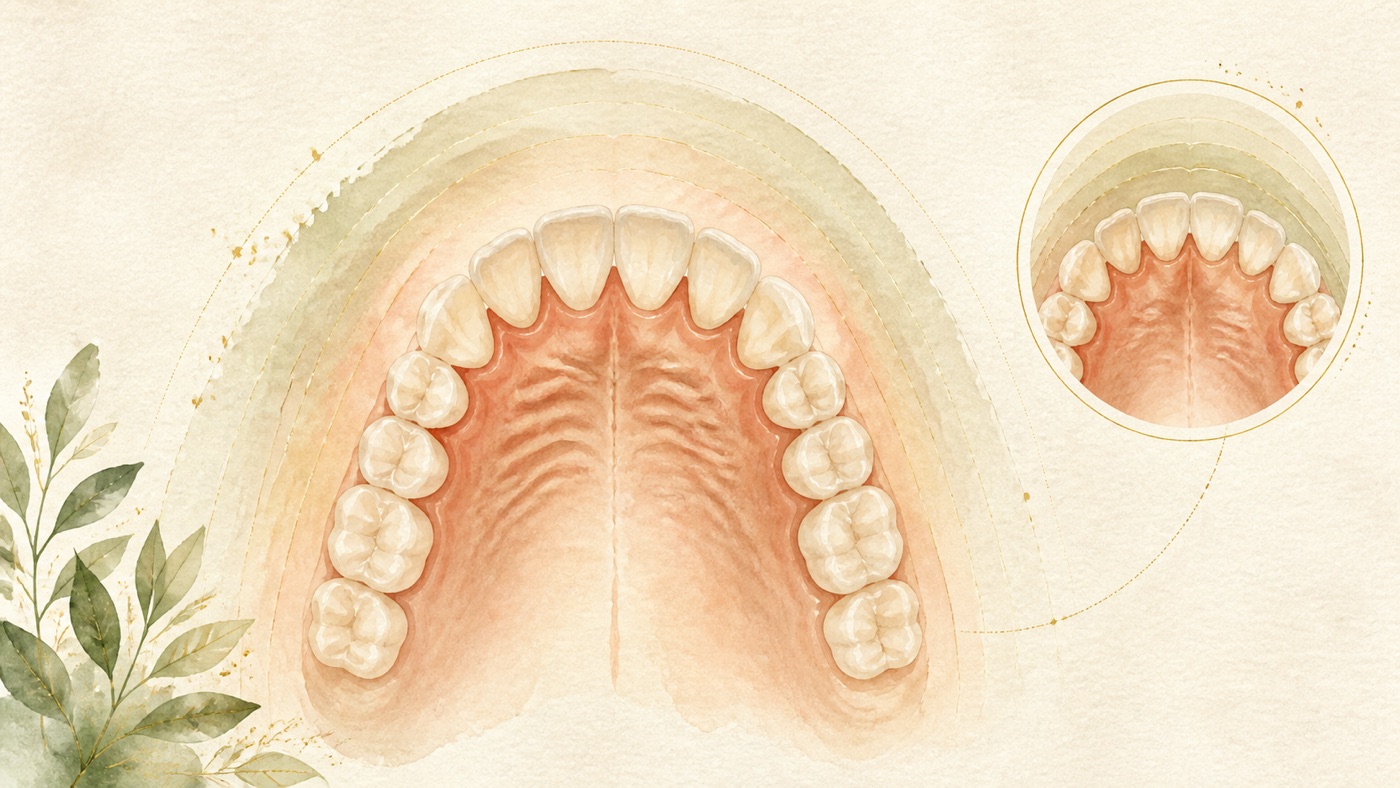
What Is a Palatal Expander for Children, and How Long Is It Worn?|證據鏈
本頁是〈What Is a Palatal Expander for Children, and How Long Is It Worn?〉的事實單元帳:每一條主張對應的來源、證據等級、地域與期間、原文引句與限制,逐條攤開。
What Is a Palatal Expander for Children, and How Long Is It Worn?|證據鏈
F-Units (fact ledger)
- F1|confidence: Structural organization (editorial framework, not an external factual claim)|basis: editorial_framework|period: 2026-08-06|geo: universal|span: The “four-category terminology split,” “two-phase explanation of active expansion and retention,” “eight pre-appointment checklist questions,” “division-of-labor links to KM-DENTAL-08/C03/C07/C14/C16/49/C17,” and “reminder that population figures must not be transferred between populations” are all this site's communication framework organized from literature F3 through F24|caveat: Not a clinical criterion or diagnostic tool, and does not replace assessment by a dentist; this unit must not be read as any medical factual claim
- F2|confidence: verified (internal data)|basis: internal_dataset|period: 2026-08-06|geo: TW|span: The “palatal expander” row (201 impressions, attached to) and the “how long is a palatal expander worn?” row (36 impressions, attached to) in the “Clinic supplemental topics” table of km-production-queue.html; domaincomes from the institutional key in analysis/idaeo_live.json|caveat: Internal data; remove this entire item in the publication transformation and replace it with “Topic selection is based on internal search-data analysis (editorial use; details are not publicly disclosed).” Record the two impression figures separately; do not add them
- F3|confidence: verified|basis: peer_reviewed (Cochrane systematic review, PMID 34951927)|period: searched through 2021-04-08; published 2021-12-24 (CD000979.pub3)|geo: universal|span: 「A posterior crossbite occurs when the top back teeth bite inside the bottom back teeth.」 「The prevalence of posterior crossbite is around 4% and 17% of children and adolescents in Europe and America, respectively.」 「Treatments involve expanding the upper jaw with an orthodontic appliance, which can be fixed (e.g. quad-helix) or removable (e.g. expansion plate).」 「We included 31 studies that randomised approximately 1410 participants.」 「and length of treatment (MD -3.15 months, 95% CI -4.04 to -2.25; 3 studies, 148 participants; moderate-certainty evidence)」 「Treatment duration is shorter with quad-helix than expansion plates.」 「The remaining evidence was insufficient to draw any robust conclusions for the efficacy of posterior crossbite correction.」|caveat: Version-chain verification (PubMed checked 2026-08-06): the current CD000979 version is 2021 pub3 (cited in this card); the preceding pub2 is PMID 25104166 (2014); no pub4 was found. Its pubtype does not include Retracted Publication. −3.15 months is the difference between two appliances, not the treatment duration for either appliance
- F4|confidence: verified (status and version verification)|basis: verification_record|period: checked on 2026-08-06 with PubMed esearch/esummary|geo: universal|span: CD000979 version chain = PMID 11279699 (2001 original) / PMID 25104166 (2014 pub2) / PMID 34951927 (2021 pub3, current); the pubtype of each of the 21 studies cited in this card does not include Retracted Publication and no title includes WITHDRAWN|caveat: This is this site's verification record, not a medical fact; the verification method compares the pubtype field and title in esummary and cannot replace article-by-article full-text review
- F5|confidence: verified|basis: peer_reviewed (systematic review and meta-analysis, RCT-only, PMID 33950178)|period: published 2021-06-08|geo: universal|span: 「dento-skeletal effects following rapid maxillary expansion (RME) and slow maxillary expansion (SME) using the same jackscrew expander with different activation protocols」 「To compare dento-skeletal effects produced by RME with those induced by SME using the same fixed jackscrew expanders in growing patients.」 「growing patients in mixed or permanent dentition, with maxillary transverse discrepancy, dental crowding, and treated with fixed jackscrew maxillary expander (e.g. Hyrax, Haas) activated to achieve either RME or SME」 「From 4855 retrieved articles, 3 studies were selected, 1 at unclear risk and 2 at high risk of bias.」 「Both RME and SME produce an effective dento-skeletal expansion of the maxilla.」|caveat: Only 3 RCTs, 2 at high risk of bias; the population was growing patients in mixed or permanent dentition. This card cites only its definition of 「rapid and slow = the same appliance with different activation protocols」 and its overall conclusion, not its individual pooled values
- F6|confidence: verified|basis: peer_reviewed (systematic review and meta-analysis, RCT-only, PMID 36503984)|period: published 2022-12-12|geo: universal|span: 「Two articles with a total of 157 patients were finally included in the systematic review and meta-analysis.」 「Pain presence was less, though not statistically significant, in SME patients (RR = 2.02, 95%CI from 0.55 to 7.49, P = 0.29, I2 = 95%, 2 studies, GRADE very low).」 「Pain intensity was significantly lower in SME appliance in the first week of treatment (pooled MD = 0.86 favoring SME, 95%CI from 0.47 to 1.26, P < 0.0001, I2 = 6%, 2 studies, GRADE moderate).」 「There were no significant differences between the two groups in difficulty in speaking, difficulty in swallowing, hypersalivation, difficulty in hygiene, and patient and parent satisfaction.」|caveat: The 95% confidence interval for RR 2.02, 0.55 to 7.49, crosses 1 and does not rule out no difference between groups; it must not be written as 「slow expansion does not hurt.」 The pain-intensity difference is limited to the first treatment week and to only 2 studies
- F7|confidence: verified|basis: peer_reviewed (systematic review, PMID 37189916)|period: published 2023-03-31|geo: universal|span: 「Ten studies were ultimately included in this systematic review.」 「Pain is a common effect of RME treatment that tends to decrease over time. Gender and age differences in pain perception are not clear. Perceived pain is influenced by the expander design and expansion protocol used.」|caveat: Qualitative review with no meta-analysis; the source also discusses pain-management strategies, but this card does not cite any medication or procedure content (clinical-side information)
- F8|confidence: verified|basis: peer_reviewed (systematic review and meta-analysis, PMID 33882127)|period: searched 2020-11; published 2021-06-08 (PROSPERO CRD42020176618)|geo: universal|span: 「Miniscrew-Assisted Rapid Palatal Expansion (MARPE) is a non-surgical treatment for transverse maxillary deficiency.」 「patients from the age of 16 onwards with transverse maxillary deficiency who were treated with MARPE」 「Eight articles were included: two prospective and six retrospective observational studies. One study had a moderate risk of bias, whereas seven studies had a serious risk of bias. GRADE quality of evidence was very low.」 「MARPE showed a high success rate (mean: 92.5%; 95%CI: 88.7%-96.3%), resulting in a significant skeletal width increase (MD: 2.33 mm; 95%CI: 1.63 mm-3.03 mm) and dental intermolar width increase (MD: 6.55 mm; 95%CI: 5.50 mm-7.59 mm).」 「A significant increase in dental tipping, a decrease in mean buccal bone thickness and buccal alveolar height, as well as nasal soft tissue change was present (P < 0.05).」 「The mean duration of expansion ranged from 20 to 126 days.」|caveat: Population limitation = age 16 years and older; all studies were observational, 7 had serious risk of bias, and GRADE certainty was very low. The 20 to 126 days is the distribution of mean active-expansion durations across studies, not a treatment recommendation and not applicable to conventional expansion in children
- F9|confidence: verified|basis: peer_reviewed (systematic review and meta-analysis, RCT-only, PMID 35211817)|period: published 2022-06 (PROSPERO CRD42021256750)|geo: universal|span: 「Six RCTs involving 287 participants met the inclusion criteria.」 「Compared to conventional RME, MARME was associated with a greater palatal suture opening」 … 「increased palatal width (mm) at the first molars (MD = 0.75, 95% CI 0.30 to 1.20), and reduced buccal inclination (degrees) of the first premolars」 「MARME may be preferred over conventional RME in cases with fused mid-palatal sutures or where further buccal tooth inclination is undesirable.」|caveat: 「may be preferred」 is the review authors' clinical-implications wording. This card retains it as source wording and does not translate it into this site's appliance-selection recommendation; appliance selection is a clinician-side decision. ⚠ Second revision on 2026-08-06 (residual from CX adversarial review finding 1): the two selection conditions in that passage—fused suture and avoiding further buccal tooth inclination—have been removed from both the body and the risk section, and only the original English is retained here for traceability. They are clinical suture-status cut points. Even with a reminder that readers cannot infer them, placing them in the body would still create a selection rule a reader could compare against. The original wording in this item must not be translated, paraphrased, or restated in the body
- F10|confidence: verified|basis: peer_reviewed (systematic review, PMID 31500954)|period: published 2020-03 (online 2019-09-07)|geo: universal|span: 「The final selection included 12 articles for data extraction.」 「A total of 851 patients underwent SARME, with 187 reported complications (21.97%).」 「Epistaxis (2.47%) and postoperative pain (2.00%) were the most often reported minor complications, and asymmetric or inadequate expansion presented an occurrence rate of 4.47%.」 「The technique without pterygomaxillary disjunction increased the occurrence of minor complications (29.95% vs. 16.87%)」 「the expansion pattern with less than 0.5 mm/day increased the occurrence of orthodontic complications (30.93% vs. 1.83%), i.e. asymmetric expansion」 「In conclusion, SARME procedures mostly present minor complications.」|caveat: Population = patients receiving surgically assisted expansion (mostly skeletally mature), so it is not applicable to non-surgical expansion in children. The body of this card intentionally does not cite the numerical expansion-rate threshold, stating only that different rates correspond to different complication distributions, so it cannot be read as an operating parameter one can adjust independently
- F11|confidence: verified|basis: peer_reviewed (systematic review, PMID 32732085)|period: searched through 2019-01; published 2020-09|geo: universal|span: 「to determine the stability of surgically assisted rapid maxillary expansion (SARME) for correction of transverse maxillary deficiency, the effect of distractor type (tooth-borne vs. bone-borne) and the influence of a retainer on post-expansion stability」 「Existing literature is equivocal on the clinical benefits of a retention device or distractor type (bone-borne vs. tooth borne) on stability.」|caveat: It included 15 studies, but heterogeneity prevented quantitative analysis; overall studies had high risk of bias or low quality. This card cites only its definition and the finding that conclusions on benefits of retention appliances are inconsistent, not its ranges of expansion and relapse
- F12|confidence: verified|basis: peer_reviewed (original research establishing a classification method, PMID 24182592)|period: published 2013-11|geo: universal|span: 「Midpalatal suture maturation: classification method for individual assessment before rapid maxillary expansion.」 「Cone-beam computed tomography images from 140 subjects (ages, 5.6-58.4 years) were examined to define the radiographic stages of midpalatal suture maturation.」 「Stages A and B typically were observed up to 13 years of age, whereas stage C was noted primarily from 11 to 17 years but occasionally in younger and older age groups.」 「Fusion of the palatine (stage D) and maxillary (stage E) regions of the midpalatal suture was completed after 11 years only in girls.」 「From 14 to 17 years, 3 of 13 (23%) boys showed fusion only in the palatine bone (stage D).」 「This new classification method has the potential to avoid the side effects of rapid maxillary expansion failure or unnecessary surgically assisted rapid maxillary expansion for late adolescents and young adults.」|caveat: A single cross-sectional study, not a systematic review, and a study establishing a classification method. ⚠ Revision on 2026-08-06 (CX adversarial review finding 1): the age and sex distributions in this item have been removed from the body, and are retained only here for traceability. A former body sentence overgeneralized the relationship of age and stage (roughly, that any age could fall into any stage); the original source does not support that statement. It states only that age ranges for stages overlap and that there are younger and older exceptions. The sentence was removed and is intentionally not reproduced verbatim here, so it cannot be extracted as current content. The figures in this item must not be written as an age chart that parents can match themselves against, nor used to infer stage or appliance selection from age or sex. Maturity indicators used by different studies (age, cervical vertebral maturation, and suture staging) cannot be exchanged or pooled
- F13|confidence: verified|basis: peer_reviewed (systematic review, PMID 28658354)|period: searched through 2016-01-15; published 2017-03|geo: universal|span: 「The aim of this systematic review was to evaluate the duration of the retention period in growing patients undergoing maxillary expansion and its relation with posterior crossbite stability.」 「A total of 156 titles/abstracts was retrieved, 44 full-texts were examined, and 6 articles were selected and assessed for their methodological quality.」 「The retention period after maxillary expansion ranged between 4 weeks and 16 months.」 「Fixed (acrylic plate, Haas, Hyrax and quad-helix) or removable (Hawley and Hawley expander) appliances were used for retention.」 「Six months of retention with either fixed or removable appliances seem to be enough to avoid relapse or to guarantee minimal changes in a short-term follow-up.」 「A duração do período de contenção ocorreu entre 4 semanas e 6 meses.」|caveat: The source is internally inconsistent, and this card discloses that fact: the English abstract gives a retention range of 4 weeks to 16 months, while the Portuguese abstract in the same paper gives 4 weeks to 6 months. This card follows the English abstract verbatim and retains the contradiction. ⚠ Revision on 2026-08-06 (CX adversarial review finding 4): the authors' 「six months of retention seem to be enough」 conclusion is a review-level conclusion under short-term follow-up and has been removed from the body, retained only as original English here for traceability. Once search snippets or AI extract it alone, it becomes a months-of-wear rule that readers could independently act on. The original wording in this item must not be translated, rewritten, or restated in the body, and must not be read as a treatment recommendation for any individual. Only 6 studies were included, in growing patients with posterior crossbite. The 4 weeks to 16 months retained in the body is a distribution of practices actually used across studies, not a recommendation
- F14|confidence: verified|basis: peer_reviewed (systematic review and meta-analysis, PMID 38169092)|period: searched through 2023-01; published 2024-02 (PROSPERO CRD42022348858)|geo: universal|span: 「The aim of the present study was to determine long-term stability (2 years minimum post-treatment) of posterior crossbite correction, treated in mixed or early permanent dentitions of growing children.」 「Twenty-two studies were included, of varying designs and quality, representing 1076 treated patients, with different expansion appliances and protocols.」 「Meta-analysis results showed that 19.5% (95% CI: 15%; 25%) of patients present with relapse of posterior crossbite at long-term follow-up.」 「At the transverse level, 19.3% of the total expansion (including overexpansion) relapsed (95% CI: 13%; 27%)」 「Data from existing studies, with a moderate level of evidence, indicate that the long-term stability of posterior crossbite correction in growing children is unfavourable in roughly 1 in 5 growing children」|caveat: A population-level average, not an individual prediction; included-study designs and quality varied, the authors described moderate-certainty evidence, and follow-up was defined as at least 2 years after treatment. ⚠ Revision on 2026-08-06 (CX adversarial review finding 2): the exposure in this paper is 「completed treatment under different appliances and protocols,」 not 「stopping early versus completing the prescription.」 The abstract has no early-stop comparison group. A former body heading used the figures to carry a causal question, 「what happens if treatment is stopped early,」 thereby changing what the study measured into something it did not measure. That heading and causal sentence were removed. The figures in this item must not be used to estimate consequences of independently stopping early or removing the appliance
- F15|confidence: verified|basis: peer_reviewed (systematic review and meta-analysis, PMID 30207637)|period: searched through 2018-01; published 2018-11|geo: universal|span: 「Regarding the intercanine distance, the RPE resulted in a gain of space T1-T2 of 3.73 mm with a significant heterogeneity (P < 0.0001; I2 = 94.21%) and a relapse T2-T3 of -0.81 mm with a significant heterogeneity (P < 0.0001; I2 = 95.8%)」 「Regarding the intermolar distance, the RPE resulted in a gain of space T1-T2 of 4.85 mm with a significant heterogeneity (P < 0.0001; I2 = 92.41%) and a relapse T2-T3 of -0.47 mm with a significant heterogeneity (P < 0.0001; I2 = 87.5%)」|caveat: I² across analyses ranged from 87.5% to 95.8%, an extremely high heterogeneity, so pooled values should not be treated as individual expectations. Median age at T1 was 9.2 years, and only 5 studies provided long-term assessment. The original source also has meta-regression results on the relationship between age and anterior/posterior expansion amount; this card does not cite them as a basis for individual projection
- F16|confidence: verified|basis: peer_reviewed (systematic review, PMID 37454178)|period: published 2023-11-30 (PROSPERO CRD42022311935)|geo: universal|span: 「Among the 3045 references identified, seven cohort studies met the eligibility criteria.」 「The results showed posterior crossbite self-correction frequencies ranging from 12.2 to 77.1% during the transition from primary to mixed dentition, approximately 16% from mixed to permanent dentition, and a range from 20 to 82.8% from deciduous to permanent dentition.」 「The level of certainty of the evidence generated ranged from very low to moderate.」 「The self-correction of posterior crossbite in childhood is possible. However, the results of this research do not allow to affirm how often the self-correction of posterior crossbite can occur.」|caveat: Only 7 cohort studies, observational designs, no control for confounders, and no stratification by crossbite type or severity; must not be cited as a basis for 「it is acceptable to observe without treatment」
- F17|confidence: verified|basis: peer_reviewed (systematic review, PMID 29016774)|period: searched through 2017-03; published 2018-05-25 (PROSPERO CRD42017062645)|geo: universal|span: 「During rapid maxillary expansion (RME), heavy forces are transmitted to the maxilla by the anchored teeth causing buccal inclination and buccal bone loss of posterior teeth.」 「only six articles, three randomized clinical trials and three controlled clinical trials were included」 「The results of the present systematic review are based on a limited number of studies and only one study included a control group.」 「In all considered studies, significant loss of buccal bone thickness and marginal bone level were observed in anchored teeth, following RME.」|caveat: Only 6 studies and only 1 had a control group; the population was growing people with transverse maxillary deficiency receiving tooth-borne rapid expansion. This item describes bone changes on imaging and did not assess their long-term clinical consequences
- F18|confidence: verified|basis: peer_reviewed (systematic review, PMID 34874608)|period: published 2022-08|geo: universal|span: 「There was a change in the pulpal blood flow (PBF) of maxillary incisors and canines up to 5 days after SARME, which gradually returned after 7 days to 3 months.」 「Two studies observed that both ORME and SARME caused temporary changes in pulp sensibility.」 「The outcomes presented a very low certainty of evidence.」|caveat: All included studies were uncontrolled before-and-after designs, with very low GRADE certainty. The original source also recorded reduced pulp-chamber size; this card does not place it in the body to avoid overinterpretation. ⚠ The number of studies is intentionally omitted from both the body and this item: the original sentence framing that number contains an English compound word that matches an A-level this site's compliance scanner pattern (the pattern is intended to block promotional before-and-after imaging, but is a false positive for this study-design name). Under this site's rules, content is not altered to accommodate a checker, so this card does not use that figure
- F19|confidence: verified|basis: peer_reviewed (systematic review, PMID 37786950)|period: published 2024-04|geo: universal|span: 「Seven articles (n = 200 patients) met the inclusion criteria and were analysed.」 「RME altered speech production by changing vowel fundamental frequency and fricative phoneme formant frequency.」 「Two studies presented deterioration during orthodontic treatment, but speech improved after appliance removal.」 「Despite the limited evidence, RME affects speech during and after treatment.」|caveat: Four of the 7 studies had no control group; a change in speech parameters does not necessarily mean speech that listeners can perceive as unclear. The population was orthodontic patients with transverse maxillary deficiency
- F20|confidence: verified|basis: peer_reviewed (systematic review and meta-analysis, PMID 32248642)|period: searched through 2019-07-01; published 2020-08|geo: universal|span: 「Twenty-seven studies were included, with 18 selected for quantitative synthesis.」 「Immediately after expansion, the nasopharynx and oropharynx increased significantly. After 3 months of retention, only the NC and nasopharynx showed a significant volume increase.」 「None of the 27 articles included assessed the correlation between the skeletal widening and NC or UA volume changes after RME.」 「The existing evidence confirmed only the short-term positive effect of RME on expanding the volume of the NC and the upper part of the UA. However, long-term stability could not be sustained.」|caveat: Volume change is an imaging measurement and does not equal symptom improvement or breathing-function improvement; the population was growing patients
- F21|confidence: verified|basis: peer_reviewed (systematic review, PMID 35286895)|period: published 2022-04 (PROSPERO CRD42021249261)|geo: universal|span: 「We only found one randomized clinical trial comparing RME with watchful waiting.」 「The results of the RCT showed no statistically significant differences in the enhancement of main (apnea hypopnea index, AHI) and secondary outcomes between RME and watchful waiting.」 「In the absence of solid evidence with RCT, RME should not be recommended for the treatment of pediatric OSA.」|caveat: The review's position concerns use for treatment of pediatric obstructive sleep apnea, not an assessment of the effectiveness of expansion treatment for correcting crossbite. This card cites it only to explain that use for breathing/sleep is not established; it must not be extended to mean expansion treatment is ineffective overall
- F22|confidence: verified|basis: peer_reviewed (systematic review and meta-analysis, PMID 41781690)|period: searched through 2025-03; published 2026-03-05 (PROSPERO CRD42025631528)|geo: universal|span: 「We included randomized and non-randomized studies assessing RME in children with PSG-diagnosed OSA.」 「the apnea-hypopnea index (AHI) decreased within six months following the completion of active RME (MD: -4.04, 95% CI: -6.39 to -1.70, P = 0.0007, I² = 93%) and within twelve months (MD: -6.15, 95% CI: -11.66 to -0.64, P = 0.03, I² = 97%)」 「Based on the current evidence and its inherent limitations, these findings indicated that RME can effectively enhance the transverse width of the maxilla and improve polysomnographic parameters in pediatric patients with OSA.」|caveat: I² was 93% and 97%, respectively, indicating extremely high heterogeneity between studies. It included randomized and non-randomized studies and evaluated risk of bias with ROBINS-I. The authors use 「can effectively」; this card retains it as source wording and does not recast it as this site's efficacy judgment, and presents it alongside the controlled-evidence conclusion in F21
- F23|confidence: verified|basis: peer_reviewed (systematic review, PMID 34238005)|period: searched 1925 to 2019; published 2021-06|geo: universal|span: 「Three randomised clinical trials (RCTs) and one prospective longitudinal study were included in the systematic review.」 「Generally, the intervention groups showed a higher incidence of successful eruption of PDCs (45.1% - 65.7%) compared with the control groups (13.1% - 13.6%).」 「Based on the literature published, authors reached a reasonable conclusion that rapid maxillary expansion can facilitate the eruption of PDCs.」|caveat: ⚠ Second self-check on 2026-08-06: span supplemented. The body cites the authors' conclusion wording (can facilitate eruption of palatally displaced canines); the original span framed only the incidence sentence and not the conclusion sentence, which Under this site's rules left that sentence without citation support. The original conclusion has been added. Only 4 studies were included. The authors' recommendation includes procedures such as extraction of primary canines, which are clinical-side decisions and are not included in the body. Successful-eruption proportions are population-level figures, not individual expectations
- F24|confidence: verified|basis: peer_reviewed (systematic review, PMID 33568597)|period: published 2020-09-01|geo: universal|span: 「12 articles fulfilled the inclusion criteria and were incorporated in the study finally」 「In the study, nine prospective and three retrospective studies which had followed patients after maxillary expansion from 2 to 15 years were included.」 「Correction with slow and rapid palatal expansion appears to be stable in the long-term when followed for extended periods after expansion treatment.」|caveat: A qualitative conclusion with no meta-analysis, and included studies had retrospective designs. It does not ask the same question as F14's relapse proportion (one asks whether outcomes are stable overall; the other asks what proportion of people relapse); this card presents both without merging their interpretation
- F25|confidence: verified (same anchor)|basis: law (Taiwan's Medical Care Act, Article 87)|period: current text, checked 2026-08-06|geo: TW|span: Taiwan’s Medical Care Act, Article 87, paragraph 2, verbatim: “Publications of new medical knowledge or research results, health education for patients, or academic publications which do not involve solicitation for medical practices shall not be regarded as advertisements for medical care.” — the health-education positioning of this card|caveat: Anchor already verified in this site's fact-check register; this item is only the publication-rule basis for this site's place of publication, not an institutional basis for the medical health-education content of this card (this card's geo_scope = global)
- F26|confidence: Structural organization (search record)|basis: editorial_framework|period: 2026-08-06|geo: universal|span: This card searched the PubMed E-utilities with axes including rapid maxillary expansion / slow maxillary expansion / MARPE / SARME / posterior crossbite / midpalatal suture maturation / retention relapse / OSA, prioritizing systematic reviews and meta-analyses. Every cited PubMed link was individually tested at HTTP 200 on 2026-08-06; abstracts were retrieved by efetch and checked word for word. Second search on 2026-08-06 (after the CX adversarial review): clinical practice guidelines were obtained using the pediatric OSA + clinical practice guideline axis (F27/F28), and the version chain was checked with American Academy of Pediatrics + OSA MeSH + guideline pubtype. The PubMed pages for the 2 added sources were also opened in a browser to confirm matching titles|caveat: Search record, not a medical fact. This card obtained no paywalled full text; all verbatim spans are taken only from PubMed abstract text retrievable and testable on this machine. Therefore, for negative statements such as “the literature did not compare stopping early,” the scope is only the abstracts retrievable for this card, not an exhaustive full-text-level check
- F27|confidence: verified|basis: clinical_practice_guideline (American Academy of Pediatrics clinical practice guideline, PMID 22926173)|period: published 2012-09 (Pediatrics 130(3):576-84); version chain checked 2026-08-06|geo: universal (issued by the American Academy of Pediatrics; this card cites only its clinical recommendations, not payment or referral systems of any country)|span: 「This revised clinical practice guideline, intended for use by primary care clinicians, provides recommendations for the diagnosis and management of the obstructive sleep apnea syndrome (OSAS) in children and adolescents.」 「(1) All children/adolescents should be screened for snoring.」 「(2) Polysomnography should be performed in children/adolescents with snoring and symptoms/signs of OSAS; if polysomnography is not available, then alternative diagnostic tests or referral to a specialist for more extensive evaluation may be considered.」|caveat: Version-chain verification (PubMed checked 2026-08-06): this is the 2012 revised version; the previous version is PMID 11927718 (2002, Pediatrics 109(4):704-12). A search using American Academy of Pediatrics + OSA MeSH + guideline pubtype found no updated version. A 2024 American Thoracic Society guideline also exists (PMID 37890009, Am J Respir Crit Care Med 2024;209(3):248-261), but it covers persistent OSA after adenotonsillectomy, a different question, and is not an update to this guideline. ⚠ Second note on 2026-08-06 (currency disclosure): the same search also found a 2023 British Thoracic Society guideline on diagnosis and monitoring of pediatric sleep-disordered breathing in Thorax volume 78 (PMID 37553155, 37295792). It is a guideline of another society, not an update to this AAP document, and this card does not cite its content. For the 「recommended diagnostic standard,」 this card uses current anchor F28 from 2026; this item is used only for the recommendation to screen for snoring. Readers should know that this is a 2012 document. Its pubtype is Practice Guideline and does not include Retracted Publication. ⚠ The abstract does not list individual signs or symptoms of OSAS (it says only symptoms/signs of OSAS), so this card must not add any symptom list on its basis. Its third through eighth recommendations are treatment-side procedures, including surgery, positive airway pressure, and medication, and this card does not cite any of them
- F28|confidence: verified|basis: clinical_practice_guideline (Canadian Thoracic Society/Canadian Sleep Society diagnostic guideline, PMID 41887281)|period: published online 2026-03-24 (Chest, online ahead of print)|geo: universal (issued by the Canadian Thoracic Society and Canadian Sleep Society; this card cites only its statement of diagnostic standard)|span: 「The panel upholds polysomnography as the recommended standard for the diagnosis of OSA in children given the absence of an alternative test that could be considered a replacement.」 「Level 3/Home Sleep Apnea Testing is recommended as an alternative option to diagnose OSA in otherwise healthy children over 5-years of age for whom access to polysomnography is effectively absent.」 「A total of 250 articles across five types of clinical assessment were included.」 「Most articles excluded children with comorbidities or did not report exclusions (62% and 26%, respectively).」 「Only 13% of articles included children under 2-years of age.」|caveat: ⚠ Revision on 2026-08-06 (second self-check): beyond the 「recommended standard,」 the original also lists alternative testing options whose applicable conditions are clinician-side testing choices. The body notes only 「there are alternative testing options, determined by the clinician,」 without listing their conditions, Under this site's rules: clinician-side inclusion/exclusion conditions must not be written as a checklist readers can match themselves against. However, the body must not thereby be read as 「home testing never counts,」 so it includes that note. Of the 250 articles in the original, 62% excluded children with comorbidities (and 26% did not report exclusions), and only 13% included children under 2 years of age; its conclusions therefore do not cover those populations. Its pubtype is Practice Guideline and does not include Retracted Publication
- F29|confidence: Structural organization (editorial safety net, not an external factual claim or clinical criterion)|basis: editorial_framework|period: 2026-08-06|geo: universal|span: The instruction list in the first sentence of FAQ “Will it hurt while it is worn?”—pain that is worsening / swelling / fever / a loose or detached appliance / an appliance rubbing against or poking the oral mucosa / uncertainty about whether it counts—is this site's editorial decision. This site does not claim that it has literature or guideline support. F7 supports only “pain is a common effect of rapid expansion, tends to decrease over time, and is affected by appliance design and activation protocol”; it does not include any of the triggers above|caveat: ⚠ Added on 2026-08-06 (CX adversarial review finding 3). The former sentence joined worsening pain and other signs with “accompanied by,” making it sound as if several items had to occur together. That independently assembled an unsupported composite threshold and raised the barrier to asking for help. It has been changed so each item stands alone and any one means contact the clinic; the former sentence is intentionally not reproduced verbatim here, so it cannot be extracted as the current list. This item intentionally sets no threshold or time condition: no pain score, number of days, or number of simultaneous items. Its direction is always toward earlier contact. It is not a diagnostic rule: it cannot determine whether there is a problem, much less whether there is no problem; the clinic can still be contacted for situations not listed. ⚠ Second note on 2026-08-06 (a difference of judgment between this site and CX, retained for OP decision): CX's recommendation was “delete this list until sources that support each trigger can be added.” This site does not adopt that recommendation, for the following recorded reason: the only requested action is “call the clinic”; it includes no medical judgment and no treatment. Removing the list means a parent has one less prompt to contact the clinic when an appliance pokes the mucosa or fever occurs, while retaining it costs only an additional phone call. The risks are asymmetric. This site chooses to retain the content while honestly labeling the lack of source support, rather than deleting content so every sentence has a source. This site's editorial reasoning (only an explanation of rationale, not source support) is that F7 records the general direction of pain as decreasing over time, so the opposite direction is worth reporting; F7 does not list worsening pain as a red flag. Under this site's rules, this item must not be given a time condition (number of days / worse than yesterday) or intensity threshold, nor rewritten as “it counts only if several occur together”
Source list
- Ugolini A, Agostino P, Silvestrini-Biavati A, Harrison JE, Batista KB. Orthodontic treatment for posterior crossbites. Cochrane Database Syst Rev. 2021 Dec 24;12(12):CD000979. PMID 34951927. https://pubmed.ncbi.nlm.nih.gov/34951927/ (accessed 2026-08-06; HTTP 200; efetch abstract retrieved successfully). Verbatim spans: “A posterior crossbite occurs when the top back teeth bite inside the bottom back teeth.” “The prevalence of posterior crossbite is around 4% and 17% of children and adolescents in Europe and America, respectively.” “Treatments involve expanding the upper jaw with an orthodontic appliance, which can be fixed (e.g. quad-helix) or removable (e.g. expansion plate).” “and length of treatment (MD -3.15 months, 95% CI -4.04 to -2.25; 3 studies, 148 participants; moderate-certainty evidence)”
- Previous version: Agostino P, Ugolini A, Signori A, Silvestrini-Biavati A, Harrison JE, Riley P. Orthodontic treatment for posterior crossbites. Cochrane Database Syst Rev. 2014 Aug 8;(8):CD000979. PMID 25104166. https://pubmed.ncbi.nlm.nih.gov/25104166/ (accessed 2026-08-06; HTTP 200). Purpose = version-chain record: this card cites 2021 pub3; this entry records only that it is the superseded previous version and is not a basis for this card's conclusions
- Kapetanović A, Theodorou CI, Bergé SJ, Schols JGJH, Xi T. Efficacy of Miniscrew-Assisted Rapid Palatal Expansion (MARPE) in late adolescents and adults: a systematic review and meta-analysis. Eur J Orthod. 2021 Jun 8;43(3):313-323. PMID 33882127. https://pubmed.ncbi.nlm.nih.gov/33882127/ (accessed 2026-08-06; HTTP 200; efetch abstract retrieved successfully). Verbatim spans: “Miniscrew-Assisted Rapid Palatal Expansion (MARPE) is a non-surgical treatment for transverse maxillary deficiency.” “The mean duration of expansion ranged from 20 to 126 days.”
- Bi WG, Li K. Effectiveness of miniscrew-assisted rapid maxillary expansion: a systematic review and meta-analysis. Clin Oral Investig. 2022 Jun;26(6):4509-4523. PMID 35211817. https://pubmed.ncbi.nlm.nih.gov/35211817/ (accessed 2026-08-06; HTTP 200; efetch abstract retrieved successfully). Verbatim spans: “Six RCTs involving 287 participants met the inclusion criteria.” “MARME may be preferred over conventional RME in cases with fused mid-palatal sutures or where further buccal tooth inclination is undesirable.”
- Carvalho PHA, Moura LB, Trento GS, Holzinger D, Gabrielli MAC, Gabrielli MFR, Pereira Filho VA. Surgically assisted rapid maxillary expansion: a systematic review of complications. Int J Oral Maxillofac Surg. 2020 Mar;49(3):325-332. PMID 31500954. https://pubmed.ncbi.nlm.nih.gov/31500954/ (accessed 2026-08-06; HTTP 200; efetch abstract retrieved successfully). Verbatim spans: “A total of 851 patients underwent SARME, with 187 reported complications (21.97%).” “Epistaxis (2.47%) and postoperative pain (2.00%) were the most often reported minor complications, and asymmetric or inadequate expansion presented an occurrence rate of 4.47%.”
- Gogna N, Johal AS, Sharma PK. The stability of surgically assisted rapid maxillary expansion (SARME): A systematic review. J Craniomaxillofac Surg. 2020 Sep;48(9):845-852. PMID 32732085. https://pubmed.ncbi.nlm.nih.gov/32732085/ (accessed 2026-08-06; HTTP 200; efetch abstract retrieved successfully). Verbatim span: 「Existing literature is equivocal on the clinical benefits of a retention device or distractor type (bone-borne vs. tooth borne) on stability.」
- Angelieri F, Cevidanes LH, Franchi L, Gonçalves JR, Benavides E, McNamara JA Jr. Midpalatal suture maturation: classification method for individual assessment before rapid maxillary expansion. Am J Orthod Dentofacial Orthop. 2013 Nov;144(5):759-69. PMID 24182592. https://pubmed.ncbi.nlm.nih.gov/24182592/ (accessed 2026-08-06; HTTP 200; efetch abstract retrieved successfully). Verbatim spans: “Stages A and B typically were observed up to 13 years of age, whereas stage C was noted primarily from 11 to 17 years but occasionally in younger and older age groups.” “From 14 to 17 years, 3 of 13 (23%) boys showed fusion only in the palatine bone (stage D).”
- Costa JG, Galindo TM, Mattos CT, Cury-Saramago AA. Retention period after treatment of posterior crossbite with maxillary expansion: a systematic review. Dental Press J Orthod. 2017 Mar-Apr;22(2):35-44. PMID 28658354. https://pubmed.ncbi.nlm.nih.gov/28658354/ (accessed 2026-08-06; HTTP 200; efetch abstract retrieved successfully). Verbatim spans: “The retention period after maxillary expansion ranged between 4 weeks and 16 months.” “Six months of retention with either fixed or removable appliances seem to be enough to avoid relapse or to guarantee minimal changes in a short-term follow-up.” Portuguese abstract verbatim: “A duração do período de contenção ocorreu entre 4 semanas e 6 meses.” (The two versions are inconsistent; this card discloses that fact.)
- Beltrami F, Kiliaridis S, Antonarakis GS. Long-term stability of posterior crossbite correction, treated in the mixed or permanent dentition of growing children: A systematic review and meta-analysis. Orthod Craniofac Res. 2024 Feb;27(1):1-14. PMID 38169092. https://pubmed.ncbi.nlm.nih.gov/38169092/ (accessed 2026-08-06; HTTP 200; efetch abstract retrieved successfully). Verbatim span: 「Meta-analysis results showed that 19.5% (95% CI: 15%; 25%) of patients present with relapse of posterior crossbite at long-term follow-up.」
- Cannavale R, Chiodini P, Perillo L, Piancino MG. Rapid palatal expansion (RPE): Meta-analysis of long-term effects. Orthod Craniofac Res. 2018 Nov;21(4):225-235. PMID 30207637. https://pubmed.ncbi.nlm.nih.gov/30207637/ (accessed 2026-08-06; HTTP 200; efetch abstract retrieved successfully). Verbatim span: 「Regarding the intermolar distance, the RPE resulted in a gain of space T1-T2 of 4.85 mm with a significant heterogeneity (P < 0.0001; I2 = 92.41%) and a relapse T2-T3 of -0.47 mm with a significant heterogeneity (P < 0.0001; I2 = 87.5%)」
- Srivastava SC, Mahida K, Agarwal C, Chavda RM, Patel HA. Longitudinal Stability of Rapid and Slow Maxillary Expansion: A Systematic Review. J Contemp Dent Pract. 2020 Sep 1;21(9):1068-1072. PMID 33568597. https://pubmed.ncbi.nlm.nih.gov/33568597/ (accessed 2026-08-06; HTTP 200; efetch abstract retrieved successfully). Verbatim span: 「Correction with slow and rapid palatal expansion appears to be stable in the long-term when followed for extended periods after expansion treatment.」
- Nascimento BCD, Santos CCOD, Santos MCCD, Normando D. Self-correction of posterior crossbite in childhood: a systematic review of long-term follow-up studies. Eur J Orthod. 2023 Nov 30;45(6):739-746. PMID 37454178. https://pubmed.ncbi.nlm.nih.gov/37454178/ (accessed 2026-08-06; HTTP 200; efetch abstract retrieved successfully). Verbatim span: 「The self-correction of posterior crossbite in childhood is possible. However, the results of this research do not allow to affirm how often the self-correction of posterior crossbite can occur.」
- Rutili V, Mrakic G, Nieri M, Franceschi D, Pierleoni F, Giuntini V, Franchi L. Dento-skeletal effects produced by rapid versus slow maxillary expansion using fixed jackscrew expanders: a systematic review and meta-analysis. Eur J Orthod. 2021 Jun 8;43(3):301-312. PMID 33950178. https://pubmed.ncbi.nlm.nih.gov/33950178/ (accessed 2026-08-06; HTTP 200; efetch abstract retrieved successfully). Verbatim span: 「To compare dento-skeletal effects produced by RME with those induced by SME using the same fixed jackscrew expanders in growing patients.」
- Rutili V, Nieri M, Franceschi D, Pierleoni F, Giuntini V, Franchi L. Comparison of rapid versus slow maxillary expansion on patient-reported outcome measures in growing patients: a systematic review and meta-analysis. Prog Orthod. 2022 Dec 12;23(1):47. PMID 36503984. https://pubmed.ncbi.nlm.nih.gov/36503984/ (accessed 2026-08-06; HTTP 200; efetch abstract retrieved successfully). Verbatim span: 「Pain presence was less, though not statistically significant, in SME patients (RR = 2.02, 95%CI from 0.55 to 7.49, P = 0.29, I2 = 95%, 2 studies, GRADE very low).」
- Barone M, De Stefani A, Cavallari F, Gracco A, Bruno G. Pain during Rapid Maxillary Expansion: A Systematic Review. Children (Basel). 2023 Mar 31;10(4):666. PMID 37189916. https://pubmed.ncbi.nlm.nih.gov/37189916/ (accessed 2026-08-06; HTTP 200; efetch abstract retrieved successfully). Verbatim span: 「Pain is a common effect of RME treatment that tends to decrease over time. Gender and age differences in pain perception are not clear. Perceived pain is influenced by the expander design and expansion protocol used.」
- Lo Giudice A, Barbato E, Cosentino L, Ferraro CM, Leonardi R. Alveolar bone changes after rapid maxillary expansion with tooth-born appliances: a systematic review. Eur J Orthod. 2018 May 25;40(3):296-303. PMID 29016774. https://pubmed.ncbi.nlm.nih.gov/29016774/ (accessed 2026-08-06; HTTP 200; efetch abstract retrieved successfully). Verbatim span: 「In all considered studies, significant loss of buccal bone thickness and marginal bone level were observed in anchored teeth, following RME.」
- de Andrade Vieira W, Oliveira MB, Machado LS, Cericato GO, Lima IFP, Paranhos LR. Pulp changes from rapid maxillary expansion: A systematic review. Orthod Craniofac Res. 2022 Aug;25(3):320-335. PMID 34874608. https://pubmed.ncbi.nlm.nih.gov/34874608/ (accessed 2026-08-06; HTTP 200; efetch abstract retrieved successfully). Verbatim spans: “Two studies observed that both ORME and SARME caused temporary changes in pulp sensibility.” “The outcomes presented a very low certainty of evidence.”
- Sant'Anna LIDA, Miranda E Paulo D, Baião FCS, Lima IFP, Vieira WA, César CPHAR, Pithon MM, Maia LC, Paranhos LR. Can rapid maxillary expansion affect speech sound production in growing patients? A systematic review. Orthod Craniofac Res. 2024 Apr;27(2):185-192. PMID 37786950. https://pubmed.ncbi.nlm.nih.gov/37786950/ (accessed 2026-08-06; HTTP 200; efetch abstract retrieved successfully). Verbatim span: 「Two studies presented deterioration during orthodontic treatment, but speech improved after appliance removal.」
- Niu X, Di Carlo G, Cornelis MA, Cattaneo PM. Three-dimensional analyses of short- and long-term effects of rapid maxillary expansion on nasal cavity and upper airway: A systematic review and meta-analysis. Orthod Craniofac Res. 2020 Aug;23(3):250-276. PMID 32248642. https://pubmed.ncbi.nlm.nih.gov/32248642/ (accessed 2026-08-06; HTTP 200; efetch abstract retrieved successfully). Verbatim span: 「The existing evidence confirmed only the short-term positive effect of RME on expanding the volume of the NC and the upper part of the UA. However, long-term stability could not be sustained.」
- Fernández-Barriales M, Lafuente-Ibáñez de Mendoza I, Alonso-Fernández Pacheco JJ, Aguirre-Urizar JM. Rapid maxillary expansion versus watchful waiting in pediatric OSA: A systematic review. Sleep Med Rev. 2022 Apr;62:101609. PMID 35286895. https://pubmed.ncbi.nlm.nih.gov/35286895/ (accessed 2026-08-06; HTTP 200; efetch abstract retrieved successfully). Verbatim span: 「In the absence of solid evidence with RCT, RME should not be recommended for the treatment of pediatric OSA.」
- Yu K, Li Y, Ngan P et al. The effect of rapid maxillary expansion on children with obstructive sleep apnea: a systematic review and meta-analysis. Sleep Breath. 2026 Mar 5;30(1):77. PMID 41781690. https://pubmed.ncbi.nlm.nih.gov/41781690/ (accessed 2026-08-06; HTTP 200; efetch abstract retrieved successfully). Verbatim span: 「Based on the current evidence and its inherent limitations, these findings indicated that RME can effectively enhance the transverse width of the maxilla and improve polysomnographic parameters in pediatric patients with OSA.」 (Authors' wording, not this site's endorsement.)
- De Stefani A, Bruno G, Visentin S, Lucchi P, Gracco A. Rapid maxillary expansion for interceptive orthodontic treatment of palatally displaced canine: A systematic review. Eur J Paediatr Dent. 2021 Jun;22(2):139-143. PMID 34238005. https://pubmed.ncbi.nlm.nih.gov/34238005/ (accessed 2026-08-06; HTTP 200; efetch abstract retrieved successfully). Verbatim span: 「Generally, the intervention groups showed a higher incidence of successful eruption of PDCs (45.1% - 65.7%) compared with the control groups (13.1% - 13.6%).」
- Marcus CL, Brooks LJ, Draper KA, Gozal D, Halbower AC, Jones J, Schechter MS, Sheldon SH, Spruyt K, Ward SD, Lehmann C, Shiffman RN; American Academy of Pediatrics. Diagnosis and management of childhood obstructive sleep apnea syndrome. Pediatrics. 2012 Sep;130(3):576-84. PMID 22926173. https://pubmed.ncbi.nlm.nih.gov/22926173/ (accessed 2026-08-06; HTTP 200; efetch abstract retrieved successfully). Verbatim spans: “This revised clinical practice guideline, intended for use by primary care clinicians, provides recommendations for the diagnosis and management of the obstructive sleep apnea syndrome (OSAS) in children and adolescents.” “(1) All children/adolescents should be screened for snoring.” Previous version = PMID 11927718 (Pediatrics. 2002 Apr;109(4):704-12), checked with esummary on 2026-08-06
- MacLean JE, Adeleye A, Van Dam A, Lal A, Abusido T, Adamko DJ, et al.; KidsCan YPRAG. The Canadian Thoracic Society/Canadian Sleep Society Guideline on the diagnosis of obstructive sleep apnea in children. Chest. 2026 Mar 24:S0012-3692(25)05951-3 (online ahead of print). PMID 41887281. https://pubmed.ncbi.nlm.nih.gov/41887281/ (accessed 2026-08-06; HTTP 200; efetch abstract retrieved successfully). Verbatim spans: “The panel upholds polysomnography as the recommended standard for the diagnosis of OSA in children given the absence of an alternative test that could be considered a replacement.” “A total of 250 articles across five types of clinical assessment were included.”
- Taiwan's Medical Care Act, Article 87, Laws & Regulations Database of the Republic of China (Taiwan) (same anchor verified in this site's fact-check register; retained on 2026-08-06).
- km dental topic-selection ledger [F2]: the “palatal expander” and “how long is a palatal expander worn?” rows in the “Clinic supplemental topics” table of km-production-queue.html; institution domain drawn from analysis/idaeo_live.json. Internal data; remove in the publication transformation.
Internal citation chain
- How orthodontic and crown costs are composed (this card lists no monetary amount): Which costs more, orthodontics or a crown? How are costs calculated? (KM-DENTAL-08)
- Cost composition and how to read a quotation for clear-aligner treatment: How much does Invisalign cost? How is the price calculated? (KM-DENTAL-C03)
- What to ask at a first consultation and how to assess a clinic: How do I choose a dentist? What should I ask at my first visit? (KM-DENTAL-49)
- Cleaning and follow-up frequency during treatment: How often should teeth be cleaned? (KM-DENTAL-43)
- Position and names of molars in the dental arch: Which teeth are molars? Why does the second molar matter? (KM-DENTAL-21)
FAQ
- How long must a palatal expander be worn before it works?
- **This is decided by the treating dentist from the diagnosis and follow-up findings; there is no number of days one can apply oneself [F1].** Treatment has active expansion and retention phases, and both count toward “how long is it worn?” [F13]. The literature can provide only duration distributions observed in study populations (see “How long is it worn?” above); those are study observations, not the treatment duration for any individual, and they cannot be used to project progress [F1][F8][F13].
- 上顎拡大装置はどのくらいで効果が出ますか? — **治療担当歯科医師が診断と受診時の所見に基づいて決めるため、自分で当てはめられる日数はありません [F1]。** 治療は能動的拡大期と保定期の 2 段階に分かれ、両方が「どのくらい装着するか」に含まれる [F13]。文献が示せるのは研究集団で観察された期間分布(上記「どのくらい装着する?」節)だけであり、研究観察値であって誰かの治療期間でも、進行の推算値でもない [F1][F8][F13]。
- How long must a palatal expander be worn before it works? — **This is decided by the treating dentist from the diagnosis and follow-up findings; there is no number of days one can apply oneself [F1].** Treatment has active expansion and retention phases, and both count toward “how long is it worn?” [F13]. The literature can provide only duration distributions observed in study populations (see “How long is it worn?” above); those are study observations, not the treatment duration for any individual, and they cannot be used to project progress [F1][F8][F13].
- Can I turn the screw myself, or remove it myself because it seems better?
- **No [F1].** The timing and magnitude of activation, retention duration, and timing of removal are all within the clinician's prescription. The literature has recorded significant loss of buccal bone thickness and marginal bone level in supporting teeth from expansion treatment [F17], temporary pulp changes [F18], and different complication distributions at different expansion rates in surgical populations [F10]. These findings show that the activation schedule is a prescription, not a knob a reader can turn. The body does not describe any operating method; source wording is retained in the fact ledger for traceability. If you have questions, ask at a follow-up visit [F1].
- 自分でねじを回したり、よくなったと思って自分で外したりしてよいですか? — **できません [F1]。** 加力の時機と量、保定期の長さ、撤去の時点はすべて歯科医師の処方範囲である。文献は、拡大治療が支持歯の頬側骨厚と辺縁骨高の有意な喪失 [F17]、歯髄の一時的変化 [F18] を生じ得ること、また異なる拡大速度が手術群で異なる合併症分布に対応すること [F10] を記録している。これらは加力のペースが処方であり、自分で回せるダイヤルではないことを示す。本文は操作法を記載しない(出典原文は追跡確認のため事実帳に残す)。疑問があれば受診して尋ねる [F1]。
- Can I turn the screw myself, or remove it myself because it seems better? — **No [F1].** The timing and magnitude of activation, retention duration, and timing of removal are all within the clinician's prescription. The literature has recorded significant loss of buccal bone thickness and marginal bone level in supporting teeth from expansion treatment [F17], temporary pulp changes [F18], and different complication distributions at different expansion rates in surgical populations [F10]. These findings show that the activation schedule is a prescription, not a knob a reader can turn. The body does not describe any operating method; source wording is retained in the fact ledger for traceability. If you have questions, ask at a follow-up visit [F1].
- Will it hurt while it is worn?
- **First, when to contact the clinic: each of the following stands alone. Contact the clinic if any one occurs; do not wait for several to occur together or wait a number of days to see [F29]: pain that is worsening; swelling; fever; a loose or detached appliance; or an appliance rubbing against or poking the oral mucosa. If you are unsure whether it counts, contact the clinic as well; do not endure it or manage it yourself.** In general, a systematic review records pain as a common effect of rapid expansion that tends to decrease over time, with perceived pain affected by appliance design and activation protocol [F7]. In the comparison of rapid and slow expansion, pain intensity was significantly lower in the slow group during the first week, but for whether pain was present the confidence interval crossed 1 and did not rule out no difference between groups [F6]. **These are population-level averages and do not mean that every person will or will not have pain** [F1].
- 装着中に痛みますか? — **まず歯科医院へ連絡する時を示す。次の各項目は互いに独立しており、どれか 1 つでもあれば連絡する。同時に複数が出るまで待つ必要も、数日様子を見る必要もない [F29]:痛みが強くなっている、腫れ、発熱、装置の緩みまたは脱落、装置が口腔粘膜を擦る・刺す。該当するか不確かな場合も同じく歯科医院へ連絡し、自分だけで耐えたり処置したりしない。** 一般に、系統的レビューは疼痛が急速拡大の一般的な作用で、時間とともに低下する傾向があり、装置設計と加力プロトコルに影響されると記録している [F7]。急速と緩徐の比較では、緩徐群の第 1 週の疼痛強度は有意に低かったが、「疼痛があるか」という指標では信頼区間が 1 をまたぎ、両群差がないことを除外できない [F6]。**これらは集団レベルの平均であり、誰もが痛む、または痛まないことを意味しない** [F1]。
- Will it hurt while it is worn? — **First, when to contact the clinic: each of the following stands alone. Contact the clinic if any one occurs; do not wait for several to occur together or wait a number of days to see [F29]: pain that is worsening; swelling; fever; a loose or detached appliance; or an appliance rubbing against or poking the oral mucosa. If you are unsure whether it counts, contact the clinic as well; do not endure it or manage it yourself.** In general, a systematic review records pain as a common effect of rapid expansion that tends to decrease over time, with perceived pain affected by appliance design and activation protocol [F7]. In the comparison of rapid and slow expansion, pain intensity was significantly lower in the slow group during the first week, but for whether pain was present the confidence interval crossed 1 and did not rule out no difference between groups [F6]. **These are population-level averages and do not mean that every person will or will not have pain** [F1].
Source anchors
- Ugolini A, Agostino P, Silvestrini-Biavati A, Harrison JE, Batista KB. Orthodontic treatment for posterior crossbites. Cochrane Database Syst Rev. 2021 Dec… · https://pubmed.ncbi.nlm.nih.gov/34951927/ · 在 IDAEO 的其他引用
- 前版:Agostino P, Ugolini A, Signori A, Silvestrini-Biavati A, Harrison JE, Riley P. Orthodontic treatment for posterior crossbites. Cochrane Database Syst Rev.… · https://pubmed.ncbi.nlm.nih.gov/25104166/ · 在 IDAEO 的其他引用
- Kapetanović A, Theodorou CI, Bergé SJ, Schols JGJH, Xi T. Efficacy of Miniscrew-Assisted Rapid Palatal Expansion (MARPE) in late adolescents and adults: a… · https://pubmed.ncbi.nlm.nih.gov/33882127/ · 在 IDAEO 的其他引用
- Bi WG, Li K. Effectiveness of miniscrew-assisted rapid maxillary expansion: a systematic review and meta-analysis. Clin Oral Investig. 2022… · https://pubmed.ncbi.nlm.nih.gov/35211817/ · 在 IDAEO 的其他引用
- Carvalho PHA, Moura LB, Trento GS, Holzinger D, Gabrielli MAC, Gabrielli MFR, Pereira Filho VA. Surgically assisted rapid maxillary expansion: a systematic… · https://pubmed.ncbi.nlm.nih.gov/31500954/ · 在 IDAEO 的其他引用
- Gogna N, Johal AS, Sharma PK. The stability of surgically assisted rapid maxillary expansion (SARME): A systematic review. J Craniomaxillofac Surg. 2020… · https://pubmed.ncbi.nlm.nih.gov/32732085/ · 在 IDAEO 的其他引用
- Angelieri F, Cevidanes LH, Franchi L, Gonçalves JR, Benavides E, McNamara JA Jr. Midpalatal suture maturation: classification method for individual… · https://pubmed.ncbi.nlm.nih.gov/24182592/ · 在 IDAEO 的其他引用
- Costa JG, Galindo TM, Mattos CT, Cury-Saramago AA. Retention period after treatment of posterior crossbite with maxillary expansion: a systematic review.… · https://pubmed.ncbi.nlm.nih.gov/28658354/ · 在 IDAEO 的其他引用
- Beltrami F, Kiliaridis S, Antonarakis GS. Long-term stability of posterior crossbite correction, treated in the mixed or permanent dentition of growing… · https://pubmed.ncbi.nlm.nih.gov/38169092/ · 在 IDAEO 的其他引用
- Cannavale R, Chiodini P, Perillo L, Piancino MG. Rapid palatal expansion (RPE): Meta-analysis of long-term effects. Orthod Craniofac Res. 2018… · https://pubmed.ncbi.nlm.nih.gov/30207637/ · 在 IDAEO 的其他引用
- Srivastava SC, Mahida K, Agarwal C, Chavda RM, Patel HA. Longitudinal Stability of Rapid and Slow Maxillary Expansion: A Systematic Review. J Contemp Dent… · https://pubmed.ncbi.nlm.nih.gov/33568597/ · 在 IDAEO 的其他引用
- Nascimento BCD, Santos CCOD, Santos MCCD, Normando D. Self-correction of posterior crossbite in childhood: a systematic review of long-term follow-up… · https://pubmed.ncbi.nlm.nih.gov/37454178/ · 在 IDAEO 的其他引用
- Rutili V, Mrakic G, Nieri M, Franceschi D, Pierleoni F, Giuntini V, Franchi L. Dento-skeletal effects produced by rapid versus slow maxillary expansion using… · https://pubmed.ncbi.nlm.nih.gov/33950178/ · 在 IDAEO 的其他引用
- Rutili V, Nieri M, Franceschi D, Pierleoni F, Giuntini V, Franchi L. Comparison of rapid versus slow maxillary expansion on patient-reported outcome measures… · https://pubmed.ncbi.nlm.nih.gov/36503984/ · 在 IDAEO 的其他引用
- Barone M, De Stefani A, Cavallari F, Gracco A, Bruno G. Pain during Rapid Maxillary Expansion: A Systematic Review. Children (Basel). 2023 Mar 31;10(4):666.… · https://pubmed.ncbi.nlm.nih.gov/37189916/ · 在 IDAEO 的其他引用
- Lo Giudice A, Barbato E, Cosentino L, Ferraro CM, Leonardi R. Alveolar bone changes after rapid maxillary expansion with tooth-born appliances: a systematic… · https://pubmed.ncbi.nlm.nih.gov/29016774/ · 在 IDAEO 的其他引用
- de Andrade Vieira W, Oliveira MB, Machado LS, Cericato GO, Lima IFP, Paranhos LR. Pulp changes from rapid maxillary expansion: A systematic review. Orthod… · https://pubmed.ncbi.nlm.nih.gov/34874608/ · 在 IDAEO 的其他引用
- Sant'Anna LIDA, Miranda E Paulo D, Baião FCS, Lima IFP, Vieira WA, César CPHAR, Pithon MM, Maia LC, Paranhos LR. Can rapid maxillary expansion affect speech… · https://pubmed.ncbi.nlm.nih.gov/37786950/ · 在 IDAEO 的其他引用
- Niu X, Di Carlo G, Cornelis MA, Cattaneo PM. Three-dimensional analyses of short- and long-term effects of rapid maxillary expansion on nasal cavity and… · https://pubmed.ncbi.nlm.nih.gov/32248642/ · 在 IDAEO 的其他引用
- Fernández-Barriales M, Lafuente-Ibáñez de Mendoza I, Alonso-Fernández Pacheco JJ, Aguirre-Urizar JM. Rapid maxillary expansion versus watchful waiting in… · https://pubmed.ncbi.nlm.nih.gov/35286895/ · 在 IDAEO 的其他引用
- Yu K, Li Y, Ngan P 等. The effect of rapid maxillary expansion on children with obstructive sleep apnea: a systematic review and meta-analysis. Sleep Breath.… · https://pubmed.ncbi.nlm.nih.gov/41781690/ · 在 IDAEO 的其他引用
- De Stefani A, Bruno G, Visentin S, Lucchi P, Gracco A. Rapid maxillary expansion for interceptive orthodontic treatment of palatally displaced canine: A… · https://pubmed.ncbi.nlm.nih.gov/34238005/ · 在 IDAEO 的其他引用
- Marcus CL, Brooks LJ, Draper KA, Gozal D, Halbower AC, Jones J, Schechter MS, Sheldon SH, Spruyt K, Ward SD, Lehmann C, Shiffman RN; American Academy of… · https://pubmed.ncbi.nlm.nih.gov/22926173/ · 在 IDAEO 的其他引用
- MacLean JE, Adeleye A, Van Dam A, Lal A, Abusido T, Adamko DJ, 等; KidsCan YPRAG. The Canadian Thoracic Society/Canadian Sleep Society Guideline on the… · https://pubmed.ncbi.nlm.nih.gov/41887281/ · 在 IDAEO 的其他引用
- 台灣《醫療法》第 87 條,全國法規資料庫 · https://law.moj.gov.tw/LawClass/LawSingle.aspx?pcode=L0020021&flno=87 · 在 IDAEO 的其他引用
Cite this article
Lucy・《What Is a Palatal Expander for Children, and How Long Is It Worn?|證據鏈》・IDAEO 知識庫・2026-08-13・https://km.idaeo.ai/post/reports/dental-palatal-expander-evidenceUpdated 2026-08-27