

🏛 Part of the "reports" topic shelf →
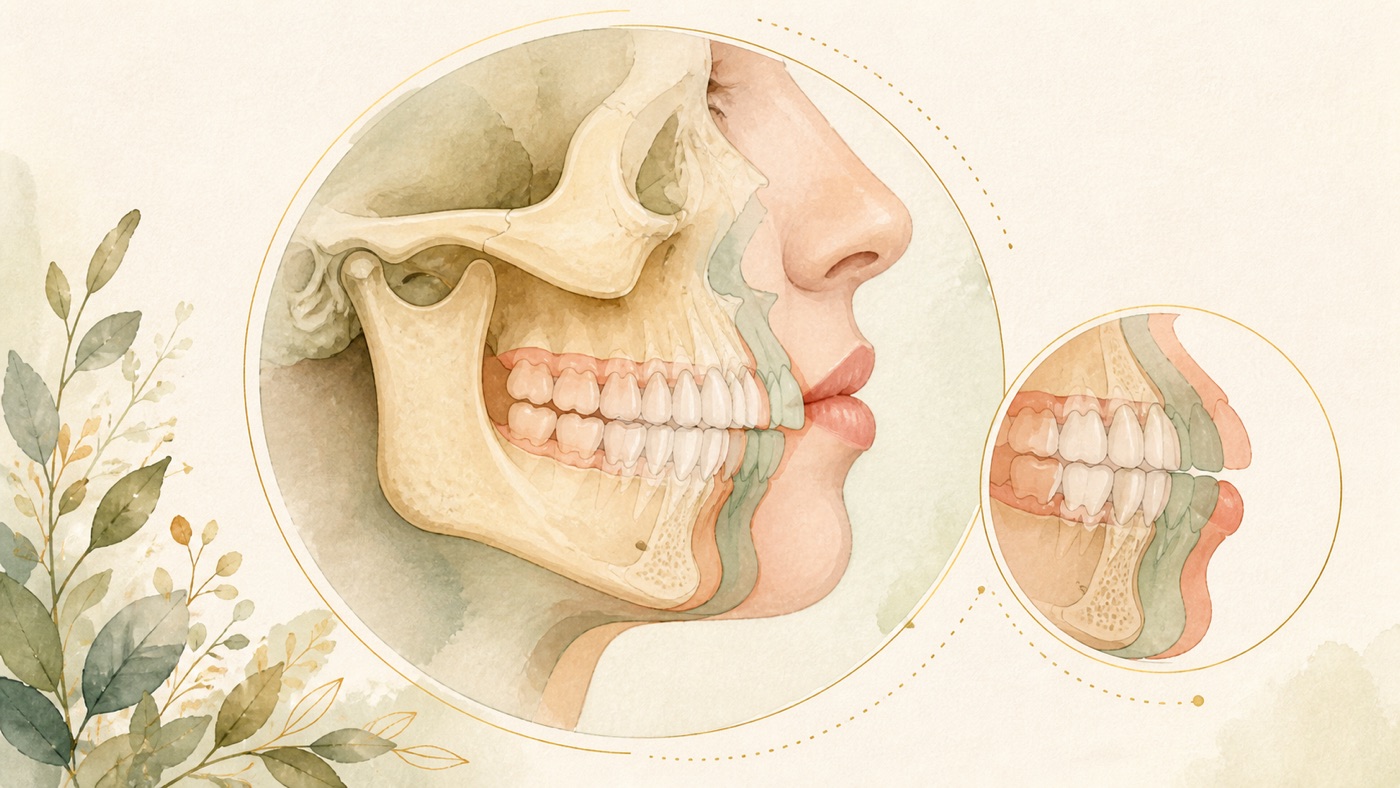
Can “buck teeth” be corrected? First find out whether the protrusion is in the teeth or the jaw|證據鏈
本頁是〈Can “buck teeth” be corrected? First find out whether the protrusion is in the teeth or the jaw〉的事實單元帳:每一條主張對應的來源、證據等級、地域與期間、原文引句與限制,逐條攤開。
Can “buck teeth” be corrected? First find out whether the protrusion is in the teeth or the jaw|證據鏈
F-Units (fact-unit ledger)
- F1|Topic-selection basis: a full GSC reconciliation of 14 clinic sites found 305 total impressions for the query 「暴牙矯正」 on(75 rows; 0 clicks). On 2026-08-06, awk was rerun against the source TSV; the figures matched the clinic-supplemental-topic table on the queue page. The placement field contains one clinic, Jingsi Dental.|Source #23|confidence=high|basis=internal_dataset|period=GSC retention window (from 2025-03-22)|geo: TW|caveat: impressions are property-level counts, not deduplicated traffic; internal data, not a medical claim, and not for the published visible layer.
- F2 [structural editorial organization]|The routing framework that splits “buck teeth” into excessive overjet / dentoalveolar protrusion / skeletal Class II; the canonical boundaries with the cost, clear-aligner-limits, underbite, and dental-trauma emergency cards; and the division-of-work decision that this card discusses management categories only and does not use appliance comparison in the main text to advise a choice (risk-section source quotations comparing appliances are excepted because they only state evidence conditions) are this site’s editorial structure, not any association’s or paper’s formal classification system. This card uses “overjet” for the horizontal distance by which upper anterior teeth protrude ahead of lower anterior teeth; that too is editorial terminology. Sources measure overjet in millimetres (F9, F13), but none cited here gives a verbatim definition sentence, so it must not be presented as a literature fact.|confidence=n/a|basis=editorial|geo: universal|caveat: do not label this “pending verification” (which would create false verification work); this framework is not a diagnostic classification, which a dentist must determine clinically.
- F3 [structural editorial organization]|The reading frameworks and conservative wording that “an odds ratio is a group indicator, not individual risk,” “classification cannot be self-determined,” “this site gives no direction on extraction,” “no appearance result is promised,” and “if an abnormality occurs while using direct-to-consumer appliances, stop self-adjustment and seek care” are editorial decisions, not literature-derived thresholds or recommendations.|confidence=n/a|basis=editorial|geo: universal|caveat: as above; do not label pending verification. This section is not a diagnosis or treatment recommendation.
- F4|Cochrane-review background: prominent upper front teeth are common, affecting about one quarter of 12-year-old children in the UK; the condition develops as permanent teeth erupt; these teeth are more likely to be injured and their appearance can cause significant distress.|Source #2|confidence=moderate|basis=peer_reviewed (Cochrane systematic review, CD003452 pub4)|period=2018 (searched to 2017-09-27; on 2026-08-06 this card searched PubMed for “CD003452,” finding 2007 pub2, 2013 pub3, and 2018 pub4; pub4 is the current version and its pubtype did not include Retracted Publication)|geo: universal (the prevalence figure is UK-only)|caveat: one quarter is a UK population figure and must not be extrapolated to other countries; “appearance can cause significant distress” describes the review’s background on care-seeking motivation and must not be cited as an efficacy claim that appearance will improve.
- F5|Cephalometric study: 48 ethnically diverse patients with bimaxillary protrusion were all treated by extraction of four premolars and anterior retraction; before treatment they showed increased incisor proclination and protrusion, a vertical facial pattern, increased lip procumbency, reduced nasolabial angle, and thin, elongated anterior alveoli in the upper and lower jaws.|Source #7|confidence=low|basis=peer_reviewed (retrospective cephalometric study)|period=2005 (on 2026-08-06 this card also found related systematic reviews from 2019 and 2024 on effects of en-masse retraction and skeletal-anchorage comparison; they do not replace this paper’s morphology description)|geo: universal|caveat: sample of 48, one source population, all already received extraction treatment; this card cites only its morphology description, not its treatment-effect appraisal (the original used strong wording, which this card neither translates nor adopts).
- F6|Systematic-review population: patients with skeletal Class II malocclusion, a retrognathic mandible, and completed growth; it compared dental, skeletal, and aesthetic outcomes of camouflage orthodontics and surgery-plus-orthodontics, including cephalometric measures such as maxilla-to-cranial-base, interjaw-difference, and mandible-to-cranial-base angles.|Source #9|confidence=moderate|basis=peer_reviewed (systematic review and meta-analysis)|period=2018 (on 2026-08-06, no newer review on the same question was found; the author group has a 2022 corresponding review on Class III, which is not this topic)|geo: universal|caveat: this only states the included population and outcomes to support the clinical distinction of skeletal Class II and completed growth; it must not be read as a treatment recommendation.
- F7|Systematic review of the validity of two-dimensional lateral cephalometry in orthodontics: electronic searches in three databases found 784, 1,034, and 264 records; 17 met inclusion criteria. The authors concluded that despite 968 peer-reviewed publications, scientific evidence for the usefulness of this technique in orthodontics remained lacking and contradictory.|Source #15|confidence=moderate (for the “insufficient evidence” conclusion)|basis=peer_reviewed (systematic review)|period=2013 (on 2026-08-06, this card found no newer systematic review on the same question)|geo: universal|caveat: insufficient validity evidence does not mean imaging should not be taken or is useless; the review calls for more rigorous research. This card uses it only to support that classification is a clinical synthesis, not automatic from one image; it must not be rewritten as advice for or against an examination.
- F8|Systematic-review/meta-analysis design: title and protocol preregistered with the Joanna Briggs Institute and PROSPERO (CRD42017060907); used that institute’s association (aetiology) review method; a three-step search covered four databases and grey literature; only high-methodological-quality, low-risk-of-bias studies were included; 41 studies were included from 3718 records.|Source #1|confidence=high (for design)|basis=peer_reviewed (systematic review and meta-analysis)|period=2019|geo: universal|caveat: this states design only; included studies were mainly observational, so association does not equal causation.
- F9|Results of that review: increased overjet was significantly associated with higher odds of trauma at all dentition stages and ages; age 0–6 with overjet greater than or equal to 3 mm had odds ratio 3.37 (95% confidence interval 1.36 to 8.38, P = 0.009); mixed and permanent dentition with overjet greater than 5 mm had odds ratio 2.43 (95% confidence interval 1.34 to 4.42, P = 0.004); 12-year-olds with overjet greater than 5 mm had odds ratio 1.81 (95% confidence interval 1.44 to 2.27, P < 0.0001).|Source #1|confidence=moderate|basis=peer_reviewed|period=2019 (on 2026-08-06, searched “overjet + dental trauma + systematic[sb] + 2020:2026[dp]”; no newer meta-analysis replacing this one was found. The newer 2020 overview F11 and 2022 Brazil review F12 point in the same direction but have different scope)|geo: universal|caveat: odds ratios are population-level association measures, not individual-risk probabilities and not causation; none of the three confidence intervals includes 1, but their widths differ greatly (the 0–6 group’s upper bound is nearly six times its lower bound), indicating imprecision for that stratum.
- F10|Conclusion of the same paper: results confirm the association between increased overjet and traumatic dental injury; primary-dentition children with overjet greater than or equal to 3 mm may be considered at trauma risk, and the early-permanent-dentition trauma threshold is overjet greater than or equal to 5 mm.|Source #1|confidence=moderate|basis=peer_reviewed|period=2019|geo: universal|caveat: the results use “greater than 5 mm” for permanent dentition, while the conclusion uses “greater than or equal to 5 mm”; endpoint wording is inconsistent. This card reports both as written rather than choosing one; cases at the boundary need whole-case assessment by a dentist.
- F11|Overview of systematic reviews: included 19 systematic reviews (four critically low, 11 low, four moderate methodological quality), pooling 249 original cross-sectional and other studies. Male sex, child age, greater overjet, inadequate lip coverage, anterior open bite, permanent-dentition caries, overweight, prior trauma, tongue piercing, alcohol use, and sports participation were associated with a greater chance of traumatic dental injury; the authors also said most included systematic reviews were low quality and might not provide an accurate, comprehensive summary.|Source #5|confidence=moderate|basis=peer_reviewed (overview of systematic reviews; AMSTAR 2 assessment)|period=2020|geo: universal|caveat: this is an association list, not a risk ranking or a self-scoring form; the authors’ reservation about review quality must accompany the conclusion.
- F12|Systematic review/meta-analysis: healthy Brazilian children and adolescents age 0–19; 55 papers from 2493 initial records (67% low risk of bias). Inadequate lip coverage was associated with 1.86 to 2.36 times the likelihood of traumatic dental injury; increased overjet with 1.94 to 3.11 times; primary dentition plus anterior open bite with 1.76 times (95% confidence interval 1.20 to 2.59). GRADE certainty ranged from very low to moderate.|Source #4|confidence=moderate|basis=peer_reviewed|period=2022|geo: universal|caveat: population limited to Brazil; the multiples are pooled estimates in that population, not individual risk. The original presents ranges such as 1.86 to 2.36 across strata; this card preserves them without averaging.
- F13|Narrative literature review: considered ten possible consequences of severe malocclusion. Except for poorer oral-health-related quality of life in adults with severe malocclusion than normal occlusion, and greater traumatic-dental-injury risk with overjet greater than 5 mm in permanent dentition and 3 mm in primary dentition, evidence for remaining conclusions was low to moderate quality and at high risk of bias.|Source #6|confidence=low-moderate|basis=peer_reviewed (narrative literature review, not meta-analysis)|period=2022|geo: universal|caveat: a narrative review, with evidence level below the F8–F12 meta-analyses; this card uses it only as independent recording of the trauma thresholds and the limitation that evidence for other consequences is weaker, not for individual topic conclusions.
- F14|Cochrane design and early-versus-late comparison: 27 randomized controlled trials, 1251 participants; three trials compared functional-appliance early treatment with late treatment. After both groups completed treatment, final overjet did not differ (mean difference 0.21, 95% confidence interval −0.10 to 0.51, P = 0.18; 343 participants; low-certainty evidence); interjaw-difference angle also did not differ (mean difference −0.02, 95% confidence interval −0.47 to 0.43; 347 participants; moderate-certainty evidence).|Source #2|confidence=high (for design)|basis=peer_reviewed (Cochrane systematic review)|period=2018 (current version; see F4 version-chain check)|geo: universal|caveat: the final-overjet confidence interval crosses 0 and does not exclude no difference; it must not be written as either side being superior. This applies only to children and adolescents.
- F15|Same review: early functional-appliance treatment had lower incidence of incisal trauma than late treatment (odds ratio 0.56, 95% confidence interval 0.33 to 0.95; 332 participants; moderate-certainty evidence); the late-treatment group reported new incisal trauma in 30% (51/171), versus 19% (31/161) in the early-treatment group.|Source #2|confidence=moderate|basis=peer_reviewed|period=2018|geo: universal|caveat: population was children starting treatment at age 7–11, not adults; 51/171 and 31/161 are the original reported absolute counts, with no conversion by this card. This is a group-incidence difference, not a prediction of injury for an individual.
- F16|Same review: two trials compared early and late headgear treatment. Early two-phase headgear reduced incisal-trauma incidence (odds ratio 0.45, 95% confidence interval 0.25 to 0.80; 237 participants; low-certainty evidence); new incisal trauma was 24/117 versus 44/120 in the late-treatment group.|Source #2|confidence=low|basis=peer_reviewed|period=2018|geo: universal|caveat: low-certainty evidence, only two trials; this card cites the direction, not an appliance-selection recommendation.
- F17|Same review: seven trials compared adolescent functional-appliance treatment with no treatment. Final overjet decreased: fixed functional appliances mean difference −5.46 mm (95% confidence interval −6.63 to −4.28; two trials, 61 participants), removable functional appliances mean difference −4.62 (95% confidence interval −5.33 to −3.92; three trials, 122 participants), both low-certainty evidence.|Source #2|confidence=low|basis=peer_reviewed|period=2018|geo: universal|caveat: population-average between-group differences, not an expected reduction for an individual; the control was no treatment, not another treatment; evidence quality is low.
- F18|Same authors’ conclusion: low-to-moderate-certainty evidence suggests early orthodontic treatment for children with prominent upper front teeth is more effective than one adolescent course in reducing incisal-trauma incidence; compared with late treatment, no other advantage of early treatment was found. Low-certainty evidence suggests functional appliances in adolescence reduce upper-front-tooth prominence compared with no treatment.|Source #2|confidence=moderate|basis=peer_reviewed|period=2018|geo: universal|caveat: “more effective” is limited to the outcome of incisal-trauma incidence; do not broaden it to overall efficacy or superiority. Treatment timing is a clinical decision.
- F19|Systematic review/meta-analysis: searched January 1995 to April 2025; 18 studies included, nine with sufficient overjet data for meta-analysis (six for interjaw-difference angle, four for peer-assessment score). Meta-analysis found no statistically significant long-term difference between early treatment and controls in overjet, interjaw-difference angle, or peer-assessment score; heterogeneity was low to moderate and overall GRADE certainty moderate. Authors concluded that early orthodontic treatment gives short-term occlusal and skeletal-parameter improvements, but evidence does not support consistent long-term benefit over delayed intervention; decisions should be individualized and reserved for specific indications such as functional crossbite, increased traumatic-dental-injury risk, or psychosocial concerns.|Source #3|confidence=moderate|basis=peer_reviewed|period=2025|geo: universal|caveat: included designs included cohort studies, not all randomized trials; “no statistically significant long-term difference” does not mean early treatment is useless. The same paper records short-term improvement and lists trauma risk as a reserved indication; both points must be stated together.
- F20|Systematic review/meta-analysis: searched to March 2018 in 24 databases; included eight non-randomized studies (12 papers) of Class II patients under 16 treated with functional appliances versus untreated controls. Functional appliances improved interjaw relationship at almost all time points (Wits appraisal at end of growth, mean difference −3.52 mm, 95% confidence interval −5.11 to −1.93, P < 0.0001); greatest mandibular-length increase was in the age-18-and-over group (Co-Gn mean difference 3.20 mm, 95% confidence interval 1.32 to 5.08, P = 0.0009), but mandibular-projection improvement was negligible or not significant. Most outcomes were very-low-quality evidence. The authors concluded functional appliances “may” be effective long term for skeletal Class II, but evidence quality was very low and clinical significance limited.|Source #10|confidence=low|basis=peer_reviewed|period=2019|geo: universal|caveat: all studies non-randomized, very-low-quality evidence; the authors said “may be effective,” which must not be rewritten as directional conclusion or efficacy claim. Increased mandibular length and improved mandibular projection are separate in the original; the latter is stated to be negligible or not significant.
- F21|Systematic review/meta-analysis: searched to July 2013; included ten papers of non-extraction, non-surgical Twin-block treatment with untreated controls. Studies consistently reported lower-incisor proclination, upper-incisor retroclination, distal upper-molar and/or mesial lower-molar movement, increased mandibular length and/or forward mandibular movement; no clinically significant maxillary-growth restraint; facial impact of increased mandibular-body length offset by increased facial height; insufficient evidence of a clear lip-position change; individually limited clinical significance but combined clinical importance; no long-term data.|Source #11|confidence=low|basis=peer_reviewed|period=2015|geo: universal|caveat: no long-term data; insufficient evidence on lip position is a direct basis for this card declining to describe appearance change. It must not be rewritten as any directional appearance statement.
- F22|Systematic review/meta-analysis: patients older than 14 years who had maxillary or bimaxillary premolar extraction followed by en-masse retraction of upper anterior teeth; searched ten databases from January 1990 to April 2018; eight studies (six randomized controlled trials, two controlled clinical trials), five in quantitative synthesis. En-masse retraction decreased maxilla-to-cranial-base and interjaw-difference angles, with no significant difference among retraction methods. Authors rated overall evidence “weak to moderate.”|Source #8|confidence=low|basis=peer_reviewed|period=2019|geo: universal|caveat: this card cites only mechanism, no significant between-method difference, and the evidence rating. It never cites comparisons of accelerated methods, skeletal anchorage, or treatment time (clinical choices). “Improve facial profile” is the authors’ original wording, retained only as a marked quotation and not translated into this site’s judgment; it must not be extracted as an efficacy claim about appearance.
- F23|Systematic review/meta-analysis: nine databases searched to December 2016; controlled clinical studies of premolar-extraction or non-extraction treatment included. Extraction was associated with increased lower-lip retraction (24 studies; 1,456 patients; mean difference 1.96 mm), upper-lip retraction (21 studies; 1,149 patients; mean difference 1.26 mm), nasolabial angle (21 studies; 1,089 patients; mean difference 4.21 degrees), soft-tissue profile convexity (six studies; 408 patients; mean difference 1.24 degrees), and profile pleasantness (three studies; 249 patients; standardized mean difference 0.41). Evidence quality was very low for every result; authors concluded that, though extraction appears to affect profile, heterogeneity prevents consistent prediction of profile response.|Source #12|confidence=low|basis=peer_reviewed|period=2018 (on 2026-08-06 this card found another same-topic 2021 meta-analysis, F25, with fewer samples and included studies; the conclusions are recorded separately, not merged)|geo: universal|caveat: population mean differences, not an individual’s expected change; very-low-quality evidence. “No consistent prediction” is the direct basis for this card giving no direction about extraction and appearance; it must not be rewritten as a directional conclusion.
- F24|Systematic review: cephalometric soft-tissue changes after premolar extraction in Class II division 1 patients. Most articles described pretreatment malocclusion severity inconsistently. Statistically significant changes included increased nasolabial angle (2.4 to 5.40 degrees for two-premolar protocols; 1 to 6.84 degrees for four-premolar protocols) and upper/lower lip retrusion, with less lower-lip retrusion in two-maxillary-premolar protocols.|Source #13|confidence=low|basis=peer_reviewed (systematic review without meta-analysis)|period=2016|geo: universal|caveat: no meta-analysis; high study heterogeneity, with authors reporting inconsistent severity description. Angle ranges are ranges across studies, not pooled estimates, and must not be read as predictable individual changes.
- F25|Systematic review/meta-analysis: searched PubMed and SCOPUS to November 2020. Pooled data from four controlled trials showed no significant extraction-versus-nonextraction difference in maxilla-to-cranial-base angle, mandible-to-cranial-base angle, mandibular-plane angle, lower-incisor inclination, overjet, or overbite; interjaw-difference angle was significantly higher with extraction (mean difference 0.78, 95% confidence interval 0.25 to 1.31, P = 0.004). Authors called non-extraction a safe and effective alternative and advocated individualized treatment, with more randomized controlled trials needed.|Source #14|confidence=low|basis=peer_reviewed|period=2021|geo: universal|caveat: “safe and effective alternative” is the paper authors’ wording, retained as original wording and not this site’s safety or superiority judgment; only four controlled trials and only two databases searched. The abstract presents an internally contradictory confidence interval for lower-incisor inclination (lower bound exceeds upper); this card therefore does not cite that numerical result.
- F26|Results of F6 review: nine papers entered qualitative synthesis and seven meta-analysis. Treatments did not differ statistically significantly in maxilla-to-cranial-base angle, lower-lip-to-aesthetic-plane linear measure, skeletal-profile convexity, or soft-tissue profile excluding the nose. Surgery-plus-orthodontics was more effective for interjaw-difference angle, mandible-to-cranial-base angle, mandibular-plane angle, and soft-tissue profile including the nose. Overjet/overbite effects differed with initial-severity values. Authors requested caution because studies were few and all non-randomized clinical trials.|Source #9|confidence=low|basis=peer_reviewed|period=2018|geo: universal|caveat: all non-randomized and few studies; “more effective” is limited to listed measurements and must not be read as a result promise for an individual or a procedure recommendation.
- F27|Systematic review/meta-analysis: searched PubMed and Embase from 1998 to February 2025; 47 studies, 5,406 patients. “Persistent neurosensory disturbance” means any disturbance reported or assessed at 12 months after surgery. Pooled one-year incidence after sagittal split osteotomy was 21% (95% confidence interval 13% to 32%). Older age (significant in five of nine studies), greater mandibular advancement (two of two), and intra-operative nerve exposure/manipulation (two of three) were significantly associated with higher risk. Sex, skeletal class, fixation method, third-molar presence, and concomitant genioplasty were not significantly associated.|Source #16|confidence=moderate|basis=peer_reviewed|period=2026 (current version found in this card’s 2026-08-06 search; an earlier 2015 incidence systematic review had smaller sample and methodological breadth)|geo: universal|caveat: pooled incidence is a population-level estimate, not individual risk; included designs include retrospective cohorts and neurosensory-assessment methods were not standardized across studies (as authors report).
- F28|Systematic review/meta-analysis: 57 studies and 9101 patients (mean age 16.4 years, 33.5% male). Among orthodontic patients, pooled white-spot-lesion prevalence was 55.06% (95% confidence interval 47.7% to 63.6%; 42 studies), incidence 34.2% (95% confidence interval 27.6% to 40.6%; 44 studies), and surface-level prevalence 26.9%. Untreated pooled prevalence was 29.1% (95% confidence interval 17.2% to 41.1%; 21 studies). Conventional fixed appliances had 4.7 times the odds compared with other appliances (95% confidence interval 1 to 19.2, P = 0.05) and seven times compared with no treatment (95% confidence interval 2.6 to 18.5, P = 0.001); prevalence increased with longer treatment and varied by ethnicity and detection method. Authors said one third of untreated cases already had lesions, so complete documentation at treatment start is essential.|Source #18|confidence=moderate|basis=peer_reviewed|period=2025|geo: universal|caveat: the odds-ratio confidence interval versus other appliances has lower bound 1 and P = 0.05, a boundary value, so this card’s main text cites only comparison with no treatment. Prevalence varies by detection method, limiting cross-study comparability.
- F29|Systematic review/meta-analysis: orthodontically induced inflammatory root resorption is described as a common adverse effect. Cone-beam-computed-tomography-based analysis included five studies and 334 participants, with sufficient data for upper incisors; aligner–fixed-appliance difference was not statistically significant (P > 0.05), and neither group had a clinically relevant degree (less than 1 mm); moderate-to-high risk of bias was present. Authors said that in non-high-risk populations, aligners should not be preferentially selected only for fear of root resorption.|Source #19|confidence=low|basis=peer_reviewed|period=2025|geo: universal|caveat: population had complete permanent dentition and excluded prior root resorption, trauma, and root-canal treatment; findings cannot be extrapolated to high-risk cases. “Not statistically significant” does not mean the groups are the same; this card does not cite it as appliance-selection advice.
- F30|Cochrane systematic review: searched to 2022-04-27; 47 studies and 4377 participants comparing removable/fixed retainers, different fixed retainers or bonding materials, and different removable retainers. Twenty-eight studies were high risk of bias. With 12-month follow-up as focus, evidence was low or very low certainty. Authors could not draw a firm conclusion that any retention method is superior, noted most studies followed less than one year, and called for high-quality studies measuring stability for at least two years.|Source #17|confidence=high (for conclusion that evidence is insufficient to compare)|basis=peer_reviewed (Cochrane systematic review, CD002283 pub5, updated from 2016 pub4)|period=2023 (on 2026-08-06 this card verified it as current version; pubtype did not include Retracted Publication)|geo: universal|caveat: the review excluded aligner studies; “cannot compare superiority” does not mean “retention is unnecessary.” Its background explicitly says teeth tend to relapse without retention; do not merge these two claims.
- F31|Cross-sectional evaluation: assessed treatment-information quality on 21 direct-to-consumer orthodontic-provider websites. 38.1% mentioned pretreatment dental-health requirements, 23.8% indefinite post-treatment retention; 95.2% were poor or very poor on DISCERN, especially for information bias and treatment risks; readability assessment found content difficult to read. Authors concluded that consent based only on website information is likely invalid.|Source #21|confidence=moderate|basis=peer_reviewed (website-content evaluation)|period=2021|geo: universal|caveat: the object assessed was website content, not treatment outcomes; “consent likely invalid” is the study’s assessment of information disclosure, from which this card draws no legal opinion.
- F32|User survey: 24-item online questionnaire recruited on social media and related forums from March to August 2019; 470 responses analysed. Typical respondent was a White millennial woman purchasing because of crowding; over half consulted a dentist before purchase and that dentist usually recommended in-office treatment. 87.5% were satisfied; 6.6% needed dental care because of adverse-effect severity.|Source #20|confidence=low|basis=peer_reviewed (self-selected cross-sectional survey)|period=2020|geo: universal|caveat: self-selected social-media sample, not probability sampling; neither percentage is general-population satisfaction or complication incidence. This card does not cite its policy suggestions about industry coexistence.
- F33|Cross-sectional survey: a one-year Spanish online questionnaire analysed 101 valid responses. Most respondents said expectations were not met and they would not recommend this service; cost was first and convenience second as motivations; many users had complications leading to dental consultations. Overall satisfaction did not differ significantly between providers, but discomfort, accessible face-to-face care, and need for additional consultation did.|Source #22|confidence=low|basis=peer_reviewed (single-country cross-sectional survey)|period=2025|geo: universal|caveat: 101-person, single-country, self-report sample; “many users” is the original non-quantified wording, and this card does not convert it into a proportion.
- F34|Article 81 of Taiwan’s Medical Care Act: when medical institutions diagnose and treat patients, they must inform the patient or the patient’s legal representative, spouse, relatives, or related person of the condition, treatment policy, procedures, medication, prognosis, and possible adverse reactions.|Source #24|confidence=high|basis=law|period=current provision (on 2026-08-06, ego-browser loaded the National Laws and Regulations Database page titled “Medical Care Act §81 – National Laws and Regulations Database”; wording was retrieved and checked verbatim, and the anchor was also verified in this site's fact-check register)|geo: TW|caveat: summary of legal text, not legal advice; this card uses it only to return treatment-plan and risk explanation to the consultation room. [On the official page the label appears in Chinese only: 「醫療法§81-全國法規資料庫」]
- F35|Article 87 of Taiwan’s Medical Care Act: advertising content that implies or alludes to medical business is deemed medical advertising; publication of medical knowledge or research reports, patient health education, and academic publications that do not solicit medical business are not deemed medical advertising.|Source #24|confidence=high|basis=law|period=current provision (on 2026-08-06, ego-browser loaded the page titled “Medical Care Act §87 – National Laws and Regulations Database”; both provisions were retrieved verbatim, and the anchor was also verified in this site's fact-check register)|geo: TW|caveat: basis for this card’s positioning; when published in another country, the health-education/advertising boundary depends on applicable local law. [On the official page the label appears in Chinese only: 「醫療法§87-全國法規資料庫」]
Official English legal text: Taiwan Medical Care Act.
Sources
- Arraj GP, Rossi-Fedele G, Doğramacı EJ. The association of overjet size and traumatic dental injuries-A systematic review and meta-analysis. Dent Traumatol. 2019 Oct;35(4-5):217-232. PMID 31062510. https://pubmed.ncbi.nlm.nih.gov/31062510/(取用 2026-08-06,efetch 摘要取回成功)。逐字 span:「The title and protocol were registered and published a priori with the Joanna Briggs Institute (JBI) and PROSPERO (CRD42017060907)」「Only high methodological quality studies with low risk of bias were included」「The study identified 3718 articles, 41 were included. An increased overjet was significantly associated with higher odds of developing trauma in all dentition stages and age groups. Children 0-6 years with an overjet ≥3mm have an odds of 3.37 (95%CI, 1.36-8.38, P = 0.009) for trauma. Children in the mixed and secondary dentition with an overjet >5mm have an odds of 2.43 (95%CI, 1.34-4.42, P = 0.004). Twelve-year-old children with an overjet >5mm have an odds of 1.81 (95%CI, 1.44-2.27, P < 0.0001)」「A child in the primary dentition could be considered as having an overjet at risk for trauma when it is ≥3mm. In the early secondary dentition, the threshold for trauma is an overjet ≥5mm」
- Batista KB, Thiruvenkatachari B, Harrison JE, O'Brien KD. Orthodontic treatment for prominent upper front teeth (Class II malocclusion) in children and adolescents. Cochrane Database Syst Rev. 2018 Mar 13;3(3):CD003452. PMID 29534303. https://pubmed.ncbi.nlm.nih.gov/29534303/(取用 2026-08-06,efetch 摘要取回成功;版本鏈以「CD003452」檢索確認 pub4 為現行最新版)。逐字 span:「Prominent upper front teeth are a common problem affecting about a quarter of 12-year-old children in the UK. The condition develops when permanent teeth erupt. These teeth are more likely to be injured and their appearance can cause significant distress」「We included 27 RCTs based on data from 1251 participants」「when both groups had completed treatment, there was no difference between groups in final overjet (MD 0.21, 95% CI -0.10 to 0.51, P = 0.18; 343 participants) (low-quality evidence) or ANB (MD -0.02, 95% CI -0.47 to 0.43; 347 participants) (moderate-quality evidence)」「Early treatment with functional appliances reduced the incidence of incisal trauma compared to late treatment (OR 0.56, 95% CI 0.33 to 0.95; 332 participants) (moderate-quality evidence). The difference in the incidence of incisal trauma was clinically important with 30% (51/171) of participants reporting new trauma in the late treatment group compared to only 19% (31/161) of participants who had received early treatment」「Early (two-phase) treatment with headgear reduced the incidence of incisal trauma (OR 0.45, 95% CI 0.25 to 0.80; 237 participants) (low-quality evidence), with almost half the incidence of new incisal trauma (24/117) compared to the late treatment group (44/120)」「There was a reduction in final overjet with both fixed functional appliances (MD -5.46 mm, 95% CI -6.63 to -4.28; 2 trials, 61 participants) and removable functional appliances (MD -4.62, 95% CI -5.33 to -3.92; 3 trials, 122 participants) (low-quality evidence)」「Evidence of low to moderate quality suggests that providing early orthodontic treatment for children with prominent upper front teeth is more effective for reducing the incidence of incisal trauma than providing one course of orthodontic treatment in adolescence. There appear to be no other advantages of providing early treatment when compared to late treatment. Low-quality evidence suggests that, compared to no treatment, late treatment in adolescence with functional appliances, is effective for reducing the prominence of upper front teeth」
- Almugla YM, Shekhar MG. Does Early Orthodontic Treatment in Mixed Dentition Improve Long-Term Outcomes? A Systematic Review and Meta-Analysis. Medicina (Kaunas). 2025 Oct 16;61(10):1854. PMID 41155841. https://pubmed.ncbi.nlm.nih.gov/41155841/(取用 2026-08-06,efetch 摘要取回成功)。逐字 span:「A total of 18 studies were included in the systematic review, of which nine provided sufficient data on overjet for meta-analysis, with overlapping datasets available for ANB angle (n = 6) and PAR scores (n = 4). Meta-analyses showed no statistically significant long-term differences between early treatment and control groups in overjet, ANB angle, or PAR scores. Heterogeneity across outcomes ranged from low to moderate. The overall certainty of the evidence was rated as moderate」「Early orthodontic treatment provides short-term improvements in occlusal and skeletal parameters. However, current evidence does not support consistent long-term benefits over delayed intervention. Clinical decision-making should be individualized and reserved for cases with specific indications, such as functional crossbites, increased risk of dental trauma, or psychosocial concerns」
- Vieira WA, Pecorari VGA, Gabriel PH, et al. The association of inadequate lip coverage and malocclusion with dental trauma in Brazilian children and adolescents - A systematic review and meta-analysis. Dent Traumatol. 2022 Feb;38(1):4-19. PMID 34275184. https://pubmed.ncbi.nlm.nih.gov/34275184/(取用 2026-08-06,efetch 摘要取回成功)。逐字 span:「The search presented 2493 initial results, from which 55 met the eligibility criteria and were included. Most studies (67%) presented a low risk of bias」「Children and adolescents with inadequate lip coverage are 1.86-2.36 times more likely to suffer from DT, while those with increased overjet are 1.94-3.11 times more likely. Children with primary dentitions and anterior open bites are 1.76 (95% CI: 1.20-2.59) times more likely to suffer from DT. The certainty of evidence varied from very low to moderate」
- Magno MB, Nadelman P, Leite KLF, Ferreira DM, Pithon MM, Maia LC. Associations and risk factors for dental trauma: A systematic review of systematic reviews. Community Dent Oral Epidemiol. 2020 Dec;48(6):447-463. PMID 32893395. https://pubmed.ncbi.nlm.nih.gov/32893395/(取用 2026-08-06,efetch 摘要取回成功)。逐字 span:「19 systematic reviews were included in this overview. Four were classified with critically low, eleven with low and four with moderate methodological quality」「Male gender, child age, greater overjet, inadequate lip coverage, anterior open bite, caries in the permanent dentition, overweight, a previous history of TDI, tongue piercing, the use of alcoholic beverages and participation in sports were all associated with a greater chance of suffering TDI」「most of the systematic reviews included were of a low quality and may not provide an accurate and comprehensive summary of the available research that addresses the question of interest」
- Leck R, Paul N, Rolland S, Birnie D. The consequences of living with a severe malocclusion: A review of the literature. J Orthod. 2022 Jun;49(2):228-239. PMID 34488471. https://pubmed.ncbi.nlm.nih.gov/34488471/(取用 2026-08-06,efetch 摘要取回成功)。逐字 span:「With the exception of Oral Health Related Quality Of Life, which is poorer in adults with severe malocclusion than those with normal occlusions, and the risk of Traumatic Dental Injury, which increases when the overjet is >5 mm in the permanent and 3 mm in the primary dentition, the evidence supporting the remaining conclusions was found to be of low to moderate quality and at high risk of bias」
- Bills DA, Handelman CS, BeGole EA. Bimaxillary dentoalveolar protrusion: traits and orthodontic correction. Angle Orthod. 2005 May;75(3):333-9. PMID 15898369. https://pubmed.ncbi.nlm.nih.gov/15898369/(取用 2026-08-06,efetch 摘要取回成功)。逐字 span:「A group of 48 ethnically diverse patients with bimaxillary protrusion was used to study the pretreatment cephalometric traits of this malocclusion and the effect of orthodontic correction. All patients were treated with four premolar extractions and retraction of the anterior teeth」「Patients with bimaxillary protrusion demonstrated increased incisor proclination and protrusion, a vertical facial pattern, increased procumbency of the lips, a decreased nasolabial angle, and thin and elongated upper and lower anterior alveoli」
- Khlef HN, Hajeer MY, Ajaj MA, Heshmeh O. En-masse Retraction of Upper Anterior Teeth in Adult Patients with Maxillary or Bimaxillary Dentoalveolar Protrusion: A Systematic Review and Meta-analysis. J Contemp Dent Pract. 2019 Jan 1;20(1):113-127. PMID 31058623. https://pubmed.ncbi.nlm.nih.gov/31058623/(取用 2026-08-06,efetch 摘要取回成功)。逐字 span:「The participants were patients over 14 years old undergoing fixed orthodontic treatment with extraction of maxillary or bimaxillary premolars followed by en-masse retraction of maxillary anterior teeth in both groups」「Eight articles (six RCTs and two CCTs) were included in this review, and only five articles were suitable for quantitative synthesis. The en-masse retraction caused a decrease in the SNA and ANB angles with no significant differences between the different en-masse retraction methods」「There is a weak to moderate evidence that using accelerated and non-accelerated methods would improve the facial profile and lead to similar skeletal corrections」
- Raposo R, Peleteiro B, Paço M, Pinho T. Orthodontic camouflage versus orthodontic-orthognathic surgical treatment in class II malocclusion: a systematic review and meta-analysis. Int J Oral Maxillofac Surg. 2018 Apr;47(4):445-455. PMID 28966066. https://pubmed.ncbi.nlm.nih.gov/28966066/(取用 2026-08-06,efetch 摘要取回成功)。逐字 span:「This systematic review was performed to compare dental, skeletal, and aesthetic outcomes between orthodontic camouflage and surgical-orthodontic treatment, in patients with a skeletal class II malocclusion and a retrognathic mandible who have already finished their growth period」「Nine articles were included in the qualitative synthesis and seven in the meta-analysis. The difference between treatments was not statistically significant regarding SNA angle, linear measurement of the lower lip to Ricketts' aesthetic line, convexity of the skeletal profile, or the soft tissue profile excluding the nose. In contrast, surgical-orthodontic treatment was more effective with regard to ANB, SNB, and ML/NSL angles and the soft tissue profile including the nose. Different treatment effects on overjet and overbite were found according to the severity of the initial values. These results should be interpreted with caution, due to the limited number of studies included and because they were non-randomized clinical trials」
- Cacciatore G, Ugolini A, Sforza C, Gbinigie O, Plüddemann A. Long-term effects of functional appliances in treated versus untreated patients with Class II malocclusion: A systematic review and meta-analysis. PLoS One. 2019 Sep 6;14(9):e0221624. PMID 31490945. https://pubmed.ncbi.nlm.nih.gov/31490945/(取用 2026-08-06,efetch 摘要取回成功)。逐字 span:「Eight non-randomised studies published in 12 papers were included. Functional appliances produced a significant improvement of the maxillo-mandibular relationship, at almost all time points (Wits appraisal at the end of growth, MD -3.52 mm, 95% CI -5.11 to -1.93, P < 0.0001). The greatest increase in mandibular length was recorded in patients aged 18 years and above (Co-Gn, MD 3.20 mm, 95% CI 1.32 to 5.08, P = 0.0009), although the improvement of the mandibular projection was negligible or not significant. The quality of evidence was 'very low' for most of the outcomes at both primary time points」「Functional appliances may be effective in correcting skeletal Class II malocclusion in the long-term, however the quality of the evidence was very low and the clinical significance was limited」
- Ehsani S, Nebbe B, Normando D, Lagravere MO, Flores-Mir C. Short-term treatment effects produced by the Twin-block appliance: a systematic review and meta-analysis. Eur J Orthod. 2015 Apr;37(2):170-6. PMID 25052373. https://pubmed.ncbi.nlm.nih.gov/25052373/(取用 2026-08-06,efetch 摘要取回成功)。逐字 span:「Proclination of lower incisors, retroclination of upper incisors, distal movement of upper molars and/or mesial movement of lower molars, increase in mandibular length, and/or forward movement of the mandible were consistently reported. Clinically significant restraint of maxillary growth was not found. Although the mandibular body length is increased, the facial impact of it is reduced by the simultaneous increment of the face height」「As for lip position, there is not enough evidence to suggest clear lip position changes」「Most of the changes individually were of limited clinical significance, but when combined reached clinical importance. No long-term changes were available」
- Konstantonis D, Vasileiou D, Papageorgiou SN, Eliades T. Soft tissue changes following extraction vs. nonextraction orthodontic fixed appliance treatment: a systematic review and meta-analysis. Eur J Oral Sci. 2018 Jun;126(3):167-179. PMID 29480521. https://pubmed.ncbi.nlm.nih.gov/29480521/(取用 2026-08-06,efetch 摘要取回成功)。逐字 span:「Extraction treatment was associated with increased lower lip retraction (24 studies; 1,456 patients; MD = 1.96 mm), upper lip retraction (21 studies; 1,149 patients; MD = 1.26 mm), nasolabial angle (21 studies; 1,089 patients; MD = 4.21°), soft-tissue profile convexity (six studies; 408 patients; MD = 1.24°), and profile pleasantness (three studies; 249 patients; SMD = 0.41)」「the quality of evidence was very low in all cases due to risk of bias, baseline confounding, inconsistency, and imprecision. Although tooth extractions seem to affect patient profile, existing studies are heterogenous and no consistent predictions of profile response can be made」
- Janson G, Mendes LM, Junqueira CH, Garib DG. Soft-tissue changes in Class II malocclusion patients treated with extractions: a systematic review. Eur J Orthod. 2016 Dec;38(6):631-637. PMID 26620831. https://pubmed.ncbi.nlm.nih.gov/26620831/(取用 2026-08-06,efetch 摘要取回成功)。逐字 span:「Heterogeneous information about malocclusion severity before treatment was found in most articles. Statistically significant soft-tissue changes reported included nasolabial angle (NLA) increasing from 2.4 to 5.40degrees in 2-premolar extraction protocol and from 1 to 6.84degrees in 4-premolar extraction protocol. Retrusion of the upper and lower lips were also verified, with less retraction of the lower lip in 2-premolar extraction groups」
- Moon S, Mohamed AMA, He Y, Dong W, Yaosen C, Yang Y. Extraction vs. Nonextraction on Soft-Tissue Profile Change in Patients with Malocclusion: A Systematic Review and Meta-Analysis. Biomed Res Int. 2021 Sep 18;2021:7751516. PMID 34589550. https://pubmed.ncbi.nlm.nih.gov/34589550/(取用 2026-08-06,efetch 摘要取回成功)。逐字 span:「Pooled data from four controlled trials demonstrated a nonsignificant difference between extraction and nonextraction in terms of SNA (MD = 0.50, 95% CI: -0.37, 1.38; p = 0.26), SNB (MD = 0.11, 95% CI: -1.23, 1.44; p = 0.88)」「the extraction method significantly increased the ANB compared with the nonextraction group (MD = 0.78, 95% CI: 0.25, 1.31; p = 0.004)」「The current evidence demonstrated that nonextraction protocols for orthodontic treatment are a safe and effective alternative to extraction protocols; individually tailored treatment strategies should be applied」
- Durão AR, Pittayapat P, Rockenbach MI, Olszewski R, Ng S, Ferreira AP, Jacobs R. Validity of 2D lateral cephalometry in orthodontics: a systematic review. Prog Orthod. 2013 Sep 20;14(1):31. PMID 24325757. https://pubmed.ncbi.nlm.nih.gov/24325757/(取用 2026-08-06,efetch 摘要取回成功)。逐字 span:「The initial search revealed 784 articles listed in MEDLINE (Ovid), 1,034 in Scopus and 264 articles in the Web of Science. Only 17 articles met the inclusion criteria and were selected for qualitative synthesis」「It is surprising that, notwithstanding the 968 articles published in peer-reviewed journals, scientific evidence on the usefulness of this radiographic technique in orthodontics is still lacking, with contradictory results」
- Bertagna AE, Van der Cruyssen F, Miloro M. Persistent Neurosensory Disturbance Following Sagittal Split Osteotomy: A Systematic Review and Meta-Analysis of One-Year Outcomes and Risk Factors. J Oral Maxillofac Surg. 2026 Jan;84(1):25-44. PMID 40983111. https://pubmed.ncbi.nlm.nih.gov/40983111/(取用 2026-08-06,efetch 摘要取回成功)。逐字 span:「"Persistent NSD" was defined as any NSD reported or assessed at 12 months postoperatively」「The final sample comprised 47 studies (5,406 patients). The pooled 1-year incidence of persistent NSD was 21% (95% CI, 13%-32%). Older age (statistically significant in 5 out of 9 studies), greater mandibular advancement (significant in 2 out of 2 studies), and intraoperative nerve exposure/manipulation (significant in 2 out of 3 studies) were statistically significantly associated with a higher risk of persistent NSD」「persistent NSD was not significantly associated with sex (8/9 studies), skeletal class (4/5), fixation method (1/2), third molar presence (1/1), or concomitant genioplasty (3/5)」
- Martin C, Littlewood SJ, Millett DT, Doubleday B, Bearn D, Worthington HV, Limones A. Retention procedures for stabilising tooth position after treatment with orthodontic braces. Cochrane Database Syst Rev. 2023 May 22;5(5):CD002283. PMID 37219527. https://pubmed.ncbi.nlm.nih.gov/37219527/(取用 2026-08-06,efetch 摘要取回成功)。逐字 span:「Without a phase of retention after successful orthodontic treatment, teeth tend to 'relapse', that is, to return to their initial position」「We excluded studies with aligners」「We included 47 studies, with 4377 participants」「We judged 28 studies to have high risk of bias」「The evidence is low to very low certainty, so we cannot draw firm conclusions about any one approach to retention over another. More high-quality studies are needed that measure tooth stability over at least two years」
- Hussain U, Wahab A, Kamran MA, et al. Prevalence, Incidence and Risk Factors of White Spot Lesions Associated With Orthodontic Treatment - A Systematic Review and Meta-Analysis. Orthod Craniofac Res. 2025 Apr;28(2):379-399. PMID 39717964. https://pubmed.ncbi.nlm.nih.gov/39717964/(取用 2026-08-06,efetch 摘要取回成功)。逐字 span:「Fifty-seven studies involving 9101 patients (mean age of 16.4 years, 33.5% male) were included. Among orthodontic patients, the pooled prevalence of WSLs was 55.06% (95% CI: 47.7%, 63.6%: 42 studies), incidence was 34.2% (95% CI: 27.6%, 40.6%: 44 studies) and surface prevalence was 26.9% (6 studies; 95% CI: 13.8%, 39.8%). Among non-treated patients, the pooled prevalence of WSLs was 29.1% (95% CI: 17.2%, 41.1%; 21 studies). The odds of WSLs were significantly higher, with CFA being 4.73 times greater compared to other appliances (OR = 4.7, 95% CI: 1, 19.2, p = 0.05) and seven times higher compared to no treatment (OR = 7, 95% CI: 2.6, 18.5, p = 0.001). Prevalence of WSLs increased with longer treatment duration (p < 0.001)」「Since one-third of untreated cases already have WSLs, proper documentation at treatment start is essential」
- Kreuter P, Sára Haba K, Kiss-Dala S, et al. Root resorption caused by aligners, self-ligating appliances, and conventional fixed appliances: a CBCT-based meta-analysis. BMC Oral Health. 2025 Jul 26;25(1):1259. PMID 40713565. https://pubmed.ncbi.nlm.nih.gov/40713565/(取用 2026-08-06,efetch 摘要取回成功)。逐字 span:「Orthodontically induced inflammatory root resorption (OIIRR) is a common adverse effect of orthodontic treatments」「The meta-analysis included five studies with 334 participants. Data on upper incisors were sufficient for analysis. Differences in OIIRR between aligners and fixed appliances did not reach statistical significance (p > 0.05), and neither group presented clinically relevant OIIRR (< 1 mm). A moderate to high risk of bias was present」
- Wexler A, Nagappan A, Beswerchij A, Choi R. Direct-to-consumer orthodontics: surveying the user experience. J Am Dent Assoc. 2020 Aug;151(8):625-636.e4. PMID 32718492. https://pubmed.ncbi.nlm.nih.gov/32718492/(取用 2026-08-06,efetch 摘要取回成功)。逐字 span:「The authors recruited users for 6 months (March-August 2019) on social media platforms (Instagram, Twitter) and online forums related to DTC orthodontics. A total of 470 responses were analyzed」「Although most respondents (87.5%) were satisfied with DTC treatment, 6.6% had to visit their dentist due to the severity of adverse effects」
- Meade MJ, Dreyer CW. An assessment of the treatment information contained within the websites of direct-to-consumer orthodontic aligner providers. Aust Dent J. 2021 Mar;66(1):77-84. PMID 33237579. https://pubmed.ncbi.nlm.nih.gov/33237579/(取用 2026-08-06,efetch 摘要取回成功)。逐字 span:「Twenty-one websites were evaluated. Few websites referred to the need for pre-treatment dental health (38.1%) and indefinite post-treatment retention (23.8%). Most websites (95.2%) were categorized as either 'poor' or 'very poor' according to their DISCERN scores. DISCERN items regarding information bias and treatment risks scored particularly poorly」「The quality of information contained within the websites of DTC orthodontic aligner providers is poor. Patient consent for DTC aligner treatment based solely on the information contained within the websites is likely to be invalid」
- Adobes Martin M, Pérez Márquez A, Meuli S, et al. User Experience, Satisfaction, and Complications of Direct-to-Consumer Orthodontics in Spain: A Cross-Sectional Study. J Clin Med. 2025 Mar 30;14(7):2382. PMID 40217832. https://pubmed.ncbi.nlm.nih.gov/40217832/(取用 2026-08-06,efetch 摘要取回成功)。逐字 span:「A cross-sectional online survey was conducted over one year」「A total of 101 valid responses were analyzed using statistical means」「The majority of respondents reported that their expectations were not met, and they would not recommend DTCO. Cost was the primary motivation for treatment selection, followed by convenience. Many users experienced complications, leading to dental consultations」
- km 牙醫線選題底帳 [F1]:`km-production-queue.html` 第三區「診所補題」表「暴牙矯正」列(曝光 305、掛載),數字以 `gsc-full-20260804/__web__full.tsv` 於 2026-08-06 重跑對帳確認(75 列、impressions 305、clicks 0)。資料源=14 診所資產 GSC 全量對帳。
- 台灣《醫療法》第 81、87 條,全國法規資料庫。https://law.moj.gov.tw/LawClass/LawSingle.aspx?pcode=L0020021&flno=81/https://law.moj.gov.tw/LawClass/LawSingle.aspx?pcode=L0020021&flno=87(2026-08-06 以 ego-browser 實載,頁面標題分別為「醫療法§81-全國法規資料庫」「醫療法§87-全國法規資料庫」,條文逐字核對;同 this site's fact-check register 已驗錨)
Internal citation chain
- Cost canonical cards: How much do “braces” cost? First distinguish orthodontic braces from a prosthetic crown (KM-DENTAL-08, draft) and How much do clear aligners cost? How is that amount calculated? (KM-DENTAL-C03, draft). Canonical boundary: cost structure, how to read a quotation, whether Taiwan National Health Insurance covers it, and other system questions follow those two cards; this card lists no amount and discusses no fee item.
- Appliance card: indications and limits of clear aligners (KM-DENTAL-C07, in production in the same batch; link to be added when live). What movements clear aligners can accomplish and when another method is needed follow that card. This card only routes “what management categories exist” and does not compare appliances or brands.
- Opposite skeletal relationship: mandibular prognathism (underbite) (KM-DENTAL-C14, in production in the same batch; link to be added when live). Class III skeletal relationships and management logic are covered there; this card provides one contrast only.
- Children’s appliance card: What is a maxillary expander and when is it needed? (KM-DENTAL-C18, in production in the same batch; link to be added when live). That card covers another appliance category in growing children; this card’s growth-modification section addresses strategy categories and not any single appliance.
- Emergency card: What should I do if a tooth suddenly falls out? (KM-DENTAL-30, draft). This card discusses trauma risk; that card discusses timing and red flags after trauma has already occurred. They do not overlap.
FAQ
- Must “buck teeth” always be treated orthodontically?
- There is no one answer for everyone. The first step is a complete dentist assessment, not deciding in advance whether to proceed [F3]. The assessment addresses which level is involved, whether bite function is affected, and trauma risk. For trauma, the literature offers population-level associations: greater overjet was associated with higher odds of traumatic dental injury (odds ratio 3.37 for ages 0–6 with overjet greater than or equal to 3 mm; 1.81 for 12-year-olds with overjet greater than 5 mm—the age groups and thresholds must remain matched to the original and cannot be swapped) [F9]. The Cochrane review recorded lower incisal-trauma incidence with early functional-appliance treatment than with late treatment (odds ratio 0.56; moderate-certainty evidence) [F15]. These are group figures, not a prediction for you [F9][F15].
- 出っ歯は必ず矯正すべきですか? — 誰にでも当てはまる答えはありません。最初にすべきことは、する・しないを先に決めることではなく、歯科医師による完全評価です [F3]。評価では、どの層に属するか、咬合機能への影響、外傷リスクを扱います。外傷について文献が示すのは集団レベルの関連です。前歯水平被蓋が大きいほど歯の外傷のオッズが高く(0〜6歳で3 mm以上は 3.37、12歳で5 mm超は 1.81。年齢層と閾値は原文どおり対応させ、入れ替えてはいけません)[F9]、Cochrane レビューでは機能的矯正装置による早期治療の切歯外傷発生率が後期治療より低いと記録されています(オッズ比 0.56、中等度品質根拠)[F15]。これは集団の数値で、あなた個人の予測ではありません [F9][F15]。
- Must “buck teeth” always be treated orthodontically? — There is no one answer for everyone. The first step is a complete dentist assessment, not deciding in advance whether to proceed [F3]. The assessment addresses which level is involved, whether bite function is affected, and trauma risk. For trauma, the literature offers population-level associations: greater overjet was associated with higher odds of traumatic dental injury (odds ratio 3.37 for ages 0–6 with overjet greater than or equal to 3 mm; 1.81 for 12-year-olds with overjet greater than 5 mm—the age groups and thresholds must remain matched to the original and cannot be swapped) [F9]. The Cochrane review recorded lower incisal-trauma incidence with early functional-appliance treatment than with late treatment (odds ratio 0.56; moderate-certainty evidence) [F15]. These are group figures, not a prediction for you [F9][F15].
- Can clear aligners fix it?
- Split the question into two parts before answering it. First: which level is involved—tooth position, dentoalveolar protrusion, or a skeletal relationship? Second: can an appliance achieve the movement required by that plan? [F2][F3]. This card addresses only the first part. Indications and limitations on the appliance side are in this site’s clear-aligner-limits card; this card gives no selection advice through appliance comparison and names no brands [F2]. What is certain is that classification should come before appliance discussion; reversing the order asks a question with no premise [F3].
- 透明矯正で治せますか? — 答える前に二つに分ける必要があります。第一に、状態はどの層か(歯の位置、歯槽性前突、骨格関係)。第二に、その計画に必要な移動を装置が実行できるかです [F2][F3]。本カードは第一の段階だけを扱います。装置側の適応範囲と限界は本サイトの透明矯正限界カードにあり、本カード本文は装置比較による選択助言もブランド名の記載もしません [F2]。確かなのは、診断分類を終えてから装置を論じるべきで、順序を逆にすると前提のない質問になるということです [F3]。
- Can clear aligners fix it? — Split the question into two parts before answering it. First: which level is involved—tooth position, dentoalveolar protrusion, or a skeletal relationship? Second: can an appliance achieve the movement required by that plan? [F2][F3]. This card addresses only the first part. Indications and limitations on the appliance side are in this site’s clear-aligner-limits card; this card gives no selection advice through appliance comparison and names no brands [F2]. What is certain is that classification should come before appliance discussion; reversing the order asks a question with no premise [F3].
- Is it too late for an adult?
- Whether growth has finished changes the available management categories; it does not decide whether it is “too late” [F2]. For skeletal Class II patients with mandibular retrusion and completed growth, the literature compares camouflage orthodontics with surgery plus orthodontics. Some measures showed no statistically significant difference; surgery plus orthodontics was more effective on measures including the interjaw-difference angle, but the review included few, all non-randomized studies [F6][F26]. If surgery is considered, the pooled incidence of persistent neurosensory disturbance at one year was 21% (95% confidence interval 13% to 32%), and this must be considered alongside it [F27]. Which route fits requires assessment by orthodontic and oral-and-maxillofacial surgery teams [F3].
- 大人ではもう遅いですか? — 成長終了の有無は利用できる処置類型を変えるのであって、「遅いか」を決めるものではありません [F2]。成長終了後で下顎後退の骨格性II級患者について、文献はカムフラージュ矯正と手術併用矯正を比較します。一部測定では有意差がなく、手術併用矯正は上下顎差角度などでより有効でしたが、採用研究は少なく全て非無作為化試験です [F6][F26]。手術を考えるなら、術後一年の持続性感覚神経障害の統合発生率 21%(95%信頼区間 13%〜32%)も同じ場に置くべき情報です [F27]。どの道が合うかは矯正と口腔顎顔面外科のチームが評価します [F3]。
- Is it too late for an adult? — Whether growth has finished changes the available management categories; it does not decide whether it is “too late” [F2]. For skeletal Class II patients with mandibular retrusion and completed growth, the literature compares camouflage orthodontics with surgery plus orthodontics. Some measures showed no statistically significant difference; surgery plus orthodontics was more effective on measures including the interjaw-difference angle, but the review included few, all non-randomized studies [F6][F26]. If surgery is considered, the pooled incidence of persistent neurosensory disturbance at one year was 21% (95% confidence interval 13% to 32%), and this must be considered alongside it [F27]. Which route fits requires assessment by orthodontic and oral-and-maxillofacial surgery teams [F3].
Source anchors
- Arraj GP, Rossi-Fedele G, Doğramacı EJ. The association of overjet size and traumatic dental injuries-A systematic review and meta-analysis. Dent Traumatol.… · https://pubmed.ncbi.nlm.nih.gov/31062510/ · 在 IDAEO 的其他引用
- Batista KB, Thiruvenkatachari B, Harrison JE, O'Brien KD. Orthodontic treatment for prominent upper front teeth (Class II malocclusion) in children and… · https://pubmed.ncbi.nlm.nih.gov/29534303/ · 在 IDAEO 的其他引用
- Almugla YM, Shekhar MG. Does Early Orthodontic Treatment in Mixed Dentition Improve Long-Term Outcomes? A Systematic Review and Meta-Analysis. Medicina… · https://pubmed.ncbi.nlm.nih.gov/41155841/ · 在 IDAEO 的其他引用
- Vieira WA, Pecorari VGA, Gabriel PH, et al. The association of inadequate lip coverage and malocclusion with dental trauma in Brazilian children and… · https://pubmed.ncbi.nlm.nih.gov/34275184/ · 在 IDAEO 的其他引用
- Magno MB, Nadelman P, Leite KLF, Ferreira DM, Pithon MM, Maia LC. Associations and risk factors for dental trauma: A systematic review of systematic reviews.… · https://pubmed.ncbi.nlm.nih.gov/32893395/ · 在 IDAEO 的其他引用
- Leck R, Paul N, Rolland S, Birnie D. The consequences of living with a severe malocclusion: A review of the literature. J Orthod. 2022 Jun;49(2):228-239.… · https://pubmed.ncbi.nlm.nih.gov/34488471/ · 在 IDAEO 的其他引用
- Bills DA, Handelman CS, BeGole EA. Bimaxillary dentoalveolar protrusion: traits and orthodontic correction. Angle Orthod. 2005 May;75(3):333-9. PMID… · https://pubmed.ncbi.nlm.nih.gov/15898369/ · 在 IDAEO 的其他引用
- Khlef HN, Hajeer MY, Ajaj MA, Heshmeh O. En-masse Retraction of Upper Anterior Teeth in Adult Patients with Maxillary or Bimaxillary Dentoalveolar… · https://pubmed.ncbi.nlm.nih.gov/31058623/ · 在 IDAEO 的其他引用
- Raposo R, Peleteiro B, Paço M, Pinho T. Orthodontic camouflage versus orthodontic-orthognathic surgical treatment in class II malocclusion: a systematic… · https://pubmed.ncbi.nlm.nih.gov/28966066/ · 在 IDAEO 的其他引用
- Cacciatore G, Ugolini A, Sforza C, Gbinigie O, Plüddemann A. Long-term effects of functional appliances in treated versus untreated patients with Class II… · https://pubmed.ncbi.nlm.nih.gov/31490945/ · 在 IDAEO 的其他引用
- Ehsani S, Nebbe B, Normando D, Lagravere MO, Flores-Mir C. Short-term treatment effects produced by the Twin-block appliance: a systematic review and… · https://pubmed.ncbi.nlm.nih.gov/25052373/ · 在 IDAEO 的其他引用
- Konstantonis D, Vasileiou D, Papageorgiou SN, Eliades T. Soft tissue changes following extraction vs. nonextraction orthodontic fixed appliance treatment: a… · https://pubmed.ncbi.nlm.nih.gov/29480521/ · 在 IDAEO 的其他引用
- Janson G, Mendes LM, Junqueira CH, Garib DG. Soft-tissue changes in Class II malocclusion patients treated with extractions: a systematic review. Eur J… · https://pubmed.ncbi.nlm.nih.gov/26620831/ · 在 IDAEO 的其他引用
- Moon S, Mohamed AMA, He Y, Dong W, Yaosen C, Yang Y. Extraction vs. Nonextraction on Soft-Tissue Profile Change in Patients with Malocclusion: A Systematic… · https://pubmed.ncbi.nlm.nih.gov/34589550/ · 在 IDAEO 的其他引用
- Durão AR, Pittayapat P, Rockenbach MI, Olszewski R, Ng S, Ferreira AP, Jacobs R. Validity of 2D lateral cephalometry in orthodontics: a systematic review.… · https://pubmed.ncbi.nlm.nih.gov/24325757/ · 在 IDAEO 的其他引用
- Bertagna AE, Van der Cruyssen F, Miloro M. Persistent Neurosensory Disturbance Following Sagittal Split Osteotomy: A Systematic Review and Meta-Analysis of… · https://pubmed.ncbi.nlm.nih.gov/40983111/ · 在 IDAEO 的其他引用
- Martin C, Littlewood SJ, Millett DT, Doubleday B, Bearn D, Worthington HV, Limones A. Retention procedures for stabilising tooth position after treatment… · https://pubmed.ncbi.nlm.nih.gov/37219527/ · 在 IDAEO 的其他引用
- Hussain U, Wahab A, Kamran MA, et al. Prevalence, Incidence and Risk Factors of White Spot Lesions Associated With Orthodontic Treatment - A Systematic… · https://pubmed.ncbi.nlm.nih.gov/39717964/ · 在 IDAEO 的其他引用
- Kreuter P, Sára Haba K, Kiss-Dala S, et al. Root resorption caused by aligners, self-ligating appliances, and conventional fixed appliances: a CBCT-based… · https://pubmed.ncbi.nlm.nih.gov/40713565/ · 在 IDAEO 的其他引用
- Wexler A, Nagappan A, Beswerchij A, Choi R. Direct-to-consumer orthodontics: surveying the user experience. J Am Dent Assoc. 2020 Aug;151(8):625-636.e4. PMID… · https://pubmed.ncbi.nlm.nih.gov/32718492/ · 在 IDAEO 的其他引用
- Meade MJ, Dreyer CW. An assessment of the treatment information contained within the websites of direct-to-consumer orthodontic aligner providers. Aust Dent… · https://pubmed.ncbi.nlm.nih.gov/33237579/ · 在 IDAEO 的其他引用
- Adobes Martin M, Pérez Márquez A, Meuli S, et al. User Experience, Satisfaction, and Complications of Direct-to-Consumer Orthodontics in Spain: A… · https://pubmed.ncbi.nlm.nih.gov/40217832/ · 在 IDAEO 的其他引用
- 台灣《醫療法》第 81、87 條,全國法規資料庫 · https://law.moj.gov.tw/LawClass/LawSingle.aspx?pcode=L0020021&flno=81 · 在 IDAEO 的其他引用
- 台灣《醫療法》第 81、87 條,全國法規資料庫 · https://law.moj.gov.tw/LawClass/LawSingle.aspx?pcode=L0020021&flno=87 · 在 IDAEO 的其他引用
Cite this article
Lucy・《Can “buck teeth” be corrected? First find out whether the protrusion is in the teeth or the jaw|證據鏈》・IDAEO 知識庫・2026-08-13・https://km.idaeo.ai/post/reports/dental-overjet-correction-evidenceUpdated 2026-08-27