Part of the "Dental" topic shelf → ← Back to the article:A tooth has started to move: is it still worth retaining?
A tooth has started to move: is it still worth retaining?|證據鏈
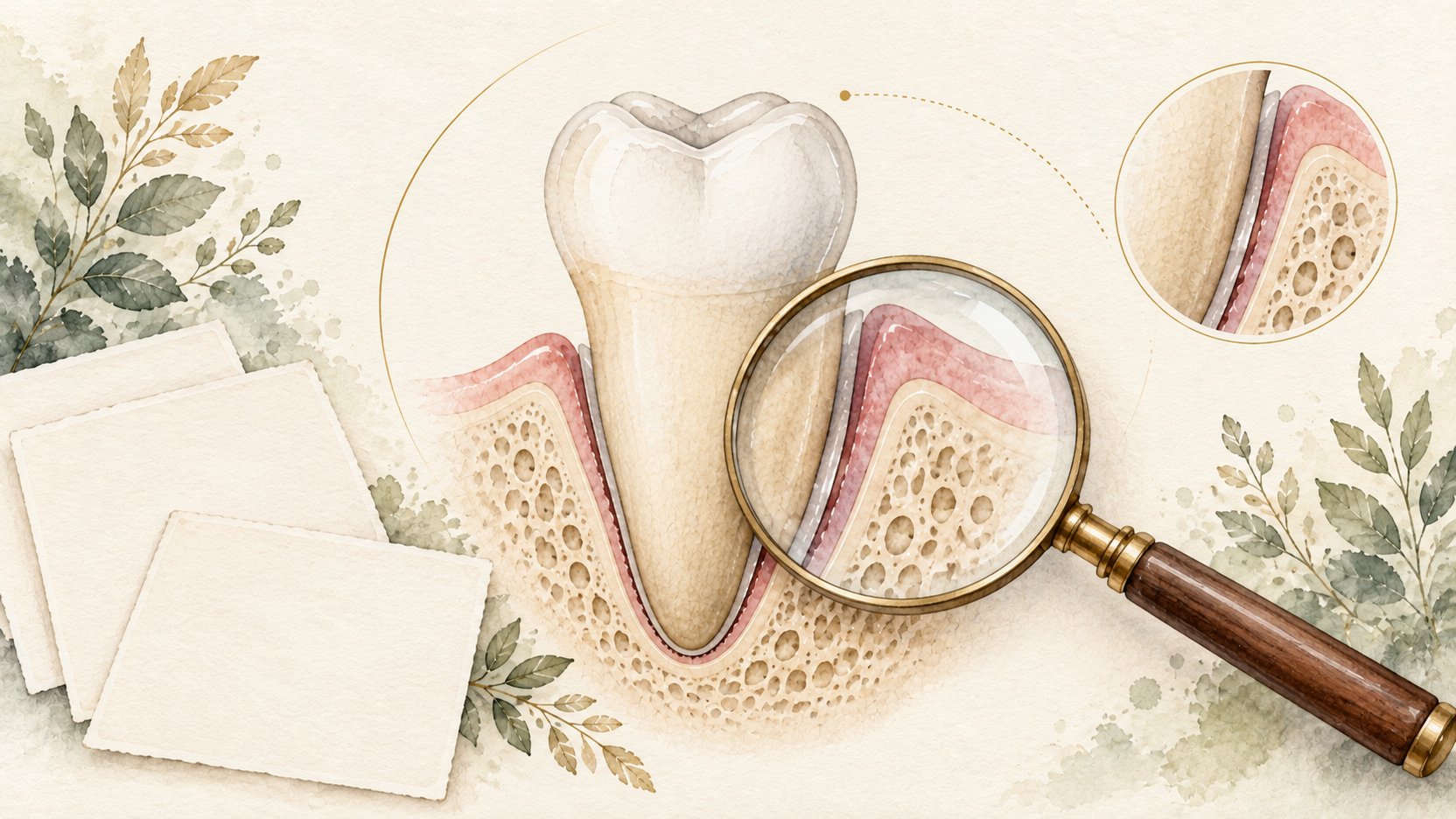
A tooth that starts to move does warrant timely periodontal assessment, but “mobile” and “not worth retaining” are not equivalent statements. The dentist needs to consider active inflammation, alveolar bone support, pocket depth, furcation involvement, tooth position, access for cleaning and occlusal loading together, first identifying which factors are manageable before discussing retention, temporary splinting or extraction. A meta-analysis of 20 longitudinal studies involving 15,422 patients with periodontitis had a mean follow-up of 12 years. The odds ratio for future tooth loss associated with mobility was 3.71, with a 95% confidence interval of 1.65–8.38. The cautious interpretation is not that “a mobile tooth cannot be saved”, but that mobility should intensify assessment and follow-up. In the same study, patients lost a mean of 0.12 teeth per person-year. This is an average across populations and cannot forecast the outcome of one tooth. Splinting must also be placed correctly. The available systematic review found very little long-term clinical evidence and, at a low level of evidence, found no demonstrated improvement in retention of mobile teeth with splinting. Splinting may address chewing discomfort or procedural needs, but cannot replace inflammation control, debridement, risk management and supportive periodontal care.
本頁逐條列出本卡每一個 [Fn] 標記對應的文獻出處。
- F1|Predictors for tooth loss in periodontitis patients: Systematic review and meta-analysis. [PMID:31025366](https://pubmed.ncbi.nlm.nih.gov/31025366/)
- F2|Efficacy of tooth splinting and occlusal adjustment in patients with periodontitis exhibiting masticatory dysfunction: A systematic review. [PMID:34854115](https://pubmed.ncbi.nlm.nih.gov/34854115/)
- F3|Predictors of tooth loss during long-term periodontal maintenance: An updated systematic review. [PMID:33998031](https://pubmed.ncbi.nlm.nih.gov/33998031/)
- F4|Systematic Review of Prognosis Models in Predicting Tooth Loss in Periodontitis. [PMID:38726948](https://pubmed.ncbi.nlm.nih.gov/38726948/)
- F5|Influence of mobility on the long-term risk of tooth extraction/loss in periodontitis patients. A systematic review and meta-analysis. [PMID:38766764](https://pubmed.ncbi.nlm.nih.gov/38766764/)

FAQ
- Does any mobility mean that the tooth can only be extracted?
- No. Mobility is associated with tooth-loss risk, but retention still requires inflammation, bone support, pockets, furcation, restorability and response to treatment to be considered together. [F1] Mobility at the first visit is a signal for greater attention, not an extraction instruction by itself.
Source anchors
- Predictors for tooth loss in periodontitis patients: Systematic review and meta-analysis. [PMID:31025366] · https://pubmed.ncbi.nlm.nih.gov/31025366/ · Other citations on IDAEO
- Efficacy of tooth splinting and occlusal adjustment in patients with periodontitis exhibiting masticatory dysfunction: A systematic review. [PMID:34854115] · https://pubmed.ncbi.nlm.nih.gov/34854115/ · Other citations on IDAEO
- Predictors of tooth loss during long-term periodontal maintenance: An updated systematic review. [PMID:33998031] · https://pubmed.ncbi.nlm.nih.gov/33998031/ · Other citations on IDAEO
- Systematic Review of Prognosis Models in Predicting Tooth Loss in Periodontitis. [PMID:38726948] · https://pubmed.ncbi.nlm.nih.gov/38726948/ · Other citations on IDAEO
- Influence of mobility on the long-term risk of tooth extraction/loss in periodontitis patients. A systematic review and meta-analysis. [PMID:38766764] · https://pubmed.ncbi.nlm.nih.gov/38766764/ · Other citations on IDAEO
Cite this article
Lucy・《A tooth has started to move: is it still worth retaining?|證據鏈》・IDAEO 知識庫・2026-08-16・https://km.idaeo.ai/post/reports/dental-mobile-tooth-retention-evidenceUpdated 2026-08-26