

🏛 Part of the "reports" topic shelf →
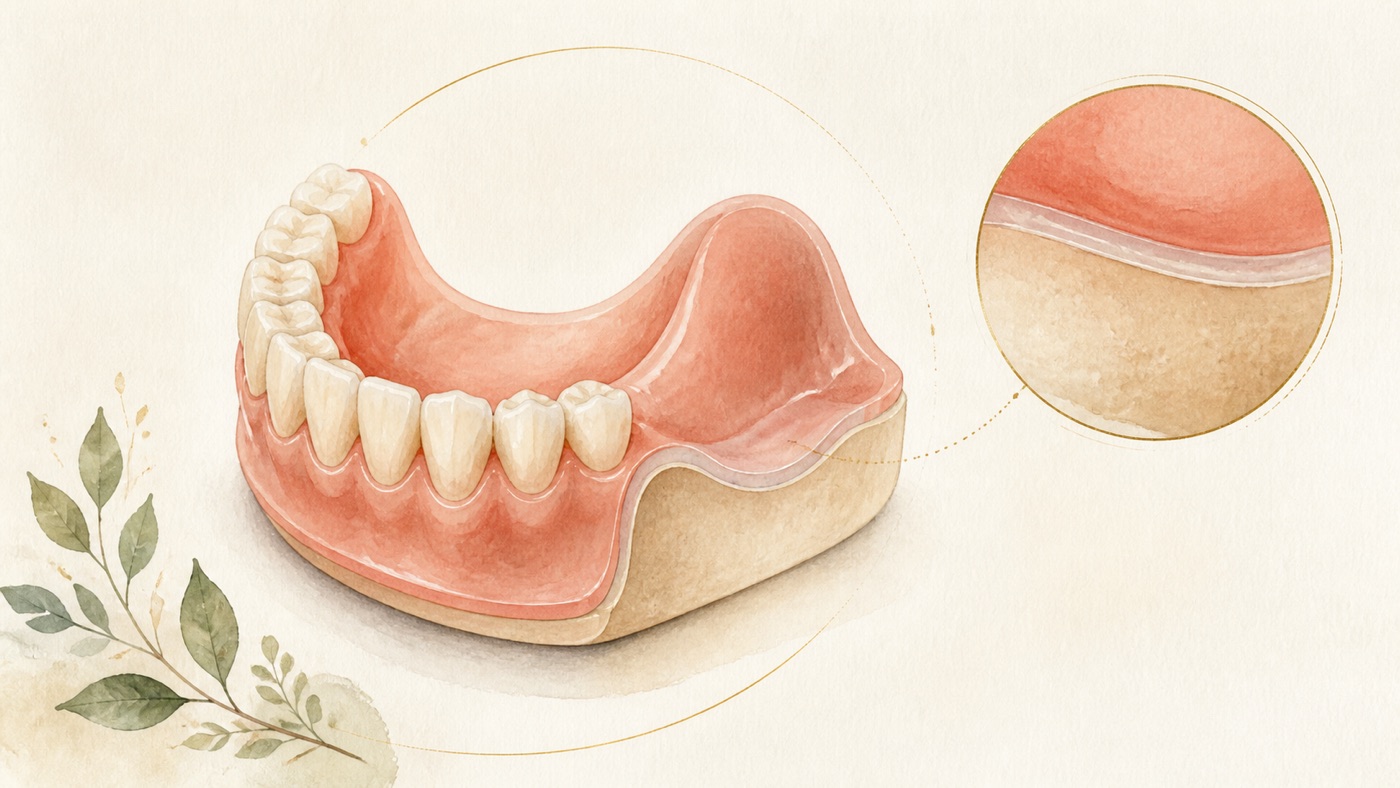
How to choose denture adhesive—and how long can it hold?|證據鏈
本頁是〈How to choose denture adhesive—and how long can it hold?〉的事實單元帳:每一條主張對應的來源、證據等級、地域與期間、原文引句與限制,逐條攤開。
How to choose denture adhesive—and how long can it hold?|證據鏈
F-Units (fact ledger)
- F1|confidence: verified|basis: peer_reviewed (PMID 33888328, scoping review)|period: searched 2020-10; published 2022|geo: universal|span: 「Commercially available denture adhesives have a dose-dependent cytotoxic effect on fibroblasts and keratinocytes, with poor cell recovery noted in older human fibroblasts. Patients presented different levels of neurologic or hematological alterations associated with the excessive use of denture adhesives.」「Most commercially available denture adhesives have a dose-dependent cytotoxic effect, and the use of well-adapted removable dental prostheses, proper patient follow-ups, and correct instructions for their use when indicated should be a priority.」|caveat: A scoping review does not pool efficacy or safety estimates; it maps the literature only; 33 included papers (14 in vitro, 19 clinical).
- F2|confidence: verified|basis: peer_reviewed (PMID 27918740, systematic review)|period: searched 2005-01 to 2015-10; published 2017|geo: universal|span: 「Out of the 190 studies obtained initially from the search 16 articles were selected to be included in our systematic review. The prevalence of denture stomatitis was 29.56% and 4.44% for IPH.」「Smoking and continued use of ill-fitting dentures turned out to be the most frequent risk factors for developing IPH.」|caveat: The prevalence is a pooled description of included studies, not a population census. This guide uses the risk-factor statement and makes no causal inference; the review did not assess adhesives.
- F3|confidence: verified|basis: peer_reviewed (PMID 33727079, systematic review and meta-analysis)|period: searched to 2020-03; published 2021; not the current newest search date—see F4 (searched to 2023-07)|geo: universal|span: 「Of the 1729 records identified, 39 studies (43 articles) were included in the analysis. Among them, 23 were RCTs and 16 were CCTs, with two multicenter clinical trials (1 RCT and 1 CCT). Meta-analysis results indicated that DAs provided significantly higher retention (SMD 1.34, 95 % CI: 0.89-1.79, P < 0.001) for CDs. Bite force (SMD 0.98, 95 % CI: 0.50-1.47, P < 0.001) and masticatory performance (SMD 0.72, 95 % CI: 0.23-1.22, P = 0.004) of the CD wearers were also improved after using DAs, but the effect size was relatively smaller.」|caveat: Included nonrandomized controlled trials; standardized mean differences cannot be converted into an individual’s felt improvement.
- F4|confidence: verified|basis: peer_reviewed (PMID 38183500, systematic review and network meta-analysis, PROSPERO CRD42023451045)|period: searched from database inception to 2023-07; published 2024 = the newest search date among adhesive-effect reviews included in this card (on 2026-08-06, PubMed was rechecked with "denture adhesive"[tiab] plus systematic[sb], 12 records; no newer search date was found)|geo: universal|span: 「Seventeen articles were included in the quantitative analysis. Cream denture adhesives significantly increased bite force in both incisal region (RR = 7.63[95%CI: 3.34, 11.91]) (P < .05) as well as premolar and molar regions (RR = 33.66[95%CI: 15.15, 52.16]).」「Powder adhesives significantly increased premolar and molar bite force (RR = 36.00[95%CI: 16.20, 55.79]) (P < .05) and Kapur's index of retention (mandibular denture) (RR = 1.54[95%CI: 0.58, 2.49]) (P = 0.002).」「Cream and powder denture adhesives are effective in enhancing the retention of mandibular dentures (Kapur's index) and bite force in the premolar/molar region in complete denture wearers (moderate level of certainty of evidence).」|caveat: The network meta-analysis contains indirect comparisons; this guide does not cite rankings (SUCRA). Outcome measures are values measured in study settings, not individual expected values.
- F5|confidence: verified|basis: peer_reviewed (PMID 34772484, systematic review and meta-analysis)|period: searched to 2021-07; published 2023|geo: universal|span: 「Nine studies (6 randomized and 3 nonrandomized clinical trials) were included. The risk of bias was considered moderate. Meta-analyses showed no differences between cream and powder denture adhesives for masticatory performance (standard mean difference=0.02; 95% CI=-0.46 to 0.50, P=.93) or between cream and strip denture adhesives for occlusal force (mean difference=14.35; 95% CI=-11.14 to 39.84, P=.27).」「However, for resorbed ridges, cream denture adhesive resulted in a higher masticatory performance than strip (P<.05). When comparing powder to strip denture adhesives, the occlusal force was higher in the powder group (P<.05). The certainty of evidence was very low for all evaluated outcomes.」|caveat: Subgroup findings for resorbed residual ridges are qualitative analysis, not pooled estimates; certainty is very low and they cannot be selection criteria.
- F6|confidence: verified|basis: peer_reviewed (PMID 33438306, systematic review)|period: searched from database inception to 2020-02-06; published 2021|geo: universal|span: 「A total of 497 abstracts were reviewed, resulting in inclusion of 10 RCTs.」「All 10 studies were assessed at unclear (10%) or high risk of bias (90%).」「Due to the heterogeneity of the outcomes, unclear/high risk of bias and small sample sizes, the quality of the evidence was very low.」|caveat: Included randomized controlled trials of complete dentures in both jaws only; it does not cover partial removable dentures.
- F7|confidence: verified|basis: peer_reviewed (PMID 33551134, systematic review)|period: searched to 2020-10; published 2022|geo: universal|span: 「Thirteen studies were included with a total of 516 participants with a mean age of 65.5 years.」「Most studies presented a low risk of bias, but the certainty of the evidence was classified as low to moderate.」|caveat: Its risk-of-bias conclusion differs from F6 (one rates most studies low risk; one rates 90% high risk); this guide reports both rather than choosing one.
- F8|confidence: verified|basis: peer_reviewed (PMID 37805705, randomized controlled crossover trial)|period: published 2024|geo: universal|span: 「Twenty-two participants with a fair-to-poor fitting maxillary denture opposed by natural dentition or a stable mandibular denture were enrolled in this single-center, randomized, double-blind, two-treatment, 4-period crossover study.」「bite force measurements were retaken at 1, 3, 5, 7, 9, 11, and 13 h.」「There were 15 females and 7 males with a mean age of 70 years.」「Both adhesives showed a statistically significant increase in bite force (p < 0.001) at each time point compared to no adhesive.」|caveat: Single-centre, 22-person formulation-comparison trial; this guide does not cite its comparison of the two products, only results versus no adhesive. Thirteen hours is the measurement-period ceiling, not a recommended duration of use.
- F9|confidence: verified|basis: peer_reviewed (PMID 30942961, randomized controlled crossover trial)|period: published 2018|geo: universal|span: 「aimed to compare three experimental adhesives ("Adhesive 1," "Adhesive 2," "Adhesive 3") with slightly different formulations and a commercially marketed "Positive control" with a "No Adhesive" arm using incisal bite force measurements over 12 hours in subjects with a moderately well- to well-fitting maxillary denture.」「This procedure was repeated at 0.5, 1, 3, 6, 9, and 12 hours after adhesive application」「A total of 48 subjects completed the study. All experimental formulations showed statistically significantly higher bite force measurements compared to the No Adhesive arm at all time points」|caveat: Participants had moderately well- to well-fitting maxillary dentures; this guide does not cite between-product comparisons. Twelve hours is the measurement-period ceiling.
- F10|confidence: verified|basis: peer_reviewed (PMID 25294364, prospective cohort study)|period: 3-year follow-up; published 2015|geo: universal (Japanese community-dwelling older-adult cohort; not a system statement)|span: 「At baseline, 524 randomly selected seniors (228 men and 296 women; mean age, 87.8 years) were examined for oral health status and oral hygiene behaviors」「During a 3-year follow-up period, 48 events associated with pneumonia (20 deaths and 28 acute hospitalizations) were identified. Among 453 denture wearers, 186 (40.8%) who wore their dentures during sleep were at higher risk for pneumonia than those who removed their dentures at night (log rank P = 0.021).」「for denture wearing during sleep, HR, 2.38; and 95% CI, 1.25-4.56」「those who wore dentures during sleep were more likely to have tongue and denture plaque, gum inflammation, positive culture for Candida albicans, and higher levels of circulating interleukin-6 as compared with their counterparts.」|caveat: Observational study: association only, not causation. The population was very old community-dwelling adults with mean age 87.8 years and cannot be generalized to typical adults; the study did not directly assess adhesive.
- F11|confidence: verified|basis: peer_reviewed (PMID 18525032, case series)|period: published 2008|geo: universal|span: 「We identified four patients, one previously reported, with various neurologic abnormalities in the setting of hypocupremia and hyperzincemia. Each of these patients wore dentures and used very large amounts of denture cream chronically.」「Zinc concentrations ranging from about 17,000 to 34,000 mug/g were identified in…denture creams.」「Denture cream contains zinc, and chronic excessive use may result in hypocupremia and serious neurologic disease.」|caveat: Case series (n=4), lower-level evidence than controlled research. The span uses … to omit a product name; this guide names no brand. Tested samples were products from 2008 and do not represent zinc content of products currently sold.
- F12|confidence: verified|basis: peer_reviewed (PMID 42087025, systematic review)|period: included cases from 1972 to 2025; published 2026 = the newest search date for zinc-toxicity evidence in this card|geo: universal|span: 「Thirty-four publications describing 37 individual cases were included, spanning from 1972 to 2025. Zinc exposure most commonly resulted from oral supplements, denture adhesive creams, and coin ingestion, with reported daily elemental zinc doses ranging from approximately 50 mg to more than 1500 mg and exposure durations ranging from weeks to years.」「Serum copper levels were reduced in all patients.」「Discontinuation of zinc exposure with copper supplementation resulted in hematologic recovery in the majority of cases, typically within weeks to months, while neurological manifestations improved more slowly and were sometimes incomplete.」|caveat: Included descriptive studies and case reports, a synthesis of rare events; it cannot estimate incidence among users. The daily-zinc-dose range covers every exposure source, not adhesive alone.
- F13|confidence: verified|basis: peer_reviewed (PMID 20493327, literature review)|period: published 2010|geo: universal|span: 「This condition causes elevation of serum zinc levels that result in depression of serum copper. The low serum copper levels cause bone marrow depression and widespread sensory and motor neuropathies.」「Denture patients must be advised of the risks of prolonged overuse of denture adhesives.」|caveat: Narrative, not systematic, review; published in 2010. See F12 for a newer synthesis.
- F14|confidence: verified|basis: peer_reviewed (PMID 40063077, in-vitro comparative study)|period: published 2025|geo: universal|span: 「The current trend in denture adhesives is shifting toward zinc-free formulations due to the significant health concerns associated with zinc.」|caveat: This guide cites its background statement about formulation trend only, not its rheological findings. It is a researcher statement, not a market census or authority statistic; individual products’ zinc content follows their ingredient labels.
- F15|confidence: verified|basis: peer_reviewed (PMID 34289999, case report)|period: published 2021|geo: universal|span: 「A 67-year-old man presented with 5 months of worsening memory impairment and sensory gait ataxia on the background of symptomatic anaemia.」「Serum analysis showed normocytic anaemia and leucopenia, severe hypocupraemia, reduced caeruloplasmin and normal zinc levels. Overuse of zinc-containing denture cream was the cause of excess zinc ingestion and resultant copper deficiency, leading to blood dyscrasia and myelopathy.」|caveat: Single case report, low-level evidence; used only for the clinical caution that normal blood zinc does not rule out copper deficiency, not for an incidence estimate.
- F16|confidence: verified|basis: peer_reviewed (PMID 34912740, case report)|period: published 2021|geo: universal|span: 「We hereby present the case of a 34-year-old female with gastric bypass surgery who presented with neutropenic fever, abdominal pain and diarrhoea, later found to have extended-spectrum beta-lactamase resistant Escherichia coli urinary tract infection and small bowel bacterial overgrowth syndrome, with her anaemia and neutropenia being caused by copper deficiency due to hyperzincaemia induced by using zinc denture adhesive cream.」「Various causes of copper deficiency have been recognized including, but not limited to, malnutrition, gastrectomy, gastric bypass surgery, protein-losing enteropathies (coeliac disease, tropical sprue), Wilson disease and Menkes syndrome.」|caveat: Single case report; the person had multiple comorbidities and no single factor can be assigned as the cause. It is used only to flag that higher-risk groups should first discuss use with a physician.
- F17|confidence: verified|basis: peer_reviewed (PMID 33750997, in-vitro study)|period: published 2022|geo: universal|span: 「All forms of the adhesives promoted higher biofilm formation when compared to control (P = .003).」「Only Strip showed a change in adhesive strength, with higher values after 3 hours of application (P = .004).」「Daily treatments with mechanical cleaning of the prosthesis are important for removing the adhesives, since the presence of this material can favor biofilm accumulation.」|caveat: In-vitro resin-specimen research, not human clinical results. This guide does not cite the tested product names or cleaner-brand comparisons.
- F18|confidence: verified|basis: peer_reviewed (PMID 25643746, in-vitro study)|period: published 2016|geo: universal|span: 「Cream adhesives were removed more completely after immersion in majority of the denture cleaners than in water. Powder adhesive was removed more quickly than cream adhesives. Cushion adhesive was not removed by immersion in either the denture cleaners or water control.」|caveat: In-vitro immersion experiment without brushing. It tested two cream, one powder, and one cushion sample, not every product on the market.
- F19|confidence: verified|basis: peer_reviewed (PMID 20733263, in-vitro materials study)|period: published 2010|geo: universal|span: 「Scant rheological information is available regarding home reliners (liner type denture adhesives).」「They showed a dramatic change in viscoelastic properties and increase in weight after approximately 1 day of water immersion.」「From the viewpoint of dynamic viscoelastic properties and durability, our results indicate that the tested home reliners would not be suitable for improvement of ill-fitting dentures.」|caveat: In-vitro materials research of 6 home reliners, not a clinical trial. Its conclusion is limited to physical properties of the tested materials and did not assess clinical effect or mucosal reaction.
- F20|confidence: verified|basis: peer_reviewed (PMID 39175130, cross-sectional study, propensity-score matching)|period: published 2024|geo: universal (Japanese participants)|span: 「This study included 38 and 40 cream-type adhesive and home-liner users, respectively, and 17 pairs were obtained after propensity-score matching.」「The findings in this study suggest that home liners improve masticatory performance and that participants regularly using cream-type denture adhesives have poorer oral hygiene.」|caveat: Cross-sectional design: association only, not causation; only 17 matched pairs.
- F21|confidence: verified|basis: peer_reviewed (PMID 32938837, web questionnaire survey)|period: published 2020|geo: JP (survey of Japanese denture wearers; not a system statement)|span: 「The purpose of this study was to clarify the usage and understanding of denture adhesives among 1,825 denture wearers, aged 40 years and older in Japan, using a web-based survey.」「Results showed that 67.1% of the respondents were satisfied with their dentures; 81.5% of respondents knew about denture adhesive, but only 347 (19.0%) had used the product. Products used by the 347 denture wearers included cream type (79.7%), cushion type (16.2%), and powder type (3.2%). The most common reason for the selection of a particular type was "Saw the product" (59.9%), followed by "Saw an advertisement" (19.3%), and "Explanation at a dental clinic" (8.4%).」「These findings show that denture adhesives were not always necessary for those with ill-fitting dentures.」|caveat: Closed web survey of online-survey members; it cannot represent Japan’s whole population. Form proportions describe only the 347 users.
- F22|confidence: verified|basis: peer_reviewed (PMID 36769520, cross-sectional survey)|period: published 2023|geo: universal|span: 「The factors associated with denture adhesive selection were investigated through a face-to-face survey on oral and denture conditions.」「There were 38 and 40 cream-type and home-liner-type adhesive users, respectively.」「The residual ridge conditions and duration of denture use were significant factors in the selection of cream- and home-liner-type denture adhesives.」|caveat: Participants were adhesive users who did not attend regularly. The cross-sectional design shows association only and cannot be a form-selection recommendation.
- F23|confidence: verified|basis: peer_reviewed (PMID 40127129, randomized controlled crossover trial, ClinicalTrials.gov NCT05063422)|period: published 2025|geo: universal|span: 「The mean retentive strengths of dentures without adhesive (control) were relatively low across all ridge classifications, ranging from 0.27 to 0.69 lb.」「Furthermore, significant mean differences were observed between ridge classes and the retentive strength of each adhesive product.」|caveat: This guide does not cite the study’s product-superiority comparison; it cites only baseline retention without adhesive and differences between residual-ridge classifications. Unit is pounds as in the original.
- F24|confidence: verified|basis: peer_reviewed (PMID 33116029, multicentre randomized clinical trial)|period: published 2021|geo: universal (10 Japanese centres)|span: 「Two hundred edentulous subjects who wore complete dentures were allocated to each of the three groups according to denture adhesive type: cream, powder, and control (saline solution). The materials were applied to the mucosal surface of the dentures for 4 days」「OHIP-EDENT-J scores were significantly decreased in all groups after the intervention (p < 0.05); however, there were no statistically significant differences among the groups.」「The cream-type denture adhesives may be expected to improve OHR-QoL in patients with poor residual ridge conditions compared with patients with good residual ridge conditions.」|caveat: Intervention lasted only 4 days. The saline control also improved significantly, suggesting nonspecific effects when interpreting change within one group over time.
- F25|confidence: verified|basis: peer_reviewed (PMID 27914670, randomized double-blind crossover clinical trial)|period: published 2017 (same anchor: site card #13 F25)|geo: universal|span: 「The masticatory efficacy was significantly higher in dentate participants compared with participants with edentulism who had complete dentures, with or without denture adhesives.」|caveat: Only 17 people per group, a small sample. The study also compared two products; this guide does not cite that comparison.
- F26|confidence: verified|basis: peer_reviewed (PMID 26553256, crossover clinical trial)|period: published 2016|geo: universal|span: 「Assessments were carried out while participants (n=49) wore their dentures first without then with adhesives.」「Stability and retention of conventional dentures ranged initially from good to very good.」「Adhesives significantly decreased OT and DT durations in initially well-fitting complete dentures with fairly well balanced occlusion, and further enhanced denture stability and occlusal contact simultaneity.」|caveat: Participants’ dentures had good baseline retention and stability; results cannot be generalized to ill-fitting dentures. This guide cites the population limitation, not occlusal-time values.
- F27|confidence: verified|basis: peer_reviewed (PMID 40394268, systematic review and meta-analysis)|period: published 2025|geo: universal|span: 「23 studies were included. Only 1 was classified as low risk of bias. Superior masticatory performance was observed in the NAM group rehabilitated with CD (P <.001).」「Clinicians should carefully monitor residual ridge resorption to guide treatment planning and prognosis, particularly in cases of AMs.」|caveat: Included nonrandomized clinical studies; only 1 of 23 was low risk of bias. The review compares prognosis in atrophic and nonatrophic mandibles and did not assess adhesive; this guide uses it only to support clinical monitoring of residual-ridge change.
- F28|confidence: verified (abstract retrieved verbatim; full text could not be retrieved)|basis: clinical_guideline (PMID 21282672, American College of Prosthodontists evidence-based guideline)|period: published 2011|geo: universal (United States professional-body guideline)|span: 「In 2009, the American College of Prosthodontists (ACP) formed a task force to establish evidence-based guidelines for the care and maintenance of complete dentures. The task force comprised members of the ACP, the Academy of General Dentistry, the American Dental Association Council on Scientific Affairs, the American Dental Hygienists' Association, the National Association of Dental Laboratories and GlaxoSmithKline Consumer Healthcare.」「The task force reviewed synopses of the literature and formulated 15 evidence-based guidelines for denture care and maintenance.」|caveat: Full text could not be retrieved (paywall). This guide does not cite any of its 15 recommendations, only its existence and task-force composition. The composition includes a consumer-healthcare company, a background interest readers should know.
- F29|confidence: verified|basis: peer_reviewed (PMID 25749085, systematic review)|period: searched to 2014-03; published 2015; not current newest—the effect evidence is covered by newer reviews F3 and F4|geo: universal|span: 「A full text review was carried out for only 32 articles.」「The majority of clinical studies supported the fact that denture adhesives enhance the retention, stability, and masticatory performance of a removable prosthesis. In terms of biocompatibility, long-term in vivo studies to investigate potential harmful effects were lacking.」|caveat: Search is older. This guide uses only its evidence-gap statement about inadequate long-term human safety studies, not its effect conclusion as a current estimate.
- F30|confidence: verified|basis: peer_reviewed (PMID 41294516, literature review)|period: published 2025|geo: universal|span: 「Studies have shown that denture adhesives may have cytotoxic effects on oral mucosal fibroblasts, as well as on biofilm formation and adhesion. Moreover, there is still little research on the effect of denture adhesives on inflammation of the denture-bearing area and cytokine production.」「The obtained results highlight the need for long-term patient investigations, and thorough clinical trials are absolutely essential to evaluate the actual safety of denture adhesives.」|caveat: The journal labels it Review, not Systematic Review, although it describes a systematic-search process. This guide cites its safety evidence-gap statement, not a quantitative estimate of efficacy or risk.
- F31|confidence: verified (on 2026-08-06, ego-browser loaded the database; the keyword 「黏著劑」 returned 12 records and every item name, identification scope, and class was read)|basis: official_statement (Medical Device Classification and Grading Query Database commissioned by Taiwan Food and Drug Administration; linked from the authority’s Medical Devices service area)|period: current query status 2026-08-06|geo: TW|span: 品項代碼與名稱=F.3410「氧化乙烯聚合物和/或羧基甲基纖維素鈉假牙黏著劑」(第 1 級)、F.3420「羧甲基纖維素鈉和陽離子聚丙醯胺聚合物假牙黏著劑」(第 3 級)、F.3450「氧化乙烯(環氧乙烷)聚合物和/或梧桐樹膠假牙黏著劑」(第 1 級)、F.3480「聚丙醯胺聚合物(改質的陽離子)假牙黏著劑」(第 3 級)、F.3490「胺基甲基纖維素鈉、和/或聚乙烯甲基醚順丁烯二酸鈣鈉複鹽假牙黏著劑」(第 1 級)、F.3500「聚乙烯甲基醚-順丁烯二酸酐(PVM-MA)酸共聚合物和羧甲基纖維素鈉假牙黏著劑」(第 3 級);各品項鑑別範圍均載明「用於在假牙放入患者口腔之前塗於假牙基底以增加假牙之固持性和舒適性」|caveat: The database itself states that it is commissioned and maintained by the Taiwan Food and Drug Administration, that content is for reference only, and that discrepancies are governed by Taiwan Food and Drug Administration announcements. Current authority announcements govern class and classification; this guide makes no regulatory-applicability determination.
- F32|confidence: verified (on 2026-08-06, ego-browser loaded Taiwan’s Laws & Regulations Database and the text matched verbatim)|basis: law|period: current text|geo: TW|span: 《醫療器材管理法》第 3 條「本法所稱醫療器材,指儀器、器械、用具、物質、軟體、體外診斷試劑及其相關物品,其設計及使用係以藥理、免疫、代謝或化學以外之方法作用於人體,而達成下列主要功能之一者:一、診斷、治療、緩解或直接預防人類疾病。二、調節或改善人體結構及機能。三、調節生育。」;同法第 25 條「製造、輸入醫療器材,應向中央主管機關申請查驗登記,經核准發給醫療器材許可證後,始得為之。但經中央主管機關公告之品項,其製造、輸入應以登錄方式為之。」|caveat: Quoted statutory text, not legal opinion. Individual product management route (licence or registration) is governed by authority announcements.
- F33|confidence: verified (on 2026-08-06, ego-browser loaded both entry and medical-device licence-search pages; query-form fields were visible)|basis: official_statement|period: status tested 2026-08-06|geo: TW|span: 衛生福利部食品藥物管理署「西藥、醫療器材及化粧品許可證暨相關資料查詢」網站設有「醫療器材許可證查詢」,查詢欄位包含許可證/登錄字號、中文品名、英文品名、醫療器材主分類、醫療器材商名稱等|caveat: Entry was verified; individual items were not. The search requires a CAPTCHA; under operating rules this guide did not defeat or automate it and did not verify any specific product’s licence status. Readers need to search themselves.
- F34|confidence: verified (on 2026-08-06, ego-browser loaded Taiwan’s Laws & Regulations Database and the text matched verbatim; same anchor in multiple site cards)|basis: law|period: current text|geo: TW|span: 《醫療法》第 81 條「醫療機構診治病人時,應向病人或其法定代理人、配偶、親屬或關係人告知其病情、治療方針、處置、用藥、預後情形及可能之不良反應。」|caveat: Quoted statutory text, not legal opinion.
- F35|confidence: verified (on 2026-08-06, ego-browser loaded Taiwan’s Laws & Regulations Database and the text matched verbatim; same anchor in multiple site cards)|basis: law|period: current text|geo: TW|span: 《醫療法》第 87 條「廣告內容暗示或影射醫療業務者,視為醫療廣告。醫學新知或研究報告之發表、病人衛生教育、學術性刊物,未涉及招徠醫療業務者,不視為醫療廣告。」|caveat: Quoted statutory text, not legal opinion; this guide’s health-education positioning follows this article.
- F36|confidence: verified|basis: internal_dataset|period: 2025-03 to 2026-08 GSC|geo: TW|span: backlog #31「假牙黏著劑推薦」「假牙黏著劑」「假牙黏著劑可以黏多久」「假牙黏著劑推薦ptt」「假牙黏著劑推薦dcard」5 詞項合計曝光 109,584,單站|caveat: Impressions are an asset-level figure, not deduplicated traffic. The listing follows queue page #31; do not add or remove. This whole F-Unit is not output in publication conversion because internal data are not public-facing.
- F38|confidence: verified|basis: peer_reviewed (PMID 38327924, Delphi expert-consensus study—expert opinion evidence level, lower than systematic reviews and clinical trials)|period: published 2024|geo: universal (practitioners in Northern Maharashtra, India)|span: 「All 31 panellists, chosen randomly, unanimously agreed to participate, with each of them actively involved in all three rounds of the survey. The panellists reached a consensus and definitively concluded that denture adhesives (1) are beneficial for enhancing the fit and comfort of the prosthesis and are not used to mask the underlying denture problems; (2) cause diseases such as denture stomatitis, candidiasis, and resorption of alveolar bone; (3) have the potential for increasing retention, function, and reducing patient anxiety.」|caveat: Delphi consensus reports the opinions of 31 respondent practitioners, not measurements, and cannot be causal evidence. This guide reports its opinion that adhesive causes alveolar-bone resorption but does not state it as an established causal conclusion. Note: PubMed also has a 1984 title concerning adhesive and bone resorption (PMID 6380920); its abstract could not be retrieved, and this guide cites none of its contents.
- F39|confidence: verified|basis: peer_reviewed (PMID 30123304, crossover randomized clinical trial)|period: published 2018|geo: universal|span: 「This cross-over randomized clinical trials study was conducted on 90 patients who were wearing well fitted complete dentures. The patients were categorized into three groups based on clinical and radiographic situations of residual ridges.」「Retention, chewing, talking, self-confidence, and efficiency of dentures were improved in all patients. No statistical significant differences in these parameters were observed between the three groups (P > 0.05).」|caveat: Results are questionnaire-based subjective assessment, not instrument measurement. This guide cites only its eligibility condition (well-fitting dentures) and no-between-group-difference result, not its use recommendation.
- F37|confidence: editorial structural summary (not an external factual claim)|basis: editorial_framework|period: 2026-08-06|geo: universal|span: 「固持不足/假牙不合」的分流問句、三類劑型的對照架構、以及「該回診而非再加黏著劑」的時機清單,均為本站依 F1 至 F30 文獻整理的溝通用架構|caveat: Not a clinical criterion, diagnostic tool, or grading scale; it does not replace a dentist’s examination.
Sources
All accessed 2026-08-06. PubMed entries were retrieved through E-utilities efetch (rettype=abstract) and checked verbatim against abstracts; pubtype and CommentsCorrections were checked record by record for retraction/correction/update relations (30 records: none retracted, corrected, or updated). Regulation and authority pages were loaded with ego-browser and matched verbatim.
- Papadiochou S, Emmanouil I, Papadiochos I. Denture adhesives: a systematic review. J Prosthet Dent. 2015;113(5):391-397.e2. PMID 25749085
- Chen F, Xia Y, Ye C, et al. A systematic review and meta-analysis to evaluate the efficacy of denture adhesives. J Dent. 2021;108:103622. PMID 33727079
- Bidra AS et al. Efficacy of denture adhesives in complete denture wearers compared to denture wearers not using denture adhesives. A systematic review. Spec Care Dentist. 2021;41(1):5-13. PMID 33438306
- Influence of different presentations of denture adhesives on masticatory function of complete denture wearers: A systematic review and meta-analysis. J Prosthet Dent. 2023;129(6):844-854. PMID 34772484
- Comparative effectiveness of types of denture adhesives in enhancing retention and function of complete dentures: a systematic review with network meta-analysis. Clin Oral Investig. 2024;28(1):86. PMID 38183500
- Does the use of an adhesive improve conventional complete dentures? A systematic review of randomized controlled trials. J Prosthet Dent. 2022;128(3):301-308. PMID 33551134
- Toxicity potential of denture adhesives: A scoping review. J Prosthet Dent. 2022;128(3):335-345. PMID 33888328
- Biocompatibility of Denture Adhesives: Effects on Oral Tissues and Inflammatory Responses—Literature Review. Dent J (Basel). 2025;13(11). PMID 41294516
- A randomized controlled trial assessing denture adhesive efficacy on denture retention across 13 hours. J Prosthodont. 2024;33(S1). PMID 37805705
- Randomized Clinical Study Comparing Three Experimental Denture Adhesives and Fixodent versus No Adhesive. J Clin Dent. 2018;29(3):71-76. PMID 30942961
- Iinuma T, Arai Y, Abe Y, et al. Denture wearing during sleep doubles the risk of pneumonia in the very elderly. J Dent Res. 2015;94(3 Suppl):28S-36S. PMID 25294364
- Nations SP, Boyer PJ, Love LA, et al. Denture cream: an unusual source of excess zinc, leading to hypocupremia and neurologic disease. Neurology. 2008;71(9):639-643. PMID 18525032
- Zinc-Induced Hematologic Toxicities: A Systematic Review of Descriptive Studies. Biol Trace Elem Res. 2026;204(9):6628-6642. PMID 42087025
- Hyperzincemia from ingestion of denture adhesives. J Prosthet Dent. 2010;103(6):380-383. PMID 20493327
- Hypocupraemia-induced anaemia, sensory ataxia and cognitive impairment secondary to zinc-containing dental adhesive. BMJ Case Rep. 2021;14(7):e242178. PMID 34289999
- Acquired Hyperzincaemia Due to Zinc-Laden Denture Adhesives Leading to Hypocupraemia as a Cause of Neutropenia. Eur J Case Rep Intern Med. 2021;8(11):002946. PMID 34912740
- Impact of the Physiological Parameters of the Oral Cavity on the Mechanical Properties of Zinc-stabilized and Zinc-free Adhesive Creams: A Comparative In Vitro Study. J Adhes Dent. 2025;27:21-29. PMID 40063077
- Effects of Different Forms of Denture Adhesives on Biofilm Formation, Adhesive Strength and Hygiene of Complete Dentures. Int J Prosthodont. 2022;35(4):512-520. PMID 33750997
- Evaluation of the efficiency of denture cleaners for removing denture adhesives. Gerodontology. 2016;33(1):101-106. PMID 25643746
- Dynamic viscoelastic properties, water absorption, and solubility of home reliners. Dent Mater J. 2010;29(4):440-446. PMID 20733263
- Comparison of masticatory performance and oral hygiene status using cream-type denture adhesives and home liners: A cross-sectional study using propensity-score matching. J Oral Rehabil. 2024;51(11):2427-2434. PMID 39175130
- A web-based survey of denture adhesive use among denture wearers 40 years of age and older. J Oral Sci. 2020;63(1):98-100. PMID 32938837
- Factors Associated with Selection of Denture Adhesive Type: A Cross-Sectional Survey. J Clin Med. 2023;12(3):873. PMID 36769520
- Comparative Analysis of Adhesive Retention and Denture Weight in Different Residual Ridge Morphologies: A Cross-Over Randomized-Controlled Trial. Clin Exp Dent Res. 2025;11(2):e70113. PMID 40127129
- Multivariate analysis reveals oral health-related quality of life of complete denture wearers with denture adhesives: a multicenter randomized controlled trial. J Prosthodont Res. 2021;65(3):288-294. PMID 33116029
- Torres-Sánchez C, Montoya-Salazar V, Torres-Lagares D, Gutierrez-Pérez JL, Jimenez-Castellanos E. Comparison of masticatory efficacy among complete denture wearers with two adhesives and dentate individuals. J Prosthet Dent. 2017;117(5):614-620. PMID 27914670
- Influence of denture adhesives on occlusion and disocclusion times. J Prosthet Dent. 2016;116(5):770-777. PMID 26553256
- Inflammatory papillary hyperplasia: A systematic review. Med Oral Patol Oral Cir Bucal. 2017;22(1):e36-e42. PMID 27918740
- Prognosis of removable complete dentures considering the level of mandibular residual ridge resorption: a systematic review and meta-analysis. Clin Oral Investig. 2025;29(6):318. PMID 40394268
- Felton D, Cooper L, Duqum I, et al. Evidence-based guidelines for the care and maintenance of complete dentures: a publication of the American College of Prosthodontists. J Am Dent Assoc. 2011;142 Suppl 1:1S-20S. PMID 21282672
- The Assessment of Awareness and Attitudes About the Use of Denture Adhesives Amongst Dental Practitioners in Northern Maharashtra: A Delphi Technique. Cureus. 2024;16(1):e52509. PMID 38327924
- The effect of denture adhesive on the efficiency of complete denture in patients with different alveolar ridges. Dent Res J (Isfahan). 2018;15(4):270-274. PMID 30123304
- Medical Device Management Act, Article 3 (Taiwan Laws & Regulations Database)
- Medical Device Management Act, Article 25 (Taiwan Laws & Regulations Database)
- Taiwan Medical Care Act, Article 81 (Taiwan Laws & Regulations Database)
- Taiwan Medical Care Act, Article 87 (Taiwan Laws & Regulations Database)
- Medical Device Classification and Grading Query Database (commissioned and maintained by Taiwan Food and Drug Administration)
- Taiwan Food and Drug Administration: Western Medicines, Medical Devices and Cosmetics Licence and Related Information Query—Medical Device Licence Search
- Internal data: `analysis/reports/km-dental-backlog.md` #31 appendix (query × site × impressions, individually auditable)
- Editorial framework: this site’s organization of triage questions, form comparison, and return-for-review timing (no external source; marked as structural organization)
Internal citation links
- Costs of removable dentures, relining and repair fee items, and adaptation and maintenance: How much does a removable denture cost? First clarify which kind you need and what is being counted (KM-DENTAL-13). Scope statement: removable-denture cost, relining, and maintenance are that card’s canonical scope; this card does not repeat them and cites them only when needed.
- Triage and how to read an estimate for fixed dentures: How much does one fixed denture cost? (KM-DENTAL-03)
- What can happen if a missing molar is not replaced, and comparison of replacement options: Can a molar be left unreplaced after extraction? What happens? (KM-DENTAL-34)
FAQ
- How long can denture adhesive hold continuously?
- The literature measures effect during a little over ten hours after one application, not continuous adhesion for several days. In a 22-person randomized crossover trial, bite force at every point from 1 to 13 hours after application was significantly higher than without adhesive [F8]; the same was true at every point from 0.5 to 12 hours in a 48-person trial [F9]. These are observation-period ceilings, not recommended hours of use. Use and dosage for individual products follow their approved instructions and the dentist’s directions. For sleeping with dentures, a cohort study of very old community-dwelling adults associated sleep-time wearing with pneumonia risk (hazard ratio 2.38, 95% confidence interval 1.25 to 4.56) [F10]. It is observational and population-specific and cannot be directly generalized, but its direction does not support never removing dentures all day.
- 義歯安定剤は連続してどのくらい保てますか? — **文献が測ったのは、1 回塗布後の十数時間であって、数日連続の固定ではありません。** 22 人試験では 1–13 時間、48 人試験では 0.5–12 時間の各時点で無使用より咬合力が高い結果でした [F8][F9]。測定期間の上限は使用時間の推奨ではありません。個別製品の用法・用量は承認説明書と歯科医師の指示に従ってください。睡眠中の装着は、平均 87.8 歳の観察研究で肺炎リスクとの関連(HR 2.38、95% 信頼区間 1.25–4.56)がありましたが、因果・一般化はできません [F10]。
- How long can denture adhesive hold continuously? — The literature measures effect during a little over ten hours after one application, not continuous adhesion for several days. In a 22-person randomized crossover trial, bite force at every point from 1 to 13 hours after application was significantly higher than without adhesive [F8]; the same was true at every point from 0.5 to 12 hours in a 48-person trial [F9]. These are observation-period ceilings, not recommended hours of use. Use and dosage for individual products follow their approved instructions and the dentist’s directions. For sleeping with dentures, a cohort study of very old community-dwelling adults associated sleep-time wearing with pneumonia risk (hazard ratio 2.38, 95% confidence interval 1.25 to 4.56) [F10]. It is observational and population-specific and cannot be directly generalized, but its direction does not support never removing dentures all day.
- Is cream, powder, or cushion form better?
- The literature’s answer is that most comparisons found no difference, not that one form is better. A meta-analysis of 9 clinical studies found no cream–powder difference in masticatory performance and no cream–strip difference in occlusal force. Only in people with marked residual-ridge resorption did cream have higher masticatory performance than strips and powder higher occlusal force than strips—and certainty for every result was very low [F5]. Which form is appropriate is associated with factors such as residual-ridge condition and wearing duration [F22] and needs a dentist’s judgment from your oral condition. This guide recommends no brand or product.
- クリーム、パウダー、クッション型のどれがよいですか? — **多くの比較で差がない、というのが文献の答えです。** 顎堤吸収が著しい一部の人で差がありましたが、全結果の確実性は非常に低いです [F5]。顎堤状態や装着期間も関係するため [F22]、口腔内を診て歯科医師が判断します。ブランド・製品の推奨はしません。
- Is cream, powder, or cushion form better? — The literature’s answer is that most comparisons found no difference, not that one form is better. A meta-analysis of 9 clinical studies found no cream–powder difference in masticatory performance and no cream–strip difference in occlusal force. Only in people with marked residual-ridge resorption did cream have higher masticatory performance than strips and powder higher occlusal force than strips—and certainty for every result was very low [F5]. Which form is appropriate is associated with factors such as residual-ridge condition and wearing duration [F22] and needs a dentist’s judgment from your oral condition. This guide recommends no brand or product.
- My denture is loose. Can I use more adhesive to keep it going?
- It is not recommended. The scoping review’s conclusion prioritizes well-adapted removable dentures, appropriate follow-up, and correct instructions [F1]. A study of home reliners concluded that, in terms of viscoelasticity and durability, they are not suitable for improving ill-fitting dentures [F19]. Taiwan’s authority item list also states the purpose only as increasing denture retention and comfort [F31]. Continued use of an ill-fitting denture is a common risk factor for mucosal lesions [F2], and “needing more and more” is the typical context of zinc-overuse cases [F11][F12]. If the denture is loose, return for examination so a dentist can decide on adjustment, relining, or remaking.
- 義歯がゆるいとき、安定剤を多く使ってしのげますか? — **勧めません。** 適合のよい義歯、フォローアップ、正しい使用説明が優先です [F1]。家庭用リライナーは不適合義歯改善に適さないとされ [F19]、台湾の品目用途も維持と快適性の増加に限られます [F31]。不適合義歯の継続使用は粘膜病変のリスク因子で [F2]、使用量が増え続ける状況は亜鉛過量症例の典型です [F11][F12]。
- My denture is loose. Can I use more adhesive to keep it going? — It is not recommended. The scoping review’s conclusion prioritizes well-adapted removable dentures, appropriate follow-up, and correct instructions [F1]. A study of home reliners concluded that, in terms of viscoelasticity and durability, they are not suitable for improving ill-fitting dentures [F19]. Taiwan’s authority item list also states the purpose only as increasing denture retention and comfort [F31]. Continued use of an ill-fitting denture is a common risk factor for mucosal lesions [F2], and “needing more and more” is the typical context of zinc-overuse cases [F11][F12]. If the denture is loose, return for examination so a dentist can decide on adjustment, relining, or remaking.
Source anchors
- Papadiochou S, Emmanouil I, Papadiochos I. Denture adhesives: a systematic review. J Prosthet Dent. 2015;113(5):391-397.e2. PMID 25749085 · https://pubmed.ncbi.nlm.nih.gov/25749085/ · 在 IDAEO 的其他引用
- Chen F, Xia Y, Ye C, et al. A systematic review and meta-analysis to evaluate the efficacy of denture adhesives. J Dent. 2021;108:103622. PMID 33727079 · https://pubmed.ncbi.nlm.nih.gov/33727079/ · 在 IDAEO 的其他引用
- Bidra AS 等. Efficacy of denture adhesives in complete denture wearers compared to denture wearers not using denture adhesives. A systematic review. Spec Care… · https://pubmed.ncbi.nlm.nih.gov/33438306/ · 在 IDAEO 的其他引用
- Influence of different presentations of denture adhesives on masticatory function of complete denture wearers: A systematic review and meta-analysis. J… · https://pubmed.ncbi.nlm.nih.gov/34772484/ · 在 IDAEO 的其他引用
- Comparative effectiveness of types of denture adhesives in enhancing retention and function of complete dentures: a systematic review with network… · https://pubmed.ncbi.nlm.nih.gov/38183500/ · 在 IDAEO 的其他引用
- Does the use of an adhesive improve conventional complete dentures? A systematic review of randomized controlled trials. J Prosthet Dent.… · https://pubmed.ncbi.nlm.nih.gov/33551134/ · 在 IDAEO 的其他引用
- Toxicity potential of denture adhesives: A scoping review. J Prosthet Dent. 2022;128(3):335-345. PMID 33888328 · https://pubmed.ncbi.nlm.nih.gov/33888328/ · 在 IDAEO 的其他引用
- Biocompatibility of Denture Adhesives: Effects on Oral Tissues and Inflammatory Responses—Literature Review. Dent J (Basel). 2025;13(11). PMID 41294516 · https://pubmed.ncbi.nlm.nih.gov/41294516/ · 在 IDAEO 的其他引用
- A randomized controlled trial assessing denture adhesive efficacy on denture retention across 13 hours. J Prosthodont. 2024;33(S1). PMID 37805705 · https://pubmed.ncbi.nlm.nih.gov/37805705/ · 在 IDAEO 的其他引用
- Randomized Clinical Study Comparing Three Experimental Denture Adhesives and Fixodent versus No Adhesive. J Clin Dent. 2018;29(3):71-76. PMID 30942961 · https://pubmed.ncbi.nlm.nih.gov/30942961/ · 在 IDAEO 的其他引用
- Iinuma T, Arai Y, Abe Y, et al. Denture wearing during sleep doubles the risk of pneumonia in the very elderly. J Dent Res. 2015;94(3 Suppl):28S-36S. PMID… · https://pubmed.ncbi.nlm.nih.gov/25294364/ · 在 IDAEO 的其他引用
- Nations SP, Boyer PJ, Love LA, et al. Denture cream: an unusual source of excess zinc, leading to hypocupremia and neurologic disease. Neurology.… · https://pubmed.ncbi.nlm.nih.gov/18525032/ · 在 IDAEO 的其他引用
- Zinc-Induced Hematologic Toxicities: A Systematic Review of Descriptive Studies. Biol Trace Elem Res. 2026;204(9):6628-6642. PMID 42087025 · https://pubmed.ncbi.nlm.nih.gov/42087025/ · 在 IDAEO 的其他引用
- Hyperzincemia from ingestion of denture adhesives. J Prosthet Dent. 2010;103(6):380-383. PMID 20493327 · https://pubmed.ncbi.nlm.nih.gov/20493327/ · 在 IDAEO 的其他引用
- Hypocupraemia-induced anaemia, sensory ataxia and cognitive impairment secondary to zinc-containing dental adhesive. BMJ Case Rep. 2021;14(7):e242178. PMID… · https://pubmed.ncbi.nlm.nih.gov/34289999/ · 在 IDAEO 的其他引用
- Acquired Hyperzincaemia Due to Zinc-Laden Denture Adhesives Leading to Hypocupraemia as a Cause of Neutropenia. Eur J Case Rep Intern Med. 2021;8(11):002946.… · https://pubmed.ncbi.nlm.nih.gov/34912740/ · 在 IDAEO 的其他引用
- Impact of the Physiological Parameters of the Oral Cavity on the Mechanical Properties of Zinc-stabilized and Zinc-free Adhesive Creams: A Comparative In… · https://pubmed.ncbi.nlm.nih.gov/40063077/ · 在 IDAEO 的其他引用
- Effects of Different Forms of Denture Adhesives on Biofilm Formation, Adhesive Strength and Hygiene of Complete Dentures. Int J Prosthodont.… · https://pubmed.ncbi.nlm.nih.gov/33750997/ · 在 IDAEO 的其他引用
- Evaluation of the efficiency of denture cleaners for removing denture adhesives. Gerodontology. 2016;33(1):101-106. PMID 25643746 · https://pubmed.ncbi.nlm.nih.gov/25643746/ · 在 IDAEO 的其他引用
- Dynamic viscoelastic properties, water absorption, and solubility of home reliners. Dent Mater J. 2010;29(4):440-446. PMID 20733263 · https://pubmed.ncbi.nlm.nih.gov/20733263/ · 在 IDAEO 的其他引用
- Comparison of masticatory performance and oral hygiene status using cream-type denture adhesives and home liners: A cross-sectional study using… · https://pubmed.ncbi.nlm.nih.gov/39175130/ · 在 IDAEO 的其他引用
- A web-based survey of denture adhesive use among denture wearers 40 years of age and older. J Oral Sci. 2020;63(1):98-100. PMID 32938837 · https://pubmed.ncbi.nlm.nih.gov/32938837/ · 在 IDAEO 的其他引用
- Factors Associated with Selection of Denture Adhesive Type: A Cross-Sectional Survey. J Clin Med. 2023;12(3):873. PMID 36769520 · https://pubmed.ncbi.nlm.nih.gov/36769520/ · 在 IDAEO 的其他引用
- Comparative Analysis of Adhesive Retention and Denture Weight in Different Residual Ridge Morphologies: A Cross-Over Randomized-Controlled Trial. Clin Exp… · https://pubmed.ncbi.nlm.nih.gov/40127129/ · 在 IDAEO 的其他引用
- Multivariate analysis reveals oral health-related quality of life of complete denture wearers with denture adhesives: a multicenter randomized controlled… · https://pubmed.ncbi.nlm.nih.gov/33116029/ · 在 IDAEO 的其他引用
- Torres-Sánchez C, Montoya-Salazar V, Torres-Lagares D, Gutierrez-Pérez JL, Jimenez-Castellanos E. Comparison of masticatory efficacy among complete denture… · https://pubmed.ncbi.nlm.nih.gov/27914670/ · 在 IDAEO 的其他引用
- Influence of denture adhesives on occlusion and disocclusion times. J Prosthet Dent. 2016;116(5):770-777. PMID 26553256 · https://pubmed.ncbi.nlm.nih.gov/26553256/ · 在 IDAEO 的其他引用
- Inflammatory papillary hyperplasia: A systematic review. Med Oral Patol Oral Cir Bucal. 2017;22(1):e36-e42. PMID 27918740 · https://pubmed.ncbi.nlm.nih.gov/27918740/ · 在 IDAEO 的其他引用
- Prognosis of removable complete dentures considering the level of mandibular residual ridge resorption: a systematic review and meta-analysis. Clin Oral… · https://pubmed.ncbi.nlm.nih.gov/40394268/ · 在 IDAEO 的其他引用
- Felton D, Cooper L, Duqum I, et al. Evidence-based guidelines for the care and maintenance of complete dentures: a publication of the American College of… · https://pubmed.ncbi.nlm.nih.gov/21282672/ · 在 IDAEO 的其他引用
- The Assessment of Awareness and Attitudes About the Use of Denture Adhesives Amongst Dental Practitioners in Northern Maharashtra: A Delphi Technique.… · https://pubmed.ncbi.nlm.nih.gov/38327924/ · 在 IDAEO 的其他引用
- The effect of denture adhesive on the efficiency of complete denture in patients with different alveolar ridges. Dent Res J (Isfahan). 2018;15(4):270-274.… · https://pubmed.ncbi.nlm.nih.gov/30123304/ · 在 IDAEO 的其他引用
- 醫療器材管理法 第 3 條(全國法規資料庫 · https://law.moj.gov.tw/LawClass/LawSingle.aspx?pcode=L0030106&flno=3 · 在 IDAEO 的其他引用
- 醫療器材管理法 第 25 條(全國法規資料庫 · https://law.moj.gov.tw/LawClass/LawSingle.aspx?pcode=L0030106&flno=25 · 在 IDAEO 的其他引用
- 醫療法 第 81 條(全國法規資料庫 · https://law.moj.gov.tw/LawClass/LawSingle.aspx?pcode=L0020021&flno=81 · 在 IDAEO 的其他引用
- 醫療法 第 87 條(全國法規資料庫 · https://law.moj.gov.tw/LawClass/LawSingle.aspx?pcode=L0020021&flno=87 · 在 IDAEO 的其他引用
- 醫療器材分類分級查詢資料庫(衛生福利部食品藥物管理署委託建置維護;連結列於食藥署「醫療器材」業務專區 · https://mdlicense.itri.org.tw/MDDB/Classification/ClassDB.aspx · 在 IDAEO 的其他引用
- 衛生福利部食品藥物管理署:西藥、醫療器材及化粧品許可證暨相關資料查詢——醫療器材許可證查詢 · https://lmspiq.fda.gov.tw/ · 在 IDAEO 的其他引用
Cite this article
Lucy・《How to choose denture adhesive—and how long can it hold?|證據鏈》・IDAEO 知識庫・2026-08-13・https://km.idaeo.ai/post/reports/dental-denture-adhesive-evidenceUpdated 2026-08-27