

🏛 Part of the "reports" topic shelf →
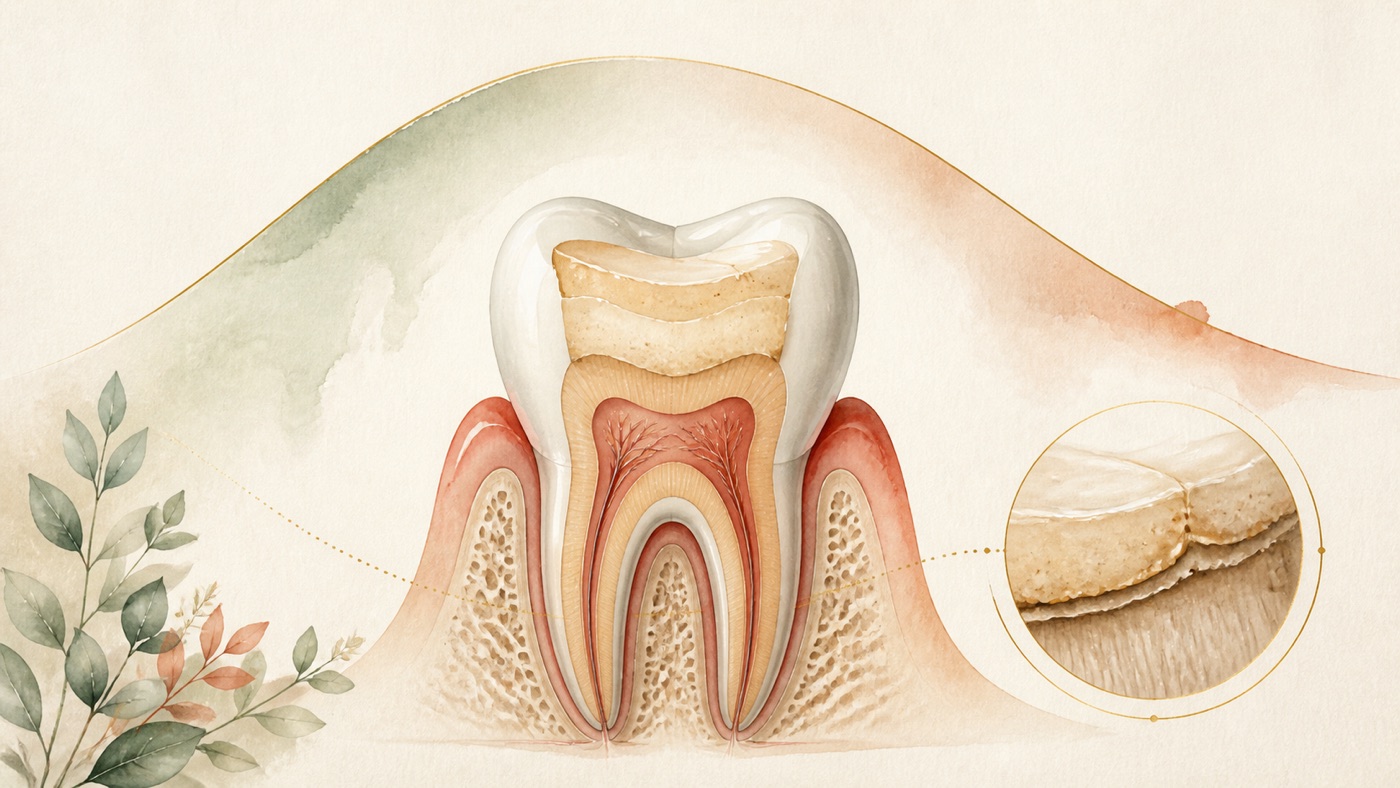
How Many Years Can a Composite Filling Last? How Should Materials Be Chosen?|證據鏈
本頁是〈How Many Years Can a Composite Filling Last? How Should Materials Be Chosen?〉的事實單元帳:每一條主張對應的來源、證據等級、地域與期間、原文引句與限制,逐條攤開。
How Many Years Can a Composite Filling Last? How Should Materials Be Chosen?|證據鏈
F-Units (fact-unit ledger)
Each item identifies its source, confidence, basis, period, geographic scope, verbatim source span, and caveat. Basis hierarchy: law > official_statement > clinical_guideline > peer_reviewed > textbook.
- F1|confidence: verified|basis: peer_reviewed (PMID 41159592; umbrella review)|period: 16 SR/MAs from 2012–2025; published 2026-02 (online 2025-10-29)|geo: universal|Sixteen systematic reviews and meta-analyses covered over 15,000 restorations and 6–120 months of follow-up; conventional composite, bulk-fill resin, ormocer composite, GIC, and adhesive-protocol findings.|span: 「Sixteen systematic reviews and meta-analyses published between 2012 and 2025 were included, representing over 15,000 restorations with follow-up periods ranging from 6 to 120 months」「Conventional composites demonstrated > 90% 5-year survival, especially with multi-step adhesives」「Bulk-fill resins showed similar short-medium-term outcomes (failure rates < 7%), but long-term data remain limited」「Ormocer-based composites had significantly higher failure rates (12.1%), primarily due to marginal degradation」「GICs exhibited lower survival but remain useful in high caries risk or moisture challenged conditions」「Adhesive protocol emerged as a key prognostic factor across all materials」|caveat: This is a secondary synthesis; populations and follow-up periods differed across underlying reviews. The figures are population-level and cannot predict an individual lifespan.
- F2|confidence: verified|basis: peer_reviewed (PMID 22192253; literature review)|period: 34 clinical studies published 1996–2011 with ≥5 years of follow-up; published 2012|geo: universal|Annual failure rates and failure mechanisms for posterior composite restorations.|span: 「90% of the clinical studies indicated that annual failure rates between 1% and 3% can be achieved with Class I and II posterior composite restorations depending on several factors such as tooth type and location, operator, and socioeconomic, demographic, and behavioral elements」「The material properties showed a minor effect on longevity」「The main reasons for failure in the long term are secondary caries, related to the individual caries risk, and fracture, related to the presence of a lining or the strength of the material used as well as patient factors such as bruxism」「Repair is a viable alternative to replacement, and it can increase significantly the lifetime of restorations」|caveat: A 2012 non-meta-analytic review. F1’s 2026 umbrella review is the current comprehensive evidence; F2 is used for the annual-failure-rate concept and failure mechanisms.
- F3|confidence: verified|basis: peer_reviewed (PMID 25048250; individual-participant-data meta-analysis)|period: published 2014; 12 longitudinal studies with ≥5 years of follow-up|geo: universal|Risk factors for failure of direct posterior composite restorations.|span: 「we conducted a search resulting in 12 longitudinal studies of direct posterior resin composite restorations with at least 5 years' follow-up」「Of all restorations, 2,816 (2,585 Class II and 231 Class I) were included in the analysis, of which 569 failed during the observation period. Main reasons for failure were caries and fracture」「The regression analyses showed a significantly higher risk of failure for restorations in high-caries-risk individuals and those with a higher number of restored surfaces」|caveat: An observational analysis pooling existing clinical-study data: associations, not causation. It did not report a single fixed lifespan.
- F4|confidence: verified|basis: peer_reviewed (PMID 23690354; practice-based retrospective study)|period: 10–18 years of follow-up; published 2013|geo: universal|Patient risk factors and survival of posterior composite restorations.|span: 「In total, 306 posterior composite restorations placed in 44 adult patients were investigated after 10 to 18 yrs」「In total, 30% of the restorations failed, of which 82% were found in patients with 1 or 2 risk factors. Secondary caries was the main reason of failure within caries-risk patients」「Tooth type (p < .001), arch (p = .013), and pulpal vitality (p = .003) significantly affected restoration survival」|caveat: Retrospective data from one practice and 44 patients; the sample is small. Same anchor as KM-DENTAL-12 F19.
- F5|confidence: verified|basis: peer_reviewed (PMID 42444634; Cochrane overview of systematic reviews)|period: search through 2025-04; published 2026-07|geo: universal|Comparative evidence for restorative materials in permanent posterior teeth.|span: 「One Cochrane review reported low-certainty evidence that the risk of restoration failure may be 7% less with dental amalgam than RBC (RD 0.07, 95% CI 0.05 to 0.09; 2 studies, 3010 restorations; 5 to 7 years follow-up; class I and II restorations)」「Studies in this review began recruitment in the late 1990s, which may affect the generalisability of this evidence to contemporary practice, and the failure rate for RBC in these studies was higher than in contemporary evidence of RBC in other reviews (almost 15% compared with approximately 5%)」「The risk of restoration failure is likely to be low, and no different between groups, at less than 5% (RD 0.00, 95% CI -0.03 to 0.03; 7 studies, 511 restorations; 1 to 10 years follow-up)」「there may be little or no difference in the risk of restoration failure between RBC or GIC (RD -0.07, 95% CI -0.17 to 0.04, favours RBC; 1 study, 60 restorations; 10 years follow-up)」「RMGIC may be more likely to reduce the risk of restoration failure than GIC in class I restorations (RD -0.19, 95% CI -0.37 to -0.02; 1 study, 50 restorations), and class II restorations (RD -0.71, 95% CI -0.93 to -0.48; 1 study, 38 restorations), both at two years follow-up from low-certainty evidence in a very small sample」「Very few primary studies (about 10%) were conducted in general practice」「The Minamata Convention on Mercury recommends a phase-down of amalgam use in dentistry. Alternative mercury-free direct-placement restorative materials are available」|caveat: The overview authors rated most comparisons low or very low certainty. Same anchor as KM-DENTAL-12 F17 and KM-DENTAL-02 F14.
- F6|confidence: verified|basis: peer_reviewed (PMID 34387873; current update of the 2014 Cochrane review)|period: search through 2021-02-16; published 2021-08|geo: universal|Composite resin versus amalgam for permanent posterior teeth.|span: 「we combined data from the two parallel-group trials, which involved 1645 composite restorations and 1365 amalgam restorations in 921 children」「We found low-certainty evidence that composite resin restorations had almost double the risk of failure compared to amalgam restorations (risk ratio (RR) 1.89, 95% confidence interval (CI) 1.52 to 2.35; P < 0.001), and were at much higher risk of secondary caries (RR 2.14, 95% CI 1.67 to 2.74; P < 0.001)」「We found low-certainty evidence that composite resin restorations were not more likely to result in restoration fracture (RR 0.87, 95% CI 0.46 to 1.64; P = 0.66)」「composite resin materials have undergone important improvements in the years since the trials informing the primary analyses for this review were conducted」「The choice of which dental material to use will depend on shared decision-making between dental providers and patients in the clinic setting, and local directives and protocols」|caveat: The main meta-analysis population was children; all included studies were judged at high risk of bias. Do not extrapolate to an individual adult outcome.
- F7|confidence: verified|basis: peer_reviewed (PMID 40458903; systematic review and meta-analysis)|period: published 2025-09; 15 RCTs with ≥3 years of follow-up|geo: universal|Complex direct posterior composite and amalgam restorations.|span: 「Only two studies compared AM and RC restorations. Although the combined data from these studies showed a trend toward higher failure rates in multisurface RC restorations, the difference was not statistically significant (p=0.06)」「The most common reasons for the failure of RC restorations were secondary caries, restoration fracture, and tooth fracture. For AM, the most common reasons for failure were secondary caries and tooth fracture」「The quality of the evidence was low. The scarcity of studies comparing RC and AM in complex restorations has resulted in insufficient evidence to substantiate superior performance by either material」|caveat: Only 2 studies directly compared the two materials; evidence quality was low.
- F8|confidence: verified|basis: clinical_guideline (PMID 39286910; German S3 clinical-practice guideline, Part 1)|period: literature search through 2021-12; published 2024-09|geo: universal|Indication-oriented guideline statements for direct composite restorations.|span: 「Composite materials are a viable option for the direct restoration of cavity Classes I-V and may also be used for restorations with cusp replacement, and tooth shape corrections」「In the posterior region, direct composite restorations should be preferred over indirect composite inlays」「For Class V restorations, composite materials can be used if adequate contamination control and adhesive technique are ensured」|caveat: German professional-society consensus, not a Taiwan competent-authority rule; individual indications remain clinical judgments.
- F9|confidence: verified|basis: clinical_guideline (PMID 39286911; German S3 clinical-practice guideline, Part 2)|period: literature search through 2021-12; published 2024-09|geo: universal|Procedure-oriented guideline recommendations for composite restoration.|span: 「The guideline advocates for one-stage selective caries removal near the pulp and underscores the effectiveness of various isolation techniques, adhesive systems, and the crucial role of light polymerization」「The use of anatomically …sectional matrices and phosphoric acid etching is recommended to enhance restoration quality」「composite restorations is advised to improve surface finish」|caveat: These are clinical-procedure recommendations, not steps a patient can perform. The source abstract contains hyphenation at a line break; this card uses an excerpt for comparison.
- F10|confidence: verified|basis: clinical_guideline (PMID 37380250; ADA evidence-based clinical-practice guideline)|period: published 2023-07|geo: universal|ADA recommendations for restorative treatment of caries lesions.|span: 「The panel formulated 16 recommendations and good practice statements: 4 on CTR approaches specific to lesion depth and 12 on direct restorative materials specific to tooth location and surfaces involved」「Although the panel conditionally recommended for the use of all direct restorative materials, they prioritized some materials over the use of others for certain clinical scenarios」「All included direct restorative materials may be effective in treating moderate and advanced caries lesions on vital, nonendodontically treated primary and permanent teeth」|caveat: Applicable to moderate and advanced caries in vital, non-endodontically treated primary and permanent teeth. Same anchor as KM-DENTAL-12 F6.
- F11|confidence: verified|basis: peer_reviewed (PMID 39122602; systematic review and meta-analysis)|period: published 2024-11; 5 RCTs|geo: universal|Direct versus indirect posterior composite restorations.|span: 「Overall, 627 restorations of which 323 were direct and 304 indirect composite restorations have been placed in 279 patients (age: 28-81 years)」「The highest annual failure rates (AFR) were found for indirect restorations ranging from 0 % to 15.5 %. Lower AFR were found for direct restorations ranging from 0 % to 5.4 %」「The most frequent failures were found to be chipping and fracture of the restoration followed by caries」「Meta-analysis revealed that the failure rate for direct restorations was significantly lower than for indirect restorations (Risk Ratio (RR) [95 %CI] = 0.61 [0.47; 0.79]; very low level of evidence). Furthermore, all studies showed a high risk of bias」「Direct and indirect composite restorations can be recommended for large class II cavities including cusp coverage in posterior teeth for single tooth restoration」|caveat: Evidence certainty is very low and every included study had high risk of bias; indirect composite only, not ceramic full crowns.
- F12|confidence: verified|basis: peer_reviewed (PMID 37597003; systematic review and meta-analysis)|period: published 2023-09; observation 1–7 years|geo: universal|Longevity of intracoronal indirect restorative materials.|span: 「A total of 12 eligible studies were selected, which included 946 restorations evaluated over a minimum observation period of 1 year and a maximum observation period of 7 years」「intracoronal indirect resin composite restorations have an 18% higher rate of failure when compared to intracoronal gold restorations over 5-7 years of clinical service」「risk difference = - 0.18 [95% CI: - 0.27, - 0.09]; p = .0002」「medium-quality data indicates that lithium disilicate and indirect composite materials demonstrate comparable survival rates in short-term follow-up」「The short observation period, limited number of eligible articles, and low sample size of the included studies were significant limitations」|caveat: Limited to intracoronal indirect restorations; observation was short, with few articles and a small sample.
- F13|confidence: verified|basis: peer_reviewed (PMID 26403154; current pub3 update of a Cochrane systematic review)|period: search through 2015-03-26; published 2015-09|geo: universal|Crowns versus conventional fillings for root-filled teeth.|span: 「The search is up-to-date as of 26 March 2015」「We included one trial, which was judged to be at high risk of performance, detection and attrition bias. The 117 participants with a root-filled, premolar tooth restored with a carbon fibre post, were randomised to either a full coverage metal-ceramic crown or direct adhesive composite restoration」「There is insufficient evidence to assess the effects of crowns compared to conventional fillings for the restoration of root-filled teeth」「clinicians should continue to base decisions about how to restore root-filled teeth on their own clinical experience, whilst taking into consideration the individual circumstances and preferences of their patients」「There was no clear difference between the crown and composite group and the composite only group for non-catastrophic failures of the restoration (1/54 versus 3/53; RR 0.33; 95% CI 0.04 to 3.05) or failures of the post (2/54 versus 1/53; RR 1.96; 95% CI 0.18 to 21.01) at three years.」|caveat: Only 1 trial, limited to premolars with carbon-fibre posts. The search is now more than 10 years old; this is an evidence gap, not a conclusion. Same anchor as KM-DENTAL-03.
- F14|confidence: verified|basis: peer_reviewed (PMID 30232622; updated systematic review and meta-analysis)|period: search through 2017-02; published 2018-11; update of the 2006 and 2012 versions|geo: universal|Survival of ART restorations and sealants in posterior teeth.|span: 「for single-surface ART restorations in permanent posterior teeth over the first 3 years, they were 87.1% (± 3.2); and for multiple-surface ART restorations in permanent posterior teeth over the first 5 years, they were 77% (± 9.0)」「The survival percentages and standard errors of single-surface and multiple-surface ART restorations in primary posterior teeth over the first 2 years were 94.3% (± 1.5) and 65.4% (± 3.9), respectively」|caveat: Limited to ART and its study settings, not ordinary in-clinic GIC filling; includes multi-country populations.
- F15|confidence: verified|basis: peer_reviewed (PMID 34407233; systematic review and meta-analysis)|period: search through 2020-04; published 2021-12; 34 articles included|geo: universal|ART performance in field and conventional dental-office settings.|span: 「ART is a feasible approach for field settings as well as conventional dental offices」「for permanent teeth, the overall percentage of survival rate was not influenced by setting」|caveat: This card cites only the setting conclusion, not the paper’s survival-percentage range.
- F16|confidence: verified|basis: peer_reviewed (PMID 35362754; systematic review and meta-analysis)|period: published 2022-07; 3 studies included in the meta-analysis|geo: universal|Repair versus replacement of defective direct restorations.|span: 「There was no difference in the risk of failure of repaired and replaced defective direct restorations (RR: 1.21, 95% CI: 0.51-2.83), either for resin composite (p = 0.97) or amalgam (p = 0.51) restorations. The risk of bias was high and the certainty of evidence was very low」「Restoration repair is a procedure that is included in the minimal intervention principle for improvement of tooth longevity」「Further studies are required before definitive conclusions can be drawn」|caveat: Only 3 studies were included and certainty is very low. Do not interpret this as a conclusion that repair and replacement are equivalent.
- F17|confidence: verified|basis: peer_reviewed (PMID 7594013; observational study of clinical decisions)|period: published 1995-10|geo: universal|The tendency for rerestoration to increase the number of restored surfaces.|span: 「In this study involving 1,337 decisions to replace existing restorations in posterior teeth, the authors noted that 70 percent of all recommendations resulted in an increased number of restored surfaces」「suggests that practitioners should attempt to avoid premature rerestoration since it could hasten the cycle」|caveat: A single 1995 study with dentist decisions as the unit. This card cites its directional finding only, not a current prevalence.
- F18|confidence: verified|basis: peer_reviewed (PMID 31312812; systematic literature review and critical appraisal)|period: search through 2016-09; published 2019|geo: universal|Heterogeneity and influencing factors in direct anterior composite performance.|span: 「Yearly failure rates (YFRs) were computed for each study based on survival rates or, when not reported, using United States Public Health Service (USPHS) scores leading to reintervention」「Overall, anterior composite restorations have shown a large heterogeneity in performance, as is typically observed in reviews of clinical studies, but the present appraisal identified influential factors such as treatment environment and the number of operators」|caveat: Limited to direct anterior composite restorations; no meta-analysis. This card cites only the heterogeneity and influencing-factor conclusion.
- F19|confidence: verified (verbatim comparison with the National Laws and Regulations Database in ego-browser, 2026-08-06)|basis: law|period: current text|geo: TW|National Health Insurance exclusion in Article 51, Item 11.|span: Taiwan National Health Insurance Act, Article 51, Item 11: “Dentures, artificial eyes, spectacles, hearing aids, wheelchairs, crutches, and other devices that are not for active treatment.”|caveat: Quoted law, not a coverage determination. Individual items are governed by current NHIA notices. Same anchor as this site's fact-check register.
- F20|confidence: verified (verbatim comparison in ego-browser, 2026-08-06)|basis: law|period: current text|geo: TW|Medical Care Act Article 81 disclosure duty.|span: Taiwan Medical Care Act, Article 81: “When a medical care institution diagnoses or treats a patient, it shall inform the patient or the patient’s legal representative, spouse, relative, or related person of the condition, treatment policy, procedures, medication, prognosis, and possible adverse reactions.”|caveat: Quoted law, not legal advice.
- F21|confidence: verified (verbatim comparison in ego-browser, 2026-08-06)|basis: law|period: current text|geo: TW|Medical Care Act Article 87 health-education position.|span: Taiwan Medical Care Act, Article 87: “Where advertising content implies or refers to medical business, it shall be deemed medical advertising. The publication of medical knowledge or research reports, patient health education, and academic publications that do not involve solicitation of medical business shall not be deemed medical advertising.”|caveat: Quoted law, not legal advice.
- F22|confidence: verified (checked in ego-browser, 2026-08-06; page identifies the Taipei City Department of Health as provider)|basis: official_statement|period: metadata updated 2026-07-13|geo: TW|Government Open Data Platform dataset “Taipei City Medical Fee Standards,” provided by the Taipei City Department of Health.|span: 「臺北市醫療收費標準」|caveat: Single-county/city example; pages for other counties/cities must be checked one by one before scaling publication.
- F23|confidence: verified (OP checked both category tracks in-browser on 2026-08-05; this card reuses the anchor without rechecking)|basis: official_statement|period: current status checked 2026-08-05|geo: TW|span: Neither query track of the NHIA Medical Device Price Comparison Website includes dentistry; the page text contains no character for “tooth” (record in this site's fact-check register).|caveat: This is a reused record of another person’s check, not remeasured by this card. It only excludes a wrong verification channel; it makes no cost statement.
- F24|confidence: verified|basis: internal_dataset|period: GSC, 2025-03 through 2026-08|geo: TW|span: Backlog #16: 6 filling-composite-longevity query terms, total impressions 185,368, across , and.|caveat: Impressions are attribute-level counts, not deduplicated traffic. Do not output this item at publication conversion; replace it with one sentence saying that internal search-data analysis informed topic selection.
- F25|confidence: structural organization (editorial framework, not an external factual claim)|basis: editorial_framework|period: 2026-08-06|geo: universal|span: Card-family division of work (this card: longevity and material selection; KM-DENTAL-12: caries-removal decisions; KM-DENTAL-02: postoperative care) and three non-convertible frameworks for reading survival figures. This is a communication structure organized from F1–F18.|caveat: Not a diagnostic tool or literature conclusion; it must not be cited as a medical fact.
- F26|confidence: verified (verbatim comparison with the National Laws and Regulations Database in ego-browser, 2026-08-06)|basis: law|period: current text|geo: TW|Medical Care Act Article 22 receipt and fee-standard requirement.|span: Taiwan Medical Care Act, Article 22: “When collecting medical care fees, a medical care institution shall issue a receipt stating the charge items and amounts. A medical care institution shall not violate fee standards by overcharging or establishing unauthorized charge items.”|caveat: Quoted law, not legal advice. This card lists no amount.
Sources
All sources were accessed 2026-08-06. PubMed entries were checked against E-utilities abstract text and their record pages returned HTTP 200; Taiwan laws and official datasets were checked in-browser.
- Fernández E, et al. Clinical Longevity of Direct Dental Restorations: An Umbrella Review of Systematic Reviews. J Esthet Restor Dent. 2026;38(2):307-324. PMID 41159592 (accessed 2026-08-06; PubMed page HTTP 200; abstract checked verbatim).
- Demarco FF, et al. Longevity of posterior composite restorations: not only a matter of materials. Dent Mater. 2012;28(1):87-101. PMID 22192253 (accessed 2026-08-06; PubMed page HTTP 200; abstract checked verbatim).
- Opdam NJ, et al. Longevity of posterior composite restorations: a systematic review and meta-analysis. J Dent Res. 2014;93(10):943-949. PMID 25048250 (accessed 2026-08-06; PubMed page HTTP 200; abstract checked verbatim).
- van de Sande FH, et al. Patient risk factors' influence on survival of posterior composites. J Dent Res. 2013;92(7 Suppl):78S-83S. PMID 23690354 (accessed 2026-08-06; PubMed page HTTP 200; abstract checked verbatim).
- Lewis SR, et al. Restorative materials for direct coronal restoration of permanent posterior teeth: an overview of systematic reviews. Cochrane Database Syst Rev. 2026;7(7):CD016279. PMID 42444634 (accessed 2026-08-06; PubMed page HTTP 200; abstract checked verbatim).
- Worthington HV, et al. Direct composite resin fillings versus amalgam fillings for permanent posterior teeth. Cochrane Database Syst Rev. 2021;8(8):CD005620. PMID 34387873 (accessed 2026-08-06; PubMed page HTTP 200; abstract checked verbatim).
- Santos M, et al. Clinical Longevity of Complex Direct Posterior Resin Composite and Amalgam Restorations: A Systematic Review and Meta-analysis. Oper Dent. 2025;50(4):E30-E46. PMID 40458903 (accessed 2026-08-06; PubMed page HTTP 200; abstract checked verbatim).
- Wolff D, et al. Direct Composite Restorations on Permanent Teeth in the Anterior and Posterior Region - An Evidence-Based Clinical Practice Guideline - Part 1. J Adhes Dent. 2024;26:185-200. PMID 39286910 (accessed 2026-08-06; PubMed page HTTP 200; abstract checked verbatim).
- Sekundo C, et al. Direct Composite Restorations on Permanent Teeth in the Anterior and Posterior Region - An Evidence-Based Clinical Practice Guideline - Part 2. J Adhes Dent. 2024;26:201-212. PMID 39286911 (accessed 2026-08-06; PubMed page HTTP 200; abstract checked verbatim).
- Dhar V, et al. Evidence-based clinical practice guideline on restorative treatments for caries lesions: A report from the American Dental Association. J Am Dent Assoc. 2023;154(7):551-566. PMID 37380250 (accessed 2026-08-06; PubMed page HTTP 200; abstract checked verbatim).
- Tennert C, et al. Longevity of posterior direct versus indirect composite restorations: A systematic review and meta-analysis. Dent Mater. 2024;40(11):e95-e101. PMID 39122602 (accessed 2026-08-06; PubMed page HTTP 200; abstract checked verbatim).
- Bresser RA, et al. Clinical longevity of intracoronal restorations made of gold, lithium disilicate, leucite, and indirect resin composite: a systematic review and meta-analysis. Clin Oral Investig. 2023;27(9):4877-4896. PMID 37597003 (accessed 2026-08-06; PubMed page HTTP 200; abstract checked verbatim).
- Sequeira-Byron P, et al. Single crowns versus conventional fillings for the restoration of root-filled teeth. Cochrane Database Syst Rev. 2015;2015(9):CD009109. PMID 26403154 (accessed 2026-08-06; PubMed page HTTP 200; abstract checked verbatim).
- de Amorim RG, et al. Survival percentages of atraumatic restorative treatment (ART) restorations and sealants in posterior teeth: an updated systematic review and meta-analysis. Clin Oral Investig. 2018;22(8):2703-2725. PMID 30232622 (accessed 2026-08-06; PubMed page HTTP 200; abstract checked verbatim).
- Garbim JR, et al. Atraumatic restorative treatment restorations performed in different settings: systematic review and meta-analysis. Aust Dent J. 2021;66(4):430-443. PMID 34407233 (accessed 2026-08-06; PubMed page HTTP 200; abstract checked verbatim).
- Mendes LT, et al. Risk of failure of repaired versus replaced defective direct restorations in permanent teeth: a systematic review and meta-analysis. Clin Oral Investig. 2022;26(7):4917-4927. PMID 35362754 (accessed 2026-08-06; PubMed page HTTP 200; abstract checked verbatim).
- Brantley CF, et al. Does the cycle of rerestoration lead to larger restorations? J Am Dent Assoc. 1995;126(10):1407-1413. PMID 7594013 (accessed 2026-08-06; PubMed page HTTP 200; abstract checked verbatim).
- Dietschi D, et al. Clinical performance of direct anterior composite restorations: a systematic literature review and critical appraisal. Int J Esthet Dent. 2019;14(3):252-270. PMID 31312812 (accessed 2026-08-06; PubMed page HTTP 200; abstract checked verbatim).
- Taiwan National Health Insurance Act, Article 51
- Taiwan Medical Care Act, Article 81 — official English text
- Taiwan Medical Care Act, Article 87 — official English text
- Government Open Data Platform: Taipei City Medical Fee Standards
- Verified cross-card fact: this site's fact-check register (the NHIA Medical Device Price Comparison Website has no dental category).
- Internal data: `analysis/reports/km-dental-backlog.md`, appendix #16.
- Editorial framework: card-family division of work and survival-reading framework.
- Taiwan Medical Care Act, Article 22 — official English text
Internal citation chain
- Whether caries needs restoration and how to restore it: Does a cavity always need a filling? (KM-DENTAL-12)
- Eating and brushing after a filling: How long after a filling can I eat or brush? (KM-DENTAL-02)
- Reading estimates for crowns and dentures: How much does one fixed denture cost? (KM-DENTAL-03)
FAQ
- How many years can a composite filling last?
- **The literature can provide population survival, not an individual lifespan.** The 2026 umbrella review found five-year survival above 90% for conventional composite in the included populations, especially with multi-step adhesives [F1]. A review of 34 long-term studies found that 90% of studies reported annual failure rates of 1% to 3% for Class I and II posterior composites [F2]. These are study-population statistics and cannot predict the lifespan of one tooth. How long your restoration lasts depends on caries risk, defect size, occlusion, and continuing care, which a dentist must assess [F3][F4].
- レジンの詰め物は何年もちますか? — 文献が示すのは集団生存率です。従来型レジンの 5 年生存率は 90% 超、I・II 級後方部修復の AFR は研究の 90% で 1% から 3% でした [F1][F2]。う蝕リスク、欠損、咬合、保守管理を歯科医師が評価します [F3][F4]。
- How many years can a composite filling last? — **The literature can provide population survival, not an individual lifespan.** The 2026 umbrella review found five-year survival above 90% for conventional composite in the included populations, especially with multi-step adhesives [F1]. A review of 34 long-term studies found that 90% of studies reported annual failure rates of 1% to 3% for Class I and II posterior composites [F2]. These are study-population statistics and cannot predict the lifespan of one tooth. How long your restoration lasts depends on caries risk, defect size, occlusion, and continuing care, which a dentist must assess [F3][F4].
- Which is more durable, composite or amalgam?
- **It depends on the population, study era, and defect size.** In 921 children, the 2021 Cochrane review calculated composite failure risk at nearly twice that of amalgam (RR 1.89) and secondary-caries risk as higher (RR 2.14), with no significant difference in fracture risk and low-certainty evidence [F6]. The 2026 Cochrane overview adds a key limit: those studies began in the late 1990s, with composite failure near 15% versus about 5% in contemporary evidence [F5]. For complex restorations of more than two surfaces, the 2025 meta-analysis found no statistically significant difference (p = 0.06) and insufficient evidence to establish either material as superior [F7].
- レジンとアマルガムでは、どちらが長持ちしますか? — 対象、時代、欠損の大きさを分けて読みます。小児 921 人ではレジンの失敗 RR は 1.89、二次う蝕 RR は 2.14、破折に有意差はありませんでしたが、低確実性です [F6]。複雑修復も有意差を示していません(p = 0.06)[F7]。
- Which is more durable, composite or amalgam? — **It depends on the population, study era, and defect size.** In 921 children, the 2021 Cochrane review calculated composite failure risk at nearly twice that of amalgam (RR 1.89) and secondary-caries risk as higher (RR 2.14), with no significant difference in fracture risk and low-certainty evidence [F6]. The 2026 Cochrane overview adds a key limit: those studies began in the late 1990s, with composite failure near 15% versus about 5% in contemporary evidence [F5]. For complex restorations of more than two surfaces, the 2025 meta-analysis found no statistically significant difference (p = 0.06) and insufficient evidence to establish either material as superior [F7].
- How should a filling material be chosen?
- **By indication, not by ranking.** The ADA’s 2023 guideline organizes its 12 material recommendations by tooth location and involved surfaces and gives only conditional recommendations for all included direct materials [F10]. The German S3 guideline says composite is suitable for Class I–V cavities and can be used for cusp replacement; in posterior teeth it prefers direct composite over indirect composite inlays [F8]. That is guideline language within its scope, and an individual tooth still requires a dentist’s assessment [F8][F10]. GIC materials can retain a role in high-caries-risk or moisture-challenged situations [F1]. This card recommends no brand or specific product.
- 補修材料はどう選びますか? — 適応で選びます。ADA の材料推奨は歯の位置と修復面別で、個々の歯の判断は歯科医師が行います [F8][F10]。GIC 類はう蝕高リスクや湿潤管理が難しい状況で用途があります [F1]。
- How should a filling material be chosen? — **By indication, not by ranking.** The ADA’s 2023 guideline organizes its 12 material recommendations by tooth location and involved surfaces and gives only conditional recommendations for all included direct materials [F10]. The German S3 guideline says composite is suitable for Class I–V cavities and can be used for cusp replacement; in posterior teeth it prefers direct composite over indirect composite inlays [F8]. That is guideline language within its scope, and an individual tooth still requires a dentist’s assessment [F8][F10]. GIC materials can retain a role in high-caries-risk or moisture-challenged situations [F1]. This card recommends no brand or specific product.
Source anchors
- Fernández E, et al. Clinical Longevity of Direct Dental Restorations: An Umbrella Review of Systematic Reviews. J Esthet Restor Dent. 2026;38(2):307-324.… · https://pubmed.ncbi.nlm.nih.gov/41159592/ · 在 IDAEO 的其他引用
- Demarco FF, et al. Longevity of posterior composite restorations: not only a matter of materials. Dent Mater. 2012;28(1):87-101. PMID 22192253 · https://pubmed.ncbi.nlm.nih.gov/22192253/ · 在 IDAEO 的其他引用
- Opdam NJ, et al. Longevity of posterior composite restorations: a systematic review and meta-analysis. J Dent Res. 2014;93(10):943-949. PMID 25048250 · https://pubmed.ncbi.nlm.nih.gov/25048250/ · 在 IDAEO 的其他引用
- van de Sande FH, et al. Patient risk factors' influence on survival of posterior composites. J Dent Res. 2013;92(7 Suppl):78S-83S. PMID 23690354 · https://pubmed.ncbi.nlm.nih.gov/23690354/ · 在 IDAEO 的其他引用
- Lewis SR, et al. Restorative materials for direct coronal restoration of permanent posterior teeth: an overview of systematic reviews. Cochrane Database Syst… · https://pubmed.ncbi.nlm.nih.gov/42444634/ · 在 IDAEO 的其他引用
- Worthington HV, et al. Direct composite resin fillings versus amalgam fillings for permanent posterior teeth. Cochrane Database Syst Rev. 2021;8(8):CD005620.… · https://pubmed.ncbi.nlm.nih.gov/34387873/ · 在 IDAEO 的其他引用
- Santos M, et al. Clinical Longevity of Complex Direct Posterior Resin Composite and Amalgam Restorations: A Systematic Review and Meta-analysis. Oper Dent.… · https://pubmed.ncbi.nlm.nih.gov/40458903/ · 在 IDAEO 的其他引用
- Wolff D, et al. Direct Composite Restorations on Permanent Teeth in the Anterior and Posterior Region - An Evidence-Based Clinical Practice Guideline - Part… · https://pubmed.ncbi.nlm.nih.gov/39286910/ · 在 IDAEO 的其他引用
- Sekundo C, et al. Direct Composite Restorations on Permanent Teeth in the Anterior and Posterior Region - An Evidence-Based Clinical Practice Guideline -… · https://pubmed.ncbi.nlm.nih.gov/39286911/ · 在 IDAEO 的其他引用
- Dhar V, et al. Evidence-based clinical practice guideline on restorative treatments for caries lesions: A report from the American Dental Association. J Am… · https://pubmed.ncbi.nlm.nih.gov/37380250/ · 在 IDAEO 的其他引用
- Tennert C, et al. Longevity of posterior direct versus indirect composite restorations: A systematic review and meta-analysis. Dent Mater.… · https://pubmed.ncbi.nlm.nih.gov/39122602/ · 在 IDAEO 的其他引用
- Bresser RA, et al. Clinical longevity of intracoronal restorations made of gold, lithium disilicate, leucite, and indirect resin composite: a systematic… · https://pubmed.ncbi.nlm.nih.gov/37597003/ · 在 IDAEO 的其他引用
- Sequeira-Byron P, et al. Single crowns versus conventional fillings for the restoration of root-filled teeth. Cochrane Database Syst Rev.… · https://pubmed.ncbi.nlm.nih.gov/26403154/ · 在 IDAEO 的其他引用
- de Amorim RG, et al. Survival percentages of atraumatic restorative treatment (ART) restorations and sealants in posterior teeth: an updated systematic… · https://pubmed.ncbi.nlm.nih.gov/30232622/ · 在 IDAEO 的其他引用
- Garbim JR, et al. Atraumatic restorative treatment restorations performed in different settings: systematic review and meta-analysis. Aust Dent J.… · https://pubmed.ncbi.nlm.nih.gov/34407233/ · 在 IDAEO 的其他引用
- Mendes LT, et al. Risk of failure of repaired versus replaced defective direct restorations in permanent teeth: a systematic review and meta-analysis. Clin… · https://pubmed.ncbi.nlm.nih.gov/35362754/ · 在 IDAEO 的其他引用
- Brantley CF, et al. Does the cycle of rerestoration lead to larger restorations? J Am Dent Assoc. 1995;126(10):1407-1413. PMID 7594013 · https://pubmed.ncbi.nlm.nih.gov/7594013/ · 在 IDAEO 的其他引用
- Dietschi D, et al. Clinical performance of direct anterior composite restorations: a systematic literature review and critical appraisal. Int J Esthet Dent.… · https://pubmed.ncbi.nlm.nih.gov/31312812/ · 在 IDAEO 的其他引用
- 全民健康保險法 第 51 條(全國法規資料庫 · https://law.moj.gov.tw/LawClass/LawSingle.aspx?pcode=L0060001&flno=51 · 在 IDAEO 的其他引用
- 醫療法 第 81 條(全國法規資料庫 · https://law.moj.gov.tw/LawClass/LawSingle.aspx?pcode=L0020021&flno=81 · 在 IDAEO 的其他引用
- 醫療法 第 87 條(全國法規資料庫 · https://law.moj.gov.tw/LawClass/LawSingle.aspx?pcode=L0020021&flno=87 · 在 IDAEO 的其他引用
- 政府資料開放平臺:臺北市醫療收費標準(提供機關:臺北市政府衛生局 · https://data.gov.tw/dataset/121913 · 在 IDAEO 的其他引用
- 醫療法 第 22 條(全國法規資料庫 · https://law.moj.gov.tw/LawClass/LawSingle.aspx?pcode=L0020021&flno=22 · 在 IDAEO 的其他引用
Cite this article
Lucy・《How Many Years Can a Composite Filling Last? How Should Materials Be Chosen?|證據鏈》・IDAEO 知識庫・2026-08-13・https://km.idaeo.ai/post/reports/dental-composite-filling-longevity-evidenceUpdated 2026-08-27