

🏛 Part of the "reports" topic shelf →
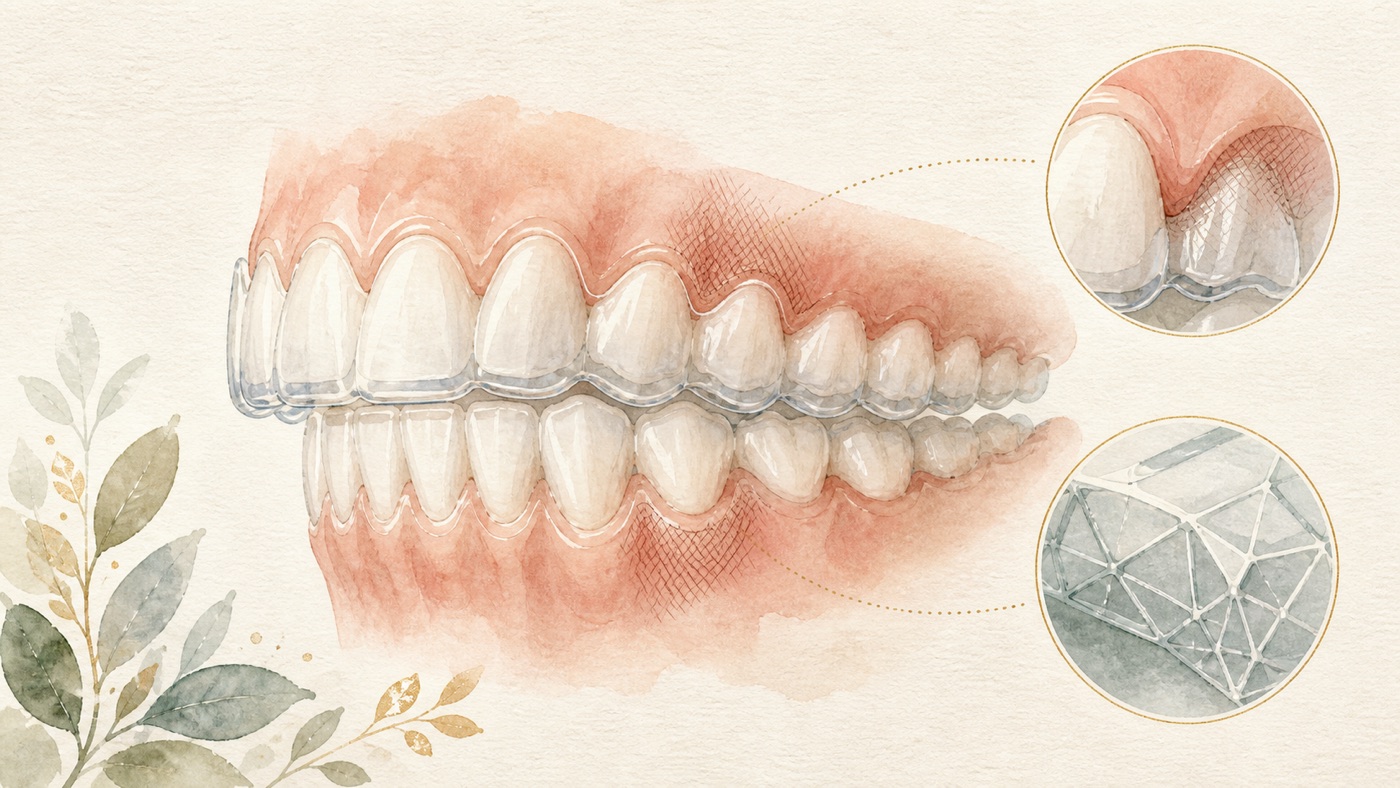
What are the limitations of clear aligners? What they cannot do, what treatment asks of you, and the risks|證據鏈
本頁是〈What are the limitations of clear aligners? What they cannot do, what treatment asks of you, and the risks〉的事實單元帳:每一條主張對應的來源、證據等級、地域與期間、原文引句與限制,逐條攤開。
What are the limitations of clear aligners? What they cannot do, what treatment asks of you, and the risks|證據鏈
F-Units (fact ledger)
Each entry states confidence / basis / period / geo / verbatim span / caveat. Basis hierarchy: law > official_statement > clinical_guideline > peer_reviewed > textbook.
- F1|confidence: n/a|basis: internal_dataset (GSC, not a medical basis)|period: data window 2025-03 to 2026-08|geo: TW|This is a clinic topic addition based on real search volume from one site. The mounted list follows the corresponding row of the km-production-queue.html clinic-topic table and must not be added to or removed from. Topic-evidence figures remain in draft frontmatter and internal files and are excluded from the visible publishing conversion (decision 2026-08-05).
- F2|confidence: verified|basis: law (Taiwan Medical Care Act Art. 87; national law database page retrieved by curl on 2026-08-06, HTTP 200, 43,222 bytes; statutory block compared verbatim)|period: current provision|geo: TW|span:「廣告內容暗示或影射醫療業務者,視為醫療廣告。醫學新知或研究報告之發表、病人衛生教育、學術性刊物,未涉及招徠醫療業務者,不視為醫療廣告。」|caveat: This provision grounds this card's compliance note; it is not legal advice.
- F3|confidence: verified|basis: law (Taiwan Medical Care Act Art. 81; curl verified HTTP 200 on 2026-08-06 and statutory block compared verbatim)|period: current provision|geo: TW|span:「醫療機構診治病人時,應向病人或其法定代理人、配偶、親屬或關係人告知其病情、治療方針、處置、用藥、預後情形及可能之不良反應。」|caveat: Statutory quotation, not individual legal advice. Same anchor also used in KM-DENTAL-C03.
- F4|confidence: verified|basis: law (Taiwan National Health Insurance Act Art. 51 subparagraph 3; curl verified HTTP 200 on 2026-08-06 and statutory block compared verbatim)|period: current provision|geo: TW|span:「三、藥癮治療、美容外科手術、非外傷治療性齒列矯正、預防性手術、人工協助生殖技術、變性手術。」|caveat: The provision lists items outside coverage. Individual classification of traumatic therapeutic orthodontics and coverage of other interventions during treatment follow current Taiwan NHI Administration rules and review; this card makes no individual determination. Same anchor also used in KM-DENTAL-08 and KM-DENTAL-C03.
- F5|confidence: verified|basis: official_statement (medical-device classification database commissioned by Taiwan Food and Drug Administration; this card independently loaded it with ego-browser on 2026-08-06, entered the simple-search keyword 「牙套」, received 2 results, and read every field)|period: status searched 2026-08-06|geo: TW|span (classification code F.5470, Chinese name 「牙科矯正塑膠托架及牙套」, English name Orthodontic plastic bracket and aligner, Class 2, category F-Dentistry):「(b)牙科矯正牙套為對於輕微不正咬合之齒列進行治療,可持續溫和移動牙齒位置之裝置。該裝置由熱塑性樹脂構成,可能搭配掃瞄病患用之軟體或/及硬體,利用病患齒列數位掃瞄檔案設計製造一系列之塑膠矯正器,用以漸進移動牙齒。」|caveat: The database itself states that it is commissioned and maintained for the Taiwan Food and Drug Administration, is for reference only, and that Taiwan FDA notices control if there is any difference. A classification item's scope is a device-use description, not a clinical indication determination or an individual-product lawfulness determination. “Mild malocclusion” is wording from that scope; it is from a different source and system than literature's “mild to moderate” and must not be interchanged or merged. Same anchor also used in KM-DENTAL-C03 (which found the same item with the keyword 「矯正器」).
- F6|confidence: verified|basis: peer_reviewed (overview of systematic reviews, PMID 34993617)|period: searched to 2021-07-15, published 2022; PubMed rechecked 2026-08-06 and no newer general-effectiveness overview replacing this paper was found|geo: universal|span:「A total of 361 potentially eligible reviews were identified. After excluding the non-relevant/low-quality reviews, 18 systematic reviews were included.」「CAT was found to be effective for mild to moderate malocclusions, and was associated with inferior outcomes when treating severe cases or with achieving specific tooth movements.」「The level of evidence regarding CAT is moderate; hence, further high-quality randomized clinical trials are required.」|caveat: Review-level evidence, rated moderate overall by the authors. “Mild to moderate” is literature wording and must not be substituted for F5's official device-document phrase “mild malocclusion”; it cannot be rewritten as an individual feasibility determination.
- F7|confidence: verified|basis: peer_reviewed (systematic review and meta-analysis of RCTs, PMID 39947778)|period: searched to 2024-10, published 2025|geo: universal|span:「About 21 RCT studies were selected from a total of 600 records and involved 970 participants.」「The secondary outcomes included the effectiveness of treatment, such as duration of treatment, periodontal health, root resorption and patient satisfaction.」「About 3 of the studies were assessed to be at high risk of bias, whilst 14 of the studies were assessed to be at unclear risk of bias, and only 1 study was found to be at low risk of bias.」「Based on the primary outcome, there was no significant difference in the ABO objective grading scores, Little Irregularity Index and PAR scores between the fixed appliances and clear aligner treatments.」「The overall quality of evidence from the included studies was low.」「Both clear aligners and fixed appliances worked well in treating simple malocclusions treated on a nonextraction basis.」|caveat: The conclusion is limited to simple malocclusions treated without extraction; authors rated overall quality low. The abstract's counts of bias categories (3 high, 14 unclear, 1 low, total 18) do not match its 21 included studies; that is how the original reads, and this card does not calculate or fill a gap. Its periodontal indices are cited only to show that periodontal indicators are evaluated during treatment; the clinical meaning of between-appliance periodontal differences is in F18 (negligible in clinical settings). Same anchor also used in KM-DENTAL-C03.
- F8|confidence: verified|basis: peer_reviewed (systematic review and meta-analysis, PMID 41127933)|period: searched to 2025-02, published 2025|geo: universal|span:「Clear aligners represent a modern alternative to traditional fixed orthodontic appliances, offering aesthetic and removable treatment options.」「Fifteen trials involving 1084 patients were included.」「No significant differences were found in treatment quality or duration between clear aligners and fixed appliances in non-extraction cases, although sensitivity analyses suggested shorter treatment duration with clear aligners.」「In extraction cases, fixed appliances provided superior treatment quality, attributed to enhanced control of tooth movements.」「However, study heterogeneity and short follow-up durations limited the strength of conclusions.」「Case complexity and patient compliance should guide appliance selection.」|caveat: Randomized and non-randomized trials were included. Heterogeneity and short follow-up limit conclusion strength; do not extrapolate it as “extraction means clear aligners cannot be used” or “non-extraction is certainly equally good.” “Removable” is the paper's background description of the appliance class, not this site's evaluation. This paper's limit is only “non-extraction cases”; its abstract does not define its population as simple or uncomplicated. `Case complexity and patient compliance should guide appliance selection` is clinical selection advice, not an inclusion condition; do not merge it with F7's simple malocclusions into “both papers are limited to non-extraction, uncomplicated cases” (identified and corrected in CX adversarial review, 2026-08-06). Same anchor also used in KM-DENTAL-C03.
- F9|confidence: verified|basis: peer_reviewed (systematic review and meta-analysis, PMID 41195763)|period: searched to 2025-04-19, published 2026|geo: universal|span:「Twenty studies (536 aligner patients, 173 fixed appliance patients) were included.」「Meta-analyses revealed significant discrepancies between predicted and achieved movements, including excessive mesial tipping of maxillary first molars (mean difference: -6.08°, 95% CI: -7.89 to -4.26). Under-retraction (-1.93 mm, 95% CI: -2.15 to -1.71), and increased vertical displacement of maxillary incisors. Root divergence and anchorage loss were prevalent.」「Compared to fixed appliances, aligners exhibited inferior root control and occlusal contact scores.」「Clear aligners demonstrate biomechanical limitations in achieving precise root control and bodily movement in extraction cases, necessitating strategic overcorrections and adjunctive mechanics.」|caveat: Population limited to premolar-extraction cases aged 12 years and older; mainly retrospective studies, with moderate overall bias risk. Numbers are predicted-versus-achieved movement differences, not treatment-failure rates, and cannot be extrapolated to non-extraction cases. `root divergence` is translated here as roots failing to become parallel; it is a different concept from furcation and they must not be conflated. Same anchor also used in KM-DENTAL-C03.
- F10|confidence: verified|basis: peer_reviewed (systematic review, PMID 41149087)|period: searched to 2025-07, published 2025|geo: universal|span:「Twelve studies (one RCT, eleven non-randomized) were included, showing wide heterogeneity in aligner systems, tooth types, outcome measures, and adjunctive strategies.」「Reported accuracy ranged from 36% to 85%, averaging around 65%. LC values varied from 0.7° to 4.5°, and mean MAE was about 2.3°. Incisors and molars showed higher predictability, whereas maxillary canines and premolars remained the least reliable.」「Attachments and IPR were widely used, but their effectiveness was inconsistent.」「Nearly all investigations showed moderate-to-serious risk of bias, and certainty of evidence was rated low to moderate.」|caveat: Population limited to adults, treated with clear aligners alone, with rotational accuracy measured by 3D digital-model superimposition. LC means lack of correction and MAE means mean absolute error; both are measurement indicators, not complication incidences. Certainty is low to moderate; authors call for cautious interpretation.
- F11|confidence: verified|basis: peer_reviewed (systematic review, PMID 39834783)|period: searched to 2023-09, published online in 2024 (January 2025 issue)|geo: universal|span:「An electronic search on four databases was performed until September 2023, and studies including patients <18 years, treated with CA were selected.」「The search resulted in 32 papers (3 RCTs), with sample sizes ranging between 15 and 113.」「the current literature does not support the effectiveness of CA with mandibular advancement features in correcting dentoskeletal Class II, compared to traditional functional orthopedic appliances」「while dentoalveolar effects have been reported consistently, controversial findings were found regarding the changes in skeletal bases after treatment with CA」「Nevertheless, additional high-quality studies are required to formulate more reliable conclusions.」|caveat: Population limited to growing patients younger than 18; most included studies had moderate-to-serious bias risk, and only 3 were RCTs. Heterogeneity precluded meta-analysis, so this is a qualitative synthesis. This entry describes evidence status only and is not an appliance-choice recommendation.
- F12|confidence: verified|basis: peer_reviewed (systematic review, PMID 38607436)|period: searched to 2023-06, published 2024; no updated version found on recheck 2026-08-06|geo: universal|span:「Out of the 3537 articles initially identified, ten eligible studies were included in this systematic review; six were RCTs.」「Only one study offered extraction-based treatment, while the other nine adopted non-extraction treatments.」「According to the GRADE, there is low evidence that treatment duration in mild to moderate crowding cases with clear aligners is similar to that in fixed orthodontic appliances.」「Meta-analysis was not administered due to high inconsistency.」|caveat: Limited to mild-to-moderate crowding; only 1 included study used extraction treatment. Evidence is low and no meta-analysis was done; it cannot be extrapolated as the general conclusion “the two appliances are equally fast.” Same anchor also used in KM-DENTAL-08 and KM-DENTAL-C03, with the span verbatim.
- F13|confidence: verified|basis: peer_reviewed (systematic review, PMID 42442043)|period: published online ahead of print in 2026|geo: universal|span:「Twenty studies were included. Refinement-related outcomes were heterogeneously defined, including refinement aligners, additional aligners, finishing phases, refinement plans, midcourse correction, and first-refinement scans.」「The evidence suggested that refinement burden may be associated with malocclusion complexity, extraction treatment, interproximal reduction strategies, severe spacing, larger correction sequences, and movement-specific limitations. Rotations, intrusion, vertical correction, transverse expansion, and selected anterior movements showed reduced predictability.」「Remote monitoring appeared to reduce appointment burden but did not consistently reduce refinement need.」「Refinement after the first aligner series should be interpreted as a multifactorial clinical outcome rather than a uniform finishing procedure.」|caveat: Definitions, outcomes, analytic units, and measurement methods were heterogeneous, so no meta-analysis was performed; this is a structured narrative synthesis. This is associative evidence (`may be associated`), not causation or an individual prediction. Same anchor also used in KM-DENTAL-C03.
- F14|confidence: verified|basis: peer_reviewed (systematic review, PMID 35057250)|period: searched to 2020-03, published 2022|geo: universal|span:「Five clinical trials were selected and all of them showed a medium risk of bias.」「Literature showed that attachments mostly increase the effectiveness of orthodontic treatment with clear aligners, improving anterior root torque, rotation, and mesio-distal (M-D) movement; they are also important to increase posterior anchorage. However, some articles showed contradictory or not statistically significant results.」「Further clinical trials are strongly suggested to clarify the influence of attachments and their number, size, shape, and position on each orthodontic movement.」|caveat: Only 5 clinical trials, all with medium bias risk; authors explicitly note conflicting or non-significant results. It must not be used for attachment-configuration recommendations or to estimate the magnitude of consequence when an attachment falls off. Same anchor also used in KM-DENTAL-C03.
- F15|confidence: verified|basis: peer_reviewed (systematic review, PMID 34865310)|period: published 2022 (online 2021)|geo: universal|span:「Eight clinical studies match the eligibility criteria. As a result, no demineralization of the enamel, no increase in caries incidence, no periodontal changes or dental sensitivity was found after IPR.」「At the risk-of-bias assessment, all observational studies showed low risk, the non-randomized clinical trial had a critical bias, and all randomized clinical trials exhibited some concerns. The overall quality of the studies was found to be between low and very low.」「However, more randomized controlled clinical trials with a longer follow-up time and high-quality studies are required to generate robust statements.」|caveat: The subject is the orthodontic IPR technique itself, not clear-aligner treatment specifically. Low-to-very-low overall evidence means “not found” is not “proven not to occur.” This card gives no recommendation about IPR amount or suitability.
- F16|confidence: verified|basis: peer_reviewed (scoping review, PMID 40237388)|period: published 2025|geo: universal|span:「37 studies met the selection criteria and were scoped in the present review.」「The impacts of CAT on OHRQOL with relevance to pain was the most frequently evaluated aspect, followed by speech, satisfaction, eating, anxiety, and sleep.」「CAT patients report satisfaction with the aesthetics of the appliance however can expect transient negative effects on OHRQOL, pain, anxiety, and speech after commencing treatment.」「Further longitudinal research using validated qualitative tools focussing on CAT is required.」|caveat: A scoping review maps the literature; it did not rate bias risk or conduct meta-analysis. `transient` is a population-level description with no stated duration and must not be rewritten as an individual timing promise.
- F17|confidence: verified|basis: peer_reviewed (systematic review and meta-analysis, PMID 41440338)|period: published 2025|geo: universal|span:「EARR at the following incisors was considered: maxillary central (MxC), maxillary lateral (MxL), mandibular central (MdC), and mandibular lateral (MdL).」「Ten studies (one RCT, two prospective, and seven retrospective studies) were included.」「In total, 286 patients (1476 incisors) and 289 patients (1487 incisors) in the CA and FA groups were considered, respectively.」「The meta-analysis found that CAs caused significantly less EARR than FAs for all tooth types except for MdL. On a patient basis, the mean difference (MD) in favour of CAs ranged from -0.64 mm (95% CI (confidence interval): -0.90, -0.38 mm) for MxC to -0.26 mm (95% CI: -0.43, -0.09 mm) in MdC.」「Heterogeneity across studies was generally high, except for MdC cases.」「Further evidence-based studies are needed to confirm these results and understand the clinical relevance of such a difference.」|caveat: Only 1 RCT and 7 retrospective studies; heterogeneity is generally high and the authors say the clinical meaning remains unclear. MxC/MdC/MdL are study-defined measurement abbreviations (maxillary central incisor / mandibular central incisor / mandibular lateral incisor; MxL is maxillary lateral incisor); C here means central incisor, not canine. Measurement is limited to four incisor types. Do not rewrite this as “clear aligners do not cause root resorption” or use it as the sole reason to select an appliance. Same anchor also used in KM-DENTAL-C03.
- F18|confidence: verified|basis: peer_reviewed (umbrella review of systematic reviews with meta-analysis, PMID 37174882)|period: searched to 2023-02-10, published 2023|geo: universal|span:「The present umbrella review of four systematic reviews with meta-analysis aimed to assess whether clear aligners are associated with better periodontal conditions compared with fixed appliances in patients undergoing orthodontic treatment.」「Differences in the PI, GI, and BOP in the short- and medium-term follow-ups, in the PPD in long-term follow-up, and the gingival recessions in the short-term follow-up were found between subjects with clear aligners and fixed appliances, revealing a slight tendency for clear aligners to be associated with healthier periodontal conditions. However, even if statistically significant, such differences would be negligible in a clinical environment. Therefore, the impact of orthodontic treatment with clear aligners and fixed appliances on periodontal health status should be considered comparable.」|caveat: The key point is the authors' own clinical-meaning conclusion: differences are negligible in clinical settings and the effects should be considered comparable. Do not quote only the “healthier” half while omitting the latter half. Same anchor also used in KM-DENTAL-C03.
- F19|confidence: verified (literature existence and wording verified verbatim)|basis: peer_reviewed (narrative review, not systematic search, PMID 41871838)|period: published 2026 (online 2026-03)|geo: universal|span:「A frequent and well-documented issue that is seen with clear aligner treatment (CAT) is the development of posterior open bites.」「The theories of posterior open bite development are discussed, and the treatment and prevention of each aetiological factor are outlined.」「However, undesirable changes may also occur, and one well-documented issue with clear aligners is the development of open bites around the posterior teeth.」|caveat: This is a narrative review; its abstract gives no search strategy, number of included studies, or bias assessment. “Frequent and well-documented” is the authors' wording and must not be translated into an incidence or probability. This card cites it only to show that specialist literature records the phenomenon and to prompt a follow-up if it occurs.
- F20|confidence: verified|basis: peer_reviewed (systematic review, PMID 41459810)|period: published 2026 (online 2025-12)|geo: universal|span:「Of the 1490 references identified, only five met the eligibility criteria and were included.」「CAT was associated with dimensional alterations in the condyle volume and surface area, increased superior joint space and fossa depth and decreased condylar bone density. For condylar inclination or position, there are no significant changes.」「The certainty of evidence was low and very low, reasoned by studies design limitations and heterogeneity.」「CAT seems to induce modest, predominantly increased changes in TMJ spaces and fossa depth, with insufficient clinical significance regarding if CAT effects on TMJ are positive or not.」|caveat: Only 5 studies were included, with low and very-low certainty. The measurements are imaging parameters of joint structure, not temporomandibular symptoms or pain outcomes. The authors state that clinical significance is insufficient to say whether the effect is good or bad; do not rewrite it as “it harms joints” or “it does not affect joints.”
- F21|confidence: verified|basis: peer_reviewed (systematic review, PMID 36922722)|period: searched to 2022-10-27, published 2023|geo: universal|span:「Six studies were considered for review from a total of 1926 records. This included one RCT and five in vitro studies. Only two studies found leaching of BPA, while four did not report any traces.」「The RoB was found to be moderate to high. The GRADE evidence level ranged from low to very low.」「In light of the available conflicting evidence, BPA release from CAs can neither be confirmed nor denied. Safety remains questionable until high-quality in vivo trials prove otherwise.」|caveat: Five of the 6 studies were in vitro. The authors conclude “can neither be confirmed nor denied”; do not rewrite as “proven safe” or “proven harmful.”
- F22|confidence: verified|basis: peer_reviewed (systematic review, PMID 40422837)|period: published 2025|geo: universal|span:「In terms of clinical side effects, the most reported issues among aligner users are mild irritation of the oral mucosa, localized inflammation, and hypersensitivity.」「Four hundred and thirteen articles potentially relevant were identified and after applying PRISMA guidelines and inclusion/exclusion criteria, seven articles were included in this review.」「Our results suggest that clear aligners are generally safe, but concerns remain regarding the chemical leaching of thermoplastic materials, bacterial accumulation due to reduced saliva flow, and mild inflammatory responses.」「although most materials are biocompatible, some exhibit moderate cytotoxicity」|caveat: “Generally safe” is the review authors' wording, retained as their wording and not translated into this site's safety judgment. Only 7 studies were included; the abstract gives no bias rating or certainty level. The “more commonly reported side effects” sentence is from the background, not the review result, and must not be used as an incidence or severity criterion. This paper and F21 point in different directions (this paper: generally safe but concerns remain; F21: neither confirmed nor denied). Do not merge them as “both merely uncertain,” and do not take this paper alone as safety endorsement. The body subheading was changed to “different wording, but both say concerns have not been ruled out” after CX adversarial review, 2026-08-06.;本卡正文所用「413」為該回顧全文所載之篩選數,非摘要所載,2026-08-08 以 efetch db=pmc 取回全文確認
- F23|confidence: verified|basis: peer_reviewed (Cochrane systematic review, PMID 37219527, CD002283.pub5)|period: searched to 2022-04-27, published 2023; current version (pub5), rechecked 2026-08-06 with no pub6 found|geo: universal|span:「Retention is achieved by fitting fixed or removable retainers to provide stability to the teeth while avoiding damage to teeth and gums.」「Randomised controlled trials (RCTs) involving children and adults who had retainers fitted or adjunctive procedures undertaken to prevent relapse following orthodontic treatment with braces. We excluded studies with aligners.」「We included 47 studies, with 4377 participants.」「The evidence is low to very low certainty, so we cannot draw firm conclusions about any one approach to retention over another.」|caveat: The review excluded studies of clear-aligner treatment, so its conclusion applies to general retention-phase questions, not a clear-aligner-specific conclusion. This card gives no retainer-wearing-time recommendation. Same anchor also used in KM-DENTAL-08 and KM-DENTAL-C03.
- F24|confidence: verified|basis: peer_reviewed (cross-sectional website assessment, PMID 33237579)|period: published 2021 (online 2020-12)|geo: universal|span:「Twenty-one websites were evaluated. Few websites referred to the need for pre-treatment dental health (38.1%) and indefinite post-treatment retention (23.8%). Most websites (95.2%) were categorized as either 'poor' or 'very poor' according to their DISCERN scores.」「The quality of information contained within the websites of DTC orthodontic aligner providers is poor. Patient consent for DTC aligner treatment based solely on the information contained within the websites is likely to be invalid.」|caveat: The subject is website-content quality, not treatment outcome; it is a website sample at a 2020 time point, not a Taiwan market survey. “Consent is likely invalid” is the authors' conclusion wording; this card makes no legal-applicability determination. It measured what websites said and did not observe whether any provider actually performed examination, imaging interpretation, or follow-up. It must not support procedural factual claims such as whether such services do or do not perform examination, imaging interpretation, or follow-up. This card's stance is an editorial healthcare recommendation (F28 item ⑦), as identified and corrected in CX adversarial review, 2026-08-06.
- F25|confidence: verified|basis: peer_reviewed (cross-sectional survey, PMID 40217832)|period: published 2025|geo: universal|span:「A cross-sectional online survey was conducted over one year.」「A total of 101 valid responses were analyzed using statistical means.」「The majority of respondents reported that their expectations were not met, and they would not recommend DTCO.」「Many users experienced complications, leading to dental consultations.」「DTCO offers affordability and convenience but raises concerns regarding treatment quality and supervision.」|caveat: A self-completed cross-sectional survey of 101 responses in one country, Spain, without clinical-examination verification; it cannot estimate an incidence for any country. “Complications” are self-reported and not defined item by item in the abstract. It reports user self-reported experience and did not compare or confirm any service model's examination, imaging interpretation, or follow-up procedure; it must not support procedural factual claims (identified and corrected in CX adversarial review, 2026-08-06).
- F26|confidence: verified|basis: peer_reviewed (literature review, PMID 21193766)|period: published 2011|geo: universal|span:「The authors found a total of 2,279 articles in their preliminary search. Eighteen reports of 24 cases from this search met all of the search criteria」「Most cases (67 percent) involved ingested objects, and of those cases, the majority (57 percent) occurred in female patients. Most cases (85 percent) occurred outside the orthodontist's office. Seventeen patients (71 percent) had been treated with a fixed orthodontic appliance.」「With one exception, no severe complications were reported (only seven patients were examined in a hospital emergency department), and patients were discharged uneventfully from the orthodontic office or emergency department.」「Each orthodontist's office should develop written emergency protocols for out-of-office events and present them to patients and their parents at the start of treatment.」|caveat: A 2011 literature review of case-report-level evidence (18 reports, 24 cases). Seventeen of 24 patients (71%) had fixed-appliance treatment; it cannot estimate an incidence for clear-aligner treatment. The percentages are composition within the review's cases, not population incidence.
- F27|confidence: verified|basis: peer_reviewed (literature review, PMID 35754414)|period: searched to 2019-07, published 2022|geo: universal|span:「An electronic search was carried out in order to identify case reports of ingestion of foreign objects related to orthodontic treatment in PubMed, Scopus, and Web of Science until July 2019.」「Nineteen articles were retrieved.」「Some of the most commonly ingested appliances were molar bands, segments of wire, and expansion keys.」「These precautions are analyzed in three categories: general, those related to fixed appliances, and those related to removable appliances.」|caveat: The search was limited to case reports; reported objects were mainly fixed-appliance parts and expansion keys, not clear aligners. The paper divides precautions into general, fixed-appliance, and removable-appliance categories; this card cites only the existence of those categories, not specific operational advice.
- F28|no external source|structural organization (editorial framework, not factual claims)|geo: universal|The following are explanatory structures defined by this site to align readers' questions, not diagnostic tools, official classifications, or clinical guidelines: ① the three pathways “indication limits / treatment burden / clinical risk” and their three matching questions; ② the three levels of healthcare communication, “cannot wait / arrange follow-up / common and often transient,” and their order (emergency information first); ③ the response-order expression “first check breathing, then contact healthcare,” plus conservative referral to immediate care for “choking, breathing difficulty, inability to speak, or chest pain after ingestion or aspiration” and for “suspected systemic allergic reaction.” These two are conservative referral guidance adopted by this site, not criteria set by the literature above; the literature supplies only event patterns and the background that practices should have emergency procedures; ④ healthcare-communication advice such as recording time and tooth position to bring to follow-up; ⑤ the industry-neutral editorial rule not to use brand names and its reason; ⑥ paragraph-by-paragraph organization that turns each paper's conclusion into “what this means for you”; ⑦ the editorial position that people should not undertake orthodontics themselves without a dentist's examination (this is this site's healthcare recommendation, not the conclusion of F24 or F25). (Decision 2026-08-05: label editorial structure as structural organization, not “pending verification,” which would create false verification work.)
- F29|no external source|evidence-gap and prohibition statement (editorial, not pending verification)|geo: universal|This card does not provide: ① any amount, price range, or “market rate”; ② a determination that an individual is or is not suitable for clear aligners; ③ clinical-parameter recommendations such as daily wearing hours, change interval, number of attachments, amount of enamel reduction, or retainer-wearing duration; ④ comparison, recommendation, or endorsement of any brand; ⑤ a regulatory-applicability determination or legal opinion about any service model; ⑥ an opinion on insurance claims or contract terms (they depend on the policy and contract terms); ⑦ incidence estimates for posterior open bite, root resorption, ingestion, or aspiration (the cited evidence consists of narrative reviews, case reports, or meta-analyses with high heterogeneity and cannot support probability statements). Every cited literature conclusion is a population-level estimate and must not be used to infer any individual's treatment result.
How to find a clinic that provides this service
This site lists no clinics and does not recommend, rate or compare any medical institution.
To find a clinic that provides this service, use the following official lookup channels yourself —
they are maintained by the competent authorities and are more current than any list:
>
- The Ministry of Health and Welfare's medical-institution lookup: search by city or county,
township and specialty (dentistry) for institutions that have completed practice registration.
The results show the institution's name, address and registered specialty. This is the first place
to confirm whether a clinic is lawfully registered.
- The National Health Insurance Administration's contracted-institution lookup: check whether a
clinic is under contract with National Health Insurance. This determines which items are covered
and which are self-paid, and therefore what kind of fee explanation you will be given.
>
Both systems are on the respective authorities' official websites; searching for the
medical-institution lookup or the contracted-institution lookup will find them. This site does not
reproduce the URLs, because they change; use whichever entry point the authority currently publishes.
>
In an emergency, do not spend time looking up lists. If your breathing, swallowing or speech is
affected, or swelling is spreading, go to the nearest emergency department.
Chinese labels to look for on the official pages
These official systems, datasets and files are published in Chinese only. The English names above are this site's renderings; on the page itself you will see the following strings, so search for these:
>
- 「醫事機構查詢」
- 「特約醫事機構查詢」
- 「特約院所查詢」
Compliance note
This article is health-education information under Article 87 of Taiwan's Medical Care Act [F2], not medical advertising. It does not recommend a particular institution, recommend or compare any brand, or provide any amount or price range. Orthodontics is a long-term course. Clear orthodontic appliances have indication ranges, limits, possible adverse effects, and contraindications (including root resorption, periodontal changes, posterior bite changes, less predictable movement types, the need for patient wearing compliance, and material-related oral-mucosal reactions). Actual treatment and outcomes vary by person and require a dentist's assessment. The three pathways and three levels in this card are for healthcare communication; they cannot replace clinical diagnosis and must not be used as a basis for delaying care, changing how an appliance is worn, or handling the appliance yourself. This article also gives no legal opinion on insurance claims or contract terms; related questions depend on the policy and contract terms.
Sources
All accessed on 2026-08-06. PubMed records were obtained with E-utilities efetch (rettype=abstract) for verbatim abstract comparison, and each pubtype was checked with esummary for retraction status (all 22 had no Retracted Publication marker and no WITHDRAWN title). Statutory provisions were retrieved from the national law database by curl (HTTP 200) and their statutory blocks compared verbatim. The medical-device classification database was loaded in ego-browser, searched by keyword, and every field read.
- S1 Yassir YA, Nabbat SA, McIntyre GT, Bearn DR. Clinical effectiveness of clear aligner treatment compared to fixed appliance treatment: an overview of systematic reviews. Clin Oral Investig. 2022;26(3):2353-2370. PMID 34993617. pubmed.ncbi.nlm.nih.gov/34993617
- S2 Baneshi M, O'Malley L, El-Angbawi A, Thiruvenkatachari B. Effectiveness of clear orthodontic aligners in correcting malocclusions: a systematic review and meta-analysis. J Evid Based Dent Pract. 2025;25(1):102081. PMID 39947778. pubmed.ncbi.nlm.nih.gov/39947778
- S3 Alhafi ZM, Hajeer MY, Alam MK, Jaber ST. Quality and stability of orthodontic treatment outcomes with clear aligners versus fixed appliances: a systematic review and meta-analysis. Eur J Orthod. 2025;47(6):cjaf091. PMID 41127933. pubmed.ncbi.nlm.nih.gov/41127933
- S4 Abu Arqub S, Chheda H, Crumpton J, Yang X, Farha P, Upadhyay M. Clear aligners in extraction-based orthodontic treatment: a systematic review and meta-analysis. Orthod Craniofac Res. 2026;29(1):12-29. PMID 41195763. pubmed.ncbi.nlm.nih.gov/41195763
- S5 Benedetti G, Sicca N, Lopponi G, Dettori C, Verdecchia A, Spinas E. Evaluating the clinical success of clear aligners for rotational tooth movements in adult patients: a systematic review. Dent J (Basel). 2025;13(10):440. PMID 41149087. pubmed.ncbi.nlm.nih.gov/41149087
- S6 D'Antò V, De Simone V, Caruso S, Bucci P, Valletta R, Rongo R, Bucci R. Effects of clear aligners treatment in growing patients: a systematic review. Front Oral Health. 2025;5:1512838. PMID 39834783. pubmed.ncbi.nlm.nih.gov/39834783
- S7 Alhamwi AM, Burhan AS, Idris MI, Nawaya FR. Duration of orthodontic treatment with clear aligners versus fixed appliances in crowding cases: a systematic review. Clin Oral Investig. 2024;28(5):249. PMID 38607436. pubmed.ncbi.nlm.nih.gov/38607436
- S8 Nogueira Matos K, Belline da Silva T, Matos de Faria Almeida L, de Faria Almeida M, Dos Santos Dantas Guimarães HH. Clinical, biomechanical, and digital factors associated with refinement after the first series of clear aligners: a systematic review. Int Orthod. 2026;24(4):101211. PMID 42442043. pubmed.ncbi.nlm.nih.gov/42442043
- S9 Nucera R, Dolci C, Bellocchio AM, et al. Effects of composite attachments on orthodontic clear aligners therapy: a systematic review. Materials (Basel). 2022;15(2):533. PMID 35057250. pubmed.ncbi.nlm.nih.gov/35057250
- S10 Gómez-Aguirre JN, Argueta-Figueroa L, Castro-Gutiérrez MEM, Torres-Rosas R. Effects of interproximal enamel reduction techniques used for orthodontics: a systematic review. Orthod Craniofac Res. 2022;25(3):304-319. PMID 34865310. pubmed.ncbi.nlm.nih.gov/34865310
- S11 Chong H, Peh J, Weir T, Meade MJ. Patient experiences with clear aligners: a scoping review. Eur J Orthod. 2025;47(3):cjaf017. PMID 40237388. pubmed.ncbi.nlm.nih.gov/40237388
- S12 Darvizeh A, González Sánchez JA, Doria Jaureguizar G, et al. External apical root resorption following orthodontic treatment with clear aligners versus fixed appliances: a systematic review and meta-analysis. Dent J (Basel). 2025;13(12):580. PMID 41440338. pubmed.ncbi.nlm.nih.gov/41440338
- S13 Di Spirito F, D'Ambrosio F, Cannatà D, D'Antò V, Giordano F, Martina S. Impact of clear aligners versus fixed appliances on periodontal status of patients undergoing orthodontic treatment: a systematic review of systematic reviews. Healthcare (Basel). 2023;11(9):1340. PMID 37174882. pubmed.ncbi.nlm.nih.gov/37174882
- S14 Akinwale-Quansah A, Singh P. Clear aligner treatment and the generation of posterior open bites: aetiology, treatment and prevention. J Orthod. 2026;53(2):158-169. PMID 41871838. pubmed.ncbi.nlm.nih.gov/41871838 (narrative review)
- S15 Sicilia L, Miranda GHN, Fattori L, Furquim BA, Normando D. Impact of clear aligners on the temporomandibular joint: a systematic review. Orthod Craniofac Res. 2026;29(2):209-224. PMID 41459810. pubmed.ncbi.nlm.nih.gov/41459810
- S16 Peter E, J M, George SA. Bisphenol-A release from thermoplastic clear aligner materials: a systematic review. J Orthod. 2023;50(3):276-286. PMID 36922722. pubmed.ncbi.nlm.nih.gov/36922722
- S17 Ferreira M, Costa H, Veiga N, Correia MJ, Gomes ATPC, Lopes PC. Do clear aligners release toxic chemicals? A systematic review. J Funct Biomater. 2025;16(5):173. PMID 40422837. pubmed.ncbi.nlm.nih.gov/40422837
- S18 Martin C, Littlewood SJ, Millett DT, et al. Retention procedures for stabilising tooth position after treatment with orthodontic braces. Cochrane Database Syst Rev. 2023;5(5):CD002283. PMID 37219527. pubmed.ncbi.nlm.nih.gov/37219527
- S19 Meade MJ, Dreyer CW. An assessment of the treatment information contained within the websites of direct-to-consumer orthodontic aligner providers. Aust Dent J. 2021;66(1):77-84. PMID 33237579. pubmed.ncbi.nlm.nih.gov/33237579
- S20 Adobes Martin M, Pérez Márquez A, Meuli S, et al. User experience, satisfaction, and complications of direct-to-consumer orthodontics in Spain: a cross-sectional study. J Clin Med. 2025;14(7):2382. PMID 40217832. pubmed.ncbi.nlm.nih.gov/40217832
- S21 Bilder L, Hazan-Molina H, Aizenbud D. Medical emergencies in a dental office: inhalation and ingestion of orthodontic objects. J Am Dent Assoc. 2011;142(1):45-52. PMID 21193766. pubmed.ncbi.nlm.nih.gov/21193766
- S22 Karamani II, Makrygiannakis MA, Bitsanis I, Tsolakis AI. Ingestion of orthodontic appliances: a literature review. J Orthod Sci. 2022;11:20. PMID 35754414. pubmed.ncbi.nlm.nih.gov/35754414
- S23 Taiwan Medical Care Act, Art. 81 (National Laws and Regulations Database). law.moj.gov.tw pcode=L0020021 flno=81
- S24 Taiwan Medical Care Act, Art. 87 (National Laws and Regulations Database). law.moj.gov.tw pcode=L0020021 flno=87
- S25 Taiwan National Health Insurance Act, Art. 51 (National Laws and Regulations Database). law.moj.gov.tw pcode=L0060001 flno=51
- S26 Medical Device Classification Database (commissioned and maintained by the Taiwan Food and Drug Administration). mdlicense.itri.org.tw classification search
- S27 Internal data: this topic's row in the `km-production-queue.html` clinic-topic table (full GSC data from 14 clinic sites, data window 2025-03 to 2026-08), one site, item-by-item auditable. Not a medical-fact basis; used only for topic selection and mounting.
- S28 Editorial framework (no external source): this card's three pathways, three-level healthcare-communication stratification, checklist, and industry-neutral editorial rule; see F28 and F29.
Internal citation chain
- Same-family canonical and division of work (read first): How much do clear aligners cost? How is that price built? (KM-DENTAL-C03, draft). The canonical boundary between the two cards: C03 covers the item structure in approved fee schedules, official difficulty-tier criteria, the meaning of separately charged material fees, digital-process items, and how to check quotations item by item. This card covers indication limits, treatment burden, clinical risks, and stratification of problems during treatment. In overlapping areas (indication range F6, extraction-case limits F9, refinement F13, attachments F14, root resorption F17, periodontal tissues F18, retention F23), this card rewrites them from the “limits and risks” perspective and adds new literature (rotation accuracy F10, growing patients F11, IPR F15, patient experience F16, posterior open bite F19, temporomandibular joint F20, materials F21/F22, services without in-person examination F24/F25, ingestion and aspiration F26/F27). It does not rewrite cost content and only points to C03 with a short reference. Shared English spans and statutory text are verbatim identical.
- Disambiguating the two meanings of “牙套”: How much are “牙套”? First distinguish orthodontic braces from a prosthetic crown (KM-DENTAL-08, draft). If by “牙套” you mean a prosthetic crown, read that card's pathway first; this card discusses clear orthodontic appliances only.
- General answer on gingival recession: Can gum recession still be saved? (KM-DENTAL-27, draft). The umbrella review cited here notes between-group differences in short-term gingival recession [F18], but causes, grading, and management of gingival recession belong to that card's canonical scope and are not rewritten here.
FAQ
- Is clear-aligner treatment suitable for my condition?
- This must be determined by a dentist from your examination and imaging; this site does not make an individual assessment [F29]. The evidence information is as follows: at review level, clear aligners are effective for mild-to-moderate malocclusions, with poorer outcomes in severe cases or for particular tooth movements [F6]. In simple non-extraction malocclusion, studies found no significant difference between the two appliances [F7][F8]. In extraction cases, fixed appliances had better treatment quality, and clear aligners have biomechanical limits in root control and overall movement [F8][F9].
- 私の状態は透明矯正に適していますか? — 検査と画像に基づき歯科医師が判断することで、当サイトは個別評価をしません [F29]。根拠面では、軽度から中等度の不正咬合には有効で、重症例または特定の歯の移動では結果が劣るというレビュー全体の結論があります [F6]。非抜歯の単純な不正咬合では研究で有意差がなく [F7][F8]、抜歯症例では固定式の治療の質がより良く、透明矯正には歯根コントロールと全体移動の生体力学的限界があります [F8][F9]。
- Is clear-aligner treatment suitable for my condition? — This must be determined by a dentist from your examination and imaging; this site does not make an individual assessment [F29]. The evidence information is as follows: at review level, clear aligners are effective for mild-to-moderate malocclusions, with poorer outcomes in severe cases or for particular tooth movements [F6]. In simple non-extraction malocclusion, studies found no significant difference between the two appliances [F7][F8]. In extraction cases, fixed appliances had better treatment quality, and clear aligners have biomechanical limits in root control and overall movement [F8][F9].
- Are clear aligners less painful or faster?
- “Faster” is not currently supported by high-level evidence. A 2024 systematic review rated the evidence low by GRADE and concluded that duration in mild-to-moderate crowding is similar to fixed appliances [F12]. The 2025 review's main analysis of non-extraction cases also found no significant difference; only sensitivity analysis suggested a shorter duration [F8]. For discomfort, the scoping review concludes that transient negative effects on quality of life, pain, anxiety, and speech can be expected after treatment starts [F16]. **“There are transient effects” and “it is almost painless” are not the same thing** [F16][F29].
- 透明矯正は痛みが少なく、速いですか? — 「速い」ことを支持する高い根拠は現在ありません。2024 年レビューは GRADE で低い根拠確実性、軽度から中等度の叢生では治療期間が固定式に近いとしました [F12]。2025 年レビューも非抜歯の主解析で有意差なし、感度分析だけが短い可能性を示しました [F8]。不快感については、開始後に生活の質、痛み、不安、会話への一過性の負の影響が予期されます [F16]。**「一過性の影響がある」と「ほとんど痛くない」は別です** [F16][F29]。
- Are clear aligners less painful or faster? — “Faster” is not currently supported by high-level evidence. A 2024 systematic review rated the evidence low by GRADE and concluded that duration in mild-to-moderate crowding is similar to fixed appliances [F12]. The 2025 review's main analysis of non-extraction cases also found no significant difference; only sensitivity analysis suggested a shorter duration [F8]. For discomfort, the scoping review concludes that transient negative effects on quality of life, pain, anxiety, and speech can be expected after treatment starts [F16]. **“There are transient effects” and “it is almost painless” are not the same thing** [F16][F29].
- Must I have interproximal enamel reduction or attachments?
- Whether to do these and how much are parts of the treatment plan that the dentist decides; this card gives no parameter recommendation [F29]. On the evidence, one systematic review of 8 clinical studies found no enamel demineralization, increased caries, periodontal changes, or dental sensitivity after IPR, but rated overall study quality low to very low and requested longer-follow-up, high-quality trials [F15]. Attachments are described as mostly improving effectiveness, but some study results conflict or are not statistically significant [F14].
- 歯間を削る、またはアタッチメントを付ける必要は必ずありますか? — 必要か、どの程度かは治療計画の一部で歯科医師が決め、本文はパラメータを勧めません [F29]。8 臨床研究のレビューは IPR 後に脱灰、齲蝕増加、歯周変化、知覚過敏を見つけませんでしたが、全体の質は低から非常に低で、長い追跡の高品質試験を求めました [F15]。アタッチメントは多くの場合に効果を高めますが、矛盾または有意差なしの研究もあります [F14]。
- Must I have interproximal enamel reduction or attachments? — Whether to do these and how much are parts of the treatment plan that the dentist decides; this card gives no parameter recommendation [F29]. On the evidence, one systematic review of 8 clinical studies found no enamel demineralization, increased caries, periodontal changes, or dental sensitivity after IPR, but rated overall study quality low to very low and requested longer-follow-up, high-quality trials [F15]. Attachments are described as mostly improving effectiveness, but some study results conflict or are not statistically significant [F14].
Source anchors
- Yassir YA, Nabbat SA, McIntyre GT, Bearn DR. Clinical effectiveness of clear aligner treatment compared to fixed appliance treatment: an overview of… · https://pubmed.ncbi.nlm.nih.gov/34993617/ · 在 IDAEO 的其他引用
- Baneshi M, O'Malley L, El-Angbawi A, Thiruvenkatachari B. Effectiveness of clear orthodontic aligners in correcting malocclusions: a systematic review and… · https://pubmed.ncbi.nlm.nih.gov/39947778/ · 在 IDAEO 的其他引用
- Alhafi ZM, Hajeer MY, Alam MK, Jaber ST. Quality and stability of orthodontic treatment outcomes with clear aligners versus fixed appliances: a systematic… · https://pubmed.ncbi.nlm.nih.gov/41127933/ · 在 IDAEO 的其他引用
- Abu Arqub S, Chheda H, Crumpton J, Yang X, Farha P, Upadhyay M. Clear aligners in extraction-based orthodontic treatment: a systematic review and… · https://pubmed.ncbi.nlm.nih.gov/41195763/ · 在 IDAEO 的其他引用
- Benedetti G, Sicca N, Lopponi G, Dettori C, Verdecchia A, Spinas E. Evaluating the clinical success of clear aligners for rotational tooth movements in adult… · https://pubmed.ncbi.nlm.nih.gov/41149087/ · 在 IDAEO 的其他引用
- D'Antò V, De Simone V, Caruso S, Bucci P, Valletta R, Rongo R, Bucci R. Effects of clear aligners treatment in growing patients: a systematic review. Front… · https://pubmed.ncbi.nlm.nih.gov/39834783/ · 在 IDAEO 的其他引用
- Alhamwi AM, Burhan AS, Idris MI, Nawaya FR. Duration of orthodontic treatment with clear aligners versus fixed appliances in crowding cases: a systematic… · https://pubmed.ncbi.nlm.nih.gov/38607436/ · 在 IDAEO 的其他引用
- Nogueira Matos K, Belline da Silva T, Matos de Faria Almeida L, de Faria Almeida M, Dos Santos Dantas Guimarães HH. Clinical, biomechanical, and digital… · https://pubmed.ncbi.nlm.nih.gov/42442043/ · 在 IDAEO 的其他引用
- Nucera R, Dolci C, Bellocchio AM, et al. Effects of composite attachments on orthodontic clear aligners therapy: a systematic review. Materials (Basel).… · https://pubmed.ncbi.nlm.nih.gov/35057250/ · 在 IDAEO 的其他引用
- Gómez-Aguirre JN, Argueta-Figueroa L, Castro-Gutiérrez MEM, Torres-Rosas R. Effects of interproximal enamel reduction techniques used for orthodontics: a… · https://pubmed.ncbi.nlm.nih.gov/34865310/ · 在 IDAEO 的其他引用
- Chong H, Peh J, Weir T, Meade MJ. Patient experiences with clear aligners: a scoping review. Eur J Orthod. 2025;47(3):cjaf017. PMID 40237388.… · https://pubmed.ncbi.nlm.nih.gov/40237388/ · 在 IDAEO 的其他引用
- Darvizeh A, González Sánchez JA, Doria Jaureguizar G, et al. External apical root resorption following orthodontic treatment with clear aligners versus fixed… · https://pubmed.ncbi.nlm.nih.gov/41440338/ · 在 IDAEO 的其他引用
- Di Spirito F, D'Ambrosio F, Cannatà D, D'Antò V, Giordano F, Martina S. Impact of clear aligners versus fixed appliances on periodontal status of patients… · https://pubmed.ncbi.nlm.nih.gov/37174882/ · 在 IDAEO 的其他引用
- Akinwale-Quansah A, Singh P. Clear aligner treatment and the generation of posterior open bites: aetiology, treatment and prevention. J Orthod.… · https://pubmed.ncbi.nlm.nih.gov/41871838/ · 在 IDAEO 的其他引用
- Sicilia L, Miranda GHN, Fattori L, Furquim BA, Normando D. Impact of clear aligners on the temporomandibular joint: a systematic review. Orthod Craniofac… · https://pubmed.ncbi.nlm.nih.gov/41459810/ · 在 IDAEO 的其他引用
- Peter E, J M, George SA. Bisphenol-A release from thermoplastic clear aligner materials: a systematic review. J Orthod. 2023;50(3):276-286. PMID 36922722.… · https://pubmed.ncbi.nlm.nih.gov/36922722/ · 在 IDAEO 的其他引用
- Ferreira M, Costa H, Veiga N, Correia MJ, Gomes ATPC, Lopes PC. Do clear aligners release toxic chemicals? A systematic review. J Funct Biomater.… · https://pubmed.ncbi.nlm.nih.gov/40422837/ · 在 IDAEO 的其他引用
- Martin C, Littlewood SJ, Millett DT, et al. Retention procedures for stabilising tooth position after treatment with orthodontic braces. Cochrane Database… · https://pubmed.ncbi.nlm.nih.gov/37219527/ · 在 IDAEO 的其他引用
- Meade MJ, Dreyer CW. An assessment of the treatment information contained within the websites of direct-to-consumer orthodontic aligner providers. Aust Dent… · https://pubmed.ncbi.nlm.nih.gov/33237579/ · 在 IDAEO 的其他引用
- Adobes Martin M, Pérez Márquez A, Meuli S, et al. User experience, satisfaction, and complications of direct-to-consumer orthodontics in Spain: a… · https://pubmed.ncbi.nlm.nih.gov/40217832/ · 在 IDAEO 的其他引用
- Bilder L, Hazan-Molina H, Aizenbud D. Medical emergencies in a dental office: inhalation and ingestion of orthodontic objects. J Am Dent Assoc.… · https://pubmed.ncbi.nlm.nih.gov/21193766/ · 在 IDAEO 的其他引用
- Karamani II, Makrygiannakis MA, Bitsanis I, Tsolakis AI. Ingestion of orthodontic appliances: a literature review. J Orthod Sci. 2022;11:20. PMID 35754414.… · https://pubmed.ncbi.nlm.nih.gov/35754414/ · 在 IDAEO 的其他引用
- 醫療法 第 81 條(全國法規資料庫) · https://law.moj.gov.tw/LawClass/LawSingle.aspx?pcode=L0020021&flno=81 · 在 IDAEO 的其他引用
- 醫療法 第 87 條(全國法規資料庫) · https://law.moj.gov.tw/LawClass/LawSingle.aspx?pcode=L0020021&flno=87 · 在 IDAEO 的其他引用
- 全民健康保險法 第 51 條(全國法規資料庫) · https://law.moj.gov.tw/LawClass/LawSingle.aspx?pcode=L0060001&flno=51 · 在 IDAEO 的其他引用
- 醫療器材分類分級查詢資料庫(衛生福利部食品藥物管理署委託建置維護) · https://mdlicense.itri.org.tw/MDDB/Classification/ClassDB.aspx · 在 IDAEO 的其他引用
Cite this article
Lucy・《What are the limitations of clear aligners? What they cannot do, what treatment asks of you, and the risks|證據鏈》・IDAEO 知識庫・2026-08-13・https://km.idaeo.ai/post/reports/dental-clear-aligner-limitations-evidenceUpdated 2026-08-27