Part of the "Dental" topic shelf → ← Back to the article:Are bleeding gums just “too much internal heat”, or a warning sign of periodontal disease?
Are bleeding gums just “too much internal heat”, or a warning sign of periodontal disease?|證據鏈
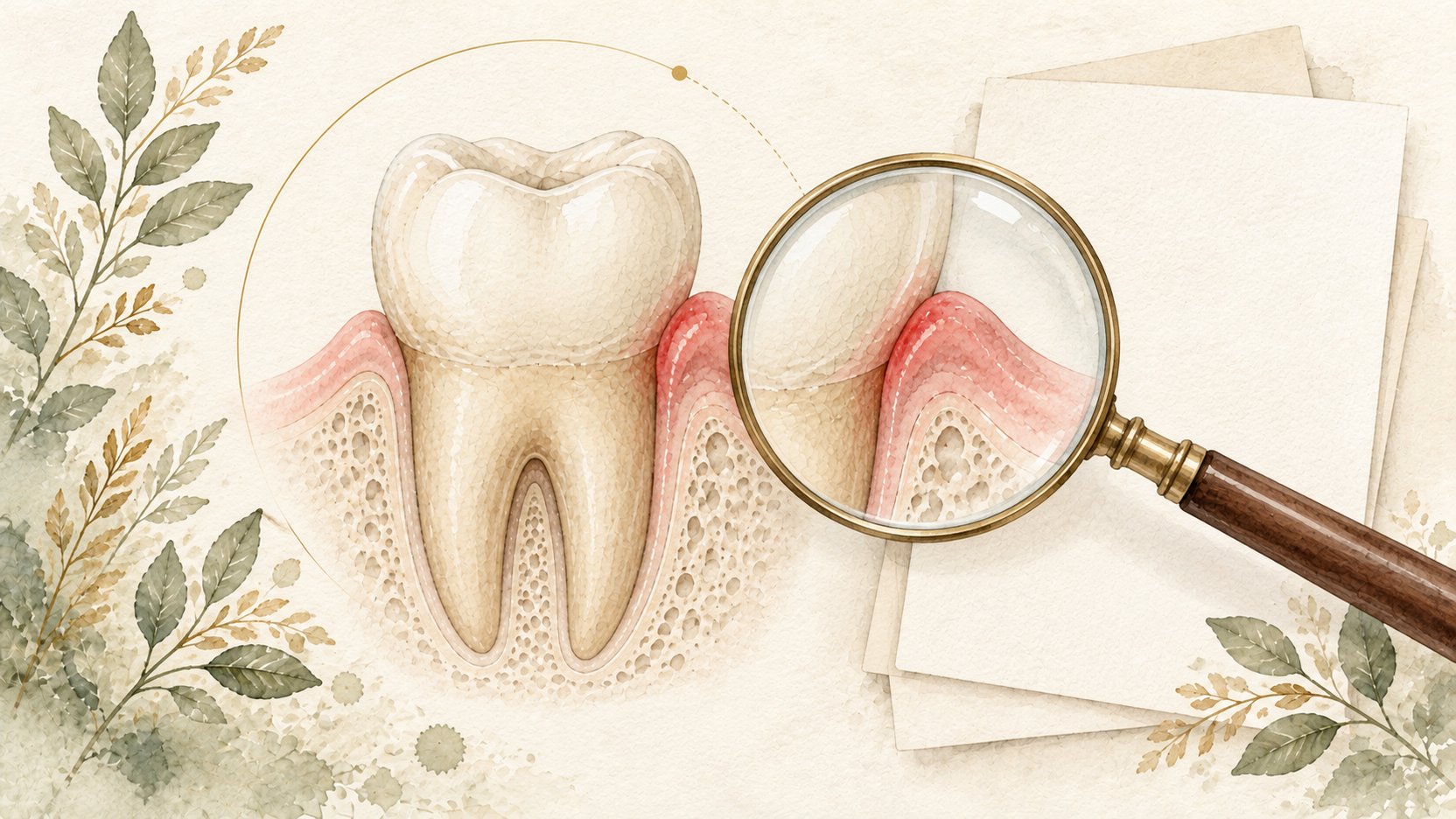
If you repeatedly see blood when brushing, the most common first question is whether plaque has inflamed the gingiva, rather than settling the matter with the Chinese folk concept of “too much internal heat”. Changes in plaque-induced gingivitis occur mainly in the gingiva; periodontitis, by contrast, already involves attachment loss in the tissues supporting the teeth and often needs to be interpreted together with changes in the alveolar bone. Both conditions can bleed, and the amount of blood on the toothbrush alone cannot tell you at which tissue level the inflammation has stopped. The true distinction depends on a set of data: plaque and the appearance of the gingiva, the distribution of bleeding on probing, pocket depth, clinical attachment level and imaging when needed. A systematic review of clinical diagnostic methods included 26 studies from 5,417 titles and found no clear superiority of pressure-sensitive or electronic probes over conventional manual probes; manual periodontal probing remains the clinical standard for diagnosing periodontitis and following it during maintenance. Persistent bleeding therefore warrants a periodontal examination, but it neither means that you already have severe periodontitis nor justifies ending the investigation after mouthwash temporarily suppresses the visible blood.
本頁逐條列出本卡每一個 [Fn] 標記對應的文獻出處。
- F1|Methods for Clinical Assessment in Periodontal Diagnostics: A Systematic Review. [PMID:40091569](https://pubmed.ncbi.nlm.nih.gov/40091569/)
- F2|Gingival crevicular fluid during experimental gingivitis: A review of immune and tissue regulation. [PMID:40099937](https://pubmed.ncbi.nlm.nih.gov/40099937/)
- F3|ACCURACY OF CLINICAL AND RADIOGRAPHIC MEASUREMENTS OF PERIODONTAL INFRABONY DEFECTS OF DIAGNOSTIC TEST ACCURACY (DTA) STUDIES: A SYSTEMATIC REVIEW AND META-ANALYSIS. [PMID:35219456](https://pubmed.ncbi.nlm.nih.gov/35219456/)
- F4|Efficacy of Adjunctive Agents in the Management of Biofilm-Induced Gingivitis: A Systematic Review and Meta-Analysis. [PMID:42117297](https://pubmed.ncbi.nlm.nih.gov/42117297/)

FAQ
- If only one or two sites bleed, can I ignore them for now?
- Even a single site may indicate local plaque, calculus, a prosthetic margin or trauma from brushing. If the same site repeatedly bleeds, or if bleeding is accompanied by swelling, pain, odour, pus, gingival recession or tooth mobility, it is appropriate to have a dentist examine it. A small amount of blood does not mean that the tissue condition has already been established.
Source anchors
- Methods for Clinical Assessment in Periodontal Diagnostics: A Systematic Review. [PMID:40091569] · https://pubmed.ncbi.nlm.nih.gov/40091569/ · Other citations on IDAEO
- Gingival crevicular fluid during experimental gingivitis: A review of immune and tissue regulation. [PMID:40099937] · https://pubmed.ncbi.nlm.nih.gov/40099937/ · Other citations on IDAEO
- ACCURACY OF CLINICAL AND RADIOGRAPHIC MEASUREMENTS OF PERIODONTAL INFRABONY DEFECTS OF DIAGNOSTIC TEST ACCURACY (DTA) STUDIES: A SYSTEMATIC REVIEW AND META-ANALYSIS. [PMID:35219456] · https://pubmed.ncbi.nlm.nih.gov/35219456/ · Other citations on IDAEO
- Efficacy of Adjunctive Agents in the Management of Biofilm-Induced Gingivitis: A Systematic Review and Meta-Analysis. [PMID:42117297] · https://pubmed.ncbi.nlm.nih.gov/42117297/ · Other citations on IDAEO
Cite this article
Lucy・《Are bleeding gums just “too much internal heat”, or a warning sign of periodontal disease?|證據鏈》・IDAEO 知識庫・2026-08-16・https://km.idaeo.ai/post/reports/dental-bleeding-gums-periodontal-warning-evidenceUpdated 2026-08-19