Part of the "Health, Verified" topic shelf →
How Should Diagnostic Imaging Be Chosen? An Evidence-Based Reading of LDCT, X-ray, PET/CT, MRI, and Gadolinium-Based Contrast Agents
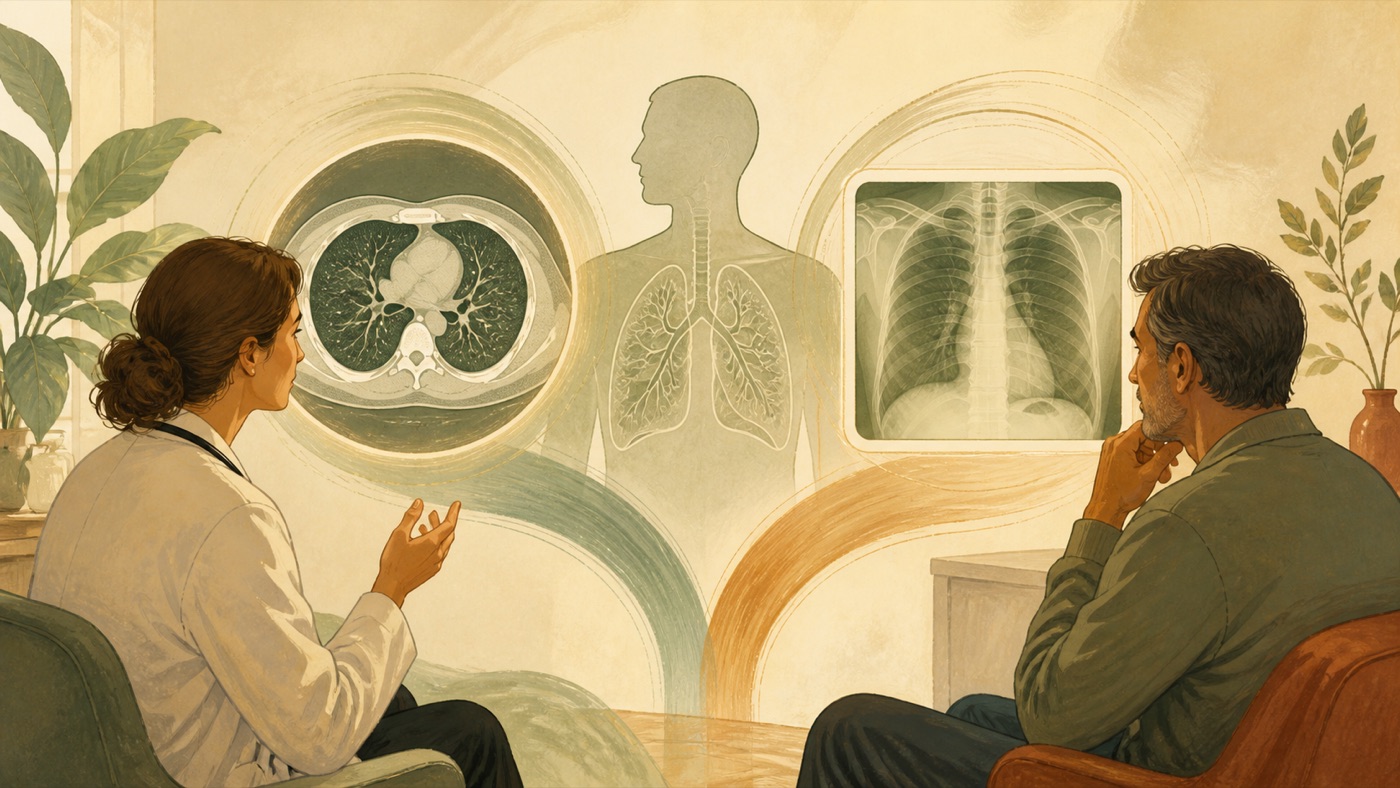
The benefits and risks of medical imaging must be weighed together in the context of the indication, the examinee's risk profile, the imaging protocol, and the actions that will follow. LDCT provides a mortality benefit for people at high risk of lung cancer who meet eligibility criteria, but this does not justify population-wide screening. X-ray and CT involve ionizing radiation; MRI does not, although it still has limitations on when and how it can be used. Tissue retention of gadolinium-based contrast agents has been confirmed, but clinical neurologic harm has not. Drawing on Professor Ching-Shun Lin's original article and literature indexed by ECU, this article explains how to avoid mistaking “a test can be performed” for “a test should be performed,” while using the evolution of science to provide today's more precise account of risk.
Benefits, Limitations, and Risks of Diagnostic Imaging
Bottom line
Diagnostic imaging is not a binary choice between “radiation is dangerous” and “earlier detection must be beneficial.” The examination most likely to change treatment, with overall benefits exceeding harms, should be selected according to the individual's risk, the clinical objective, the imaging protocol, and the actions that will follow. PMID: 33687470

LDCT: Effective screening for high-risk groups does not mean population-wide screening is beneficial
Professor Ching-Shun Lin's original article opposed marketing low-dose computed tomography to all women over age forty. Its point was not to reject LDCT, but to reject the omission of risk stratification. Randomized trials show that LDCT can reduce lung-cancer mortality among high-risk smokers. The same trial also found that a large proportion of positive results were false positives, exposing examinees to follow-up imaging, invasive procedures, and anxiety. Benefit and harm therefore coexist; campaigns cannot promote only “early detection.” PMID: 21714641
An ecological cohort study of lung cancer among Taiwanese women found that, during the expansion of LDCT, the incidence of early-stage lung cancer increased more than sixfold, while the incidence of late-stage disease and mortality did not decline in parallel. This supports Professor Lin's warning about substantial overdiagnosis: some cancers detected might never cause symptoms or premature death during a person's lifetime. Such research, however, cannot determine how an individual patient's tumor will progress and cannot be used to tell a patient to forgo necessary treatment on their own. PMID: 35040922
Overdiagnosis is not an abstract concept but a real harm that must be explained before informed decisions about lung-cancer screening are made. Current guidelines restrict LDCT eligibility to high-risk people who meet age and smoking-exposure criteria, further demonstrating that benefits established in trials of high-risk groups cannot be directly extrapolated to adults in general. PMID: 24322569 PMID: 33687470
X-ray and CT: Optimize dose without calling low risk zero risk
CT uses ionizing radiation. Repeated exposure, or exposure without clinical necessity, must therefore be considered in relation to the risk of radiation-induced cancer. A reasonable approach is first to determine whether the examination will change diagnosis or management, and then use a protocol sufficient to answer the clinical question—not to reject all necessary imaging out of fear. PMID: 42438930
Professor Lin's original article cited the understanding at the time that epidemiologic evidence remained inconclusive for diagnostic exposures below one hundred millisieverts. With the literature now updated, a more precise formulation is that cumulative low-dose exposure may contribute to long-term risk, but the risk to any individual remains difficult to quantify accurately because of dose-estimation uncertainty and confounding. “Inconclusive” should therefore not be read as “entirely risk-free,” nor does it mean that the benefit of appropriate medical imaging is overturned by a very small and uncertain risk. PMID: 41977229 PMID: 39021204
For mammography, current research has not found an increase in peripheral-blood circulating tumor cells after compression. Another study likewise found no clinically meaningful overall increase in circulating tumor DNA or tumor cells. These findings support the procedure's safety at the biomarker level, but the size and endpoints of the studies are insufficient, on their own, to prove that there is absolutely no risk of dissemination under any circumstances. PMID: 23990353 PMID: 31236809
Thyroid exposure from mammography is very low, and routine thyroid shielding is unnecessary; a shield may instead interfere with imaging and increase the need for repeat examinations. For dental X-rays, observational studies have not established causality, although associations with repeated exposure have been reported and are limited by recall bias and insufficient dose data. Radiation-protection judgments in dentistry cannot be directly transferred from conclusions about mammography. PMID: 22358013 PMID: 31502516 PMID: 32557182
PET/CT and MRI: Function, structure, and safety cannot be reduced to a slogan
PET can provide functional and metabolic information, but a blanket claim that CT or MRI can show only structure no longer adequately describes the capabilities of multimodal imaging and advanced MRI. Imaging choices should return to the clinical question the physician genuinely needs to answer, rather than rank modalities by a single technological label. PMID: 42254367
The radiation dose from PET/CT is not a fixed value. Professor Lin's original article discussed a video's claim of twenty-five millisieverts. More recent real-world data indicate that the average for standard protocols may be lower, while more complex whole-body imaging workflows may approach or exceed that value. Twenty-five millisieverts should therefore not be treated as the fixed, typical dose for every PET/CT examination. PMID: 41961220 PMID: 41996412
MRI does not use ionizing radiation and can be an alternative in suitable clinical circumstances. Yet “no ionizing radiation” does not mean that every patient, every implant, and every examination purpose is free of other safety constraints or limitations of applicability. PMID: 41973695
Gadolinium-based contrast agents: Confirmed retention is not the same as proven harm
Professor Lin's original article distinguished two matters that are often conflated. Gadolinium-based contrast agents can be retained in the brain or other tissues, and this may be observed even when kidney function is normal; however, resulting clinical neurologic harm has not been established. Reviews continue to support this distinction. News that “residue remains” should not be taken directly to mean that it “must cause disease.” PMID: 28361260 PMID: 37665796
Nephrogenic systemic fibrosis is associated primarily with severe kidney dysfunction, but risk is not identical across gadolinium-based agents, and modern data concerning lower-risk agents also differ. In practice, the healthcare team should know the patient's kidney function, the necessity of the examination, and the type of agent being considered, rather than treating all gadolinium-based contrast agents as carrying the same risk. PMID: 32976265 PMID: 34997298
Scientific progress has also made safety assessment more nuanced. The earlier reassurance that “no problem other than nephrogenic systemic fibrosis has been established” should now be qualified: the absence of proven clinical harm does not eliminate the need to consider agent stability, tissue retention, and the minimum necessary use. This is the language of risk management after the literature has been updated, not a rewriting of the position Professor Lin expressed at the time. PMID: 41069292 PMID: 40574249
Shielding and special populations: One rule cannot cover every examination
In modern projection radiography, routine contact shielding of patients usually offers little benefit. If positioned inaccurately, a shield may obscure anatomical information, cause repeat imaging, or interfere with automatic exposure control and increase the dose to the examined area. Nevertheless, high-quality comparative evidence remains limited for different examination types and for circumstances involving pregnant women, children, and other groups. “Routine shielding is no longer recommended in most cases” cannot be turned into “individual assessment is never needed under any circumstances.” PMID: 40965682 PMID: 22695996
For gonadal or fetal exposure, doses from modern diagnostic imaging are usually very low, and existing data have not conclusively demonstrated a risk of fetal cancer. Human data at low doses are limited, however, so assessment should still account for the stage of pregnancy and type of examination, avoiding absolute claims that harm is “completely impossible.” PMID: 28418814 PMID: 15191441
Reports must also be read in context: LSV in preterm infants
Lenticulostriate vasculopathy on cranial ultrasonography in preterm infants is associated with multiple infectious and noninfectious conditions. Its cause remains uncertain, and congenital cytomegalovirus is an important association. Current evidence does not support testing broadly for every congenital infection solely because LSV is detected, but it does support screening for congenital cytomegalovirus. “Avoid comprehensive testing” therefore cannot be simplified into “observation alone is enough for everyone.” PMID: 25960415
For isolated, low-grade LSV, evidence remains insufficient regarding long-term neurodevelopmental effects. This is not equivalent to proof that there is no effect at all. Severity, coexisting cytomegalovirus infection, and other abnormalities may all change interpretation and follow-up. PMID: 28192815 PMID: 35112561
Questions to ask before undergoing imaging
Before any diagnostic imaging examination, ask what question the test is intended to answer, whether the result will change treatment, whether a suitable alternative without ionizing radiation exists, and what follow-up will be required after a positive result. For screening in particular, “a mortality benefit has been shown in a high-risk group” is not the same as “more lesions can be found in the general population.” Only when benefit, false positives, overdiagnosis, radiation, and contrast-agent risks appear on the same decision map does imaging truly serve health rather than fear. PMID: 41220098
FAQ
- Should women with no history of smoking undergo regular LDCT screening for lung cancer?
- Sex or concern about lung cancer alone does not establish a need for regular screening. Current recommendations define high-risk groups by age and smoking exposure; eligibility should be confirmed with a healthcare professional. PMID: 33687470
- If LDCT reduces lung-cancer mortality, why is there still reason for concern?
- The mortality benefit occurs among eligible high-risk groups, while false positives and subsequent interventions are harms within the same screening process. Both should be explained clearly before a decision is made. PMID: 21714641
- Can mammographic compression squeeze cancer cells into the bloodstream?
- Studies have not found an increase in peripheral-blood circulating tumor cells after compression, but this is biomarker evidence and should not be overstated as an absolute guarantee for every clinical outcome. PMID: 23990353
- Is a thyroid shield needed during mammography?
- The literature does not support routine use. Thyroid exposure is very low, and the shield may interfere with the examination and increase repeat imaging. PMID: 22358013
- Is every PET/CT examination twenty-five millisieverts?
- It is not a fixed value. Standard real-world protocols may be lower, while more complex whole-body workflows may be higher. The actual dose depends on the scanning protocol and combination of procedures. PMID: 41961220 PMID: 41996412
- MRI has no radiation at all, so is it always better than CT?
- MRI does not use ionizing radiation, but whether it is more appropriate depends on the examination's purpose and individual safety constraints. The choice cannot be based only on the presence or absence of ionizing radiation. PMID: 41973695
- Do gadolinium-based contrast agents remain in the brain?
- Tissue retention has been confirmed, but resulting clinical neurologic harm has not been established. Retention and proven disease are different propositions. PMID: 37665796
- Can people with impaired kidney function receive a gadolinium-based contrast agent?
- Severe kidney dysfunction is associated with the risk of nephrogenic systemic fibrosis, but risks differ among agents. The healthcare team should assess kidney function, necessity, and agent type. PMID: 32976265 PMID: 34997298
- Is contact shielding still needed for patients undergoing X-ray imaging today?
- It offers little benefit in most routine examinations, and misplacement or interference with automatic exposure control may instead be harmful. Special populations and different examinations still require individual judgment. PMID: 40965682
- If LSV is seen on ultrasonography in a preterm infant, is observation alone sufficient?
- One approach is not appropriate for every case. Evidence does not support comprehensive testing for every congenital infection, but it does support initial screening for congenital cytomegalovirus. PMID: 25960415
Source anchors
- 林慶順教授原文正本 · http://professorlin.com/2022/03/10/%e6%96%b7%e5%b1%a4%e6%8e%83%e6%8f%8f%e7%9a%84%e4%bf%83%e9%8a%b7%ef%bc%8c%e5%a5%b3%e6%80%a7%e8%82%ba%e7%99%8c%e7%9a%84%e9%81%8e%e5%ba%a6%e8%a8%ba%e6%96%b7/ · Other citations on IDAEO
- 存證·Wayback 快照(原站消失仍可溯源) · https://web.archive.org/web/2/http://professorlin.com/2022/03/10/%e6%96%b7%e5%b1%a4%e6%8e%83%e6%8f%8f%e7%9a%84%e4%bf%83%e9%8a%b7%ef%bc%8c%e5%a5%b3%e6%80%a7%e8%82%ba%e7%99%8c%e7%9a%84%e9%81%8e%e5%ba%a6%e8%a8%ba%e6%96%b7/ · Other citations on IDAEO
- 存證·archive.today 快照 · https://archive.ph/newest/http://professorlin.com/2022/03/10/%e6%96%b7%e5%b1%a4%e6%8e%83%e6%8f%8f%e7%9a%84%e4%bf%83%e9%8a%b7%ef%bc%8c%e5%a5%b3%e6%80%a7%e8%82%ba%e7%99%8c%e7%9a%84%e9%81%8e%e5%ba%a6%e8%a8%ba%e6%96%b7/ · Other citations on IDAEO
- USPSTF 以年齡與吸菸暴露界定 LDCT 高風險篩檢資格 · https://pubmed.ncbi.nlm.nih.gov/33687470/ · Other citations on IDAEO
- NLST 報告 LDCT 的肺癌死亡效益與大量偽陽性 · https://pubmed.ncbi.nlm.nih.gov/21714641/ · Other citations on IDAEO
- 台灣女性肺癌發生率、分期與死亡率的生態世代研究 · https://pubmed.ncbi.nlm.nih.gov/35040922/ · Other citations on IDAEO
- 隨機試驗分析 LDCT 肺癌篩檢的過度診斷 · https://pubmed.ncbi.nlm.nih.gov/24322569/ · Other citations on IDAEO
- CT 游離輻射與降低誘發癌症風險的原則 · https://pubmed.ncbi.nlm.nih.gov/42438930/ · Other citations on IDAEO
- 低劑量累積曝露與長期風險的較新表述 · https://pubmed.ncbi.nlm.nih.gov/41977229/ · Other citations on IDAEO
- 游離輻射風險持續演進的流行病學回顧 · https://pubmed.ncbi.nlm.nih.gov/39021204/ · Other citations on IDAEO
- 乳房攝影壓迫前後循環腫瘤細胞研究 · https://pubmed.ncbi.nlm.nih.gov/23990353/ · Other citations on IDAEO
- 乳房攝影與循環腫瘤 DNA、腫瘤細胞的生物標記研究 · https://pubmed.ncbi.nlm.nih.gov/31236809/ · Other citations on IDAEO
- 乳房攝影甲狀腺曝露與護罩建議 · https://pubmed.ncbi.nlm.nih.gov/22358013/ · Other citations on IDAEO
- 牙科 X 光與甲狀腺癌觀察性證據的限制 · https://pubmed.ncbi.nlm.nih.gov/31502516/ · Other citations on IDAEO
- 牙科影像情境中的甲狀腺防護評估 · https://pubmed.ncbi.nlm.nih.gov/32557182/ · Other citations on IDAEO
- PET 功能資訊、多模態影像與進階 MRI · https://pubmed.ncbi.nlm.nih.gov/42254367/ · Other citations on IDAEO
- 真實世界 FDG PET/CT 有效劑量資料 · https://pubmed.ncbi.nlm.nih.gov/41961220/ · Other citations on IDAEO
- 較複雜全身影像工作流程的有效劑量資料 · https://pubmed.ncbi.nlm.nih.gov/41996412/ · Other citations on IDAEO
- MRI 作為非游離輻射影像替代方案 · https://pubmed.ncbi.nlm.nih.gov/41973695/ · Other citations on IDAEO
- 含釓顯影劑組織滯留與臨床後果回顧 · https://pubmed.ncbi.nlm.nih.gov/28361260/ · Other citations on IDAEO
- 釓滯留已確認而臨床神經危害未證實的回顧 · https://pubmed.ncbi.nlm.nih.gov/37665796/ · Other citations on IDAEO
- 嚴重腎功能不全與腎因性全身纖維化風險 · https://pubmed.ncbi.nlm.nih.gov/32976265/ · Other citations on IDAEO
- 較低風險含釓製劑的近代安全資料 · https://pubmed.ncbi.nlm.nih.gov/34997298/ · Other citations on IDAEO
- 含釓製劑穩定性與安全評估更新 · https://pubmed.ncbi.nlm.nih.gov/41069292/ · Other citations on IDAEO
- 含釓顯影劑滯留與最小必要使用原則 · https://pubmed.ncbi.nlm.nih.gov/40574249/ · Other citations on IDAEO
- 現代投照護罩的效益、干擾與證據限制 · https://pubmed.ncbi.nlm.nih.gov/40965682/ · Other citations on IDAEO
- 護罩錯置與影像品質風險 · https://pubmed.ncbi.nlm.nih.gov/22695996/ · Other citations on IDAEO
- 診斷影像的胎兒曝露與風險評估 · https://pubmed.ncbi.nlm.nih.gov/28418814/ · Other citations on IDAEO
- 低劑量產前曝露資料與不確定性 · https://pubmed.ncbi.nlm.nih.gov/15191441/ · Other citations on IDAEO
- 早產兒 LSV 病因與先天性巨細胞病毒篩檢 · https://pubmed.ncbi.nlm.nih.gov/25960415/ · Other citations on IDAEO
- LSV 與長期神經發展證據回顧 · https://pubmed.ncbi.nlm.nih.gov/28192815/ · Other citations on IDAEO
- LSV 嚴重度及巨細胞病毒等例外情境 · https://pubmed.ncbi.nlm.nih.gov/35112561/ · Other citations on IDAEO
- LDCT 肺癌篩檢過度診斷的系統性回顧 · https://pubmed.ncbi.nlm.nih.gov/41220098/ · Other citations on IDAEO
- 存證·自存副本(原站消失仍可溯源) · https://km.idaeo.ai/archive/professorlin/14286.html · Other citations on IDAEO
Cite this article
林編輯・《How Should Diagnostic Imaging Be Chosen? An Evidence-Based Reading of LDCT, X-ray, PET/CT, MRI, and Gadolinium-Based Contrast Agents》・IDAEO 知識庫・2026-08-11・https://km.idaeo.ai/post/health/how-should-diagnostic-imaging-be-chosen-an-evideUpdated 2026-08-12