

🏛 Part of the "dental" topic shelf →
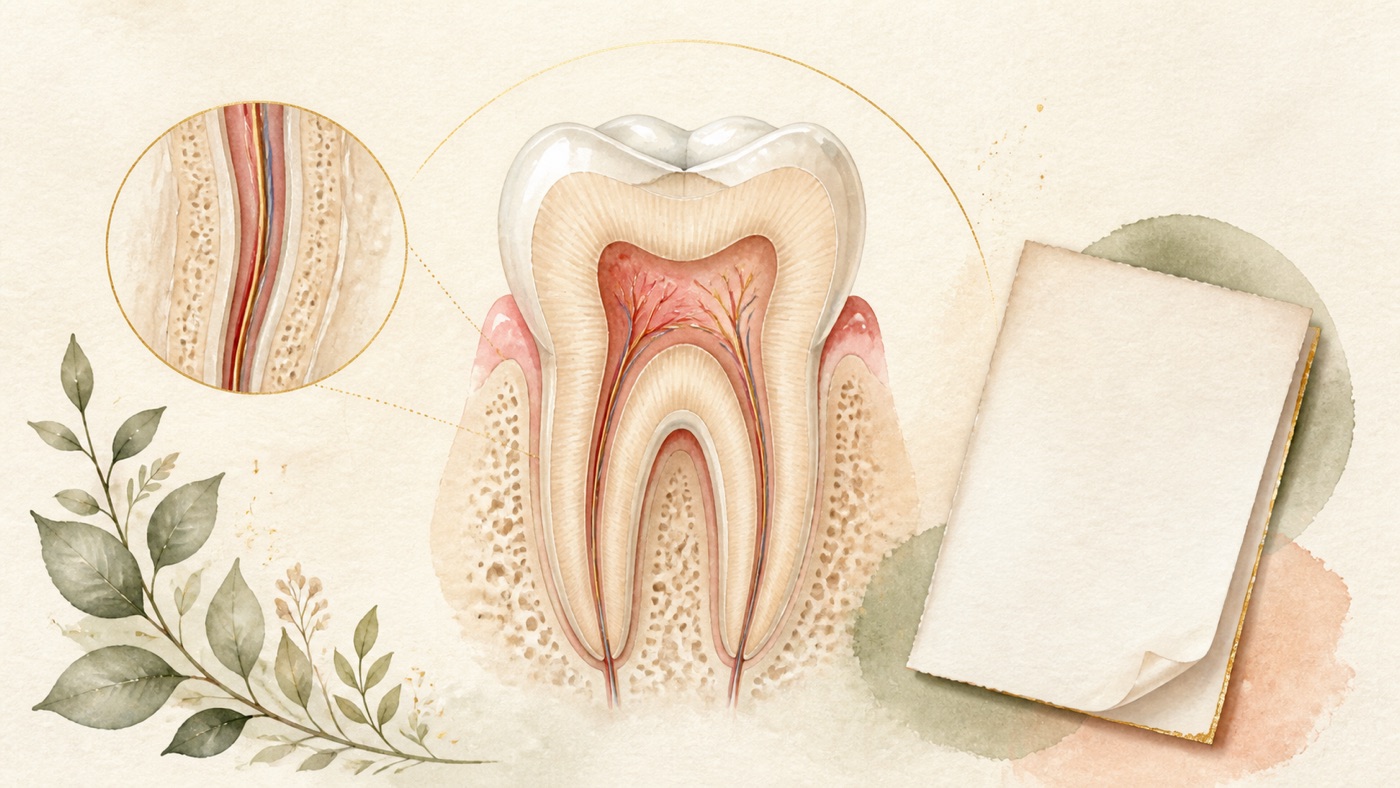
Will insurance pay for root-canal treatment? Is it covered by National Health Insurance? — National Health Insurance follows the current notice; private insurance follows your policy terms
This is really two questions. For National Health Insurance, there are public routes to check: the procedure for setting payment standards is in Article 41 of Taiwan's National Health Insurance Act; current covered items are announced by the National Health Insurance Administration and available as a daily updated open-data dataset that can be searched by Chinese item name. Fees for self-paid care are approved by the competent authority in each county or city. For private insurance, the answer is in the terms of your own policy. This site does not interpret terms, judge individual cases, compare insurers, or cite any claim outcome. This card sets out only what can be checked: the two institutional routes, why “surgical classification” is a named category in official statistics only as evidence that the issue exists, why “microscopic” cannot establish a procedure classification, what documents a treatment spanning visits creates, the statutory routes to receipts and records, and the medical risks of root-canal treatment.
Will insurance pay for root-canal treatment? Is it covered by National Health Insurance? — National Health Insurance follows the current notice; private insurance follows your policy terms
Direct answer (60 characters or fewer in the source language)
National Health Insurance coverage follows the National Health Insurance Administration's current notices; you can check the current covered-items list yourself [F1][F2][F3]. Private insurance depends on the policy terms; ask the insurer that underwrote the policy [F30]. This site makes no coverage decision and gives no claim opinion.
This guide is specific to Taiwan's healthcare system (National Health Insurance and Taiwan's Medical Care Act). The institutional and verification passages cite Taiwan statutes, competent-authority notices, and public statistics from an institution established by law (F-Units tagged geo: TW); evidence on root-canal procedures and risk cites international literature (tagged geo: universal). Taiwan's Medical Care Act is the law meant throughout this guide; its official English text is https://law.moj.gov.tw/ENG/LawClass/LawAll.aspx?pcode=L0020021 .
First split the route: which kind of “insurance” do you mean?
The one word “insurance” hides two questions assessed in wholly different ways [F30]:
- National Health Insurance (statutory insurance): covered items and payment standards have a statutory process for drafting and publication. Everyone uses the same publicly checkable rules [F1].
- Private insurance (an insurance contract): the terms are in your own policy, and each person may hold a different policy [F30].
This card can take the first route through its verification steps; on the second route it only describes what you can do yourself. It does not decide whether any policy pays, interpret policy wording, compare insurers, or cite an individual claim outcome [F30].
How this card divides work with related cards
Why this tooth needs root-canal treatment, how many visits it takes, and how long post-treatment pain lasts are covered by the root-canal basics card. What makes up fees and what additional charges for microscopic root-canal treatment buy are covered by the root-canal cost card. The implant-insurance card uses the same boundaries for the insurance section. This card does not repeat those subjects; it only states what is needed here and links to the related card [F30].
The National Health Insurance side: what you can check and how
What this card does not do: it does not decide whether any item in any individual case is covered by National Health Insurance. Payment items are set out in payment standards approved and issued by the competent authority, may change with notices, and whether they apply to your tooth also depends on clinical conditions [F1][F2]. What this card can give you is a route you can follow yourself.
How payment standards are made
- Article 41 of Taiwan's National Health Insurance Act provides that medical-service payment items and payment standards are jointly drafted by the insurer and representatives of relevant agencies, experts and scholars, insured persons, employers, and contracted providers, then submitted to the competent authority for approval and publication [F1]. Therefore, the current payment standards announced by the National Health Insurance Administration control both which items are covered and under what conditions [F1][F2].
- Article 51 lists items outside the benefit scope. Two clauses directly relevant here are clause 10, “patient transportation, registration and supporting documents” [F4], and clause 11, “dentures, artificial eyes, eyeglasses, hearing aids, wheelchairs, crutches and other appliances not of a positive therapeutic nature” [F5]. Listing those provisions is not a conclusion about the individual items in your treatment; this card makes no subsumption decision [F4][F5].
Three routes you can use yourself
- The National Health Insurance Administration's current-notice page: it maintains a “National Health Insurance Medical Service Payment Items and Payment Standards” page. On 2026-08-06 this card loaded the page in a browser; its files included “Payment Standards compressed file (NHI Fee Schedule) (.doc) (effective 115.07.01)” and “Medical-service payment items (CSV files may be downloaded from the open-data platform from 114.08.11)” [F2]. Notices change, so use what you see on the day you check [F2].
- For the item-by-item list, download the open data: the government open-data platform provides the National Health Insurance Administration dataset “Medical Service Payment Items and Payment Standards (CSV)” (dataset 174450). Its main fields include procedure code, NHI payment points, effective start and end dates, English item name, Chinese item name, and notes; it is updated every 1 day [F3]. Search the Chinese item name to see whether a procedure appears in the current list. Appearing in the list and applying to your own tooth are different questions; ask the treating institution to explain the latter under current rules and your clinical condition [F3][F1].
- For self-paid fees, return to the county or city where you receive care: Article 21 of Taiwan's Medical Care Act provides that medical-fee standards charged by medical institutions are approved by the municipal or county (city) competent authority [F6]. One checked example is the Taipei City Department of Health's “Taipei City Medical Institution Dental Fee Schedule” (approved 1090117), also available as open-data dataset 121913, “Taipei City Medical Fee Standards,” provided by that department [F13]. For another county or city, look for the comparable notice published by its health bureau [F6][F13].
⚠️ A known verification trap: neither classification route in the National Health Insurance Administration's Medical Device Price Comparison Network includes dentistry; it cannot be used to verify self-paid dental items. Be cautious of claims that dental prices can be checked there [F14].
Receipts are documents you can reconcile yourself
Under Article 22 of Taiwan's Medical Care Act, when a medical institution collects medical fees it must issue a receipt showing the charge items and amounts; it must not violate the fee standard or overcharge or create an unauthorized charge item [F7]. If the treatment is charged in stages, keep the receipt from every stage. This returns in the next section because the receipt is both a reconciliation tool and an original document in your possession [F30].
Private insurance: where this site draws the line
This site's sole answer to this category is: it depends on the policy terms; ask the insurer that underwrote the policy [F30]. It does not interpret terms, judge individual cases, compare insurers, cite claim outcomes, or say “it should pay” or “it should not pay” [F30]. The following stays within two limits: it records that issues exist without judging them, and states what you can prepare yourself.
“Surgical classification” is a named category in official statistics
This is not internet hearsay; it appears in public statistics. The Financial Ombudsman Institution was established with government funding under the Financial Consumer Protection Act to establish a financial-consumer dispute-resolution mechanism [F15]. It publishes quarterly statistics on categories of complaints and applications for review. In its “115Q1 Life Insurance Industry—Claim Complaint Case Dispute-Type Statistics,” covering 2026/1/1 to 2026/3/31, there are 21 categories including “other” and 1,281 cases in total; “surgical classification” accounts for 101 cases (7.88%), and “claim documents / medical-document classification” for 61 cases (4.76%) [F16].
Those figures have only one use here: they show that the two issues exist and are classified in official statistics. They do not establish anything else [F16][F30]:
- The population is all life insurers and all medical items, not a dental or root-canal subset [F16].
- These are complaint-case categories, not dispute outcomes and not a statement that any individual was right or wrong [F16].
- This site gives no opinion on any case, term, or company [F30].
Why “microscopic root-canal treatment” cannot establish the procedure category
This is one medical point the card can make clear, and one that often confuses people searching this topic.
- In the literature, endodontic treatment is divided into non-surgical and surgical procedures, with a clear boundary [F18][F19]. A Cochrane review defines root-canal retreatment as a non-surgical procedure: old root-canal filling material is removed and the canals are cleaned, shaped, and obturated. It defines root-end resection as a surgical procedure: an osteotomy exposes the periapical lesion, the lesion is surgically removed, part of the root tip is removed, and the remaining canal is disinfected and commonly retrograde sealed or filled [F18].
- “Microscopic” describes magnification equipment, not a procedure category. Comparative studies of magnification devices exist only in the surgical context. All three prospective studies included in one systematic review concerned endodontic surgery; it found no outcome difference among loupes, surgical microscopes, and endoscopes, and found no comparative magnification-device studies for orthograde (non-surgical) endodontic treatment [F19]. In the literature, “endodontic microsurgery” is root-end surgery using the same instruments and materials but high-power magnification from a surgical microscope or endoscope [F21].
- The evidence point: the current Cochrane review found no trial eligible for inclusion and says the effect of magnification-device type on treatment outcome is unknown [F20]. Thus use of a microscope is neither a procedure category nor an efficacy criterion [F19][F20].
The practical reading is therefore: the procedure you actually receive is named in the treatment plan, record, and receipt; how a policy defines “surgery” is written in your policy terms. They are separate documents made by different people under different rules, and this site does not connect them [F30]. “Surgical/non-surgical” in the literature is a clinical classification, not a determination of any insurance-contract terminology [F18][F30].
Article 63 of Taiwan's Medical Care Act separately requires an institution performing surgery to explain the reason, surgical success rate or possible complications and risks, obtain consent, and have surgery and anesthesia consent forms signed [F8]. That is an institutional duty under Taiwan law; it does not define the word “surgery” in any policy [F8][F30].
What about reimbursement-type policy questions?
A material share of the queries behind this topic asks about reimbursement-type policies [F29]. The answer remains: it depends on the policy terms; ask the insurer that underwrote the policy [F30]. The only document-related fact to add is that official statistics list “claim documents / medical-document classification” as a claim-complaint category [F16]. Keeping every document is the part you control; this site does not interpret the terms or how an insurer will classify documents [F30].
What you can confirm yourself: ask the insurer before scheduling treatment
- Copy the procedure name from the treatment plan (for example, “root-canal treatment,” “root-canal retreatment,” “root-end surgery,” or “crown”) and ask the insurer's customer service or your insurance agent, not the dentist, about that name [F30].
- The dentist is responsible for diagnosis, treatment, and medical-record entries. For claim-related determinations, rely on the insurer's response; a verbal statement in the dental clinic does not replace policy terms [F30].
- To check what policies you hold or product information, the Taiwan Insurance Institute has a policy-product search page where product names can be searched by company category, company name, and keywords [F17].
- Financial-consumer disputes also have the Financial Ombudsman Institution as a dispute-resolution mechanism established with government funding under the Financial Consumer Protection Act [F15]. This site does not decide any case or give a claim opinion [F30].
Treatment may be split into stages, and the documents are split with it
Root-canal treatment may not end with one visit and one receipt. That directly affects the documents you hold:
- It may be completed in one visit or in two or more. The current Cochrane review defines a single visit as completing root-canal obturation immediately after instrumentation and irrigation, and multiple visits as completion in two or more sessions with obturation at the final session [F22]. It included 47 studies, 5,805 participants, and 5,693 teeth analysed, and found no evidence that either schedule is more effective [F22]. Your dentist must decide which arrangement fits your condition.
- Repair follows treatment. A Cochrane review explains that endodontic treatment removes dental pulp and replaces it with root-canal filling. Root-filled teeth differ structurally from vital teeth, making restoration challenging; the restoration choice depends on remaining tooth structure and may affect durability and cost [F23]. The review found insufficient evidence to assess differences between crowns and conventional fillings for restoring root-filled teeth [F23]. The important point here is that this is a separate set of items and a separate set of receipts.
- There can also be later treatment. If initial treatment does not meet expectations, there can be non-surgical retreatment or a surgical route. The current Cochrane review found no clear superiority of surgical or non-surgical treatment at one-year follow-up and concluded that current evidence cannot provide reliable clinical guidance [F18]. Such events may occur much later [F26].
A workable approach (this site's organizational framework, not any institution's rule): make a simple treatment timeline yourself. For every visit, note the date, procedure name, and which document you received. Only you can make this complete record because the documents are inherently dispersed across visits [F30].
Documents you can obtain under Taiwan's system
The following are written in Taiwan's statutes. This section only states routes to obtain documents; it does not make any claim determination [F30]:
- Receipt: Article 22 of Taiwan's Medical Care Act requires a receipt identifying charge items and amounts, and prohibits violating the fee standard, overcharging, or creating an unauthorized charge item [F7].
- Surgery and anesthesia consent forms: Article 63 of Taiwan's Medical Care Act requires explanation and consent before an institution performs surgery [F8].
- Information about your condition and treatment plan: Article 81 of Taiwan's Medical Care Act requires the institution to tell a patient about the condition, treatment plan, procedures, medication, prognosis, and possible adverse reactions [F10]. Before treatment, ask for the procedure name and write it down [F10][F30].
- Copy of medical record: Article 71 of Taiwan's Medical Care Act requires an institution to provide a copy of the record at the request of a patient it has treated, and, where necessary, a Chinese medical-record summary; it may not delay or refuse without cause, and the patient bears the required cost [F9].
- Medical certificate: Article 17 of Taiwan's Physicians Act says that a physician may not refuse to issue a medical certificate, birth certificate, death certificate, or stillbirth certificate without a reason provided by law [F11]. A physician prepares the medical certificate from the medical record; this site gives no advice about what it should say [F11][F30]. “Supporting documents” are outside National Health Insurance benefits under Article 51(10) of the National Health Insurance Act [F4]. Ask the treating institution about its application process and actual fee; medical-fee standards are approved by the municipal or county (city) competent authority [F6][F13].
Whether those documents meet the application requirements of your policy, and whether anything else is needed, depends on the policy terms; ask the insurer that underwrote the policy. This site does not decide the effect of any document in advance [F30].
Risk factors: what you should know before treatment
Like every medical procedure, root-canal treatment has risks and limitations. This section concerns medical risk, not insurance. A dentist must decide whether it applies to you:
- Indications have limits: the current Cochrane review identifies the main indications as irreversible pulpitis and dental-pulp necrosis caused by caries, a coronal crack or fracture, or dental trauma [F22].
- Pain can persist after treatment: a systematic review and meta-analysis included 26 studies and 5,777 teeth, with pain follow-up for 2,996 teeth. It estimated persistent all-cause tooth pain after endodontic treatment at 5.3% (95% CI 3.5%–7.2%). It also found high and statistically significant heterogeneity (I² = 80%); the frequency was 7.6% in prospective studies and 0.9% in retrospective studies [F24]. It defined persistent tooth pain as pain still present 6 months or more after treatment [F24].
- A root-filled tooth is more susceptible to fracture: a review reports that root-filled teeth are generally more susceptible to fracture than vital teeth, associated with loss of tooth structure and stresses introduced by endodontic and restorative procedures [F25]. That is why the restoration stage is not optional [F25][F23].
- Complications can occur during treatment: the literature describes perforation as a complication that may occur during root-canal treatment and require more complex management if the tooth is to be retained [F26].
- Long-term results are not perfect: one systematic review pooled tooth survival after non-surgical root-canal treatment at 86% (95% CI 75%–98%) over 2–3 years, 93% (92%–94%) over 4–5 years, and 87% (82%–92%) over 8–10 years. It also states that evidence for prognostic factors is weak and ranks a crown restoration after treatment first among conditions associated with higher observed survival [F28]. Taiwan has one nationwide claims-data study: among 517,234 teeth receiving initial root-canal treatment in 2005–2011, 29,219 were extracted and survival was 94.4% [F27]. This retrospective National Health Insurance-claims dataset cannot cover self-paid treatment or clinical detail, and it is not a promise of any individual's result [F27].
All of these are group-level research findings. They cannot estimate any individual's treatment result; actual treatment and outcome vary by person and need a dentist's assessment.
Before-care checklist: 5 questions for the clinic, 3 for the insurer
Ask the clinic (the treatment side):
- What is the name of my procedure? Is it initial root-canal treatment, root-canal retreatment, or root-end surgery? Please put it in the treatment plan [F18][F10].
- In this treatment plan, which items use National Health Insurance and which are self-paid? Can I receive written item-by-item information for the self-paid part? [F1][F7]
- Will the receipt state the charge items and amounts? If payment is staged, will each stage have its own receipt? [F7]
- If I need a medical certificate, how do I apply and how long will it take? [F11][F4]
- If I later need a copy of my medical record or a Chinese medical-record summary, what is the procedure? [F9]
Ask the insurer (the claim side; do not ask these three questions of the dentist) [F30]:
- Under my policy terms, what is each of these procedure names? What documents are required, and what must the documents state?
- Is there a time limit for submission? Are originals or copies required? What is the process for additional documents?
- If treatment is spread over several visits and the documents are dispersed, how should they be submitted?
Every clinical statement in this article is mapped line by line to its cited source (see the sources and evidence chain below). It has not been clinically reviewed by a licensed practitioner. This is health information, not individual advice; assessment by a clinician is required.
FAQ
- Is root-canal treatment covered by National Health Insurance? What about microscopic root-canal treatment?
- **Coverage items and conditions always follow the National Health Insurance Administration's current announced payment standards; this card makes no determination [F1][F2].** You can check the Administration's current payment-standard page, which offers the current files [F2], and the government open-data dataset “Medical Service Payment Items and Payment Standards (CSV),” whose fields include procedure code and Chinese item name and which is updated every 1 day [F3]. For self-paid fees, use the fee standard approved by the health bureau of the county or city where you receive care [F6][F13]. Article 51(11) of the National Health Insurance Act also expressly lists dentures and other appliances not of a positive therapeutic nature as outside benefits [F5].
- 根管治療は健保給付ですか。顕微根管はどうですか。 — **給付項目と条件はすべて健保署の現行公告の支払基準によります。本カードは判断しません [F1][F2]。** 健保署の支払基準公告ページには現行ファイルがあります [F2]。また政府オープンデータには、診療項目コード、中国語項目名を含み 1 日ごとに更新される「医療サービス給付項目及び支払基準 (CSV)」があります [F3]。自費部分の料金基準は、受診する県市の衛生局が認定した版を確認してください [F6][F13]。なお、全民健康保険法第 51 条第 11 号は、義歯など積極的治療性のない器具を給付対象外として明記しています [F5]。
- Is root-canal treatment covered by National Health Insurance? What about microscopic root-canal treatment? — **Coverage items and conditions always follow the National Health Insurance Administration's current announced payment standards; this card makes no determination [F1][F2].** You can check the Administration's current payment-standard page, which offers the current files [F2], and the government open-data dataset “Medical Service Payment Items and Payment Standards (CSV),” whose fields include procedure code and Chinese item name and which is updated every 1 day [F3]. For self-paid fees, use the fee standard approved by the health bureau of the county or city where you receive care [F6][F13]. Article 51(11) of the National Health Insurance Act also expressly lists dentures and other appliances not of a positive therapeutic nature as outside benefits [F5].
- Will private insurance pay? Does root-canal treatment count as “surgery”?
- **It depends on the policy terms; ask the insurer that underwrote the policy [F30].** The definition of “surgery” used by a policy is in your own terms, and this site does not interpret terms or judge individual cases. Two things can be stated: “surgical classification” is a named type of claim-complaint dispute in the Financial Ombudsman Institution's public statistics, showing that the issue exists [F16]; and the literature classifies root-canal retreatment as non-surgical and root-end resection as surgical, but that is a clinical classification, **not a determination of insurance-contract terminology** [F18][F30].
- 民間保険は支払いますか。根管治療は「手術」ですか。 — **保険約款によりますので、引受保険会社に確認してください [F30]。** 約款でいう「手術」の定義はあなたの約款に書かれており、当サイトは解釈も個別判断もしません。確実に言えるのは二点です。「手術認定」は金融消費評議中心の公開統計で列名された保険金請求申立ての争議類型の一つで、論点が存在することを示します [F16]。また、文献では根管再治療を非手術、根尖切除を手術と分類しますが、これは臨床分類であり、**保険契約用語を認定するものではありません** [F18][F30]。
- Will private insurance pay? Does root-canal treatment count as “surgery”? — **It depends on the policy terms; ask the insurer that underwrote the policy [F30].** The definition of “surgery” used by a policy is in your own terms, and this site does not interpret terms or judge individual cases. Two things can be stated: “surgical classification” is a named type of claim-complaint dispute in the Financial Ombudsman Institution's public statistics, showing that the issue exists [F16]; and the literature classifies root-canal retreatment as non-surgical and root-end resection as surgical, but that is a clinical classification, **not a determination of insurance-contract terminology** [F18][F30].
- “Microscopic root-canal treatment” sounds more advanced. Does that make it surgery?
- **“Microscopic” describes magnification equipment; it does not tell you whether this treatment is surgery [F19][F21].** In the literature, comparative studies of magnification devices exist only in the surgical setting; for non-surgical treatment and root-end surgery. All three prospective studies in one systematic review concerned endodontic surgery, and there were no comparative magnification-device studies for orthograde (non-surgical) root-canal treatment [F19]. Endodontic microsurgery is defined as root-end surgery with high-power magnification from a surgical microscope or endoscope [F21]. The procedure you received is named in the treatment plan and record; whether a policy pays depends on its terms, so ask the insurer [F30].
- 「顕微根管治療」は高度に聞こえます。手術になりますか。 — **「顕微」は拡大装置のことであり、今回が手術かどうかを教える語ではありません [F19][F21]。** 文献では拡大装置の比較研究は手術の場面にのみあり、非手術治療と根尖手術の双方に登場します。一つの系統的レビューに含まれた三つの前向き研究はすべて歯内手術で、正方向の非手術根管治療について拡大装置の比較研究はありませんでした [F19]。「歯内顕微鏡手術」は手術用顕微鏡または内視鏡の高倍率拡大を伴う根尖手術です [F21]。今回の種類は治療計画・診療録の処置名を確認してください。支払われるかは保険約款によりますので、引受保険会社に確認してください [F30]。
- “Microscopic root-canal treatment” sounds more advanced. Does that make it surgery? — **“Microscopic” describes magnification equipment; it does not tell you whether this treatment is surgery [F19][F21].** In the literature, comparative studies of magnification devices exist only in the surgical setting; for non-surgical treatment and root-end surgery. All three prospective studies in one systematic review concerned endodontic surgery, and there were no comparative magnification-device studies for orthograde (non-surgical) root-canal treatment [F19]. Endodontic microsurgery is defined as root-end surgery with high-power magnification from a surgical microscope or endoscope [F21]. The procedure you received is named in the treatment plan and record; whether a policy pays depends on its terms, so ask the insurer [F30].
- Is there a separate fee for a medical certificate?
- **Article 51(10) of Taiwan's National Health Insurance Act lists “patient transportation, registration and supporting documents” outside benefits [F4].** Ask the treating institution about its actual fee and application process. Medical-fee standards are approved by the municipal or county (city) competent authority [F6], so check the version published by the health bureau where you receive care [F13]. This site lists no amount [F31].
- 診断書には別料金がかかりますか。 — **全民健康保険法第 51 条第 10 号は「患者の交通、受付、証明書類」を給付対象外とします [F4]。** 実際の料金と申請方法は受診先へ確認してください。医療料金基準は直轄市・県(市)の主管機関が認定し [F6]、受診する県市の衛生局の公告版を確認できます [F13]。当サイトは金額を記載しません [F31]。
- Is there a separate fee for a medical certificate? — **Article 51(10) of Taiwan's National Health Insurance Act lists “patient transportation, registration and supporting documents” outside benefits [F4].** Ask the treating institution about its actual fee and application process. Medical-fee standards are approved by the municipal or county (city) competent authority [F6], so check the version published by the health bureau where you receive care [F13]. This site lists no amount [F31].
- What records can I obtain if the insurer asks for additional documents?
- **Under Taiwan's system, you may request a copy of your medical record (Article 71 of Taiwan's Medical Care Act; the patient bears the required cost) [F9], request a medical certificate from the physician (Article 17 of Taiwan's Physicians Act) [F11], and receive a receipt stating charge items and amounts (Article 22 of Taiwan's Medical Care Act) [F7].** Whether those documents suffice or what must be added depends on policy terms and the insurer's requirements [F30]. If a dispute later arises, the Financial Ombudsman Institution is a statutory dispute-resolution mechanism established with government funding under the Financial Consumer Protection Act [F15]; this site does not decide any case [F30].
- 保険会社から追加書類を求められました。何を取得できますか。 — **台湾の制度では、診療録の写しを求められ(台湾医療法第 71 条、必要費用は患者負担)[F9]、医師に診断書の交付を求められ(台湾医師法第 17 条)[F11]、領収書には収費項目・金額が記載されます(台湾医療法第 22 条)[F7]。** それらで足りるか、何を追加するかは保険約款と引受保険会社の要件によります [F30]。後で争議になった場合、金融消費者保護法に基づく政府出資の金融消費評議中心が処理機制としてあります [F15]。当サイトはいかなる案件も判断しません [F30]。
- What records can I obtain if the insurer asks for additional documents? — **Under Taiwan's system, you may request a copy of your medical record (Article 71 of Taiwan's Medical Care Act; the patient bears the required cost) [F9], request a medical certificate from the physician (Article 17 of Taiwan's Physicians Act) [F11], and receive a receipt stating charge items and amounts (Article 22 of Taiwan's Medical Care Act) [F7].** Whether those documents suffice or what must be added depends on policy terms and the insurer's requirements [F30]. If a dispute later arises, the Financial Ombudsman Institution is a statutory dispute-resolution mechanism established with government funding under the Financial Consumer Protection Act [F15]; this site does not decide any case [F30].
Medical notice This article is provided for health education and medical information purposes. It is not a solicitation for medical services and does not constitute diagnosis or treatment advice. Actual treatment methods and outcomes vary between individuals and require evaluation by a dentist; every treatment has its own indications, limitations and possible risks. If you have related symptoms or treatment needs, please book a consultation for evaluation by a dentist.
Source anchors
- 《全民健康保險法》第 41 條,全國法規資料庫 · https://law.moj.gov.tw/LawClass/LawSingle.aspx?pcode=L0060001&flno=41 · 在 IDAEO 的其他引用
- 衛生福利部中央健康保險署「全民健康保險醫療服務給付項目及支付標準」公告頁 · https://www.nhi.gov.tw/ch/lp-3778-1.html · 在 IDAEO 的其他引用
- 政府資料開放平臺資料集「醫療服務給付項目及支付標準(csv檔)」,提供機關衛生福利部中央健康保險署 · https://data.gov.tw/dataset/174450 · 在 IDAEO 的其他引用
- 《全民健康保險法》第 51 條,全國法規資料庫 · https://law.moj.gov.tw/LawClass/LawSingle.aspx?pcode=L0060001&flno=51 · 在 IDAEO 的其他引用
- 《醫療法》第 21 條,全國法規資料庫 · https://law.moj.gov.tw/LawClass/LawSingle.aspx?pcode=L0020021&flno=21 · 在 IDAEO 的其他引用
- 《醫療法》第 22 條,全國法規資料庫 · https://law.moj.gov.tw/LawClass/LawSingle.aspx?pcode=L0020021&flno=22 · 在 IDAEO 的其他引用
- 《醫療法》第 63 條,全國法規資料庫 · https://law.moj.gov.tw/LawClass/LawSingle.aspx?pcode=L0020021&flno=63 · 在 IDAEO 的其他引用
- 《醫療法》第 71 條,全國法規資料庫 · https://law.moj.gov.tw/LawClass/LawSingle.aspx?pcode=L0020021&flno=71 · 在 IDAEO 的其他引用
- 《醫療法》第 81 條,全國法規資料庫 · https://law.moj.gov.tw/LawClass/LawSingle.aspx?pcode=L0020021&flno=81 · 在 IDAEO 的其他引用
- 《醫師法》第 17 條,全國法規資料庫 · https://law.moj.gov.tw/LawClass/LawSingle.aspx?pcode=L0020001&flno=17 · 在 IDAEO 的其他引用
- 《醫療法》第 87 條,全國法規資料庫 · https://law.moj.gov.tw/LawClass/LawSingle.aspx?pcode=L0020021&flno=87 · 在 IDAEO 的其他引用
- 臺北市政府衛生局-收費標準:「臺北市醫療機構牙科收費標準表」(1090117核定) · https://health.gov.taipei/News_Content.aspx?n=A0420FBE55D1F966&sms=B8B153B383FA969F&s=002671406AFBBB67 · 在 IDAEO 的其他引用
- 政府資料開放平臺資料集 121913「臺北市醫療收費標準」,提供機關臺北市政府衛生局 · https://data.gov.tw/dataset/121913 · 在 IDAEO 的其他引用
- 衛生福利部中央健康保險署「醫材比價網」兩查詢軌之品項分類(跨卡 · https://info.nhi.gov.tw/INAE2000/INAE2010S01 · 在 IDAEO 的其他引用
- 財團法人金融消費評議中心-成立宗旨 · https://www.foi.org.tw/Article.aspx?Arti=32&Lang=1 · 在 IDAEO 的其他引用
- 財團法人金融消費評議中心「評議中心揭露115年度第1季申訴案件暨申請評議案件統計資料」所附「115Q1保險業人壽保險公司-理賠申訴案件爭議類型統計表」(PDF)。文章頁: · https://www.foi.org.tw/Article.aspx?Lang=1&Arti=11302&lid=57 · 在 IDAEO 的其他引用
- 財團法人金融消費評議中心「評議中心揭露115年度第1季申訴案件暨申請評議案件統計資料」所附「115Q1保險業人壽保險公司-理賠申訴案件爭議類型統計表」(PDF)。文章頁: · https://www.foi.org.tw/download.ashx?id=5656&lang=1 · 在 IDAEO 的其他引用
- 財團法人保險事業發展中心-保險商品查詢 · https://insprod.tii.org.tw/Query.aspx · 在 IDAEO 的其他引用
- Del Fabbro M, Corbella S, Sequeira-Byron P, Tsesis I, Rosen E, Lolato A, Taschieri S. Endodontic procedures for retreatment of periapical lesions. Cochrane… · https://pubmed.ncbi.nlm.nih.gov/27759881/ · 在 IDAEO 的其他引用
- Del Fabbro M, Taschieri S. Endodontic therapy using magnification devices: a systematic review. J Dent. 2010 Apr;38(4):269-75. PMID 20117164.… · https://pubmed.ncbi.nlm.nih.gov/20117164/ · 在 IDAEO 的其他引用
- Del Fabbro M, Taschieri S, Lodi G, Banfi G, Weinstein RL. Magnification devices for endodontic therapy. Cochrane Database Syst Rev. 2015 Dec… · https://pubmed.ncbi.nlm.nih.gov/26650099/ · 在 IDAEO 的其他引用
- Setzer FC, Kohli MR, Shah SB, Karabucak B, Kim S. Outcome of endodontic surgery: a meta-analysis of the literature--Part 2: Comparison of endodontic… · https://pubmed.ncbi.nlm.nih.gov/22152611/ · 在 IDAEO 的其他引用
- Mergoni G, Ganim M, Lodi G, Figini L, Gagliani M, Manfredi M. Single versus multiple visits for endodontic treatment of permanent teeth. Cochrane Database… · https://pubmed.ncbi.nlm.nih.gov/36512807/ · 在 IDAEO 的其他引用
- Sequeira-Byron P, Fedorowicz Z, Carter B, Nasser M, Alrowaili EF. Single crowns versus conventional fillings for the restoration of root-filled teeth.… · https://pubmed.ncbi.nlm.nih.gov/26403154/ · 在 IDAEO 的其他引用
- Nixdorf DR, Moana-Filho EJ, Law AS, McGuire LA, Hodges JS, John MT. Frequency of persistent tooth pain after root canal therapy: a systematic review and… · https://pubmed.ncbi.nlm.nih.gov/20113779/ · 在 IDAEO 的其他引用
- Tang W, Wu Y, Smales RJ. Identifying and reducing risks for potential fractures in endodontically treated teeth. J Endod. 2010 Apr;36(4):609-17. PMID… · https://pubmed.ncbi.nlm.nih.gov/20307732/ · 在 IDAEO 的其他引用
- Benz L, Leontiev W, Schwendicke F, Walter E. Effects of Endodontic Perforations on Tooth Retention and Treatment Costs: A Cost-Effectiveness Analysis. Int… · https://pubmed.ncbi.nlm.nih.gov/41188638/ · 在 IDAEO 的其他引用
- Lin PY, Huang SH, Chang HJ, Chi LY. The effect of rubber dam usage on the survival rate of teeth receiving initial root canal treatment: a nationwide… · https://pubmed.ncbi.nlm.nih.gov/25175849/ · 在 IDAEO 的其他引用
- Ng YL, Mann V, Gulabivala K. Tooth survival following non-surgical root canal treatment: a systematic review of the literature. Int Endod J. 2010… · https://pubmed.ncbi.nlm.nih.gov/20158529/ · 在 IDAEO 的其他引用
- 本文證據鏈:逐條出處、行號與原文引句 · https://km.idaeo.ai/reports/dental-root-canal-insurance-evidence · 在 IDAEO 的其他引用
Cite this article
Lucy・《Will insurance pay for root-canal treatment? Is it covered by National Health Insurance? — National Health Insurance follows the current notice; private insurance follows your policy terms》・IDAEO 知識庫・2026-08-13・https://km.idaeo.ai/post/dental/root-canal-insuranceUpdated 2026-08-27