

🏛 Part of the "dental" topic shelf →
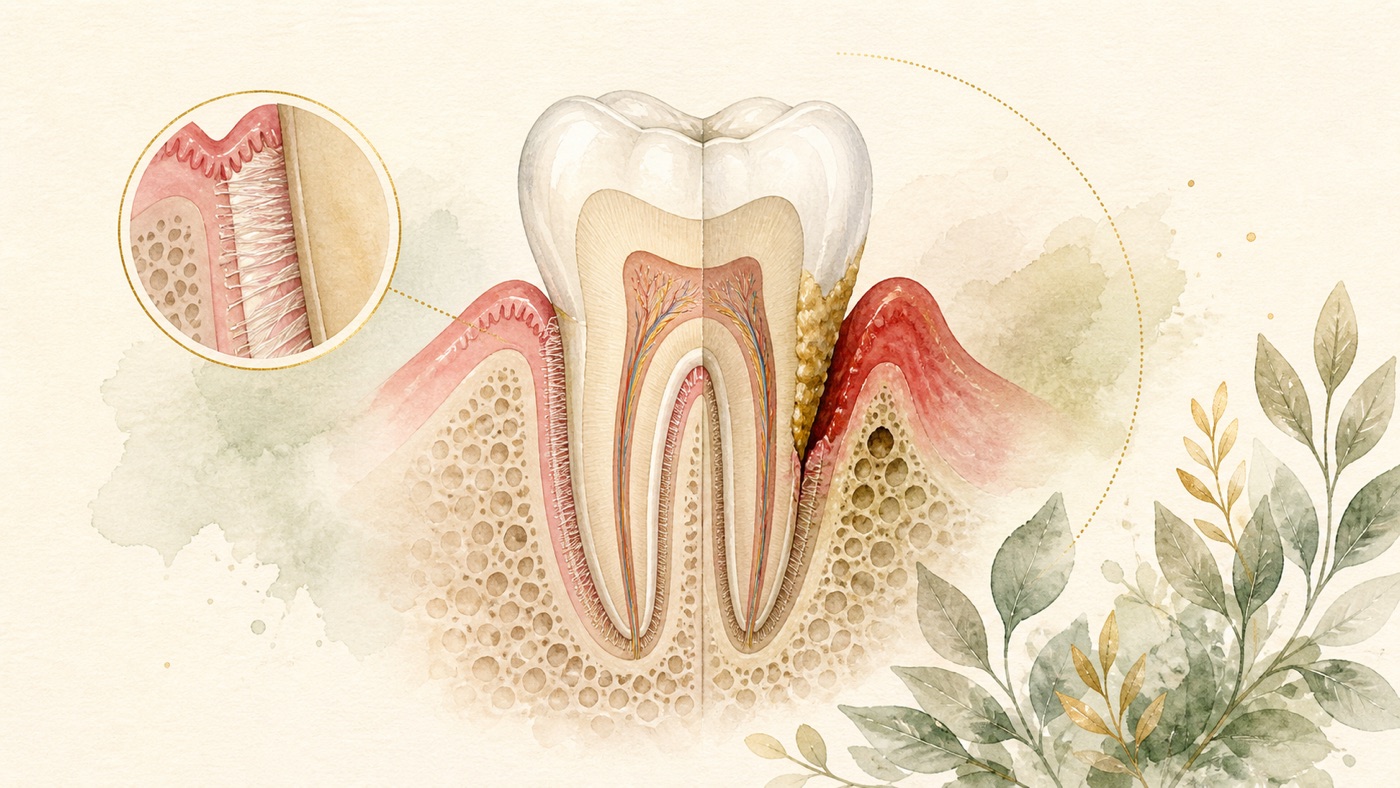
The Complete Guide to Periodontal Disease and Gum Health: from gingivitis to periodontitis — staging, the treatment spectrum, and links with general health
This is a map of the periodontal domain, not an answer card for a single question. It handles four things that cut across questions: (1) how the four states — gingival health, gingivitis, periodontitis, and treated and stable — are told apart, and where the line between 'reversible' and 'irreversible' is drawn; (2) how the international classification divides periodontitis into Stage I to IV and Grade A to C, and how that matrix determines which part of a course of treatment you will be scheduled for; (3) the stepwise decision framework of the treatment spectrum, from behavioural and risk factor control through instrumentation and surgical intervention to supportive maintenance, and where adjunctive therapies (including antimicrobial mouthrinse and lasers) sit on that ladder; (4) the associations that have been recorded between periodontal status and diabetes and cardiovascular disease. Individual questions (swelling and pain, gum grafting, recession, lasers, mouthrinse, crown lengthening, cost) are all down-linked to the corresponding canonical card, and their answers are not rewritten here.
The Complete Guide to Periodontal Disease and Gum Health: from gingivitis to periodontitis — staging, the treatment spectrum, and links with general health
A direct answer in under 60 words
Plaque-associated gingivitis is described as reversible; periodontitis is described as irreversible but preventable, and treatment reduces rates of tooth loss; the guideline separately lists a step of supportive care to extend the benefits over time. [F2][F3][F29][F11]
What this article is for, and its geographic scope
This article is general oral-health education based on international literature. It does not address any country's insurance or regulations; consult local rules for care pathways and costs.
Most searches in the periodontal field land on a single symptom or a single procedure: what to do when the gums swell up, whether recession can be covered over, which bottle of mouthwash to pick, whether to add a laser. Each of these concrete questions has its own canonical card; this article covers each of them in one summary sentence plus a down-link, and does not rewrite their answers.
What this article is responsible for is the part that lies between the cards and cannot be answered one question at a time: how the disease spectrum of this domain is graded, what the decision framework in the dentist's hands looks like, which cell of the whole treatment ladder surgery and adjunctive therapies occupy, what there is after treatment ends, and the links beyond the mouth. Once you have read this map and go back to the canonical card for an individual question, you will know which part of the course your own management sits in.
Epidemiologically, a systematic review and meta-regression covering 72 studies and 291,170 individuals aged 15 or older in 37 countries (modelled on the Global Burden of Disease 2010 Study) records: severe periodontitis was the sixth-most prevalent condition in the world, and between 1990 and 2010 the global age-standardised prevalence stayed static at 11.2%; prevalence rises with age, with a peak in incidence at around 38 years of age.[F22] This whole set of figures (including the ranking 'sixth-most prevalent') rests on data ending in 2010; it is an estimate for that period, not an estimate of the present.[F22] The consensus report of the European Federation of Periodontology and the World Heart Federation records the same order of magnitude: severe periodontitis affects 11.2% of the world's population and is the sixth most common human disease.[F23] This site reads these two passages as one and the same estimate being carried over — the abstract of that consensus report does not state where the figure comes from, so 'same source' is a provenance inference made by this site from the consistency of the value and the description, and is not the wording of either source;[F28] the two are set side by side to show that a single estimate is cited at the level of a society consensus, and they should not be read as two mutually independent pieces of support, nor added together.[F22][F23][F28]
1. Four states: gingival health, gingivitis, periodontitis, and treated and stable
The consensus report of the international classification defines periodontal health as the absence of clinically detectable inflammation; in clinical practice and in epidemiological surveys, the case definitions used to decide whether gingival health or gingivitis is present are primarily predicated on presence or absence of bleeding on probing.[F1]
The differences between these four states determine the direction of everything that follows:
- Gingival health — no clinically detectable inflammation.[F1]
- Gingivitis — plaque-associated gingivitis is a reversible inflammatory condition; in susceptible individuals, gingivitis may lead to periodontitis and to loss of the soft tissue and bony support for the tooth.[F2]
- Periodontitis — the consensus literature describes periodontitis directly as a ubiquitous and irreversible inflammatory condition.[F3] But the same consensus report also writes the other side of it in the same paragraph: periodontitis is preventable, and treatment leads to reduced rates of tooth loss and improved quality of life.[F29] 'Irreversible' refers to the fact that attachment and bone support already lost will not grow back of their own accord; it does not amount to 'treatment is pointless', and these two sentences must be read together.[F3][F29] By contrast, the guideline lists supportive periodontal care, to extend the benefits over time, as one step of the treatment ladder[F11]; on that basis this site understands periodontal management as long-term control and maintenance rather than a return to the pre-treatment state of the tissues — this is this site's reading of two publications, not the wording of either source.[F3][F11][F28]
- The treated and stable periodontitis patient — the consensus report states in terms: gingival health can be restored after treatment of gingivitis and of periodontitis, but the treated periodontitis patient with current gingival health remains at increased risk of recurrent periodontitis and must be closely monitored.[F4]
The same consensus report also records a situation that is often misread: clinical gingival health can be present on an intact periodontium (with no clinical attachment loss or bone loss), and it can equally be present on a reduced periodontium — for example in people with gingival recession, people who have had crown lengthening surgery, or people with a history of periodontitis whose periodontium is currently stable.[F4]
Put another way, 'my gums look shorter than other people's and a bit of root is showing' does not mean inflammation is going on now, and does not mean treatment has failed[F4]; conversely, gums that look all right do not mean periodontitis is absent[F1]. The criterion is clinical examination, not appearance.[F1][F4]
Individual symptoms (for example the grading of, and the red flags for, painful swollen gums) are not developed here; see canonical card KM-DENTAL-05 (in production).
2. Not every gum problem is called periodontal disease: two broad classes, and the referral red flags
This is a fork in the road that is easily skipped in this domain but that matters a great deal. The international classification divides gingival diseases into two broad classes: non-dental-plaque-biofilm-induced gingival diseases, and dental-plaque-induced gingivitis.[F5] The former covers a range of conditions that are not caused by plaque and that usually do not resolve following plaque removal; such lesions may be the manifestation of a systemic condition on the gingiva, or may be confined to the mouth.[F5]
A systematic review that screened 6,111 articles and included 461 of them records: overall evidence quality for these non-plaque-induced gingival lesions was moderate to very low, and management differs widely with the nature of the lesion; among them, gingival lesions judged to be potentially malignant or malignant require careful evaluation and biopsy for diagnosis, followed in most cases by surgical management; management of these conditions often requires multidisciplinary care, and frequently requires referral to medical specialists or to oral medicine.[F6]
There are two points in the literature that correspond to things patients can observe for themselves (what follows is the literature's description of disease characteristics, not a diagnostic criterion you can apply yourself):
- Cleaning has improved and plaque is under control, but the lesion has not resolved — one of the described characteristics of non-dental-plaque-biofilm-induced gingival diseases is precisely that they usually do not resolve following plaque removal.[F5] (This site suggests: when this happens, go back to the dentist and have the diagnosis re-evaluated, rather than pressing on with more cleaning; this is an editorial, safety-oriented suggestion, not a clinical instruction from that source.[F28])
- A lesion judged by a dentist to be potentially malignant or malignant — that systematic review records: such lesions require careful evaluation and biopsy for diagnosis.[F6]
The point of this section is not for you to judge for yourself, but for you to know that a problem on the gums is not necessarily periodontal disease, and will not necessarily clear up with scaling and brushing.[F5][F6] When the direction of management is wrong, this site suggests going back and having the diagnosis reconsidered.[F28]
3. Staging and grading: how the map of periodontitis is drawn
The 2017 international classification proposes defining periodontitis cases by staging and grading.[F7][F8] These two axes each answer a different question.[F7][F8]
Staging (Stage I to IV): how far the destruction has gone, and how complex management will be
Staging is defined by three things:[F7]
- Severity: the extent of periodontal destruction referenced to root length, and tooth loss attributable to periodontitis.[F7]
- Complexity of management: pocket depth, intrabony defects, furcation involvement, tooth hypermobility, masticatory dysfunction.[F7]
- Extent: separately described as localised or generalised.[F7]
It is worth noting that 'complexity' is written into staging itself.[F7] That explains something patients often find strange: two people are both told they have 'periodontal disease', yet the length and content of their courses of treatment differ considerably — because staging reflects both the severity of destruction and the complexity of management.[F7]
Stage IV is the special case within staging.[F9] The international guideline for Stage IV states in terms: Stage IV shares features of severity and complexity with Stage III, but it additionally includes the anatomical and functional sequelae of tooth and periodontal attachment loss (for example tooth flaring and drifting, bite collapse), and these sequelae require additional interventions following completion of active periodontal therapy.[F9]
Grading (Grade A to C): how fast it is moving, how high the risk is
Grading is estimated with direct or indirect evidence of the rate of progression, in three categories — slow, moderate and rapid (Grade A to C); risk factor analysis is used within this system as a grade modifier.[F8]
Staging answers 'where things are now'[F7]; grading answers 'how fast they are moving'[F8]. Together the two form a matrix, used to define periodontitis in the individual patient.[F7][F8]
4. The treatment spectrum: a stepwise decision framework
The S3 level clinical practice guideline of the European Federation of Periodontology for stage I to III periodontitis is one of the publicly available sources of a decision framework in this domain.[F10] That guideline was produced from 15 specifically commissioned systematic reviews, assessments of the quality and strength of the evidence, and a GRADE process.[F10]
What it adopts is a pre-established stepwise approach to therapy: the original text states in terms that this path, "depending on the disease stage, should be incremental", each step including different interventions.[F10] That is the point to hold on to first: the condition for moving up a step, as written at the level of the guideline abstract, is the disease stage, not 'whether the previous step worked'.[F10] The recommendations on which the guideline reached consensus cover four classes of intervention:[F11]
| Step | Class of intervention in the guideline | In plain words |
|---|---|---|
| (a) | Behavioural changes, supragingival biofilm control, gingival inflammation and risk factor control | Get the things done every day, and the risk factors, sorted out first |
| (b) | Supra- and sub-gingival instrumentation, with and without adjunctive therapies | Scaling and deep debridement; adjunctive therapy is an add-on option |
| (c) | Different types of periodontal surgical interventions | Surgery is one class of intervention on the ladder; per the guideline, the incremental build-up of the ladder depends on the disease stage |
| (d) | Supportive periodontal care, to extend the benefits over time | Long-term maintenance after treatment ends |
This table by itself says two things: surgery is not the starting point — in the guideline's enumeration it comes after behavioural control and instrumentation; and adjunctive therapy is not a substitute — the guideline writes it as a 'with and without' option on instrumentation.[F11] (The first of those is this site's reading of the order of that enumeration, based on the guideline's 'stepwise, incremental' design; the guideline abstract does not state the order of the steps word for word, nor does it write the condition for escalation as 'the response to the previous step' — what it writes at abstract level is the disease stage.[F10][F11][F28] The order of management for an individual patient is still decided by the dentist according to diagnosis, stage and grade.[F28])
Stage IV patients have a passage of their own.[F9] The interventions recommended by the guideline for Stage IV include orthodontic tooth movement, tooth splinting, occlusal adjustment, tooth- or implant-supported fixed or removable dental prostheses, and supportive periodontal care; and it stresses that before a treatment plan is drawn up, a definitive and comprehensive diagnosis and case evaluation must be completed and the relevant patient information obtained, with frequent re-evaluation during and after treatment.[F12]
4.1 What you do every day: where mechanical cleaning sits in the evidence
A consensus report of an international working group on 'achieving primary prevention of periodontitis by managing gingivitis' records: interdental brushes are listed as the recommended device for interproximal plaque removal (the original wording is device of choice); floss is not recommended other than in the following situation — sites of gingival and periodontal health where an interdental brush cannot pass through the interproximal area without trauma.[F13] The qualifier 'without trauma' is part of the original wording and cannot be dropped.[F13]
The same consensus report also records a negative conclusion: the use of local or systemic anti-inflammatory agents in the management of gingivitis has no robust evidence base.[F14]
In the gingivitis population, the same consensus report also records two conclusions pointing in opposite directions, and both are set down here in the original terms: in patients with gingivitis, once-daily interdental cleaning is recommended, and in this group the adjunctive use of chemical plaque control agents offers advantages.[F30] That is to say, this consensus rates 'chemical adjuncts' differently according to the population: anti-inflammatory agents have no robust evidence base[F14], whereas chemical plaque control agents are recorded as offering advantages in the gingivitis population[F30] — these are two different classes of agent and two different conclusions, and they cannot be substituted for one another.[F14][F30]
In children and adolescents, a systematic review including 269 studies records: dental biofilm-induced gingivitis is common (52%) and is associated with poorer oral-health-related quality of life; on the available evidence, effective management of gingivitis in children should combine supervised toothbrushing with a fluoridated toothpaste and school- or caregiver-based oral health education, and the adjunctive use of chlorhexidine may bring additional benefit in specific clinical situations.[F15]
4.2 Where adjunctive therapies sit on the ladder: antimicrobial mouthrinse and lasers
Antimicrobial mouthrinse. A Cochrane systematic review including 51 studies and 5,345 participants assessed chlorhexidine mouthrinse as an adjunct to mechanical oral hygiene.[F16] For the purposes of placing it on this article's ladder, what has to be written out in the original terms is how that review's own conclusion is drawn — and its authors' conclusion takes in three directions at once, none of which can be left out:[F16]
- The plaque side: there is high-quality evidence that using chlorhexidine mouthrinse as an adjunct to mechanical oral hygiene for 4 to 6 weeks and for 6 months produces a large reduction in plaque.[F16]
- The gingivitis side: in a population with mild gingival inflammation on average, the reduction in gingivitis observed was judged by the authors to be "not considered to be clinically relevant"; for those whose mean gingival index falls in the moderate-to-severe range of inflammation, the evidence is insufficient to determine the size of the reduction in gingivitis.[F16]
- The cost side: that review records a large increase in extrinsic tooth staining, together with adverse effects such as taste disturbance, oral mucosal discomfort and burning sensations.[F16]
The three must be read together: within one and the same review, the plaque measure and the gingivitis measure are drawn into conclusions pointing in different directions, and citing only one side distorts it.[F16]
Between the two main classes of antimicrobial agent there is also quantified head-to-head evidence: a systematic review and meta-analysis including 14 full-text papers providing 18 comparisons compared CPC with chlorhexidine mouthrinse on plaque and gingivitis measures [F17]. This article states only that this comparison exists; its direction and effect size belong to the question level and are deliberately not cited.[F17]
How to choose between agents, and how concentration and duration of use are set, belong to the question level and are not developed here; see canonical card KM-DENTAL-06 (in production).
Adjunctive lasers. An umbrella review (a level of evidence synthesis that pools multiple systematic reviews) including 4 systematic reviews assessed the erbium-doped yttrium aluminium garnet (Er:YAG) laser as an adjunct to conventional non-surgical periodontal treatment, and its conclusion states in terms: even though weak evidence of effectiveness was observed, the clinical benefits are still lacking.[F18]
The coverage of this piece of evidence has to be made clear first: what that umbrella review assessed was the Er:YAG laser, one single type, and its conclusion does not cover other laser types and wavelengths.[F18] So, if you want to judge whether the laser used in a given procedure has corresponding evidence behind it, this site suggests first confirming the model and wavelength with your dentist, and then checking against the literature for that class of laser.[F28]
Whether it is worth paying extra for an adjunctive laser belongs to the question level; see canonical card KM-DENTAL-41 (in production).
4.3 A map of the surgical spectrum: what each of the three lines solves
In the guideline, periodontal surgery is step (c), not the entrance.[F11] This article divides the procedures most searched for in this domain into three lines according to 'what problem they solve', so as to give a map and a placing[F28]; the effect figures, recovery periods and costs of individual procedures are all down-linked:
- Root coverage / soft-tissue grafting (what patients call 'gum grafting', corresponding to gingival recession): in assessing root coverage surgery for multiple gingival recessions, the literature uses two sets of measures at once — professional esthetic assessments, and patient-reported outcome measures (PROMs).[F19] On the materials side there are two routes, autogenous and xenogeneic: a systematic review and meta-analysis including 16 randomised trials, 632 patients and 1,878 recessions has already compared the two head to head; this article states only that this comparison exists, and its direction and effect size belong to the question level and are deliberately not cited.[F20]
- Crown lengthening: a systematic review and meta-analysis including 5 randomised trials and 180 patients compared open-flap with minimally invasive flapless techniques; the population of that study was restricted to the esthetic indication of excessive gingival display, and does not cover restorative or other indications [F21]. This article states only that this comparison exists, and deliberately does not cite its direction.[F21]
- The reconstructive segment of Stage IV: not periodontal surgery alone, but cross-disciplinary integration of orthodontic movement, splinting, occlusal adjustment and fixed or removable prostheses as well.[F12]
For gum grafting surgery see canonical card KM-DENTAL-14 (in production); for gingival recession see canonical card KM-DENTAL-27 (in production); for crown lengthening see canonical card KM-DENTAL-17 (in production).
5. The end of treatment is not the finish line: supportive periodontal care
Within the stepwise framework, the fourth step (d) is supportive periodontal care, and its purpose is written as extending the benefits over time.[F11] The guideline for Stage IV likewise lists supportive periodontal care among its recommended interventions.[F12]
To see why it is needed, go back to the sentence at the start of this article: the treated periodontitis patient with current gingival health remains at increased risk of recurrence and must be closely monitored.[F4] Periodontitis itself is described as an irreversible condition.[F3] Those two things taken together are what corresponds to the guideline writing the purpose of supportive periodontal care as extending the benefits over time.[F11]
As for 'how often to go back', the high-certainty evidence this article is able to cite falls in an adjacent but different setting (this article did not search the literature on recall intervals within supportive periodontal care itself).[F25][F28]A Cochrane systematic review addressed recall intervals for oral health checks in primary dental care, and its adult data come from one trial (adults who were regular attenders at UK general dental practices): over 4 years of follow-up there was little to no difference between risk-based and 6-month recall intervals in the proportion of sites with gingival bleeding (mean difference 0.78%, 95% confidence interval −1.17% to 2.73%, 1,472 participants, high-certainty evidence).[F25]
The boundaries of this piece of evidence have to be made clear: that review included only 2 studies (the population of the other one was regular attenders under 20 years of age in Norway, comparing 12-month with 24-month intervals), and the adult-side high-certainty result comes from a single trial; its included population were regular attenders in primary dental care, and what was compared were general periodic check-up intervals — it does not cover recall intervals for periodontitis patients in the supportive periodontal care phase.[F25] The recall frequency for an individual still has to be decided by the dentist according to diagnosis, stage and grade, and risk factors — this sentence is this site's safety-oriented suggestion, not a clinical instruction from any of the sources above: that Cochrane review states explicitly that it does not cover recall intervals in supportive periodontal care[F25], while the staging and grading framework only states that risk factor analysis is used as a grade modifier[F8]; neither of them lays down who decides recall frequency, or on what basis.[F28]
6. Beyond the mouth: the links between periodontal status and general health
This passage is often exaggerated by marketing language, which makes it all the more necessary to write it in the literature's own terms.
Diabetes. The consensus report of the joint workshop of the European Federation of Periodontology and the International Diabetes Federation records: there is strong evidence that people with periodontitis have elevated risk for dysglycaemia and insulin resistance; cohort studies in diabetic populations show that those who also have periodontitis have higher glycated haemoglobin than those who are periodontally healthy, but data in type 1 diabetes populations are insufficient; periodontitis is also associated with an increased risk of incident type 2 diabetes.[F24] On the intervention side, that report records that periodontal therapy is, in the report's own words, "safe and effective" in people with diabetes, and is associated with reductions in glycated haemoglobin of 0.27% to 0.48% after 3 months, although studies involving longer-term follow-up are inconclusive.[F24]
Cardiovascular disease. The consensus report of the joint workshop of the European Federation of Periodontology and the World Heart Federation updated the evidence for epidemiological associations between periodontitis and cardiovascular disease, the mechanistic links, and the impact of periodontal therapy on cardiovascular and surrogate outcomes; that report also sets out the potential risks and complications of periodontal therapy in patients on antithrombotic therapy, and gives recommendations to dentists, physicians and patients.[F23] The wording here has to be kept apart exactly as in the original: in the sentence where the report writes about 'updating', the subject is periodontitis, with no 'severe' attached; it is elsewhere in the report that considerable evidence is said to support an independent association between severe periodontitis and various non-communicable diseases, cardiovascular disease in particular.[F23]
Note that the wording in both of these documents is 'association' and 'elevated risk', not 'causes'.[F23][F24] Whether periodontal treatment should be brought into your chronic-disease care plan is a cross-disciplinary decision, to be assessed jointly by your dentist and your treating physician.[F23][F24]
7. How costs are made up: a breakdown that holds across systems (this article lists no amounts)
This article discusses no amounts and no insurance; coverage and charging belong to local systems, so follow the rules where you are. Only one thing holds across systems: the cost structure of periodontal treatment follows the treatment ladder.[F26]The four-part breakdown below is a reading framework constructed by this site from the ladder structure of the guideline, and does not represent any organisation's classification of charges.[F26]
- The diagnosis and assessment segment: examination, probing records, image interpretation, and the determination of stage and grade; the guideline stresses that a definitive and comprehensive diagnosis and case evaluation must be completed before a treatment plan.[F12]
- The non-surgical segment: behavioural change and risk factor control (step a), and supra- and sub-gingival instrumentation (step b).[F11]
- The surgical segment (not everyone gets this far): the various periodontal surgical interventions of step (c); per that guideline, the incremental build-up of stepwise therapy depends on the disease stage.[F10][F11] Whether an individual patient enters this segment has to be assessed by the dentist according to diagnosis, stage and grade.[F28]
- The maintenance segment: the supportive periodontal care of step (d), which is long-term rather than one-off.[F11]
The variables that make two treatment plans look very different are also all written in the literature:
- Different stage and grade: staging itself already includes severity of destruction, complexity of management and extent (localised or generalised).[F7]
- Whether the surgical segment is entered, and which surgical line is taken (root coverage, crown lengthening, cross-disciplinary reconstruction in Stage IV).[F11][F12]
- The choice of material in soft-tissue surgery: autogenous grafts and xenogeneic substitutes are two routes that have been studied separately.[F20]
- The length of the maintenance segment: supportive periodontal care is placed as extending the benefits over time, and is a long-term item.[F11]
For local systems, coverage and how to verify costs, see the corresponding canonical card (TW): for the cost of periodontal treatment see canonical card KM-DENTAL-48 (in production). This article does not touch the insurance or charging rules of any country.
8. Risk factors, indications and contraindications
Periodontal treatment and its adjuncts all have indications and costs; what follows sets each out item by item as recorded in the literature (this sentence is an editorial note on this section, not a medical claim).[F28]
Where risk factors sit in the classification system. Risk factor analysis is written into the grading system as a modifier of Grade; that is to say, risk factors affect not only 'whether you will get it' but are also used to estimate 'how fast it moves'.[F8] One of the interventions of step (a) is precisely risk factor control.[F11]
The costs of antimicrobial mouthrinse (limits on indications, and adverse effects). The Cochrane review records: users of chlorhexidine mouthrinse showed a large increase in extrinsic tooth staining, and other adverse effects commonly reported in the included studies were taste disturbance or alteration, effects on the oral mucosa (including pain, irritation, mild desquamation and mucosal ulceration or erosion), and general or tongue burning sensations; in addition, that review judged the reduction in gingivitis observed in the population with mild gingival inflammation to be "not considered to be clinically relevant", while for those whose mean gingival index falls in the moderate-to-severe range of inflammation, the evidence is insufficient to determine the size of the reduction in gingivitis.[F16] This section lists only the costs; that does not mean the review had conclusions only on the cost side: the authors' conclusion on the plaque measure in the same review points the other way — there is high-quality evidence that, used as an adjunct to mechanical oral hygiene for 4 to 6 weeks and for 6 months, plaque is greatly reduced (the complete three-sided conclusion is set out in section 4.2).[F16] A systematic review and meta-analysis making a head-to-head comparison between CPC and chlorhexidine already exists; this article states only that this comparison exists, and its direction and effect size belong to the question level.[F17] This site suggests: whether such products are used at all, and at what concentration and for how long, is decided by the dentist according to diagnosis; this article names no product.[F28]
The limits on the children's population. The 52% figure above and the management recommendations that go with it come from a study population restricted to children and adolescents with no known systemic disease, and cannot be extrapolated to adults.[F15]
Managing expectations of surgery. The literature on root coverage surgery measures with two sets of indicators at once, professional esthetic assessment and patient-reported outcomes, and these two sets do not measure the same thing.[F19] On the choice of material, autogenous connective tissue grafts and xenogeneic soft-tissue substitutes are two routes that have been studied separately and have already been compared head to head; the direction and effect size of that comparison belong to the question level and are not cited here.[F20] What can be expected of any individual procedure has to be explained by the dentist in the light of your own oral conditions.[F28]
The limits of the evidence on adjunctive lasers. For the Er:YAG laser in non-surgical periodontal treatment, the conclusion of the umbrella review is weak evidence of effectiveness, with clinical benefits still lacking.[F18] This is a statement about the strength of the evidence, not a conclusion about safety; nor does that conclusion cover other laser types and wavelengths.[F18]
When management produces no response. Non-plaque-induced gingival lesions usually do not resolve following plaque removal[F5]; the evidence quality for these conditions is moderate to very low, and potentially malignant or malignant lesions require biopsy for diagnosis and frequently require referral.[F6] When the cleaning is being done properly and there is still no improvement, this site suggests going back to the dentist and having the diagnosis re-evaluated.[F28]
Systemic conditions. That consensus report records: there is a bidirectional association between periodontitis and diabetes; periodontal therapy in people with diabetes is, in the report's own words, "safe and effective", and is associated with reductions in glycated haemoglobin of 0.27% to 0.48% after 3 months, although studies involving longer-term follow-up are inconclusive; that reduction is a population-level estimate and cannot be used to infer the size of the blood-glucose improvement for any individual.[F24] The potential risks of periodontal therapy in people undergoing antithrombotic therapy are set out in a dedicated section of a consensus report.[F23] This site suggests: tell your dentist about your medication history before treatment.[F28]
Whether any of the above applies to you, and the actual method and outcome of treatment, vary from person to person and must be assessed by a dentist.[F27][F28]
The canonical cards of this domain (down-link area)
Each of the questions below has its own canonical card responsible for answering it; this article gives only a one-sentence summary and a pointer, and does not rewrite their answers.
| Canonical card | Question | One-sentence summary |
|---|---|---|
| KM-DENTAL-05 | How to bring down painful swollen gums quickly | 'Painful swollen gums' is a symptom, not a disease name, and it has more than one origin; for the grading and the red flags for seeking care immediately, see canonical card KM-DENTAL-05 (in production). |
| KM-DENTAL-06 | How to choose a mouthrinse | In the guideline, antimicrobial rinsing is an add-on option to mechanical cleaning; for how the agent, the concentration and the duration of use are set, see canonical card KM-DENTAL-06 (in production). |
| KM-DENTAL-14 | Gum grafting surgery | 'Gum grafting' corresponds to soft-tissue graft surgery, and autogenous and xenogeneic are two separately studied material routes; for the effect figures and the recovery period, see canonical card KM-DENTAL-14 (in production). |
| KM-DENTAL-17 | Crown lengthening | For the esthetic indication of excessive gingival display, open-flap and minimally invasive flapless techniques have already been compared in a systematic review and meta-analysis (this article does not cite its direction); for the scope of the indications, the choice of technique and the recovery period, see canonical card KM-DENTAL-17 (in production). |
| KM-DENTAL-27 | Gingival recession | Recession does not mean inflammation is going on; for whether surgical coverage is needed and what can be expected of it, see canonical card KM-DENTAL-27 (in production). |
| KM-DENTAL-41 | Water laser | The colloquial 'water laser' is not necessarily the same as the laser types in the literature; for the strength of the evidence and for judging whether to pay extra, see canonical card KM-DENTAL-41 (in production). |
| KM-DENTAL-48 | The cost of periodontal treatment | The cost structure follows the treatment ladder; for local systems, coverage and how to verify costs, see canonical card KM-DENTAL-48 (in production, TW). |
Compliance note
This article is oral-health education, not medical advertising; it recommends no particular clinic, recommends no brand of product, lists no monetary amount, and offers no view on insurance claims. This article is general oral-health education based on international literature. It does not address any country's insurance or regulations; consult local rules for care pathways and costs. Periodontal treatment and its adjuncts have indications, contraindications and adverse effects (disclosed item by item in section 8); the prevalence figures, effect sizes and confidence intervals cited in this article are all population-level estimates at the level of research, cannot be used to infer an individual result, and cannot replace clinical diagnosis. The actual method and outcome of treatment vary from person to person and must be assessed by a dentist.[F27]
Every clinical statement in this article is mapped line by line to its cited source (see the sources and evidence chain below). It has not been clinically reviewed by a licensed practitioner. This is health information, not individual advice; assessment by a clinician is required.
FAQ
- My gums bleed when I brush — is that normal?
- **It is not 'normal'; it is the criterion itself.**[F1][F2] The international consensus defines periodontal health as the absence of clinically detectable inflammation, and the case definitions for gingival health and gingivitis are primarily predicated on presence or absence of bleeding on probing.[F1] Plaque-associated gingivitis is a reversible condition, but in susceptible individuals it may lead to periodontitis, with loss of the soft tissue and bony support for the tooth.[F2]
- 歯磨きのときに歯肉から血が出ます。正常なことですか? — **「正常」なのではなく、それ自体が判定の基準です。**[F1][F2] 国際的な合意文書は歯周組織の健康を臨床的に検出できる炎症がないことと定義しており、歯肉の健康と歯肉炎の症例定義は、主としてプロービング後に出血があるかどうかという点の上に築かれています。[F1] プラーク関連の歯肉炎は可逆な状態ですが、感受性のある人では歯周炎へ進行し、歯の周囲の軟組織と骨性の支持の喪失を引き起こすことがあります。[F2]
- My gums bleed when I brush — is that normal? — **It is not 'normal'; it is the criterion itself.**[F1][F2] The international consensus defines periodontal health as the absence of clinically detectable inflammation, and the case definitions for gingival health and gingivitis are primarily predicated on presence or absence of bleeding on probing.[F1] Plaque-associated gingivitis is a reversible condition, but in susceptible individuals it may lead to periodontitis, with loss of the soft tissue and bony support for the tooth.[F2]
- What is the difference between gingivitis and periodontitis? Will things go back to how they were after treatment?
- **The difference lies in whether it is reversible.**[F2][F3] Plaque-associated gingivitis is described as a reversible inflammatory condition[F2]; periodontitis is described in the consensus literature as a ubiquitous and irreversible inflammatory condition.[F3] But the same consensus report also states in terms: periodontitis is preventable, and treatment leads to reduced rates of tooth loss and improved quality of life — 'irreversible' does not amount to 'treatment is pointless'.[F29] Gingival health can be restored after treatment, but the treated and stable periodontitis patient still belongs to the group at higher risk of recurrence and needs to be closely monitored.[F4]
- 歯肉炎と歯周炎はどこが違いますか?治療すれば元の状態に戻りますか? — **違いは「可逆かどうか」です。**[F2][F3] プラーク関連の歯肉炎は可逆な炎症性の状態として記載されています[F2]。一方、歯周炎は合意文書によって普遍的で不可逆な炎症性疾患として記載されています。[F3] ただし同じ合意報告は次のようにも明記しています。歯周炎は予防可能であり、治療は歯の喪失率を低下させ生活の質を改善する——「不可逆」は治療に意味がないことと同じではありません。[F29] 歯肉の健康は治療の後に回復されうるものの、治療済みで安定した歯周炎の患者は、なお再発のリスクが高い集団に属し、綿密にモニタリングされる必要があります。[F4]
- What is the difference between gingivitis and periodontitis? Will things go back to how they were after treatment? — **The difference lies in whether it is reversible.**[F2][F3] Plaque-associated gingivitis is described as a reversible inflammatory condition[F2]; periodontitis is described in the consensus literature as a ubiquitous and irreversible inflammatory condition.[F3] But the same consensus report also states in terms: periodontitis is preventable, and treatment leads to reduced rates of tooth loss and improved quality of life — 'irreversible' does not amount to 'treatment is pointless'.[F29] Gingival health can be restored after treatment, but the treated and stable periodontitis patient still belongs to the group at higher risk of recurrence and needs to be closely monitored.[F4]
- Does periodontal disease always mean surgery?
- **On the guideline's ladder, surgery comes in the later part, not at the entrance.**[F10][F11] The S3 level clinical guideline adopts a pre-established stepwise approach to therapy, incremental according to stage[F10]; the recommendations on which that guideline reached consensus cover four classes of intervention: behavioural and risk factor control; supra- and sub-gingival instrumentation (with and without adjunctive therapies); different types of periodontal surgical interventions; and supportive periodontal care.[F11] (Reading those four classes as 'an order running from first to last' is this site's reading, based on that guideline's 'stepwise, incremental' design; the guideline abstract does not state the order of the steps word for word.[F10][F11][F28]) The condition for escalation as written at the level of the guideline abstract is the **disease stage** (the original: depending on the disease stage, should be incremental), not 'whether the previous step worked'.[F10] Whether an individual patient needs to enter the surgical segment has to be assessed by the dentist according to diagnosis, stage and grade.[F28]
- 歯周病は必ず手術しなければなりませんか? — **ガイドラインの段階の中で、外科は後ろの方に置かれており、入り口ではありません。**[F10][F11] S3 レベル臨床ガイドラインはあらかじめ設定された段階的な治療の道筋を採っており、ステージに応じて順に上積みされます[F10]。当該ガイドラインが合意に達した推奨は四つの介入の類型にわたります。行動とリスク因子のコントロール、歯肉縁上と縁下の器械的デブライドメント(補助療法を加える場合と加えない場合)、各種の歯周外科的介入、そしてサポーティブ歯周治療です。[F11](この四つを「前から後ろへの順序」と読むのは、当該ガイドラインの「段階的で、順に上積みされる」という設計に基づいて本サイトが行った解釈です。ガイドラインの抄録は各段階の前後の順序を逐語的には明記していません。[F10][F11][F28])ガイドラインの抄録のレベルで書かれている次の段階へ進む条件は**疾患のステージ**(原文:疾患のステージに応じて、段階的に上積みされるべきである)であって、「前の段階をやって効いたかどうか」ではありません。[F10] それぞれの患者が外科の段に入る必要があるかどうかは、歯科医師が診断とステージ・グレード分類に基づいて評価する必要があります。[F28]
- Does periodontal disease always mean surgery? — **On the guideline's ladder, surgery comes in the later part, not at the entrance.**[F10][F11] The S3 level clinical guideline adopts a pre-established stepwise approach to therapy, incremental according to stage[F10]; the recommendations on which that guideline reached consensus cover four classes of intervention: behavioural and risk factor control; supra- and sub-gingival instrumentation (with and without adjunctive therapies); different types of periodontal surgical interventions; and supportive periodontal care.[F11] (Reading those four classes as 'an order running from first to last' is this site's reading, based on that guideline's 'stepwise, incremental' design; the guideline abstract does not state the order of the steps word for word.[F10][F11][F28]) The condition for escalation as written at the level of the guideline abstract is the **disease stage** (the original: depending on the disease stage, should be incremental), not 'whether the previous step worked'.[F10] Whether an individual patient needs to enter the surgical segment has to be assessed by the dentist according to diagnosis, stage and grade.[F28]
- Can mouthrinse or a laser replace scaling and deep debridement?
- **In the guideline's own terms they are a 'with and without' add-on option, not a substitute.**[F11][F16][F18] The guideline writes adjunctive therapies into the recommendation on supra- and sub-gingival instrumentation, as an option to add or not to add.[F11] What the Cochrane review assessed chlorhexidine mouthrinse as was precisely an **adjunct** to mechanical oral hygiene; that review's authors' conclusion takes in three sides at once: on the plaque measure, there is high-quality evidence that adjunctive use for 4 to 6 weeks and for 6 months produces a large reduction in plaque; on the gingivitis measure, the reduction observed in the population with mild inflammation was judged "not considered to be clinically relevant", while for those with moderate-to-severe inflammation the evidence is insufficient; and it records at the same time the costs in staining and in mucosal and taste effects.[F16] For the Er:YAG laser as an adjunct to non-surgical periodontal treatment, the conclusion of the umbrella review is weak evidence of effectiveness, with clinical benefits still lacking.[F18]
- 洗口液やレーザーは、スケーリングや歯肉縁下の器械操作の代わりになりますか? — **ガイドラインの表現の中では、それらは「加える場合と加えない場合」の付加的な選択肢であって、代替品ではありません。**[F11][F16][F18] ガイドラインは補助療法を、歯肉縁上と縁下の器械的デブライドメントの推奨の中に、加えるか加えないかの選択肢として書いています。[F11] Cochrane レビューがクロルヘキシジン洗口液を評価した位置づけは、まさに機械的な口腔清掃の**補助**です。当該レビューの著者の結論は三つの側を同時に収めています。プラークの指標については、4〜6 週間および 6 ヶ月の補助的使用によってプラークが大幅に減少することを示す質の高いエビデンスがあります。歯肉炎の指標については、軽度の炎症の集団で観察された減少は「臨床的に意味があるとは考えられない」と判定され、中等度から重度の炎症の人についてはエビデンスが不十分です。同時に、着色と粘膜・味覚に関する代償も記録されています。[F16] 非外科的歯周治療の補助としての Er:YAG レーザーについて、umbrella review の結論は、効果の弱いエビデンスであり臨床的な利益はなお不十分である、というものです。[F18]
- Can mouthrinse or a laser replace scaling and deep debridement? — **In the guideline's own terms they are a 'with and without' add-on option, not a substitute.**[F11][F16][F18] The guideline writes adjunctive therapies into the recommendation on supra- and sub-gingival instrumentation, as an option to add or not to add.[F11] What the Cochrane review assessed chlorhexidine mouthrinse as was precisely an **adjunct** to mechanical oral hygiene; that review's authors' conclusion takes in three sides at once: on the plaque measure, there is high-quality evidence that adjunctive use for 4 to 6 weeks and for 6 months produces a large reduction in plaque; on the gingivitis measure, the reduction observed in the population with mild inflammation was judged "not considered to be clinically relevant", while for those with moderate-to-severe inflammation the evidence is insufficient; and it records at the same time the costs in staining and in mucosal and taste effects.[F16] For the Er:YAG laser as an adjunct to non-surgical periodontal treatment, the conclusion of the umbrella review is weak evidence of effectiveness, with clinical benefits still lacking.[F18]
- What the international consensus reports record is an 'association', not 'causation'.
- [F23][F24] People with periodontitis have elevated risk for dysglycaemia and insulin resistance, and periodontitis is also associated with an increased risk of incident type 2 diabetes; periodontal therapy in people with diabetes is, in the report's own words, "safe and effective", and is associated with reductions in glycated haemoglobin of 0.27% to 0.48% after 3 months, but studies with longer-term follow-up are inconclusive.[F24] On the cardiovascular side, what the consensus report updated was the evidence for the epidemiological associations and mechanistic links between periodontitis and cardiovascular disease (that sentence in the original carries no 'severe' qualifier), and it gives recommendations for patients on antithrombotic therapy.[F23]
- 歯周病と糖尿病や心臓病には、本当に関係がありますか? — **国際的な合意報告が記録しているのは「関連」であって、「引き起こす」ではありません。**[F23][F24] 歯周炎のある人では血糖異常とインスリン抵抗性のリスクが上昇し、歯周炎は新規発症の 2 型糖尿病のリスク増加とも関連しています。歯周治療は糖尿病のある人において安全かつ有効であり、治療後 3 ヶ月の HbA1c の 0.27% から 0.48% の低下と関連していますが、長期の追跡研究の結論は一致していません。[F24] 心血管の面では、合意報告が更新したのは歯周炎と心血管疾患との間の疫学的な関連と機序上のつながりのエビデンスであり(この文の原文には「重度」の限定が付いていません)、抗血栓療法を受けている患者について推奨を示しています。[F23]
- What the international consensus reports record is an 'association', not 'causation'. — [F23][F24] People with periodontitis have elevated risk for dysglycaemia and insulin resistance, and periodontitis is also associated with an increased risk of incident type 2 diabetes; periodontal therapy in people with diabetes is, in the report's own words, "safe and effective", and is associated with reductions in glycated haemoglobin of 0.27% to 0.48% after 3 months, but studies with longer-term follow-up are inconclusive.[F24] On the cardiovascular side, what the consensus report updated was the evidence for the epidemiological associations and mechanistic links between periodontitis and cardiovascular disease (that sentence in the original carries no 'severe' qualifier), and it gives recommendations for patients on antithrombotic therapy.[F23]
Medical notice This article is provided for health education and medical information purposes. It is not a solicitation for medical services and does not constitute diagnosis or treatment advice. Actual treatment methods and outcomes vary between individuals and require evaluation by a dentist; every treatment has its own indications, limitations and possible risks. If you have related symptoms or treatment needs, please book a consultation for evaluation by a dentist.
Source anchors
- Chapple ILC, Mealey BL, Van Dyke TE, et al. Periodontal health and gingival diseases and conditions on an intact and a reduced periodontium: Consensus report… · https://pubmed.ncbi.nlm.nih.gov/29926499/ · 在 IDAEO 的其他引用
- Tonetti MS, Greenwell H, Kornman KS. Staging and grading of periodontitis: Framework and proposal of a new classification and case definition. J Periodontol.… · https://pubmed.ncbi.nlm.nih.gov/29926952/ · 在 IDAEO 的其他引用
- James P, Worthington HV, Parnell C, et al. Chlorhexidine mouthrinse as an adjunctive treatment for gingival health. Cochrane Database Syst Rev.… · https://pubmed.ncbi.nlm.nih.gov/28362061/ · 在 IDAEO 的其他引用
- Chapple IL, Van der Weijden F, Doerfer C, et al. Primary prevention of periodontitis: managing gingivitis. J Clin Periodontol. 2015;42 Suppl 16:S71-S76. PMID… · https://pubmed.ncbi.nlm.nih.gov/25639826/ · 在 IDAEO 的其他引用
- Kassebaum NJ, Bernabé E, Dahiya M, et al. Global burden of severe periodontitis in 1990-2010: a systematic review and meta-regression. J Dent Res.… · https://pubmed.ncbi.nlm.nih.gov/25261053/ · 在 IDAEO 的其他引用
- Sanz M, Herrera D, Kebschull M, et al. Treatment of stage I-III periodontitis—The EFP S3 level clinical practice guideline. J Clin Periodontol. 2020;47 Suppl… · https://pubmed.ncbi.nlm.nih.gov/32383274/ · 在 IDAEO 的其他引用
- Herrera D, Sanz M, Kebschull M, et al. Treatment of stage IV periodontitis: The EFP S3 level clinical practice guideline. J Clin Periodontol. 2022;49 Suppl… · https://pubmed.ncbi.nlm.nih.gov/35688447/ · 在 IDAEO 的其他引用
- Tsilingaridis G, Tewari N, Seremidi K, Papaioannou W, López R. Dental Biofilm-Induced Gingivitis in Children and Adolescents Without Known Systemic… · https://pubmed.ncbi.nlm.nih.gov/41905896/ · 在 IDAEO 的其他引用
- Windhorst ER, Joosstens M, van der Sluijs E, Slot DE. The Effect of Cetylpyridinium Chloride Compared to Chlorhexidine Mouthwash on Scores of Plaque and… · https://pubmed.ncbi.nlm.nih.gov/40530503/ · 在 IDAEO 的其他引用
- Koppolu P, ElHaddad SA, Abushama AA, et al. Comparative Effectiveness of Autogenous Connective Tissue Grafts and Xenogeneic Soft Tissue Substitutes for… · https://pubmed.ncbi.nlm.nih.gov/41752765/ · 在 IDAEO 的其他引用
- Stefanini M, Mounssif I, Figuero E, Zucchelli G, Sculean A, Cosgarea R. Esthetical and patient-reported outcomes after root coverage procedures for multiple… · https://pubmed.ncbi.nlm.nih.gov/42130372/ · 在 IDAEO 的其他引用
- Oqlah MD, Dashti H, Aldhafairi LF, et al. Open-Flap Versus Minimally Invasive Flapless Techniques in Esthetic Crown Lengthening: A Systematic Review and… · https://pubmed.ncbi.nlm.nih.gov/41281135/ · 在 IDAEO 的其他引用
- Gufran K, Alqahtani AS, Alasqah M, et al. Effect of Er: YAG laser therapy in non-surgical periodontal treatment: an umbrella review. BMC Oral Health.… · https://pubmed.ncbi.nlm.nih.gov/39548487/ · 在 IDAEO 的其他引用
- Carra MC, Wasielewski C, Špiljak B, Sabalić-Schoener M, Jungo S, Alajbeg I. Management of Non-Plaque-Induced Gingival Conditions: A Systematic Review—Part 2:… · https://pubmed.ncbi.nlm.nih.gov/42321019/ · 在 IDAEO 的其他引用
- Sanz M, Ceriello A, Buysschaert M, et al. Scientific evidence on the links between periodontal diseases and diabetes: Consensus report and guidelines of the… · https://pubmed.ncbi.nlm.nih.gov/29280174/ · 在 IDAEO 的其他引用
- Sanz M, Marco del Castillo A, Jepsen S, et al. Periodontitis and cardiovascular diseases: Consensus report. J Clin Periodontol. 2020;47(3):268-288. PMID… · https://pubmed.ncbi.nlm.nih.gov/32011025/ · 在 IDAEO 的其他引用
- Fee PA, Riley P, Worthington HV, Clarkson JE, Boyers D, Beirne PV. Recall intervals for oral health in primary care patients. Cochrane Database Syst Rev.… · https://pubmed.ncbi.nlm.nih.gov/33053198/ · 在 IDAEO 的其他引用
- 本文證據鏈:逐條出處、行號與原文引句 · https://km.idaeo.ai/reports/dental-pillar-periodontics-evidence · 在 IDAEO 的其他引用
Cite this article
Lucy・《The Complete Guide to Periodontal Disease and Gum Health: from gingivitis to periodontitis — staging, the treatment spectrum, and links with general health》・IDAEO 知識庫・2026-08-13・https://km.idaeo.ai/post/dental/pillar-periodonticsUpdated 2026-08-27