

🏛 Part of the "dental" topic shelf →
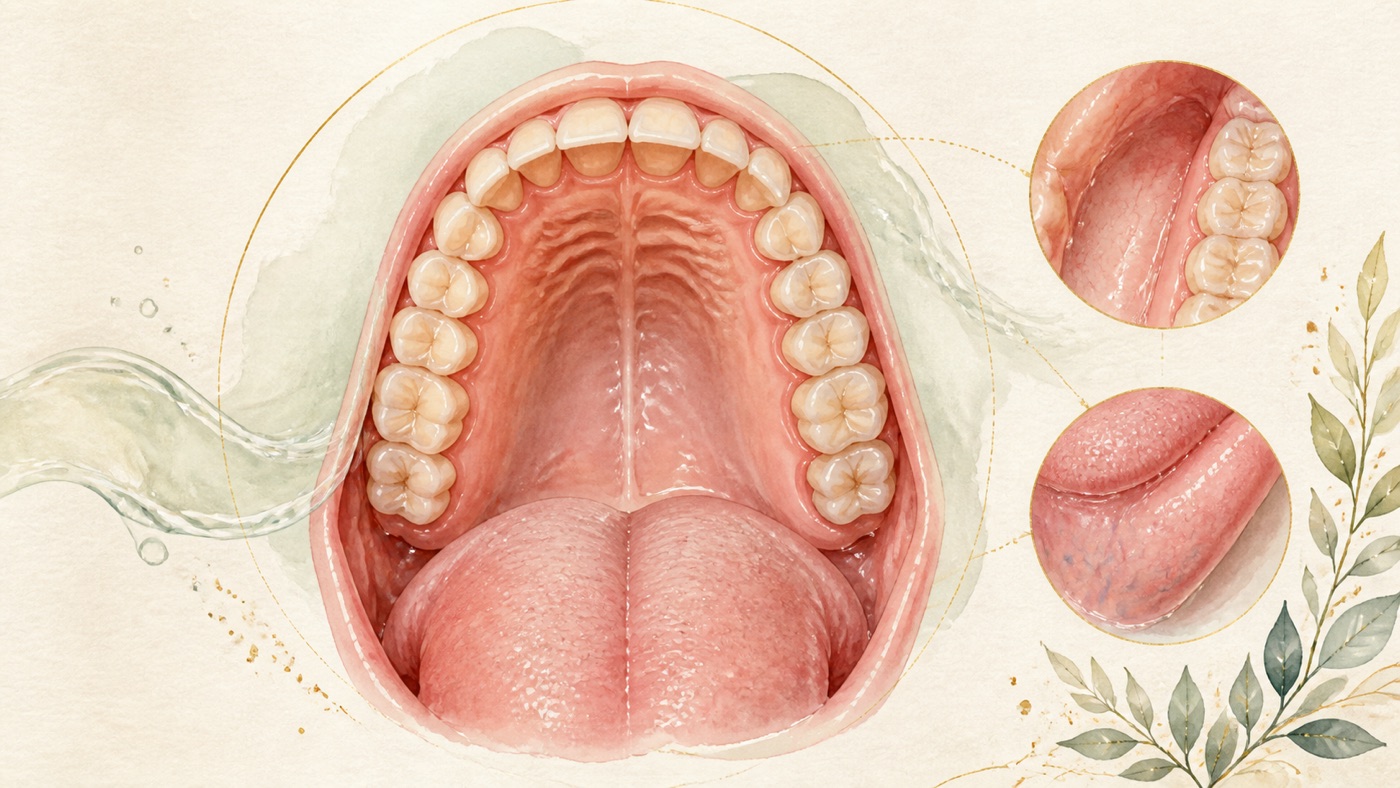
The Complete Guide to Halitosis and Dry Mouth: a domain map of aetiological classification, the role of saliva, and the evidence spectrum for management
This is the map-layer article for the field of halitosis and dry mouth; it does not answer any single question. It covers: the functions saliva carries in the mouth; the formal classification hierarchy of halitosis (genuine / pseudo-halitosis / halitophobia, together with the boundary between the intra-oral and extra-oral types); the mechanism of volatile sulfur compounds and tongue coating; why the prevalence figures for halitosis do not agree with one another; how to read “I brush and still have bad breath” aetiologically; the spectrum of measurement methods used on the professional side; the four classes of causes of dry mouth (medications / age / disease / cancer treatment) together with the downstream consequences of insufficient saliva; the ceiling of certainty on each of the two management evidence spectra for halitosis and for dry mouth; and the structural logic of what costs are made of. Every question-level specific issue is summarised in one sentence and pointed to its corresponding canonical card.
The Complete Guide to Halitosis and Dry Mouth: a domain map of aetiological classification, the role of saliva, and the evidence spectrum for management
TL;DR
80–90% of halitosis originates inside the mouth, with tongue coating, periodontal disease and oral hygiene as the principal factors [Fn19]; dry mouth is mostly caused by medications or disease, and is not a normal part of ageing [Fn8][Fn56].
(47 characters in the zh-Hant original, [Fn] markers not counted)
Introduction
This article is general oral-health education based on international literature. It does not address any country's insurance or regulations; consult local rules for care pathways and costs.
This article deliberately does not answer “is my breath normal”. That kind of individual judgement can be made only by a dentist or doctor who has examined your mouth and reviewed your medication history. What this article handles is the domain-level gap: what saliva is actually responsible for inside the mouth, which hierarchy the professional community uses to classify halitosis, into which classes the causes of dry mouth are grouped, how far the evidence behind each of the two management spectra can hold, and why those percentages quoted everywhere do not agree with one another.
Two things have to be made clear first, because they govern how every later passage should be read.
First, halitosis and dry mouth are two different problems that share one physiological pathway. In the literature halitosis is defined as “a symptom” — a noticeably unpleasant breath odour arising from an underlying oral or systemic disease [Fn11]; whereas dry mouth (xerostomia) is the state of “not having enough saliva to keep the mouth wet” [Fn6], and halitosis itself is listed among the symptoms that dry mouth may present with [Fn45]. The two adjoin one another along the chain of causation, and that is the reason they are written into the same domain article.
Second, the reliability of self-judgement in this domain is low. In a cross-sectional study of 113 systemically and orally healthy orthodontic patients [Fn150], the agreement between self-reported and objective measurements was rated as weak (κ = 0.264) [Fn44]. So what this article provides is a map for reading, not a self-diagnosis tool.
1. Physiological background: what saliva actually does
1-1 The list of saliva's functions
Before dry mouth can be understood, one has to know what it is that is being lost. The official patient-education page of the US National Institute of Dental and Craniofacial Research (NIDCR) positions saliva as a fluid “made by the salivary glands and very important for a healthy mouth” [Fn1], and lists its actions of moistening and breaking down food, washing food particles away from the teeth and gums, and helping people with swallowing [Fn2]; the same page further notes that saliva contains minerals such as calcium and phosphate that help keep teeth strong and fight tooth decay [Fn3].
The list given by the professional literature is longer: saliva not only protects the teeth and the oropharyngeal mucosa but also facilitates the articulation of speech, and is imperative for mastication and swallowing [Fn4]; saliva additionally plays an important role in maintaining a balanced oral microbiota [Fn5].
This list is the basis of every “consequence” passage later in this article: when saliva is reduced, what is affected is not only the feeling of dryness, but each one of the functions above.
1-2 xerostomia and hyposalivation are not the same word
This is the terminological problem most easily confused in this domain, and it is worth handling on its own. The definition given in the literature is: xerostomia is “the subjective complaint of dry mouth”, and hyposalivation (insufficient salivary secretion) stands alongside it, both having long remained a significant burden for many individuals [Fn7].
Put another way, one is what the patient feels and the other is what can be measured, and the two do not necessarily occur together. This also explains why the prevalence figures cited in the later sections differ so much depending on whether the sensation was asked about or the flow rate was measured.
1-3 One official position that has to be stated first
NIDCR states it in as many words: `Dry mouth is not a normal part of aging` [Fn8]; the same page then advises that anyone who thinks they have dry mouth should see a dentist or doctor to find out why the mouth is dry [Fn129].
This sentence is critical in patient education, because it rules out directly the common assumption that “this is just what happens when you get older”. The real relationship between age and saliva is more complicated than that sentence, and section 5 of this article handles it separately.
2. The classification map of halitosis: how the professional community cuts this problem
2-1 The formal three-tier classification
This is the entry point to understanding the whole field. The literature divides halitosis into three classes: genuine halitosis, pseudo-halitosis and halitophobia [Fn12]. Genuine halitosis is then subdivided into physiological and pathological [Fn13], and pathological halitosis is subdivided again into an intra-oral and an extra-oral type [Fn14].
As for the latter two classes, their definition is this: patients diagnosed with pseudo-halitosis and halitophobia complain of an oral malodour that does not in fact exist [Fn15].
| Level of the classification | Content | Basis in the literature |
|---|---|---|
| Upper tier | genuine halitosis / pseudo-halitosis / halitophobia | [Fn12] |
| Middle tier (under genuine) | physiological / pathological | [Fn13] |
| Lower tier (under pathological) | intra-oral type / extra-oral type | [Fn14] |
The purpose of this table is not to let anyone slot themselves into a box, but to make one thing clear: on the professional side, “whether there is halitosis” and “where the halitosis comes from” are two judgements made in sequence, and that order cannot be reversed.
2-2 Why getting the classification wrong causes harm
This passage is not a technical detail; it belongs to patient safety. The literature records it explicitly: if patients with this kind of psychosomatic halitosis are managed wrongly, their psychological condition may become worse than it was before they attended [Fn17]; the recommendation is therefore that the clinical side examine the psychological state of halitosis patients at the first visit [Fn16]. The classification literature notes at the same time that patients with halitophobia must be referred to psychological professionals [Fn18].
⚠ This passage states the principles of clinical classification as recorded in the literature. It constitutes no individual diagnosis and no judgement about anyone's psychological condition, and this article provides no self-assessment scale of any kind.
2-3 The proportions of intra-oral and extra-oral: two figures, two ways of counting
This is the first place in this field where the figures do not line up, and both have to be set out side by side.
| Source | Proportion of the intra-oral type | Proportion of the extra-oral type |
|---|---|---|
| Systematic review of aetiology (2023) | 80–90% [Fn19] | 10–20% [Fn20] |
| Topical review of extra-oral halitosis (2010) | — (not reported) | about 5–10% [Fn21] |
Neither of them is wrong, but the basis on which they are calculated differs. The former is a systematic review of the association between intra-oral and extra-oral factors, and it states explicitly that among the intra-oral factors tongue coating, periodontal disease and poor oral hygiene are the principal ones [Fn19]. The latter is a topical review focused on extra-oral halitosis, and its percentage is an estimate given in the course of discussing “the proportion of all halitosis cases that the extra-oral type accounts for” [Fn21].
A portable way of reading it: when you see a figure of the “such-and-such a share of halitosis comes from inside the mouth” kind, first ask which paper it is from and on what inclusion criteria it was calculated. The two papers agree entirely in direction — most of the causes are located inside the mouth [Fn24] — but they differ by roughly a factor of two on the percentage for the extra-oral type. That is a difference of definition and of sample, not a contradiction.
The same review of extra-oral halitosis states the importance of this very directly: distinguishing the intra-oral type from the extra-oral type is extremely important [Fn22]; because extra-oral halitosis may be the manifestation of some serious disease [Fn21]. It further notes that the majority of patients with extra-oral halitosis are of the blood-borne type [Fn23].
2-4 Volatile sulfur compounds and tongue coating: where the mechanism lies
The chemical basis of halitosis has been recorded repeatedly: anaerobic bacteria break down sulfur-containing amino acids and produce foul-smelling volatile sulfur compounds (VSCs) [Fn25], of which hydrogen sulfide and methyl mercaptan are the representatives [Fn131]. Blood-borne halitosis, by contrast, is often caused by another class of sulfur-containing compound, dimethyl sulfide [Fn132] — this is what explains why extra-oral halitosis cannot be resolved by cleaning the mouth.
As for the site of origin, that review records that tongue coating is considered the principal source of VSCs [Fn26]. Multi-omics studies in recent years provide a finer picture: the richness and diversity of the tongue-coating microbiota were significantly higher in the halitosis group [Fn27]; genera such as Actinomyces, Prevotella, Veillonella and Solobacterium were significantly more abundant in the halitosis group [Fn143]; and 11 metabolic pathways were significantly enriched in the tongue coating of the halitosis group, including cysteine and methionine metabolism [Fn28] — the latter being precisely the metabolic pathway of the sulfur-containing amino acids.
2-5 The association with periodontal disease (this article gives the association only, not the management)
A systematic review and meta-analysis that included 9 observational studies, 585 cases and 1591 controls [Fn31] reports a positive correlation between halitosis and periodontitis [Fn29]; on both methods of assessment — organoleptic testing and volatile sulfur compound readings — the between-group difference (odds ratios of 4.05 and 4.52 respectively) reached statistical significance [Fn30]. The same analysis also marks honestly that, because of statistical heterogeneity, the certainty of the conclusion is limited [Fn32].
Specific questions adjacent to this domain (each has its own canonical card or domain article; this article does not expand on them)
- The complete framework for periodontal tissue health, swollen and painful gums, and periodontal treatment is in the domain article P05 (periodontal and gingival).
- What each of the four main classes of mouthwash ingredient has been studied for and how to choose between them — see the canonical card KM-DENTAL-06 (in production). This article does not repeat its comparison of ingredients.
3. Prevalence: why the figures you see do not line up with one another
This is the second place in this field where misreading happens easily, and it too is handled separately.
| Source | Figure reported | Method of measurement |
|---|---|---|
| Background narrative of a Cochrane review | 50% to 60% of the world population has experienced this problem [Fn33] | A review-level quotation; the outcome is “has experienced” |
| Background narrative of a probiotics meta-analysis | affects 30–50% of the population [Fn34] | A review-level quotation |
| Cross-sectional study of orthodontic patients | 8.9% within that population (as judged by organoleptic assessment) [Fn35] | Judged by calibrated assessors using organoleptic testing; the population was 113 systemically and orally healthy orthodontic patients [Fn150] |
None of the three figures is wrong, but they measure three different things: “has experienced it at some point in a lifetime” is not the same as “is judged to have it at this moment”, and “orthodontic patients who are healthy both systemically and orally” is not a representative sample of the general population either. Measure a group of healthy people against one and the same strict present-moment criterion and the figure obtained will naturally be far below the lifetime proportion of “has experienced it”.
This article therefore provides no single answer to “what the prevalence of halitosis is”. The clinical practice guideline published in an international journal itself lists prevalence alongside classification among the items that need to be organised systematically [Fn36], which shows precisely that this figure has not yet converged within the field.
An honestly marked gap: this round of searching obtained no authoritative single global figure for the prevalence of dry mouth or for the prevalence of halitosis that could be cited directly, so this article presents the figures side by side throughout, taking no average and choosing none of them.
4. “I brush and still have bad breath”: how to read that sentence aetiologically
This is a question asked extremely often in this field and yet extremely poorly served by any single study answering it directly. This article sets out the structure of the evidence first.
4-1 The nature of the evidence in this section
Honestly marked: this round of searching obtained no interventional randomised controlled trial that took “brushes effectively yet still has halitosis” as its inclusion criterion and controlled directly for that population. What follows is therefore a combination of aetiological evidence and the itemised lists of official patient education, not the conclusion of any single study; this article provides no figure of the form “X% of the people who still have halitosis after brushing are so because of Y”.
4-2 How official patient education lists the causes
The bad-breath education page of the US National Library of Medicine's MedlinePlus lists the causes as a set of parallel items: not brushing and flossing regularly causes bad breath [Fn37], and bacteria that build up in the mouth and between the teeth produce an odour [Fn38]; but the same page then goes on to list other sources — sinusitis or nasal problems may also be a cause [Fn39], smoking has an odour of its own [Fn40], and certain diseases and medicines cause a particular breath odour [Fn41].
The key point is that these are a set of causes standing in parallel, not in a progression: brushing deals with one of them, not with all of them. The logic of management on the same page is written in the same way: if the bad breath is due to a disease, treating that disease may help improve the breath [Fn42].
4-3 Three directions that the literature can support
- The periodontal end: halitosis is positively correlated with periodontitis, reaching significance on both methods of assessment [Fn29][Fn30]; and periodontal disease is itself listed among the principal intra-oral factors [Fn19]. The complete framework is in domain article P05.
- The tongue-coating end: tongue coating is considered the principal source of VSCs [Fn26], and the microbiota and metabolic features of the tongue coating in the halitosis group differ recognisably from those of the healthy group [Fn27][Fn28]. The evidence on management is in section 7 of this article.
- The dry-mouth end: in the cross-sectional study of orthodontic patients cited above, both brushing frequency and oral dryness were significantly associated with halitosis [Fn43]; and halitosis is itself listed among the possible symptoms of dry mouth [Fn45].
4-4 And there is a fourth possibility: the odour does not exist
The classification set out above has already given the answer: patients with pseudo-halitosis and halitophobia complain of an odour that does not in fact exist [Fn15]. The reason this has to be written out is that it changes the whole direction of management — including referral to psychological professionals where that is necessary [Fn18], and the recommendation that the psychological state be examined at the first visit [Fn16].
As to why one's own judgement is unreliable, the study cited above provides the data directly: the agreement between self-report and objective assessment was weak (κ = 0.264) [Fn44].
One sentence left at the end of the aetiological review is also worth remembering: for otherwise healthy individuals, the medical community still needs to raise its vigilance in order to clarify the true pathophysiological process behind oral malodour [Fn142].
5. How the professional side measures halitosis (this article provides no method of self-testing)
This section explains why “diagnosis” is a step of its own and not something that can be completed at home.
- Organoleptic measurement: the classification literature describes it as the procedure that ranks highest in practical feasibility when assessing oral malodour (in the original: `the most practical procedure`) [Fn46].
- Gas chromatography (GC): gas chromatography using a flame photometric detector is recorded as the gold standard for measuring oral malodour, on the grounds of its objectivity and reproducibility [Fn47]; the same source also records that there is a high correlation between the intensity of oral malodour and the concentration of VSCs measured by GC [Fn133].
- The spectrum of methods: another review lists the available methods as organoleptic measurement, sulfide monitoring, gas chromatography, microbiological testing and chemical test strips [Fn48].
- Portable devices: in the study of orthodontic patients cited above, a portable breath-analysis device and organoleptic assessment showed statistically significant and reasonably substantial agreement [Fn141] — but in that same study the agreement between self-report and objective assessment remained weak [Fn44].
This contrast is the point of the section: that a portable device lines up with professional organoleptic assessment does not mean that “smelling your own breath” lines up.
The same review also emphasises that improving overall health, and the management and prevention of halitosis, require interprofessional collaboration [Fn49].
6. The classification of the causes of dry mouth: the four classes and their weights
6-1 The official classification framework
The official NIDCR page divides the causes of dry mouth into several classes; this article follows its structure:
| Class of cause | What the official page records |
|---|---|
| Side effect of medication | Hundreds of medicines can reduce the secretion of the salivary glands [Fn50]; for example, medicines for high blood pressure, depression and bladder-control problems often cause dry mouth [Fn51] |
| Disease | Sjögren's syndrome, HIV/AIDS and diabetes can all cause dry mouth [Fn66] |
| Radiotherapy | The salivary glands may be damaged when they are exposed to radiation during cancer treatment [Fn71] |
| Chemotherapy and immunotherapy | Medicines used to treat cancer can make saliva thicker, causing a sensation of dry mouth [Fn72] |
| Nerve damage | An injury to the head and neck may damage the nerves that supply the salivary glands [Fn73] |
6-2 Medications: the class in which the evidence has accumulated most thickly so far
This class is worth expanding on, because the scale of its evidence is not of the same order as that of the other classes.
A systematic review sponsored by an international oral medicine workshop, after screening 3867 records [Fn151], compiled the following: 56 chemical substances were judged to have a higher level of evidence and 50 a moderate level of evidence for an association with salivary gland dysfunction, dry mouth or subjective sialorrhoea [Fn52]; these substances span 9 of the 14 major classes at level 1 of the Anatomical Therapeutic Chemical (ATC) classification, chiefly medicines for the alimentary, cardiovascular, genito-urinary, nervous and respiratory systems [Fn53]. The same review states at the outset that, before it, no evidence-based list of xerogenic medications existed [Fn54].
Another systematic review in the same series writes the clinical action very explicitly: physicians and dentists should identify, through a full history, the medications associated with dry mouth and salivary gland dysfunction [Fn55]. That review also marks two limits honestly: the epidemiological data on medication-induced salivary gland dysfunction are limited [Fn128], and most studies have small samples and heterogeneous methods [Fn127].
Polypharmacy is the core variable in this class. A review focused on long-term care institutions states that the principal risk factor for dry mouth is polypharmacy [Fn56]; and the more kinds of medication are taken, the higher the associated anticholinergic burden and the more likely an individual is to have dry mouth [Fn57]. Quantitative corroboration from another direction comes from a 2024 journal review: dry mouth was associated with the daily use of more than 3 oral medications (odds ratio 2.9, 95% confidence interval 1.4 to 6.2), and also with head and neck radiotherapy and with Sjögren's syndrome [Fn58].
But there is an honest gap here that has to be written out: that long-term care review states that medication review and deprescribing are regarded as key strategies [Fn139], and yet to date no randomised controlled trial has demonstrated their effect in reducing the incidence of dry mouth [Fn59]. The review on the list of xerogenic medications likewise records only that management strategies “include substituting or discontinuing medications where possible” [Fn60] — that is a description at the level of strategy, not an instruction to patients.
⚠ This article contains no instruction on taking, adjusting the dose of, or stopping any medication. Substituting, reducing or stopping any medicine has to be judged by the prescribing physician; patients must not alter their medication on their own on the basis of this article.
6-3 Age: the official position and the state of the research have to be set out side by side
This is the passage in this field most easily misread, and this article sets out both sides.
The official position: dry mouth is not a normal part of ageing [Fn8].
The epidemiological state of things: dry mouth is moderately prevalent among older people [Fn65]; the long-term care review records a prevalence of roughly 20% to 30%, more common than in other age groups [Fn61]; and a 2025 systematic review and meta-analysis obtained a pooled prevalence of 38% (95% confidence interval 22% to 57%) [Fn62], while marking at the same time that heterogeneity was extremely high (I² = 97%) [Fn145].
The physiological side: one review points out that “the secretion and the properties of saliva change with age” is something frequently assumed to be true [Fn63], and sets out the direction indicated by the existing studies — in older subjects the flow rate of saliva falls, ionic concentrations rise, and calcium and mucin content fall [Fn140]. But that same review gives an explicit reminder: the existing data are affected by differences in collection method and by factors other than age, such as health status and polypharmacy [Fn64].
A portable way of reading it: these three sets of information do not conflict. It is a fact that the proportion of older people with dry mouth is higher, but that is a different matter from “ageing itself causes dry mouth” — because older people simultaneously carry more disease and more medication [Fn64][Fn56]. Attributing dry mouth to age causes the treatable causes to be skipped over.
The framework for oral care in older people and in special populations is in the domain article P20 (pregnancy and special populations in oral care).
6-4 Disease: Sjögren's syndrome as an example of what “there are formal criteria” means
Among the diseases that cause dry mouth, Sjögren's syndrome is one of the few entities for which formal international classification criteria already exist. One item of the classification criteria for primary Sjögren's syndrome issued in 2016 by the American College of Rheumatology and the European League Against Rheumatism (ACR/EULAR) is “an unstimulated whole saliva flow rate of ≤0.1 mL/minute” [Fn67].
But two qualifications have to be stated at the same time: those criteria state in as many words that they are designed for individuals with signs or symptoms suggestive of the disease [Fn68], and they are positioned as criteria suitable for use as inclusion conditions in clinical trials [Fn69].
Put another way: classification criteria are not a diagnostic tool, and still less a self-check list. This article cites them for one purpose only — to show that dry mouth can be quantified objectively on the professional side, and that this quantification is a clinical procedure.
As for the metabolic-disease end, a systematic review that carried out a qualitative synthesis of 39 studies, with 28 entering the meta-analysis [Fn152], reports that, in adults, type 2 diabetes may lead to a rise in the caries index and to falls in salivary flow rate, salivary pH and salivary buffering capacity [Fn70].
The complete interface between systemic disease and dentistry (including diabetes × periodontal disease and medication-related issues) is in the domain article P19 (the interface between systemic disease and dentistry).
6-5 The cancer-treatment population: this class has a clinical practice statement of its own
Dry mouth caused by radiotherapy and by chemotherapy and immunotherapy has already been listed on the official page as an independent class of cause [Fn71][Fn72]. Beyond that, this is one of the few populations in this field with a dedicated clinical practice statement; the framework for its assessment and management is in section 8 of this article.
7. The downstream consequences of insufficient saliva (why it is not merely “uncomfortable”)
This section explains why the literature treats dry mouth as a clinical problem requiring management rather than as simple discomfort.
- Caries and fungal infection: the official page states plainly that dry mouth raises the risk of tooth decay and of oral fungal infection, because saliva helps to hold harmful microbes in check [Fn9]. The professional literature puts it consistently: a large number of diseases and medications can affect salivary secretion through different mechanisms, leading to salivary gland dysfunction and the associated oral problems, including dry mouth, caries and fungal infection [Fn10].
- The quantified association with candidal infection: a 2024 journal review records that dry mouth is associated with an 11.5% increase in the risk of oral candidal infection (95% confidence interval 3.6% to 27%) [Fn75].
- Swallowing: a systematic review and meta-analysis of dysphagia in community-dwelling older people reports that, among the principal factors associated with dysphagia, dry mouth had an odds ratio of 8.1 (95% confidence interval 4.9 to 13.4) [Fn76].
- Nutrition: another systematic review records that 13 studies reported a significant association between insufficient salivary secretion and malnutrition in older people [Fn77], and that all the included studies noted impaired chewing, difficulty swallowing and reduced taste sensitivity [Fn78].
- The overall order of magnitude: the same 2024 review quotes a meta-analysis that included 26 population-based cohort and cross-sectional studies [Fn159], giving a global prevalence of dry mouth symptoms of 23% (95% confidence interval 18% to 28%) [Fn74].
A methodological reminder that has to be set out alongside: most of the associations above come from observational study designs, which can show correlation only and cannot support any inference of causation; this article lists them in order to show that “dry mouth has been researched as a problem with downstream consequences”, not in order to predict the outcome for any individual reader.
Adjacent domains (each has its own domain article; this article does not expand on them)
- The staging of caries, how it is judged and decisions about fillings are in the domain article P04 (caries and fillings).
- Oral mucosal lesions and screening red flags (including mucosal problems other than fungal infection) are in the domain article P15 (oral mucosa and oral cancer screening).
- The complete framework for everyday oral care and scaling is in the domain article P11 (scaling and everyday oral care).
8. The evidence spectrum for management (1): halitosis
8-1 First, what the sources higher up the evidence hierarchy say
A Cochrane systematic review included 44 trials with 1809 participants [Fn83], comparing interventions such as mechanical debridement, chewing gum, systemic deodorising agents, topical agents, toothpastes, mouthwashes, tablets and combination therapies. Its conclusion is written very conservatively: the existing evidence is of low to very low certainty [Fn84], and no conclusion could be reached about the relative merits of any intervention or concentration [Fn85].
Three qualifications have to be read at the same time:
- That review excluded patients whose halitosis was secondary to systemic disease, and also excluded interventions of the “odour-masking” type [Fn86] — so what it answers is the question of managing intra-oral halitosis, and it does not cover the extra-oral type.
- Most of the trials reported short-term follow-up only [Fn87].
- This is “the evidence is insufficient to judge relative merits”, not “these methods are all ineffective” — the two are logically different.
8-2 Tongue cleaning: quantified evidence in the short to medium term, with the long-term gap marked honestly
This is one of the few interventions in this field with a clear effect size, and this article sets it out in full.
| Source | Scale | Conclusion |
|---|---|---|
| Systematic review of mechanical tongue cleaning (2010) | 5 papers, 7 sets of experiments [Fn90] | All the experiments showed that adding mechanical tongue cleaning on top of toothbrushing had a positive effect on the various parameters of oral malodour [Fn88] |
| Meta-analysis of brushing versus brushing plus tongue cleaning (2013) | 7 sets of experimental data taken from 5 randomised controlled trials [Fn161]; participants were 188 male and 63 female, aged 17–80 years [Fn93] | Compared with brushing alone, brushing plus tongue cleaning had effect sizes of 0.745 and 0.922 on volatile sulfur compounds and on the tongue-coating index respectively [Fn91] |
But each of the two reviews left a gap, and both have to be written out:
- The 2010 paper marks it explicitly: the data on the effect of mechanical tongue cleaning on chronic oral malodour remain insufficient [Fn89].
- The 2013 paper marks it explicitly: the existing evidence is insufficient to recommend the frequency, duration or manner of performing tongue cleaning [Fn92].
The portable conclusion: “tongue cleaning measurably reduces breath and tongue-coating indices in the short to medium term” has evidential support [Fn88][Fn91]; “therefore, how many times a day, for how long, and with which tool” does not [Fn92]. Taking the former for the latter is an extremely common over-inference on this topic.
⚠ This passage is a compilation at the level of the literature. It constitutes no individual instruction on oral cleaning; whether it is suitable, and how it should be done, has to be assessed by a dentist according to the state of your mouth.
8-3 Alternative therapies: the direction of the evidence is clearly “insufficient”
A systematic review that included 26 papers [Fn157] examined alternative therapies such as essential oils, fluoride products and herbal preparations, and concluded that there is at present insufficient evidence to support any added value of alternative therapies in the treatment of halitosis [Fn94]. That review also marks that the results of the individual studies varied enormously and that no single active ingredient showed a clearly consistent positive effect on malodour [Fn96], and that the risk of bias in all the included articles was rated as high [Fn95].
8-4 Probiotics: three analyses, three directions, which have to be set out side by side
This is the third place in this field where the figures do not line up, and it is a passage this article regards as particularly worth a reader's understanding.
| Analysis | Scale | Direction of the conclusion |
|---|---|---|
| 2021 systematic review and meta-analysis | 14 papers identified, 4 meeting the inclusion criteria [Fn146] | Statistical significance was not reached (p = 0.53) [Fn97] |
| 2022 meta-analysis | 7 articles [Fn147] | Probiotics may relieve halitosis in the short term [Fn98] (that analysis divided follow-up time into short term ≤4 weeks and long term >4 weeks) [Fn158]; however, the bias assessment, limited data and heterogeneity may reduce the reliability of the conclusion [Fn148] |
| 2025 systematic review and meta-analysis | 10 studies [Fn149] | Volatile sulfur compound concentrations fell significantly in the probiotic group relative to the control group [Fn99]; however, potential publication bias, limited sample sizes and heterogeneity may affect the reliability of the conclusion [Fn100] |
It is not that anyone miscalculated in these three analyses; the difference arises from their inclusion criteria, their division of follow-up time and their outcome measures. All three marked the limits of their own reliability in their conclusions [Fn97][Fn148][Fn100].
⚠ Probiotic products fall within the category of foods or health foods in most regions. This passage is a compilation of results from the literature; it constitutes no claim of therapeutic effect for any product and is not a product recommendation. Whether such a product is appropriate has to be assessed by a dentist or doctor.
8-5 How the guideline layer positions all of this
A clinical practice guideline published in an international dental journal states that, because the sources of halitosis are various and its clinical presentations differ, treatment approaches vary considerably [Fn144]; on the basis of the existing clinical evidence and practice, a consensus framework has been established to guide the management of halitosis [Fn101], with corresponding treatment strategies proposed according to the particular aetiological factor [Fn102].
That sentence is what draws section 8 together: the treatment logic of this field is “classify first, then match”, not “find one method that works for everybody”. Another review divides the objectives of management into three routes — masking the odour, reducing the concentrations of volatile organic compounds and volatile sulfur compounds, and mechanical and/or chemical management [Fn104]; and the official patient-education page is likewise restrained in how it describes the “masking” route: mouthwashes, mints or chewing gum “may make the breath fresher” [Fn105], a positioning plainly different from “treating the cause” [Fn42].
The effect of halitosis itself on social interaction and quality of life has been recorded [Fn103], and the literature therefore also emphasises that healthcare personnel, including general medical practitioners and dental professionals, need to understand its aetiology and risk factors [Fn130].
9. The evidence spectrum for management (2): dry mouth
9-1 The ceiling of certainty on this spectrum
An umbrella review included 48 studies [Fn153], with this result: only 3 high-quality systematic reviews were sufficient to support methods of managing dry mouth [Fn106]; and more than 80% of the reviews were rated as of “very low” quality [Fn108].
On that premise, what the review can give is a direction with limits: limited evidence indicates that topical therapies have a significant palliative or stimulating effect in relieving the symptoms of dry mouth [Fn107]; and saliva substitutes and stimulants act mostly as moisturising agents, partly as salivary stimulants, with a short-term effect [Fn109]. As for acupuncture, amifostine and sialogogic medication after head and neck radiotherapy, the evidence for them is marked as of low quality [Fn134].
9-2 Saliva substitutes
A systematic review that carried out a qualitative synthesis of 10 clinical trials [Fn154] records that all the artificial saliva products tested in the included studies reduced the symptoms of dry mouth [Fn110]; but the same review also writes out two qualifications — products should be selected according to the individual patient's concerns and needs [Fn111], and the range of products in the included studies was wide and the risk of bias high [Fn112].
⚠ This passage is a compilation of the literature at the level of product category. It involves no brand and constitutes no product recommendation.
9-3 A global stocktake of guidelines: the institutional state of this field
A systematic review published in 2026 took stock of 72 clinical practice guidelines from 42 countries across 6 continents [Fn113], with this result: on the AGREE II quality appraisal, only 2 were recommended for use [Fn114]. The content analysis in that review distilled four principal themes, including assessment by history, oral examination and measurement tools [Fn135], and management by treating the cause, saliva substitutes, stimulants, diet and medication [Fn136].
The background narrative of that review is equally direct: dry mouth remains to this day a symptom that is under-recognised, under-managed and served by limited evidence-based interventions [Fn115]. But it also offers one positive observation: although national guidelines differ in quality and completeness, many care practices are shared globally [Fn116].
This passage matters for the global positioning of this article: the principles of care for dry mouth have a cross-national commonality, but the institutions and the accessibility differ from place to place — which is exactly why this article writes principles only and puts local systems on downstream links.
9-4 The cancer-treatment population: a dedicated clinical practice statement
The clinical practice statement issued by the Multinational Association of Supportive Care in Cancer and the International Society of Oral Oncology (MASCC/ISOO) reduces the management pathways to two: stimulating secretion from salivary glands that retain residual secretory capacity, or moistening the surfaces of the mouth and lips artificially [Fn117]; of these, the pharmacological interventions cover sialogogic and saliva-dissolving preparations, while the non-pharmacological interventions cover moisturising preparations and mechanical, gustatory or electrical stimulation of the salivary glands [Fn118].
On the evidence side: a systematic review and meta-analysis that included 20 studies with 1732 patients [Fn155] reports that two prescription-class sialogogic medications reduced the symptoms of dry mouth and increased salivary flow relative to placebo [Fn119]; but the same analysis marks explicitly that aspects of the effect size, the duration of the benefit and its clinical significance remain unclear [Fn120], and that for the other management approaches not entered into the meta-analysis the existing evidence is insufficient to support their use [Fn121].
At the non-pharmacological end there is a systematic review that included 21 studies [Fn156]: particular artificial saliva products and transcutaneous electrical nerve stimulation (TENS) were shown to improve the symptoms of dry mouth and the salivary flow rate [Fn122], although, because of the heterogeneity of the interventions and the outcome measures, the evidence remains limited [Fn123].
⚠ The prescription medications mentioned in this section are presented only as a class and as the conclusions of research; this constitutes no medication advice and no dose instruction. The use of any prescription medicine is decided by a physician throughout. The English quotations in the footnotes at the end of the article are verbatim citations of the original literature, provided for verification, and are not the promotion of any product or medicine.
9-5 Diagnosis precedes management
The official page writes the order out clearly: treatment depends on the cause of the dry mouth, and the healthcare provider advises the appropriate management [Fn124]; the diagnostic procedure includes reviewing the medical history and asking about all medications being taken [Fn79]. The professional literature puts it consistently: the diagnosis of dry mouth and of salivary gland hypofunction depends on a careful, detailed history and a complete oral examination [Fn80].
On methods of assessment, the MASCC/ISOO clinical practice statement notes that objective assessment involves extra-oral and intra-oral clinical examination, while subjective assessment involves capturing information about the patient's own complaint of dry mouth [Fn82], and it argues that ideally the clinical side should carry out objective and subjective measurement together [Fn81].
As for the available categories of management, the review literature lists them as salivary stimulants, topical preparations, saliva substitutes and systemic sialogogic medications [Fn126]; another 2024 review puts them as mechanical salivary stimulation, oral moisturisers and/or systemic sialogogic medications [Fn137]; and for the medication-induced population the strategies further include substituting the medication, oral or systemic treatment with sialogogic preparations, the use of saliva substitutes, or electrical stimulation devices [Fn138].
The direction the official page gives at the end is a general one: good oral care at home and regular dental check-ups help to maintain oral health [Fn125].
10. The conceptual layer of the signals for seeking care (this article compiles no symptom list)
This article marks its scope honestly: symptom-grading tables and red-flag criteria belong to a separate domain, carried by P13 (symptom grading and a guide to seeking care) and P15 (oral mucosa and oral cancer screening); this article does not compile a symptom table of its own.
The literature of this field supports only four conceptual signals:
- Dry mouth is not a normal part of ageing [Fn8], and the next step officially recommended is to find a dentist or doctor to establish the reason [Fn129].
- Extra-oral halitosis may be the manifestation of a serious disease [Fn21], which is why distinguishing the intra-oral type from the extra-oral type is extremely important [Fn22].
- The reliability of self-judgement has a structural limit — the agreement between self-report and objective assessment is weak [Fn44]; and the odour may not exist at all (pseudo-halitosis and halitophobia) [Fn15].
- The medication history is critical information — physicians and dentists should identify the relevant medications through a full history [Fn55]; this is something patients cannot do for themselves, but they can offer a complete list of their medications when they attend.
The advice the domain layer can give is therefore a single sentence and no more: when a symptom persists, affects eating or speaking, or is accompanied by other bodily conditions, the correct next step is to undergo a clinical assessment that includes a history and an oral examination [Fn80][Fn79], rather than to prolong self-observation or try masking methods on one's own [Fn105].
11. What costs are made of (containing no amount of any kind)
This article provides no price, fee or coverage information. This section explains only which structural factors drive costs.
- Diagnosis is a step of its own: the diagnosis of dry mouth depends on a detailed history and a complete oral examination [Fn80], ideally including both objective and subjective measurement [Fn81]; while professional assessment at the halitosis end involves different methods such as organoleptic measurement, sulfide monitoring and gas chromatography [Fn48], whose equipment and procedural levels are not the same.
- Management has to correspond to the aetiological classification: the logic of the guidelines is to propose corresponding treatment strategies according to the particular cause [Fn102], and the difference in the complexity of management between the intra-oral and extra-oral types has been recorded explicitly [Fn21][Fn22]. A different classification means different clinical procedures.
- Most management has a short-term effect and requires repeated assessment: the effect of saliva substitutes and stimulants is marked as short-term [Fn109], and most trials of halitosis interventions had short-term follow-up [Fn87] — which means follow-up rather than closing the case in one visit.
- Interprofessional collaboration: the literature emphasises that the management and prevention of halitosis require interprofessional collaboration [Fn49]; and where dry mouth originates in medication, the prescribing physician is involved [Fn55][Fn60]. The more professions are involved, the longer the process.
- Whether the cause has been dealt with: if the cause has not been identified, a masking approach changes only the perception of the odour [Fn105] and does not change the cause [Fn42].
Local fee structures, insurance and the boundaries of coverage are outside the scope of this article: for local systems and costs, see the corresponding canonical card (TW) and the domain article P12 (the complete guide to costs and insurance systems).
12. Risk factors (indications / adverse effects / contraindications and limits)
Indications and preconditions
- The precondition for any management is that the classification has been completed first: halitosis has to be separated into genuine, pseudo-halitosis and halitophobia [Fn12][Fn15], and genuine halitosis then divided further into the intra-oral and extra-oral types [Fn14][Fn22].
- The management of dry mouth depends on its cause [Fn124], and identifying the cause requires a history and an oral examination [Fn80][Fn79].
- The medication history is information necessary for medication-induced dry mouth [Fn55].
Possible adverse outcomes and risks
- Risks of management at the psychological level: if patients with psychosomatic halitosis are managed wrongly, their psychological condition may become worse than it was before they attended [Fn17]; those with halitophobia need referral to psychological professionals [Fn18].
- Downstream risks of insufficient saliva: the risk of tooth decay and of oral fungal infection rises [Fn9][Fn10]; the risk of candidal infection is relatively raised by 11.5% [Fn75]; the odds ratio for the association with dysphagia is 8.1 [Fn76]; and a significant association with malnutrition in older people is found in 13 studies [Fn77].
- The cumulative risk of polypharmacy: the more kinds of medication are taken, the higher the anticholinergic burden and the more likely dry mouth becomes [Fn57]; the principal risk factor is polypharmacy [Fn56].
- The risk of masking rather than treating: masking the odour is one of the management routes explicitly listed [Fn104], but if the cause has not been dealt with, an improvement in the symptom may delay a correct diagnosis [Fn42][Fn21].
Contraindications and limits of applicability (the ceiling of the evidence)
- The overall certainty of halitosis management is on the low side: the evidence in the Cochrane review is of low to very low certainty [Fn84], and the relative merits of any intervention or concentration could not be determined [Fn85]; its conclusions do not cover halitosis secondary to systemic disease [Fn86].
- There is no evidence on the operating parameters of tongue cleaning: there is insufficient evidence to recommend a frequency, a duration or a manner of performing it [Fn92]; the data on the long-term effect on chronic oral malodour are likewise insufficient [Fn89].
- There is no evidence of added value for alternative therapies: the existing evidence is insufficient to support their added value [Fn94], and the risk of bias in all the included articles was high [Fn95].
- The conclusions on probiotics point in inconsistent directions: the three analyses obtained, respectively, a result that did not reach significance [Fn97], a possible short-term relief [Fn98] and a significant reduction in VSCs [Fn99], and all of them stated the limits of their own reliability [Fn100].
- The quality of the evidence on dry mouth management is on the low side: of 48 studies [Fn153] only 3 were high-quality systematic reviews [Fn106], and more than 80% were rated as of very low quality [Fn108]; of 72 guidelines worldwide [Fn113] only 2 met the AGREE II standard for recommendation [Fn114].
- The risk of bias in artificial saliva: the range of products in the included studies was wide and the risk of bias high [Fn112].
- Deprescribing strategies lack trial evidence: although medication review and deprescribing are regarded as key strategies [Fn139], no randomised controlled trial has yet demonstrated that they reduce the incidence of dry mouth [Fn59].
- Limits of design: most of the prevalence figures and associations cited in this article come from cross-sectional or observational studies [Fn35][Fn62][Fn76], which can show association only and cannot support causal inference; those with extremely high heterogeneity are marked item by item [Fn145][Fn32].
- This article contains no instruction on medication, dose or technique: citations involving prescription medicines present only research conclusions and their limits [Fn119][Fn120][Fn121].
⚠ This section is a disclosure of medical risk and constitutes no individual treatment advice. Actual treatment approaches and outcomes vary from person to person and must be assessed by a dentist.
Every clinical statement in this article is mapped line by line to its cited source (see the sources and evidence chain below). It has not been clinically reviewed by a licensed practitioner. This is health information, not individual advice; assessment by a clinician is required.
FAQ
- Q1. How is halitosis actually treated?
- **The structure of the evidence at present is “classify first, then match the cause”, not a single universal therapy: the clinical practice guideline published in an international journal states plainly that the sources of halitosis are various and that treatment approaches vary considerably [Fn144], and it proposes corresponding strategies according to the particular aetiological factor [Fn102].** At the level of interventions, the Cochrane review included 44 trials with 1809 people [Fn83] and concluded that the evidence is of low to very low certainty [Fn84] and that the relative merits of any intervention could not be determined [Fn85]; on alternative therapies, the existing evidence is insufficient to support their added value [Fn94]. This article therefore provides no answer to “which method is more useful” — which is precisely why clinical classification is needed [Fn22]. For a comparison of mouthwash ingredients, see the canonical card KM-DENTAL-06 (in production).
- Q1. 口臭は結局どう治すのですか。 — **現在のエビデンスの構造は「まず分類し、次に病因に対応させる」であって、一つの汎用の療法ではありません:国際的な学術誌に発表された臨床実践の指針は、口臭の由来が多様で治療の方法が大きく異なるとはっきり書いており [Fn144]、特定の病因の因子に応じた戦略を提案しています [Fn102]。** 介入のレベルでは、Cochrane のレビューが 44 件の試験、1809 名を組み入れ [Fn83]、その結論はエビデンスが低いから非常に低い確実性であり [Fn84]、いかなる介入の優劣も判定できないというものです [Fn85];代替療法については、現在のエビデンスはその付加的な価値を支持するのに不十分です [Fn94]。したがって本記事は「どの方法がより役に立つか」という答えを提供しません——これこそ臨床での分類が必要な理由です [Fn22]。洗口液の成分の比較は正典カード KM-DENTAL-06(作成中)をご覧ください。
- Q1. How is halitosis actually treated? — **The structure of the evidence at present is “classify first, then match the cause”, not a single universal therapy: the clinical practice guideline published in an international journal states plainly that the sources of halitosis are various and that treatment approaches vary considerably [Fn144], and it proposes corresponding strategies according to the particular aetiological factor [Fn102].** At the level of interventions, the Cochrane review included 44 trials with 1809 people [Fn83] and concluded that the evidence is of low to very low certainty [Fn84] and that the relative merits of any intervention could not be determined [Fn85]; on alternative therapies, the existing evidence is insufficient to support their added value [Fn94]. This article therefore provides no answer to “which method is more useful” — which is precisely why clinical classification is needed [Fn22]. For a comparison of mouthwash ingredients, see the canonical card KM-DENTAL-06 (in production).
- Q2. I brush carefully every day, so why do I still have bad breath?
- **Because brushing deals with only one item on the list of causes: the official patient-education page lists “not brushing and flossing regularly” [Fn37] alongside periodontal disease, dry mouth, nasal problems [Fn39], smoking [Fn40], and certain diseases and medicines [Fn41] as causes.** The quantification given by the systematic review of aetiology is: 80–90% of halitosis originates in intra-oral factors, with tongue coating, periodontal disease and poor oral hygiene as the principal factors [Fn19]; 10–20% originates in extra-oral factors associated with systemic disease [Fn20]. At the periodontal end, a meta-analysis has confirmed the positive correlation between halitosis and periodontitis [Fn29][Fn30]. **And there is a fourth possibility**: the odour does not in fact exist (pseudo-halitosis and halitophobia) [Fn15], and the agreement between self-report and objective assessment is weak [Fn44]. **Honestly marked**: this round obtained no interventional trial designed for the population that “brushes effectively yet still has halitosis”, so this article provides no proportional figure of any kind. The complete periodontal framework is in the domain article P05.
- Q2. 毎日きちんと歯を磨いているのに、なぜまだ口臭があるのですか。 — **歯磨きが扱うのは原因のリストのうちの一項目にすぎないからです:公式の患者教育のページは「規則的に歯を磨きフロスを使わないこと」[Fn37] と、歯周疾患、口腔乾燥、鼻の問題 [Fn39]、喫煙 [Fn40]、特定の疾患と薬剤 [Fn41] を並べて原因として挙げています。** 病因論のシステマティックレビューの定量はこうです:口臭の 80–90% は口腔内の因子に由来し、舌苔、歯周疾患、口腔衛生の不良が主な因子です [Fn19];10–20% は全身の疾患と関連する口腔外の因子に由来します [Fn20]。歯周の側では、口臭と歯周炎の正の関連がメタアナリシスですでに確認されています [Fn29][Fn30]。**さらに第四の可能性があります**:異臭が実際には存在しないこと(仮性口臭と口臭恐怖症)[Fn15]、そして自己申告と客観的な評価の一致は弱いものでした [Fn44]。**正直に明示します**:今回は「有効に歯を磨いてもなお口臭がある」集団のために設計された介入の試験は検出できませんでした。したがって本記事はいかなる比率の数字も提供しません。歯周の完全な枠組みは領域記事 P05 をご覧ください。
- Q2. I brush carefully every day, so why do I still have bad breath? — **Because brushing deals with only one item on the list of causes: the official patient-education page lists “not brushing and flossing regularly” [Fn37] alongside periodontal disease, dry mouth, nasal problems [Fn39], smoking [Fn40], and certain diseases and medicines [Fn41] as causes.** The quantification given by the systematic review of aetiology is: 80–90% of halitosis originates in intra-oral factors, with tongue coating, periodontal disease and poor oral hygiene as the principal factors [Fn19]; 10–20% originates in extra-oral factors associated with systemic disease [Fn20]. At the periodontal end, a meta-analysis has confirmed the positive correlation between halitosis and periodontitis [Fn29][Fn30]. **And there is a fourth possibility**: the odour does not in fact exist (pseudo-halitosis and halitophobia) [Fn15], and the agreement between self-report and objective assessment is weak [Fn44]. **Honestly marked**: this round obtained no interventional trial designed for the population that “brushes effectively yet still has halitosis”, so this article provides no proportional figure of any kind. The complete periodontal framework is in the domain article P05.
- Q3. Should tongue coating be brushed or not?
- **There is quantified evidence in support of it in the short to medium term, but not for “how to do it”: two systematic reviews showed, respectively, that adding mechanical tongue cleaning on top of brushing had a positive effect on the various parameters of oral malodour [Fn88], and that the effect sizes on volatile sulfur compounds and on the tongue-coating index were 0.745 and 0.922 respectively [Fn91].** But two gaps have to be known as well: the data on the long-term effect on chronic oral malodour are insufficient [Fn89], and the existing evidence is insufficient to recommend the frequency, duration or manner of cleaning [Fn92]. On the mechanism, tongue coating is considered the principal source of volatile sulfur compounds [Fn26], and the diversity of the tongue-coating microbiota in the halitosis group was significantly higher [Fn27]. This passage is a compilation of the literature, not an instruction on technique; what to do in practice has to be assessed by a dentist according to the state of your mouth.
- Q3. 舌苔は結局のところ磨くべきですか。 — **短中期には定量的な実証の裏づけがありますが、「どう磨くか」にはありません:二つのシステマティックレビューはそれぞれ、歯磨きに加えて機械的な舌苔の清掃を行うことが口腔の異臭の各種の指標に正の効果を示すこと [Fn88]、そして揮発性硫黄化合物と舌苔の指標に対する効果量がそれぞれ 0.745 と 0.922 であることを示しています [Fn91]。** しかし同時に二つの欠落も知っておく必要があります:慢性の口腔の異臭に対する長期の効果のデータは不十分であり [Fn89]、現在のエビデンスは清掃の頻度、時間の長さ、実施の方法を推奨するには不十分です [Fn92]。機序の上では、舌苔は揮発性硫黄化合物の主要な供給源と考えられており [Fn26]、口臭群の舌苔の細菌叢の多様性は有意に高いものでした [Fn27]。本段落は文献の整理であって操作の指示ではありません;実際のやり方は歯科医師があなたの口腔の状態に応じて評価しなければなりません。
- Q3. Should tongue coating be brushed or not? — **There is quantified evidence in support of it in the short to medium term, but not for “how to do it”: two systematic reviews showed, respectively, that adding mechanical tongue cleaning on top of brushing had a positive effect on the various parameters of oral malodour [Fn88], and that the effect sizes on volatile sulfur compounds and on the tongue-coating index were 0.745 and 0.922 respectively [Fn91].** But two gaps have to be known as well: the data on the long-term effect on chronic oral malodour are insufficient [Fn89], and the existing evidence is insufficient to recommend the frequency, duration or manner of cleaning [Fn92]. On the mechanism, tongue coating is considered the principal source of volatile sulfur compounds [Fn26], and the diversity of the tongue-coating microbiota in the halitosis group was significantly higher [Fn27]. This passage is a compilation of the literature, not an instruction on technique; what to do in practice has to be assessed by a dentist according to the state of your mouth.
- Q4. My mouth is dry all the time and I keep wanting to drink water — what is going on?
- **Dry mouth is divided in the literature into several classes of cause: side effects of medication [Fn50], disease (such as Sjögren's syndrome, HIV/AIDS and diabetes) [Fn66], radiotherapy [Fn71], chemotherapy and immunotherapy [Fn72], and nerve damage [Fn73]; and “thirst” is itself listed among the possible symptoms of dry mouth [Fn45].** Medication is the class in which the evidence has accumulated most thickly so far: 56 chemical substances with a higher level of evidence and 50 with a moderate level have been compiled [Fn52], spanning 9 of the 14 major classes at level 1 of the ATC classification [Fn53]; polypharmacy is listed as a principal risk factor [Fn56], and taking more than 3 oral medications a day is associated with dry mouth (odds ratio 2.9) [Fn58]. **The one sentence particularly worth remembering is this: dry mouth is not a normal part of ageing [Fn8]**, and the official advice is to find a dentist or doctor to establish the reason [Fn129]. **This article provides no advice on adjusting medication**; take a complete list of your medications with you to the consultation [Fn55].
- Q4. 口がずっと乾いていて、ずっと水を飲みたくなります。どういうことですか。 — **口腔乾燥は文献においていくつかの原因の分類に分けられています:薬剤の副作用 [Fn50]、疾患(シェーグレン症候群、HIV/AIDS、糖尿病など)[Fn66]、放射線治療 [Fn71]、化学療法と免疫療法 [Fn72]、神経の損傷 [Fn73];そのなかで「口の渇き」そのものが口腔乾燥に現れうる症状の一つとして挙げられています [Fn45]。** 薬剤は現時点でエビデンスの蓄積が厚い分類です:より高いエビデンスのレベルの化学物質 56 種類と中等度のレベルの 50 種類がすでにまとめられており [Fn52]、ATC の第 1 階層の 14 の大分類のうち 9 分類にまたがります [Fn53];多剤併用は主要なリスク因子として挙げられており [Fn56]、1 日あたり 3 種類を超える経口薬の使用が口腔乾燥と関連します(オッズ比 2.9)[Fn58]。**特に覚えておくべき一文はこれです:口腔乾燥は加齢による正常な変化ではありません [Fn8]**。公式には歯科医師または医師に原因を調べてもらうことが勧められています [Fn129]。**本記事はいかなる服薬の調整の助言も提供しません**;完全な服薬のリストを外来にお持ちください [Fn55]。
- Q4. My mouth is dry all the time and I keep wanting to drink water — what is going on? — **Dry mouth is divided in the literature into several classes of cause: side effects of medication [Fn50], disease (such as Sjögren's syndrome, HIV/AIDS and diabetes) [Fn66], radiotherapy [Fn71], chemotherapy and immunotherapy [Fn72], and nerve damage [Fn73]; and “thirst” is itself listed among the possible symptoms of dry mouth [Fn45].** Medication is the class in which the evidence has accumulated most thickly so far: 56 chemical substances with a higher level of evidence and 50 with a moderate level have been compiled [Fn52], spanning 9 of the 14 major classes at level 1 of the ATC classification [Fn53]; polypharmacy is listed as a principal risk factor [Fn56], and taking more than 3 oral medications a day is associated with dry mouth (odds ratio 2.9) [Fn58]. **The one sentence particularly worth remembering is this: dry mouth is not a normal part of ageing [Fn8]**, and the official advice is to find a dentist or doctor to establish the reason [Fn129]. **This article provides no advice on adjusting medication**; take a complete list of your medications with you to the consultation [Fn55].
- Q5. How do I know whether I really have bad breath or am imagining it?
- **In the literature this is precisely a problem of classification requiring professional judgement: halitosis is divided into three classes, genuine, pseudo-halitosis and halitophobia [Fn12], and the complaint in the latter two is an odour that does not in fact exist [Fn15].** The reliability of self-judgement has a clear limit — in one cross-sectional study the agreement between self-report and objective assessment was weak (κ = 0.264) [Fn44]; in the same study, the agreement between a portable breath-analysis device and organoleptic assessment was significant and reasonably substantial [Fn141]. The methods available on the professional side include organoleptic measurement (described in the original as `the most practical procedure`) [Fn46], gas chromatography with a flame photometric detector (recorded as the gold standard) [Fn47], and sulfide monitoring, microbiological testing and chemical test strips [Fn48]. **One point in particular has to be flagged on this question**: if the direction of management is judged wrongly, the psychological condition of a patient with psychosomatic halitosis may become worse than it was before they attended [Fn17], and the literature therefore recommends examining the psychological state at the first visit [Fn16] and referring to psychological professionals where necessary [Fn18]. This article provides no method of self-testing and no self-assessment scale.
- Q5. 自分に本当に口臭があるのか、それとも考えすぎなのか、どうすればわかりますか。 — **このことは文献の上ではまさに専門家の判断を要する分類の問題です:口臭は真性、仮性、口臭恐怖症の三つに分けられ [Fn12]、後の二つが訴えるのは実際には存在しない異臭です [Fn15]。** 自己判断の信頼性には明確な限界があります——ある横断研究において、自己申告と客観的な評価の一致は弱いものでした(κ = 0.264)[Fn44];同じ研究のなかで、携帯型の呼気分析の装置と官能による評価の一致は有意でかつ相当な程度でした [Fn141]。専門家の側で使える方法には、官能による測定(原文の記述は the most practical procedure)[Fn46]、炎光光度検出器を用いたガスクロマトグラフィー(ゴールドスタンダードとして記載)[Fn47]、そして硫化物モニタリング、微生物学的な検査、化学試験紙が含まれます [Fn48]。**この設問で特に注意を促したいこと**:対処の方向の判断を誤ると、心身症的な口臭の患者の心理的な状態は受診前より悪くなる可能性があります [Fn17]。そのため文献は初診の時点で心理的な状態を確認すること [Fn16]、必要な場合には心理の専門家へ紹介することを勧めています [Fn18]。本記事はいかなる自己測定の方法も自己評価の尺度も提供しません。
- Q5. How do I know whether I really have bad breath or am imagining it? — **In the literature this is precisely a problem of classification requiring professional judgement: halitosis is divided into three classes, genuine, pseudo-halitosis and halitophobia [Fn12], and the complaint in the latter two is an odour that does not in fact exist [Fn15].** The reliability of self-judgement has a clear limit — in one cross-sectional study the agreement between self-report and objective assessment was weak (κ = 0.264) [Fn44]; in the same study, the agreement between a portable breath-analysis device and organoleptic assessment was significant and reasonably substantial [Fn141]. The methods available on the professional side include organoleptic measurement (described in the original as `the most practical procedure`) [Fn46], gas chromatography with a flame photometric detector (recorded as the gold standard) [Fn47], and sulfide monitoring, microbiological testing and chemical test strips [Fn48]. **One point in particular has to be flagged on this question**: if the direction of management is judged wrongly, the psychological condition of a patient with psychosomatic halitosis may become worse than it was before they attended [Fn17], and the literature therefore recommends examining the psychological state at the first visit [Fn16] and referring to psychological professionals where necessary [Fn18]. This article provides no method of self-testing and no self-assessment scale.
Medical notice This article is provided for health education and medical information purposes. It is not a solicitation for medical services and does not constitute diagnosis or treatment advice. Actual treatment methods and outcomes vary between individuals and require evaluation by a dentist; every treatment has its own indications, limitations and possible risks. If you have related symptoms or treatment needs, please book a consultation for evaluation by a dentist.
Source anchors
- #01 | clinical_guideline | Clinical Practice Guidelines on the Diagnosis and Treatment of Halitosis. | Int Dent J, 2026(PublicationType: Consensus Statement… · https://pubmed.ncbi.nlm.nih.gov/41678945/ · 在 IDAEO 的其他引用
- #02 | official_statement | Dry Mouth(NIDCR/NIH 官方衛教頁,Last Reviewed October 2024) | NIDCR, NIH · https://www.nidcr.nih.gov/health-info/dry-mouth · 在 IDAEO 的其他引用
- #03 | official_statement | Bad Breath(MedlinePlus/U.S. National Library of Medicine, NIH) | MedlinePlus, NIH · https://medlineplus.gov/badbreath.html · 在 IDAEO 的其他引用
- #04 | peer_reviewed | Interventions for managing halitosis. | Cochrane Database Syst Rev, 2019 | PMID 31825092 · · https://pubmed.ncbi.nlm.nih.gov/31825092/ · 在 IDAEO 的其他引用
- #05 | peer_reviewed | Aetiology and associations of halitosis: A systematic review. | Oral Dis, 2023 | PMID 35212093 · · https://pubmed.ncbi.nlm.nih.gov/35212093/ · 在 IDAEO 的其他引用
- #06 | peer_reviewed | The association between halitosis and periodontitis: a systematic review and meta-analysis. | Clin Oral Investig, 2024 | PMID 38801476 · · https://pubmed.ncbi.nlm.nih.gov/38801476/ · 在 IDAEO 的其他引用
- #07 | peer_reviewed | Halitosis: prevalence, risk factors, sources, measurement and treatment - a review of the literature. | Aust Dent J, 2020 | PMID… · https://pubmed.ncbi.nlm.nih.gov/31610030/ · 在 IDAEO 的其他引用
- #08 | peer_reviewed | Effectiveness of mechanical tongue cleaning on breath odour and tongue coating: a systematic review. | Int J Dent Hyg, 2010 | PMID… · https://pubmed.ncbi.nlm.nih.gov/20961381/ · 在 IDAEO 的其他引用
- #09 | peer_reviewed | Toothbrushing versus toothbrushing plus tongue cleaning in reducing halitosis and tongue coating: a systematic review and… · https://pubmed.ncbi.nlm.nih.gov/24165218/ · 在 IDAEO 的其他引用
- #10 | peer_reviewed | Systematic Reviews on the Management of Xerostomia and Hyposalivation-An Umbrella Review. | Gerodontology, 2025 | PMID 39838537 · · https://pubmed.ncbi.nlm.nih.gov/39838537/ · 在 IDAEO 的其他引用
- #11 | peer_reviewed | Efficacy of Artificial Salivary Substitutes in Treatment of Xerostomia: A Systematic Review. | J Pharm Bioallied Sci, 2019 | PMID… · https://pubmed.ncbi.nlm.nih.gov/30923424/ · 在 IDAEO 的其他引用
- #12 | peer_reviewed | Dry mouth in palliative care: A systematic review of clinical practice guidelines around the world. | Palliat Med, 2026 | PMID 42051234… · https://pubmed.ncbi.nlm.nih.gov/42051234/ · 在 IDAEO 的其他引用
- #13 | peer_reviewed | Alternative therapies in controlling oral malodour: a systematic review. | J Breath Res, 2021 | PMID 33227726 · · https://pubmed.ncbi.nlm.nih.gov/33227726/ · 在 IDAEO 的其他引用
- #14 | peer_reviewed | World Workshop on Oral Medicine VI: a systematic review of medication-induced salivary gland dysfunction: prevalence, diagnosis, and… · https://pubmed.ncbi.nlm.nih.gov/25994331/ · 在 IDAEO 的其他引用
- #15 | peer_reviewed | A Guide to Medications Inducing Salivary Gland Dysfunction, Xerostomia, and Subjective Sialorrhea: A Systematic Review Sponsored by the… · https://pubmed.ncbi.nlm.nih.gov/27853957/ · 在 IDAEO 的其他引用
- #W1 | peer_reviewed | Common Oral Conditions: A Review | JAMA, 2024 | PMID 38530258 · · https://pubmed.ncbi.nlm.nih.gov/38530258/ · 在 IDAEO 的其他引用
- #W2 | peer_reviewed | Classification and examination of halitosis | Int Dent J, 2002 | PMID 12090449 · · https://pubmed.ncbi.nlm.nih.gov/12090449/ · 在 IDAEO 的其他引用
- #W3 | peer_reviewed | Genuine halitosis, pseudo-halitosis, and halitophobia: classification, diagnosis, and treatment | Compend Contin Educ Dent, 2000 | PMID… · https://pubmed.ncbi.nlm.nih.gov/11908365/ · 在 IDAEO 的其他引用
- #W4 | peer_reviewed | Extra-oral halitosis: an overview | J Breath Res, 2010 | PMID 21386205 · · https://pubmed.ncbi.nlm.nih.gov/21386205/ · 在 IDAEO 的其他引用
- #W5 | peer_reviewed | Halitosis: a review of the etiologic factors and association with systemic conditions and its management | J Contemp Dent Pract, 2014 |… · https://pubmed.ncbi.nlm.nih.gov/25825113/ · 在 IDAEO 的其他引用
- #W6 | clinical_guideline | MASCC/ISOO Clinical Practice Statement: Management of salivary gland hypofunction and xerostomia in cancer patients | Support Care… · https://pubmed.ncbi.nlm.nih.gov/39048728/ · 在 IDAEO 的其他引用
- #W7 | clinical_guideline | MASCC/ISOO Clinical Practice Statement: Clinical assessment of salivary gland hypofunction and xerostomia in cancer patients |… · https://pubmed.ncbi.nlm.nih.gov/39048727/ · 在 IDAEO 的其他引用
- #W8 | clinical_guideline | 2016 American College of Rheumatology/European League Against Rheumatism Classification Criteria for Primary Sjögren's Syndrome |… · https://pubmed.ncbi.nlm.nih.gov/27785888/ · 在 IDAEO 的其他引用
- #W9 | peer_reviewed | Salivary secretion in health and disease | J Oral Rehabil, 2018 | PMID 29878444 · · https://pubmed.ncbi.nlm.nih.gov/29878444/ · 在 IDAEO 的其他引用
- #W10 | peer_reviewed | The Challenge of Medication-Induced Dry Mouth in Residential Aged Care | Pharmacy (Basel), 2021 | PMID 34698291 · · https://pubmed.ncbi.nlm.nih.gov/34698291/ · 在 IDAEO 的其他引用
- #W11 | peer_reviewed | Aging-related changes in quantity and quality of saliva: Where do we stand in our understanding? | J Texture Stud, 2019 | PMID… · https://pubmed.ncbi.nlm.nih.gov/30091142/ · 在 IDAEO 的其他引用
- #W12 | peer_reviewed | Nutritional status in non-cancer older adults experiencing dry mouth - meta-analysis and systematic review | J Dent, 2025 | PMID… · https://pubmed.ncbi.nlm.nih.gov/40889540/ · 在 IDAEO 的其他引用
- #W13 | peer_reviewed | Interventions for the management of radiotherapy-induced xerostomia and hyposalivation: A systematic review and meta-analysis | Oral… · https://pubmed.ncbi.nlm.nih.gov/28249650/ · 在 IDAEO 的其他引用
- #W14 | peer_reviewed | Non-pharmacologic interventions for management of radiation-induced dry mouth: A systematic review | Oral Dis, 2024 | PMID 37946598 · · https://pubmed.ncbi.nlm.nih.gov/37946598/ · 在 IDAEO 的其他引用
- #W15 | peer_reviewed | Efficacy of probiotics in the management of halitosis: a systematic review and meta-analysis | BMJ Open, 2022 | PMID 36600415 · · https://pubmed.ncbi.nlm.nih.gov/36600415/ · 在 IDAEO 的其他引用
- #W16 | peer_reviewed | Efficacy and safety of probiotic therapy for halitosis: a systematic review and meta-analysis of randomized controlled trials | J… · https://pubmed.ncbi.nlm.nih.gov/41289613/ · 在 IDAEO 的其他引用
- #W17 | peer_reviewed | Role of Probiotics in Halitosis of Oral Origin: A Systematic Review and Meta-Analysis of Randomized Clinical Studies | Front Nutr… · https://pubmed.ncbi.nlm.nih.gov/35127785/ · 在 IDAEO 的其他引用
- #W18 | peer_reviewed | Multifactorial assessment of halitosis in systemically and orally healthy orthodontic patients | J Breath Res, 2026 | PMID 42492573 · · https://pubmed.ncbi.nlm.nih.gov/42492573/ · 在 IDAEO 的其他引用
- #W19 | peer_reviewed | Tongue-Coating Microbial and Metabolic Characteristics in Halitosis | J Dent Res, 2024 | PMID 38623900 · · https://pubmed.ncbi.nlm.nih.gov/38623900/ · 在 IDAEO 的其他引用
- #W20 | peer_reviewed | Dental caries and salivary alterations in patients with type 2 diabetes: A systematic review and meta-analysis | J Dent, 2024 | PMID… · https://pubmed.ncbi.nlm.nih.gov/39216817/ · 在 IDAEO 的其他引用
- #W21 | peer_reviewed | Diagnosis and management of xerostomia and hyposalivation | Ther Clin Risk Manag, 2015 | PMID 25653532 · · https://pubmed.ncbi.nlm.nih.gov/25653532/ · 在 IDAEO 的其他引用
- #W22 | peer_reviewed | Frequency and associated factors for swallowing impairment in community-dwelling older persons: a systematic review and meta-analysis… · https://pubmed.ncbi.nlm.nih.gov/36207669/ · 在 IDAEO 的其他引用
- 本文證據鏈:逐條出處、行號與原文引句 · https://km.idaeo.ai/reports/dental-pillar-halitosis-drymouth-evidence · 在 IDAEO 的其他引用
Cite this article
Lucy・《The Complete Guide to Halitosis and Dry Mouth: a domain map of aetiological classification, the role of saliva, and the evidence spectrum for management》・IDAEO 知識庫・2026-08-13・https://km.idaeo.ai/post/dental/pillar-halitosis-drymouthUpdated 2026-08-27