

🏛 Part of the "dental" topic shelf →
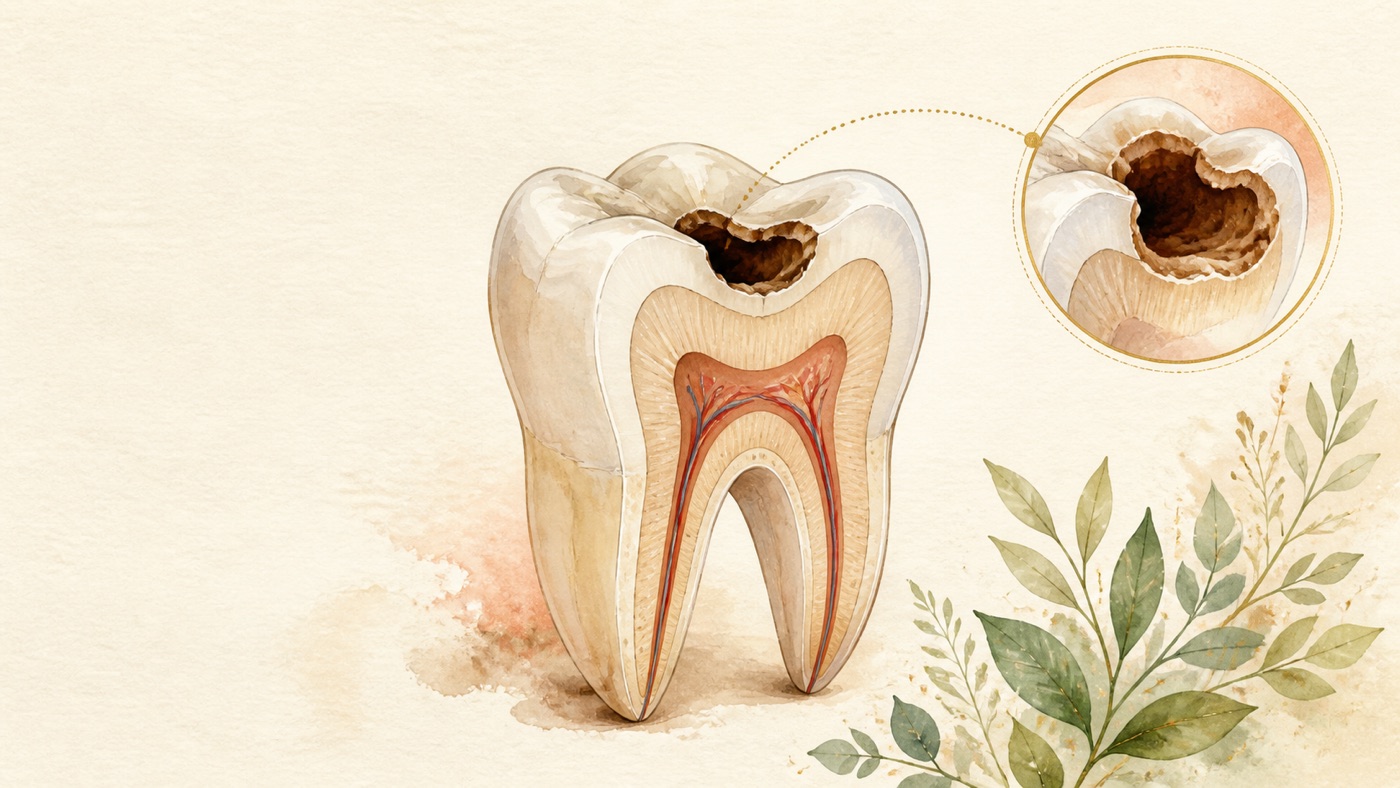
My filling fell out: what should I do?
When a filling falls out, the first step is not to cover the hole but to let a dentist examine the tooth underneath. Loss is usually a result rather than a cause. Secondary caries, fracture, marginal deterioration, and inadequate remaining tooth structure are all recorded failure patterns, and only an examination can tell them apart. This card explains what to do immediately, why a filling can fall out, outcomes that the literature associates with inadequate coronal restoration, symptoms that cannot wait, and what a dentist considers when deciding between refilling and another option. It gives no prices and recommends no product or brand.
My filling fell out: what should I do?
Direct answer
Do not put anything into the hole yourself. Keep the fragment, avoid chewing hard foods on that side, and arrange a dental review promptly so the tooth underneath can be examined. Seek medical care immediately if you have spontaneous pain, swelling of the face or floor of the mouth, neck swelling, or fever [F2][F19][F31][F32].
For swelling of the floor of the mouth or face, fever, neck swelling, neck pain, difficulty swallowing, voice change, difficulty opening the mouth, or respiratory distress, do not wait for a dental appointment; seek medical help immediately [F19][F30][F32]. If the fragment cannot be found and you begin coughing or having trouble breathing, this is also an emergency; the same applies to choking or coughing, inability to speak, or chest pain. Seek medical care immediately; do not wait for the appointment date [F2][F29].
Scope: This guide is specific to Taiwan's healthcare system (National Health Insurance and Taiwan's Medical Care Act). Its clinical evidence is international literature (F-Units marked geo: universal); its institutional sections cite Taiwan laws and authority-published items (geo: TW). Readers elsewhere should check local systems. This guide does not recommend, compare, or evaluate any brand or product, and gives no prices.
What this card covers (division of work among related cards)
Two other cards on this site cover adjacent questions: KM-DENTAL-02 covers when you can eat and brush after a filling, and KM-DENTAL-16 covers how long resin fillings last, how to choose materials, and the full reading of survival and failure causes. This card does not repeat those subjects; it cites them where needed [F29]. This card addresses one question only: the filling has already come out—what next? A denture, cap, or crown coming off is a different kind of restoration and has a separate care route; see the internal links at the end [F29].
1. First identify what kind of “filling” came out
The same phrase, “my filling fell out,” can mean four different things in a dental clinic. If the route is wrong, the urgency and response can be wrong as well. The four routes below are this site's communication framework assembled from F3 through F24; they are not a diagnostic tool [F2].
- All or part of a definitive filling has come out: a direct filling material such as composite resin (white), amalgam, or glass ionomer has come out of the cavity as a whole piece or a corner. This is the main subject of this card.
- A temporary seal between treatment visits has come out: a tooth is undergoing root-canal treatment and the material sealing it between two appointments has come out. This has its own care sequence; see section 4.
- An indirect restoration such as an inlay or onlay has come out: this is a shaped, intact piece made in a laboratory or by machine and then cemented back to the tooth.
- A denture cap (crown) or bridge has come out: this is not a filling but another type of restoration. Its canonical card is elsewhere on this site, so it is not repeated here [F29].
All four situations share one point: the event of coming out is usually a result, not the cause. Covering the hole addresses the result, not the cause [F2].
2. Five things to do—and not do—right away
The following are operational reminders assembled by this site from the sources above. They do not involve a diagnosis or treatment decision [F2].
- Do not put anything into the hole yourself. The reasons are in section 3. The only directly recorded household material found in the literature for this card is household superglue: it is a single case report and its conclusion discourages use [F16]. In Taiwan, material for temporary tooth filling has a specific medical-device classification and management requirements [F22][F23]. “Do not put anything into the hole yourself” covers more than those two sources; it is this site's operational reminder (a routing instruction: let a dentist examine the tooth first), not a claim of item-by-item literature support [F2].
- Keep the fragment and take it to the appointment. This is this site's operational reminder, not a literature-derived criterion [F2]. If a loose fragment is still in your mouth, do not push it with your tongue or keep it in your mouth [F2]. A published ingestion setting was professional removal of restorations in a clinic: a survey at one Japanese dental hospital recorded accidental ingestion as about thirty percent of that hospital's accidents in the relevant year, most often when dental restorations were removed; inlays and crowns were the most frequently ingested items. All ingested items in that survey passed naturally, and no accidental aspiration occurred [F17]. That survey concerns a clinic and a dentist, not your situation at home. It is cited only to show that swallowing a loose restoration has been recorded; it cannot estimate your risk and does not say that a home fragment is the situation it described [F17][F2].
- Avoid chewing hard foods on that side for now. The basis is the relation between cavity form and coronal stiffness. An in-vitro study of forty-two extracted maxillary second premolars found that endodontic procedures themselves reduced relative stiffness by five percent, less than a single occlusal cavity preparation at twenty percent. Greater stiffness loss was associated with loss of marginal-ridge integrity, and an MOD cavity preparation produced an average sixty-three percent loss of relative cuspal stiffness [F6]. Read these figures very carefully: they measure extracted teeth after cavity preparation, not a tooth whose filling has been out for a number of days; they cannot be converted into whether your tooth will crack. This card cites them only to show that cavity form itself is a mechanical variable [F6]. The statement that a cavity returns to an unfilled state once the filling falls out is this site's inference, not the study's conclusion; that study did not measure teeth after filling loss [F6][F2].
- Keep cleaning the area, but be gentle. Food trapping and sensitivity during brushing can make people stop brushing that area. The full discussion of how and when to clean is in the filling-aftercare card and is not repeated here [F29].
- Contact the clinic promptly to arrange a review. This card gives no number of days because this search did not find a citable timing study [F28]. “Do not leave it until the next routine appointment” is this site's editorial decision (a routing instruction: call the clinic), with no time threshold and no claim of literature support. An evidence gap cannot in turn prove any particular time for care [F2][F28].
3. Why it is not advised to fill the hole yourself
1. In Taiwan, material for temporary tooth filling is a regulated medical-device item (geo: TW)
On 2026-08-06, this site searched the medical-device classification and grading database commissioned by Taiwan's TFDA using the term “temporary filling.” It returned one item in category F—Dentistry: code F.3275, “Dental cement.” Its identifying scope says that it is for temporary filling of a tooth; for use as a base layer to adhere temporary dental prostheses, crowns, bridges, and other dental devices; or for application to a tooth to protect the pulp [F22]. Article 25 of Taiwan's Medical Devices Management Act states that manufacturing or importing medical devices requires application to the central competent authority for inspection and registration, followed by an approved medical-device licence; for items announced by that authority, manufacturing or import is instead by registration [F23].
This card does not determine the legality of any individual product and does not recommend, compare, or evaluate any brand or product [F26]. Its single point is that placing material into a tooth cavity is institutionally classified as a dental-device use, and clinically should occur after someone has examined the tooth [F2].
2. Household superglue: the literature records it directly, and discourages it
A 2003 case report describes a man attempting to repair damage to maxillary teeth himself with superglue. Its conclusion states that this action is discouraged because of possible adverse reactions in hard and soft tissues [F16]. This is a low-level, single case report, and its abstract does not state the type or severity of adverse reactions. It is cited because it was the citable record found in this search that directly concerns a patient using superglue on teeth; it does not cover any material other than superglue [F16][F28].
3. Even a temporary seal used in dental care has a limited time function
An in-vitro study assessed coronal microleakage of temporary restorations in two hundred and four mandibular first premolars after root-canal treatment. Its conclusion states that none of the temporary restorative materials could prevent microleakage after one week [F14]. The same article's introduction states that coronal leakage is one factor in root-canal-treatment failure and that a permanent restoration should be placed as soon as possible after root-canal treatment is completed [F14]. This is an in-vitro experiment, and the sentence in the introduction is the authors' background statement rather than its experimental result; it cannot be read as a clinical timetable. It is nevertheless enough to show the direction: a temporary seal is designed to bridge a short period, not to be a substitute [F14][F2].
Temporary-seal loss itself is not unusual in clinical observation. A questionnaire survey conducted in Saudi Arabia with five hundred and twenty-five eligible dentists and trainees recorded temporary-material breakdown or complete loss as a common observation. Although eighty-three point six percent of participants had two root-canal appointments within two weeks, only nineteen point six percent said they rarely observed temporary-restoration breakdown [F15]. This is a questionnaire about dentists' self-reported observations in one country, and asks about clinical impressions rather than a patient-level incidence; it cannot be read as a probability of occurrence [F15].
4. Covering it hides what needs to be assessed
This card does not claim that “filling it yourself seals caries inside so it keeps worsening.” That is common online wording, but this card did not obtain direct evidence for it [F28]. Three defensible reasons are different: first, the cause of loss can only be separated by clinical and imaging assessment (see section 4) [F3][F4][F8]; second, this search obtained no citable basis for the seal or biocompatibility of materials not intended for dental use, while the record of self-use of superglue discourages it [F16][F28]; third, covering the hole can delay discovery of the cause [F2].
4. Why fillings fall out
Overall restoration survival, annual failure rates, and material choice belong to the canonical resin-longevity card. This card neither repeats those survival figures nor recasts them [F29]. This section addresses only factors associated in the literature with the specific failure pattern of loss.
- Secondary caries and marginal deterioration: A meta-analysis of eighty-eight prospective clinical trials, limited to Class I and Class II composite fillings reporting failure rates, recorded restoration fracture, secondary caries, and marginal gaps as the main causes of failure in the first five years, in descending order. In long-term studies, fracture and secondary caries were similarly distributed [F3]. This is the composition of failure patterns at a population level, not a determination of the cause for your tooth [F3].
- The bonding and retention side: Retention loss is an outcome measured independently in clinical trials. A 2021 systematic review and meta-analysis, including twenty studies qualitatively and fourteen quantitatively, compared application modes of universal adhesives in non-carious cervical lesion restorations. It recorded a higher risk of retention loss in the self-etch group than the etch-and-rinse group at twelve months and at eighteen to twenty-four months, with moderate-certainty evidence; its conclusion was that etch-and-rinse or selective-enamel-etch modes of universal adhesive use provide more predictable retention [F4]. Its population is limited to non-carious cervical lesions and cannot be extended to every filling. It is cited to show that whether a restoration comes out is, in the literature, an outcome associated with operative conditions, not an evaluation of any one treatment [F4][F2].
- Changing material does not itself solve it: A 2025 systematic review and meta-analysis searched six databases through May 2024 and included ten randomised clinical trials in five countries, with four hundred and eleven participants followed for one to eight years. It recorded no statistically significant difference between bioactive resin material and conventional resin for either primary outcome: preventing secondary caries or reducing retention loss [F5]. In other words, this evidence does not support “change to another material and it will not come out again” [F5].
- Cavity form and remaining tooth structure: See the extracted-tooth stiffness study in section 2. Greater stiffness loss was associated with loss of marginal-ridge integrity; in the two cavity forms it measured, a single occlusal cavity preparation caused twenty percent relative-stiffness loss and an MOD cavity preparation averaged sixty-three percent relative-cuspal-stiffness loss [F6]. That is a difference between the two forms measured in that study, not a continuous rule that more tooth surface always means greater loss. The study did not measure teeth after filling loss [F6].
- A cracked tooth: A literature review of cracked-tooth syndrome addresses aetiology, diagnosis, management, and prevention. Its aetiology section lists inappropriate root-canal therapy and improper restorative procedures as iatrogenic factors, while separately discussing non-iatrogenic factors [F8]. This is a narrative review. It is cited only to locate a crack as a clinical issue with literature that includes restorative procedures in its aetiology discussion; it cites no proportion here and gives no self-test for a crack [F8].
- If it came out on the side between teeth, there is one additional question: A 2023 literature review, searching PubMed from 1947 through 2023-03-28 and including seventy-two articles, lists proximal-contact loss, occlusal disharmony, morphological deformity, positional abnormality, and interdental-papilla loss among causes of food impaction, and says its pathological cause should be identified before management [F7]. This is a narrative review, not causal proof from a list of factors. It is cited only to show that proximal-contact loss is listed as one cause. Whether contact has changed and food will start to trap after your proximal filling came out requires examination; this card does not infer it for you [F7][F2].
5. What the literature associates with not addressing it
The two limits of this section need to come first, because it is easy to misread [F28][F2].
- Limit one (what the studies measured): This search did not find a direct study of what happens after a filling has been out for a specified number of days [F28]. The four pieces of evidence below address inadequate quality of a coronal restoration, which is not the same as a filling being completely absent for a number of days and cannot be converted into it [F28]. Only F12 uses “quality or presence” as its variable; the other three compare levels of quality [F9][F10][F11][F12].
- Limit two (which populations were studied): The four studies below concern root-canal-treated teeth [F9][F10][F11] and teeth after direct pulp capping [F12]. Neither is “an ordinary filling on a vital tooth.” Thus this section supports only that the coronal layer is associated with outcomes in these populations; it cannot be directly inferred for every tooth whose filling has come out [F28][F2]. The section remains because these are currently available, directionally consistent indirect evidence from different populations, not because they replace direct evidence [F28].
- The quality of coronal restoration is associated with odds of periapical-lesion healing. A systematic review and meta-analysis identifying nine articles and reviewed by three investigators, after adjustment for significant covariates to reduce heterogeneity, obtained pooled common odds ratios of 2.734 for adequate restoration plus adequate root-canal treatment versus adequate restoration plus inadequate root-canal treatment, and 2.808 for adequate restoration plus adequate root-canal treatment versus inadequate restoration plus adequate root-canal treatment [F9]. Its conclusion is that odds of healing of apical periodontitis rise when both root-canal and restorative treatment are adequate; between the combinations “adequate root filling with inadequate coronal restoration” and “inadequate root filling with adequate coronal restoration,” there was no statistically significant difference in healing odds [F9]. In plain language: in that analysis, the coronal layer and the root-canal layer are on the same order of importance [F9].
- A marginal problem is associated with probability of extraction. A ten-year radiographic follow-up study of a general adult Danish population—three full-mouth radiographic examinations in three hundred and twenty-seven randomly selected people—recorded that thirteen percent of root-canal-treated teeth had been extracted overall. The probability of persistent apical periodontitis was higher where radiographs showed a restoration overhang or open margin (P = 0.01), and the probability of extraction was higher with a restoration overhang or open margin (P = 0.008) [F10]. This is an observational study: it shows association, not causation, and is limited to root-canal-treated teeth [F10].
- A third observation in the same direction. A review of twenty-nine epidemiological studies records that the quality of coronal restorations and root fillings appears to be a major predictor of apical periodontitis [F11]. A long-term retrospective direct-pulp-capping study by one operator over fifteen years, with two hundred and twenty-five teeth available for follow-up, recorded that the main variable significantly affecting treatment outcome at all follow-up periods was quality or presence of coronal restoration (P < .001) [F12]. The latter population is teeth with pulp exposure from deep caries, clinically diagnosed reversible pulpitis, and direct pulp capping; it is retrospective data from one operator and cannot be generalised [F12].
- No symptoms do not mean nothing is happening. A systematic review and meta-analysis including one hundred and fourteen studies and thirty-four thousand six hundred and sixty-eight people records that apical periodontitis often presents as chronic asymptomatic disease, with an estimated individual-level prevalence of fifty-two percent [F13]. The analysis has very high heterogeneity and high risk of bias, and its authors call for cautious interpretation. Causes of apical periodontitis are also not limited to a lost filling [F13].
Therefore, this card's answer to “can I wait?” is: it has no number of days to give, because this search found no such study [F28]. Two statements can be made honestly. First, in root-canal-treated teeth and teeth that had pulp capping, quality of the coronal restoration—F12 is quality or presence—is associated with periapical-lesion healing and probability of extraction [F9][F10][F11][F12]. Second, those studies did not include the situation “a filling on a vital tooth has been out for a number of days,” so the preceding statement cannot be read as what will happen to your tooth [F28][F2]. What determines whether care should be brought forward is the red flags in section 6 and the actual condition of your tooth; the latter needs examination [F2].
6. Situations that cannot wait (this card's red-flag section)
Each item below corresponds to circumstances recorded in the literature. They are not a self-diagnosis list, but signals to move care priority forward [F2]. The full red-flag framework is in this site's toothache and caries-delay cards; this card lists the part directly relevant here and identifies the shared anchors [F29].
- Pain that appears by itself without a stimulus, pain that lingers after hot or cold stimulation, or referred pain: a 2025 systematic review and meta-analysis defines symptomatic irreversible pulpitis in its methods as spontaneous unprovoked pain, lingering thermal pain, or referred pain, with or without periapical pathosis/involvement [F31]. A Cochrane systematic review describes irreversible pulpitis in its background as acute and intense pain, and one of the most frequent reasons people attend for emergency dental care [F18]. These are disease definitions and descriptions from literature, not a checklist for you to diagnose yourself. Tooth pain has more than one source, and a dentist must determine the category by examination [F31][F18][F2]. The action for this item is: seek medical care immediately; do not leave it until the next routine appointment (routing instruction) [F2].
- About “just taking medicine to get through it”: the same Cochrane review concludes that current evidence is insufficient to determine whether antibiotics reduce this pain compared with not using antibiotics [F18]. It tested antibiotics only, not painkillers or other medicines; this card does not turn it into “all medicines lack evidence.” Whether medication is used is for a clinician to decide; this card gives no medication instruction [F18].
- Swelling of the floor of the mouth or face, fever, neck swelling, neck pain, difficulty swallowing, voice change, difficulty opening the mouth, or respiratory distress: a textbook entry on deep neck infections records symptoms from local pressure on the respiratory, nervous, or gastrointestinal tracts, including neck swelling, dysphagia, dysphonia, and trismus, often with fever, neck pain, and respiratory distress [F19]. The floor of the mouth has a separate basis: another textbook entry records Ludwig angina—the original disease name is retained here rather than translated from memory—as a rare, life-threatening condition with diffuse cellulitis involving soft tissues of the floor of the mouth and neck. It also states that true Ludwig angina originates from infection of a lower molar tooth, and that early recognition and treatment are critical [F30]. The face has a case-report basis: a sixty-two-year-old man presented to the emergency department after five days of dental pain with progressive right facial swelling, trismus, dysphagia, and voice changes. His National Early Warning Score was zero and he was triaged to the minor section, but urgent contrast-enhanced CT later showed a large parapharyngeal collection requiring urgent anaesthetic and surgical intervention [F32]. That is one case report and cannot estimate probability; it is cited for one purpose only: normal measured vital signs do not mean this group of symptoms can wait [F32]. This group is not a situation to wait for a dental appointment; seek medical help immediately [F19][F30][F32].
- The situations above in someone with systemic disease or an affected immune state: the same entry lists immunosuppression, comorbidities, trauma, recent instrumentation, and other host factors as factors influencing infection spread and severity [F19].
- The fragment cannot be found and you begin coughing or having trouble breathing: this is an emergency. Seek medical care immediately; do not wait for the appointment date and do not first go read another explanation. On arrival, proactively say “something is missing.” This is this site's operational reminder (a routing instruction), offered for the clinical team's assessment [F2]. Also seek care immediately for choking/coughing, inability to speak, or chest pain. These three items are this site's conservative editorial policy (routing instruction), not literature-derived criteria; they are included to keep red flags aligned with the clear-aligner and post-and-core cards for the same situation [F2]. The complete swallowing/aspiration route, including imaging visibility and timing, is canonical in the denture/crown-loss card, but that is for later understanding, not what you should do now [F29].
A review states the consequence plainly: untreated odontogenic infection can spread to deep spaces of the head and neck and may cause life-threatening complications; a mainstay of treatment is timely treatment of affected teeth [F20]. That review is about odontogenic infections in children. This card cites its statement about the mechanism of spread through deep spaces, not to apply child-population data to adults [F20]. It is not cited to frighten you. This card obtained no citable incidence proportion and makes no probability statement about these situations [F28]. Its only purpose is to show which signals cannot wait [F2].
7. At the review: how a dentist decides between refilling and another option
The following are decision dimensions recorded as relevant in the literature. They are not a decision flowchart or self-assessment standard; a dentist must make the actual determination with clinical and imaging examination [F2].
- Whether there is secondary caries underneath and the state of the margin: secondary caries and marginal gaps are recorded together as failure patterns [F3]; radiographic restoration overhang or open margin was associated with probability of extraction in the ten-year study [F10].
- How much tooth structure remains and whether the proximal marginal ridge is intact: greater stiffness loss was associated with loss of marginal-ridge integrity [F6].
- Whether there is a crack: a cracked tooth is a distinct clinical issue in the literature, whose aetiology discussion includes restorative procedures [F8].
- Pulp status: pain pattern—whether it is spontaneous and unprovoked, or lingers after hot/cold stimulation—is one defining condition of the diagnostic category symptomatic irreversible pulpitis [F31]. Quality or presence of the coronal restoration is also a significant variable in long-term pulp-capping outcomes [F12]. This line lists what a dentist considers; it is not asking you to classify yourself [F2].
- Which route comes next: direct refilling, local repair, or indirect restoration. The evidence comparison of “repair or replace the whole restoration” is canonical in the resin-longevity card and is not repeated here [F29]. For root-canal-treated teeth, a 2025 systematic review and meta-analysis screened two thousand and sixty-three articles and included eleven studies, ten cohort studies and one randomised controlled trial. It records significantly better tooth survival with indirect coronal restorations than direct restorations (p = 0.01), but no statistically significant difference in periapical healing (p = 0.72); the authors also state that this finding should be interpreted cautiously [F21]. That caution is the authors' own and is retained here. It does not mean “a lost filling needs a crown”; indications require the dentist to assess your tooth structure and bite [F21].
8. Three institutional points (geo: TW)
This section cites Taiwan's system, geo: TW. Readers in other regions should check the system where they receive care.
- National Health Insurance claims for refilling have a timing rule, but that rule governs a provider's claim, not your payment conclusion. On 2026-08-06 this site retrieved the National Health Insurance Administration endpoint listed by the Government Open Data Platform dataset for the CSV “Medical Service Payment Items and Standards” (HTTP 200, 1,692,784 bytes). The notes field for filling items states verbatim that for composite-resin filling claims on the same tooth, any refilling in any form (cavity and material), for any reason, may not be claimed again for a primary tooth within one year or for a permanent tooth within one and a half years, and this is limited to the same institution [F24]. This governs National Health Insurance providers' claim rules, not your individual payment amount and not an individual coverage determination. For how a repeat filling on the same tooth will be charged, ask the provider and follow current rules and the clinical circumstances of that visit [F24]. The composition and breakdown of fees are canonical in the filling-cost card [F29].
- You have the right to an explanation. Article 81 of Taiwan's Medical Care Act requires a medical institution, when treating a patient, to inform the patient or the patient's legal representative, spouse, relative, or related person of the condition, treatment policy, management, medication, prognosis, and possible adverse reactions [F25]. Why it came out, whether the underlying tooth can be kept, and whether this time means refilling or another option are all matters you can ask to have clarified in the clinic.
- How to verify fees. This card gives no monetary amount. Verification channels for self-paid dental items are the dental fee standards approved by each county/city health bureau and the provider's written quotation. The two query tracks in the National Health Insurance Administration's “Medical Device Price Comparison Network” have no dentistry in their item categories, so they cannot verify dental fees [F27].
9. Risk factors and limits
- When this deserves earlier attention: more tooth surfaces involved and a lost proximal marginal ridge [F6]; a tooth that has undergone root-canal treatment and is currently protected by its coronal seal [F9][F10][F14]; a proximal filling that has come out and is already trapping food [F7]; or section 6 red flags—spontaneous or referred pain [F31][F18], floor-of-mouth or facial swelling [F30][F32], neck swelling, neck pain, difficulty swallowing, voice change, difficulty opening the mouth, or fever [F19].
- An honest account of evidence level: the stiffness and microleakage studies cited here are in-vitro experiments and cannot equal clinical outcomes [F6][F14]; frequency of temporary-seal loss comes from dentists' self-reported questionnaire observations, not incidence [F15]; self-use of adhesive material is recorded in one case report [F16]; associations between coronal-restoration quality and outcomes come from observational studies and their syntheses, showing association rather than causation [F9][F10][F11][F12]. All percentages, odds ratios, and proportions cited here are research-level population figures and cannot estimate an individual outcome [F9][F10][F13].
- Risk disclosure: refilling, local repair, and conversion to indirect restoration each have indications, limitations, and possible adverse reactions. Recorded failure patterns include secondary caries, restoration fracture, marginal gaps, and retention loss [F3][F4][F5]. Whether any applies to you needs assessment by a dentist; actual treatment and outcomes vary by person.
- What this card cannot replace: why the filling came out, how much tooth structure remains underneath, whether there is a crack, pulp status, and whether direct refilling is possible can only be determined through clinical examination and imaging.
- What this search did not obtain citable evidence for, and therefore this card does not state: any price, range, or market level; a number of days by which a lost filling must be reviewed; a study of consequences after a filling has been out for a specified number of days; survival or service life after refilling; a head-to-head study of self-filling versus not filling; or Taiwan incidence statistics for filling loss [F28].
10. Appointment checklist (seven questions to ask)
- When did it come out? What was I eating, and did I hear a sound? Did I bring the fragment [F2]?
- Have I put anything into it myself during this time? What did I use? Please say so accurately—this is this site's operational reminder [F2]. The direct literature record is self-use of superglue [F16].
- What is happening to the tooth underneath—secondary caries, fracture, insufficient remaining tooth structure, or another cause [F3][F6][F8]?
- Has this tooth had root-canal treatment? If so, what does loss of the coronal seal mean for it [F9][F10][F14]?
- Is this a direct refill, a local repair, or a change to indirect restoration? What are the conditions and risks of each [F21]?
- Was the lost filling on the side between teeth? How will contact be restored, and will food still trap afterward [F7]?
- How will this visit's fee be calculated, and what does it include? Under Article 81 of Taiwan's Medical Care Act, may I ask you to explain the treatment policy, management, and possible adverse reactions [F24][F25]?
How to find a clinic that provides this service
This site lists no clinics and does not recommend, rate or compare any medical institution.
To find a clinic that provides this service, use the following official lookup channels yourself —
they are maintained by the competent authorities and are more current than any list:
>
- The Ministry of Health and Welfare's medical-institution lookup: search by city or county,
township and specialty (dentistry) for institutions that have completed practice registration.
The results show the institution's name, address and registered specialty. This is the first place
to confirm whether a clinic is lawfully registered.
- The National Health Insurance Administration's contracted-institution lookup: check whether a
clinic is under contract with National Health Insurance. This determines which items are covered
and which are self-paid, and therefore what kind of fee explanation you will be given.
>
Both systems are on the respective authorities' official websites; searching for the
medical-institution lookup or the contracted-institution lookup will find them. This site does not
reproduce the URLs, because they change; use whichever entry point the authority currently publishes.
>
In an emergency, do not spend time looking up lists. If your breathing, swallowing or speech is
affected, or swelling is spreading, go to the nearest emergency department.
Chinese labels to look for on the official pages
These official systems, datasets and files are published in Chinese only. The English names above are this site's renderings; on the page itself you will see the following strings, so search for these:
>
- 「醫事機構查詢」
- 「特約醫事機構查詢」
- 「特約院所查詢」
- 「醫療服務給付項目及支付標準(csv檔)」
Compliance note
This is health education information under Article 87 of Taiwan's Medical Care Act [F26], not medical advertising. It does not recommend a particular clinic, and does not recommend, compare, or evaluate any brand or product, nor does it give any monetary amount or price range. Tooth restoration (filling), local repair, and indirect restoration all have risks and contraindications; suitability requires a dentist's clinical and imaging examination. This card's red-flag list is for health-education communication, not a diagnostic tool, and cannot replace professional assessment in an emergency department or clinic. Treatment and results vary by person and require a dentist's assessment. The percentages, odds ratios, and proportions cited here are research-level population figures and cannot estimate an individual outcome. This card also gives no legal opinion on insurance reimbursement or contractual terms; relevant questions depend on the policy and contract terms.
Every clinical statement in this article is mapped line by line to its cited source (see the sources and evidence chain below). It has not been clinically reviewed by a licensed practitioner. This is health information, not individual advice; assessment by a clinician is required.
FAQ
- When should I seek immediate medical care rather than wait?
- For swelling of the floor of the mouth or face, fever, neck swelling, neck pain, difficulty swallowing, voice change, difficulty opening the mouth, or respiratory distress, do not wait for a dental appointment; seek medical help immediately [F19][F30][F32]. If the fragment cannot be found and you begin coughing or having trouble breathing, this is also an emergency; the same applies to choking or coughing, inability to speak, or chest pain. Seek medical care immediately; do not wait for the appointment date [F2][F29].
- どのような場合に直ちに受診し、待ってはいけませんか? — 口腔底又は顔面の腫れ、発熱、頸部腫脹、頸部痛、嚥下困難、声の変化、開口困難又は呼吸窮迫がある場合は、歯科外来の予約を待たず、直ちに医療の助けを求めてください [F19][F30][F32]。破片が見つからず、せき又は息苦しさが始まった場合も救急です。むせ、話せない、胸痛でも同じく、直ちに受診し、予約日を待たないでください [F2][F29]。
- When should I seek immediate medical care rather than wait? — For swelling of the floor of the mouth or face, fever, neck swelling, neck pain, difficulty swallowing, voice change, difficulty opening the mouth, or respiratory distress, do not wait for a dental appointment; seek medical help immediately [F19][F30][F32]. If the fragment cannot be found and you begin coughing or having trouble breathing, this is also an emergency; the same applies to choking or coughing, inability to speak, or chest pain. Seek medical care immediately; do not wait for the appointment date [F2][F29].
- My filling fell out. Can I use a store-bought temporary filling material myself first?
- **It is not advised. Treat it as a matter for before the dental review, not a problem to solve by yourself.** In Taiwan's system, material for temporary tooth filling is within the identifying scope of code F.3275 “Dental cement” in the medical-device classification and grading database [F22]. Article 25 of Taiwan's Medical Devices Management Act requires medical-device manufacture and import to undergo inspection and registration or registration under an announced route [F23]. **This card does not determine the legality of any individual product and recommends no product** [F26]. More fundamentally, even temporary restorative materials used in dental settings all failed to prevent microleakage after one week in one in-vitro study [F14]. Covering the hole does not address why it came out, and that cause needs examination to be distinguished [F3][F8][F2].
- 詰め物が取れた時、市販の暫時充填材料を自分で使ってよい? — **勧めません。「自分で解決する問題」ではなく、「受診前に持ち込む問題」と考えてください。** 台湾制度上、歯の暫時的充填に用いる材料は、医療機器分類・等級データベースの F.3275「牙科用水泥(士敏汀)」(Dental cement)の識別範囲に入ります [F22]。台湾医療機器管理法第 25 条は、医療機器の製造・輸入には査験登録又は公告に基づく登録を求めます [F23]。**本カードは個別製品の適法性を判定せず、いかなる商品も推奨しません** [F26]。さらに根本的には、歯科で使う暫間修復材料でも、in vitro 研究で全材料が一週間後の微小漏洩を防げませんでした [F14]。穴を覆っても脱落の原因は処理できず、その原因は診察でなければ分かりません [F3][F8][F2]。
- My filling fell out. Can I use a store-bought temporary filling material myself first? — **It is not advised. Treat it as a matter for before the dental review, not a problem to solve by yourself.** In Taiwan's system, material for temporary tooth filling is within the identifying scope of code F.3275 “Dental cement” in the medical-device classification and grading database [F22]. Article 25 of Taiwan's Medical Devices Management Act requires medical-device manufacture and import to undergo inspection and registration or registration under an announced route [F23]. **This card does not determine the legality of any individual product and recommends no product** [F26]. More fundamentally, even temporary restorative materials used in dental settings all failed to prevent microleakage after one week in one in-vitro study [F14]. Covering the hole does not address why it came out, and that cause needs examination to be distinguished [F3][F8][F2].
- What about superglue? I only want to stick it for now.
- **The recorded literature position is that it is discouraged.** A case report describes a man attempting to repair maxillary-tooth damage himself with superglue and concludes that this is discouraged because it may cause adverse reactions in hard and soft tissues [F16]. **It is one low-level case report and the abstract does not state the type or severity of adverse reactions.** This card follows its position but does not infer any rate of injury [F16][F28]. If you have already used it, tell the dentist what you used and how many times when you attend [F2].
- 瞬間接着剤(強力接着剤)は? ひとまず少し接着したいだけです。 — **文献で記録された結論は、勧めない、です。** 症例報告は、男性が上顎歯の損傷を強力接着剤で自ら修理しようとしたことを記録し、硬組織と軟組織に有害反応を起こす可能性があるため勧めないと結論しました [F16]。**単一症例で根拠水準は低く、抄録は有害反応の種類と重症度を示していません。** 本カードはその立場を引用するだけで、障害の発生率を推定しません [F16][F28]。すでに使った場合は、受診時に何を何回使ったかを自ら伝えてください [F2]。
- What about superglue? I only want to stick it for now. — **The recorded literature position is that it is discouraged.** A case report describes a man attempting to repair maxillary-tooth damage himself with superglue and concludes that this is discouraged because it may cause adverse reactions in hard and soft tissues [F16]. **It is one low-level case report and the abstract does not state the type or severity of adverse reactions.** This card follows its position but does not infer any rate of injury [F16][F28]. If you have already used it, tell the dentist what you used and how many times when you attend [F2].
- It does not hurt. Can I wait and deal with it at my next cleaning visit?
- **Lack of pain is not evidence that it can wait.** A systematic review and meta-analysis of one hundred and fourteen studies records that apical periodontitis often presents as chronic asymptomatic disease, with an estimated individual-level prevalence of fifty-two percent [F13]. Other studies associate coronal-restoration quality—F12 is quality or presence—with odds of periapical-lesion healing and probability of extraction [F9][F10][F11][F12]. **Those studies concern root-canal-treated or pulp-capped teeth and measure inadequate restoration quality, not a filling having been out for a number of days. They cannot be converted into days or applied directly to a vital tooth** [F28]. What can be said honestly is that this card has no “how many days can I wait” figure, so it gives none and advises a prompt dental review [F28][F2].
- 痛くなければ、次の歯のクリーニングまで待ってもよい? — **痛みがないことは「まだ待てる」根拠ではありません。** 百十四研究を含む系統的レビュー・メタ解析は、根尖性歯周炎が慢性無症候性疾患として現れることが多く、個人レベルの推定有病率が五十二パーセントだったと記録しました [F13]。他の研究では、歯冠側修復物の品質(F12 は品質又は有無)が、根尖病変治癒のオッズと抜歯の確率に関連します [F9][F10][F11][F12]。**これらの研究は根管治療歯又は覆髄歯で、測ったのは「修復物の品質不良」であり「詰め物が何日取れたか」ではありません。日数に換算も、生活歯への直接適用もできません** [F28]。誠実に言えば、このカードは「何日待てるか」の数値を得ていないため示さず、早めに受診し歯科医師に判断してもらうことを勧めます [F28][F2]。
- It does not hurt. Can I wait and deal with it at my next cleaning visit? — **Lack of pain is not evidence that it can wait.** A systematic review and meta-analysis of one hundred and fourteen studies records that apical periodontitis often presents as chronic asymptomatic disease, with an estimated individual-level prevalence of fifty-two percent [F13]. Other studies associate coronal-restoration quality—F12 is quality or presence—with odds of periapical-lesion healing and probability of extraction [F9][F10][F11][F12]. **Those studies concern root-canal-treated or pulp-capped teeth and measure inadequate restoration quality, not a filling having been out for a number of days. They cannot be converted into days or applied directly to a vital tooth** [F28]. What can be said honestly is that this card has no “how many days can I wait” figure, so it gives none and advises a prompt dental review [F28][F2].
- I am in the middle of root-canal treatment and the temporary seal came out. Do I need to deal with it right away?
- **Contact the clinic providing that treatment directly; do not wait for the originally scheduled next appointment.** An in-vitro study records that all tested temporary restorative materials could not prevent microleakage after one week; its introduction also states that coronal leakage is a factor in root-canal-treatment failure and a permanent restoration should be placed as soon as possible after root-canal treatment [F14]. Dentists' questionnaire observations also record temporary-seal breakdown or complete loss as common [F15]. **Neither an in-vitro study nor a questionnaire can be converted into your individual time limit.** Let the dentist providing the treatment determine timing from your treatment stage and symptoms [F14][F15][F2].
- 根管治療中で、間の暫間封鎖が取れた。すぐ対応が必要? — **その治療をしている診療所へ直接連絡し、元の次回予約まで待たないでください。** in vitro 研究は、試験したすべての暫間修復材料が一週間後の微小漏洩を防げなかったと記録し、同論文の導入は歯冠側漏洩を根管治療失敗の一因、永久修復を治療後できるだけ早く行うものと記載します [F14]。歯科医師の質問票でも、暫間封鎖の破損又は完全脱落は一般的な観察です [F15]。**in vitro 研究も質問票も、あなたの個別の時間制限には換算できません。** 時期は治療段階と症状から担当歯科医師が判断します [F14][F15][F2]。
- I am in the middle of root-canal treatment and the temporary seal came out. Do I need to deal with it right away? — **Contact the clinic providing that treatment directly; do not wait for the originally scheduled next appointment.** An in-vitro study records that all tested temporary restorative materials could not prevent microleakage after one week; its introduction also states that coronal leakage is a factor in root-canal-treatment failure and a permanent restoration should be placed as soon as possible after root-canal treatment [F14]. Dentists' questionnaire observations also record temporary-seal breakdown or complete loss as common [F15]. **Neither an in-vitro study nor a questionnaire can be converted into your individual time limit.** Let the dentist providing the treatment determine timing from your treatment stage and symptoms [F14][F15][F2].
- If it is filled again, will it come out again later?
- **This card does not predict the result for an individual tooth.** The literature can say that secondary caries, restoration fracture, and marginal gaps are major items in failure-pattern statistics [F3]; retention loss is independently measured in clinical trials and is associated with operative conditions [F4]; and a systematic review and meta-analysis found no statistically significant difference between bioactive resin material and conventional resin in either prevention of secondary caries or reduction of retention loss [F5]. **The full reading of restoration longevity, material choice, and repair versus redo is canonical in the resin-longevity card and is not repeated here** [F29]. The decision dimensions in section 7 are worth asking about at the appointment [F2].
- 取れた後にまた詰めても、しばらくしたらまた取れる? — **本カードは個々の歯の結果を予測しません。** 文献が言えるのは、続発う蝕、修復物破折、辺縁間隙は失敗形態統計の主な項目であること [F3]、維持力喪失は臨床試験で独立して測定され、操作条件と関連すること [F4]、生物活性レジンと従来型レジンには続発う蝕予防と維持力喪失低減の二主要結果で統計学的有意差がなかったこと [F5] です。**修復物の寿命、材料選択、修理とやり直しの比較の完全な読み方はレジン寿命カードの canonical で、ここでは繰り返しません** [F29]。受診時には第 7 節の判断面を聞く価値があります [F2]。
- If it is filled again, will it come out again later? — **This card does not predict the result for an individual tooth.** The literature can say that secondary caries, restoration fracture, and marginal gaps are major items in failure-pattern statistics [F3]; retention loss is independently measured in clinical trials and is associated with operative conditions [F4]; and a systematic review and meta-analysis found no statistically significant difference between bioactive resin material and conventional resin in either prevention of secondary caries or reduction of retention loss [F5]. **The full reading of restoration longevity, material choice, and repair versus redo is canonical in the resin-longevity card and is not repeated here** [F29]. The decision dimensions in section 7 are worth asking about at the appointment [F2].
Medical notice This article is provided for health education and medical information purposes. It is not a solicitation for medical services and does not constitute diagnosis or treatment advice. Actual treatment methods and outcomes vary between individuals and require evaluation by a dentist; every treatment has its own indications, limitations and possible risks. If you have related symptoms or treatment needs, please book a consultation for evaluation by a dentist.
Source anchors
- Beck F, et al. Survival of direct resin restorations in posterior teeth within a 19-year period (1996-2015): A meta-analysis of prospective studies. Dent… · https://pubmed.ncbi.nlm.nih.gov/26091581/ · 在 IDAEO 的其他引用
- Josic U, et al. Is clinical behavior of composite restorations placed in non-carious cervical lesions influenced by the application mode of universal… · https://pubmed.ncbi.nlm.nih.gov/34481667/ · 在 IDAEO 的其他引用
- de Carvalho LF, et al. Effectiveness of bioactive resin materials in preventing secondary caries and retention loss in direct posterior restorations: A… · https://pubmed.ncbi.nlm.nih.gov/39547467/ · 在 IDAEO 的其他引用
- Reeh ES, Messer HH, Douglas WH. Reduction in tooth stiffness as a result of endodontic and restorative procedures. J Endod. 1989;15(11):512-6. PMID 2639947 · https://pubmed.ncbi.nlm.nih.gov/2639947/ · 在 IDAEO 的其他引用
- Truong VM, Kim S, Yi YJ, Park YS. Food Impaction in Dentistry: Revisited. Oral Health Prev Dent. 2023;21:229-242. PMID 37345582 · https://pubmed.ncbi.nlm.nih.gov/37345582/ · 在 IDAEO 的其他引用
- Li F, et al. Review of Cracked Tooth Syndrome: Etiology, Diagnosis, Management, and Prevention. Pain Res Manag. 2021;2021:3788660. PMID 34956432 · https://pubmed.ncbi.nlm.nih.gov/34956432/ · 在 IDAEO 的其他引用
- Gillen BM, et al. Impact of the quality of coronal restoration versus the quality of root canal fillings on success of root canal treatment: a systematic… · https://pubmed.ncbi.nlm.nih.gov/21689541/ · 在 IDAEO 的其他引用
- Kirkevang LL, Vaeth M, Wenzel A. Ten-year follow-up of root filled teeth: a radiographic study of a Danish population. Int Endod J. 2014;47(10):980-8. PMID… · https://pubmed.ncbi.nlm.nih.gov/24392750/ · 在 IDAEO 的其他引用
- Persoon IF, Ozok AR. Definitions and Epidemiology of Endodontic Infections. Curr Oral Health Rep. 2017;4(4):278-285. PMID 29201596 · https://pubmed.ncbi.nlm.nih.gov/29201596/ · 在 IDAEO 的其他引用
- Ricucci D, et al. Outcome of Direct Pulp Capping Using Calcium Hydroxide: A Long-term Retrospective Study. J Endod. 2023;49(1):45-54. PMID 36375647 · https://pubmed.ncbi.nlm.nih.gov/36375647/ · 在 IDAEO 的其他引用
- Tiburcio-Machado CS, et al. The global prevalence of apical periodontitis: a systematic review and meta-analysis. Int Endod J. 2021;54(5):712-735. PMID… · https://pubmed.ncbi.nlm.nih.gov/33378579/ · 在 IDAEO 的其他引用
- Srivastava PK, et al. Assessment of Coronal Leakage of Temporary Restorations in Root Canal-treated Teeth: An in vitro Study. J Contemp Dent Pract.… · https://pubmed.ncbi.nlm.nih.gov/28174365/ · 在 IDAEO 的其他引用
- Algahtani FN, et al. Common Temporization Techniques Practiced in Saudi Arabia and Stability of Temporary Restoration. Int J Dent. 2021;2021:4965500. PMID… · https://pubmed.ncbi.nlm.nih.gov/34777500/ · 在 IDAEO 的其他引用
- Winkler S, Wood R, Facchiano AM, Bergloff JF. Esthetics and super glue: a case report. J Oral Implantol. 2003;29(6):286-288. PMID 14719578 · https://pubmed.ncbi.nlm.nih.gov/14719578/ · 在 IDAEO 的其他引用
- Hisanaga R, et al. Survey of accidental ingestion and aspiration at Tokyo Dental College Chiba Hospital. Bull Tokyo Dent Coll. 2010;51(2):95-101. PMID… · https://pubmed.ncbi.nlm.nih.gov/20689240/ · 在 IDAEO 的其他引用
- Agnihotry A, et al. Antibiotic use for irreversible pulpitis. Cochrane Database Syst Rev. 2019;5(5):CD004969. PMID 31145805 · https://pubmed.ncbi.nlm.nih.gov/31145805/ · 在 IDAEO 的其他引用
- Almuhaiza M, et al. Deep Neck Infections. StatPearls. PMID 30020634 · https://pubmed.ncbi.nlm.nih.gov/30020634/ · 在 IDAEO 的其他引用
- Cachovan G, et al. Odontogenic Infections in Children. Review. 2024. PMID 38777729 · https://pubmed.ncbi.nlm.nih.gov/38777729/ · 在 IDAEO 的其他引用
- Kaaber W, Ranjkesh B, Kirkevang LL. Effect of Type of Coronal Restoration on Periapical Healing and Tooth Survival of Root Filled Teeth: Systematic Review… · https://pubmed.ncbi.nlm.nih.gov/40851324/ · 在 IDAEO 的其他引用
- AL Ghabra Y, Brizuela M, Winters R, Singhal M. Ludwig Angina. StatPearls. 2025 Jun 22. PMID 29493976 · https://pubmed.ncbi.nlm.nih.gov/29493976/ · 在 IDAEO 的其他引用
- Coll JA, et al. Vital Pulp Therapy in Permanent Teeth: A Systematic Review and Meta-Analyses. Pediatr Dent. 2025;47(3):137-150. PMID 40533920 · https://pubmed.ncbi.nlm.nih.gov/40533920/ · 在 IDAEO 的其他引用
- Wates E, Higginson J, Kichenaradjou A, McVeigh K. A severe deep neck odontogenic infection not prioritised by the emergency department triage system and… · https://pubmed.ncbi.nlm.nih.gov/29735507/ · 在 IDAEO 的其他引用
- 醫療器材分類分級查詢資料庫(衛生福利部食品藥物管理署委託建置維護 · https://mdlicense.itri.org.tw/MDDB/Classification/ClassDB.aspx · 在 IDAEO 的其他引用
- 醫療器材管理法 第 25 條(全國法規資料庫 · https://law.moj.gov.tw/LawClass/LawSingle.aspx?pcode=L0030106&flno=25 · 在 IDAEO 的其他引用
- 醫療法 第 81 條(全國法規資料庫 · https://law.moj.gov.tw/LawClass/LawSingle.aspx?pcode=L0020021&flno=81 · 在 IDAEO 的其他引用
- 醫療法 第 87 條(全國法規資料庫 · https://law.moj.gov.tw/LawClass/LawSingle.aspx?pcode=L0020021&flno=87 · 在 IDAEO 的其他引用
- 政府資料開放平臺 資料集「醫療服務給付項目及支付標準(csv檔)」(提供機關:衛生福利部中央健康保險署 · https://data.gov.tw/dataset/174450 · 在 IDAEO 的其他引用
- 本文證據鏈:逐條出處、行號與原文引句 · https://km.idaeo.ai/reports/dental-filling-fell-out-evidence · 在 IDAEO 的其他引用
Cite this article
Lucy・《My filling fell out: what should I do?》・IDAEO 知識庫・2026-08-13・https://km.idaeo.ai/post/dental/filling-fell-outUpdated 2026-08-27