Part of the "Dental" topic shelf → Evidence chain for this article →
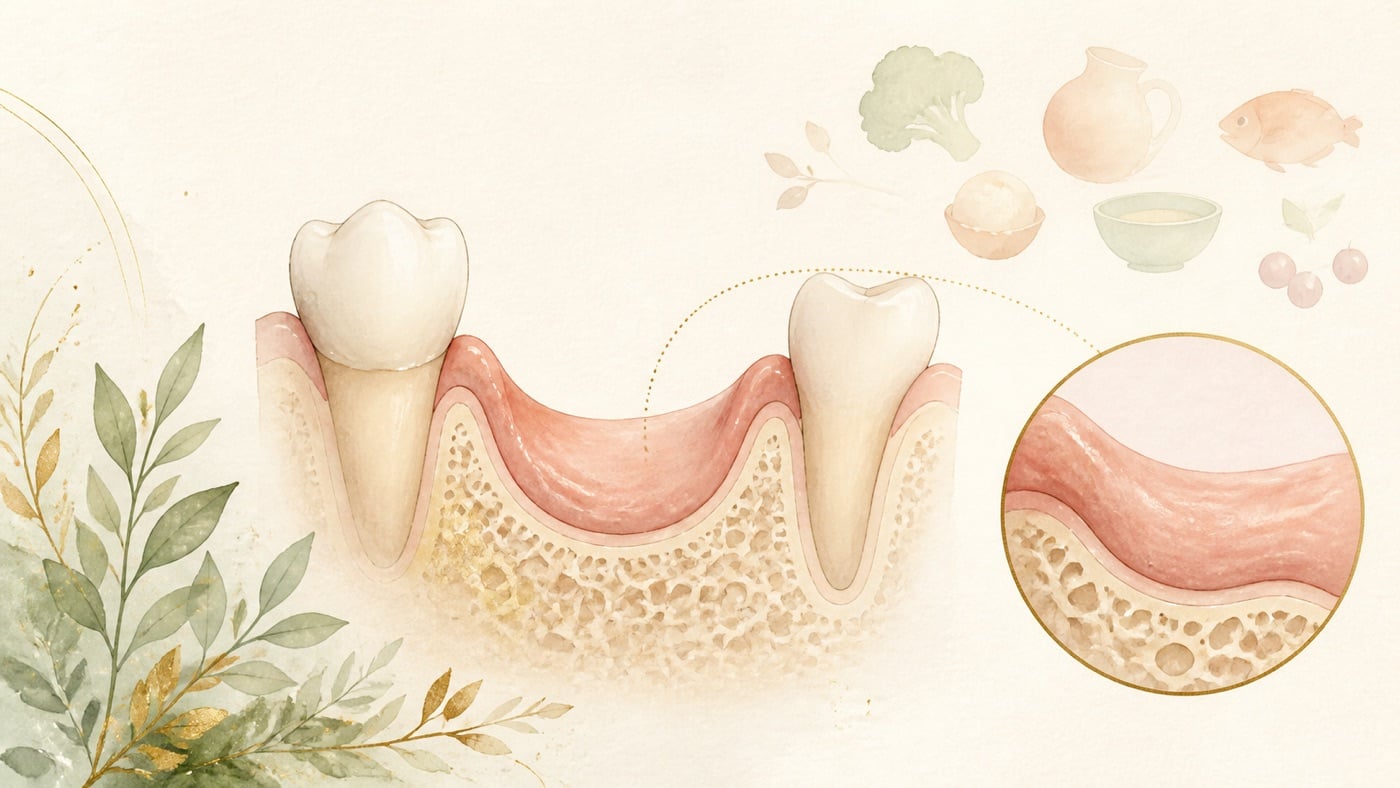
When can I eat and drink after a tooth extraction? What should I eat?
Using four stages—anaesthesia not yet worn off, the day of surgery, the first 3 postoperative days, and after 1 week—this article explains what international literature and clinical guidance can and cannot support about eating after tooth extraction. It labels the evidence for straws, hot drinks, warm salt water, smoking, and alcohol one by one, and compares recovery after wisdom-tooth removal with simple extraction. For the healing timeline and dry-socket criteria, see KM-DENTAL-01; this article does not repeat them.
TL;DR
A UK guide, originally for dental patients taking antithrombotic medicines, advises resting until the anaesthetic has worn off and the clot has formed—usually 2 to 3 hours. On the day, avoid hot drinks and hard foods, do not suck forcefully or chew on the treated side, and wait until the next day to rinse 3. There is no universal number of days 24.
This is general health education based on international literature; it does not address the insurance or legal system of any particular country. Care and payment arrangements depend on where you receive care. The clinical evidence here comes from international journals and a Scottish (UK) clinical-guidance patient leaflet (facts marked `geo: universal`; eligibility limits are stated in each fact). Only the two passages on the duty to inform and the health-education positioning cite Taiwan law (facts marked `geo: TW`); when obtaining care outside Taiwan, those two passages must be read against local requirements.

This is not the same question as “how long does the extraction socket take to heal?”
Another card on this site explains the extraction-socket healing timeline—blood clot, granulation tissue, woven bone, mineralisation, and remodelling—and the definition, red flags, and review criteria for dry socket 25. This article does not repeat that material; it cites it only when needed (link in the internal citation chain below).
This article addresses a different question: after you leave the clinic today, when may you drink water, when may you eat, what might you eat or avoid, and how firm is the evidence for each point?
First, what does the evidence for this question look like?
Postoperative diet is frequently searched but unevenly supported by evidence. After searching PubMed from patient questions and obtaining a clinical-guidance leaflet, this site’s assessment is 24:
- Direct clinical studies are available for recovery time of soft-tissue sensation after local anaesthesia 4, risk of self-injury while sensation is absent 5, day-by-day postoperative symptoms and recovery times 13141516, the association between smoking and dry socket 910, and using a straw 11.
- Clinical guidance states, but does not itself cite randomised trials for “avoid hot drinks and hard foods on the day,” “do not suck forcefully,” “start rinsing only the next day,” and “do not chew on the treated side” 3. These are verifiable words in guidance, not randomised-trial conclusions. The leaflet is for dental patients taking anticoagulants or antiplatelet medicines, not all extraction patients 3.
- This search found no direct clinical evidence for a causal link between food temperature and post-extraction bleeding, spicy food, ice taken in the mouth, alcohol, or particular supplements accelerating healing. Each is labelled below; this article does not fill gaps with assumptions 24.
In other words, this article is meant to help you understand the postoperative instructions your clinician gives you and identify questions to ask before leaving; it does not replace those instructions. Under Article 81 of Taiwan’s Medical Care Act, medical institutions must inform the patient or specified related persons about the condition, treatment plan, procedure, medicines, prognosis, and possible adverse reactions 21. A medicolegal review also notes that people who are anxious or in pain may not retain oral information, so postoperative instructions should be provided in writing 20. You may ask the clinic for a written copy.
Stage 1: the anaesthetic has not yet worn off (the first few postoperative hours)
At this stage, the key issue is not what to eat but whether eating and drinking should wait.
- Soft-tissue anaesthesia lasts longer than many people expect. In a multicentre randomised controlled trial, the control group without a reversal drug had median return of sensation at 155 minutes for the lower lip, 125 minutes for the tongue, and 133 minutes for the upper lip 4.
- Biting a numb lip, cheek, or tongue without noticing is a recognised type of risk. A review comparing local anaesthetics states that shortening soft-tissue anaesthesia may reduce self-inflicted injuries after an inferior-alveolar nerve block 5.
- The guidance is direct: rest until the local anaesthetic has worn off and the clot has fully formed, which usually takes 2 to 3 hours 3.
The two anaesthesia studies were not extraction surgery (they involved restorative or cleaning procedures and a paediatric population). This article cites only the mechanism-level facts that soft-tissue anaesthesia can last several hours and absent sensation can permit self-injury; it does not estimate an individual time 45. Follow your operating clinician’s instruction for when you may first drink water and begin eating 21.
Stage 2: the day of surgery (the blood clot is central)
All dietary limits on the day point to one thing: do not dislodge the newly formed clot.
- Literature describes dry socket as a socket that may be partly or completely without a clot 6. Another systematic review describes partial or total post-extraction clot loss causing severe pain that usually begins 1 to 5 days after surgery 7. For the full distinction, see the dry-socket section of KM-DENTAL-01; this article does not duplicate it 25.
- The guidance leaflet gives four instructions for that day: avoid hot liquids and hard foods, avoid forceful sucking or disturbing the clot, avoid chewing on the treated side, and do not rinse before the next day 3.
- The evidentiary status of those four sentences matters: they are from the March 2022 patient postoperative leaflet of the Scottish Dental Clinical Effectiveness Programme (SDCEP), for dental patients taking anticoagulant or antiplatelet medication; the leaflet does not cite randomised trials supporting each instruction 3. This article cites it as verifiable clinical-guidance wording, not as randomised-trial evidence.
- The mouth is not an environment in which a wound can remain still easily. A review describes it as a complex microenvironment affected by oral movements, salivary flow, and bacterial biofilms; these factors can contribute to delayed socket healing and post-extraction complications 19. That mechanism helps explain why postoperative instructions contain so many details.
What to do about bleeding: a systematic review included local haemostatic measures such as gauze pressure 18. The patient leaflet says that if bleeding restarts after leaving the clinic, press on the area for 30 minutes with a folded, clean, damp handkerchief or gauze pad, and contact the dentist if it does not stop 3. The same systematic review states that interrupting antithrombotic medicines because of fear of bleeding, or after postoperative bleeding, increases the risk of thromboembolic events 18. If you take an anticoagulant or antiplatelet medicine, report the bleeding to your clinician; do not stop or change the dose on your own.
Stage 3: the first 3 postoperative days (the symptom plateau)
- A patient-reported study of 339 people undergoing five types of alveolar surgery used a 10 cm visual analogue scale to record bleeding, swelling, pain, and bruising daily for postoperative 1 week and at day 14. In the first 3 healing days, transalveolar extraction had a higher area under the curve for overall bleeding and pain than the other groups (mean bleeding 5.6; mean pain 7.5) 8.
- A quality-of-life study of mandibular third-molar surgery (92 patients, including eating and speaking ability) concluded that lower third-molar surgery significantly affects quality of life and environment, particularly in the first 3 days after extraction 14.
- A prospective longitudinal study of upper third molars (47 included in analysis) found pain fell linearly over 7 days, with statistically significant relief between day 2 and day 3; upper third-molar removal significantly affected quality of life, particularly in the first 2 days 15.
- Taken together, these three studies support only this: the first 2 to 3 days are a period when discomfort is more concentrated and quality of life more noticeably affected, then it declines. This is a population-level pattern, not an inevitable individual outcome 81415. The two quality-of-life questionnaires included eating ability, but their abstracts do not report a numeric eating subscore, so this article does not turn them into “how many days until normal eating” 141524.
What should you eat in this period? After the day of treatment, the guidance no longer sets foods by day; it shifts to cleaning: beginning the day after treatment, gently rinse with warm salt water (one teaspoon of salt in one glass of water) 3 to 4 times daily for 5 days 3. The evidence level for warm salt water needs an honest description: a systematic review and meta-analysis of 8 randomised studies found no significant difference in dry-socket incidence between warm saline mouth baths and other antimicrobial rinses (`P > 0.05`), and the authors noted high risk of bias in most included studies 17. “No significant difference” means it was not shown to be better or worse than other rinses; it does not mean “useless” or “do not do it.” Whether and how to rinse should follow your postoperative instruction 321.
Stage 4: after 1 week (when does “normal eating” return?)
- A prospective clinical trial enrolled 740 people having all four third molars removed and obtained recovery data from 630. Patients completed a daily quality-of-life measure for 14 postoperative days, covering pain, daily activities, oral function, and other symptoms. Most quality-of-life measures recovered within 5 days, but recovery of pain to “little or none” lagged behind the other measures; 22% of patients were treated for delayed healing 13.
- Recovery speed differs between populations. A study of 958 subjects enrolled at 9 academic centres and 12 community practices defined recovery as the days needed for patients to report no or only a little trouble. Apart from mouth opening, people aged 21 years or older had significantly slower recovery on all quality-of-life items than younger people, and women had significantly longer recovery times than men for all outcomes 16.
- In plain language: “about 5 days” is a population-level observation in that study, not a warranty period. The source says most quality-of-life measures recovered within 5 days; it does not provide a median or mean 13. Age, sex, and surgical difficulty can change your actual pace 1316.
What to eat: this article gives three criteria, not a food list
Most online lists of “20 foods you can eat after an extraction” lack clinical-study support. This article can cite only two nutrition-related items, and both need clear limits:
- Protein intake and early wound healing: a pilot study of 25 patients used a food-frequency questionnaire and 24-hour recall to assess habitual protein intake in the preceding month, then assessed early wound-healing index after impacted mandibular third-molar surgery. Protein intake was positively associated with the day-7 early wound-healing index (`p = 0.019`) and lower day-1 pain scores (`p = 0.009`). In the same study, however, the high-protein group had a greater decrease in mouth opening on day 3 (`p = 0.004`), more facial swelling on day 3 (`p = 0.023`), and no significant differences in OHIP-14 scores at any time point 12. This is a pilot study of 25 people measuring what they had habitually eaten, not a trial of eating more protein after surgery; the authors themselves call for larger studies 12.
- Malnutrition and delayed healing: mice fed a low-casein diet for two weeks before extraction showed delayed wound healing on day 7 with higher inflammation-related indicators 23. An animal experiment cannot be extrapolated to people. It is cited only to show that being unable to eat or eating too little is not mechanistically irrelevant 23.
Accordingly, this article gives criteria rather than a list. The following three are this site’s communication framework derived from F3 and F19, not clinical guidance 2:
- No forceful biting—the guidance says to avoid hard food and chewing on the treated side on the day 3; oral movement itself is listed as one factor that may delay socket healing 19.
- Do not burn your mouth—the guidance says to avoid hot liquids on the day 3. Important: this site found no direct clinical trial on food temperature and post-extraction bleeding, so this is guidance wording, not a trial conclusion 324.
- No forceful sucking needed—the guidance says to avoid sucking hard or disturbing the clot 3. Straw use itself has a direct study whose conclusion may differ from what you have heard (next section) 11.
Being able to eat and getting enough to eat are part of postoperative care. If pain or limited opening means you can hardly eat, that is something to report at a review visit, not something you should simply endure 121322.
What to avoid, and why: evidence level item by item
Smoking: the most densely cited item in this article
- A systematic review of 11 studies found that smokers had more than 3 times the odds of dry socket; combined incidence was about 13.2% in smokers and about 3.8% in non-smokers 7.
- An evidence-based dentistry commentary on that review added that the 11 studies came from 10 countries and included 10,195 patients (3,007 smokers and 7,188 non-smokers); every included study was only at the third or fourth level of a five-level evidence scale 10.
- One honest qualification: the guidance leaflet cited in this article does not mention smoking. The smoking evidence above comes entirely from a systematic review and its commentary, not from guidance wording 3710. There is no single standard answer for how long or how to stop; follow your clinician’s plan.
Forceful sucking and straws: one direct study points against the usual claim
- In a study of 60 patients having all four third molars removed, half used a straw with every meal for the first 2 postoperative days. A total of 220 teeth were removed; no dry socket occurred in the maxilla, while 17 occurred in the mandible—8 among straw users (15%) and 9 among non-users (15%). The authors concluded that no evidence showed an increased dry-socket incidence from using a straw in the first 2 days after third-molar extraction 11.
- Read that carefully: it is one study, with 60 patients, published in a state dental-association journal. The abstract says “randomly selected patients,” but does not describe random allocation or blinding, and does not clearly define the percentage denominator 11.
- This article’s position is therefore: “straws cause dry socket” currently lacks supporting clinical evidence, but that does not mean you may disregard your postoperative instructions. The guidance still says to avoid forceful sucking or disturbing the clot 311. The two statements do not conflict: the first concerns the device, the second the action.
Hot drinks and hot food
- What can be cited is the guidance wording: avoid hot liquids and hard foods on the day 3.
- This search found no clinical trial of food temperature and post-extraction bleeding or dry socket 24. The only mechanism-level support available is impaired temperature and pain judgement while anaesthesia has not worn off 45.
- This article therefore gives no number of days after which hot food may be eaten. Any fixed-day claim exceeds what the available literature can support 24.
Alcohol
- This search found no direct clinical study of alcohol use after extraction and dry socket or wound healing 24.
- Whether alcohol may be used while taking postoperative medicines is an individual medication question; follow your clinician’s advice 21. This article gives no alcohol recommendation.
Timing of rinsing
- The guidance says not to rinse before the next day; beginning the day after treatment, gently rinse with warm salt water 3 to 4 times daily for 5 days 3.
- Warm salt water and other antimicrobial mouth rinses showed no significant difference in dry-socket incidence, and the included studies had high risk of bias 17.
- This site found no clinical trial of rinse force and clot loss. What can be cited is that literature lists a socket partly or totally without a clot as a descriptive feature of dry socket 624.
Wisdom-tooth version: why “normal eating” may come later
“When can I drink water after wisdom-tooth removal?” and “when can I eat normally after wisdom-tooth removal?” are often asked separately and deserve a direct comparison.
- The experience in the first days is indeed different: in the patient-reported study, transalveolar extraction had a higher area under the curve for overall bleeding and pain during the first 3 healing days than the other groups 8.
- Pain is not the only limit on eating; reduced mouth opening is another: a Cochrane review of mandibular wisdom-tooth surgery says surgery is commonly associated with short-term postoperative pain, swelling, and trismus. Less commonly, infection, dry socket, and trigeminal nerve injury may occur 22.
- There is a citable scale for recovery time: after removal of all four third molars, most quality-of-life measures recovered within 5 days, pain recovery lagged behind, and 22% were treated for delayed healing 13; recovery was significantly longer for people aged 21 years or older and for women 16.
- The dry-socket risk range also differs: the Cochrane review cites a prevalence of 1% to 5% for routine extractions and upwards of 30% for surgically extracted third molars 9. A meta-analysis of 28 studies covering 41,859 impacted mandibular third-molar extractions estimated overall prevalence at 6.7% (95% confidence interval 4.6% to 9.1%) and reported considerable heterogeneity 26.
- But the operative diet principles are not separately set by tooth position in the guidance: the leaflet applies to “dental treatment that is likely to cause bleeding, for example an extraction,” and does not give separate advice by tooth position 3. The difference is intensity and duration, not the principle.
Common claims checked one by one
The following records what this site obtained by searching PubMed E-utilities on 2026-08-05. “No direct evidence obtained” means this search did not find a citable clinical study; it does not mean the claim has been disproved 24.
- “A straw sucks out the clot and causes dry socket.” One direct study recorded 8 straw users and 9 non-users, both shown as 15% in the source; the authors found no evidence of higher incidence 11. Its small sample and limited reporting of method details and percentage denominators do not overturn the guidance to avoid forceful sucking 311.
- “You cannot drink anything hot on the day of extraction.” The guidance does say this 3, but this search found no clinical trial of food temperature and postoperative bleeding 24. This is guidance wording, not a trial conclusion.
- “Eating ice after an extraction reduces swelling better.” This search found no clinical study of ice taken in the mouth after extraction 24. External ice application is a different matter; its evidence is in the relevant section of KM-DENTAL-20 25.
- “You cannot eat spicy food after an extraction.” This search found no clinical study of spicy food and extraction wounds 24.
- “Taking more supplements makes the socket heal faster.” No clinical evidence was obtained that a particular food accelerates human extraction-socket healing 24. The only citable nutrition evidence is the pilot study of habitual protein intake 12 and the mouse malnutrition experiment 23; neither endorses supplements.
- “If it no longer hurts, it is healed and I can eat normally.” Pain resolution and tissue healing are different. In the third-molar study, pain recovery even lagged behind other quality-of-life measures, and 22% were treated for delayed healing 13. See KM-DENTAL-01 for the socket-healing timeline 25.
<!-- 風險因素 -->
Risk factors: whose postoperative diet needs more caution?
- People who smoke: dry-socket odds were more than 3 times higher, with combined incidence 13.2% versus 3.8%; however, the included studies were third- or fourth-level evidence 710.
- People taking antithrombotic medicines: postoperative bleeding needs clinician management; stopping antithrombotic medicines on one’s own increases thromboembolic-event risk 18. The guidance leaflet cited here was written for this population; its medication passages need individual explanation from your clinician 3.
- People taking antiresorptive or antiangiogenic medicines, or in an immunosuppressed state: a systematic review of 23 papers found that leading complications in oral surgery were haemorrhage in anticoagulated patients, infection in immunosuppressed patients, and osteonecrosis in people taking antiresorptive drugs 22.
- People having surgical extraction (flap elevation, bone removal, tooth sectioning): bleeding and pain area under the curve were higher in the first 3 days 8, and dry-socket risk range was higher 926.
- Older people and women: recovery time for postoperative quality-of-life measures was significantly longer 16. This is a population-level observation, not an individual prediction.
- People who were not eating enough already: the positive association between habitual protein intake and day-7 early wound-healing index is from a pilot study 12; evidence that malnutrition delays extraction-wound healing comes from a mouse experiment 23.
Tooth extraction and aftercare have risks and contraindications. Whether any item above applies to you must be assessed by a dentist for your individual circumstances.
Before the appointment / before leaving the clinic: 7 questions to ask
- Was mine a simple extraction, or a surgical extraction with a flap, bone removal, or tooth sectioning? How does recovery differ? 822
- About how long will the anaesthetic last? May I drink water before it wears off? When may I start eating? 345
- What may I eat or avoid from today to tomorrow? Can I take written postoperative instructions home? 32021
- When should I start rinsing? Should I use warm salt water, how should I rinse, and for how many days? 317
- I take anticoagulants, antiplatelet medicines, or other chronic-disease medicines. What should I note about postoperative bleeding and diet? May I drink alcohol? 1821
- I smoke. How should I understand my dry-socket risk for this extraction? Can the clinic help refer me to smoking-cessation resources? 710
- What signs need an immediate review (bleeding that will not stop, pain that worsens rather than improves, being barely able to eat), and whom do I contact outside clinic hours? 31318
<!-- 常見問題 -->
How to find a clinic that provides this service
This site lists no clinics and does not recommend, rate or compare any medical institution.
To find a clinic that provides this service, use the following official lookup channels yourself —
they are maintained by the competent authorities and are more current than any list:
>
- The Ministry of Health and Welfare's medical-institution lookup: search by city or county,
township and specialty (dentistry) for institutions that have completed practice registration.
The results show the institution's name, address and registered specialty. This is the first place
to confirm whether a clinic is lawfully registered.
- The National Health Insurance Administration's contracted-institution lookup: check whether a
clinic is under contract with National Health Insurance. This determines which items are covered
and which are self-paid, and therefore what kind of fee explanation you will be given.
>
Both systems are on the respective authorities' official websites; searching for the
medical-institution lookup or the contracted-institution lookup will find them. This site does not
reproduce the URLs, because they change; use whichever entry point the authority currently publishes.
>
In an emergency, do not spend time looking up lists. If your breathing, swallowing or speech is
affected, or swelling is spreading, go to the nearest emergency department.
Chinese labels to look for on the official pages
These official systems, datasets and files are published in Chinese only. The English names above are this site's renderings; on the page itself you will see the following strings, so search for these:
>
- 「醫事機構查詢」
- 「特約醫事機構查詢」
- 「特約院所查詢」
Compliance note
This is health education information under Article 87 of Taiwan’s Medical Care Act, not medical advertising, and it does not recommend a particular clinic 0. Tooth extraction and post-extraction care have risks and contraindications. Actual treatment methods and outcomes vary by person and require a dentist’s assessment. The stage framework and dietary criteria in this article are for communication during care; they cannot replace postoperative instructions and clinical diagnosis from your treating dentist.
Every clinical statement in this article is mapped line by line to its cited source (see the sources and evidence chain below). It has not been clinically reviewed by a licensed practitioner. This is health information, not individual advice; assessment by a clinician is required.
FAQ
- When may I drink water after an extraction?
- **A patient leaflet from UK (Scottish) clinical guidance says to rest until the local anaesthetic has worn off and the clot has fully formed, usually 2 to 3 hours; the leaflet was originally written for dental patients taking anticoagulant or antiplatelet medicines** [F3]. Comparable clinical data show median return of soft-tissue sensation of 155 minutes in the lower lip, 125 minutes in the tongue, and 133 minutes in the upper lip in controls without reversal drug [F4], while absent sensation can lead to self-injury [F5]. The actual timing remains subject to your operating clinician’s instruction [F21].
- When may I eat after an extraction, and what should I eat?
- **The literature does not give one number of days that fits everyone.** The day-of-treatment guidance is to avoid hot liquids and hard foods, not suck forcefully, and not chew on the treated side [F3]. Symptoms are more concentrated in the first 2 to 3 days [F8][F14][F15], and most quality-of-life measures recovered within 5 days in people having all four third molars removed [F13]. Rather than a food list, this article gives three criteria: no forceful biting, do not burn your mouth, and no need for forceful sucking [F2][F3].
- When may I eat hot food or drink hot soup after extraction?
- **This search found no clinical trial of food temperature and post-extraction bleeding or dry socket** [F24]. What can be cited is only the UK guidance leaflet’s instruction to avoid hot liquids on the day (originally for people taking anticoagulant or antiplatelet medicines) [F3], and impaired temperature and pain judgement while anaesthesia persists [F4][F5]. This article therefore gives no number of days; follow your written postoperative instruction [F20][F21].
- Do straws really cause dry socket?
- **One direct study did not support that claim.** Among 60 patients having all four third molars removed, half used a straw with every meal for 2 postoperative days; 17 mandibular dry sockets occurred, 8 among straw users (15%) and 9 among non-users (15%), and the authors found no evidence of increased incidence [F11]. **But the study was small and reported limited method detail**, while the guidance still advises avoiding forceful sucking or disturbing the clot [F3][F11]. If concerned, follow your postoperative instruction rather than using one study to override an individual clinician’s advice.
- When may I eat normally after wisdom-tooth removal, and how does it differ from a regular extraction?
- **The difference is intensity and duration, not the diet principles.** Surgical transalveolar extraction had a higher bleeding and pain area under the curve in the first 3 days [F8]. Mandibular wisdom-tooth surgery commonly has short-term pain, swelling, and limited opening, with infection, dry socket, and trigeminal nerve injury less commonly possible [F22]. After removal of all four third molars, most quality-of-life measures recovered within 5 days; pain recovery lagged behind, 22% were treated for delayed healing [F13], and recovery was slower for people aged 21 years or older and for women [F16]. See KM-DENTAL-01 for the socket’s healing timeline [F25]. <!-- 提供此服務的診所 -->
Medical notice This article is provided for health education and medical information purposes. It is not a solicitation for medical services and does not constitute diagnosis or treatment advice. Actual treatment methods and outcomes vary between individuals and require evaluation by a dentist; every treatment has its own indications, limitations and possible risks. If you have related symptoms or treatment needs, please book a consultation for evaluation by a dentist.
Source anchors
- Hersh EV, Moore PA, Papas AS, et al. Reversal of soft-tissue local anesthesia with phentolamine mesylate in adolescents and adults. J Am Dent Assoc.… · https://pubmed.ncbi.nlm.nih.gov/18682623/ · Other citations on IDAEO
- Smith T, Urquiola R, Oueis H, et al. Comparison of articaine and lidocaine in the pediatric population. J Mich Dent Assoc. 2014;96(1):34-37. PMID 24654413 · https://pubmed.ncbi.nlm.nih.gov/24654413/ · Other citations on IDAEO
- Daly BJ, Sharif MO, Jones K, Worthington HV, Beattie A. Local interventions for the management of alveolar osteitis (dry socket). Cochrane Database Syst Rev.… · https://pubmed.ncbi.nlm.nih.gov/36156769/ · Other citations on IDAEO
- Kuśnierek W, Brzezińska K, Nijakowski K, Surdacka A. Smoking as a Risk Factor for Dry Socket: A Systematic Review. Dent J (Basel). 2022;10(7):121. PMID… · https://pubmed.ncbi.nlm.nih.gov/35877395/ · Other citations on IDAEO
- Yao J, Lee KK, McGrath C, Wu YN, Li KY, Mattheos N. Comparison of patient-centered outcomes after routine implant placement, teeth extraction, and… · https://pubmed.ncbi.nlm.nih.gov/26970296/ · Other citations on IDAEO
- Majid OW. Further evidence confirms the association between smoking and dry socket: a motivational opportunity for tobacco cessation. Evid Based Dent.… · https://pubmed.ncbi.nlm.nih.gov/37814003/ · Other citations on IDAEO
- Bloomer CR. Straws do not cause dry sockets when third molars are extracted. Tex Dent J. 2012;129(1):25-32. PMID 22432232 · https://pubmed.ncbi.nlm.nih.gov/22432232/ · Other citations on IDAEO
- Avağ C, Avağ MS, Sakarya Ö, Vural A. The effect of protein intake levels on early postoperative outcomes following impacted mandibular third molar removal: a… · https://pubmed.ncbi.nlm.nih.gov/40462111/ · Other citations on IDAEO
- White RP Jr, Shugars DA, Shafer DM, Laskin DM, Buckley MJ, Phillips C. Recovery after third molar surgery: clinical and health-related quality of life… · https://pubmed.ncbi.nlm.nih.gov/12730831/ · Other citations on IDAEO
- Colorado-Bonnin M, Valmaseda-Castellón E, Berini-Aytés L, Gay-Escoda C. Quality of life following lower third molar removal. Int J Oral Maxillofac Surg.… · https://pubmed.ncbi.nlm.nih.gov/16280233/ · Other citations on IDAEO
- Avellaneda-Gimeno V, Figueiredo R, Valmaseda-Castellón E. Quality of life after upper third molar removal: A prospective longitudinal study. Med Oral Patol… · https://pubmed.ncbi.nlm.nih.gov/29053650/ · Other citations on IDAEO
- Phillips C, Gelesko S, Proffit WR, White RP Jr. Recovery after third-molar surgery: the effects of age and sex. Am J Orthod Dentofacial Orthop.… · https://pubmed.ncbi.nlm.nih.gov/21130316/ · Other citations on IDAEO
- Osunde OD, Adebola RA, Adeoye JB, et al. Effectiveness of warm saline mouth bath in preventing alveolar osteitis: A systematic review and meta-analysis. J… · https://pubmed.ncbi.nlm.nih.gov/34509363/ · Other citations on IDAEO
- Ockerman A, Bornstein MM, Leung YY, Li SKY, Politis C, Jacobs R. Local haemostatic measures after tooth removal in patients on antithrombotic therapy: a… · https://pubmed.ncbi.nlm.nih.gov/30155575/ · Other citations on IDAEO
- Yin Y, Shuai F, Liu X, Zhao Y, Han X, Zhao H. Biomaterials and therapeutic strategies designed for tooth extraction socket healing. Biomaterials.… · https://pubmed.ncbi.nlm.nih.gov/39626339/ · Other citations on IDAEO
- Rees J. Medicolegal implications of dental implant therapy. Prim Dent J. 2013;2(2):34-38. PMID 23726490 · https://pubmed.ncbi.nlm.nih.gov/23726490/ · Other citations on IDAEO
- Bailey E, Kashbour W, Shah N, Worthington HV, Renton TF, Coulthard P. Surgical techniques for the removal of mandibular wisdom teeth. Cochrane Database Syst… · https://pubmed.ncbi.nlm.nih.gov/32712962/ · Other citations on IDAEO
- Morgado-Sevillano D, Rodríguez-Molinero J, García-Bravo C, et al. Oral surgery considerations in patients at high-risk of complications related to drug… · https://pubmed.ncbi.nlm.nih.gov/40952869/ · Other citations on IDAEO
- Zhang Y, Ideguchi H, Aoyagi H, et al. Malnutrition delayed wound healing after tooth extraction by HMGB1-related prolonged inflammation. Int Immunopharmacol.… · https://pubmed.ncbi.nlm.nih.gov/34162142/ · Other citations on IDAEO
- Kostares E, Kostare G, Kostares M, Kantzanou M. Prevalence of fibrinolytic alveolitis following extraction of impacted mandibular third molars: A systematic… · https://pubmed.ncbi.nlm.nih.gov/38432484/ · Other citations on IDAEO
- Scottish Dental Clinical Effectiveness Programme. Post-Treatment Advice for Dental Patients Taking Anticoagulant or Antiplatelet Medication(2022 年 3 月,PDF · https://www.sdcep.org.uk/media/bocnpjel/sdcep-post-treatment-advice-for-dental-patients.pdf · Other citations on IDAEO
- 醫療法 第 81 條(全國法規資料庫 · https://law.moj.gov.tw/LawClass/LawSingle.aspx?pcode=L0020021&flno=81 · Other citations on IDAEO
- 醫療法 第 87 條(全國法規資料庫 · https://law.moj.gov.tw/LawClass/LawSingle.aspx?pcode=L0020021&flno=87 · Other citations on IDAEO
- 本文證據鏈:逐條出處、行號與原文引句 · https://km.idaeo.ai/reports/dental-extraction-diet-evidence · Other citations on IDAEO
Cite this article
Lucy・《When can I eat and drink after a tooth extraction? What should I eat?》・IDAEO 知識庫・2026-08-13・https://km.idaeo.ai/post/dental/extraction-dietUpdated 2026-08-27