

🏛 Part of the "dental" topic shelf →
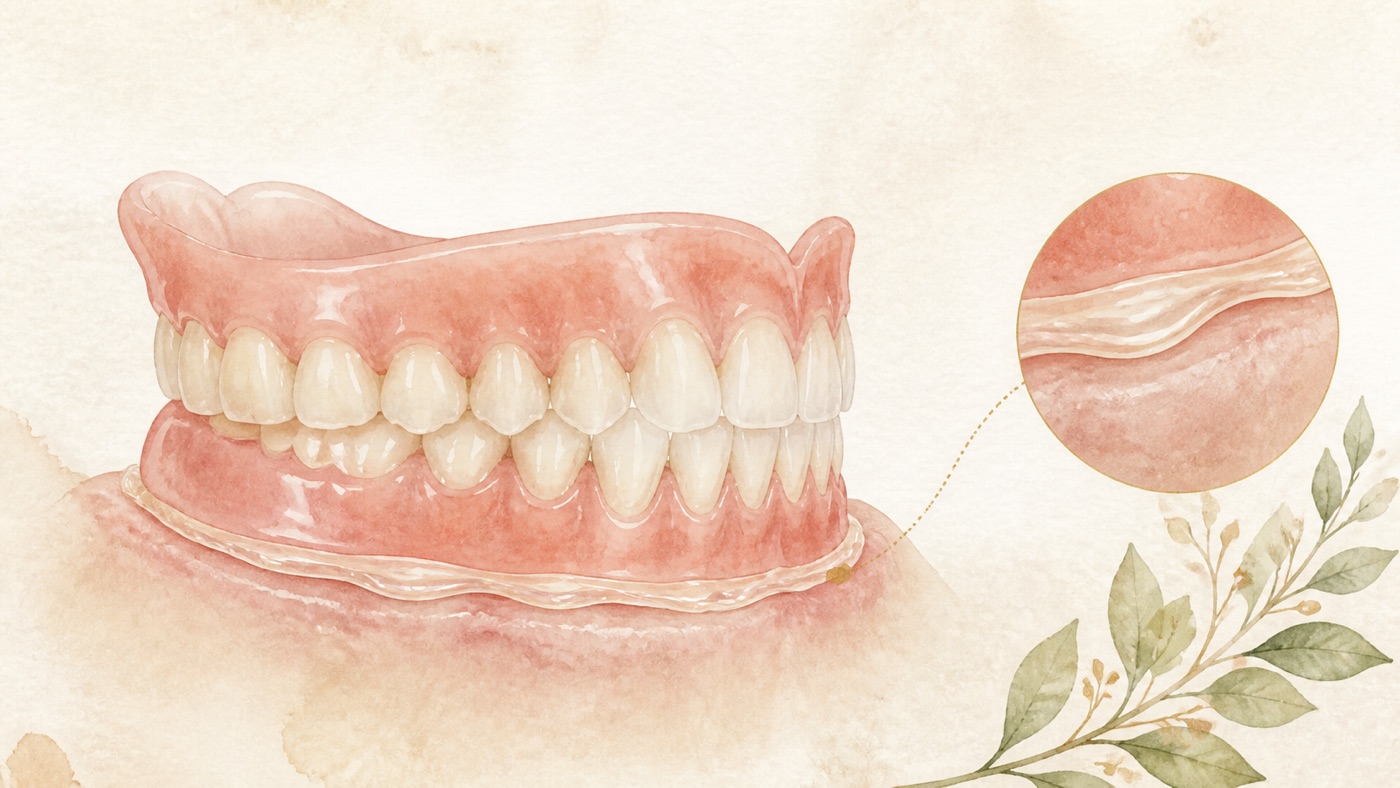
How to choose denture adhesive—and how long can it hold?
In Taiwan, denture adhesive is a listed medical device whose stated purpose is to increase denture retention and comfort. This guide reviews evidence and differences for cream, powder, and cushion (home-liner) forms; how many hours one application has been measured to work; the risk from overuse of zinc-containing products; how to remove residue; and when to return for review rather than adding more adhesive. It recommends no brand or product and gives no prices.
How to choose denture adhesive—and how long can it hold?
Direct answer in 60 characters
Denture adhesive is an aid to retention, not a substitute for an ill-fitting denture. If the denture is loose, painful, or repeatedly falls out, return for review; a dentist should decide whether adjustment, relining, or remaking is needed [F1][F19][F31].
Scope: this guide is general health education based on international literature and does not address any particular country’s insurance or regulations; care and payment systems should follow the place where care is received. The section “How Taiwan’s system classifies it” cites Taiwan regulations and authority-listed products (each marked geo: TW in the F-Units); readers elsewhere should not apply that section. This guide does not recommend, compare, or rate any brand or product.
1. First distinguish inadequate retention from an ill-fitting denture
Online, “denture adhesive” is often treated as a shopping question. Clinically, it is first a diagnostic question: why will your denture not stay in place?
- If the denture fits well and you only want more retention in particular circumstances—for example, poorer residual-ridge conditions, speaking, or eating hard food—adhesive is an adjunct discussed in the literature [F3][F4].
- If it is clearly loose, rubs the mucosa raw, hurts when you bite, or continually shifts position, this is a fit-and-occlusion issue. It needs a review visit, then a dentist’s decision about adjustment, relining, repair, or remaking. That is maintenance of the removable denture itself; another site card covers it, so this card does not repeat it (see the internal links below).
Why does this distinction matter? A scoping review of adhesive toxicity concluded that well-adapted removable dental prostheses, appropriate follow-up, and correct instructions when indicated should take priority [F1]. In other words, the denture itself fitting properly comes before deciding whether to use adhesive.
A systematic review of mucosal lesions found smoking and continued use of ill-fitting dentures to be common risk factors for inflammatory papillary hyperplasia. In its included studies, reported prevalence was 29.56% for denture stomatitis and 4.44% for inflammatory papillary hyperplasia [F2]. Using adhesive to keep wearing an ill-fitting denture leaves that risk factor in place and can delay recognition of the problem.
Materials evidence points in the same direction. A study of six commercially available home reliners—liner-type adhesive products—reported major changes in viscoelastic properties and increased weight after about one day in water. From dynamic viscoelasticity and durability, the tested home reliners were not suitable for improving ill-fitting dentures [F19].
One point needs to be stated honestly: the clinical studies found for this card do not directly prove that using adhesive itself accelerates residual-ridge resorption. This guide does not make that claim. What the sources support is that residual-ridge resorption needs ongoing clinical monitoring and that marked resorption is associated with poorer removable-denture function [F27]; continued use of an ill-fitting denture is associated with mucosal lesions [F2]; and adhesive can make an ill-fitting denture feel less obvious, delaying review. Together, those are reasons not to use adhesive instead of returning for care.
A different level of evidence also needs to be included. A 2024 Delphi study of 31 dental practitioners recorded consensus that adhesive can improve perceived fit and comfort and is not for masking underlying denture problems; the panel also listed denture stomatitis, candidiasis, and alveolar-bone resorption as diseases caused by adhesive [F38]. This is expert-opinion consensus, not a clinical-trial result, and is lower-level evidence than the preceding systematic reviews and trials. The guide reports it but does not state that adhesive-caused alveolar-bone resorption is an established causal conclusion. The direction shared by the professional consensus and this guide is that adhesive is not for concealing denture problems.
2. What main forms are sold, and what does the literature compare?
The literature generally compares three main forms (the following is this site’s literature-based organization, not a clinical classification) [F37]:
- Cream/paste: applied to the tissue surface of the denture. In a Japanese web survey of 1,825 denture wearers aged 40 years or older, 79.7% of the 347 people who had used adhesive used cream [F21].
- Powder: sprinkled on the wet tissue surface of the denture. It accounted for 3.2% in the same survey [F21].
- Cushion/home-liner form: a thicker, moldable sheet or paste. It accounted for 16.2% [F21].
The comparison is not “one form is better.” Most comparisons found no difference; only some subgroups differed:
- A systematic review and meta-analysis of 9 clinical studies (6 randomized and 3 nonrandomized) found no difference between cream and powder in masticatory performance (standardized mean difference 0.02, 95% confidence interval −0.46 to 0.50, P=.93), nor between cream and strip forms in occlusal force (mean difference 14.35, 95% confidence interval −11.14 to 39.84, P=.27). For people with resorbed residual ridges, cream had higher masticatory performance than strips (P<.05); powder had higher occlusal force than strips (P<.05). The review rated certainty for every outcome very low [F5].
- A 2024 systematic review and network meta-analysis (searched to July 2023; 17 included articles) estimated that cream significantly increased incisal bite force (RR = 7.63, 95% confidence interval 3.34 to 11.91) and premolar/molar bite force (RR = 33.66, 15.15 to 52.16); powder also significantly increased premolar/molar bite force (RR = 36.00, 16.20 to 55.79). Its conclusion was that cream and powder improve mandibular-denture retention and premolar/molar bite force, with moderate certainty [F4]. The review labels these values RR and they correspond to measurement scales in the original studies, such as bite force and the Kapur retention index; they should not be read directly as “so many times better” [F4].
- In a 10-centre randomized clinical trial of 200 edentulous participants, cream, powder, and control (saline) were used for 4 days. Oral-health-related quality-of-life scores improved significantly in all groups, but there was no statistically significant between-group difference; cream may improve quality of life more in people with poorer residual-ridge conditions [F24]. The fact that the control group also improved is important context for claims that use necessarily feels beneficial.
The practical implication is not “which product is best,” but which form is closer to your oral conditions. A cross-sectional survey of adhesive users not attending regularly found residual-ridge condition and how long dentures had been worn to be significant correlates of choosing cream or home-liner forms [F22]. In another randomized crossover trial, retention without adhesive was relatively low across residual-ridge classifications (0.27 to 0.69 lb), and retention differed significantly between ridge classes [F23].
3. How large is the effect? Read it with the evidence level
- A systematic review and meta-analysis of 39 studies (43 articles; 23 randomized controlled trials and 16 controlled clinical trials) estimated significantly higher retention after adhesive use (standardized mean difference 1.34, 95% confidence interval 0.89 to 1.79, P<0.001). Bite force (0.98, 0.50 to 1.47) and masticatory performance (0.72, 0.23 to 1.22, P=0.004) also improved, but the effect sizes were relatively smaller [F3].
- A systematic review limited to 10 randomized controlled trials recorded unclear (10%) or high (90%) risk of bias for every included study and rated overall evidence quality very low [F6].
- Another systematic review of 13 studies and 516 participants (mean age 65.5 years) rated certainty low to moderate [F7].
- There is a ceiling: in a randomized, double-blind crossover trial, complete-denture wearers had significantly lower masticatory efficacy than people with natural teeth, whether or not adhesive was used [F25].
The direction is consistent—there can be benefit—but the magnitude is not large, evidence quality is often low, and most trials measure short-term function rather than long-term health outcomes. For any strong effect claim, ask whether the participants’ dentures fit at baseline, how long they were followed, and what certainty level was assigned.
4. “How long can it hold?”: studies measure hours, not days
This question is common, but the literature answers a narrower question than people may expect.
- A single-centre randomized, double-blind, 4-period crossover trial enrolled 22 participants (mean age 70 years; fair-to-poor maxillary-denture fit) and measured bite force needed to dislodge the denture at 1, 3, 5, 7, 9, 11, and 13 hours after application. Both adhesives produced significantly higher bite force at every time point than no adhesive (p<0.001) [F8].
- A randomized crossover trial of 48 participants (moderately well- to well-fitting maxillary dentures) measured at 0.5, 1, 3, 6, 9, and 12 hours. Every tested formulation had significantly higher bite force than no adhesive at every time point [F9].
- An in-vitro study found a change in strip adhesive strength after 3 hours (higher value, P=.004), while cream and powder did not show a time-related change [F17].
Thus, the literature supports that a single application’s effect was present during observation periods of a little over ten hours; it does not support that a denture can stay adhered continuously for days. The two trial observation ceilings were 12 and 13 hours. Those are measurement-period limits, not safety limits or use instructions.
Should dentures come out at night? A prospective cohort study in very old community-dwelling adults enrolled 524 randomly selected seniors (mean age 87.8 years) at baseline and identified 48 pneumonia-related events during 3 years. Among 453 denture wearers, 186 (40.8%) wore dentures during sleep and had higher pneumonia risk than those who removed them; in a multivariable Cox model, sleep-time denture wearing was associated with risk (hazard ratio 2.38, 95% confidence interval 1.25 to 4.56). Sleep-time wearers more often had tongue and denture plaque, gingival inflammation, and positive Candida albicans culture [F10]. This was an observational study of community seniors with a mean age of 87.8 years, so it cannot be directly generalized to every age group or read as causation. Its direction does not support using adhesive so that dentures need never be removed over 24 hours.
For every individual product, approved instructions for use and the dentist’s directions determine recommended amount and frequency. This guide gives no product dosage or use-frequency instructions.
5. Risk from overuse of zinc-containing products
Long-term excessive use of zinc-containing products is a denture-adhesive risk with recorded human adverse events and warrants its own section.
- Mechanism: long-term excessive zinc intake can lower serum copper. Copper deficiency can cause bone-marrow suppression and widespread sensory and motor neuropathies. A 2010 literature review identified adhesive overuse as one source of excess zinc noted in epidemiologic investigation and concluded that denture patients must be advised of the risks of prolonged adhesive overuse [F13].
- Original cases: a 2008 neurology case series recorded 4 patients, including 1 previously reported, with neurologic abnormalities in the setting of low copper and high zinc. All wore dentures and chronically used very large amounts of denture cream. Zinc concentration in the tested cream was about 17,000 to 34,000 micrograms per gram; these were products tested in 2008 and do not represent zinc concentrations in products currently sold. The authors concluded that zinc-containing denture cream may, with chronic excessive use, result in low copper and serious neurologic disease [F11].
- Newer synthesis: a 2026 systematic review included 34 publications and 37 cases from 1972 to 2025. Recorded zinc sources included oral supplements, denture adhesive cream, and coin ingestion; reported daily elemental-zinc doses were about 50 mg to more than 1500 mg, and exposure lasted weeks to years. Serum copper was reduced in all patients. After zinc exposure stopped and copper was supplemented, hematologic abnormalities recovered in most cases within weeks to months, while neurologic manifestations improved more slowly and were sometimes incomplete [F12].
- An easily missed point: normal blood zinc does not mean there is no problem. A case report of a 67-year-old man with copper deficiency described anaemia, sensory gait ataxia, and cognitive decline; testing showed normocytic anaemia and leucopenia, severe low copper, reduced caeruloplasmin, and normal zinc. Excessive use of zinc-containing denture cream was the cause [F15].
- Who may be at higher risk: another case report involved a 34-year-old woman with prior gastric bypass surgery, hyperzincaemia after zinc denture-adhesive cream use, subsequent copper deficiency, and neutropenia. The report also lists malnutrition, gastrectomy, gastric bypass, and protein-losing enteropathies among recognized causes of copper deficiency [F16]. People with altered gastrointestinal absorption or existing anaemia or blood-cell abnormalities need to discuss use with a physician beforehand.
- Current context: a 2025 in-vitro study states in its background that concern about zinc-related health effects is shifting the trend toward zinc-free formulations [F14]. That is a researcher’s background statement, not a market census. Check the ingredient label of the product in hand rather than assuming whether it contains zinc.
The risk is associated with long-term overuse, not with a single use. But because the harm is cumulative, “the denture does not fit, so I keep using more every day” is the typical setting in the case literature [F11][F12].
6. Cleaning: if residue remains, the problem returns in another form
- An in-vitro study comparing three forms found all forms produced more biofilm than the no-adhesive control (P=.003). Its conclusion says daily mechanical cleaning of the denture is important for removing adhesive because the material can favour biofilm accumulation [F17].
- Removal difficulty differs by form. A study of five denture cleaners found cream was removed more completely by most cleaners than by water; powder was removed faster than cream; cushion adhesive was not removed by immersion in either cleaners or water. Thus, soaking is nearly ineffective for cushion forms and brushing is needed [F18].
- There is also a user-level signal. A propensity-score-matched cross-sectional study (38 cream users, 40 home-liner users, 17 matched pairs) found poorer oral hygiene, with a significantly higher tongue-coating index, in regular cream users [F20]. This is association only, not causation; people with poorer oral conditions may also be more likely to use adhesive.
7. When to return for review instead of adding more adhesive
The following is a literature-based list of times to return for review. It is for health-education communication, not a diagnostic tool or grading criterion [F37]. If any applies, a dentist should examine the denture rather than having you solve it by increasing adhesive:
- Redness, swelling, white patches, ulcers, or pain that does not go away beneath the denture or on the mucosa: denture stomatitis and inflammatory papillary hyperplasia are associated with continued use of ill-fitting dentures [F2].
- Noticeably more adhesive than before, or needing repeated reapplication in a day: the zinc-overuse cases typically involved long-term, large amounts [F11][F12].
- Continued movement or dislodgement while speaking or eating, or uneven left-right bite: this is a fit-and-occlusion issue. A clinical trial of 49 participants measured adhesive effect in dentures whose baseline stability and retention were good to very good [F26]; a 90-participant crossover randomized clinical trial likewise enrolled people wearing well-fitting complete dentures [F39]. Most effectiveness research concerns people whose dentures already fit.
- A changed facial appearance or a denture that feels “too loose and cannot bite”: residual-ridge resorption is a continuing change requiring clinical monitoring, and marked resorption is associated with poorer masticatory performance [F27].
- Anaemia, leucopenia, numb hands or feet, unsteady walking, or worsening memory together with long-term zinc-containing adhesive use: these are recorded manifestations of copper deficiency and need medical assessment, not dental management alone [F12][F15][F16].
- Buying and using adhesive without ever seeing a dentist: in the Japanese survey, the three leading reasons for selecting a form were “Saw the product” (59.9%), “Saw an advertisement” (19.3%), and “Explanation at a dental clinic” (8.4%). Its conclusion states that adhesive was not always necessary for people with ill-fitting dentures [F21].
8. How Taiwan’s system classifies it (geo: TW)
This section cites Taiwan’s system and is geo: TW. Readers elsewhere should follow the system where they live.
- It is a medical device, not an ordinary household product. Article 3 of Taiwan’s Medical Device Management Act defines a medical device as an item acting on the human body by methods other than pharmacological, immunological, metabolic, or chemical means to achieve functions such as diagnosing, treating, alleviating, or directly preventing human disease, or regulating or improving human structure and function. Article 25 provides that manufacturing or importing medical devices requires application to the central competent authority for inspection and registration and an approved medical-device licence, except announced items that use registration instead [F32].
- The authority’s item list states the purpose as increasing retention and comfort. In the Medical Device Classification and Grading Query Database commissioned by Taiwan’s Food and Drug Administration, denture adhesives are listed under several component-based items: F.3410, F.3420, F.3450, F.3480, F.3490, and F.3500. Their identification scope says they are applied to the denture base before the denture is placed in the patient’s mouth to increase retention and comfort. F.3410, F.3450, and F.3490 are Class 1; F.3420, F.3480, and F.3500 are Class 3. The database says its content is for reference and any discrepancy is subject to Taiwan Food and Drug Administration announcements; current authority announcements govern classifications and items [F31]. The stated institutional purpose is increased retention and comfort; no item says it repairs an ill-fitting denture.
- How to check whether a product in hand is a lawful medical device: the Taiwan Food and Drug Administration website “Western Medicines, Medical Devices and Cosmetics Licence and Related Information Query” offers a medical-device licence search by Chinese product name or licence number. On 2026-08-06, this site confirmed that the entry page worked and that fields included Chinese product name and licence number. The search requires a CAPTCHA; this guide did not look up any individual product [F33].
- You have the right to ask for an explanation. Article 81 of Taiwan’s Medical Care Act requires medical institutions, when treating a patient, to explain the condition, treatment plan, procedure, medication, prognosis, and possible adverse reactions to the patient or specified representatives. Why a denture will not stay in place, whether relining or remaking is needed, and whether to use adhesive are all matters to clarify in the consultation [F34].
- This guide lists no prices. The components of removable-denture fees, relining and repair fee items, and ways to verify them are in the removable-denture cost card linked below.
9. Risk factors and limits
- Evidence quality is often low: the review limited to randomized controlled trials found 90% of included studies at high risk of bias and overall evidence very low [F6]; every outcome in the form-comparison review was very-low certainty [F5]; the newer network meta-analysis rated its main conclusion moderate certainty [F4].
- Long-term biocompatibility data are inadequate: a 2015 systematic review found long-term in-vivo studies of potential harm lacking [F29]. A 2025 literature review still calls for long-term patient studies and rigorous clinical trials to assess actual safety, and notes possible cytotoxic effects on oral-mucosal fibroblasts and effects on biofilm formation and adhesion [F30]. The scoping review also records dose-dependent cytotoxicity of marketed adhesives and neurologic or hematologic abnormalities associated with overuse in some patients [F1].
- Systemic risk from zinc-containing products: see section 5; the key issue is long-term overuse and copper deficiency [F11][F12][F13][F15][F16].
- Oral-hygiene burden: all forms increase biofilm formation [F17]; cushion forms cannot be removed by soaking [F18]; regular cream users had poorer oral-hygiene indicators in cross-sectional observation [F20].
- What this guide cannot replace: only a clinical examination can determine denture fit, occlusion, residual ridge and mucosal conditions, salivary flow, medication effects, and systemic disease. Actual treatment and effect vary by person and require a dentist’s assessment.
- A reading note about interests: an evidence-based complete-denture care and maintenance guideline convened by the American College of Prosthodontists in 2011 included representatives of dental professional organizations and one consumer-healthcare company [F28]. This guide cites the guideline only for that composition fact because the full text could not be retrieved; it does not cite any individual recommendation. The point is to encourage readers to ask who set any care recommendation.
10. Checklist before the appointment (7 questions)
- When was my denture last made or relined? Has a clinician checked its current fit?
- Is the reason it will not stay in place fit, occlusion, residual-ridge change, or saliva amount? How is each addressed?
- Given my oral conditions, do I need adhesive? If so, which form better suits my residual-ridge condition [F22][F23]?
- Does the product I have contain zinc? Where is the ingredient label? With a history of anaemia or gastrointestinal surgery, what should I consider [F12][F16]?
- How many times a day and how much each time may I use it? If it takes more and more to work, what does that mean [F11][F13]?
- How should I clean daily to remove the adhesive? Can the form I use be removed by soaking [F18]?
- Should I remove my denture at night? How should I store it after removal [F10]?
How to find a clinic that provides this service
This site lists no clinics and does not recommend, rate or compare any medical institution.
To find a clinic that provides this service, use the following official lookup channels yourself —
they are maintained by the competent authorities and are more current than any list:
>
- The Ministry of Health and Welfare's medical-institution lookup: search by city or county,
township and specialty (dentistry) for institutions that have completed practice registration.
The results show the institution's name, address and registered specialty. This is the first place
to confirm whether a clinic is lawfully registered.
- The National Health Insurance Administration's contracted-institution lookup: check whether a
clinic is under contract with National Health Insurance. This determines which items are covered
and which are self-paid, and therefore what kind of fee explanation you will be given.
>
Both systems are on the respective authorities' official websites; searching for the
medical-institution lookup or the contracted-institution lookup will find them. This site does not
reproduce the URLs, because they change; use whichever entry point the authority currently publishes.
>
In an emergency, do not spend time looking up lists. If your breathing, swallowing or speech is
affected, or swelling is spreading, go to the nearest emergency department.
Chinese labels to look for on the official pages
These official systems, datasets and files are published in Chinese only. The English names above are this site's renderings; on the page itself you will see the following strings, so search for these:
>
- 「內容僅供參考,如有差異以衛生福利部食品藥物管理署公告為準」
- 「醫事機構查詢」
- 「特約醫事機構查詢」
- 「特約院所查詢」
Compliance note
This is health education under Article 87 of Taiwan’s Medical Care Act [F35], not medical advertising. It recommends no particular clinic and does not recommend, compare, or rate any brand or product; it gives no amount or price range. Denture adhesive is a medical device with use limitations and possible adverse reactions, including hematologic and neurologic abnormalities associated with long-term excessive use of zinc-containing products and copper deficiency. Adjustment, relining, and remaking of removable dentures also have risks and contraindications. Actual treatment and effects vary by person and require a dentist’s assessment. Percentages, effect sizes, and hazard ratios cited here are study-level population figures; they cannot estimate an individual outcome or replace a clinical diagnosis. This guide gives no product use, dosage, or purchase instructions; such matters follow the product’s approved directions and the dentist’s directions. It also gives no legal opinion on insurance claims or contract terms; related matters depend on the insurance policy and contract terms.
Every clinical statement in this article is mapped line by line to its cited source (see the sources and evidence chain below). It has not been clinically reviewed by a licensed practitioner. This is health information, not individual advice; assessment by a clinician is required.
FAQ
- How long can denture adhesive hold continuously?
- The literature measures effect during a little over ten hours after one application, not continuous adhesion for several days. In a 22-person randomized crossover trial, bite force at every point from 1 to 13 hours after application was significantly higher than without adhesive [F8]; the same was true at every point from 0.5 to 12 hours in a 48-person trial [F9]. These are observation-period ceilings, not recommended hours of use. Use and dosage for individual products follow their approved instructions and the dentist’s directions. For sleeping with dentures, a cohort study of very old community-dwelling adults associated sleep-time wearing with pneumonia risk (hazard ratio 2.38, 95% confidence interval 1.25 to 4.56) [F10]. It is observational and population-specific and cannot be directly generalized, but its direction does not support never removing dentures all day.
- 義歯安定剤は連続してどのくらい保てますか? — **文献が測ったのは、1 回塗布後の十数時間であって、数日連続の固定ではありません。** 22 人試験では 1–13 時間、48 人試験では 0.5–12 時間の各時点で無使用より咬合力が高い結果でした [F8][F9]。測定期間の上限は使用時間の推奨ではありません。個別製品の用法・用量は承認説明書と歯科医師の指示に従ってください。睡眠中の装着は、平均 87.8 歳の観察研究で肺炎リスクとの関連(HR 2.38、95% 信頼区間 1.25–4.56)がありましたが、因果・一般化はできません [F10]。
- How long can denture adhesive hold continuously? — The literature measures effect during a little over ten hours after one application, not continuous adhesion for several days. In a 22-person randomized crossover trial, bite force at every point from 1 to 13 hours after application was significantly higher than without adhesive [F8]; the same was true at every point from 0.5 to 12 hours in a 48-person trial [F9]. These are observation-period ceilings, not recommended hours of use. Use and dosage for individual products follow their approved instructions and the dentist’s directions. For sleeping with dentures, a cohort study of very old community-dwelling adults associated sleep-time wearing with pneumonia risk (hazard ratio 2.38, 95% confidence interval 1.25 to 4.56) [F10]. It is observational and population-specific and cannot be directly generalized, but its direction does not support never removing dentures all day.
- Is cream, powder, or cushion form better?
- The literature’s answer is that most comparisons found no difference, not that one form is better. A meta-analysis of 9 clinical studies found no cream–powder difference in masticatory performance and no cream–strip difference in occlusal force. Only in people with marked residual-ridge resorption did cream have higher masticatory performance than strips and powder higher occlusal force than strips—and certainty for every result was very low [F5]. Which form is appropriate is associated with factors such as residual-ridge condition and wearing duration [F22] and needs a dentist’s judgment from your oral condition. This guide recommends no brand or product.
- クリーム、パウダー、クッション型のどれがよいですか? — **多くの比較で差がない、というのが文献の答えです。** 顎堤吸収が著しい一部の人で差がありましたが、全結果の確実性は非常に低いです [F5]。顎堤状態や装着期間も関係するため [F22]、口腔内を診て歯科医師が判断します。ブランド・製品の推奨はしません。
- Is cream, powder, or cushion form better? — The literature’s answer is that most comparisons found no difference, not that one form is better. A meta-analysis of 9 clinical studies found no cream–powder difference in masticatory performance and no cream–strip difference in occlusal force. Only in people with marked residual-ridge resorption did cream have higher masticatory performance than strips and powder higher occlusal force than strips—and certainty for every result was very low [F5]. Which form is appropriate is associated with factors such as residual-ridge condition and wearing duration [F22] and needs a dentist’s judgment from your oral condition. This guide recommends no brand or product.
- My denture is loose. Can I use more adhesive to keep it going?
- It is not recommended. The scoping review’s conclusion prioritizes well-adapted removable dentures, appropriate follow-up, and correct instructions [F1]. A study of home reliners concluded that, in terms of viscoelasticity and durability, they are not suitable for improving ill-fitting dentures [F19]. Taiwan’s authority item list also states the purpose only as increasing denture retention and comfort [F31]. Continued use of an ill-fitting denture is a common risk factor for mucosal lesions [F2], and “needing more and more” is the typical context of zinc-overuse cases [F11][F12]. If the denture is loose, return for examination so a dentist can decide on adjustment, relining, or remaking.
- 義歯がゆるいとき、安定剤を多く使ってしのげますか? — **勧めません。** 適合のよい義歯、フォローアップ、正しい使用説明が優先です [F1]。家庭用リライナーは不適合義歯改善に適さないとされ [F19]、台湾の品目用途も維持と快適性の増加に限られます [F31]。不適合義歯の継続使用は粘膜病変のリスク因子で [F2]、使用量が増え続ける状況は亜鉛過量症例の典型です [F11][F12]。
- My denture is loose. Can I use more adhesive to keep it going? — It is not recommended. The scoping review’s conclusion prioritizes well-adapted removable dentures, appropriate follow-up, and correct instructions [F1]. A study of home reliners concluded that, in terms of viscoelasticity and durability, they are not suitable for improving ill-fitting dentures [F19]. Taiwan’s authority item list also states the purpose only as increasing denture retention and comfort [F31]. Continued use of an ill-fitting denture is a common risk factor for mucosal lesions [F2], and “needing more and more” is the typical context of zinc-overuse cases [F11][F12]. If the denture is loose, return for examination so a dentist can decide on adjustment, relining, or remaking.
- How dangerous is zinc-containing denture adhesive?
- Risk is associated with long-term overuse; short-term risk with ordinary instructed use is not the focus of the literature. A 2008 case series recorded 4 people using large amounts of denture cream long term who developed copper deficiency and neurologic abnormalities; tested cream contained about 17,000 to 34,000 micrograms of zinc per gram [F11]. A 2026 systematic review included 37 zinc-overdose cases from oral supplements, denture adhesive cream, and coin ingestion; after exposure ceased and copper was supplemented, hematologic abnormalities recovered in most people within weeks to months, whereas neurologic manifestations improved more slowly and were sometimes incomplete [F12]. Normal blood zinc can coexist with copper deficiency [F15], and people with altered absorption such as gastric bypass may be at higher risk [F16]. The literature also describes a trend toward zinc-free formulations [F14], but check the ingredient label of the product in hand and discuss it with a dentist.
- 亜鉛含有の義歯安定剤はどの程度危険ですか? — **リスクは長期の過量使用と関連し、通常の指示に従う短期使用のリスクは文献の主題ではありません。** 4 人の長期大量使用症例、17,000–34,000 micrograms/g の 2008 年試料、37 症例の 2026 年レビューは、銅欠乏と血液学的・神経学的異常を記録しています [F11][F12]。血中亜鉛が正常でも銅欠乏はあり得、胃バイパスなど吸収変化がある人は高リスクの可能性があります [F15][F16]。成分表示を確認し、歯科医師と相談してください。
- How dangerous is zinc-containing denture adhesive? — Risk is associated with long-term overuse; short-term risk with ordinary instructed use is not the focus of the literature. A 2008 case series recorded 4 people using large amounts of denture cream long term who developed copper deficiency and neurologic abnormalities; tested cream contained about 17,000 to 34,000 micrograms of zinc per gram [F11]. A 2026 systematic review included 37 zinc-overdose cases from oral supplements, denture adhesive cream, and coin ingestion; after exposure ceased and copper was supplemented, hematologic abnormalities recovered in most people within weeks to months, whereas neurologic manifestations improved more slowly and were sometimes incomplete [F12]. Normal blood zinc can coexist with copper deficiency [F15], and people with altered absorption such as gastric bypass may be at higher risk [F16]. The literature also describes a trend toward zinc-free formulations [F14], but check the ingredient label of the product in hand and discuss it with a dentist.
- How do I clean adhesive off completely?
- Clean mechanically—by brushing—every day; the difficulty varies by form. An in-vitro study found more biofilm with every form than in controls and concluded that daily mechanical cleaning is important for adhesive removal [F17]. Another study found cream more completely removed by most cleaners than by water, powder removed faster, and cushion adhesive not removed by immersion in any cleaner or water [F18]. So effervescent soaking alone has limited help for cushion forms. Follow the material and product instructions for your denture, and obtain guidance from a dentist or dental technician.
- 残留した安定剤はどう清掃しますか? — **毎日、ブラッシングなど機械的に清掃してください。** 全剤形でバイオフィルムが多く、機械的清掃が重要でした [F17]。クリームは多くの洗浄剤で水より除去され、パウダーは速く除去されましたが、クッション型はどの洗浄剤・水への浸漬でも除去されませんでした [F18]。義歯の材質と製品説明に従い、歯科医師または歯科技工士の指導を受けてください。
- How do I clean adhesive off completely? — Clean mechanically—by brushing—every day; the difficulty varies by form. An in-vitro study found more biofilm with every form than in controls and concluded that daily mechanical cleaning is important for adhesive removal [F17]. Another study found cream more completely removed by most cleaners than by water, powder removed faster, and cushion adhesive not removed by immersion in any cleaner or water [F18]. So effervescent soaking alone has limited help for cushion forms. Follow the material and product instructions for your denture, and obtain guidance from a dentist or dental technician.
Medical notice This article is provided for health education and medical information purposes. It is not a solicitation for medical services and does not constitute diagnosis or treatment advice. Actual treatment methods and outcomes vary between individuals and require evaluation by a dentist; every treatment has its own indications, limitations and possible risks. If you have related symptoms or treatment needs, please book a consultation for evaluation by a dentist.
Source anchors
- Papadiochou S, Emmanouil I, Papadiochos I. Denture adhesives: a systematic review. J Prosthet Dent. 2015;113(5):391-397.e2. PMID 25749085 · https://pubmed.ncbi.nlm.nih.gov/25749085/ · 在 IDAEO 的其他引用
- Chen F, Xia Y, Ye C, et al. A systematic review and meta-analysis to evaluate the efficacy of denture adhesives. J Dent. 2021;108:103622. PMID 33727079 · https://pubmed.ncbi.nlm.nih.gov/33727079/ · 在 IDAEO 的其他引用
- Bidra AS 等. Efficacy of denture adhesives in complete denture wearers compared to denture wearers not using denture adhesives. A systematic review. Spec Care… · https://pubmed.ncbi.nlm.nih.gov/33438306/ · 在 IDAEO 的其他引用
- Influence of different presentations of denture adhesives on masticatory function of complete denture wearers: A systematic review and meta-analysis. J… · https://pubmed.ncbi.nlm.nih.gov/34772484/ · 在 IDAEO 的其他引用
- Comparative effectiveness of types of denture adhesives in enhancing retention and function of complete dentures: a systematic review with network… · https://pubmed.ncbi.nlm.nih.gov/38183500/ · 在 IDAEO 的其他引用
- Does the use of an adhesive improve conventional complete dentures? A systematic review of randomized controlled trials. J Prosthet Dent.… · https://pubmed.ncbi.nlm.nih.gov/33551134/ · 在 IDAEO 的其他引用
- Toxicity potential of denture adhesives: A scoping review. J Prosthet Dent. 2022;128(3):335-345. PMID 33888328 · https://pubmed.ncbi.nlm.nih.gov/33888328/ · 在 IDAEO 的其他引用
- Biocompatibility of Denture Adhesives: Effects on Oral Tissues and Inflammatory Responses—Literature Review. Dent J (Basel). 2025;13(11). PMID 41294516 · https://pubmed.ncbi.nlm.nih.gov/41294516/ · 在 IDAEO 的其他引用
- A randomized controlled trial assessing denture adhesive efficacy on denture retention across 13 hours. J Prosthodont. 2024;33(S1). PMID 37805705 · https://pubmed.ncbi.nlm.nih.gov/37805705/ · 在 IDAEO 的其他引用
- Randomized Clinical Study Comparing Three Experimental Denture Adhesives and Fixodent versus No Adhesive. J Clin Dent. 2018;29(3):71-76. PMID 30942961 · https://pubmed.ncbi.nlm.nih.gov/30942961/ · 在 IDAEO 的其他引用
- Iinuma T, Arai Y, Abe Y, et al. Denture wearing during sleep doubles the risk of pneumonia in the very elderly. J Dent Res. 2015;94(3 Suppl):28S-36S. PMID… · https://pubmed.ncbi.nlm.nih.gov/25294364/ · 在 IDAEO 的其他引用
- Nations SP, Boyer PJ, Love LA, et al. Denture cream: an unusual source of excess zinc, leading to hypocupremia and neurologic disease. Neurology.… · https://pubmed.ncbi.nlm.nih.gov/18525032/ · 在 IDAEO 的其他引用
- Zinc-Induced Hematologic Toxicities: A Systematic Review of Descriptive Studies. Biol Trace Elem Res. 2026;204(9):6628-6642. PMID 42087025 · https://pubmed.ncbi.nlm.nih.gov/42087025/ · 在 IDAEO 的其他引用
- Hyperzincemia from ingestion of denture adhesives. J Prosthet Dent. 2010;103(6):380-383. PMID 20493327 · https://pubmed.ncbi.nlm.nih.gov/20493327/ · 在 IDAEO 的其他引用
- Hypocupraemia-induced anaemia, sensory ataxia and cognitive impairment secondary to zinc-containing dental adhesive. BMJ Case Rep. 2021;14(7):e242178. PMID… · https://pubmed.ncbi.nlm.nih.gov/34289999/ · 在 IDAEO 的其他引用
- Acquired Hyperzincaemia Due to Zinc-Laden Denture Adhesives Leading to Hypocupraemia as a Cause of Neutropenia. Eur J Case Rep Intern Med. 2021;8(11):002946.… · https://pubmed.ncbi.nlm.nih.gov/34912740/ · 在 IDAEO 的其他引用
- Impact of the Physiological Parameters of the Oral Cavity on the Mechanical Properties of Zinc-stabilized and Zinc-free Adhesive Creams: A Comparative In… · https://pubmed.ncbi.nlm.nih.gov/40063077/ · 在 IDAEO 的其他引用
- Effects of Different Forms of Denture Adhesives on Biofilm Formation, Adhesive Strength and Hygiene of Complete Dentures. Int J Prosthodont.… · https://pubmed.ncbi.nlm.nih.gov/33750997/ · 在 IDAEO 的其他引用
- Evaluation of the efficiency of denture cleaners for removing denture adhesives. Gerodontology. 2016;33(1):101-106. PMID 25643746 · https://pubmed.ncbi.nlm.nih.gov/25643746/ · 在 IDAEO 的其他引用
- Dynamic viscoelastic properties, water absorption, and solubility of home reliners. Dent Mater J. 2010;29(4):440-446. PMID 20733263 · https://pubmed.ncbi.nlm.nih.gov/20733263/ · 在 IDAEO 的其他引用
- Comparison of masticatory performance and oral hygiene status using cream-type denture adhesives and home liners: A cross-sectional study using… · https://pubmed.ncbi.nlm.nih.gov/39175130/ · 在 IDAEO 的其他引用
- A web-based survey of denture adhesive use among denture wearers 40 years of age and older. J Oral Sci. 2020;63(1):98-100. PMID 32938837 · https://pubmed.ncbi.nlm.nih.gov/32938837/ · 在 IDAEO 的其他引用
- Factors Associated with Selection of Denture Adhesive Type: A Cross-Sectional Survey. J Clin Med. 2023;12(3):873. PMID 36769520 · https://pubmed.ncbi.nlm.nih.gov/36769520/ · 在 IDAEO 的其他引用
- Comparative Analysis of Adhesive Retention and Denture Weight in Different Residual Ridge Morphologies: A Cross-Over Randomized-Controlled Trial. Clin Exp… · https://pubmed.ncbi.nlm.nih.gov/40127129/ · 在 IDAEO 的其他引用
- Multivariate analysis reveals oral health-related quality of life of complete denture wearers with denture adhesives: a multicenter randomized controlled… · https://pubmed.ncbi.nlm.nih.gov/33116029/ · 在 IDAEO 的其他引用
- Torres-Sánchez C, Montoya-Salazar V, Torres-Lagares D, Gutierrez-Pérez JL, Jimenez-Castellanos E. Comparison of masticatory efficacy among complete denture… · https://pubmed.ncbi.nlm.nih.gov/27914670/ · 在 IDAEO 的其他引用
- Influence of denture adhesives on occlusion and disocclusion times. J Prosthet Dent. 2016;116(5):770-777. PMID 26553256 · https://pubmed.ncbi.nlm.nih.gov/26553256/ · 在 IDAEO 的其他引用
- Inflammatory papillary hyperplasia: A systematic review. Med Oral Patol Oral Cir Bucal. 2017;22(1):e36-e42. PMID 27918740 · https://pubmed.ncbi.nlm.nih.gov/27918740/ · 在 IDAEO 的其他引用
- Prognosis of removable complete dentures considering the level of mandibular residual ridge resorption: a systematic review and meta-analysis. Clin Oral… · https://pubmed.ncbi.nlm.nih.gov/40394268/ · 在 IDAEO 的其他引用
- Felton D, Cooper L, Duqum I, et al. Evidence-based guidelines for the care and maintenance of complete dentures: a publication of the American College of… · https://pubmed.ncbi.nlm.nih.gov/21282672/ · 在 IDAEO 的其他引用
- The Assessment of Awareness and Attitudes About the Use of Denture Adhesives Amongst Dental Practitioners in Northern Maharashtra: A Delphi Technique.… · https://pubmed.ncbi.nlm.nih.gov/38327924/ · 在 IDAEO 的其他引用
- The effect of denture adhesive on the efficiency of complete denture in patients with different alveolar ridges. Dent Res J (Isfahan). 2018;15(4):270-274.… · https://pubmed.ncbi.nlm.nih.gov/30123304/ · 在 IDAEO 的其他引用
- 醫療器材管理法 第 3 條(全國法規資料庫 · https://law.moj.gov.tw/LawClass/LawSingle.aspx?pcode=L0030106&flno=3 · 在 IDAEO 的其他引用
- 醫療器材管理法 第 25 條(全國法規資料庫 · https://law.moj.gov.tw/LawClass/LawSingle.aspx?pcode=L0030106&flno=25 · 在 IDAEO 的其他引用
- 醫療法 第 81 條(全國法規資料庫 · https://law.moj.gov.tw/LawClass/LawSingle.aspx?pcode=L0020021&flno=81 · 在 IDAEO 的其他引用
- 醫療法 第 87 條(全國法規資料庫 · https://law.moj.gov.tw/LawClass/LawSingle.aspx?pcode=L0020021&flno=87 · 在 IDAEO 的其他引用
- 醫療器材分類分級查詢資料庫(衛生福利部食品藥物管理署委託建置維護;連結列於食藥署「醫療器材」業務專區 · https://mdlicense.itri.org.tw/MDDB/Classification/ClassDB.aspx · 在 IDAEO 的其他引用
- 衛生福利部食品藥物管理署:西藥、醫療器材及化粧品許可證暨相關資料查詢——醫療器材許可證查詢 · https://lmspiq.fda.gov.tw/ · 在 IDAEO 的其他引用
- 本文證據鏈:逐條出處、行號與原文引句 · https://km.idaeo.ai/reports/dental-denture-adhesive-evidence · 在 IDAEO 的其他引用
Cite this article
Lucy・《How to choose denture adhesive—and how long can it hold?》・IDAEO 知識庫・2026-08-13・https://km.idaeo.ai/post/dental/denture-adhesiveUpdated 2026-08-27