Latest articles

Folk Remedies and Health Hacks: An Evidence-Based Assessment of Hirudin, Silver-Ion Water, and Black Sesame
The key to assessing a folk remedy is not to ask first whether it is natural, but whether clinical evidence actually mat…
#健康的真實#偏方撇步#水蛭素#銀離子水#環保酵素#白髮
Food Safety Myths: An Evidence-Based Reading of Glycoalkaloids, Leftovers, Plastics, and Supplements
Cooking black nightshade leaves does not make them categorically safe, nor does eating a ripe tomato raw make it inheren…
#健康的真實#食品安全#龍葵鹼#食安迷思#風險評估#保健食品
How Can Constipation Be Improved? An Evidence-Based Review of Fiber, Probiotics, Senna, and Prescription Drugs
The key to improving constipation is not to chase a “miracle ingredient,” but to distinguish among fiber properties, str…
#健康的真實#便秘#膳食纖維#益生菌#瀉藥#循證醫學
How Can Osteoporosis Be Prevented? Interpreting the Evidence on Onions, Exercise, Calcium, and Vitamin D
Claims that a particular food can “strengthen bones” often present laboratory, animal, or observational research as thou…
#健康的真實#骨質疏鬆#洋蔥補骨#維他命D#鈣#阻力運動
How Can You Recognize Pseudoscience? From Borax in Slime to Detox, Quantum, and Negative-Ion Claims
Terms such as “quantum,” “detox,” “negative ions,” and “resonance” should neither be accepted at once nor dismissed whol…
#健康的真實#偽科學#史萊姆#硼砂#健康識讀#醫療迷思
How Should Diagnostic Imaging Be Chosen? An Evidence-Based Reading of LDCT, X-ray, PET/CT, MRI, and Gadolinium-Based Contrast Agents
More imaging does not necessarily bring more reassurance. What matters is who should be tested, why the test is needed, …
#健康的真實#診斷顯影#低劑量電腦斷層#醫療輻射#含釓顯影劑#過度診斷
How Should Diet Be Adjusted for Polycystic Ovary Syndrome? Evidence on Low-Carbohydrate, DASH, and Pulse-Based Diets
Evidence supports some metabolic and hormonal benefits of low-carbohydrate and DASH diets in polycystic ovary syndrome, …
#健康的真實#多囊性卵巢症候群#PCOS#低碳水飲食#DASH飲食#婦產科
How Should Migraine Treatment Be Chosen? The Limits of Evidence for Acupuncture, Pain Relievers, and Melatonin
Acupuncture may help with migraine, but neither its benefit nor its safety is absolute. Pain relievers and melatonin mus…
#健康的真實#偏頭痛#針灸#止痛藥#褪黑激素#用藥安全
How Should We Evaluate Alternative Therapies? An Evidence-Based Appraisal of Black Seed Oil, Homeopathy, and Energy Devices
The key to evaluating an alternative therapy is not whether it is called “alternative,” but whether a specific product, …
#健康的真實#另類療法#黑種草籽油#順勢療法#循證醫學#醫療迷思
How Should We Evaluate Vitamins and Supplements? An Evidence-Based Reading of Fish Oil, Vitamin D, and Red Yeast Rice
Fish oil, multivitamins, vitamin D, B vitamins, red yeast rice, and anti-aging products are not things that are “always …
#健康的真實#維他命#保健品#魚油#維他命D#循證醫學
How Should We Interpret Pesticide Residues? An Evidence-Based Review of Risk, Washing, and Common Myths
Pesticide residue is not synonymous with poisoning. Washing with water does help, but no household method can guarantee …
#健康的真實#農藥#農藥殘留#蔬果清洗#食品安全#基改食品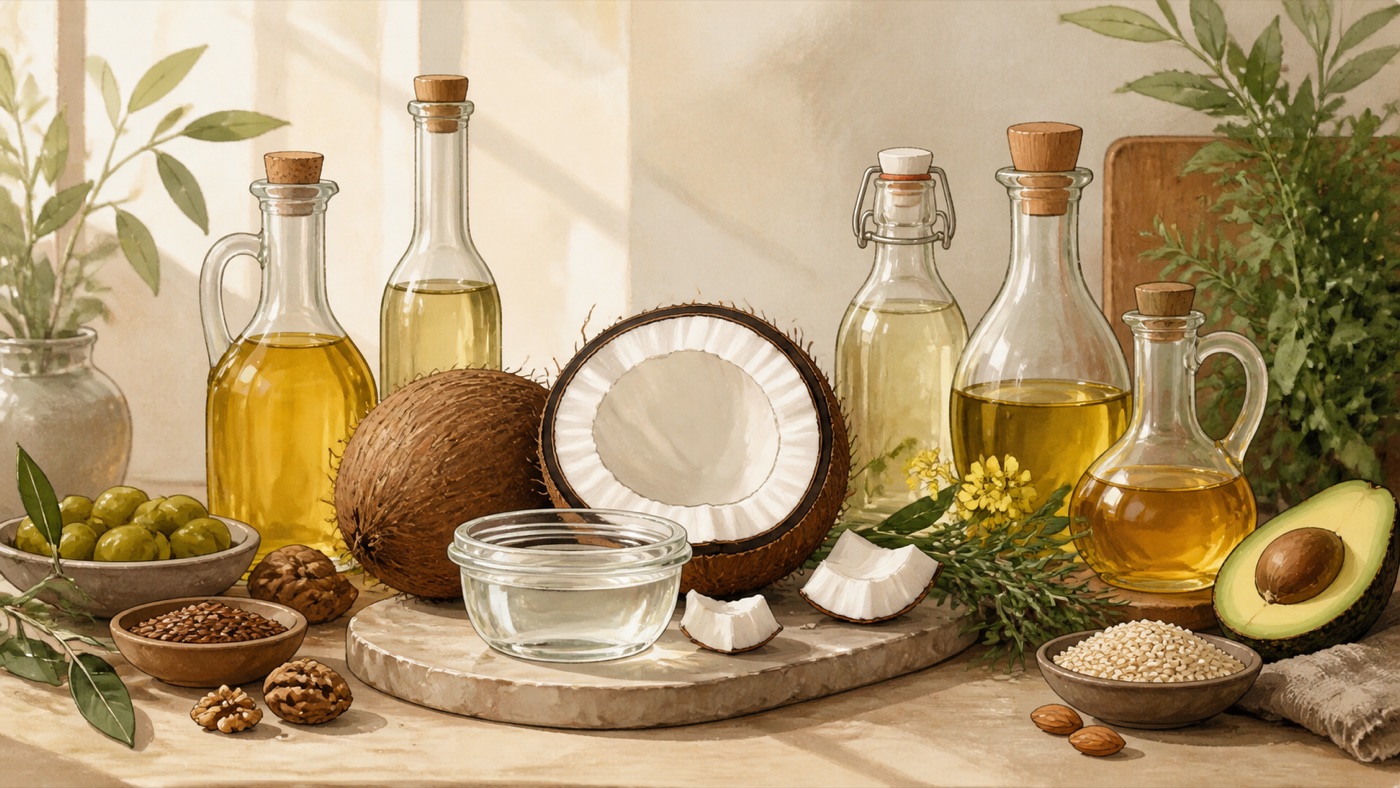
How Should You Choose a Cooking Oil? An Evidence-Based Appraisal of Coconut Oil, Seed Oils, and High-Heat Cooking
From coconut oil, ghee, canola oil, and palm oil to olive oil, this page examines familiar claims such as “natural means…
#健康的真實#食用油#椰子油#種子油#飽和脂肪#高溫烹調
How to Assess Environmental Health Risks: From Formaldehyde and Disinfectant Ingredients to Laundry and Hantaviruses
Is formaldehyde released by paint invariably harmful? Does a household disinfectant ingredient amount to an environmenta…
#健康的真實#環境衛生#甲醛#PCMX#漢他病毒#mpox
How to Assess Food Additives Without Panic: Distinguishing Real Risk Through Dose, Use, and Human Evidence
Legal use does not mean zero risk at every dose, in every product, and for every person. Likewise, animal toxicity or an…
#健康的真實#食品添加物#食品安全#風險溝通#超加工食品#甜味劑
How to Evaluate Hair-Loss Treatments: The Evidence Boundaries for Propecia, Proscar, Rogaine, and Hair-Growth Products
Finasteride has demonstrated clinical efficacy for male androgenetic alopecia, but that finding does not directly establ…
#健康的真實#禿頭#雄性禿#Finasteride#Minoxidil#生髮治療
How to Evaluate New Drugs: An Evidence-Based Reading of Coronavirus Oral Antivirals, Weight-Loss Drugs, and Alzheimer’s Antibodies
News about new drugs often compresses “effective” into a slogan. What truly matters is: effective for whom, improving wh…
#健康的真實#新藥#藥物療效#用藥安全#循證醫學#風險效益How Should We Evaluate Vitamins and Supplements? An Evidence-Based Review from NMN Anti-Aging Claims to Supplementation Risks
Professor Ching-Shun Lin's original article cautioned readers against presenting animal studies, biomarkers, or prelimin…
#健康的真實#NMN#維他命#保健品#抗老#循證醫學
How to Interpret Cholesterol Correctly: The Full Evidence-Based Picture of HDL, LDL, Diet, and Treatment
Understanding cholesterol is not about chasing one attractive number. It means distinguishing the roles of lipoproteins,…
#健康的真實#膽固醇#HDL#LDL#心血管健康#飲食
Hypertension and Real Versus False Warning Signs of Stroke: Do Not Substitute Nosebleeds, Headaches, or Age-Based Formulas for Proper Recognition
Hypertension is often silent and cannot be diagnosed by how a person feels. Stroke recognition instead depends on identi…
#健康的真實#高血壓#中風前兆#TIA#血壓控制#醫療闢謠
Interpreting Health Information: From African Swine Fever to Wellness Myths—Separating Facts, Associations, and Updated Evidence
The fact that African swine fever does not infect humans does not mean researchers have directly studied whether feces m…
#健康的真實#非洲豬瘟#健康資訊判讀#偽科學#循證醫學#藥物安全