Chapter 4
Trust and Verification (Why Believe It): Credible Facts and External Corroboration
How does a merchant's claim become a credible fact that AI can cite?
Trust and Verification (Why Believe It): Credible Facts and External Corroboration
This chapter answersHow does a merchant's claim become a credible fact that AI can cite?
Why it comes hereAnswer accuracy in S7 is judged by credible facts, and verification also underpins the service tiers.
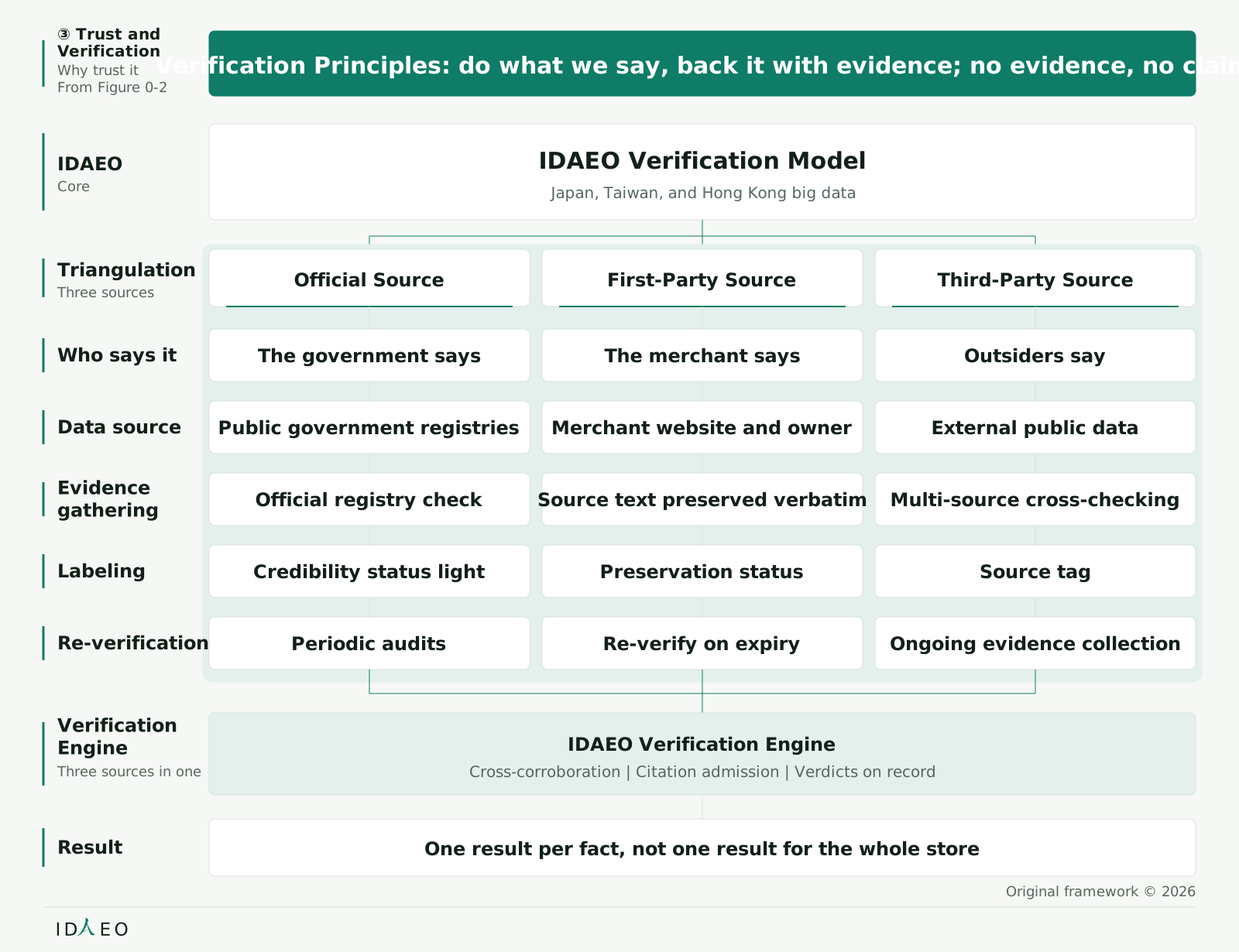
Figure 4-1 IDAEO Verification Model: Three-Party Verification and Credible Facts
The IDAEO Verification Model is built on big data from Japan, Taiwan, and Hong Kong. Data is accumulated over the long term and continuously checked, serving as the basis for identifying credible facts.
View as text
Start with the IDAEO Verification Model at the top, then the evidence roles of the Official Source, First-Party Source, and Third-Party Source, and finally the verification result for each fact.
③ Trust andVerification
Why trust it
From Figure 0-2
Verification Principles: do what we say, back it with evidence; no evidence, no claim
IDAEO
Core
IDAEO Verification Model
Japan, Taiwan, and Hong Kong big data
Triangulation
Three sources
Official Source
First-Party Source
Third-Party Source
Who says it
The government says
The merchant says
Outsiders say
Data source
Public government registries
Merchant website and owner
External public data
Evidencegathering
Official registry check
Source text preserved verbatim
Multi-source cross-checking
Labeling
Credibility status light
Preservation status
Source tag
Re-verification
Periodic audits
Re-verify on expiry
Ongoing evidence collection
VerificationEngine
Three sources in one
IDAEO Verification Engine
Cross-corroboration | Citation admission | Verdicts on record
Result
One result per fact, not one result for the whole store
Original framework © 2026
ID
EO
How to readStart with the IDAEO Verification Model at the top, then the evidence roles of the Official Source, First-Party Source, and Third-Party Source, and finally the verification result for each fact.
Key Points of This Chapter
| Claim | Why |
|---|---|
| IDAEO uses credible facts and external corroboration to turn merchant claims into a basis AI can cite. | The IDAEO Verification Model is built on big data from Japan, Taiwan, and Hong Kong, accumulating data over the long term and checking continuously to confirm the credibility of each individual fact. |
| Law of Fact Primacy: credible content starts from verified facts. | Every claim rests on verified facts. AI may be more likely to use verified content; this is still a hypothesis. It applies to claims that can be checked against Official Source or Third-Party Source data. Check whether AI answers match the verified facts. If AI still frequently gets verified facts wrong, this rule needs revision. |
| Law of Claim Traceability: every claim has a traceable basis. | Only when it is traceable can AI cite it with confidence. The claim must include a source. Check whether the AI's answer can be traced back to that source. If AI still frequently gets it wrong despite the source, this rule needs revision. |
| Law of External Corroboration: a credible claim must have external corroboration. | Independent viewpoints complete a one-sided account. The external source must be independent of the merchant; republishing your own claims does not count. Check whether the external information agrees with your account. If they contradict each other, investigate before labeling the claim. |
| Verify facts one by one, and keep confirming they are still current. | AI cites specific content, so when information is updated it needs a matching credible basis. |
Terms
- Triangulated Verification
- The principle of combining Official Source, First-Party Source, and Third-Party Source evidence to form a credible judgment.
- Official Source
- Information provided by the public sector, such as government public registrations.
- First-Party Source
- A statement by a merchant or its owner about their own information.
- Third-Party Source
- Public information provided by independent external sources.
- Verification Principles
- Build credible claims on verified facts, a traceable basis, and external corroboration.
- Re-verification
- The professional work of re-confirming that a fact is still valid, based on the information's timeliness.
FAQ
Q: What do the Official Source, First-Party Source, and Third-Party Source each provide?
A: The Official Source provides public registrations, the First-Party Source states its own information, and the Third-Party Source provides external corroboration. The sources have different viewpoints; read together, the facts are more complete.
Q: Why does verification have a barrier to entry?
A: Verification is a resource-intensive job with real scale and technical barriers. The IDAEO Verification Model is built on big data from Japan, Taiwan, and Hong Kong accumulated over the long term. It requires cross-checking Official Source, First-Party Source, and Third-Party Source data, continuous checking, and re-verification on expiry. Every conclusion must have supporting evidence. If conclusions change to suit the client, they violate the Law of Independent Verification.
Q: Why must verification go down to individual facts?
A: Each fact has its own verification result. AI cites individual details such as phone numbers, addresses, and business hours; each has a different basis and timeliness, so each must be verified separately.
Q: How do verification results stay valid?
A: Through continuous checking and re-verification on expiry. Brand and service information changes, so credible judgments must keep up with the facts.
Q: How does verification relate to S7?
A: Verification provides the benchmark for judging answer accuracy in S7. The details in AI answers must match verified facts to build credible brand perception.
Q: Where does a third-party verification page sit among the four ways AI mentions you?
A: It is way ④: when AI looks you up online, it reads facts someone has verified for you. Your website is the First-Party Source; a verification page from a Third-Party Source adds outside corroboration to the facts. See Figure 2-5.
This Chapter in Three Sentences
- Verify facts before making them available for AI to read.
- Verification combines Official Source, First-Party Source, and Third-Party Source information.
- Facts must be reverified when they are no longer current.
Three Things You Can Do This Week
- Select a merchant's claim and check its source.
- Compare the address on your website with registration records from the Official Source, and flag any discrepancies.
- Find an independent external source and confirm that it is not republishing your own claims.
Next ChapterIn the next chapter, you will learn how service tiers map to the journey.
Self-CheckPick one merchant claim and explain how First-Party Source information, external corroboration, and information timeliness together support a credible judgment.
Related questions
- Chapter 4 key pointsTrust and Verification (Why Believe It): Credible Facts and External Corroboration
- Figure 4-1IDAEO Verification Model: Three-Party Verification and Credible Facts
- FAQ 4-1What do the Official Source, First-Party Source, and Third-Party Source each provide?
- FAQ 4-2Why does verification have a barrier to entry?